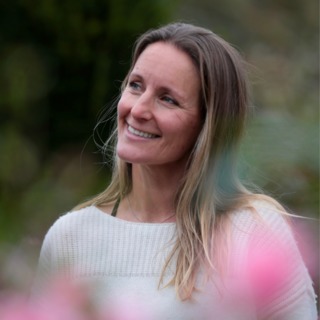
The following practice is led by Sonia Lockyer,
Host of the Wellbeing Ritual Club.
Welcome this morning to our meditation practice.
We're going to be doing Tonglen.
Tonglen is a practice that I use the guidance of penne children.
The book that I will be reading from today is Start Where You Are.
I fail to find another version,
Another book that helps me as much as this one when it comes to Tonglen.
It's such a basic introduction to the practice.
I'm going to read her words to you before we begin the practice.
Let's take a moment to settle.
You want to be sitting comfortably with your spine straight.
If that means sitting in a chair,
Then wonderful.
Even if it means lying down on your back with your knees bent,
Then do that.
We've made this time,
This space to journey inwards.
Let's give ourselves the time to get comfortable here.
Can you hear the cadence of your breath?
Can you sense the rhythm of the inhale and the exhale?
To help us get comfortable,
We can add some movements,
Circling your head in a way that suits you.
Noticing how your breath adjusts to allow this settling.
Then switching directions.
Then circling the shoulders,
Slowing it right down.
Then circling elbows.
If you have the space,
Perhaps a full arm extension.
Then comfortably finding a way to circle your heart.
Not so easy if you're lying down,
But if you're sitting up,
Slow big circles through the heart.
Changing direction.
Finding your way back to center.
Drawing your in breath down into your heart space and letting it expand from your heart out in all directions as you exhale.
Reading from Pema Shodron,
Start where you are.
Let me talk about tumbling.
I've noticed that people generally eat up my teachings,
But when it comes to having to do tumbling,
They say,
Oh,
It sounded good,
But I didn't realize you actually meant it.
In its essence,
This practice of tumbling,
When anything painful or undesirable happens,
You breathe it in.
That is another way of saying you don't resist it.
You surrender to yourself.
You acknowledge who you are.
You honor yourself.
As unwanted feelings and emotions arise,
You actually breathe them in and connect with what all humans feel.
We all know what it is to feel pain in its many guises.
This breathing,
This breathing in,
Is done for yourself in the sense that it's a personal and real experience.
Simultaneously,
There's no doubt that you are at the same time developing your kinship with all beings.
If you can know it in yourself,
You can know it in everyone.
If you're in a jealous rage and it occurs to you to actually breathe it in rather than blame it on someone else,
If you get in touch with the arrow in your heart,
It's quite accessible to you at that very moment that there are people all over the world feeling exactly what you're feeling.
This practice cuts through culture,
Economic status,
Intelligence,
Race,
Religion.
People everywhere feel pain,
Jealousy,
Anger,
Being left out,
Feeling lonely.
Everybody feels that exactly the way you feel it.
The storylines vary,
But the underlying feeling is the same for us all.
By the same token,
If you feel some sense of delight,
If you connect with what for you is inspiring,
Opening,
Relieving,
Relaxing,
You breathe it out,
You give it away,
You send it out to everyone else.
Again,
It's very personal.
It starts with your feeling of delight,
Your feeling of connecting with a bigger perspective,
Your feeling of relief or relaxation.
If you're willing to drop the storyline,
You feel exactly what all other human beings feel.
It's shared by all of us.
In this way,
If we do the practice personally and genuinely,
It awakens our sense of kinship with all beings.
The other thing that's important is absolute bodhichitta.
In order to do tonglen,
We first establish the ground of absolute bodhichitta because it's important that when you breathe in and connect with the vividness and reality of pain,
There is a sense of space.
There's that vast,
Tender,
Empty heart of bodhichitta,
Your awakened heart.
Right in the pain,
There's a lot of room,
A lot of openness.
You begin to touch in on that space when you relate directly to the messy stuff because by relating directly with the messy stuff,
You are completely undoing the way ego holds itself together.
We shield our heart with an armor woven out of old habits by pushing away pain and grasping at pleasure.
When we begin to breathe in the pain instead of pushing it away,
We begin to open our hearts to what's unwanted.
When we relate directly in this way to the unwanted areas of our lives,
The airless room of ego begins to be ventilated.
In the same way,
When we open up our clenched hearts and let the good things go,
Radiate them out and share them with others,
That's also completely reversing the logic of ego,
Which is to say reversing the logic of suffering.
Lojong logic is the logic that transcends the messy and unmessy,
Transcends pain and pleasure,
Begins to open up the space,
Begins to ventilate this whole cocoon that we find ourselves in.
Whether you're breathing in or breathing out,
You're opening your heart,
Which is awakening bodhichitta.
Bodhichitta is the awakened heart.
Each time we breathe into our heart space and allow that exhale to radiate from the heart space,
We're inviting the awakening of our hearts.
So let that be the foundation of our practice.
And we'll go through the steps of tumbling and see how today unfolds,
Trying not to grasp it being a certain way or to reject and push away its feeling another way.
Let's begin by exploring,
Let's explore texture.
So how does it feel to breathe in heavy and to breathe out light?
How does it feel to breathe in spacious and breathe out cramped?
And flipping it the other way,
How does it feel to breathe in cramped and breathe out spacious?
How about breathing in hot and breathing out cool?
And this month we're exploring the theme of rhythm.
So to get our sensory awareness around those polarities,
Let's see how it feels to breathe in,
What's the right word,
Forced.
How does it feel to breathe in forced?
And how does it feel to breathe out allowing?
How does it feel to breathe in?
Keeping the spaciousness of an awakened heart as you practice breathing in how it feels to force things and breathing out how it feels to allow.
And then bringing the practice to someone whom we care for deeply and effortlessly.
And as you breathe in,
You're going to breathe in their sense of force,
Their experience of forcing things and how it feels to them.
You're going to breathe it in and draw it right the way down into the deepest part of your belly.
And as you breathe out,
You're going to send to them your gift of allowing,
Of ease,
And let them receive it as they breathe.
So this might look like a ribbon traveling between the two of you.
It might look like a puff of smoke.
It might just be a feeling sense.
Breathing in their sense of forcing,
Their experience of forcing things.
Taking it gladly into yourself and exhaling your gift of allowing to them.
Breathing in their sense of force,
Their experience of forcing,
Their experience of forcing.
And then bringing the practice to someone who you feel quite neutral about.
Someone whose path you cross regularly,
But maybe don't phone them or meet them,
Meet up with them.
It's just a friendly face that you say hi to.
And let's experiment with Tonglen on this neutral person,
Allowing yourself to receive as you breathe in their sense of forcing and generously offering up the gift as you exhale for your sense of allowing so that they can receive,
They can be filled up with that sense of allowing.
Breathing in their sense of force,
Their experience of forcing,
Their experience of forcing.
Keeping the spaciousness of an open heart.
Let's experiment with Tonglen on someone who we find to challenge our enemy,
The person that gets under our skin and does all the things that drive us wild.
And let's experiment with breathing in their sense of force,
Allowing yourself to receive it and exhaling the gift of allowing that they may receive that.
Notice what's going on in your body as you practice.
It doesn't always go quite as we hoped this Tonglen to the people that drive us mad.
Just chuckle to yourself as if you find little conditions coming up or little stories of yes,
But maybe it's just not available.
We don't need to pretend.
We can be with whatever the practice holds.
There's no fail.
We're just curious,
We're just exploring.
Can we breathe in their sense of forcing?
Can we offer our sense of allowing?
And then we're aware that every single human being on earth has had this experience of allowing.
The storyline may be different,
But every person,
Every being has felt the need to force.
They know what that feels like in their body.
And every human being has at some point touched the experience of allowing.
So let's play with Tonglen for the entire planet.
Breathing in the universe's experience of forcing.
And breathing out an offering of allowing.
And then softening into the gentlest of smiles as you let the practice go.
And draw the breath down into your heart space and allow your exhale to radiate from your heart in all directions.
It's all just a curiosity.
It's nothing too serious.
So just allow yourself to feel how that practice felt.
And Tonglen doesn't just belong on your yoga mat or your meditation cushion.
You can play with Tonglen throughout your day.
Building this kinship that Pema Chodron mentions.
The kinship with all humanity.
As you practice for yourself,
It becomes a collective practice.
Bringing hands to heart and dropping forehead to fingertips.
Thank you for joining us today.
Namaste.