Hello,
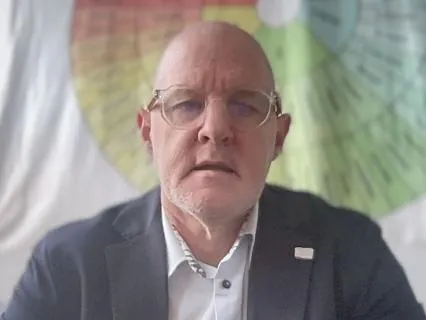
My name is Scott Langston and I would like to talk to you today about DBT.
What it is and how it works.
So DBT is Dialectical Behaviour Therapy.
And it helps people to develop healthier ways of coping with emotions.
With relationships and with life stresses.
It's become one of the most.
.
.
Respected forms of therapy for people who struggle with intense emotional reactions.
Um.
.
.
But a lot of people don't know what it is or how it works.
So that's my goal today to make that clear,
Practical,
Relatable.
So behavioural therapy like in CBT,
Cognitive behavioural therapy is is any former.
Therapy that is designed to alter somebody's behavior.
Usually we develop behavioral traits as young children and adolescents.
And on the whole day work.
When they cease to work for us and our behaviours become problematic.
Then we can engage in different therapies to try to understand and alter our behaviours.
So dialectical behavioural therapy specifically,
Works very well with people with extreme emotional responses to things and the word dialectical in this context means that two seemingly opposite things can both be true at the same time.
This is a central part of DBT.
You're doing the best you can.
And you need to try harder.
These are two different ideas.
They can both be true.
You need to accept yourself for who you are and.
.
.
You need to change.
Because who you are is not working for you right now so these are ideas,
Seemingly opposite ideas,
And they can both be true.
This is the core of DBT.
Acceptance on the one side and change on the other.
It helps people to move out of black and white thinking into a more flexible,
More compassionate view of themselves.
Soon.
DBT was first created by Marsha Lenehan,
A psychologist.
Who was working with people experiencing chronic emotional pain.
People who were having suicidal thoughts,
Who were self-harming,
Who were just overwhelmed by their emotional responses to things,
And traditional therapy wasn't effective.
Since then it has grown into one of the most evidence-based treatments that are out there for a wide range of challenges.
Specifically,
It is used with people with BPD,
Borderline personality disorder.
Childhood traumas,
Attachment traumas,
Substance use,
Eating disorders,
Depression,
Anxiety and the list goes on.
But it's really,
Really important.
To understand that DBT is not just for people in crisis.
It's for anybody who finds that they're having difficulty regulating their emotions.
Or whose typical reactions to things causes problems in relationships,
Whether they be Um.
.
.
Romantic relationships,
Family relationships,
Work relationships.
Dbt after lenahan gives or gives people the tools to what she calls,
Have a life worth living.
Now at its core,
DBT teaches four main areas,
Four main sets of skills which are designed to help you respond appropriately to emotions rather than.
.
.
Impulsively rather than escalating things further out of control.
For me,
One of the most important parts is the first one,
Which is mindfulness.
And we'll talk more about mindfulness and what it is.
Um.
.
.
Distress tolerance is another area.
Sitting with your discomfort and anxiety.
Learning to accept.
Emotional regulation,
How to get to a point where your emotions are not controlling you,
But that you are using your emotions effectively and interpersonal effectiveness.
How effective are you in communications and in dealing with the everyday world around you.
So four separate areas that we're not going to go into in detail in this short video,
But hopefully in further videos I can expound on each of those.
DBT tends to be fairly structured.
It's not just a random talking therapy that can sort of follow twists and turns.
It tends to be fairly focused,
Certainly weekly individual therapy with a therapist.
If possible also weekly skills training groups,
But perhaps with a group of people.
And not necessarily the same therapist but a therapist.
Who teaches the skill sets.
Phone or text coaching happens between sessions when real-life moments crop up and the patient Um.
.
.
Wants to explore how to deal with that in the moment.
And usually there'll be a team behind a therapist.
Supporting the therapist.
For example,
In my case,
I have a clinical supervisor who I talk about cases to in a randomised,
Anonymous way.
But this structure allows consistent support,
Helping clients to build their independence and their confidence.
So I think the sort of a one-line summary of DBT would be.
.
.
DBT helps to create a life.
Worthy of living by balancing acceptance and change.
What it teaches is that emotional pain is not a personal failure.
It's a sign that you need better tools to approach.
Those life situations and DBT can provide you with those tools in a step-by-step and very practical and learnable way.
So thank you for listening to this short video and hopefully I will be releasing more videos in time.
Certainly CBT is something that I will discuss at some point and please check back for other videos in the future.
Thank you.