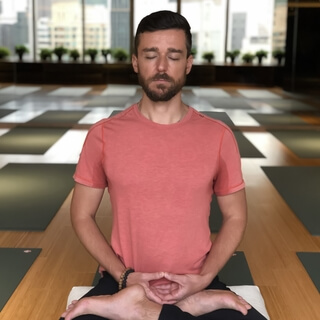
Hello there.
Good morning,
Good afternoon,
Good evening,
Wherever you are.
I'm Ryan in Singapore.
Welcome to our mindfulness practice.
So what we're chatting about is self-compassion and how to bring it – first,
How to bring it into our meditation practice.
You know,
Meditation is.
.
.
Is the is the way to help keep building up ourselves for our mental health.
And you don't have to take my word for it.
There are plenty of studies out there that show what happens when we meditate regularly.
And that really,
The discipline practice.
Of sitting and focusing on the breath.
Or focusing on one particular object.
Training,
Concentration,
Watching.
And noticing when the mind has wandered away from that object and gently bringing the mind back to that object.
Super powerful.
And so if you can find ways to cultivate self-compassion and to meet yourself where you are,
I think maybe that's kind of one of the themes of self-compassion is learning how to meet yourself where you are and something that is intrinsic in this is acceptance,
Right?
We've talked about the nine attitudes of mindfulness-based stress reduction.
One of them that really is key to self-compassion is acceptance,
Is knowing where we are.
I've used an analogy of if you're trying to get somewhere and if you have a map,
Let's say your GPS is broken,
You can't.
.
.
You can't use your GPS to figure out where you are.
And you have a map and you're looking at the map.
If you don't know where you are,
You're not going to be able to go.
And get to where you're going.
And so that's really this very first step of self-improvement is this.
Radical acceptance of self and self situation.
Where am I right now?
It sounds super simple.
But it's just so easy to get caught up.
Trying to make ourselves believe that we are not where we are.
And I think this is a good little.
.
.
Segway.
For There are a lot of sessions on Insight Timer about affirmations,
And I think this is my.
.
.
Probably the thing I take issue with most about affirmations is that it's very common.
For us to assure ourselves that we're okay and we're doing great when in fact the exact opposite is true.
And I think that's the other interesting thing is that we think that this kind of convincing ourselves that we are where we are not.
Is an act of self-compassion where I would argue the exact opposite that in fact the very first step of self compassion is this radical self-acceptance as to recognizing and knowing where we are without putting on any blinders,
Without putting any fog down to make seeing what's here less challenging.
It's going to be challenging.
I mean,
That's just the way it is,
To see things as they are.
It can be very unpleasant.
However,
It is crucial.
To to this process of self-compassion.
We can't be loving towards ourselves where we are if we don't know who we are and where we are.
And I really can't stress enough how important.
That is and and i'd say you know the next steps of self-compassion really help to soften our feelings when we discover the challenging time that we're in.
So as we look through and we look with clarity and honesty where we are,
We recognize that,
Yes,
This is difficult.
This is challenging.
But I'm not alone in this experience.
The three steps of compassion in general and not just self-compassion.
So today's session is about self-compassion,
Which really is kind of the foundation.
For all of our compassion,
Because as we explore self-compassion,
One thing that we realize.
And although this maybe takes time to realize and takes more practice,
Is that we are not separate from the universe that gave rise to us.
And we are not separate from all of the other human beings that are here.
And as we recognize this connection that we have.
No matter what your political view might be,
That's maybe one that a lot of people can relate to.
95 plus percent.
Of you is exactly the same as the person next to you no matter what their political view no matter what the color of their skin is no matter what their religious belief is and yeah and if you want to really go you know if you want to get technical and get down to the genetic level right it's well over 99 of what is the same in me is the same in this other person and it's just are comparing minds.
We are human beings.
We like to compare things because that's in our biology.
That's what makes us never satisfied.
That's why.
.
.
I mean,
That's the foundation of Buddhism,
Right?
Why does Buddhism exist is because human beings are never satisfied.
So what can we do?
I mean,
That's kind of the main philosophy of Buddhism.
So let's recognize and accept that we are forever unsatisfied.
So what can I do to minimize the discomfort that my biological dissatisfaction brings to me?
And I think that's.
.
.
You know,
That's a really.
.
.
Interesting.
Little piece so we are the same as as everybody else no matter what our minds what our comparing minds tell us so we want to look at hey look at this you know look at her car you know look at her Look at her hair.
She's,
You know,
Her situation must be so much better than mine.
You know,
How can I climb to those heights?
Well,
Of course,
Without knowing.
The truth behind what this person is experiencing.
So the first step of self-compassion is mindfulness.
Where am I,
Right?
Looking around,
Accepting where I am without.
.
.
Without judgment,
Right?
That's mindfulness.
Without judgment,
Seeing if I can be aware of my own judgments about my own situation as well.
And the comparing mind is part of that.
So as I'm judging,
I'm looking around and going,
Oh,
You know,
These situations are better.
Is it possible to just focus on me and where I am in this moment,
Right?
That's the first step,
Mindfulness.
The second step is common humanity,
Recognizing that I am not alone in this struggle.
That every single human is dissatisfied with their life,
No matter how great they may look like they're doing and how much they've acquired or how much.
.
.
Status or power or wealth or whatever they have.
There is something in them that is still deeply unsatisfied.
And everybody struggles.
And specifically,
Whatever situation that you're having right now,
That's one thing we tend to do is personalize our situation.
That this situation is me and I'm stuck in it all alone in my life.
And something that you can trust and rest assured in is that you are not alone,
Is that although you are special and unique and your situation is completely unique in that there are certain factors about the situation that are unique to you.
Generally speaking,
What you're experiencing,
The emotional landscape.
The uh The thoughts that you're having about your situation are not unique in that every.
.
.
There is certainly another human being on this planet right now that is sharing in this difficulty that you're having.
Although it's not identical,
Extremely similar.
That's the first step.
Mindfulness.
The second step.
Common humanity.
So see that.
My human experience is not.
Isolated and it's not just about me that there are so many others that are experiencing a similar difficulty and then the last step is offer kindness.
So mindfulness,
Know where we are.
Number two,
A common humanity.
See that this is,
I am not alone.
I am not alone in this situation.
And by the way,
You are not alone right now.
You're here with a bunch of other people who are sharing this experience with you.
And I would encourage you to connect with the Insight Timer community.
You know,
It's really here to help and support you.
And a lot of what you will find is that what people are experiencing here is similar to what you're experiencing.
Step three is offer kindness.
So find a way to offer kindness to yourself.
Um,
It's.
.
.
Respond to yourself with care,
Not criticism.
What is the voice inside of your head like?
What happens when you screw up?
What do you hear?
Oh,
I'm so stupid.
Oh,
I can't believe I did that.
Oh,
I feel like such a fool.
Our.
Protecting egos.
I mean that's the – this is another biological thing,
Right?
Our sense of self.
Is so strong inside of ourselves.
And,
You know.
I don't know,
Maybe we're also linking back to that difficult time we had in high school or junior high or something.
And we think that when we make a mistake,
Everybody saw it.
And everyone's going to remember it forever.
And I'm going to be ridiculed.
And hurt for whatever this mistake is when in fact the reality is that our sense of self is strong and blows it out of proportion and it turns out that actually whatever it is that's just happened is just a temporary thing And it isn't as big of a deal as we've made it out to be.
I've got a couple little more tidbits to share.
About this.
We'll get into it after the meditation,
But I want to make sure that we have plenty of time to do our meditation together.
Get comfortable.
And,
You know.
In self-compassion,
Often I start the meditation,
Oh,
Okay,
Find a comfortable seated posture,
Crown of the head towards the ceiling,
All of this kind of stuff.
And for sure.
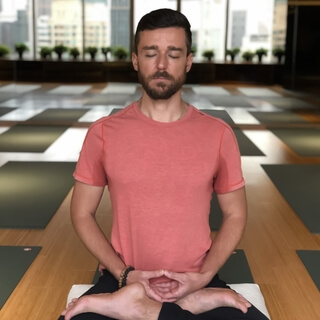
That's a posture you can sit in.
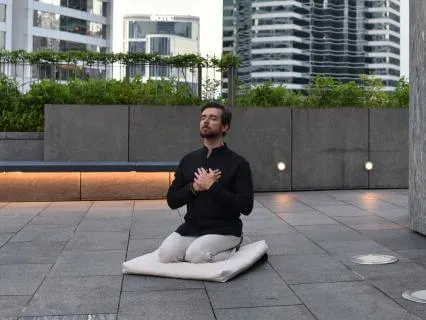
And this is a posture I'm going to sit in as I lead practice today.
But.
.
.
With mindfulness.
And acceptance.
Who is it that's here today?
What version of you is showing up?
And can you choose a posture that is going to be loving,
And kind.
And open.
To whoever it is that's here today.
So maybe sitting up straight and tall isn't the right posture for you.
Maybe crossing your legs isn't right.
Maybe you want to relax.
And lie back on your sofa today.
Maybe you want to lie down.
Especially with self-compassion.
Think it's important to choose a posture that's going to be conducive to this practice of meeting yourself where you are.
So find that posture.
So maybe step one,
Mindfulness,
Just take a moment.
Who is it that's showing up here today?
What state am I in?
As I show up to this practice today.
And then choosing a posture.
Is going to be as conducive as possible to what you've discovered in this.
Several seconds of checking in with yourself.
And as we get going in practice,
We'll be doing a little more checking in before we get in.
So as you arrive into your posture,
Just take a few moments to notice that you're breathing.
That you are alive.
Thich Nhat Hanh.
It is not a miracle to walk on water.
The real miracle.
Is to walk on this green earth.
To bathe in this moment.
To be alive.
So just take a few moments.
To remember what a miracle it is that you are here and you are alive.
No matter what story you may tell yourself.
Trust in this fact.
The fact that you are here.
And you're alive.
There must be more right with you than wrong with you.
No matter what your opinion about the situation is.
Your liver is functioning.
Your kidneys are doing what they're supposed to be doing.
Your heart is pumping.
Your lungs are breathing.
Just take a moment to.
.
.
Acknowledge.
This physical reality of your body.
That you live in 24 hours a day.
Seven days a week,
365 days a year.
Befriending this vehicle which You know,
Maybe we don't always feel connected to.
Know that this body is me just as much as anything else I think is me is me.
So following the breath,
Feeling the air moving in and out.
And so now expanding beyond the body.
Being aware of the mental state.
Maybe as you were trying to focus on the breath,
You found that your mind continued going other places.
There's something pressing at work.
Or in your family.
Or internal to you.
That is so loud inside your mind that when you try to focus on your breath,
It just doesn't work.
You keep going back to this.
Possibly unpleasant thought.
And so.
.
.
Can you accept?
This is the way my mind is right now.
This is what my mind is doing.
As much as I am trying to hold it,
On observing this physical sensation,
It just won't.
Can you be okay with that?
And then what about the emotional landscape?
Perhaps thoughts are bringing up emotions.
Can you feel those emotions manifesting in the body?
So noticing this whole triangle of body,
Mind,
And emotions.
See if you can be aware of how all three.
Play together like a symphony.
And again,
As we look at this with mindfulness.
Seeing that this is a miracle.
This is beautiful in its own way.
Getting a chance to glimpse non-judgmentally.
Even difficult emotions.
Can be like,
Spotting a wild animal.
On safari What does it look like?
Can I.
.
.
Examine.
Even the difficult emotions for everything they are.
Bodily sensations,
The thoughts around them.
You can discover.
The more you practice,
The more the observing mind strengthens,
The more we can see ourselves with objectivity.
So roll out the red carpet.
Welcome.
The me that's here right now.
The me that's here today.
And now.
Whatever it is that you're experiencing.
We are human beings.
We all have particular attributes we all have comparing minds.
We all experience emotions.
And those emotions were critical to our survival many years ago.
But whatever you're experiencing.
Right now or a week ago or a year ago or what you're going to experience in the future.
It's not unique to you.
That we all.
.
.
Experience times.
Of joy.
Of happiness.
And times.
Of sadness.
Depression.
Anger.
Fear.
Anxiety.
And whatever you're experiencing now.
Or will experience in the future.
It's shared.
With all other humans.
As we are connected through our biology.
So you can rest assured that whatever experience you're having.
It is shared with another person.
And you are not alone.
In fact,
It is our own human failings.
That becomes the foundation for our compassion.
As we see our own failings.
We can.
.
.
Extend out a pillow for ourselves to fall on.
That we become like a perfect parent.
Ready to embrace ourselves.
In these difficult times.
And that our compassion outwards towards others becomes.
.
.
Completely natural.
In fact,
We can't even help it.
Because we've learned to see ourselves.
And recognize.
At all humans.
Face these same challenges.
The same kind of unsatisfactoriness with life.
And it's through this.
That I can Begin to offer myself kindness.
So what was it like?
Do you remember a time in your life?
When you were loved unconditionally?
See if you can recall.
A feeling of unconditional love.
Was there someone in your life who loved you unconditionally?
Maybe a parent.
A grandparent.
A brother or sister.
Maybe you're a child.
Maybe a really close friend who always took care of you.
Perhaps.
One or more of your pets.
So can you recall that feeling?
Of being loved unconditionally.
By another person.
What was it like to be cradled?
Maybe not physically.
Or maybe physically.
By their unconditional love for you.
Just take a few moments to remember that.
And see if you can feel.
The feelings.
Where they manifest in the body.
And now you'll see.
.
.
If you have never experienced unconditional love from another.
Can you imagine?
What that might be like.
And so what I've just done is.
.
.
Kind of tricked you into loving yourself unconditionally by seeing yourself through the eyes of another.
So this imagination,
In fact,
As you see it.
There was no other person.
In this exercise that it was all you.
So you can.
Become that other person.
You can love yourself exactly as you are right now.
Without needing to be any different.
Without needing to be stronger.
Or smarter.
Or more loving.
Or more compassionate.
Than you already are.
You have the capacity inside you.
And if you find this practice challenging,
That's common.
It's another part of our common humanity.
But you'll find that there's a spark in there,
If nothing else.
Maybe you haven't flexed this muscle ever.
Or maybe it's been a long time.
We'll discover that you have this innate capacity for self-compassion.
That you can love yourself exactly as you are.
It is possible.
And so what can be helpful?
If you're still having difficulty.
Is to repeat some phrases.
And see if you can get to the meaning behind the words.
Don't just repeat the phrases like a mantra.
Really do your best to mean them,
Get down to the meaning of the words.
So repeat after me.
You can do it out loud.
You can do it in your mind,
Whatever you feel comfortable doing.
May I be happy and contented.
May I be happy and contented.
May I be safe.
And protected.
Free from inner and outer harm.
May I be healthy and whole.
To whatever degree possible.
May I be at peace.
May I have ease of well-being.
May I be kind to myself in this moment.
I give myself.
Permission to soften.
And so now,
Meeting yourself exactly where you are.
Observing the body,
The breath,
The mind,
The emotions.
Who is it that's here now?
And now.
Let's close our practice and our time together with.
.
.
Three rings of the bell.
All right.
Congratulations,
Everybody.
Good job in making it through today's practice.
How'd it go?
What came up for you?
Was it easy?
Was it difficult?
As we practice self-compassion,
What we can discover is that it's It's not just here,
That as we start to practice self-compassion,
We can't help.
But have our compassion start to go outwards because we do.
Through that step two,
That common humanity.
We can see through our own common humanity what we have in common with everybody else.
So that can be.
.
.
That's the doorway.
So as we love ourselves more,
It becomes.
.
.
Becomes easier and easier to love others.
And as we take more care of ourselves,
We'll discover that we are more equipped to take care of others as well.
Burnout.
Is uh mindfulness certainly can help.
Wish you all the best in your day or evening as you go forward.
And uh.
.
.
Hope to see you again soon.
May I be happy and peaceful.
May everyone watching,
Listening,
Wherever you are.
I wish you all happiness and peace.
May all sentient life on this planet,
In this universe.
Including those yet to be born.
May we all be happy and peaceful.
Thanks again.
See you soon.