Hello,
Hello everyone.
Welcome,
Welcome to our Vegas Nerve and Nervous System Self-Regulation live stream.
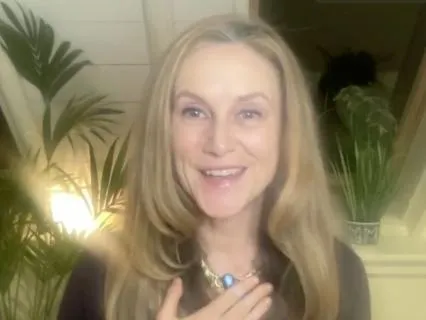
My name is Prema Gaya and I'm coming to you from the beautiful New Eden community here in the Northern Netherlands.
I actually spent hours today preparing a special class specifically focusing on teaching about the five cranial nerves that are responsible for social engagement and how we can work with them in a way that helps to regulate our nervous systems.
You'll understand a little more when I get into it,
But I prepared a very,
Very special talk.
I will be sharing some of the practices from,
Love you Debbie,
Some of the practices from our PDF here,
Six tools for nervous system self-regulation.
And I'm going to be sharing some that I haven't shared in like,
It's been a long time and also some new ones.
We have 12 cranial nerves.
The 10th cranial nerve is the vagus nerve.
It's one of the most well-known cranial nerves.
Out of these 12 cranial nerves,
There are five cranial nerves that are responsible for social engagement.
I'm wondering if you can let me know with a heart in the chat box or with some hearts,
If you've ever felt that overstimulation or anxiety made it challenging for you to feel socially engaged at big,
Loud,
Noisy gatherings or in airports or big shopping centers.
If you've ever felt,
Let me know with a heart,
If you've ever felt that overstimulation or anxiety made it feel hard for you to feel authentically,
Naturally,
Socially engaged.
So for me,
I see a lot of hearts.
I have sensory processing sensitivity.
So I get overstimulated in big,
Noisy,
Loud environments sometimes.
Less so than I used to,
But I definitely have that.
And I see a lot of hearts.
The nervous system's social engagement system relies on five of our 12 cranial nerves that support us with connection and communication.
Understanding how these five cranial nerves work can be supportive on the journey of becoming an active operator of our nervous system.
So how many people on the call,
Out of curiosity,
Let me know in the chat with an emoji if anyone knows much about the cranial nerves responsible for social engagement.
This is something that learned from Stanley Rosenberg,
Who was a master craniosacral educator,
Who wrote the book Accessing the Healing Power of the Vagus Nerve,
Which is an incredible book.
So the trigeminal nerve is cranial nerve number five.
These cranial nerves emanate from the brainstem or the brain.
The trigeminal nerve registers sensations in the face,
Like when we do gentle havening on both cheeks.
The trigeminal nerve helps us to register that,
Which can signal,
These sensations can signal comfort and safety.
And it also controls facial movements,
Such as a soft smile or relaxed jaw that convey trust and openness.
So let's try a little practice here of havening of the face.
So this practice also supports with bilateral stimulation,
Helping to balance both brain hemispheres,
Because we do it on one side and then the other,
And just really tuning into the sensation.
So beginning,
I invite you to do this one with me.
So bringing your hand up to your cheek and then just gently stroking and closing your eyes,
Just really coming into your own experience of self-soothing.
Activating your mammalian caregiving system,
Which is a term from somatic experiencing.
And then try the other side,
Bringing all your attention and your awareness to this feeling of havening of your cheeks.
Noticing how your body likes this.
And then one more time on the other side.
And how many of you have ever had a moment where a loved one,
Either a parent or a partner,
Has stroked your cheek,
And it just makes you feel so loved?
So this is connecting with,
You can switch sides,
Connecting with the fifth cranial nerve.
Deep breath.
Okay.
You can let me know.
Oh,
Hi,
Becca.
Good to see you,
Love.
Hi,
Sandy.
Welcome,
Welcome.
Sandy is one of our community leaders.
Let me know in the chat how you liked the cheek havening.
I love that practice.
And I especially love it when someone that I love,
Like Betsy Finkel,
Who does it to me,
One of my best friends.
She's a body worker too.
Okay.
So let's see.
What does Betsy say?
Leo says,
It's helpful.
Beautiful.
So let's talk about the facial nerve,
Cranial nerve number seven.
It controls facial expressions and signals emotional states.
So like smiles,
Eyebrows raising,
Like,
Wow,
All of this is like the seventh,
The seventh cranial nerve.
It enhances nonverbal communication,
Like smiling and eye contact and raising your eyebrows and all these fun things.
So,
Okay.
This is cognitively a lot of information.
So deep breath.
Okay.
The next one is the glossopharyngeal nerve,
Which is cranial nerve number nine.
It supports clear vocalization and swallowing.
So it affects your voice tone,
Which is vital for effective communication.
So to connect with the ninth cranial nerve,
Which is one of the five responsible for social engagement,
We're going to do a practice of going back and forth between making the OM sound and making the VU sound.
So I invite you to put one hand on your throat and one hand on your face,
And we're going to make an OM together and see how you feel this in your nervous system and see how,
Notice also how this vibrates the vagus nerve.
So big breath in.
OM.
And now we're going to do VU.
And I invite you to notice which one of these your body likes more,
Just for your own interoception,
Your own inner awareness of what your body resonates with more.
So big breath in,
And we're going to do a VU.
VU.
One more time,
We're going to do an OM.
And just notice which one your body,
Which speaks to you more.
What was the difference in tone and frequency between those two sounds?
Did you notice how they were kind of vibrating different aspects and different parts of your nervous system?
And which one did your body really resonate with the most?
Let me know out of the OM or the VU.
So those practices,
Those two vocal toning practices,
They connect with your ninth cranial nerve and also the 10th cranial nerve,
The vagus nerve.
So I got some people saying they prefer the OM and Lauren.
Hi,
Lauren.
Welcome back,
Beauty.
Lauren says VU.
We got some VU.
So we're moving on to the fourth cranial nerve responsible for social engagement is the vagus nerve,
Cranial nerve number 10.
It regulates the heart rate,
Helps to bring the body into a calm and parasympathetic state and influences our vocal tone.
Dr.
Stephen Porges,
Let me know with some hearts who has heard of Dr.
Stephen Porges.
He's someone that we all love in the nervous system educator world.
He's the author of the Polyvagal Theory.
He calls the vagus nerve,
The love nerve,
Because when it's functioning optimally,
We feel connected,
We feel loving,
We feel warm and cozy and engaged.
We're going to do an exercise to connect with the vagus nerve to support in our vagal tone.
Some of you have,
Some of you've done this one before.
It's very simple.
I'm just going to back up a bit.
So we're going to draw a big X.
So coming down,
Bringing your eyes down towards the bottom diagonal left corner,
Keeping your face forward,
But your eyes are going down.
And then you're going to bring your eyes and your finger all the way up to the right corner,
As far as feels comfortable,
Getting a nice stretch of your eye muscles.
Take a deep breath there.
Now we're going to bring the finger down to the bottom,
Right?
Look at the finger as much as you can.
Take a deep breath.
I'm bringing that finger all the way back up,
Following with your eyes to the top left corner,
Getting a nice stretch up there.
Take a deep breath again.
One more deep breath,
Stretching the eyes up to the full range of motion there.
And we're going to bring the hand back down to the bottom left,
Following it with your,
We're trying to keep the face forward,
And then the eyes are going down to the bottom left all the way.
Deep breath.
And then bringing it up slowly to the right corner.
Well,
I got a little yawn.
Maybe you guys are getting a sigh or a swallow or a yawn.
The eyes are called,
Referred to as the gateway to the brain,
And the brain and the spinal cord make up our central nervous system.
Okay,
So just bringing your hand back to your lap,
Closing your eyes,
Checking in with yourself.
What happened to your body with those eye exercises?
One more deep breath.
Oh,
You might get a little yawn.
I got a yawn.
Nitsan is sending love to everyone.
Thank you,
Nitsan.
Thank you for being here.
We're going to go on to the last of the five cranial nerves that are part of the social engagement system.
The accessory nerve is cranial nerve 11.
This one controls neck and shoulder muscles for head positioning and facilitates open body language and attention cues.
So to work with this cranial nerve,
We can do a little SCM,
Sternocleidomastoid.
I invite you to do this one with me,
A little sternocleidomastoid self-massage.
This is this thick,
Wiry muscle here.
You can find it by turning your head from side to side and noticing this long,
Wiry muscle that pops out.
And if you happen to have a little massage oil or lotion nearby,
You can put that on.
It's always nice to massage the SCM muscles with a little bit of oil or lotion.
Switching sides.
Taking some deep breaths.
The sternocleidomastoid muscles and the trapezius muscles are both enervated by the 11th cranial nerve.
And so many of us are on our screens so much these days.
What ends up happening,
You can switch to the other side again if that feels good to you.
What ends up happening is we have about 70% of the population has what's called forward head posture.
It's known as FHP.
And in forward head posture,
Often either the SCM muscles or the trapezius muscles,
One of them is overcompensating for the other.
So let's go back to our trapezius muscles,
The back of our shoulders here and give the shoulders a little bit of love.
It's a wonderful self-care practice to do self-massage of massaging the sternocleidomastoid muscles and the shoulders for five minutes with some soothing oil,
Maybe some almond oil or coconut oil with some lavender in it,
Which is a soothing essential oil,
Just for like five minutes before bed to help wind down,
Especially if you work on a computer.
Switch sides,
Taking some deep breaths.
So again,
These areas are really connected to the 11th cranial nerve,
The 10th cranial nerve,
The vagus nerve.
Taking a deep breath.
Ah,
We can support these five cranial nerves through practices like vocal toning,
VU breathing,
Eye exercises,
Gentle havening on both cheeks and giving ourselves a neck and shoulder massage with soothing oil.
As I mentioned,
All of these practice help support our nervous system in functioning at its optimum.
So in my 10-day course,
Vagus Nerve and Nervous System Self-Regulation,
I teach dozens of practices for self-regulation,
Body-based somatic tools to not only self-regulate the nervous system in times of overstimulation,
But also to build vagal efficiency so that your vagus nerve can help bring you into a parasympathetic state more effectively after a stress response.
So I really encourage you to check out the course to discover more of these practices.
Part two about these five cranial nerves.
The social engagement system of our nervous system involves these five cranial nerves which govern facial expression,
Tone of voice,
Hearing,
And eye movement.
As we said,
When the ventral vagal state of our nervous system is active,
These nerves work harmoniously facilitating relaxed genuine expressions like a natural smile,
Warm eye contact,
And a calm tone of voice.
When a person doesn't feel calm or safe or perceives threat or feels dysregulated,
Their sympathetic nervous system,
Fight or flight response,
Or dorsal vagal system,
Shutdown or freeze response,
May dominate.
And I'd love to hear in the chat which of those two,
The fight or flight,
Or the freeze or shutdown,
Which of those two does your nervous system tend to gravitate towards when you get overstimulated or maxed out.
Maybe you can let me know in the chat.
For me,
I have a long,
Long history,
Which many of you know because many of you have been on these calls before,
I have a long history of hyper arousal and hyperactivity of the amygdala due to childhood trauma and trauma throughout my formative years and teenage years.
So for me,
It's been more hyper arousal which is more of the fight or flight,
Sympathetic,
Dominant.
So I'm curious to hear,
So some people are saying dorsal,
Ah,
Some people say freeze.
So it's a mixture of all of them.
Okay,
And so the ventral vagal complex of the nervous system becomes less active.
Obviously,
You know,
The ventral vagal is the rest and restoration.
So it becomes less active than disrupting the coordination of the cranial nerves,
These five cranial nerves,
Their coordination and their functioning gets impacted.
When this happens,
So this can result in tense or flat facial expressions.
The facial muscles controlled by the facial nerve may not relax fully.
So I'm curious if you've ever had that happen in overstimulation where you feel like your facial muscles just aren't,
It's just obvious that your face,
Your face is not relaxed and you can't do anything about it.
I know I've had that.
So difficulty with eye engagement and eye contact can feel strained at those times.
Maintain a monotone or strained voice that lacks warmth.
Deep breath.
It sometimes may feel impossible to summon these five cranial nerves to form a natural smile when you don't feel safe or calm.
So I'm curious if you can let me know in the chat.
If you've ever been out at a really noisy,
Intense event or in the airport or at a concert or sporting event,
Where it was just over the top or at a restaurant where it was way too loud and you're trying to maintain like natural,
Calm social engagement and you just,
It's just not available to you.
Maybe you can let me know by popping a heart if you've ever had anything like that happen,
Where you really want to be warm and social but you're so overstimulated that it's actually not physically available to your nervous system.
So let me know if you've ever had that happen.
I have definitely had that happen.
So when the nervous system is in a defensive or overstimulated state,
It prioritizes survival.
A genuine smile,
One that involves both the mouth and the eyes,
Requires activation of the ventral vagal system.
If this system is disengaged,
The body may have less access to forming a natural smile because its state in that moment is not neurologically aligned with a sense of safety or connection.
Any attempt to force a smile may feel inauthentic or disconnected.
So by regulating the nervous system and reactivating the ventral vagal complex,
A natural and genuine smile can emerge organically.
So let me know with some hearts or any comments in the chat if this resonates with your experience.
With practices like heart math,
Let's try heart math together for a moment.
So we're just going to put our hand over our heart and heart math is bringing something joyful to mind and heart and then thinking about it and smiling and feeling the feelings.
And that's a way to self-regulate the nervous system.
So yes,
I absolutely feel that if you bring a genuine smile to your face combined with authentically feeling something inspiring in your heart,
Then absolutely that's a way to self-regulate and down-regulate the nervous system.
So let's try a little heart math.
It's called the quick coherence practice.
So I invite you to take,
Let's just take a couple breaths together.
Breathing in for five.
And exhaling for five.
Breathing in for five.
And exhaling for five.
Breathing in for five.
And exhaling for five.
Now bring to mind something or someone that you really love and visualizing yourself engaging with that person,
Or that flower,
Or that tree,
Or that baby,
Or that pet.
So we're going to do a short practice here,
Just feeling yourself engaging with that beautiful person or thing or pet.
If it's a person,
You could visualize one of your best friends or family members giving you a big hug.
If it's a flower,
You could visualize smelling a bouquet of your favorite flowers.
Bring a smile to your lips.
Bring a twinkle to your eyes.
Bring this experience into your inner landscape fully.
I'm just savoring this experience for another 20 seconds.
Feeling how good it feels.
Feeling the warmth of your hand over your face.
Feeling the warmth of your hand over top of your heart.
Taking a deep,
Deep breath.
And opening the eyes.
I'm just noticing and imagining doing that practice for about five minutes.
I just wanted to give you a quick example.
But yes,
Bringing a smile to your face along with a joyful thought,
An elevated emotional state to your heart,
Absolutely is an amazing tool for nervous system self-regulation.
We are going to do one self-regulation practice working with the ears.
So the ears,
Three out of 12 of our cranial nerves are connected to functions of the ears.
That's actually cranial nerves five,
Seven,
And eight.
I learned this from Stanley Rosenberg,
Author of Accessing the Healing Power of the Vagus Nerve.
So there's many amazing acupressure points in here for nervous system downregulation.
So one here is called the Shen Men.
So going right here underneath the top ear ridge and right down here,
There's a little nook.
Not all the way down here,
But this little nook right underneath the top ridge.
So putting your fingers into the Shen Men,
You can also put a little bit of essential oil,
A little bit of lavender essential oil,
Onto your fingertips.
And then putting your fingertips in your ears in the Shen Men area,
And then just rubbing up and down.
This is called a master acupressure point.
And it's known as the translation of Shen Men means divine gate.
So it's a very powerful acupressure point,
Especially for those who certain people are really connected to acupressure points.
My friend Soteria puts her fingers in there,
And I can see her immediately going.
That's really cool.
So try rubbing up and down this Shen Men point.
You can close your eyes,
Just rubbing up and down and around intuitively,
Bringing all of your awareness to the somatic feelings and sensations in your ears.
Take a deep breath.
Again,
You can close your eyes so you can really track what's happening in your body,
Your nervous system.
And you can also just hold your fingertips right to that Shen Men point.
And taking some breaths there.
Hmm,
Noticing what you notice,
And then gently bringing your hands back to your lap,
Checking in with your body.
JB says,
Prima,
This stuff is all new to me.
JB,
Have you done my course,
Vegas Nerve and Nervous System Self-Regulation?
It really synthesizes many,
Many wisdom streams around polyvagal theory,
The Vegas nerve,
Trauma integration.
It synthesizes it into a very bite-sized 10-day course.
So I definitely recommend starting there.
Okay,
We're going to go right into another self-regulation practice called the Half Salamander.
I learned this exercise,
Again,
From Stanley Rosenberg,
Beautiful soul who wrote Accessing the Healing Power of the Vegas Nerve.
It's a very scientific book if you want to check that one out too.
So we're going to go right into the Half Salamander,
Which is a really great tool for vagal toning,
Another eye exercise.
So first of all,
We're going to bring our eyes all the way to the right.
So bringing your eyes all the way to the right,
And then keeping your shoulders relaxed,
You're going to slowly drop the right ear to the right shoulder without lifting the right shoulder.
And your eyes are all the way,
Nice stretch to the right.
We're going to breathe there for 30 seconds.
Your eyes all the way to the right.
You can find a spot to look at or just sort of gaze gently over there,
Remembering to keep the right shoulder down and relaxed.
Keeping the eyes over to the right,
Gently bring the head back up.
Take a deep breath.
Slowly bring the eyes over.
And you'll notice it's deep.
It goes deep.
Bringing the eyes over to the left side now.
And then we're going to slowly drop the left ear to the left shoulder,
Keeping the left shoulder,
Keeping both shoulders relaxed.
And just gently gaze towards the left,
Taking a few deep breaths.
You might get a yawn or a sigh or swallow.
You might feel a little more saliva in your mouth.
These are all signs of downregulation.
And then slowly keep your eyes to the left,
Keeping your eyes to the left,
Bringing your head slowly back with your eyes still to the left.
And the eyes will be the last thing to come back to the center.
Now close your eyes.
Check in with your body.
Taking some deep breaths there.
Checking in with your eyes.
Checking in with your body.
I just got another yawn there.
This one really goes deep.
Let me know in the chat how that was for you.
You can also alternate where your eyes go to the right,
But you drop your head to the left.
And then your eyes will go to the left and you drop your head to the right.
So it's nice to do it both ways.
It's so deep.
And now with you guys understanding what you understand about those five cranial nerves responsible for social engagement,
You can start to understand how this is really getting in there,
You know,
To the 11th cranial nerve,
To the 10th cranial nerve,
To those cranial nerves that are connected to the eyes.
It's like getting right in there to the nervous system.
So six out of 12 of the cranial nerves are connected to the eyes.
Three out of 12 connected to the ears.
As you know,
The 11th cranial nerve is connected to the trapezius muscles and the sternocleidomastoid.
So we're going to do a practice that was inspired.
I learned this from my friend Leah Kaufman.
So hi,
Dear Becca.
So we're going to put.
.
.
Oh,
And I see Matt is here.
Let me see if that's Matt.
Matt is here.
Yay,
Matt M.
I remember you.
Okay.
I'm not to put you on the spot.
Okay.
Okay.
So we're going to put the right hand underneath the left underarm and the left hand over top of the right shoulder.
This is called.
.
.
Who can tell me what this position is called?
For my Peter Levine students,
My somatic experiencing people,
This is called the containment hold.
Some people call it the self hug.
So let's just take a breath here.
So we're connecting with the right hand energetically with the heart center.
By wrapping our arms around ourselves,
We're creating a gentle boundary.
We're creating containment.
And then what we're going to do with this practice is we're going to take a deep breath in and then we're going to take a deep breath out.
This practice I believe is inspired by the Feldenkrais modality.
So we are going to bring the head to the right and bringing the shoulders and the torso.
Oh,
For me,
It's the head to the left,
The shoulders and the torso.
Wait,
I'm getting confused.
Bring your head to one side and your shoulders and torso to the opposite side.
And take a few breaths there.
We're going to do this on the other side also.
And this is a practice for also bilateral stimulation,
Stimulating both sides of the brain,
Both brain hemispheres.
We're going to switch.
So opposite side,
Bringing your head to the other side.
Your shoulders and torso to the opposite direction that it just was in.
And taking some breaths there.
Getting a nice stretch also of some of those muscles on either side of your spine.
A couple more deep breaths and then we're going to switch sides.
The head goes to the opposite direction and then the shoulders and torso go to the other side.
And again,
This supports with balancing both brain hemispheres.
And also,
It's bringing your awareness so much to synchronizing body movements that it really also brings it out of the mind,
Which is one of the helpful side effects.
So then switching it up last time,
Take a deep breath.
Getting a nice twist there.
Taking a few breaths.
You might feel a sigh.
You might feel your nervous system starting to settle.
And then coming back to center.
And releasing,
Just wiggling around,
Wiggling your spine and your neck,
Noticing how that practice was for you.
I see another question.
Love says,
How do you stay regulated when triggered by physical symptoms or health anxiety?
That's an excellent question.
I personally have found that brain retraining along with somatic nervous system regulation and vagal toning,
Brain retraining is one of the missing links to stay regulated when you have a bunch of health stuff going on.
And also to build new neural pathways,
New empowering neural pathways,
Because oftentimes with chronic health conditions and chronic pain,
What often happens is we have these neural pathways of I am sick,
I'm unwell,
This is scary,
I have these symptoms.
And what we unknowingly do is we fortify those neural pathways every day by traveling on those neural pathways back and forth multiple times every day.
So brain retraining and self-directed neuroplasticity,
Which I have a track called brain retraining,
This trains and empowers us to really cultivate the garden of our mind with empowering thoughts and new ways of using this real estate of our brain and of our mind in a very intentional and empowering way on a daily basis that will help us to not go into those ruts,
But worrying about health or worrying about a breakup or ruminating about an ex-partner or whatever the thing is that we may be ruminating about.
And I'm guessing most all of us on this call at some point in time or another in 2024,
Let's say,
We're ruminating about something or another more than we needed to.
So that's where brain and I'm raising my hand.
That's where brain retraining really comes in handy.
Understanding how to,
You know,
Invest our energy in building neural pathways that are empowering,
That are going to get us out of those ruts.
One of the most simple tools for brain retraining is called the pattern interrupt.
This is taught by many teachers who teach brain retraining,
Including there's a modality called reorigin.
There's the Gupta method.
There's primal trust.
There's many.
One of the most simple ones is called the pattern interrupt.
So when you find yourself having a thought or fear about your ex-partner or about a health symptom or about money,
Finances,
And you notice you're like this,
I've had this thought 10 times already today or this week.
You know,
This is more than I need to be thinking about it.
What you can simply do is,
You know,
When you catch it and doing this multiple times a day,
You pattern interrupt by saying unhelpful,
Let it go,
Old story,
Release,
You know,
Something like that.
You can find your pattern interrupt word.
It could be like old story,
Untrue,
Let it go,
Find a pattern interrupt that works for you.
Sometimes I would even say to myself,
Amygdala hijack,
Let it go,
Because the amygdala is the part of the brain that is the threat detection center.
So I would sometimes say to myself,
Amygdala hijack,
Let it go,
Old story,
Let it go,
Unhelpful,
Release,
Cancel,
Untrue,
Etc.
So you're using these terms that your higher wisdom knows are accurate.
Your higher wisdom is like coming down and saying untrue,
Let it go,
Unhelpful,
Release,
Cancel,
Old story,
You know.
So you're doing that multiple times a day and then you redirect your attention to a more empowering thing.
It can be as simple as looking at something beautiful in your environment for 20 seconds,
Which Deb Dana calls savoring.
So you're like,
Okay,
Unhelpful,
Let it go.
So then you look at something.
In this moment,
I see a bouquet of flowers.
I'm going to look at that for 20 seconds and savor this moment.
Come out of that unhelpful neural network and savor these beautiful dried flowers and savor and just be present with it for 20 seconds.
And one of the amazing things about Deb Dana's savoring practice is you can just do it for 20 to 30 seconds.
If your mind is on overdrive worrying about something,
You can just give yourself the respite of a 20 second moment of savoring something beautiful,
A bird,
Some flowers,
A crystal in your home,
Or a beautiful piece of jewelry that's hanging on your jewelry rack,
Something that's pretty,
A piece of art,
An affirmation that's placed up in your home somewhere.
But just bringing your attention to something empowering for 20 seconds,
Savoring that,
And that helps to interrupt that old pattern,
Which over time,
Those health symptoms actually literally start.
There's been thousands and thousands of cases with the work of Dr.
Joe Dispenza,
Different brain retraining organizations where people have healed chronic illnesses and chronic pain with a combination of brain retraining,
Somatic self-regulation practices,
Vagal toning,
Somatic work,
Etc.
And I hope to meet some of you in person this year.
Hope to see you at an upcoming retreat.
Thank you so much all for being here.
Sending so much love to you all.
Bye,
Everyone.