Welcome.
Allow yourself to arrive.
Just very gently and slowly.
Allow the busyness of the day or the evening.
Just allow it to gently flow away.
I invite you for your body to be supported.
By whatever is holding you.
Perhaps a channel.
A bed.
Your floor,
Your yoga mat.
Don't need to change anything.
You don't need to perform.
I invite you just to be here.
I invite you just to be.
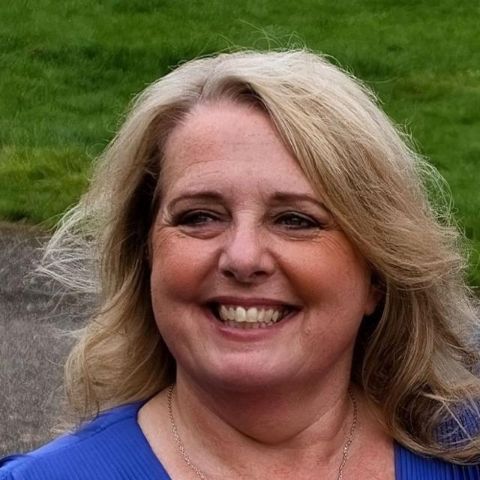
My name is Kim.
I'm a psychotherapist specializing in nervous system regulation.
Neuroplastic symptoms,
Trauma-informed care and self-compassion based approaches.
For people who experience big sensations.
Chronic neuroplastic symptoms.
Those of us that have an overprotective nervous system.
Stress.
I choose my work to be grounded in kindness.
Self-compassion,
Clarity and the belief that our nervous system is doing its best.
Even when it feels overwhelming.
So I've created this series.
For self-compassionate introduction to neuroplastic symptoms,
Neuroplastic conditions.
We'll explore what neuroplastic conditions are.
Why the sensations could feel so big.
Why the nervous system becomes overprotective.
And how self-compassion can begin to soften these patterns.
Each episode includes a soft.
Neurodiverse friendly practice.
To help our bodies to feel safe enough to settle.
You don't need to get anything right.
You don't need to push or to strive.
You don't need to perform.
I invite you just to arrive.
I invite you to allow yourself to be held by the pace.
The tone of my voice.
And the softness of this space that we create together.
Phobia begin.
Is just a gentle note.
I'm not a medical doctor.
I'm a trained psychotherapist.
And this series is for education and understanding and for emotional support.
It isn't a substitute for a medical assessment.
Or diagnosis or treatment.
If you have bodily symptoms that concern you,
It's truly important that you seek the opinion of a qualified medical doctor.
So neuroplastic conditions and symptoms.
Our nervous system.
I invite you to explore more of this work.
That I've taken lifetime exploring.
You're welcome to listen to my other practices here on Inset Timer.
A pressure from me.
There is no time frame.
Simply allow and follow what feels supportive for you.
So we're gently going to express and explain what neuroplastic symptoms and conditions are.
A little bit of background.
About.
What I shall be discussing.
In this blog series.
Many people living with these symptoms.
Symptoms that come in the body are unexplained.
And these symptoms can be anything such as fatigue,
Pain,
Sensory overwhelm,
IBS,
Many,
Many things.
Just remember that all of this is just an education.
This is my training,
Not as a medical doctor,
But as a psychotherapist.
So today we're exploring what neuroplastic conditions and symptoms are.
Gently,
Clearly,
With scientific facts.
Neuroplastic conditions and symptoms are real.
The symptoms are expressed in our body.
These lift experiences are created by the nervous system.
When it has become overwhelmed or overly protective.
So the symptoms can,
As I've said,
Include pain.
Fatigue,
Dizziness,
Gut issues,
Muscle tension,
Sensory overload.
Many,
Many other sensations.
That feel very physical.
Because they are physical.
So the sensation that you're feeling is very real,
That raw data is real.
But because all medical disease and structural damage has been ruled out,
It can be a neuroplastic condition.
I'm giving you time just to allow that to land.
Softly.
So you can have sensations in your body,
Big sensations,
And they truly are there.
But they're not caused from a physical source.
So the sensation is real.
The dizziness,
The fatigue,
Pain,
The symptom is real,
But is not caused when it's neuroplastic by structural damage or disease,
Because these would already have been ruled out.
Before we get to this stage.
So all of my work.
Is through a lens.
Grounded in your plasticity.
Polyvagal theory and the science of nervous system dysregulation.
Your symptoms in your plastic conditions are real.
They are brain-based.
They're not imagined.
And they can change.
These symptoms arise when our brains interpret a normal signal.
And See it,
Sense it,
As potential danger.
The nervous system amplifies,
Distorts or generates sensations in attempt protect you.
So this is not all in your head.
It is not imagined.
This is your nervous system doing its best.
Even when your body is already safe enough.
So it's like a false alarm going off.
Now hearing this may bring up all sorts.
Of emotions and feelings.
You might feel relief hearing this.
You might feel anger or doubt.
Or frustration.
You might feel a mix of both.
All of those.
Are welcome here.
So this work.
Covers neuroplastic pain.
Neuroplastic conditions.
Brain-based symptoms.
Functional symptoms.
Central sensitization.
Medically unexplained symptoms.
Mind-body conditions,
And the old phrase we used to use is TMS.
So again,
I'm saying the symptoms are not all in our heads.
They are actually very real symptoms,
But it is not from structural damage or disease.
These symptoms,
As I've said,
Are very real and often debilitating.
But they're also reversible.
Because the brain is capable of neuroplasticity.
Changes and connections.
Just allow yourself to come back to you.
Take a sleepy,
Slow breath.
Allow your chest to soften.
Allow your hands just to rest gently.
As you allow this information to permeate through you.
Common neuroplastic conditions can include chronic pain,
Migraines,
Fibromyalgia.
Chronic fatigue.
Functional neurological symptoms,
IBS.
Got brain dysregulation,
Dizziness.
Symptoms can be linked to trauma.
And burn out.
So in neuroplastic conditions,
The brain has learned to interpret it.
Safe sensations as dangerous.
This is not psychological.
It is neurobiology protecting you.
Because the brain's primary job is survival.
When it perceives threat,
It turns up the sensitivity dial.
So the sensations that you're feeling.
Become louder or heavier.
Pain becomes more intense,
Fatigue heavier,
Muscles tighten,
Digestion slows down,
Sleep may become disrupted.
And sensory input may become overwhelming.
We may feel just one of these sensations or many of them.
This is the brain's danger response.
Often linked to central sensitization.
And hypervigilant neuroception.
It's an unconscious process detecting threats.
So through a polyvagal perspective.
Your autonomic nervous system.
Is constantly scanning.
For cues of safety or danger.
And in neuroplastic symptoms,
It may be that we've got stark.
In an overactive state.
A fight or flight?
Or maybe the freeze and shut down with the fatigue.
Dissociation,
Exhaustion.
So neuroplastic symptoms often arise when our systems,
Nervous systems have become stuck.
In sympathetic activation.
Or dorsal vagal shutdown.
So just allow yourself.
To receive that information.
You may be feeling a reaction within you.
Just allow that to dry.
Reaction to be with you.
Allow it to flow through you.
Once again,
Taking a slow breath.
I invite you to breathe in through your nose.
And when you're ready,
Exhale through your mouth.
Perhaps in through your nose,
The count of three.
And when you're ready,
Exhale for the count of six.
So you're allowing the out breath to be longer than your in breath.
So you're inhaling for one.
Tune.
Three.
Exhale 1,
2,
3,
4,
5,
6.
Inhale 1,
Two three.
Exhale 1,
2,
3,
4,
5,
6.
Inhale for 3.
One.
Three.
Exhale 1,
2,
3,
4,
5,
6.
Just allow your breath.
To be.
Gently longer the exhale.
Gently with me.
This is a little bit more information I would like to be able to share with you if I can.
Each of our nervous systems are shaped by experience.
By stress.
By predictive processing.
Maybe shaped by trauma.
All fair.
Perfectionism.
It may be shaped by our neurodivergent sensitivities.
And the way we process the information around us.
All of that are the ways that we've learned to cope.
Sometimes though our nervous system become overwhelmed.
And with neuroplastic conditions and symptoms.
The nervous system is trying to protect us by creating sensations.
To get our attention.
Because there is no English for our body to speak to us in.
It communicates with us with raw data of the sensations.
None of this is a failure.
None of this is weakness.
It is not your fault.
You are not to blame.
It is a sign of a heightened nervous system sensitivity.
It's not damage It's a sign of overwhelm.
Lot of danger.
Is a sign that your nervous system is trying to do its best for you.
So just pause here for a moment,
Continue with the inhalation if you can for three.
Exhale for six.
So just allow your body to pause.
Allow yourself to hear the suggestions that I've made.
And that gentle grounding practice of inward painting for three.
Exhaling for six.
And having three.
Exhaling for six.
In three.
And exhale for six.
And if you wish.
To join me in a gentle somatic practice.
I invite you to bring your awareness to one place in your body that feels neutral.
Where there is no sensation.
Of pain or overwhelm,
If that's possible.
Maybe there's a place in your body that feels slightly comfortable,
So maybe it's a place on your hand.
Or maybe on your back.
But maybe you just concentrate on your breath.
And that's fine.
So allow your attention to rest.
On this part of your body.
Softly.
No forcing,
No analysing.
Just noticing.
This is your anchor.
A place that reminds your nervous system.
That not everything is high alert,
That not everything is danger.
And you may even say to yourself.
In the weft lead.
I'm here with you.
I may have these sensations.
These sensations are real.
And just okay to feel.
You may choose to say to yourself,
We can meet this gently.
We're not doing anything wrong.
Just say to yourself,
I'm here with you.
The sensation is real.
And it's okay to feel guilty.
Allow these words to land.
Allow them to be offered with self-compassion and kindness to your nervous system.
Maybe noticing any small shifts.
A soft name.
A sense of.
Being slightly more held.
If nothing shifts,
That's okay.
Just practicing it.
Is the ship.
Your teaching on nervousness is safe enough to settle.
Because self-compassion kindness and safety help you.
To reshape our nervous system.
So I have suggested.
That our nervous system can get into patterns of being heightened alert.
But if we've learned these patterns of self-protection,
And the symptoms of tension,
Pain,
Shutdown,
Fatigue,
Anxiety.
They're not failures,
They are learned survival strategies.
They've been the body's best attempt to keep you safe.
But because these patterns were learned,
They can be unlearned.
They can be softened and rewired.
And replaced with new experiences.
You can create new pathways,
New possibilities.
Your nervous system is not stuck.
It is adaptable,
Responsive and always listening.
And when we talk about rebalancing our nervous systems,
Perhaps we imagine big breakthroughs,
The kind that arrive with force and clarity.
Body nervous system work.
Often the most powerful shifts are usually those quiet ones,
The really subtle ones,
The ones that happen when the body finally feels safe enough.
To be.
I will continue to share with you deceptively simple practices.
But with repeated practice.
They can create profound change.
Each practice may only take a few minutes and it requires no equipment.
And yet it speaks directly to one of the most influential systems in your body.
Your fake is bad.
And especially those living with neuroplastic conditions.
These exercises can become a doorway back to regulation and connection.
And a felt sense of safety.
Thank you for spending time with me today.
For this evening.
Continue to allow yourself to take a slow breath.
Self play.
Inhaling with a slightly longer exhale.
If you want to soften further.
Allow your body to continue to feel supported by whatever is holding you.
I thank you because you're moving through this information with gentleness,
Curiosity and courage.
Understanding neuroplastic symptoms is not about fixing yourself.
It's about meeting your experience of where you are.
With kindness.
And allow your nervous system to feel safe enough to soften.
So your sensations are real,
Your experience is valid.
Your nervous system is doing its best.
You're not doing anything wrong.
And before we close,
It's just a gentle reminder.
I'm not a medical school doctor.
I am a psychotherapist.
And the series that I'm creating is for education,
Understanding and emotional support.
But it isn't a substitute for medical assessment.
Diagnosis or treatment.
If you have symptoms that concern you.
Please seek the opinion of a qualified medical doctor.
But it is with deep gratitude.
I thank you for being here with me.
Thank you for meeting yourself with kindness and self-compassion.
And thank you for allowing me to accompany you today.