Welcome.
I invite you to arrive just gently and slowly.
There's no pressure for performance.
Just invite your presence.
Encouraging you to take a slower deeper breaths if you can Maybe inhaling through the nose.
And exhaling through your mouth.
Allow your shoulders to soften.
Let your hands rest wherever they naturally fall.
Allow your body to be supported by whatever is holding you.
Maybe your chair,
A bed,
Sofa,
Floor,
Yoga mat.
Nothing needs to change.
Just inviting you to be here.
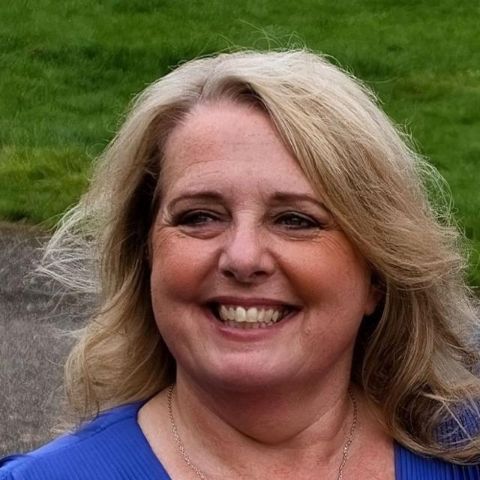
My name is Kim and a psychotherapist specializing in nervous system regulation,
Neuroplastic symptoms.
And today i'm inviting to share with you information around those of us that have had chronic neuroplastic symptoms.
My work is grounded in self-compassion,
Kindness and clarity.
And the belief that our nervous systems are doing the best that they can.
Even when we feel completely overwhelmed.
So I'm creating a series around neuroplastic symptoms and sensations and how and why the nervous system can become overprotective.
Each episode is written in a neurodiverse friendly way.
To help those of us.
That take information in,
In small bite-sized chunks.
Just allow yourself to be held by the pace and the tone of this space that we're creating together.
Just a gentle note,
I'm not a medical doctor,
I'm a psychotherapist.
And this series is for education.
And we're looking through the lens of polyvagal theory.
Neuroplasticity.
And I'm asking if you have.
Physical symptoms that concern you.
The sessions were.
Running together.
Is not instead of you seeking the opinion of a qualified medical doctor.
So it's just for an understanding and background and a little bit of support.
And today we're talking about neuroplastic symptoms and why they feel so intense at times.
And you're very welcome to look at my other videos.
Offerings on inset timer there's plenty of free resources because i genuinely want to support those of Us.
That have been experiencing these physical symptoms that have no explained calls from a physical illness or injury.
So neuroplastic symptoms.
Can be symptoms such as chronic pain,
Chronic fatigue,
Dizziness,
Gut issues,
Migraines,
Many,
Many,
Many other symptoms.
But how can I feel so intense?
If they're not from a biomedical cause.
It's a deeply understandable question.
And the answer lies.
In how the nervous system has learnt safety.
How it has become stressed and how emotional expression may have been blocked.
So for today we're working on the fact that our physical bodies have got really strong sensations.
When our stress cycle has become unresolved.
And we've gone into fight or flight,
So we've been activated in our nervous system.
Or if it's become too much,
We go into that shut down,
That freeze mode.
There are more nuanced ideas for me to share with you,
But today this is just a beginning.
So.
.
.
When we are in a heightened state of fight or flight for too long,
Or in that shutdown freeze mode.
There's a stress cycle that's unresolved.
And sensations can be expressed in the body,
As I've said,
With sleep disruption,
Headaches,
Fatigue,
Pain.
And these symptoms are all incredibly real.
And they are physical but not from a biomedical cause.
They've been produced.
By the nervous systems.
Dangerous alarm.
These symptoms are not imagined or exaggerated and they're not made up or all in your head.
The intensity reflects the intensity of Active survival response.
That is firing again and again and again.
Notified this at the moment distorts or generates sensations in an attempt to protect you As I've said,
This is not all imagined,
This is not all in your head.
You are genuinely experiencing these symptoms and they can be incredibly strong,
Incredibly strong.
This is your nervous system doing its best.
It's trying to protect you,
As I said.
Even when your body is already safe.
It's perceiving through our senses,
Externally and internally,
That we're not safe.
It set off an enormous alarm bell.
And that alarm bell is ringing all the time.
And that can make our nervous systems sensitized.
In a simple analogy,
The volume knob has been turned up.
Sensations,
Signals from the body to the brain that would normally feel moderate suddenly feel incredibly enormous,
Incredibly powerful.
Signals that would normally feel neutral suddenly feel uncomfortable.
Signals that would normally feel mild and suddenly feel overwhelming.
So let that land.
So neuroplastic symptoms are real.
They can be incredibly intense.
But then not from.
Physical or medical cause because you will have already ruled those symptoms out.
In addition.
The brain uses many ways to process.
At its simplest level.
Predictive processing.
So when we've experienced situations before Our sensations can be based on that memory.
Of fear,
Or expectation.
Or past experiences.
So if our nervous system has learned to expect A perception of danger.
It will produce in neuroplastic symptoms and conditions big sensations to get your attention.
This does actually mean that you're in danger.
But the alarm is being.
Heightened through the sensitivity of the nervous system because your nervous system cannot speak to you in English.
It communicates with you through sensations.
So if a physical injury has been brought out by your medical doctor,
And you've had the tests.
Intensity doesn't equal physical injury.
But what it does reflect The intensity is a reflection of the overwhelm of your nervous system.
It's like a loud smoke alarm.
A smoke alarm doesn't prove that there's a fire.
It proves that maybe an alarm's gone off.
Because it's too sensitive.
There is actually no fire there.
And our nervous systems can be the same.
So just take a slow breath.
Allow your jaw to loosen.
Allow yourself to breathe more deeply.
As you allow yourself.
To process some of this information which you may be hearing.
For the first time.
So the symptoms are real.
And they're produced by the body's danger system.
It's not imagined or exaggerated and it's not all in your head.
But the hopeful poll And if you're brain and nervous system has done this to protect you if it's learned how to protect you then it can unlearn this too.
So change can happen.
Through self-compassion.
Through very simple somatic practices.
Because there you're inviting and teaching your brain that you're safe now.
And that you don't need these symptoms to survive.
Self-compassion and callingness.
And safety help reshape your nervous system.
Gentle somatic practice.
To help.
You tune back in.
To the fact that your body has sensations.
And to down regulate the intensity of the sensations if you've gone into your fight or flight state.
Or to upregulate them a little bit if you've gone into your shut down freeze mode.
Is just to bring an awareness a curiosity to just.
One sensation in your body.
Maybe something that is neutral or mild.
And just allow your attention to rest there.
Softly.
Not attributing a story or an emotion or a meaning just.
Be with the sensation.
You may even want to lay a hand.
On that part of the body.
Where you feel the sensation.
So you're bringing this somatic attention.
To that.
Sensation what's real that you're not attaching a story.
Or a meaning to that sensation.
You might even say inwardly my nervous system.
Has become overprotected.
I'm not broken.
The sensation is real.
And I can meet this gently.
So you're sending messages to your body.
Nervous system.
Beginning to create new pathways.
Supporting your body.
To here,
Safety to hear messages of safety.
That the sensation is real that you're safe enough to feel it.
And it is a simple sensation flowing through you.
And your nervous system is trying to protect you.
Allow your body.
To hear safety.
Allow the self-compassion this kindness.
To reshape.
Your nervous system Breathing deeply.
Inhaling through the nose.
Exhaling through your mouth.
Inhaling through the nose.
Exhaling through the mouth One of the most encouraging truths about the nervous system.
That if Our nervous systems have learned a pattern.
This pattern of protection that's coming out of symptoms.
It can also unlearn that pattern and learn a sense of safety.
And allow your body to know that it can change,
That they can be unlearned.
With those connections.
Of patterns.
Can be unlearned because they were learned.
And every time you spend time doing the practice,
Of just being aware of a sensation and not getting caught up.
In the story you attach to it.
You're offering your nervous system a tiny moment of safety.
And the somatic Moments accumulate.
They become new pathways,
They become new possibilities.
Because your nervous system is not stuck.
Is incredibly adaptable.
Responsive and always listening.
And with this support.
And what you choose to do,
You can learn to feel safe again.
And we're not talking necessarily about big breakthroughs,
The kind that arrive with force and clarity.
But in the nervous system work The most powerful shifts are usually those quiet ones,
The subtle ones.
The ones that happen when your body finally feels safe enough to soften.
The practice is consistent.
Seemed deceptively simple.
And it takes less than a few minutes and requires no time.
No equipment.
Thank you for spending time with me today.
Let yourself take a slow deep breath.
A beautiful inhale through the nose.
And a beautiful long exhale through the mouth.
Let your body feel supported.
By whatever is holding you.
You've moved through today's.
Practice with gentleness,
Curiosity and courage.
Even if it doesn't feel like courage.
Understanding neuroplastic symptoms is not about fixing yourself.
I'm suggesting about you meeting your experience with kindness and self-compassion.
And allowing your nervous system to feel safe enough to soften.
Your sensations are real.
Your experience is valid.
And your nervous system is doing the best that it possibly can.