Did you know that by nature,
Any breath control practice,
Any pranayama practice,
Is a form of disturbance?
We can use the breath to disturb or to affect the body,
The nervous system,
The state of being,
In ways that are supportive or in ways that are less so.
But anytime you manipulate,
You change your breath,
You're intentionally seeking to create a shift of some sort.
We'll work with samavritti pranayama as a send-off into meditation or mindfulness.
Start by getting comfortable.
You can,
Again,
Sit,
Stand,
Lie down,
Take the support you need.
No one's watching,
No one's judging.
So choose comfort and ease over what you think you should do.
There are many definitions of what samavritti means.
Sanskrit is a beautiful and nuanced language.
Sama is generally agreed to be same or equal,
But vritti has many different meanings depending on context.
One of my favorite definitions for vritti in relationship to this particular breath technique is waves or ripples of disturbance,
Like a whirlpool.
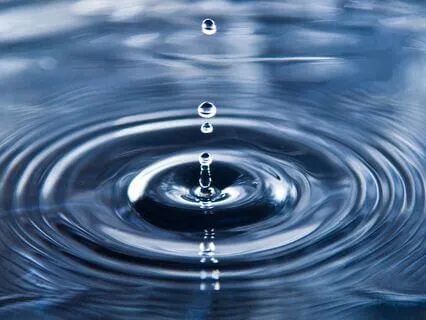
You can imagine the calm surface of the water.
You can do this with your eyes open or with your eyes closed.
Maybe picture a place you've been in nature,
A beautiful place with still water.
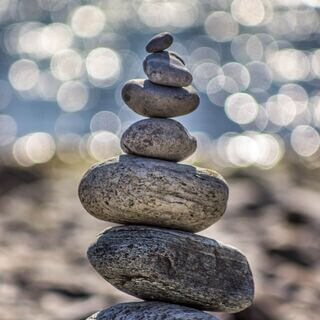
And imagine what happens if you were to drop a rock into the water.
Picture the ripples gently emanating out from that center point.
Or you can imagine a playful being,
A child,
An animal,
Or a playful adult spinning around in the water,
Creating greater disturbance,
Dragging arms or paws through the water's surface,
Creating,
Yes,
Ripples,
But a different sort.
Most of the time,
Our breath is unconscious,
But in mindfulness practice,
We seek to make the unconscious more conscious more often.
So today,
By using some disturbance to the breath,
By modulating it slightly,
I'm inviting you to create the sort of ripples,
The sort of waves,
The sort of disturbances that you need for yourself today.
And only you can know that.
As before,
This practice will begin with guided work with the breath,
And then I'll invite you into a slightly longer period of mindful awareness.
Once you are primed on a nervous system level to be in a more receptive state,
Again,
If anything does not work for you,
Does not feel right,
Or you simply don't want to do it,
You're totally empowered to make that choice for yourself.
Begin by finding your grounding where you are right now.
Picture or look around the space you're in.
Take a moment to fully arrive here and now in this space you've carved out to care for yourself,
Despite all the ripples,
The disturbances in your life and in the world around you.
Whether you're in movement or in stillness right now,
Let yourself be this grounded center point.
Notice your breath moving in and out through your nose and observe how just with that invitation,
The breath begins to shift as if a tiny stone was tossed into the still surface of the water,
A slight ripple outward.
Then begin to invite your breath to slow and deepen slightly.
Drawing the breath deep into the lungs,
Engaging the diaphragm muscle,
And on the exhalation,
Returning to rest.
Notice the natural pace of this breath,
The approximate length of your inhale and exhale.
With Samavritti Pranayama,
You'll be intentionally evening out the length of inhale compared with the length of exhale.
You can begin to do that now,
Either approximating,
Even inhale and exhale,
Or if it helps your mind to have something to focus in on,
Count your breath,
Counting up to maybe four or five on your inhale,
Counting down from that same number on your exhale.
Move at a pace that is unhurried,
But not a strain.
When your mind wanders or you lose track of the breath,
Know that that's okay,
And that's even part of the process.
Whenever you notice that,
Return your attention to the very next inhale and the very next exhale.
Imagine again the stone dropped into the surface of the water,
Creating even steady ripples outward.
This is Samavritti Pranayama,
A gentle rippling,
A gentle disturbance.
This technique,
The even ratio of in-breath to out-breath,
Tends to have a very calming,
Soothing,
And balancing effect.
I'll offer you now the chance to play with a slight variation on this technique,
Or to choose to stay with even inhale and exhale.
If you'd like,
You can insert a slight pause at the top of your inhalation,
Then complete your exhalation,
Making the breath about as light as possible.
As long as the in-breath.
And at the bottom of the exhale,
Again,
A slight pause.
Then take a normal breath in and a normal breath out and observe.
What was the impact of holding the breath,
Of pausing,
Suspending briefly?
Did you notice,
Perhaps the ripples were moving at a different pace,
With a different intensity?
If you enjoyed that practice,
You can continue the even inhale and exhale with a slight pause at top and bottom of the breath.
You're always welcome to take a normal breath in between rounds of this practice,
Or to move continuously from one breath cycle to the next.
Whichever feels better for you.
Make sure there's no strain,
No struggle.
If it feels comfortable,
You can even extend the length of the pause.
The pause could even be as long as the breath itself.
So if you inhale for a count of four,
You might hold for a count of four,
Before exhaling for four,
And again,
Holding for four.
This is called box breathing.
It requires some mental focus,
And it balances out the soothing qualities of this breath,
With a somewhat activating quality of the breath suspension.
So if that's not what you want today,
Leave that part out.
Again,
Remember you choose the type of disturbance the breath causes,
The gentle ripples,
Or more of the whirlpool quality.
Enjoy a few more moments with your breath practice,
The Samavritti,
The box breathing,
Or some combination.
And now,
After your next exhale,
Let go of any control,
Any manipulation of the breath.
And rest in mindful awareness,
Simply observing.
Note where your attention is at this moment.
Note the state of your body,
Your breath,
Your mind.
And gradually invite in a more conscious breath once again,
Tuning into the somatic sensations of breath,
The air moving through the nostrils,
The expansion of the body with the breath,
The release of the body with the exhale.
And feel your contact with the support beneath you,
And where you are in the room,
Reorienting gently.
If you like,
You can look around or picture the objects in the room.
Take a final moment here to notice how it felt to again use the breath as a tool for meditation.
Thanks so much for practicing.
Reach out with any questions,
And I'll be with you next time.