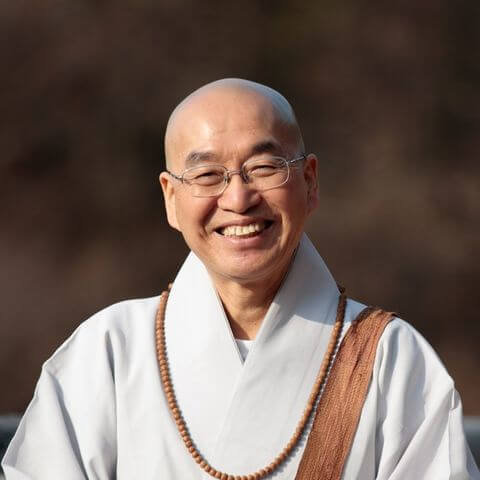
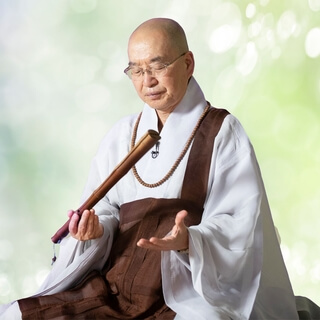
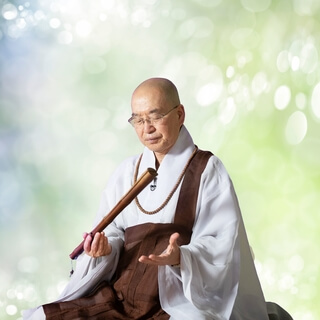
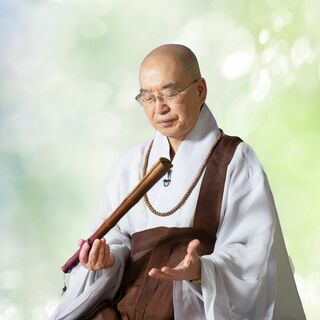
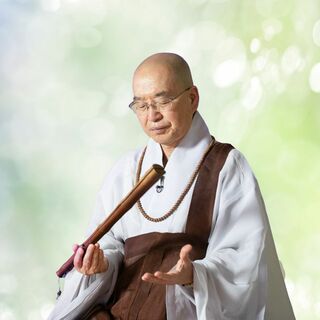
We will begin the online meditation with Venerable Pham Nunsanim shortly.
Before we proceed,
We will meditate for a brief moment to calm our minds.
We will begin the online meditation with Venerable Pham Nunsanim.
We will begin the online meditation with Venerable Pham Nunsanim.
Hello,
I am Il-Jil Gan-Chal,
Welcome to the channel.
Hello,
How was your last week?
I was in Korea for a long time,
But I am still in Japan.
Where I am today,
In the southern part of Korea,
Is very cold.
I am very happy to be here today.
It is the first time I saw the water freeze on the ground this year.
I was in Korea for a long time,
But I am still in Japan.
So it was chilly throughout the day,
So even today,
Even right now,
It is actually kind of cold.
I am very happy to be here today.
This morning I spent time chopping wood to get the woodlings to feed into the furnace we just built.
I am very happy to be here today.
How did you spend your weekend?
I spent a lot of time here.
Let's look at the questions.
There are events in my past that I now consider to be embarrassing or shameful.
Frequently during my daily life these days,
Particularly during meditation,
Memories of these events come unbidden to my consciousness.
Do you have suggestions on how to stop thinking about these memories or to keep these memories from causing me pain and suffering when they come?
I am very happy to be here today.
I am very happy to be here today.
That's because you are regretting what you did wrong previously.
I am very happy to be here today.
To regret something you did wrong previously.
To regret something you did wrong previously means you don't think you are that person or as bad as that person who committed that deed.
So it is hard for you to acknowledge that you are that bad person.
When I say bad,
I mean something that could have been schoolgirl or snack.
But when I say bad,
I mean that humanapache.
So the person you consider yourself is a good person.
However,
The person that's in reality,
That's yourself currently,
Doesn't quite match up to the ideal yourself.
So that's why you're kind of embarrassed or shameful about who you really are.
Because the person you consider yourself is a good person,
And the person you consider yourself is a good person,
And the person you consider yourself is a good person,
You can't really accept it.
So it's important for you to be able to accept,
To throw away the illusory you or the ideal you that you hold yourself up to,
And acknowledge and accept you as you are,
The reality you,
That can also commit bad things that you might end up regretting.
So if you did something wrong,
Repent and then don't do it again,
But you don't have to be embarrassed or ashamed about it.
If you have no purpose,
Then you're a bad person.
And if you don't have purpose,
Then you're a bad person.
If you don't have purpose,
Then you're a bad person.
So instead of accepting what you did in the past and kind of commit yourself not to repeat them again in the future,
You're kind of stuck in this stage in which you're constantly regretting what you did in the past.
I think that's the most important thing.
I think that's the most important thing.
I think that's the most important thing.
I think that's the most important thing.
I think that's the most important thing.
I think that's the most important thing.
I think that's the most important thing.
Because we're not wise,
We tend to make mistakes and commit mistakes.
Because we're not wise,
We tend to make mistakes and commit mistakes.
I'm not seeking to rationalize whatever mistakes we make.
I'm just saying that the fact that we make mistakes is just a reality we live in.
Yes.
Because we're not wise,
We tend to make mistakes and commit mistakes.
Even that me,
That me that commits these mistakes,
Even that me should be accepted and acknowledged.
Because we're not wise,
We tend to make mistakes.
And get up from where you fell and move forward.
I'm not wise,
I'm not wise,
I'm not wise.
The way you can actually kind of address this during meditation.
So if these memories keep coming out during meditation,
Don't pursue or follow these memories or thoughts,
But focus on the breath.
If these memories are causing you pain and suffering,
That means you already lost focus on the breath and you're kind of pursuing them.
So maintain your equanimity and calm and whatever memories come unbidden,
Do not imbue them with any meaning but keep focus on the breath.
This memories will keep on coming and will try to take you away.
However,
Do not let them grab you but keep on your focus on the breath and those thoughts will eventually disappear.
But then it will come again.
Once again,
Do not imbue them with any meaning but it will keep coming.
However,
If you're able to maintain equanimity and not react emotionally and be able to maintain your focus on the breath despite these thoughts arising,
That eventually these thoughts and memories will always come but you won't have that emotional reaction and you won't have that pain and suffering associated with it.
It will just be a memory.
So in other words,
You'll still have the memory of the action itself,
However,
The associated emotions will not be there.
Next question,
Please.
I just came back from a 12-day face-to-face meditation workshop.
When I practice with you every Sunday,
Can I practice Vipassana or should I stick to Anupana?
I'm not sure if you can do that.
I'm not sure if you can do it with Vipassana or not.
I'm not sure if you can do it with Anupana or not.
No,
Vipassana is not a part of me.
You can engage in Vipassana.
No,
But Anupana is a part of me.
Because Anupana is actually a part of Vipassana.
I can do it with Anupana.
I can do it with Thiravata.
So Vipassana is the mainstay of the discipline of Theravada Buddhism.
In Jain Buddhism,
There are many methods of training.
However,
There are other varieties of training methods,
Or methods of practices that are practiced by Mahayana Buddhism.
Yes,
Jain Buddhism.
In Jain Buddhism,
There are many methods of training.
In Jain Buddhism,
Of course,
There is meditation training.
In Jain Buddhism,
There are many methods of training.
In Jain Buddhism,
There are many methods of training.
So if you engage in what he mentioned,
Jamsana training,
Meditation training,
While engaged in Vipassana,
Anupana,
That actually differentiates the two practices.
However,
Anupana and Vipassana essentially are the same training practice.
The Vipassana training actually teaches you the four ways of recognizing something,
Four stages of mindfulness.
First is the recognition or sensitivity to the body.
The second is the sensitivity to your emotions.
The third is the sensitivity or observation of the mind.
And the last is the observation or recognition of the Dhamma,
The truth.
This is called the fourfold stage of establishment of mindfulness or meditation training,
And there is a sacred text that is associated with this.
However,
The observation of the body or the physical things is divided into further subtexts.
And first is the sensitivity to the breath,
Observation of the breath.
The second is the observation or sensitivity to your own emotions.
The third is the observation of the parts of your body.
The fact that different elements make up your body.
So basically the four elements,
The earth,
Water,
Fire,
Wind,
Air,
That actually your body,
Once it dies,
Goes back to these elements.
That there is no permanence to any of these elements.
And then you observe where it's sensitive to different organic parts of the body.
The third is the sensitivity to the body.
The third is the sensitivity to the body.
Basically you become aware of the different organs of the body,
Whether it's stomach,
Small,
Large intestines,
What not.
And in order to realize the impermanent nature of all these organs.
You also observe the nine steps it takes that your body to decay and become earth itself after death.
Why did we observe this?
We realized that there is nothing there in the body itself for you to attach yourself to.
And to kind of free yourself from the attachment to your own body.
So what I just explained is the observation of the physical body.
And the first thing from all the steps is the observation of the breath.
The first effect that a breath practice observation has is to calm your body and mind.
So taking this random,
Constantly distracted mind and being able to make it focus to a single point.
If you are not aware of the breath,
You can see the breath.
You can see the breath.
So taking just the breath phase of this overall training is called anabana.
Or in China,
In Korea,
It's called sushikwan,
Basically meaning the same thing,
Observation or practice of the breath.
And there is a special training that is set aside on the observation of how the body decays.
That's called pek guo guan,
Which is the observation of how the body turns into a skeleton basically.
This is a very effective practice method for somebody who is too attached to the body.
This is a very effective practice method for somebody who is too attached to the body.
So including all of these,
Right,
Observation of the body,
But also the emotions,
Also the mind and the truth itself is called vipassana.
So you observe the breath while sitting down and your sensitivities.
And as you move,
If you move,
You become observant of the emotions.
And also become observant of the emotions.
And also observant of your own mind.
So whether you're sitting down or moving around,
Being mindful or awake to any type of reaction in the body,
That's vipassana training.
And if your observation of the breath becomes really deep,
It becomes really easy for you to become aware of everything else happening.
So if you become well versed in anapana,
The breath practice,
Then the rest of vipassana comes along much easier.
And if you engage in a five days or ten days kind of a longer consistent meditation training,
We'll go from anapana to vipassana.
And since we're engaged in a once a week training and we have a constant influx of beginners,
That's why we're only engaged in anapana.
But the questioner,
If you want to engage in vipassana meditation training,
There's no problem at all.
Next question.
The voice and the breath.
If you are stuck on an emotion or thought,
That already means that you lost focus on the breath.
If there is a sound from the outside and you find yourself kind of focusing on the sound,
Which means that you already lost the focus on the breath.
However,
Even if you're focused on the breath,
You may register a sound from the outside.
So likewise,
You can have a temporary thought that kind of arises.
But if you're able to maintain focus on the breath,
Those thoughts will expire itself very quickly.
And other thoughts will come,
But they'll also expire.
You'll have a constant cycle of something arising,
Then expiring.
But if you have one piece of thought that kind of lingers,
That means you already lost focus on the breath.
Of course,
If you purposely engage in a rough breath,
Then I guess it's possible for you to maintain focus on the breath while you also have a lingering thought.
However,
Then you kind of take away from the original intent from the breathing meditation practice.
So since you're trying to engage on a really subtle movement of the breath on the tip of your nose,
But at the same time being focused on the pain in the leg,
It's meaningless.
So in other words,
If your thoughts kind of arise and expire quickly,
That means you are maintaining focus on the breath.
However,
If there's a thought that lingers,
That means you already lost focus on the breath.
And with that,
We shall conclude.
Strain your posture.
And relax your body and your mind.
Ensure that you have this space of the mind,
The idol of the mind.
Do not try to desire to do well.
Do not put forth an effort to do well.
Do not tense.
Do not be lethargic or lazy.
Do not express an intent whatsoever.
In a relaxed state,
Just focusing your mind on the tip of your nose.
And you are able to observe the subtle sensitivity of the skins around your nostrils if the breath moves in and out.
And if there is an intent behind your observation of the breath,
And you tend to tense up,
Then you become fatigued and you lose that focus.
You are just observing.
However,
You frequently lose your focus because of various distractions.
Then just observe that you have lost focus.
And then regain that focus.
Do not regret.
Do not give up.
Do not make an effort not to lose the focus.
You are just observing the breath.
If you lose the focus,
Regain the focus.
If you do not have the focus,
You will not be able to express your focus.
The most important point of this practice is not to exert any effort in the midst of relaxation of the body and mind.
That's it.
Let us begin.
Let's do it for 30 minutes today.
Let's do it for 30 minutes.
Let's do it for 30 minutes.
Let's do it for 30 minutes.
Let's do it for 30 minutes.
Let's do it for 30 minutes.
Let's do it for 30 minutes.
Let's do it for 30 minutes.
Let's do it for 30 minutes.
Let's do it for 30 minutes.
Let's do it for 30 minutes.
Let's do it for 30 minutes.
Let's do it for 30 minutes.
Let's do it for 30 minutes.
Let's do it for 30 minutes.
Let's do it for 30 minutes.
Let's do it for 30 minutes.
Let's do it for 30 minutes.
Let's do it for 30 minutes.
Let's do it for 30 minutes.
Let's do it for 30 minutes.
Let's do it for 30 minutes.
Let's do it for 30 minutes.
Let's do it for 30 minutes.
Let's do it for 30 minutes.
Let's do it for 30 minutes.
Let's do it for 30 minutes.
Let's do it for 30 minutes.
Let's do it for 30 minutes.
Let's do it for 30 minutes.
Let's do it for 30 minutes.
Let's do it for 30 minutes.
Let's do it for 30 minutes.
Let's do it for 30 minutes.
Let's do it for 30 minutes.
Let's do it for 30 minutes.
Let's do it for 30 minutes.
Let's do it for 30 minutes.
Let's do it for 30 minutes.
Let's do it for 30 minutes.
Let's do it for 30 minutes.
Let's do it for 30 minutes.
Let's do it for 30 minutes.
Let's do it for 30 minutes.
Let's do it for 30 minutes.
Let's do it for 30 minutes.
Let's do it for 30 minutes.
Let's do it for 30 minutes.
Let's do it for 30 minutes.
Let's do it for 30 minutes.
Let's do it for 30 minutes.
Let's do it for 30 minutes.
Let's do it for 30 minutes.
Let's do it for 30 minutes.
Let's do it for 30 minutes.
Let's do it for 30 minutes.
Let's do it for 30 minutes.
Let's do it for 30 minutes.
Let's do it for 30 minutes.
Let's do it for 30 minutes.
Let's do it for 30 minutes.
Let's do it for 30 minutes.
Let's do it for 30 minutes.
Let's do it for 30 minutes.
Let's do it for 30 minutes.
Let's do it for 30 minutes.
Let's do it for 30 minutes.
Let's do it for 30 minutes.
Let's do it for 30 minutes.
Let's do it for 30 minutes.
Let's do it for 30 minutes.
Let's do it for 30 minutes.
Let's do it for 30 minutes.
Let's do it for 30 minutes.
Let's do it for 30 minutes.
Let's do it for 30 minutes.
Let's do it for 30 minutes.
Let's do it for 30 minutes.
Let's do it for 30 minutes.
Let's do it for 30 minutes.
Let's do it for 30 minutes.
Let's do it for 30 minutes.
Let's do it for 30 minutes.
Let's do it for 30 minutes.
Let's do it for 30 minutes.
Let's do it for 30 minutes.
Let's do it for 30 minutes.
Let's do it for 30 minutes.
Let's do it for 30 minutes.
Let's do it for 30 minutes.
Let's do it for 30 minutes.
Let's do it for 30 minutes.
Let's do it for 30 minutes.
Let's do it for 30 minutes.
Let's do it for 30 minutes.
Let's do it for 30 minutes.
Let's do it for 30 minutes.
Let's do it for 30 minutes.
Let's do it for 30 minutes.
Let's do it for 30 minutes.
Let's do it for 30 minutes.
Let's do it for 30 minutes.
Let's do it for 30 minutes.
Let's do it for 30 minutes.
Let's do it for 30 minutes.
Let's do it for 30 minutes.
Let's do it for 30 minutes.
Let's do it for 30 minutes.
Let's do it for 30 minutes.
Let's do it for 30 minutes.
Let's do it for 30 minutes.
Let's do it for 30 minutes.
Let's do it for 30 minutes.