Welcome to the podcast for real-life heroines.
I'm your host Susanna Liller.
In each episode,
I talk with women who dare to be themselves.
Real heroines who take risks,
Both big and small.
They try new things,
Challenge themselves,
And take leaps into the unknown.
Together,
We'll hear stories of women stepping into courage,
Finding and using their voice,
And realizing the gifts they were born to give.
Let's begin.
Welcome.
Hello,
Everyone.
Welcome to the podcast for real-life heroines,
Where I am very privileged to talk with heroines about their journeys.
And of course,
We go on many in our lives,
And even many in different areas of our lives at the same time.
And today,
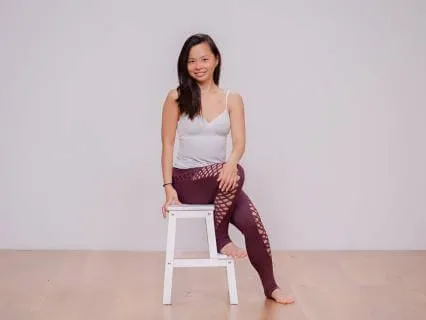
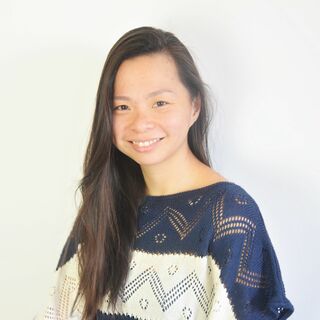
I'm honored to be speaking with Wenlin Tan.
Welcome,
Wenlin.
Thanks for the invitation,
Susanna.
It's my pleasure to be here with you.
Oh,
Of course.
And you're so welcome.
Let me say a few words about you,
And then we'll get into how we even connected and what you do.
But I want people to know that you are an interdisciplinary artist and an embodied listening practitioner.
And I'm definitely going to ask you some questions about what exactly does that mean?
You work at the intersection of participatory art,
Ecology,
And relational awareness,
And your practice explores listening beyond language through movement,
Rhythm,
Sensory attention,
And watershed environments,
Inviting more reciprocal ways of being with place and with one another.
So you draw from a background in behavioral health and psychology,
And over 15 years of facilitating groups across Asia,
Europe,
And the USA.
And you create grounded spaces for collective inquiry and transformation.
Your work is informed by the five elements in the creative cycle,
Which you use as a living framework for navigating creativity,
Transition,
And ecological belonging.
You're based in Turin,
Italy,
And your current research unfolds along the River Poe.
And I have to tell you,
Because we met because of the story you wrote about a skiff on the River Poe,
I just took a moment this morning and had to look,
What?
So what is the River Poe look like?
I have never been to Italy.
It is beautiful,
Beautiful.
We'll talk more about that.
And so yeah,
So you integrate embodied ecological practice,
Citizen science,
And collective sensing.
So where do we begin in all that?
And well,
Let me ask you after reading all that,
Which is all about you,
Where,
What's the thread you want to pull?
Where do you want to go with this?
We could start with the pole.
This is where and how we met.
I think it's also a great way of connecting and it is central to my work and even my life as well.
Right.
So,
So let's,
Can you explain how does the River Poe connect to how you and I met?
Yeah,
So I had the fortune to be a part of your writing competition for heroines,
Which is a wonderful writing competition.
And through the process of submitting a piece of writing,
Which had been actually working on for more over a year right now,
I think it started off as a series of blog posts and that I consolidated them.
And initially the idea was to write a memoir related to the water element and related to rowing and how it's not just a sport,
But actually it's really a way of relating to life,
Connecting with the more than human world.
Since rowing is something that puts us in contact very closely with nature and with ourselves and also with others,
If we grow with others.
And then through the process of joining a competition,
The format of the competition helped me really consolidate because there was a word limit instead of the long memoir that I had originally envisioned,
It was condensed.
And that made me really come to the essence of what the story is.
I wanted to convey about what it means to row and what it's like for me to go through that experience.
Great.
And so you won a prize in our contest and it's just so beautiful.
And I just had to,
I'm just going to,
If you're okay with it,
Read the first couple of lines.
It's called Silver Skiff,
A Love Story.
Three springs ago,
Passing through Valentino Park,
The most beautiful thing in the world came into my sight.
A single skull cutting through the poe.
The rower,
Boat,
River,
All elements as one.
The swirling thoughts from my failing marriage stopped,
But just for a moment,
I was mesmerized.
I knew I had to be on that boat and that single sculler was me.
So captivating.
And so tell us for people who might not know,
Well,
Why don't you tell us what you did,
What you did with that scull and why you were on that,
In that boat,
On the poe.
What is Silver Skiff about?
Silver Skiff is an annual single boat.
We call it a skiff.
It's a narrow boat that can accommodate one single person.
So instead,
There are various different ways of rowing.
You can row within two people,
Duos,
Quads and eights,
Usually with a coxswain at the front steering the boat.
Those are very much more common during college competitions.
And then there's the skiff as well,
Which is for a single person.
For me,
When I saw the skiff on the poe,
I felt immediately a deep connection with the skiff and I could not explain why at that moment.
I just knew I had to be on the boat.
And later on during that first year,
I realized it was because it embodied all the qualities of what it meant to really be with oneself,
Like learn to appreciate,
Love,
Care for myself,
And also cultivate all the other qualities of self-discipline that are related to rowing alone.
That when you row with someone else,
If you are low in motivation,
You can rely on the other person to motivate you.
When you are in the skiff,
You watch out on your own.
If there are branches,
If you are tired,
You are the one to push yourself.
For me at that time,
As I was going through,
As mentioned in the story of separation,
It was also a way of coming home to myself and a way of that separation as a passage,
Almost like a journey,
Perhaps a heroine's journey to coming into wholeness and wholeness on my own without another person.
Right,
And we talk about on the journey you get a call and that certainly was a strong calling for you.
And then you step over an imaginary threshold.
So for you,
That's like getting in the boat and starting to go and be in the competition.
Now,
I'm thinking before this,
You weren't rowing,
Right?
I mean,
You know,
So this is was totally new.
And you got yourself a coach.
And I think it's okay to this is a spoiler.
So spoiler alert,
Because your essay will be in my blog next month.
And and it'll be in the newsletter.
But you didn't do you didn't,
You made it through the competition.
But you didn't win.
And you had problems.
And you were unhappy.
And then your coach had to intervene.
And,
And what did the coach say to you?
Well,
Actually,
During the first year of the competition,
Where I endeavored the competition,
It actually became a really great metaphor for life.
Because for me,
I saw the competition simply as a chance for me to gain independence and really be able to do things on my own.
Like the single skiff is not something for the faint hearted.
There are so many rowers who row for years for decades,
And even at high levels,
And they never attempt the skiff just because it's not something that they're good at.
Or,
For example,
For that,
For the skiff,
It's very hard to balance in it.
And also,
As I mentioned,
From before,
You have to be really self reliant.
So it's not for everyone.
At the same time,
For me,
I wasn't looking to win,
I just wanted to complete the competition because the silver skiff competition is a world class competition contested by Olympic athletes.
And for me,
It was kind of an audacious idea.
Like I'm a beginner.
Why couldn't I do it?
But it for me wasn't about the timing.
It was like,
If I could just do it,
If I could complete this 11 kilometers on the river,
That would be kind of like in life,
I can really do anything on my own.
And I don't need to rely on anyone.
I know I can fall back on myself.
And that's the self assurance I needed.
And yet at the first year,
The coach who supported me at that time told me I should complete it within an hour.
It seemed like a really unrealistic time limit.
So that gave me a lot of stress.
And that also actually became a really interesting metaphor for life itself,
How very often you know,
We live life and there are people who tell us,
Oh,
You should do this,
You should make this choice in life,
You should follow step A,
B,
C,
You should hit these milestones in order to be worthy.
Right?
Yeah.
And then and comparing comparing to others all the time,
Right?
If he can do it,
Or she can do it that way,
I can and but that wasn't the way you finally came out and processed it all,
Right?
For you,
It had to do with play and joy.
Yeah.
Definitely.
Yeah.
For me,
It was the process.
It really was not the outcome itself.
It was the process of training for the competition,
Right?
And the actual process of doing the competition that for me felt like life itself as it was a healing journey for me as well,
Because I was,
As I mentioned in the story,
Separating from someone with whom is a very important person to me in my life.
And yet I knew in the next stage of my life,
It was not right,
I had to separate so that I could find that wholeness on my own.
Yeah,
Yeah.
Which I think also is part of your practice with the creative cycle,
And the wheel and harnessing the five elements,
Wood,
Fire,
Earth,
Water and air,
And you your practice,
How you help people is based on this structure.
And can you and I know it's,
It's a lot to describe in a few sentences,
But help us understand how you use that,
If you will.
So the five elements framework is a framework that can be found,
It's very ancient framework that can be found across various different countries,
And also different cultures.
And depending on which culture,
And which lens you're taking,
Sometimes it's four elements,
Sometimes it's five elements.
But the idea is generally the same.
And it goes back to this idea of how we are not just material objects,
But that there are forces or energies or even phases and transitions.
And so the primary framework I work with is the five elements that is rooted in Eastern philosophy.
And each of the five elements,
So that's a water element,
And in this case,
Related to the pole,
Silver skiff,
Rowing,
When we water a seed,
It takes root,
Begins to sprout,
And in due time,
It becomes a tree.
So water gives rise to wood,
Wood element,
When we chop wood,
It becomes fuel for fire.
So wood gives rise to fire.
And then when fire extinguishes that we can find the ashes of the earth.
So fire gives rise to the earth.
And then within the soil of the earth,
We can extract precious minerals and metal.
And so the earth element gives rise to the metal element.
And then on the cold surface of the metal,
What condenses is water.
So we complete the cycle.
And this cycle that I just described is the creative cycle.
And it also maps on to different energies as well.
So for example,
When we endeavor,
Or we work on something,
This could be a project,
This could be a life journey,
This could be a relationship.
It also maps on to each of these stages,
Starting with the,
For example,
The water element is the stage of gestating.
Also in our life cycle,
It's the very beginning of preconception when we're in the watery womb of the mother,
We're not manifest in the real world yet.
And yet we're there,
You know,
The idea is being conceived,
The baby is being conceived.
And it's midwifing the possibility for something to be brought into this world.
And then the moment when that is brought into this world,
For example,
Is the wood element.
So I work with my clients and also in various different one-on-one and also in workshops as well.
And we use this across various different disciplines to guide,
For example,
Each element also has specific sense organs associated with it and specific qualities,
Energies,
Water elements associated with right now,
As we're recording this live,
We're still transitioning out of winter season.
So very timely winter is associated with the water element.
It's the most inwards,
Introspective,
It invites us to hold space,
Be with ourselves rather than reach outside.
It's also associated with listening and the sense organ of the ear.
So I find that very timely.
And so my work is also very centered around listening.
The more scientific aspect of my work is I do mental health coaching.
I'm a certified mental health coach.
And so a lot of the work I do is also holding space for another person or for a group of a group in contact with the more than human world,
In this case,
Nature,
The greater environment,
Such as a river,
A forest,
The ecosystem,
How might we commune with ourselves and with each other to listen beyond what is being said on an explicit level,
Beyond just words.
I love that,
Wenlin.
And I,
As a former mediator,
So much of the process in helping people through Welcome.
Hello,
Everyone.
Welcome to the podcast for real life heroines,
Where I am very privileged to talk with heroines about their journeys.
And of course,
We go in on many in our lives,
And even many in different areas of our lives at the same time.
And today,
I'm honored to be speaking with Wenlin Tan.
Welcome,
Wenlin.
Thanks for the invitation,
Susanna.
It's my pleasure to be here with you.
Of course,
And you're so welcome.
Let me say a few words about you,
And then we'll get into how we even connected and what you do.
But I want people to know that you are an interdisciplinary artist,
And an embodied listening practitioner.
And I'm definitely going to ask you some questions about what exactly does that mean?
You work at the intersection of participatory art,
Ecology and relational awareness and your practice explores listening beyond language,
Through movement,
Rhythm,
Sensory attention and watershed environments,
Inviting more reciprocal ways of being with place and with one another.
So you draw from a background in behavioral health and psychology,
And over 15 years of facilitating groups across Asia,
Europe and the USA and you create grounded spaces for collective inquiry and transformation.
Your work is informed by the five elements in the creative cycle,
Which you use as a living framework for navigating creativity,
Transition and ecological belonging.
You're based in Turin,
Italy,
And your current research unfolds along the River Poe.
And I have to tell you,
Because we met because of the story you wrote about a skiff on the River Poe.
I just took a moment this morning and had to look what so what is the River Poe look like?
I have never been to Italy.
It is beautiful,
Beautiful.
We'll talk more about that.
And so yeah,
So you integrate embodied ecological practice,
Citizen science and collective sensing.
So where do we begin and all that?
And,
Well,
Let me ask you after reading all that,
Which is all about you,
Where,
What's the thread you want to pull?
Where do you want to go with this?
We could start with the pole.
This is when,
How we met.
I think it's also a great way of connecting and it's central to my work and even my life as well.
Right.
So,
So let's,
Can you explain how does the River Poe connect to how you and I met?
Yeah.
So I had the fortune to be a part of your writing competition for Heroines,
Which is a wonderful writing competition.
And through the process of submitting a piece of writing,
Which I'd been actually working on for more over a year right now,
I think it started off as a series of blog posts and I consolidated them.
And initially the idea was to write a memoir related to the water element and related to rowing and how it's not just a sport,
But actually it's really a way of relating to life,
Connecting with the more than human world,
Since rowing is something that puts us in contact very closely with nature and with ourselves and also with others,
If we row with others.
And then through the process of joining a competition,
The format of the competition helped me really consolidate because there was a word limit.
Instead of the long memoir that I had originally envisioned,
It was condensed and that made me really come to the essence of what the story is I wanted to convey about what it means to row and what it's like for me to go through that experience.
Right.
And so you won a prize in our contest and it's just so beautiful.
And I just had to,
I'm just going to,
If you're okay with it,
Read the first couple of lines.
It's called Silver Skiff,
A Love Story.
Three springs ago,
Passing through Valentino Park,
The most beautiful thing in the world came into my sight,
A single skull cutting through the poe.
The rower,
Boat,
River,
All elements as one.
The swirling thoughts from my failing marriage stopped,
But just for a moment,
I was mesmerized.
I knew I had to be on that boat and that single sculler was me.
So captivating.
And so tell us for people who might not know,
Well,
Why don't you tell us what you did,
What you did with that skull and why you were on that,
In that boat,
On the poe.
What is Silver Skiff about?
Silver Skiff is an annual single boat.
We call it a skiff.
It's a narrow boat that can accommodate one single person.
So instead,
There are various different ways of rowing.
You can row within two people,
Duos,
Quads and eights,
Usually with a coxswain at the front steering the boat.
Those are very much more common during college competitions.
And then there's the skiff as well,
Which is for a single person.
For me,
When I saw the skiff on the poe,
I felt immediately a deep connection with the skiff and I could not explain why at that moment.
I just knew I had to be on the boat.
And later on during that first year,
I realized it was because it embodied all the qualities of what it meant to really be with oneself,
Like learn to appreciate love,
Care for myself and also cultivate all the other qualities of self-discipline that are related to rowing alone.
That when you row with someone else,
If you are low in motivation,
You can rely on the other person to motivate you.
When you are in the skiff,
You watch out on your own.
If there are branches,
If you are tired,
You are the one to push yourself.
For me at that time,
As I was going through,
As mentioned in the story of separation,
It was also a way of coming home to myself and a way of that separation as a passage,
Almost like a journey,
Perhaps a heroine's journey to coming into fullness and wholeness on my own without another person.
Right.
And we talk about on the journey,
You get a call and that certainly was a strong calling for you.
And then you step over an imaginary threshold.
So for you,
That's like getting in the boat and starting to go and be in the competition.
Now,
I'm thinking before this,
You weren't rowing,
Right?
I mean,
You know,
So this is was totally new and you got yourself a coach and I think it's OK that this is a spoiler.
So spoiler alert,
Because your essay will be in my blog next month and and it'll be in the newsletter.
But you didn't do you didn't you made it through the competition,
But you didn't win and you had problems and you were unhappy and then your coach had to intervene.
And and what did the coach say to you?
Well,
Actually,
During the first year of the competition where I endeavored the competition,
It actually became a really great metaphor for life,
Because for me,
I saw the competition simply as a chance for me to gain independence and really be able to do things on my own.
Like the single skiff is not something for the faint hearted.
There are so many rowers who row for years,
For decades and even at high levels.
And they never attempt the skiff just because it's not something that they're good at.
Or,
For example,
For the skiff,
It's very hard to balance in it.
And also,
As I mentioned from before,
You have to be really self-reliant.
So it's not for everyone.
At the same time,
For me,
I wasn't looking to win.
I just wanted to complete the competition because the silver skiff competition is a world class competition contested by Olympic athletes.
And for me,
It was kind of an audacious idea.
Like I'm a beginner.
Why couldn't I do it?
But for me,
It wasn't about the timing.
It was like,
If I could just do it,
If I could complete this 11 kilometers on the river,
That would be kind of like in life.
I can really do anything on my own and I don't need to rely on anyone.
I know I can fall back on myself and that's the self-assurance I needed.
And yet,
In the first year,
The coach who supported me at that time told me I should complete it within an hour.
It seemed like a really unrealistic time limit.
So that gave me a lot of stress.
And that also actually became a really interesting metaphor for life itself.
How very often we live life and there are people who tell us,
Oh,
You should do this.
You should make this choice in life.
You should follow step A,
B,
C.
You should hit these milestones in order to be worthy.
And also,
Comparing to others all the time,
Right?
If he can do it or she can do it that way,
I can.
But that wasn't the way you finally came out and processed it all,
Right?
For you,
It had to do with play and joy.
Yeah.
Definitely.
Yeah.
For me,
It was the process.
It really was not the outcome itself.
It was the process of training for the competition and the actual process of doing the competition that for me felt like life itself.
It was a healing journey for me as well because I was,
As I mentioned in the story,
Separating from someone with whom is a very important person to me in my life.
And yet,
I knew in the next stage of my life,
It was not right.
I had to separate so that I could find that wholeness on my own.
Yeah.
Yeah.
Which I think also is part of your practice with the creative cycle and the wheel and harnessing the five elements,
Wood,
Fire,
Earth,
Water,
And air.
And your practice,
How you help people is based on this structure.
And I know it's a lot to describe in a few sentences,
But help us understand how you use that,
If you will.
Yeah.
So the five elements framework is a framework that can be found.
It's a very ancient framework that can be found across various different countries and also different cultures.
And depending on which culture and which lens you're taking,
Sometimes it's four elements,
Sometimes it's five elements,
But the idea is generally the same.
And it goes back to this idea of how we are not just material objects,
But that there are forces or energies or even phases and transitions.
And so the primary framework I work with is the five elements that is rooted in Eastern philosophy.
And each of the five elements,
So there's a water element,
And in this case,
Related to the pole,
Silver skid,
Rowing.
When we water a seed,
It takes root,
Begins to sprout,
And in due time,
It becomes a tree.
So water gives rise to wood,
Wood element.
When we chop wood,
It becomes fuel for fire.
So wood gives rise to fire.
And then when fire extinguishes,
We can find the ashes of the earth.
So fire gives rise to the earth.
And then within the soil of the earth,
We can extract precious minerals and metal.
And so the earth element gives rise to the metal element.
And then on the cold surface of the metal,
What condenses is water.
So we complete the cycle.
And this cycle that I just described is the creative cycle.
And it also maps onto different energies as well.
So for example,
When we endeavor,
Or we work on something,
This could be a project.
This could be a life journey.
This could be a relationship.
It also maps on to each of these stages,
Starting with,
For example,
The water element is the stage of gestating.
Also in our life cycle,
It's the very beginning of preconception when we're in the watery womb of the mother.
We're not manifest in the real world yet.
And yet we're there.
The idea is being conceived.
The baby is being conceived.
And it's midwifing the possibility for something to be brought into this world.
And then the moment when that is brought into this world,
For example,
Is the wood element.
So I work with my clients and also in various different one-on-one and also in workshops as well.
And we use this across various different disciplines to guide,
For example,
Each element also has specific sense organs associated with it and specific qualities,
Energies,
Water elements associated with right now,
As we're recording this live,
We're still transitioning out of winter season.
So very timely winter is associated with water element.
It's the most inwards,
Introspective,
Invites us to hold space,
Be with ourselves rather than reach outside.
It's also associated with listening and the sense organ of the ear.
So I find that very timely.
And so my work is also very centered around listening.
The more scientific aspect of my work is I do mental health coaching.
I'm a certified mental health coach.
And so a lot of the work I do is also holding space for another person or for a group or for a group in contact with the more than human world,
In this case,
Nature,
The greater environment,
Such as a river,
A forest,
The ecosystem.
How might we commune with ourselves and with each other to listen beyond what is being said on an explicit level,
Beyond just words?
I love that.
And I,
As a former mediator,
So much of the process and helping people through conflict is to help them with listening.
And you talk about embodied listening.
And it's,
It's not about listening to,
But listening with.
And I found that so fascinating.
And I wonder,
So when,
Can you give us an example?
So you're with a group and how do you,
And maybe you're,
Are you usually outside to do this,
To do embodied listening?
And how does that work?
So usually for embodied listening,
It depends on what past experiences,
Maybe a group would have had from before.
Let's say this group has not had any prior experience with regards to embodied listening experiences,
Or even mindfulness practices.
So we might start indoors.
We might begin with connecting with ourselves because every practice,
Connecting with others,
Anything external always begins from the self,
Just like also in rowing.
How you row with others is firstly how well you're able to row on your own.
Right.
Exactly.
With everything.
Yeah.
Yeah.
Um,
So I'm wondering,
So again,
With my work that I did with people in conflict,
I would talk about listening and make it a major piece of our work together.
And I'd ask people,
So think about all the people,
You know,
Do you have a person or maybe more than one who's really a good listener in your life that you really feel when you talk,
They're there for you,
And they're really taking in what you have to say.
And I will tell you,
I would ask them to raise their hand and not that many people could identify a good listener in their lives.
Do you find the same thing?
Yeah,
I think listening is really an art.
It also depends on the culture that you're from.
For example,
I've noticed just my personal experience moving from Singapore,
Where I'm from,
To Italy,
There are some cultures that I would say they favor talking over each other.
It really is very common at the dinner table,
You know,
If you don't,
If someone's saying something and you kind of like have to,
If you don't say and get your point across,
You won't really get the opportunity.
But then at the same time,
I think it depends also on the setting.
There are some opportunities that I think where listening would be a lot more valued and important,
But I generally agree with you.
It is a very much needed,
I think,
Skill that not many of us are aware of that.
Oh,
Just to listen.
A lot of people listen to respond and then they're already in response mode even before listening.
And also,
Again,
As you mentioned,
It's listening to rather than with.
So there's a difference in terms of the relationship,
How we relate to the other.
Listening with implies a kind of shared agency and a sense that we are together and I'm accompanying you.
Just like,
For example,
If we go to a concert and there is a vocalist and there is a pianist,
The pianist is accompanying the vocalist,
But they are complementary.
So neither is trying to overdo the other or trying to get their point across,
Like sometimes in arguments that is what happens.
They're not interrupting each other,
For sure.
But I,
Oh and I so agree with you and I think the United States,
Particularly now with the culture we have,
It's all about talking over each other and I think in my work what I realized was it was so important to listen actively to understand kind of what was going on underneath the words that the person was saying,
How are they feeling and just really both people or however many understanding where that person's coming from in that perspective.
And it takes time and you have to be patient.
Yeah,
I can relate to that as well,
For sure.
Yeah,
So of course I was interested to just this morning because I do,
I use insight timer for my transcendental meditation timing my 20 minutes in the morning and I've been doing this for a long time and I know you had told me that you were on insight timer that you had courses on there and you had followers on there and I thought I need to go in and look and it's great what you have in there and what was really fun to uncover was that you have a series of your own about interviewing women about their heroine's journeys.
So how did that come about?
When then how did you,
Because I don't meet that,
You know,
I hear a lot from people about the hero's journey and then lately it's been sort of putting down the hero's journey,
Which I can understand,
But heroine's journey,
Not so much.
So how did you get into that?
It was quite,
I would say coincidental and it happened,
It unfolded really unexpectedly about two to three years ago while I was here in Italy,
I met a friend and connected with her and she is also quite a non-traditional unconventional woman in terms of her career path.
This is a friend who is an artist and she is deeply passionate also about dogs,
About creation and her journey and her background.
She lives alone with four dogs for someone that's usually not quite,
I think,
Accepted.
Well,
Nowadays it's getting more accepted and so by chance we connected and then over a period of time somehow organically the topic of the heroine's journey came up because I had always been quite interested in mapping out and I believe there's some kind of archetype for like how our lives unfold and I'm always interested in different frameworks because a framework is like a pair of lenses or glasses that when we put on,
You know,
It helps to helps us to see the world in a different way and we see something that we may not have seen before so the heroine's journey was one such thing and at the time I happened to be teaching yoga at this studio which now is no longer around,
It's called Yoga Union and one of the co-founders of the studio,
She's an amazing person,
She's called Pandora Williams and she had shared her own journey with me and I am deeply really grateful to her because she is one of my benefactors.
When I first moved to Turin,
It's thanks to her that I started to get integrated,
I found work,
I connected with this land that was not originally mine and so I really resonated with her story and I told her,
Let's do something,
You know,
For Women's Day,
You should share your story,
Why is your story not on the website of Yoga Union,
More women need to hear this story and so what started off as that then became some interviews,
I also included a short story about my mom who to me is my first heroine as well even though she does not see herself as a heroine,
Yes.
Right,
Yes,
Well I have that and you probably know because of the writing contest and the conference I did last year,
We're actually doing it again in November and you should come from Italy and be there but it's all about getting women to recognize that they do have this story and it's important to share it and they are heroines so do you,
I have that issue that people don't like,
I don't call myself,
They say,
I don't call myself a heroine,
I don't see myself as a heroine and have you run into that too?
I think it's just because of the word hero or heroine and it doesn't,
It's not about gender,
I mean either word or whatever label,
It kind of has some kind of associations that perhaps we might have subtly gotten from social media or from the movies we've watched or the videos we've watched online and therefore some people might even,
I would say,
Dissociate themselves from the label.
For me,
How I like to see it is maybe the word protagonist might even be a better word.
I like to think of it as there's every one of us is a story or a river and but then there's and we are the main protagonist of our own story,
Right,
Like as we live it,
It feels like it's really our story and we're owning the story and that's the powerful part of writing the story as well,
Being able to tell it and choose very mindfully the words we want to use which then reinforces our felt and lived experience but then at the same time being able to,
That's why I love the creative cycle and the five elements that reconnects us with the more than human world where only I am only one small river of the great big river that is life itself and we are all intertwined like all these rivers flow into this the great big ocean or the great big sea,
Yeah,
So that's how I see it.
I love that,
I love calling it a river or yourself a river and your journey so I wrangle with the terminology.
In fact,
The last person that I interviewed,
Wendy Ulmer,
She's a writer and an author and has written several books for middle-aged children and she just rejects the word heroine and you know she said well I'm not a heroine but I'm a brave person and I'm courageous and which of course is what we're talking about so it is hard because of the connotations that people bring to it so I could call it the river journey,
The river journey.
Yeah,
It's a work in process figuring out how but I feel that women need help getting the fact that their story is important that they are the main protagonist of their story and would you agree that it helps to share them?
Of course,
For sure and I completely agree with you that the thing is depending on,
Let's take the example of my mom,
I think she has been a caregiver and in a supportive role for so much of her life,
She has this habitual pattern of putting down herself and thinking that I'm not a smart person,
I'm not an outstanding person,
I'm just an average person,
I don't have anything special to share,
No one needs to hear my story and that's okay and you can be a completely humble person living an ordinary life and you can be quietly extraordinary.
I feel that every person's story has significant insights for someone else to learn and I also feel that there's so much value in the telling of the story because every time we tell a story whether verbally or we write the story or we even think and visualize it,
It's a recreating of the memory and that also helps with the healing also if for example if there's been trauma in the past or in also let's say we are embarking on a journey and moving through a transition and maybe there are some values I've experienced this in the past that I was this kind of person but that was kind of due to upbringing or things that were out of my control and I was never really conscious of it.
Now that I'm conscious,
I want to choose different values to embody,
I want to be braver,
So I choose different words to describe myself right now and I write my story in a different way and that's why for me your competition was really helpful because through the rewriting as well being very intentional with the words I chose that affirmed me and that gave me also helped me really I would say cement my identity and my path forward as well the path that I've already walked up to now and it is I would say it is a journey of identity you know we learn sometimes through unfortunate situations what who we are and what we like and what we don't like and the people that come into our lives it's all we're sifting through them as we figure out what resonates and so sort of on the same tact how what would you say because I've been referring to it lately as figure not figuring out but understanding what's the core of you and so as I in my life have tried this and tried this and done different things to me now working with women and empowerment and this particular metaphor of the heroine's journey it feels very much the core of me and I'm wondering what you would say if I and and I think it can shift I think it can shift but also I think there is that seed that's in you that's the core of you and what would you say about that one I think the core of me is offering and supporting people in the world to go embark on the journey of cultivating and experiencing the art of listening beginning with listening to themselves understanding what it's like to relate to themselves and then naturally this listening through embodied practices through mindfulness meditation yoga various different ways of doing it the how this care which often it's talked as mentioned as self-care can then naturally be extended to care for others other people in our lives the direct extended family colleagues and then greater care in terms of communities at an organizational level a societal level and then extending beyond that what I've really been looking into the and what I felt really in the last couple of years starting to roll and starting to connect with the natural environment is then that care naturally extending into care for the more than human world because so much of the way we frame life and society is so human-centric and we we lose the connection that we are one small part of this big infinite world and and how can we connect with nature what does it mean for me what I'm really curious is what does it mean to listen with and accompany for example nature and rather than see a river as a passageway or to see fossil fuels as resources for us to either exploit or to save or even an endangered species as something we should protect you know what does it mean to accompany them to give them a voice to support them and I think right now in the world we are already seeing quite a lot of advancements in this direction for example in South America they've already successfully began to champion for rights for rivers on the legal basis and so I think we're really all moving towards this direction and so I think the care that has to begin at an individual level is a natural it's a natural progression and I see myself as offering this guidance across this progression and you know back to what you said earlier that if you can't give that to yourself then how can you give it to other people and particularly to our natural world and and yeah so how do you well maybe it's in your rowing what do you do to get yourself quiet and into that listening mode first for you that's a great question I think there are a couple of practices and also depends on how much time I have what environment I might be in naturally focusing on my breathing is something that is really really helpful and I and I find that practice really helpful across any environment even if it's work related let's say it's a meeting and there are some parties that have conflicting views and I notice that maybe I someone has said something that might have triggered me and I notice that I'm being triggered I come back to my breath and I take a moment and then I soften into myself and I focus on the exhale going back to the creative cycle and the five elements the breath there are also four phases of the breath there's your inhalation the pause after the inhale the exhalation and the pause after the exhale and the four phases of the breath also map on to the four seasons and then the whole cycle as well as the transitions map on to the five elements as well and so the exhale and especially the pause after the exhale like the suspension you know when there's emptiness when there's a void it's a great way of soothing the nervous system encouraging the parasympathetic nervous system to kick in rather than being agitated and the sympathetic nervous system wanting to fight flight or freeze you know so slowing that down and then coming back into water like listening what does it mean to okay you know I was triggered or maybe I had made some assumptions first when I first heard this like slow it down what does it mean you know and I noticed this response okay do I have to necessarily feel this way what might be a response that might be a an aligned response moving forward so I find that is always helpful for me in any environment so that knowledge of those elements really that's your framework that guides you through everything yeah even a quick being triggered by something you go there yeah what gets in your way of being a an active listener I mean does anything are you so well practiced at it now that it just isn't an issue for you or some well you just talked about being triggered so I guess even you with what you're doing you still get triggered yeah for sure I in fact last year my objective I just joked with my mom on the phone and also recently with my best friend that like last year my goal was to become an unbothered woman a woman who cannot get angry because for many years anger because I care so much I care a lot about the people I love I care about the communities that I am a part of I care about the poll you know there are very things and the things I care about when I see other people not caring or acting in a way that violate those cares it makes me really angry or speaking in a certain way that don't express doesn't express care or respect to someone else yet the the anger gets in the way and there are more effective ways and more feminine ways to to deal with it and I used to joke with my mom that okay the anger it only hurts me also because this used to I used to struggle with this because my dad and I used to have a difficult relationship as well and he is not as uh I would say seasoned when it comes to speaking to uh listening as well and some it comes naturally more naturally to some of us and for others of us it takes a lot more practice so I think later on when I realized that oh this comes naturally to me and I have naturally I've already had a head start and then because of my training my background all the work I've done I'm even at a higher level so I always constantly remind myself okay a lot of people don't have this um privilege they don't have this training they've never had this experience how might I support them you know it's not intentional don't take it personally and then there's always a way I can choose not to be angry and the anger only hurts me it affects my energy I can redirect that anger in a more constructive way so that was my journey for the last year and it's been a fun one yeah I really can relate to that because particularly now here there's so much going on in protesting and anger and in my little church in town talking about righteous anger and I think well who's to say what's righteous and what isn't righteous but but I get you and I love the term an unbothered woman that's perfect I think that should be that could be your book title all right I mean at the same time it's not like I don't care it's like I care but I don't let the care get become wasted energy also because going back to the the creative cycle and the five elements each of the elements relates to an emotion when out of balance so the wood element if we look at a tree the energy of the tree like bursting through the surface of the soil rising up towards the sun that's the same kind of energy that anger is but anger is when it's blocked because someone didn't respect our boundaries or someone for example failed to acknowledge the values that are so important to us or it's disrespectful to an organization or yeah whatever the reason but it's the same kind of energy but we can channel that just like they are also activists I mean there are so many things we care about and we can choose to be very proactive about making change in the world in a constructive and positive way we can also let anger take the better of us and then in the end it becomes destructive so it's a fine line but I think you know with practice it can be done right I agree and and I think it's worth saying that it's yes there's one thing about listening and taking it but also sending and there's a art to sending what you want to say and you can do it in such a way that you shut people down and they don't hear you or you can do it to help them that it helps them open up and actually hear what you're saying so yeah so there's so much here Wenlin that we've talked about and and I have to bring things to a close but I have one final question for you and it's really because everybody listens to podcasts and there's so much information coming into people in all different forms and channels and they only can take in so much but here there are people that have listened to you speak and me about the things that we talked about today and if you wanted them to just remember one thing from what you have said what would you want them to remember well that's a great question and also a difficult one I know I know I think it would be that you have the creative impulse within you so you are the one holding that creative impulse but at the same time you're the container for the impulse so yeah and let it flow through you through your life through your actions if you see life in this way that you know your ideas are not necessarily yours like we don't own them a lot of the stress anger anxiety comes from this this idea that oh if I do this and you know it's not good I failed in life or something it's an impulse it's a life impulse and and this is basically the creative cycle from an idea being conceived and then you feeling that impulse to want to bring it into life naturally it it rises and then it it falls away just like the seasons just like the energies of the day and you are the one at the end of the day you are the one holding the space for it to happen the container the vessel and it's your job and also your privilege to accompany that creative impulse how wonderful is that um so yeah have fun being the vessel for the creative impulse that wants to flow through you that is wonderful and that reminds me of the teaching that and there's only ever only one of you in all the whole universe so the way it goes through is very individual because of who you are yeah it's really pretty amazing when you start thinking and talking about it well all I can do is say thank you so very much for helping us understand this helping us understand your work giving us new ideas um I'm and just our story of how you came into my life with your story and um it's just testimony to the how remarkable our universe is pure synchronicity okay and so your website is tell us please uh wonlintan.
Com so like my name w-e-n-l-i-n-t-a-n.
Com right yeah that's how we find you on instant insight timer which is a meditation app which has full of many practitioners and you're one and you're on instagram and I'm going to put all your information in the show notes so people will have it and um yeah so thank you so much Wenlin thank you for spending this time with us it's my pleasure Suzanne and I hope that our listeners will join me with the next person that comes on in the next month and Wenlin I have a feeling that you and I are going to be seeing more and talking more I look forward to that me too okay until then good rowing on your river thank you thank you for joining us for this episode of the podcast for real life heroines your time and presence mean the world to us if you're hungry for more inspiration and ready to craft your own heroine story connect with Suzanna outside of the show visit suzannalillard.
Com to discover her courses and programs designed to empower you on your journey.
Until next time,
May your days be filled with the courage and strength of a true heroine.
Stay inspired!