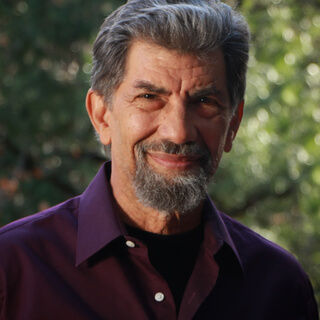
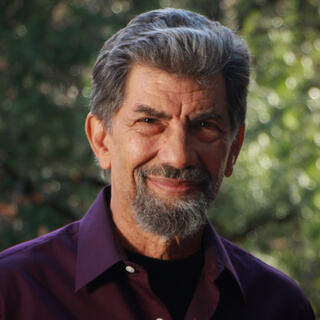
The show you're about to hear is a recording from Dr.
Miller's webinar series titled Life Meditations.
He began this series in response to the pandemic,
And his goal has been to provide wisdom,
Practical tools and comfort to people during these stressful times.
Hello,
I'm Dr.
Emmett Miller,
And today I'd like to explore with you the issue of loss and letting go,
Something we all have to deal with in life,
Especially during a pandemic such as we're in right now,
Whether you're dealing with sequestration or sheltering in space or quarantine,
Or if you're just trying to deal with the loss of your job,
Loss of money,
Loss of people that you can connect with on a daily basis,
The loss of social position.
We all have different losses that we need to deal with.
And often we tend to look at our losses as obstacles to our peace of mind and happiness.
However,
If we are clever,
We can look at the issue as a challenge,
A challenge that can be exciting to confront.
And in fact,
If we're really wise,
We can begin to see it as an opportunity.
As a matter of fact,
Sooner or later we have to let go of everything that we have.
As they say,
We're born with clenched fists,
But we die with empty hands.
And we'll all find that life can be much more satisfying and fulfilling if we can confront loss and deal with it with grace and equanimity.
There are several stages that we tend to go through when we're dealing with loss of any kind.
The first,
Of course,
Is denial.
And if you think back recently,
At first,
No,
This can't be.
It's going to be okay.
It'll just be a little thing.
It'll die away like magic.
When April comes,
It'll all be gone.
And we're not affected too much because we're also unaware of how long it's going to take and how much we're going to have to confront.
The second phase is shock.
There's a sort of a numbness,
A sort of a confusion,
And our memory doesn't work too well when we begin to perceive the real magnitude of what we're dealing with.
You've probably felt that when you read the newspaper or look at the news.
The next level is bargaining.
And you think,
Well,
Maybe I can get a little more out of it like this,
Or maybe I can save this,
Or maybe I can save that.
And we don't want to look at the sheer enormity of it.
But soon we're forced to.
And at that point,
Many of us go into anger and blame.
For instance,
We say,
Oh no,
This is all about the Chinese eating raw bat soup.
Or it's a Chinese germ warfare experiment gone awry.
Or a U.
S.
Experiment gone awry.
Or it's a Democrat hoax.
Or we'll call it the Chinese virus or the U.
S.
Virus.
So we're into that anger and separation and polarity as a way to not really deal with the fact that there's loss.
But sooner or later,
We get to the next phase,
Which is sadness,
Grief,
Pain inside.
In fact,
We might find ourselves crying because that's part of letting go.
And grief,
Of course,
Is a very important part of life.
And it's part of dealing with loss.
So it's important that we be able to feel the right amount of grief.
And sometimes it's very,
Very useful to feel this together with someone else who's also going through it or someone who can comfort you.
That connection is very important.
But then we have to go beyond that grief.
Or as the old saying goes,
You cannot prevent the birds of sorrow from flying over your head,
But you can prevent them from making a nest in your hair.
The next stage,
Of course,
Is that stage of acceptance.
There's one little story that really helped me learn to deal with loss.
It's the story of a farmer whose horse had run away.
All of his neighbors came around to commiserate with him.
And they said,
Oh,
We're so sorry to hear your horses run away.
This is most unfortunate.
The farmer said,
You never know.
Well,
Wouldn't you know it,
A couple of days later the horse came back bringing seven other wild horses with it.
The neighbors arrived and said,
Oh,
Isn't that lucky?
What a great turn of events.
You now have eight horses.
The farmer said,
You never know.
Well,
The very next day his son was trying to break one of the horses and instead he broke his leg because he was thrown to the ground.
The neighbor said,
Oh no,
Your son has a broken leg.
That's too bad.
The farmer said,
You never know.
Well,
Several days later the conscription officers came around to conscript people into the army.
They of course had to reject his son because he had a broken leg.
Isn't that great,
Said his neighbors.
You never know,
Said the farmer.
You see,
The whole process of nature is an integrated process of immense complexity and it's really impossible to tell whether anything that happens in your life is good or bad because you never know what will be the consequence of that misfortune.
Or you never know what will be the consequences of good fortune.
So it's very important that we learn to have patience in the face of any kind of loss.
I'm sure you can think about a time in your own life when you had a loss but after a while you were happy again.
I mean,
Think back to the things you were attached to as a teenager and it was so important and now you look back and it's not important to you anymore,
You have let it go.
Or maybe you can remember breaking a bad habit or an addiction because when you have a habit or addiction,
Boy,
It's really hard to think about letting it go but once you break it,
I feel so free after having broken that habit of smoking or drinking too much or think about relationships that you finally let go of.
So it's the monkey mind that becomes attached to things because we understand in our conscious mind that we have to let go of things and when something is let go of,
We need to release it from ourselves deeply.
Remember that little story,
The difference between a normal person and a psychotic and a neurotic?
Ask a normal person how much is two and two,
They say four.
You ask a psychotic and he says,
Oh,
17 or purple or Elvis Presley.
You ask a neurotic and he says,
Four,
But it really hurts my feeling.
So it's neuroticism that makes it difficult for us to let go of things that we want to let go of.
That simply means we haven't learned how to bring peace to that monkey mind.
So our goal is to find a really comfortable way to accept things as they are.
And the best way to fully let go of what we need to let go of is to allow ourselves to come into the present moment and to look at reality exactly as it is in the here and now.
And that can become difficult for us in our culture because in our culture we don't learn to let go.
We learn to hold on.
War is better.
He who dies with the most toys wins,
That sort of thing.
But where is it that we ever learn how to let go and feel better because we have let go?
And because we haven't learned—and it's just a skill,
Like swimming.
And if you've never learned to swim,
Just think of what happens if you fall off of a rowboat or something like that.
Whereas if you have learned to swim,
How much better equipped you are to deal with the situation?
Well,
We've all fallen off the boat and it's time for us to learn how to swim,
How to let go.
And so,
Of course,
One of the most important things you can learn to do is how to come into the present moment,
How to relax deeply and to be in the here and now.
So think for a moment of someone that you love deeply or a hobby or a talent that you love.
Whether it's singing or dancing or jogging or playing the slot machine or something that you really emotionally love or a beautiful place that you've been or a fantastic sunset or mountaintop or whatever it might be,
Think about it right now.
Something that brings joy and love into your heart.
And I'm going to ask you to think about that place in a few moments.
But for right now,
Just choose a spot over on the wall opposite you,
On the ceiling or the wall.
If you're sitting or lying down,
Let your body be in a comfortable position.
Become aware of the fact that there's no other place that you need to go right now.
There's nothing else that you need to do.
And there's no problem that you need to solve.
And therefore,
You can allow yourself to relax.
And it's comfortable,
If it's comfortable for you to do so,
Allow your eyelids to close.
Just simply let them fall closed.
And behind your closed eyelids,
Let your eyes roll upward toward the back of your forehead.
If you prefer to allow your eyes to remain open,
If they're more comfortable that way,
Keep them focused on that point in the distance.
And take a deep breath in and hold it.
And feel the holding breath.
And feel how much you want to let that breath go.
Hold it as long as you can.
And then release it.
And feel the letting go now.
How good that feels.
Then take a deep breath in.
And as you let that breath out,
Feel it as a sense of letting go with your entire body.
And then stop breathing and just let the air do the breathing for you,
The way it does when you're asleep at night.
Feel the rising and the falling of your breath.
Each breath in,
Breathing in fresh,
Clean,
Pure white light.
Each breath out,
Emptying your body of any unnecessary tension.
Each breath out,
Unnecessary emotions,
As each breath breathes in relaxation and peace.
And after each breathing out,
Feel yourself sinking into that little pause after you breathe out and before the next breath comes in.
It's the quietest time of all.
That's the time when you are most in contact with your true self and most here in the present moment.
And allow yourself to rest in this place of peace.
Whenever an unnecessary thought comes along,
Imagine it's being breathed out with your next breath out.
As if that unnecessary thought does like a little puff of smoke in the middle of your head and you're breathing it out through your nose.
Your next breath in,
Breathe in fresh air that cleanses your mind.
Good.
And now as you settle in this peaceful place,
Here and now,
Letting go all thoughts of the past because the past doesn't exist and the future doesn't exist either.
There's only now.
This moment is the only moment that exists.
And into this moment,
Bring an image of that loved one or that place that you love or that activity that you love.
And take yourself into enjoying it.
Imagine that person's really with you.
You may relive the last time you were with that person or in that place,
But make it really real and get to the point where you feel the fullness inside.
You feel the love,
The gratitude for having this in your life,
For having had it in your life.
And breathe that throughout all the rest of your body,
A positive energy,
A sense of fullness and gratitude.
And as you're doing that,
Squeeze together your thumb and forefinger on one of your hands.
And that will serve as an anchor to this place.
And you can come back to this place and this feeling any time you need to by just allowing your eyelids to close or focus on a point on the wall and squeeze those fingers together.
Bring yourself back here,
Emptying all of the thoughts from your mind.
Good.
And while you stay in this beautiful place,
Just imagine that you're sort of watching a parade of events and things across the stage as if you're sitting in an audience.
And as you sit,
You see things pass by and these are things that it's important for you to let go of.
Places,
Things,
Ideas,
Relationships that need to be let go of.
But you stay in this joyful place with your loved one,
With the love that is you inside.
And just watch them pass by,
Perhaps dimly in the distance.
They come and they leave.
Just as your breath comes and goes.
Each breath is wonderful and then it's also wonderful to let that breath go.
And as you do this,
Those images grow even more dim and even more distant.
And you come more and more into the essence of now and into the love that you have and the love that you are deep inside.
And now think of an image or a signal or a word or a song or a phrase that represents who you would like to be,
Who you feel you are at a deeper level or the person you most want to be,
The person you came here to be.
Picture that person in your mind's eye.
Good.
And each time you think of this image,
You'll return to this special place and once again recognize that just as you let go of each breath,
You can let go of whatever needs to be let go of.
Good.
And you may stay in this place now and turn me off or if you want to continue,
Just bring yourself back to a full wide awake awareness of the space around you.
If you'd like to learn a little bit more about how to release and let go of things,
Check out my program called Accepting Change Moving On.
And for those for whom the grieving part is difficult,
The program entitled Escape from Depression is perfect.
And for those of you who just want to really enjoy the healing presence of the moment,
Check out Rainbow Butterfly,
A meditation done with Georgia Kelly on harp,
And also Healing Journey with Raphael who conducts an entire symphony on that program.
It's been great to be with you and I'd like to leave you with a reminder that the future is not some place we're going.
The future is a place we're creating and we create the future with every thought and word and action.
Be well.