This is an awareness of thoughts practice.
It's adapted from a John Kabat-Zinn practice which is entitled Observing Thoughts.
Judging is actually how we make sense of the world.
So it's natural that we do it,
But having an awareness of our own judgment will really help us to know what's going on in our mind and therefore help us to think a little bit more clearly rather than being taken away by it.
And there's a good analogy,
Which is sitting by a river.
Sitting on the bank and watching the river go by,
That's like not being carried downstream.
If you can just watch your emotions and observe what's actually going on with your thoughts,
But sitting on that riverbank,
Not getting carried downstream to the waterfall or something potentially dangerous.
If you can sort of bear that in mind during the practice.
So we're just going to start by sensing into your body right now.
You can sit down or lie down.
For this however you feel comfortable.
Just sensing into your feet on the floor or the bed and your body.
That sense of physical body in this space where you are today.
And just letting go of that and tuning into your breath,
Not changing it in any way,
Just breathing normally.
Just being aware of how that feels for you right now.
Every breath being different.
You might feel it in your abdomen,
Your chest,
Or the top of your lip.
Your nostrils.
Just feeling your body breathing.
And letting go of the breath right now.
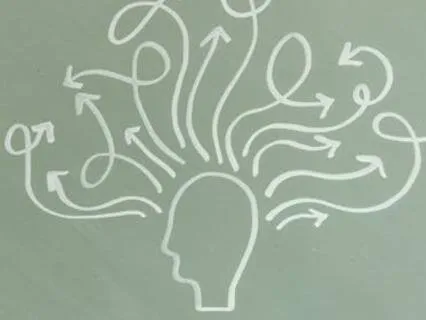
Just going to tune into that stream of thoughts.
It's always there.
Always happening.
And just seeing them for what they are,
Which is mental events that are happening in your mind.
We don't choose our thoughts,
They just come to us.
And just remember you're sitting on the bank,
So try not to get carried down the stream or the river with them.
They're merely just your thinking mind doing what it's supposed to do.
Just seeing the thought and then just letting it go.
But not pleasant or unpleasant.
Trying to detach from that story or.
.
.
Whether you like it or not,
Just things happening in your mind,
Coming and going.
It's like sounds come and go and sensations come and go.
Thoughts come and go as well.
It's easy to get caught in them.
Just letting them go right now.
Not pursuing anything,
You're not pushing it away.
Not preferring anything,
Merely just resting in that awareness of thinking.
There might be spaces between the thoughts.
You don't have to latch onto them.
It's almost like if you were watching a sports game and there's a commentary,
You can turn the volume down and you can watch the game without tuning into the incessant commentary.
That's what you're doing really with your thoughts and your awareness.
You're just turning that control down.
Don't need to grab onto any of them,
Just recognising them.
They might want to pull you into the past or the future.
Just staying right here,
Right now.
And if it's helpful,
Just tuning back into your breath as the anchor for the present moment.
Just allowing those thoughts to come and go.
Recognising them,
They're not the truth and they're also not you.
Our mind fabricates these views and these opinions and ideas and beliefs and memories and plans.
One might lead into another one.
Before we know it,
We're carried downstream.
We're no longer aware of being in the stream itself.
So get back onto the bank.
Just notice the thoughts as thoughts.
Just observing them.
Recognising them.
Letting them be there and letting them go.
And as we're coming to the end of the practice,
Just know you can become aware of your thoughts at any point and tuning into that,
But choosing to not believe them as truth and just to let them go and let the next one come along.
And just tuning back into your physical body.
On the chair or the bed.
Just noticing how that feels in your body.
To have an awareness of all these thoughts.
Just come and gone.
And then when you're ready.
Just taking one big breath.
And then letting it all go.
With your out-breath.
And you might want to stand up or sit up and have a little stretch.
And maybe if you have your notebook to hand,
Just write down some of those thoughts.
That came to you during that practice.
Thank you.