Hey everyone and welcome back to your practice space.
This is a pranayama practice for anxiety.
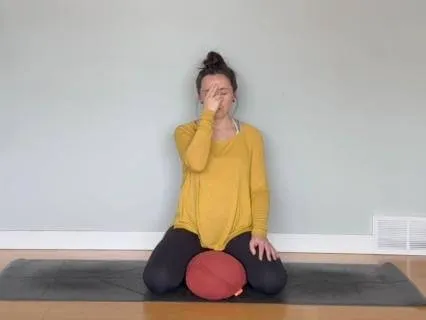
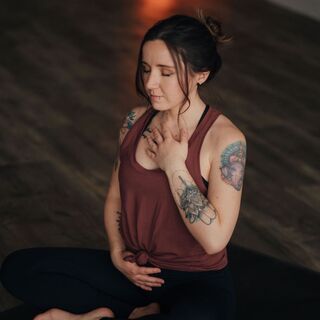
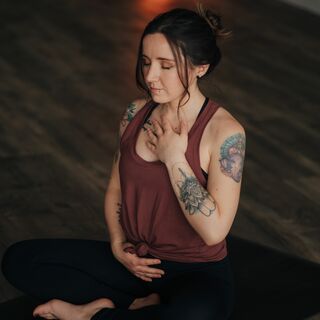
So I'm sitting on my bolster just on my heels just to have it supported underneath of me but feel free to find any comfortable seat that works for you today and we'll just get right into it.
So grounding down through your seat.
Resting your hands on your lap in whatever way is comfortable for you right now and just allow the eyes to close down Just taking these first few moments to arrive here in this space that you're in.
I'm just letting go for now of anything that happened before you got here,
Before you arrived to this space.
And knowing that your thoughts will always be there.
The goal in these seated practices or in any practice is never to eliminate thought.
But rather to find a sense of concentration.
That can ground you in something other than the sea of thoughts that are constantly circulating the mind.
And over time,
You'll find that The resistance to your thoughts will go away.
The need to change or control them or eliminate them will go away and you'll be able to.
Just simply allow them to be there.
Passing by like clouds in the sky.
They come and they go.
No need to linger,
No need to cling.
No need to push away.
You just allow them to be.
To come and go without the connection to the story that we create in the mind.
The Judgment.
The wishing and the worrying.
Complete,
Non-judgmental,
Compassionate awareness.
And we're going to begin our practice with samavriti or equal breathing,
Box breathing.
We will inhale for a count of four,
Hold the breath in for a count of four,
Exhale for four,
Hold the breath out for four.
And so breathing in this way,
Breath retention is said to slow the heart rate down,
Which can help combat feelings of anxiety.
However,
For some,
You might notice a sense of panic with the breath retention if you aren't used to practicing it.
If that is you,
You can inhale for a count of four,
Exhale for a count of four.
We don't want to be causing any sense of panic.
We want to be combating it.
So if breath retention isn't working for you today,
Simply inhale,
Exhale equal in length.
So wherever you are in the breath,
We can exhale the breath completely.
And we'll inhale for 1,
2,
3,
4.
Hold 1,
2,
3,
4.
Exhale 1,
2,
3,
4.
Hold 1,
2.
Three.
Four.
Inhale one.
Three four hold one two three four out one two three four hold one two three four in one.
To.
Three.
Four,
Hold one,
Two.
Three four out one two three four hold one two three four in one two three four hold one two three four out one two three four hold one Two.
Three.
Four.
In one.
Two.
Three.
Four hold one two three four out one two three four hold one two three four inhale fully fill the lungs Holding the breath in.
Exhale,
Let it go.
Coming back to a natural pace of breath.
And from there,
Coming into our ujjayi breathing.
Just that muscle engagement in the back of the throat like you're whispering to somebody or fogging up a mirror.
Can we deepen the breath?
With your ujjayi.
And make that muscle engagement a little bit more than you would in a typical yoga practice.
So allow the sound to be a little bit louder and deeper.
And we'll just continue with that for the next few moments.
Breathing Ujjayi.
Allow the engagement to be equal on the inhale and exhale.
And as thoughts inevitably come in to pull at your attention,
Just.
.
.
Gently bring the awareness back to the breath.
Back to.
That muscle engagement in the back of the throat,
If that's your point of awareness.
Or maybe you come back to the awareness of the sound it's creating.
And you can slowly start to decrease the quality of your ujjayi and just bring it to a soft engagement.
And if it feels comfortable to continue with that through the remainder of this practice,
You can,
Or you can just eliminate it altogether and find a natural pace of breath.
And for our next round we're going to bring in a count of inhale for a count of six exhale slow for a count of eight So this lengthened exhalation.
Can bring a sense of calm and ease to the body.
So maintaining the ujjayi if you want to or just eliminating altogether.
Take a few more breaths here in your natural pace.
And then wherever you are in the breath,
We'll just exhale all of the breath out completely empty.
And inhale for one,
Two,
Three,
Four,
Five.
Six exhale eight seven six five four three two one inhale one two three four five six exhale eight Seven.
Five,
Four,
Three one inhale one three four five six exhale eight seven six five four three Two.
One.
Inhale.
One.
Two three four five six exhale eight seven six five four three two one inhale one two three four five six exhale eight seven six five four three two one inhale one two three four five six out eight seven six five four three Two.
One.
Inhale fully fill the lungs.
Holding the breath in for a moment.
Exhale,
Let it go.
Breathing naturally for a moment.
And for our final practice,
We will move into nadi shodhana,
Or alternate nostril breathing.
This breath brings balance to the left and right sides of the brain,
The solar and lunar sides of the body,
Just bringing total balance to the body.
So you can keep your left hand down.
We'll take our right hand to our face.
Take your peace fingers to your forehead,
To your third eye.
Your thumb is going to plug your right nostril.
Your ring finger will plug your left.
So keeping the hand there,
And if the right arm gets tired at all,
You can bring the left hand underneath of the elbow,
Just to kind of have it to rest onto.
And wherever you are in the breath,
Just exhale completely.
Let's inhale through both nostrils first.
Exhale both.
Plugging the right nostril,
Inhale through the left.
Pause and switch.
Exhale through the right.
Inhale through the right.
Pause and switch.
Exhale through the left.
So that's one round.
Inhale left.
Exhale right.
Inhale right.
Exhale left.
Inhale left.
Exhale right.
Inhale right.
And exhale left.
Continuing on your own.
And if you get lost or confused,
Just remembering you pass on the exhalation.
And it's no rush whatsoever,
But next time you exhale through the left nostril,
You can just bring the right hand back down onto your lap.
Just taking a moment to notice.
Anything you're currently experiencing,
Any changes in your experience from the start until now.
And knowing that the breath is such a powerful tool to combat feelings of stress and anxiety.
To slow the breath and slow the heart rate down.
Activates our rest and digest.
And knowing that you have this practice to come back to,
Or any of these practices,
Any of the pranayama practices that we did today,
You can introduce into any.
Aspect of your day if you're at work.
Or with your kids or in any other situation,
You always have the breath with you.
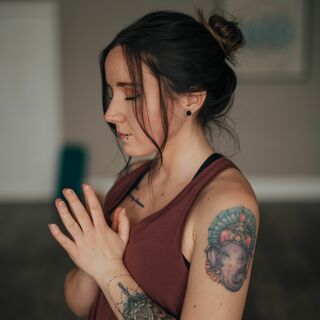
Turning the hands to heart center on Anjali Mudra.
And thank you so much for joining me in practice as always.
And we'll see you again soon.
Namaste.