Hi,
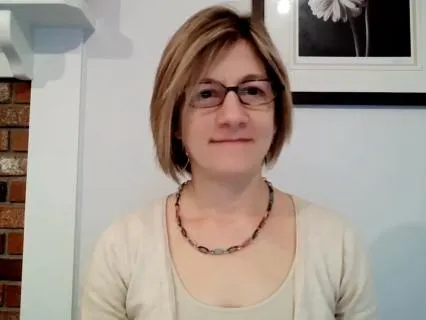
I'm Beth Kurland,
And today I want to invite you to try a little mini experiment here.
So I'm going to ask you to think about something that is.
Mildly stressful in your day,
In your week,
Maybe something that typically creates some stress for you,
A feeling of too much to do,
Maybe a particular.
.
.
Person that you have to interact with that feels challenging for you.
Maybe stress around a project that you're working on,
Could be anything.
And.
Just call this to mind for a moment.
And as you do that,
I want to invite you to make three changes in your body.
So we're going to be working with posture,
Muscle tension,
And breathing.
The first thing that I want you to do is to,
And by the way,
We're going to do this twice.
So this is version one.
I want you to tighten up all of the muscles in your body.
So kind of squeeze the muscles around your face and eyes,
Tense your shoulders,
Your.
.
.
Upper body,
You can.
.
.
Bring your legs in there and just really squeeze and tighten everything.
And as you're doing that,
I want you to begin to,
And I'll just do it for a moment here,
Slump over.
So you're really collapsing your chest.
And notice as you're doing a tightening and slumping that your breath probably gets very shallow.
And so really focusing on kind of just this feeling of shallow.
Upper chest breathing that may be a little bit quicker as you're tightening and slumping.
And as you do that,
Just saying to yourself,
I'm so stressed.
I'm so stressed.
I'm so stressed.
And just notice how that feels in your body.
Make a mental note.
Really have a sense of that.
And then you can let that go.
So that is version one.
And I want you to compare that to version two.
So this time what I'm going to invite you to do is to take your shoulders,
Roll them up and back.
And really just elongate your spine,
But feel supported by whatever surface that you're sitting upon.
So that your posture is upright but relaxed and supported.
You might have a sense of your chest,
Heart,
Lungs just expanding and opening.
And I want to invite you to now soften the muscles in your body.
So again,
You're still feeling upright and supported.
But you might feel some softening and ease around the muscles in your eyes and your jaw and your forehead.
And letting some softening and relaxation traveling down your neck to the shoulders,
The muscles.
In your upper back.
Feeling some softening through your torso,
In your abdomen.
Letting That relaxation spread all the way down to the tips of your toes.
So your muscles are soft and relaxed.
And then inviting your breath to deepen.
And if you can,
Taking a few slower,
Deeper belly breaths.
So you're slowing down your breath just a little bit.
And especially.
You're just focusing on that.
Sorry,
I didn't turn the phone off,
So I won't do that.
You're focusing on that nice,
Slow.
Exhalation.
Breathing in through your nose and you might even breathe out.
Slowly.
Deep,
Slow exhalation,
As if you're blowing out the roostraw.
And now I want you to think about that thing that is stressful.
For you.
In your week.
And with those nice,
Slow,
Deep exhalations,
Softening in your body,
Upright posture,
Say to yourself,
I'm so stressed.
I'm so stressed.
I'm so stressed.
And just notice.
What feels different this time?
Than that first person.
So for me,
When my body is sending me signals of safety and relaxation,
Which is version two,
And in fact,
Our body is about 80% of these fibers from our vagus nerve travel from the body up to the brain.
So when I'm getting all of these cues of safety,
It's hard to access that feeling of stress.
Whereas when my body is tight,
When my posture is slumped,
When my breathing is shallow and constricted.
I'm already just from that starting point creating.
Signals and messages from the body going up to my brain saying there's a threat here.
And our narrative sometimes can follow our body responses.
They certainly.
You know,
Can go back and forth so the signals from our body can create the messages,
The thoughts,
The narratives that we're experiencing.
And sometimes the thoughts that we have can also create.
Tension or stress or whatever we're experiencing in our body.
But just noticing that as you make those shifts in your body,
You can actually begin to shift the experience.
Of whatever that stressful event is.
So the next time that you run into as you're going through your day and you begin to feel stress about a particular situation that's occurring in that moment.
I invite you to really shift your posture upright.
Soften the tension in your body,
In your muscles.
Take a few deeper,
Slower.
Intentional breath slowing down your exhalation And notice what changes or shifts in your experience of stress in that moment,
That you're actually making changes to your nervous system.
That you're accessing a different part of your nervous system that's controlled by this ventral vagal pathway.
Of our body.
And as we shift into that,
Newer.
Operating system,
If you will,
We actually can then change our experience of the stress that's occurring.
We can begin to shift that story.
We can have access to greater resources that help us meet that moment.
With greater ease so i invite you to play with that and um I'd love to hear your experience.
Take good care.