.
Relating to difficulty differently.
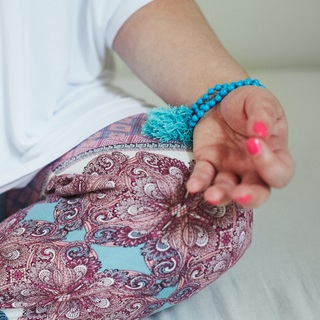
Get into a comfortable sitting position,
Either on a straight back chair or a soft surface on the floor,
Ensuring that you're supported.
If you use a chair,
It's really helpful to sit away from the back of the chair so that your spine is self-supporting.
If you sit on the floor,
It's helpful if your knees actually touch the floor.
Experiment a little with the height of the cushions or stool until you feel comfortably and firmly supported.
Whatever it is that you sit on,
Arrange things so that your knees are slightly lower than your hips.
Allow your back to adopt an erect,
Dignified,
Comfortable posture,
Embodying a sense of ease and alertness.
Gently allow your eyes to close if that feels comfortable for you at this moment.
Begin to bring your awareness to the level of physical sensations by focusing your attention on the sensations of touch and pressure in your body where it makes contact with the surface beneath you.
Now bring your awareness to the changing patterns of physical sensations as the breath moves in and out of your body.
See if you can really feel into the sensations of slight stretching as the body rises and falls with each breath.
Remember,
There's no need to try and control the breathing in any way.
Simply let the breath breathe itself.
And as best you can,
See if you can bring this attitude of allowing to the rest of your experience with this meditation.
There's nothing to be fixed.
There's no particular state to be achieved.
And as best you can,
Simply allow your experience to be your experience without needing it to be other than it is.
And when you become reasonably settled on awareness of the breath coming in,
Breath leaving the body,
Intentionally allow your awareness to expand around the breath to include as well a sense of physical sensations throughout the whole body.
While still aware in the background of the movements of the breath,
Just changing your primary focus now so that you become aware of a sense of the body as a whole and of the changing patterns of sensation throughout the body.
You may find that you get a sense of the movements of the breath throughout the body as if the whole body were breathing.
And acknowledging that the mind will wander repeatedly away from the breath and body sensations.
This is natural.
It's to be expected and in no way is it a mistake or a failure.
Whenever you notice that your awareness has drifted away from the sensations in your body and the breath,
You might want to congratulate yourself.
You've woken up.
So gently note where your mind was and kindly focus your attention back to your breathing and to a sense of your body as a whole.
As best you can,
Keep things simple.
Gently attending to the actuality of sensations throughout your body,
The mind wandering from one moment to the next.
And while you're sitting,
If you notice that your attention keeps being pulled away to painful or uncomfortable thoughts or emotions,
You can explore something different from what we've been practicing up until now.
Until now when you've been sitting and notice that your mind has wandered,
The invitation has been simply to notice where the mind had gone.
And then gently and deliberately bring the attention back to the breath or the body or back to whatever you intended to be focusing on.
Now you can explore a different way to respond.
Instead of bringing attention back from a thought or feeling,
Now allow the thought or feeling to remain in the mind.
Almost like examining this thought or feeling on the workbench of your mind.
And then shifting the attention into the body,
See if you can become aware of any physical sensations in the body that come along with the thought or emotion.
And when you've identified any sensations,
Deliberately move the focus of attention to the part of the body where these sensations are strongest.
Perhaps imagine you could breathe into this region on the in-breath and breathe out from it on the out-breath.
Not to change the sensations but to explore them,
To see them clearly.
If there are no difficulties or concerns coming up for you now and you want to explore this new approach,
Then if you choose you might deliberately bring to mind a difficulty that's going on in your life at the moment.
Something you don't mind staying with for a short while.
Doesn't have to be very important or critical but something that you're aware of as somewhat unpleasant,
Something unresolved.
Perhaps a misunderstanding or an argument.
A situation where you feel somewhat angry,
Regretful or guilty over something that's happened.
If nothing comes to mind,
Perhaps you might choose something from the past,
Either recent or distant,
That once caused unpleasantness.
Now once you've focused on some troubling thought or situation,
Some worry or intense feeling,
Allow yourself to take some time to tune into any physical sensations in the body that this difficulty evokes.
See if you are able to note,
To approach and investigate inwardly the feelings arising in your body.
Becoming mindful of those physical sensations.
Deliberately directing your focus of attention to the region of the body where the sensations are strongest.
In a gesture of an embrace,
A welcome.
This gesture might include breathing into that part of the body on the in breath.
And breathing out from that region on the out breath.
Exploring the sensations.
Watching their intensity shift up and down from one moment to the next.
Once your attention has settled on the body sensations and they're vividly present in the field of awareness and pleasant though they may be,
You might try deepening the attitude of acceptance and openness to whatever sensations you're experiencing.
You can do this by saying to yourself from time to time.
It's here now.
It's okay to be open to it.
Whatever it is,
It's already here.
Let me open to it.
Soften and open to the sensations you become aware of.
Intentionally letting go of tensing and bracing.
Say to yourself,
Expansion as you breathe in.
Softening,
Opening on each out breath.
See if it's possible to stay with the awareness.
Exploring these body sensations and your relationship to them.
Breathing with them.
Accepting them.
Letting them be.
Allowing them to be just as they are.
Remember that by saying it's already here or it's okay,
You're not judging the original situation,
You're not saying that everything's fine.
You're simply helping your awareness right now to remain open to the sensations in the body that are already here.
You do not have to like these feelings.
It's quite natural not to want to have them around.
You might find it helpful to say to yourself inwardly,
It's okay not to want these feelings.
They're already here.
Let me be open to them.
All right.
And now letting go of the thoughts and feelings associated with the difficulty.
Coming back to the simple sensations of the body sitting and breathing.
All right.
All right.
And as we bring the practice to a close,
Bringing an attitude of compassion,
Reminding yourself that difficulty is part of everybody's life.
The most appropriate,
The most helpful response to this is one of kindness and compassion.
Perhaps placing one hand on your heart center in the middle of the chest as a gesture of self-care and kindness.
All right.
All right.
All right.