My name is Larissa.
We're going to practice for about 30 minutes this morning.
Opportunity to slow down a little bit.
Spend a little time with yourself.
That's what you often do,
Just take a few moments to settle into your body.
Just notice how we have these habits,
And they can be so helpful.
Rituals can be so helpful.
Very often we settle right in,
Just closing our eyes or shifting the gaze downward.
Take a moment here as you're settling your body.
Maybe you're still making some neck rolls.
Consciously open your eyes.
Take a moment and just look around your space,
Probably a familiar space.
Just seeing the things that are around you.
Is there a way to see anything?
In a slightly different way.
So maybe you're looking at the light.
That's coming across an object rather than just looking straight at an example I'm looking at a vase.
It's really cool,
That's a vase.
But to see the light that's coming across and all of a sudden,
I see texture in a new way.
To maybe tip your head sideways.
Or you might close your lids a little bit more as you're kind of looking through the slits of your eyes.
And you might notice your vision is still moving around the space,
Just kind of taking it in.
If possible,
Just let your eyes land on something specific.
Notice how your brain tells you what it is immediately.
And beyond what the object is.
Notice the experience of seeing it.
Notice the different layers of color,
Texture.
And how all of that brings you a certain sensory awareness.
Like your skin might have an understanding of what it might feel like to touch that object.
Without even touching it.
And just take a moment to shift your attention to your hands.
Letting your hands rest in your lap,
Looking downward.
And then from seeing your hands,
Just close your eyes for a moment.
And notice.
.
.
The sensation of your hands.
And you might play with that for a few moments here,
Just this exploration of vision versus felt sense.
You might open your eyes and look again,
Looking at the way the light is playing across your fingertips.
And then close your eyes and just feel the sensation.
And then try that on one more time,
Just opening your eyes,
Flipping your hands over,
Looking at both sides of them.
And when you do that,
Notice how your vision tends to be the most obvious part.
But continue doing so and notice the movement of your wrists.
And you notice as you're flipping your hands,
Just slowly turning them over and over again.
Notice the rotation at your elbows as well.
Just continue for a few more moments,
Just turning your hands over.
Multiple times,
Just finding this little flipping action slowly.
Can you even notice that movement of your hands?
In your shoulders.
In your rib cage.
And then eventually just letting your hands rest.
You can close your eyes or set your gaze down.
Just letting your eyes be still for a moment.
Landing here,
Take a few deep breaths.
So you're breathing in and out.
Just look for that softening quality of your exhale.
Can you soften your shoulders just a bit?
Let your arms hang a little heavier.
Might even linger at the end of your exhale,
Just to notice that stillness.
And that little exploration that we just did.
It's bringing a bit more curiosity to something that we do all the time,
Which is see.
Take in sensory information.
And we often do that in the same way.
Which is taking a moment to be really curious beyond what our mind tells us about something.
Again,
For my example,
The vase.
Maybe your eyes landed on a pet.
One of your beloved creatures.
Maybe your eyes landed on something.
Smooth.
Maybe there was a lot of darkness in your room.
Maybe there was a lot of light play in the space you're in.
That affects how we see something,
How we experience something,
How we pull something into our awareness.
And that little play,
That little experiential slowing down.
It's a way to help us get to know the ways.
That we kind of glaze over the world at times.
We have a very interesting way that we see the world.
There's something called serial dependence,
And it's just a scientific term for something we all do.
It's a brilliant mechanism in our mind.
That actually takes the last 10 or 15 seconds and kind of merges it.
Otherwise we'd be overwhelmed with the amount of visual input that we take in in any given second.
And this serial dependence as it's called,
The technological,
Excuse me,
The technical term for it.
It's just something we all do and it's,
Again,
It's something our brain does to help us so we're not overwhelmed or overloaded with sensory information all the time.
Because of that,
Because we all have that.
Kind of a buffer for what our eyes see.
We sometimes miss what's truly in front of us.
It's like driving.
The same road.
Two,
Three,
Four times a day.
And then one day you look over,
You're like,
Man,
When did they start building that building?
It's halfway done.
And it's just because our eyes.
Are seeing it,
But our brain isn't informing us about it because it just isn't that important.
Where our brain has decided it isn't that important.
So in our meditation,
We get to really see ourselves a little more clearly.
We start to get to know those little mechanisms of mind.
As we stay here,
Spending a few moments here in silence again.
And your eyes might be closed or your eyes might be just barely open,
Resting on some still spot.
Beyond the vision that we're so used to taking in,
What is the experience of just being in this present space?
You're certainly welcome to play with that exploration of opening and closing your eyes a few times.
Change the sensory awareness.
Just landing for a time just to notice what you notice And just notice where your mind is.
It's possible your mind moved elsewhere.
Returning to yourself.
What am I experiencing in this present moment?
Where do you feel your breath moving through your body?
This sensory experience of feeling your breath moving through you.
Is actually so much quicker than how our vision moves.
And we're talking about nanoseconds,
But.
Touch and sound come to us quicker than vision.
And just as our brain does this serial dependence,
Our brain essentially smoothing out.
What we're bringing into our visual awareness.
Taking our past experience to help it merge with what we're seeing in the present moment.
That that's quite literally happening within our vision field.
It's also happening within our thought field.
Sometimes what we're experiencing.
In any given scenario.
Our brain is pulling up past experience to help us understand what's happening.
So let's say somebody startles us,
And then we recognize,
Oh,
That's somebody that I know,
And we start laughing.
What if someone startles us and we don't know them and say it's dark out and you're not used to the environment that you're in?
It's no longer a funny moment,
It becomes a cautious moment.
And that's simply because of the experience our brain is pulling from the past.
And merging it with what's present.
And so here we have this opportunity to let go of any of those cautious experiences that our brain is pulling forward.
I'm safe here.
Even just the act of closing your eyes.
Allows us to feel our experiences a little quicker.
Because our brain doesn't have to do that smoothing out of our vision.
And it doesn't mean don't trust what you see.
It's this slowing down that we do in our meditation that helps us see a little bit more clearly.
Oh yeah,
That's a past experience my brain is pulling forward.
What can I do with that information?
I don't have to immediately rely on it.
I can use that past experience as an advisor.
So sometimes our brain will immediately say,
This is dangerous.
And we want to listen to that as an advisor.
But when we slow down and take a deep breath.
Like,
Oh,
Actually.
I'm still just sitting in my meditation.
I'm still just breathing,
Listening to a bird song.
It's just a sound that happened in the background that made me feel that moment of fear.
Sometimes it's just a thought.
Ooh,
That brought me some anxiety.
I don't need to follow the thought.
Can I tend to the anxiety that I'm experiencing my body?
It's just present,
And present again,
And present again.
Just witnessing what it is that your mind is doing.
Just landing again in your breath.
And anytime your mind becomes busy,
Notice the weight of your hands.
Perhaps even rubbing your fingertips together to give you a more clear sense of the present moment.
Just inviting your attention to land again and again and again.
Just in this experience of being in a body.
It's just breath by breath,
Moment by moment.
It's present awareness,
Noticing.
When our thoughts move away from the present.
And on occasion,
We land.
In what Buddhism calls pure awareness.
This awareness without judgment.
And that's that little practice we did earlier.
Your brain will tell you,
Ah,
I'm looking at a vase.
And beyond that,
What is the experience of the vase?
The texture,
The color,
The touch.
The third sense.
Of being in your body and experiencing something.
And then even in the experience,
Our brain is often interpreting,
I like this,
I don't like this,
I want more of this,
I want less of this.
And the pure awareness is just the landing space beneath all of the judgment of the mind.
Can you just allow,
Can you just let the judgment of the mind?
Be a part of your experience,
Witnessing it,
And as you witness it,
You let it soften for just a moment.
And we land in these moments of just pure awareness.
And that pure awareness,
We can enhance it at times by being so present with something like a flower.
Something like a purring cat.
The touch of a loved one's hand.
And slowing ourselves down so we can fully,
Fully experience.
With all of our senses,
With all of our awareness.
Very often our mind is moving in so many directions.
We miss the pure awareness.
Hear this opportunity to just really notice what does this breath feel like?
Breath by breath,
It's returning to yourself.
Returning to present moment awareness.
Anytime we feel.
Frustration,
Disconnection in our meditation.
It's just information that we are asking for our own,
Tending our own attention.
A lot more attention.
On the thought.
It is frustrating.
More attention on the sensation in the body.
Releasing the thought.
I'm coming back to your experience.
There's so many moments of ease to be experienced.
Very often we miss them.
Here there's an opportunity to slow down and just receive the fullness of the inhale.
The softness of the exhale.
In the spaciousness between breaths where we can just rest.
Perhaps even feeling your heartbeats.
And there's a really beautiful line from Diane Ackerman.
I think it's from her book.
A natural history of the senses.
And it says,
We can't enchant the world,
Which makes its own magic.
But we can enchant ourselves by paying deep attention.
Is paying deep attention to.
Our breath.
The magic of the world.
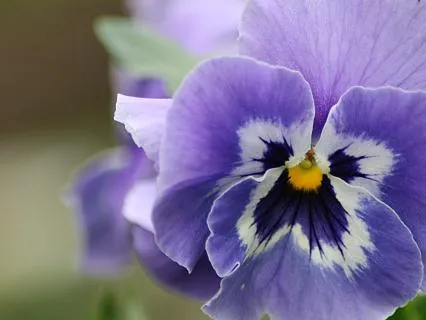
I spent a couple of minutes this morning looking at a ruffled viola.
It's the sun just barely scraping across its sides.
And at first I thought to myself,
What a beautiful purple flower.
And then the name of it came to me,
Oh,
That's a viola.
And then as I continue to look at it,
I see not just purple,
But.
.
.
Perhaps 50 different colors within those purples.
The different lines,
The difference.
Textures,
The softness.
Of the petal,
The firmness of the stem.
And just to really witness that for a moment.
It's like the pure joy of experience.
Of course in that moment there's the beauty of the flower.
My brain isn't so drawn in by,
I gotta get to this,
I need to do this today.
Just the pure witnessing,
The pure experience.
Beautiful when it's a flower but it's just as exquisite when it's a patch of dirt.
When it's your own hangnail?
When we get beyond the constructs of the mind and we're just in that pure witness,
That pure awareness.
Invitation here.
Can you be so fully enraptured by this breath that's coming into your body?
That there's no thought that interrupts just for this moment of the inhale.
Feel it fully.
Experience the length,
The heaviness of your exhale and just linger there for a while.
When we can slow down like this,
We start to contact.
Within that pure awareness.
Is your soul,
Your spirit.
The lovingness.
Of who you truly are.
It exists within all of us.
And our mind may judge,
I like this,
I don't like this,
I want more of this,
I want less of this,
This is beautiful,
It's easy to love,
This is not so beautiful,
This is harder to love.
Beyond the judgment.
There is a lovingness within each of us.
It can hold space for whatever is within our awareness.
And just trusting that lovingness within you.
I invite you to bring your hands into any of your closing habits or practices.
Before we end with our loving-kindness phrases,
Just an invitation as you Head into the day,
The next couple of days,
Whatever it is.
Can you slow down at times,
Even if it's just for five seconds,
And really notice what's in front of you?
That might mean looking a little more deeply beyond what your brain tells you what you're looking at.
Might mean closing your eyes for a moment.
And just letting your breath.
Land you in the present a little deeper.
Pausing for three deep breaths can quite literally change your life.
We'll end here with a few loving kindness praises.
Repeating them back as they make sense for you.
May I slow down and see the magic of the world.
May I slow down so I can pay deep attention.
And when action is needed.
May I move with ease and peace.
May the merits of our practice ripple out to benefit all beings.
And just whenever you feel complete,
Go slow if you can.
Take a moment to thank yourself.
Find movement if that feels good.
As always,
Thank you for being here,
For supporting each other in our sangha,
Our community.