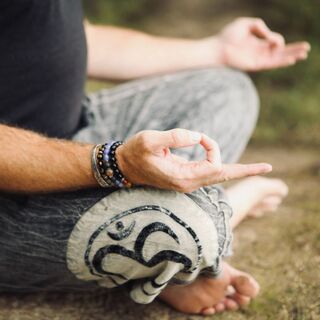
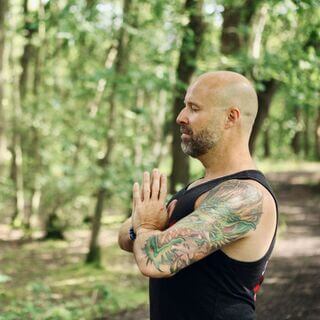
So let's begin by finding a comfortable seated position.
Your spine is tall,
You're grounding into your sitting bones,
Imagining that there is a piece of string pulling you up by the crown of the head.
Drawing your chin parallel to the floor.
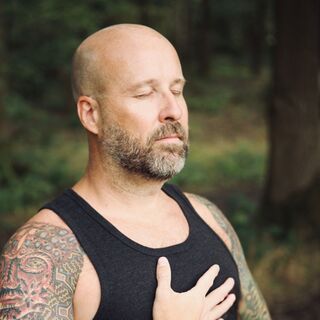
Closing down the eyes or softening the gaze.
And welcome to this Kumbhaka breathing meditation.
Kumbhaka or breath retention is a powerful practice that helps to calm the mind,
Steady focus,
And balance the nervous system.
And we'll focus on retaining the breath after the exhalation,
Creating a pause where stillness and clarity can arise.
And then just taking a moment to arrive here in this present moment.
Feeling the ground beneath you,
Supporting you fully.
Taking a light,
Slow,
Deep breath in through the nose and exhale through the mouth with a sigh.
And again,
Breathing in through the nose.
When you reach the top of the inhale,
Open the mouth,
Sigh it away.
And once more,
In through the nose.
And then exhaling and releasing with a sigh through the mouth.
And then allow your breath to settle back to a natural rhythm,
Breathing in and out through the nose.
So bring your attention to your diaphragm,
Your lower ribcage.
And as you inhale deeply through the nose,
Allow the ribcage to expand fully as if you were inflating a balloon.
Exhaling slowly,
Extending the exhalation completely as you feel your ribcage contract.
Continue to deepen your focus on your nostril breathing.
Focusing on the sensation of the breath moving out and in.
And with every exhale,
Releasing any tension in the body,
Distracting thoughts in the mind,
Cultivating that space with inner stillness.
And then let's introduce the pause after the exhalation.
So as you inhale deeply,
Exhale fully.
Pause at the end of the exhalation until you are ready to receive your next breath.
Notice the stillness of the pause,
The quiet space between each breath.
And when you are ready to receive your next breath,
Take your next inhalation.
Inhaling light,
Slow and deep.
Exhaling fully,
Lengthening and extending that exhalation.
As the breath leaves your body.
And at the end of the exhale,
Pausing gently.
Relaxing into the stillness between each breath.
Softening into the body.
Being aware of any thoughts in the mind.
As you create some space between you and your mental process.
And with every pause,
Pause the breath until you are ready to receive your next inhalation.
And repeat this cycle with every full round of breath you take.
Breathing light,
Breathing slow and breathing deep.
And with every pause,
Suspend the breath gently.
There's no need to push,
No need to force.
And when you are ready,
Taking that next inhalation.
Continue to breathe at your own pace.
Maybe increasing the length of each pause.
Creating that slight hunger for air.
And remember if your mind begins to wander,
Gently guide your attention back to the breath.
Back to the stillness of each pause.
Noticing any sensations in the body.
Observe how the pause creates a space for calm,
Clarity and presence.
There's no need to push,
No need to strain.
Just allow the breath to flow naturally and smoothly.
And then slowly begin to release the practice of Kumbhaka breathing.
Allowing your breath to return to a natural rhythm.
Breathing out and in through the nose.
Taking a moment to notice how you feel.
Noticing the thoughts in your mind.
Noticing the sensations in the body.
And acknowledging the stillness and calm that you've cultivated throughout this practice.
And as we close this practice,
Take a long slow deep breath in through the nose.
Pause at the top and then sigh it out through the mouth.
Gently bring your awareness back to your surroundings.
Introducing some movement,
Wiggling the fingers and the toes.
And when you are ready,
Just bowing the chin down.
Flickering open the eyes,
Lifting the head,
Taking a look around you.
Coming back to full awake consciousness.
Our Kumbhaka breathing practice is complete.