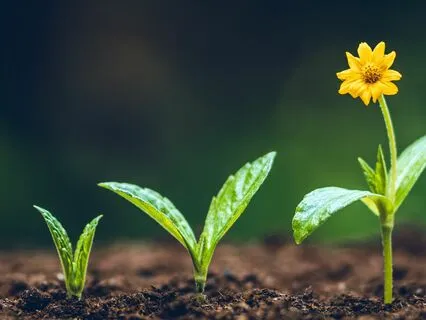
Why not focus our attention on blossoming rather than burning out?
I want to ask you,
What would it mean to you to be blossoming with more space,
More ease,
And joy in your life?
Now,
Your initial response might be,
Oh,
Blah.
OK,
I'm going to ask you to allow that question to drop in a little.
I know what blossoming means to me.
For me,
It's things like coming home to myself,
Being calm,
Laughing.
I have other words.
But I'd love you to name for yourself,
What would blossoming mean?
If you were living in a blossoming place,
What word or phrase?
But the workshop is really for people,
Many of us in fact,
Who are kind of living with a low-level burnout all the time.
We're used to being somehow dissatisfied,
Somehow overworked,
Somewhat not quite our best selves.
So if we're aware that there is such a thing as burnout,
We're wondering,
You're in the right spot.
Also for busy women who are time poor.
So all of my training,
In fact,
Is now very much using tools and resources that don't require huge investment of time.
We don't need to do that.
We've learned so much from neuroscience.
We're remembering so much from nature and from ancient wisdom that we can actually make impactful changes with tiny,
Tiny pockets of time.
So I'm focused on you if you're time poor.
And I'm especially welcoming here today,
The woman leader who is over-giving.
I don't mind.
It's OK.
No,
I can do it.
The woman who is over-committed.
Yeah,
I know I worked 12 hours for the last three days.
But you know what?
This has to be done.
I'll do it.
It's OK.
For the woman who is role-modeling perfection,
I have to do it perfectly.
No,
No,
I can't ask anybody else to do it because it must be done perfectly.
And I'm the person who can do it perfectly.
Now,
I'm being a bit harsh here.
And in a way,
It's very intentional.
I'm calling you out.
So if you resonate with any of these things,
Even if you feel uncomfortable and you're a bit cross with D now,
That's OK.
If you resonate in any way,
This workshop is for you.
The reason I'm interested in training you in this workshop to begin to blossom rather than to burn out and the reason I work with women leaders in the area of burnout is because I know all about it from the inside out.
So long story short,
As a young woman,
I was passionately committed to my profession in human care services.
I was intelligent,
Skilled,
Willing,
Able.
I was the person who was rolled out if there was ever a situation of conflict,
Ever in need of debrief,
If there was a requirement for somebody to step up into a role for which she was neither trained nor resourced,
If there was more to be done,
If there was difficulty to be sat with.
I just naturally did it.
I didn't even,
You know,
It's not that I thought myself a martyr or anything.
It just naturally came to me.
I could do anything,
Be anywhere for as long as required.
And of course,
You know the end of that story.
I absolutely crashed and burned.
It was a devastating experience.
It cost me a lot in terms of relationships,
Financially,
Just my whole sense of purpose,
My confidence.
So it's an experience I don't wish on anybody and it's my great joy that I support others not to crash and burn the way I did.
But you know,
From that experience then,
I spent many years studying.
I was wanting to know why.
Who's a decent person?
What happened?
Why did it happen?
So I spent time exploring the ancient wisdom traditions.
I studied philosophy,
Theology,
All of the wisdom traditions.
I had a wonderful five-year full-time immersion.
And do you know the essence of what I learned in that week-long study time?
Across all wisdom traditions,
There's only one core tenet.
Guess what it is?
One core belief that stretches across every wisdom tradition.
Kindness,
The only thing to which all have subscribed.
I found that powerful.
I then went on and studied mindfulness.
I did a master's in mindfulness.
I was interested in this second wave of brain training.
So if we can reframe our experience,
If we can choose a better life,
Let me find out why,
How,
How.
So that was a deep immersion,
Way over my head at times.
I learned so much.
But again,
And of course,
All that I learned there now informs everything I do.
But again,
I was surprised by the core thing that I learned.
Guess what that was?
The super sauce,
The cutting edge,
The most impactful finding within neuroscience,
Where all the excitement and energy and research is,
Is in the area of self-compassion.
And even though that surprised me,
It kind of resonated deeply with me as well.
So now that,
Of course,
Is one of my key teachings and key ways of being with people,
The importance and the power and the simplicity of self-compassion.
I'll say a bit more about that later.
And then I went on and I did some advanced studies in supervision.
I've always been a supervisor and facilitator.
But I was really interested in not just our professional development,
But in helping the women I work with and myself to remember that we're not just machines.
We're human beings.
So I had a wonderful experience studying a school of wisdom supervision.
And so now I bring that into all of my work,
Helping us to remember we're human beings.
Yes,
We have a professional life.
Yes,
We want to grow and develop professionally.
Yes,
We want to do a good job.
And we're human beings.
So that shaped me so that now my life is not one of busyness.
I've learned the art and skill of pausing.
It's that little space that we create where we then have choice.
And we then take action to support ourselves.
A little tiny brain hack.
For me,
Pausing is always associated with being in nature.
Again,
Something that the ancients knew all about.
6,
000 years ago,
People in Australia were removing themselves,
Going out in nature.
The natives in North America were doing the same thing.
The indigenous people there removed themselves into nature.
We Celtic people in Ireland have that tradition,
Removing ourselves,
Spending time apart.
Now we know from neuroscience I can do that in a really short time by this art and skill of pausing.
So I live there now.
And it is the heart of my work.
So if you have been struggling with depletion,
And by depletion,
I mean a bit jaded,
A bit wrecked,
But keep on going,
Keep on going,
A bit dissatisfied,
A bit unhappy,
Perhaps feeling you're not as sharp as you used to be.
But we'll keep on going.
So if that is you,
Maybe you have had energy of coping with depletion the hard way,
Like the day of old.
Maybe like her,
You'd consider yourself Teflon coated,
Water off a duck's back.
Maybe you have bounce back ability.
Oh,
It doesn't matter to me that I've been involved in that huge conflict and that I have a bullying experience in work.
Never mind.
I'll stand up.
I'll get going.
Maybe you've stuffed down your feelings.
I know my way of doing that involves the fridge,
Bad food,
Perhaps wine,
Perhaps some sedation on the couch watching Netflix.
Maybe you're just used to running on empty.
This is how it is.
This is life.
Maybe you live with the dissatisfaction of a life you don't quite want.
Maybe you exhibit behaviors of resentment.
I thought it was going to be different.
Or maybe you just overgive.
You just keep on giving,
Keep on pouring from that empty teapot.
I don't mention these things in this workshop to shame you or to judge you.
Every one of those things I know about because they are our habitual ways of coping with depletion.
But becoming aware and choosing something different is very powerful.
So forgive me,
But the invitation is to notice how you cope with depletion.
So now I want to turn the page,
And I want to say whatever your current experience of over-business,
Stress,
Depletion,
Wondering if there's another way is,
It is possible to blossom,
To deal with that extreme fatigue,
To banish burnout,
To succeed even in stressful,
Even in toxic situations,
Though you will take some informed decisions there.
It's possible to set and keep healthy boundaries.
It's possible to live from an empowered leadership.
It's possible to love,
Work,
And to live life.
And these,
In a way,
Are the fruits of choosing blossoming.
But let me offer you three core fundamental questions now that will pivot you from whatever reality you're in towards blossoming.
You might want to write these questions down and revisit them.
But even for now,
Just take them.
Do you have to do everything?
Notice your emotional response to that question.
Notice what immediately comes up,
And then allow the question to drop and drop and drop.
It's a great practice to journal a bit on these questions.
Do you have to do everything?
A second question,
Can you be less than perfect?
What about average?
What about leaving an unfinished to-do list?
What about completing a piece of work or being with a person?
And you could have done better.
Can you be less than perfect?
And again,
I invite you to notice your immediate emotional response to that question.
What comes up for you?
And then in your own time,
Perhaps later,
Journal a little bit on that question.
Can you be less than perfect?
Get it all out.
And the third question,
Can you celebrate your wins?
How are you with the pat on the back?
God,
I did a fantastic job there.
I'm so glad I was able to spend time with Dee.
I think it was powerful what I offered her there.
How are you with that?
Again,
Notice your immediate emotional response.
What comes up for you when you ask yourself,
Can I celebrate my wins?
And then a wonderful thing to journal on as well.
So the answers to these three questions are your start place,
Really.
Whatever detail you come up with,
Whatever emotions get stirred for you,
Whatever are your current experiences or strategies in relation to these three questions,
Well,
They now are your baseline.
Powerful stuff.
So I'm giving you a moment to jot down these questions.
Come back to them.
Spend time with them.
And they will pivot you from floating through depletion to taking some clear decision around blossoming from this point on in your life.
So jot down the questions and bear with me.
Often people come to me or do something else to take a break from an overstressed life.
You might take a holiday.
You might take a few days off.
You might start a new hobby.
But then we come back to our busyness.
So the question we want to grapple with in this training is,
But in our real life,
Not when we're taking a break,
Not when we're giving ourselves some downtime,
Not when I'm in a do-vey-do day,
Or not when Dee is stuffing her feelings down with bad food from the fridge and vegetating on the couch.
Not in those times.
But in my day-to-day busyness,
How do I maintain the momentum without burning out?
How do I not get caught up in the cycles of over-busyness again?
So the answer is simply,
Wherever we put our attention,
That grows.
So if we begin to focus on blossoming,
We're going to take action in our day that supports that.
Focusing on blossoming rather than focusing on burnout is already a powerful action.
So if you have identified what words or phrases come up for you,
What's your description of blossoming in your life?
A marvelous thing to have those few words and the word blossom just someplace in your eyeline.
Focus there and that will grow.
It's kind of super simple,
But it's evidence-based,
Scientifically proven practice.
Wherever we put our attention,
That grows.
So the little hamster on the left in the orange wheel is spinning,
Spinning,
Spinning that wheel.
So busy,
Sweat on her brow,
Can't really slow down because she must keep the momentum up.
That's her job,
You see.
Now while she's spinning,
She's absolutely exhausting herself,
But nevermind,
She can keep the wheel spinning.
While she's spinning,
She has very limited perspective.
She can't really see what else is around.
She can't even think of anything else,
Just keep spinning.
And of course we know the end of that story.
That little hamster is going to crash like D of old and that wheel will stop.
And guess what?
The sky won't fall down.
That's the little hamster on the left.
Now I ask you to put your attention on the hamster in the pink wheel.
So this little lady,
Like the D of more recent years,
Has learned the art and skill of pausing.
So sure,
Sometimes she's spinning really fast because she's got a deadline,
She's got a piece of work,
She's involved in a situation,
We must keep the momentum up.
But then there are other times when she slows that wheel right down,
Maybe even bringing the wheel to a full stop.
In the full knowledge that that's okay,
She can get spinning again whenever she wants and she can go as fast as she needs to whenever she wants.
So it's the same reality.
It's the same world,
But very different experiences.
So another question,
We're full of questions today.
Which world do you choose?
Now I have a caveat here because whichever world you're in,
We sometimes spend time in the other.
So I'm all about the pausing and sometimes in a spinning,
Fast spinning wheel,
But I'm more aware of it now and I spend less time there.
So which world do you choose?
So if we choose the little lady on the right in the pink wheel,
Who has learned the art and skill of pausing,
That little lady has learned about our emotional regulation system.
So all the time,
Every day,
From the time we are born until we die,
We are running one of three emotional regulation systems.
It's like the engine under the hood.
We're either in the drive system,
All about going,
Getting,
Making things happen.
We're in the stress system,
All about galvanizing our energy to keep ourselves safe.
Or we're in the calm system,
The parasympathetic nervous system,
Which restores peace,
Brings us home to ourselves and gives us that pause from which we reach that part in the brain that deals with clarity,
Focus and attention.
All of these systems are marvelous,
Amazing in what they do.
Sometimes we get stuck on a system like the drive or the stress cycle.
And that's where we experience the exhaustion,
The depletion,
The burnout.
And often as 21st century women,
We don't know much about the calm system.
We don't really know how to trigger ourselves into it.
We don't really know how to spend time there.
And so we're depriving ourselves of that healing,
Peaceful,
Calm,
Nourishing emotional regulation system.
And that's what the invitation to blossom is all about.
Confession time.
I have spent years teaching about self-care from the perspective that we cannot continue to pour from an empty cup.
We wouldn't dream of running our car with the oil light flashing or without diesel or petrol.
Basic care.
And we need to do the same for ourselves.
But I woke up recently to an important corrective.
I never intended to,
But I bet I often taught that we need to replenish our cup so that we can continue to care for others.
And do you know what?
That's faulty foundation.
So I now say it is absolutely true.
We cannot run on empty.
If we don't know how to spend time in our calm parasympathetic nervous system,
That calming emotional regulation system,
We will end up running on empty.
So we can't pour from an empty cup.
So we do need to replenish.
But actually,
We need to replenish in such a way that I don't repeat the cycle.
So I don't fill up my teapot so that I can pour out all the tea and care for others again and run on empty again.
That's faulty thinking.
So yes,
We cannot run on empty.
We do need to replenish our teapot.
But not so that we can pour it all out again and deplete ourselves again.
We need to learn not to empty ourselves.
So in a way,
That's my fundamental shift.
So it's not just avoiding burnout,
Filling our teapot up again and off we go.
No,
No,
No,
No,
No.
It's a completely other perspective.
I learn not to empty the teapot.
I learn to keep myself nourished and safe and calm and happy.
And I know how to do nothing and be okay about it.
See the shift?
Embarrassing that it's in late adulthood I come to it.
So the foundations for blossoming are choosing,
Asking yourself those core fundamental questions,
Which I hope you've made a note of and that will be great.
And then it's about strategy and mindset.
So there's a strategy solution and a mindset solution to the whole thing.
And you know what?
They're kind of simple.
So I'm going to share four strategies.
Pausing,
One micro step,
Find your mentor,
And no shiny object.
So pausing is simply that neuroscience finding that if I take a nano break,
A tiny break,
It allows my nervous system to calm and it gives me a lot more choice in that moment.
So remembering to pause,
One micro step.
So often when we're wanting to bring about a change,
We'll decide on a hundred things.
From tomorrow,
I'm going to eat healthy.
I'm going to get up.
I'm going to exercise.
I'm going to journal for an hour.
I'm going to express gratitude.
I'm going to meditate twice a day.
I'm going to take a walk out in nature.
I'm going to smile at everybody I see.
Now look,
We're not going to do that.
So the science tells us one micro step is actually enough to build the momentum.
Then finding a mentor and no shiny object.
Finding a mentor means finding some accountability and some support.
Can be with a coach like myself,
Or it can be a work colleague or a good friend or somebody who will understand your journey and be a little anchor for you.
And then no shiny object.
So one of our great challenges in the 21st century is distractions.
And we can distract ourselves really easily from doing what we want to do.
You know,
For me,
I know it's reading the next book,
Attending the next course,
Taking these five free workshops.
And actually the challenge is to cut all that down.
So for example,
You might be watching this and you say,
Oh God,
I can't stand Joanne's voice or she's too slow or she's too fast.
Perfect.
You hone in on something that supports you and then stay with it.
Shiny object syndrome,
Big fundamental in getting on the road,
Big strategy towards blossoming.
So the pausing is simply taking a little break.
It does come from the world of mindfulness.
It does come from the world of neuroscience.
It is an evidence-based practice that gives our brain that chance to notice that I'm highly stressed,
To notice that I'm exhausted,
To notice that I have feelings about that challenging conversation I've just had.
And when I notice,
I'm already kicking myself into that calmer place.
So the slight pause is super,
Super powerful.
The question is,
Can you find a way of pausing that you can build into your day?
And sure you can.
Can you decide to take three deep breaths as you're waiting for your computer to warm up?
Can you look out the window?
Can you take a moment?
Just identifying something that would be a pause in your day and practicing it brings you all the benefits of that neuroscience.
Can you focus on one micro-step,
A new habit,
Something really tiny,
One step too small to fail?
Like for example,
When I wake up in the morning,
I just take a couple of minutes before I reach for my phone.
When I get to the workplace,
I park a little bit further away and have a few minutes walk.
When I'm having my lunch,
I might notice the taste,
The sights,
The smells,
The first bite.
So just choosing one micro-step.
And then you mightn't even do it every day,
And that's okay.
We're coming back to,
Can you give yourself credit?
So maybe you choose that I don't get out of bed until I name three things I'm grateful for,
Or until I set an intention for the day,
Or until whatever it is.
Some little micro-step.
And then you do it one day and you forget it the next.
And I've done it one day.
And maybe I start with doing it just once a week,
And then I do it a bit more frequently.
One micro-step,
One place to start,
One commitment.
A micro-step is a tiny,
Tiny step,
Something that's too small to fail.
It will open up the root to blossoming.
So maybe you'll identify one for yourself right now.
If you do jot it down,
What might your micro-step be,
Your first micro-step?
What might it be?
And then we know that as human beings,
Creating the new habit is challenging.
So a great brain hack is to embed the new habit in something I already do.
See what I was saying there earlier on,
When I wake up before I get out of bed.
So that becomes the trigger for the three things I'm grateful for,
Or for the setting of an intention,
Or it reminds me that I don't reach my phone for the first couple of minutes,
Or to take the three deep breaths.
Whatever it is,
Is my micro-step.
Or it might be,
While I'm brushing my teeth,
I'm going to notice my feet on the floor.
While I'm brushing my teeth,
I'm going to set my intention for the day.
While I am washing my hair,
I'm going to express some kindness for myself.
One kind phrase.
I always close my computer down at 4 p.
M.
So as I'm closing my computer down at 4 p.
M.
,
I had the habit of looking out the window and seeing the blue sky,
Or the gray sky,
Or the rainy sky.
So it's while I'm doing something,
I will do my micro-step.
That really helps to embed the habit.
And then the third strategy is finding a mentor.
Really support yourself to move towards blossoming if you find some accountability and support space.
So maybe that's a free Facebook group.
Maybe it's a work colleague,
Or a friend.
Or maybe it is a coach,
Somebody that you feel attracted to working with.
But just finding that anchor,
That ally,
That support,
That will help you with your reframing,
With your micro-step,
With your habit stacking.
You see,
The information is not that rocket science.
It's around everywhere.
You can look all of this up.
You can find out an awful lot more about each of these strategies.
And as humans,
We need a little support.
We need somebody in our corner.
We need a bit of accountability and support.
So maybe choose how you're going to find that.
A Facebook group,
A physical network group,
A friend,
A work colleague,
Or a coach.
Or find that mentor,
We'll call it.
So those are the four strategies.
And if you take those four strategies,
You're really going to begin to build the momentum towards blossoming.
You ask the questions,
You choose the world you want to live in,
And you implement the strategies.
And then the second part of the solution is around mindset.
This is the internal work.
So one of the great benefits of pausing is we notice our habit energy.
So when I build in a pause into my day,
So at one time,
I will have a cup of coffee in a slower,
More attentive way.
Then I notice how I am.
God,
I'm a bit rattled.
My head is still swimming with that conversation I had with the person I was trying to support who was a bit snappy with me.
Oh,
I'm a bit rattled.
I notice.
And I remember that what I did with that rattleness was I got really busy into something else because I don't want to know about it.
I'm not going there,
I'm just keeping on going.
And then when I pause,
Oh,
I notice that habit energy.
And noticing that habit energy is not a judgment.
It's not a failure.
It's a powerful doorway into refocusing that.
So the power of the pause is I notice my habit energy,
Not in a way to judge myself,
But in a very gentle way to turn that,
To pivot that,
To refocus that,
To build new habit energy with my micro-step and my habit stacking and my mentor or support.
So that's the first mindset change,
Allowing myself to notice the habit energy.
It's okay.
And then the second fundamental mindset response is be kind to you.
Now,
You may have an awful reaction to this.
Many of us who are working in human care services are in some ways supporting other people.
We do that naturally,
But we have,
Sometimes we have great difficulty turning that kindness towards ourselves.
And yet we know from neuroscience that self-compassion is the foundation of wellbeing,
Resilience,
Blossoming.
Self-compassion,
Building that muscle is incompatible with burnout.
So whatever your star place about being kind to you,
It's worthy that you find some ways of noticing your habit energy,
Of noticing your challenge through the lens of love.
Often when we're stressed and over busy,
Our inner critic is way out of control.
Wherever we are with our inner critic,
We can begin to soften,
Soften towards ourselves.
Maybe by on occasion,
Just putting my hand on my heart and noticing my heartbeat.
That already sends messages to my brain,
Releases some oxytocin,
Softens the edge.
And I'll be a bit kinder to myself in that moment.
Or maybe it is in a very stressful moment,
Just taking that pause and asking myself,
What do I most need now?
Turning to myself with the same kindness that I would very naturally turn to another person with.
And then we're back to no shiny objects.
So finding what works for you,
The micro set to start with,
The habit stacking to help you with that,
The practice of pausing through the day,
Having a mentor,
A free Facebook group,
A network,
A work colleague or a buddy to help you to be accountable and to support you on your journey into blossoming.
And then stop flitting from one thing to another.
If we choose blossoming,
If we choose to put our attention in the area that we want to grow,
Then we can't be putting our attention a lot on other things.
So no shiny objects is a really challenging mindset perspective for blossoming.
I have a tendency,
I'm a magpie.
I have a tendency for shiny objects.
I like the new training.
I love the new book.
I want to see why people are interested in following this.
I want to see,
Can I learn something more?
Can I try something differently?
And I have trained myself to notice the shiny object syndrome and then to refocus.
So noticing the habit energy,
Building that muscle of kindness to myself and watching for the shiny object.
We moved fast through core questions and core activities that will pivot you away from burner towards blossoming.
I hope I didn't move too fast.
Wishing you a great ease and peace and happiness now as you go through the rest of your day.
And thank you for joining me.