The world’s largest free audio library for everyday wellbeing
Devotional & Prayer
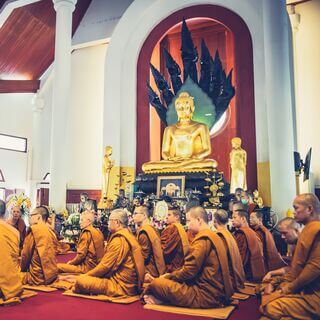
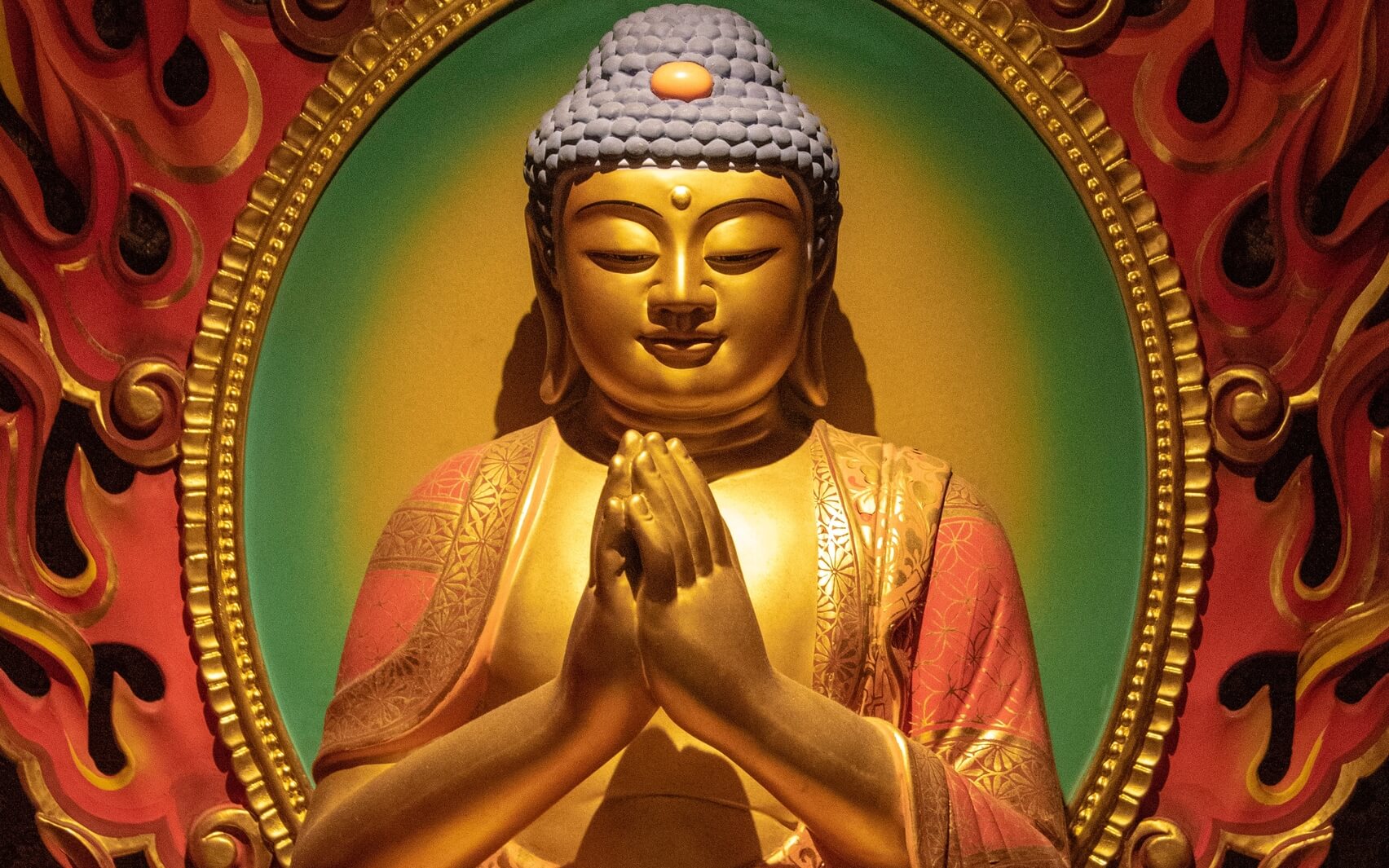
Refuge Prayer is a traditional Buddhist practice of reciting the refuge formula to take shelter in the Buddha, the Dharma, and the Sangha, the Three Jewels of the Buddhist path.
Last Updated
3 Jul 2026
We are still reviewing this page. Our research team checks every technique page for accuracy and evidence quality before final release. Details may change as that review completes. The evidence badge shows our current reading of the published research.
RECOMMENDED DOSE
No direct dose evidence for Refuge Prayer at this level; editorial synthesis. A short, daily period of quiet repetition is a conservative, achievable starting point for anyone new to a repetition-based prayer practice.
No direct dose evidence for Refuge Prayer at this level; editorial synthesis. Once a daily habit is established, extending to 15–20 minutes reflects common practice conventions for repetition-based prayer and meditation.
A peer-reviewed feasibility study of mantram (Holy Name) repetition — a closely related repetition-prayer practice — used a 5-week program of roughly 90 minutes of structured practice per week. This session length is extrapolated as overlap to Refuge Prayer. The weekly structured cadence comes from that study; the recommendation to sustain daily informal repetition alongside it reflects general practice convention rather than a cited dose.
Session length
Session length: 5–10 minutes
5
MIN
How long each individual practice session should last from start to finish.
Frequency
Frequency: 5–7 days
5
DAYS
The number of days per week to fit a session into your routine.
Session length
Session length: 15–20 minutes
15
MIN
How long each individual practice session should last from start to finish.
Frequency
Frequency: 6–7 days
6
DAYS
The number of days per week to fit a session into your routine.
Session length
Session length: Up to 90 minutes of structured practice per week
30
MIN
How long each individual practice session should last from start to finish.
Frequency
Frequency: 1–7 days
1
DAY
The number of days per week to fit a session into your routine.
About this card. These recommendations are not a substitute for personalised guidance from a qualified practitioner. Beginner and intermediate durations are editorial estimates, and the extended range is extrapolated from a related repetition-prayer study rather than a trial of Refuge Prayer itself; treat all figures as starting points.
Quick answers to what people most often ask. Each card links to the deeper section below.
evidence
No trials have tested Refuge Prayer directly; the closest research comes from related contemplative prayer and mantra practices, which show lower everyday stress. A meditation meta-analysis found small-to-moderate stress reduction, but one large trial of 702 people found contemplative prayer worked no better than other calming activities.
Read moregood for
Refuge Prayer suits Buddhist practitioners and others drawn to devotional practice who face everyday stress, a restless mind, or the sense of carrying too much alone. Reciting the three-line formula offers steadier, lighter stress and the relief of handing over control. It is not a substitute for professional care during trauma, addiction, depression, or crisis.
Read moresafety
Most healthy adults can recite Refuge Prayer safely every day, and no harms have been measured for it. People working through recent trauma or grief should note the quiet, inward turn can let painful material surface, so pair it with support. During crisis, addiction recovery, or clinical depression, use it alongside professional care, not instead of it.
Read morehow it works
Refuge Prayer appears to work through the act of handing over control—formally entrusting yourself to the Buddha, the Dharma, and the Sangha rather than gripping every problem alone. The three-line formula also gives wandering attention a fixed place to return to, and the settling that follows is consistent with easing the body's fight-or-flight response.
Read moreRefuge Prayer is a Buddhist devotional practice of reciting the refuge formula to take shelter in the Three Jewels: the Buddha, the Dharma, and the Sangha.
The practitioner sits in a settled, reverent posture and recites the three-line refuge formula, 'Buddham saranam gacchami, Dhammam saranam gacchami, Sangham saranam gacchami,' with each line turning attention toward the Buddha, the Dharma, and the Sangha in turn. It can be a one-time formal entry to the Buddhist path or a repeated daily devotion. In Tibetan Buddhism the form expands into a fourfold refuge that adds the guru and the three roots, deepening the devotional relationship.
Refuge Prayer, also called Taking Refuge, is a devotional recitation rather than a silent insight or breath-focused meditation; its heart is the act of entrusting oneself to the Three Jewels, not observing thoughts or watching the breath. It is not a petition for specific outcomes, and it is distinct from Christian contemplative prayer, even though much of its supporting research comes from those adjacent traditions.
Not to be confused with
Prayer of petition or supplication
Petitionary prayer asks a higher power to change a situation or grant an outcome. Taking refuge instead entrusts oneself to the awakened path and reaffirms commitment; it is an act of shelter and trust, not a request for a specific result.
Mindfulness meditation
Mindfulness cultivates detached, nonjudgmental observing of thoughts and sensations. Refuge Prayer is devotional: it directs active trust and self-offering toward the Three Jewels rather than simply watching experience from a neutral distance.
Passive resignation or giving up
Devotional surrender in refuge practice is active trust and receptive openness, not defeated passivity. It means releasing the burden of self-directed control while staying engaged, which differs from resignation and from avoidant, emotion-focused coping.
Guru yoga and deity visualization (Tibetan Vajrayana)
These advanced Tibetan practices center on visualizing a teacher or meditational deity. Refuge Prayer is the foundational entry recitation; in Tibetan Buddhism it can expand into a fourfold refuge that adds the guru, but the core practice remains taking shelter in the Three Jewels.
Refuge Prayer appears to work less through the words themselves and more through the act of handing over control, formally entrusting yourself to the Buddha, the Dharma, and the Sangha rather than carrying every problem alone. This devotional surrender, the deliberate release of self-directed control toward a trusted refuge, may be where relief comes from. A correlational study of 177 university students in Chile found prayer eased stress most when it rested on a genuine, trusting bond rather than rote repetition, though it studied Christian prayer rather than refuge practice (Wnuk, 2023). The three-line formula also gives wandering attention a fixed place to return to, steadying a busy mind, and prayer more broadly has been described as serving several coping roles such as seeking guidance and expressing gratitude (Bade & Cook, 2008).
Relief in Refuge Prayer may come less from the words themselves and more from the act of handing over control, formally placing trust in the Buddha, the Dharma, and the Sangha instead of carrying every problem alone. Early research on prayer suggests it may ease stress most when it rests on a felt sense of trust or connection (Wnuk, 2023).
When the body is wired, saying the refuge lines slowly in a settled posture may ease the muscle tension, quick breathing, and on-edge feeling that come with high alert. This is arousal downregulation, the body's activation settling from a revved-up state toward a steadier baseline. Early prayer research suggests the settling is strongest when the words carry a real sense of trust rather than being said by rote (Wnuk, 2023), (Bade & Cook, 2008).
Repeating the three-line refuge formula gives a wandering mind a fixed place to return to, so attention has something steady to hold instead of circling back to worry. Early prayer research suggests this kind of focused, meaningful repetition can support a calmer, more collected state, though it has been studied in other prayer traditions rather than in refuge practice itself (Wnuk, 2023), (Bade & Cook, 2008).
What Refuge Prayer does to the body has not been measured directly, so the physical picture is inferred from related prayer and meditation studies rather than from recordings taken during the practice. Those studies tracked felt stress rather than physiology, but the settling they describe is consistent with reduced sympathetic arousal, the fight-or-flight activation that shows up as a quick breath, a braced chest, and tight muscles (Knabb & Vazquez, 2018), (Dharmawardene et al., 2015). In the body this may feel like the shoulders dropping, the breath slowing, and the sense of being on guard easing, though cortisol and muscle tension have not been recorded during refuge practice itself.
Many practitioners feel the chest loosening, the breath slowing, and the braced, on-guard feeling ease as they recite the refuge lines. That shift points away from sympathetic arousal, the body's fight-or-flight setting, though it has not been measured directly during Refuge Prayer; the signal comes from related contemplative prayer and mantra practices (Knabb & Vazquez, 2018), (Bormann et al., 2005).
The settling that many people describe while reciting the refuge formula is thought to involve lower cortisol, the body's main stress hormone. That drop has not been measured in Refuge Prayer itself; it is expected from related prayer and meditation practices that ease felt stress (Knabb & Vazquez, 2018), (Dharmawardene et al., 2015), and practitioners often experience it as muscles loosening and breathing slowing.
As the recitation finds a steady rhythm, many people notice the shoulders dropping and the jaw and hands loosening, the body feeling less braced as muscular tension eases. This easing hasn't been measured during Refuge Prayer itself; it is drawn from related prayer and meditation practices that lower stress (Knabb & Vazquez, 2018), (Dharmawardene et al., 2015).
Indirect evidence points to stress relief as the most supported use of Refuge Prayer, though the studies examined related contemplative prayer and mantra practices rather than refuge practice itself. A 2-week internet-based contemplative prayer trial with 86 self-identifying Christians facing daily stress found the prayer group settled more than a wait-list group on stress and a sense of surrender (Knabb & Vazquez, 2018), (Ferguson et al., 2009), and repeating a spiritual word or phrase was linked to lower stress and anxiety in a small, uncontrolled study of 62 outpatient veterans (Bormann et al., 2005). What is not yet supported: any trial of Refuge Prayer on its own, reported effect-size estimates from those prayer trials, and long-term follow-up.
Reciting the familiar refuge formula gives the mind a steady place to return to, and practitioners often describe the weight of a stressful day starting to feel lighter. Small trials of related contemplative prayer found lower perceived stress, though they studied Christian prayer rather than Refuge Prayer itself (Knabb & Vazquez, 2018), (Ferguson et al., 2009).
Related contemplative prayer and mantra practices have been linked to lower everyday stress, which is the closest research we have, because Refuge Prayer has not been tested in a trial of its own. A 2-week internet-based prayer program eased stress in adults facing daily pressure (Knabb & Vazquez, 2018), and research on meditation broadly, not Refuge Prayer specifically, shows a small-to-moderate reduction in stress: a standardized mean difference of 0.49 (95% CI 0.21 to 0.77) versus control conditions among informal caregivers and health professionals, meaning the average person who practiced reported less stress than about two-thirds of those who did not (Dharmawardene et al., 2015). Two limits matter most. Samples are mostly Christian or general meditation groups, and one large trial of 702 people found a related contemplative prayer worked no better than other calming activities, though everyone improved a little (Rohde et al., 2024).
1
Meta-analyses
1
RCTs
0
Systematic reviews
1
Observational
7
Pilot
Studied populations
War trauma and strategies for coping with stress among Ukrainian refugees staying in Poland
2023
Finding: In a survey of Ukrainian war refugees who fled to Poland, people who leaned on emotion-focused coping such as praying, distraction, or sedatives showed no better mental-health scores, while those who used active, problem-solving strategies reported lower distress. For someone considering Refuge Prayer, it is worth knowing this study says nothing about that practice specifically; it looked at general prayer as a way of coping with acute war trauma, a very different context. The research was also a one-time snapshot rather than a study that followed people over time, so it can point to patterns but cannot show what causes what. Treat it as a caution against assuming prayer alone will ease severe distress, not as evidence for or against Refuge Prayer as a technique.
See full citation in referencesWar trauma and strategies for coping with stress among Ukrainian refugees staying in Poland
2023
Finding: In a survey of Ukrainian war refugees living in Poland shortly after the 2022 invasion, people who leaned on emotion-focused ways of coping, such as praying, distraction, or taking sedatives, showed no improvement in their mental-health scores, while those who used active, problem-solving approaches reported less distress. This tells us something about how people cope with acute trauma, not about a meditative Refuge practice, so it should not be read as evidence for or against Refuge Prayer itself. It is also a one-time snapshot of a population in crisis, which means it can show associations but cannot establish cause.
See full citation in referencesRefuge Prayer comes from the foundational Buddhist act of taking shelter in the Three Jewels, the Buddha, the Dharma, and the Sangha, and is practiced across the Theravada, Mahayana, and Vajrayana traditions as both the formal entry to the Buddhist path and a daily devotional meditation. In Tibetan Buddhism it expands into a fourfold refuge that adds the guru and the three roots, deepening the devotional relationship. These roots help explain the practice's form, its reverent recitation and its placing of trust in the awakened path, not its clinical effects.
Refuge Prayer is a gentle, low-risk practice for most healthy adults. Reciting the refuge formula in a settled, upright posture is safe to do daily, and no harms have been measured for it. A few situations call for care rather than avoidance. If you are working through recent trauma or grief, the quiet, inward turn of the practice can sometimes let painful memories surface, so it is better paired with support than done alone; this is a caution drawn from practice, not from measured adverse events. And because the practice has only been studied indirectly, treat it as a companion to professional care during acute crisis, addiction recovery, or clinical depression rather than a substitute for it. In one large trial, a related contemplative prayer eased distress no more than other calming activities did (Rohde et al., 2024), which is a reason to keep any existing treatment in place alongside it.
People living with trauma, grief, clinical depression, addiction, or acute emotional crisis should practise Refuge Prayer alongside professional treatment rather than in place of it. The practice has not been tested on its own, and feeling comforted in the moment does not always shift underlying symptoms. In some crisis-coping surveys, leaning on prayer mainly as an emotion-focused strategy, a way of soothing feelings rather than acting on the situation, was not linked to better mental health (Długosz, 2023), (Długosz, 2023). Anyone in perinatal distress or under active psychiatric care should keep their clinician informed and let the practice support that care, not replace it.
The quiet, inward turn of reciting the refuge formula can sometimes let painful memories or strong emotion surface if you are working through recent trauma or grief. It is better paired with support than done alone: if difficult feelings rise, gently open your eyes, feel your feet on the floor, and pause rather than pushing through. This caution is drawn from practice, not from measured adverse events.
| Technique | Best for | Use with care | Evidence strength | Distinction |
|---|---|---|---|---|
| Centering Prayer (Christian contemplative prayer) | Christians who want a contemplative, trust-based practice inside their own faith framework. | One large trial found it eased distress no more than other calming activities, so expect a supportive rather than curative effect. | moderate EVIDENCE | Centering Prayer rests in silent consent to God's presence within a Christian frame, while Refuge Prayer recites a fixed Pali formula to take shelter in the Buddha, Dharma, and Sangha. Both share a settling, trust-based mechanism, but the refuge object and tradition differ. Most of the direct prayer evidence comes from Centering Prayer and related Christian practice, not from Refuge Prayer itself. |
| Mantram repetition (spiritual phrase repetition) | People who want a portable spiritual phrase to return to across a busy day, regardless of tradition. | Its stress evidence comes from a small uncontrolled study, so read benefits as preliminary. |
No. Refuge Prayer is traditionally Buddhist, the formal entry to the Buddhist path centred on taking shelter in the Buddha, the Dharma, and the Sangha, but you do not have to be Buddhist to explore it. A belief-aligned frame helps some people take it up, while others may prefer a secular version.
+
No. Refuge Prayer began as a Buddhist practice, the foundational act of taking shelter in the Three Jewels: the Buddha as the awakened one, the Dharma as the teachings, and the Sangha as the community of practitioners. It appears across the Theravada, Mahayana, and Vajrayana schools and expands into a fourfold refuge in Tibetan Buddhism. You do not have to be Buddhist to recite the formula: for many the meaning of the Three Jewels aids engagement, while others may prefer a secular framing that shares the same calming and focusing effects. Whether you identify as Buddhist is about personal fit and comfort, not about whether the practice can help.
Taking refuge means formally entrusting yourself to the Three Jewels: the Buddha as the awakened one, the Dharma as the teachings, and the Sangha as the community of practitioners, an act of trust, commitment, and belonging rather than carrying everything alone.
+
Taking refuge means formally entrusting yourself to the Three Jewels: the Buddha as the awakened one, the Dharma as the teachings or path of truth, and the Sangha as the community of practitioners. Reciting the formula turns attention toward each in turn, understood as active trust and self-offering, setting down sole reliance on your own resources rather than requesting an outcome. Across the Theravada, Mahayana, and Vajrayana traditions it is both the formal entry to the path and a daily reaffirmation of commitment, and Tibetan Buddhism expands it into a fourfold refuge. This describes meaning and tradition, not a clinical effect.
The three refuges a Buddhist practitioner takes shelter in: the Buddha (the awakened one), the Dharma (the teachings), and the Sangha (the community of practitioners). Contemplating each is meant to feel like an act of trust and belonging rather than mere repetition.
The three-line recitation 'Buddham saranam gacchami, Dhammam saranam gacchami, Sangham saranam gacchami,' spoken in a settled posture. Each line turns attention toward a different facet of the path and gives the mind a steady place to return to.
The expanded Tibetan Buddhist form of taking refuge that adds the guru and the three roots (guru, yidam, dakini) to the Three Jewels, deepening the devotional relationship.
Deliberately releasing self-directed control and placing active trust in a higher refuge, rather than passively giving up. It often feels like the relief of no longer holding every problem alone.
A proposed mechanism (self-transcendence, surrender experience) in which releasing personal agency toward a trusted higher power is associated with reduced distress; evidence here is indirect and correlational.
Holding attention on one clear target, here the repeated refuge formula, so it stops drifting to worry and distraction. In practice this can feel like fewer spiraling thoughts and a clearer sense of staying present line by line.
Focused attention or attentional selection stabilized on a verbal or sensory anchor to reduce mind-wandering; inferred for Refuge Prayer from adjacent prayer research rather than measured directly.
The body settling from a revved-up, on-alert state toward a steadier baseline, felt as looser muscles, slower breathing, and less mental urgency.
Autonomic deactivation and reduced sympathetic tone; proposed as a calming pathway for Refuge Prayer but not directly measured in the practice.
Piotr Długosz (2023). War trauma and strategies for coping with stress among Ukrainian refugees staying in Poland. https://doi.org/10.31234/osf.io/azy2v
Cited in: Faq, Research, Use with care, Who should use care
Piotr Długosz (2023). War trauma and strategies for coping with stress among Ukrainian refugees staying in Poland. https://doi.org/10.1016/j.jmh.2023.100196
Outcomes measured
| Outcome | Effect size | 95% CI | N | Comparator | Source |
|---|---|---|---|---|---|
| burnout and psychological health outcomes | Glass' Delta = 2.87 | — | — | no-treatment control | Chirico et al., 2020 |
| stress | SMD = 0.49 | 95% CI 0.21 to 0.77 | — | — | Dharmawardene et al., 2015 |
The research is useful for setting expectations, but study methods and participant groups vary. Treat the findings as general guidance rather than a promise about any single session, and not a replacement for clinical care.
Centering and flourishing: an online intervention study assessing the effects of a Christian contemplative practice on stress-reduction and human flourishing
n = 702
Finding: In a large online trial with 702 Christian participants, a week of Centering Prayer left well-being scores no higher than in comparison groups doing either a non-religious version of the same practice or nothing structured at all; notably, everyone improved a little, whichever group they were in. Wrapping the practice in explicitly religious language did shift how people rated their spiritual experience, but it did not translate into greater well-being. For someone drawn to Refuge Prayer, the practical takeaway is modest: this study looked at a related Christian prayer rather than Refuge Prayer itself, and it found no evidence that a devotional framing alone lifts well-being, at least over a single week.
reported narratively
Bond with God as a Moderator of the Relationship between Prayer and Stress of Chilean Students
2023
Finding: Among 177 university students in Chile, whether prayer eased or added to stress depended on the quality of a person's felt connection to the divine: for those with strong spiritual experiences and a trusting bond, more prayer went hand in hand with less stress, while for those without that bond, prayer was actually linked to more stress. This points to trust and a sense of relational surrender, rather than the act of reciting words, as the ingredient that makes prayer calming. Keep in mind this was a snapshot survey rather than a controlled experiment, so it shows a pattern rather than proving cause, and it looked at Christian prayer rather than Refuge Prayer specifically. For your own practice, it suggests prayer is most likely to relieve stress when it grows out of genuine trust or connection, not repetition alone.
See full citation in referencesEfficacy of Frequent Mantram Repetition on Stress, Quality of Life, and Spiritual Well-Being in Veterans
n = 62
Finding: In a five-week feasibility study, 62 outpatient veterans practised silently repeating a mantram (a word or phrase with spiritual meaning, an ancient form of prayer) for about 90 minutes a week, and afterwards reported lower stress and anxiety along with better quality of life and a stronger sense of spiritual well-being. For someone considering a recitation-based practice, this hints that quietly returning to a meaningful phrase may help settle the nervous system and support a sense of steadiness. Two caveats matter, though: the study had no comparison group, so everyday factors can't be ruled out, and it tested mantram repetition rather than Refuge Prayer itself, so it offers only a parallel rather than direct evidence for this practice.
reported narratively
Spirituality and Prayer on Teacher Stress and Burnout in an Italian Cohort: A Pilot, Before-After Controlled Study
2020
Finding: In a small pilot with 50 teachers and support staff at a Catholic school, split into a prayer group and a no-practice comparison group, a structured program of Christian prayer and reflection lowered the core signs of burnout, including emotional exhaustion and a sense of detachment from work, while raising job satisfaction, with moderate-to-large gains on measures of psychological health. In practical terms, staff who prayed regularly reported feeling less drained and more engaged, and the authors concluded that prayer could be as effective as meditation for easing work stress. Keep in mind this was a small, short pilot in one religious setting, and it tested Christian prayer generally rather than Refuge Prayer, so the results point to what the broader practice may offer rather than proving a specific effect for this technique.
Glass' Delta = 2.87
A Randomized Controlled Trial of a 2-Week Internet-Based Contemplative Prayer Program for Christians With Daily Stress
n = 86
Finding: In this two-week trial, 86 Christian adults were split between an online Jesus Prayer program and a wait-list, and those who prayed reported lower stress and a greater sense of spiritual surrender than those who waited. For someone drawn to devotional prayer, this hints that even a short, structured routine may take the edge off daily stress. Keep in mind the study tested the Jesus Prayer, not Refuge Prayer itself, and it was brief with a small group, so the result points to the broader family of contemplative prayer rather than proving anything about Refuge Prayer specifically.
reported narratively
Functions of Christian Prayer in the Coping Process
2008
Finding: Working with members of Christian groups, this study mapped the many roles prayer plays when people are coping with personal difficulties, sorting them along lines like turning toward a problem versus away from it, looking inward versus outward, and handing a situation over versus taking it on yourself. Of all these roles, participants found seeking guidance and expressing gratitude the most helpful. If you are drawn to a devotional practice, this points to why prayer can function as a flexible coping tool rather than a single fixed act. Keep in mind, though, that the research looked at a small group within a Christian context, so it describes prayer in that tradition rather than Buddhist refuge, and it maps how people use prayer rather than measuring specific health outcomes.
See full citation in referencesCentering Prayer as a Healing Response to Everyday Stress: A Psychological and Spiritual Process
2009
Finding: In a short two-week trial, 44 Christians who followed an online Jesus Prayer program reported lower day-to-day stress and a greater sense of spiritual surrender than a comparison group of 42 who waited for the program, suggesting that a structured, repeated devotional prayer can help settle everyday tension over just a couple of weeks. For someone drawn to contemplative prayer, this hints that a simple, consistent routine may offer real relief without a long time commitment. Keep in mind the study was small and brief, and it tested the Jesus Prayer rather than Refuge Prayer itself, so the results point to what related prayer practices can do rather than proving anything about Refuge Prayer specifically.
See full citation in referencesA systematic review and meta-analysis of meditative interventions for informal caregivers and health professionals
2015
Finding: This review pooled controlled trials of meditation programmes for informal caregivers and health professionals and found a small-to-moderate drop in stress after about eight weeks of practice, alongside improvements in anxiety, depression and people's confidence in coping. For someone drawn to Refuge Prayer, that offers modest encouragement that regular meditative practice can ease the weight of caring for others. Keep in mind, though, that these trials tested meditation in general rather than Buddhist refuge practice specifically, so the results point to the broader family the practice belongs to rather than to Refuge Prayer itself.
SMD = 0.49
Because Refuge Prayer has only been studied indirectly, treat it as a companion to professional care during acute crisis, addiction recovery, or clinical depression rather than a substitute for it. Feeling comforted in the moment does not always shift underlying symptoms, and in one large trial a related contemplative prayer eased distress no more than other calming activities did (Rohde et al., 2024). Keep any existing treatment or clinician contact in place alongside the practice.
Leaning on prayer mainly to soothe difficult feelings, rather than also acting on the situation, may not be enough on its own. In some crisis-coping surveys, prayer used as an emotion-focused strategy was not linked to better mental health (Długosz, 2023), (Długosz, 2023). Let the practice sit alongside practical steps and professional support rather than standing in for them.
Anyone in perinatal distress or under active psychiatric care should keep their clinician informed and let Refuge Prayer support that care rather than replace it. The practice has not been tested on its own, so treat it as one supportive part of your day and continue any treatment already in place.
Refuge Prayer is best approached as a quiet, settled practice you can return to daily, ideally in a comfortable upright posture where you have a few unhurried moments to yourself. A sensible starting format is short and unforced, reciting the three refuge lines at a pace that lets each one land rather than aiming for any set number of repetitions. If you are working through trauma, grief, or ongoing clinical care, keep it as a gentle companion to professional support rather than something you lean on alone.
Find a quiet spot and a comfortable, upright posture. Take a few unhurried breaths so the body starts to loosen and the recitation has a calm base to rest on.
Speak the three refuge lines — 'Buddham saranam gacchami, Dhammam saranam gacchami, Sangham saranam gacchami' — slowly enough that each one lands, letting attention return to the words whenever the mind drifts. There is no target number of repetitions; stop when you feel settled rather than pushing for a result.
If difficult memories or strong emotion begin to surface, especially around trauma or grief, gently open your eyes, feel your feet on the floor, and pause. Surfacing distress is a signal to slow down, not to push through.
If you are managing depression, addiction, an acute crisis, or perinatal distress, treat Refuge Prayer as one supportive part of your day and continue any treatment or contact with your clinician.
If distress feels overwhelming or persistent, reach out to a mental health professional or crisis service. This practice can offer comfort, but it does not replace clinical support.
This information is educational and is not medical advice. This practice is not a substitute for professional care and should not replace prescribed medication or treatment for any medical or mental-health condition. If you are managing a health condition or taking medication, talk with a qualified health professional before changing your practice. If you are in distress or crisis, seek professional support.
| Mantram repetition silently repeats a short sacred word or name throughout the day, whereas Refuge Prayer is a formal three-line recitation taken in a settled posture. Both use meaningful repetition to steady attention and settle the body, but mantram is portable and can be drawn from many traditions, while refuge is anchored to the Three Jewels. |
| Mindfulness meditation | Those who prefer a secular, well-researched route to calmer attention without a devotional framing. | It lacks the felt sense of trust and belonging that gives refuge practice its devotional weight. | strong EVIDENCE | Mindfulness trains open, nonjudgmental observation of present experience, while Refuge Prayer engages devotional trust and self-offering toward a sacred refuge. They can produce a similar quieting of arousal and mind-wandering, but mindfulness is typically secular and does not involve entrusting oneself to a higher refuge. Its stress research is far larger and more direct. |

Possibly, but the honest answer is unproven. Refuge Prayer has never been tested on its own; related contemplative prayer, spiritual-phrase repetition, and meditation studies suggest modest stress relief, though one large trial found no advantage over other calming activities (Knabb & Vazquez, 2018), (Dharmawardene et al., 2015), (Rohde et al., 2024).
+
Possibly, but treat it as suggestive rather than settled. No trial has tested Refuge Prayer itself, so the evidence is borrowed from adjacent practices in mostly Christian or general samples: a 2-week contemplative prayer program eased stress (Knabb & Vazquez, 2018), (Ferguson et al., 2009), repeating a spiritual word or phrase was linked to lower stress in a small uncontrolled study (Bormann et al., 2005), and meditation reviews show a small-to-moderate stress reduction (SMD 0.49) (Dharmawardene et al., 2015). Against that, one large trial of 702 people found a related contemplative prayer worked no better than other calming activities (Rohde et al., 2024). The calming claims are plausible for Refuge Prayer but not yet directly demonstrated.
Indirect and limited. Refuge Prayer itself has not been tested in any trial, so the evidence is borrowed from related contemplative prayer, mantram, and meditation studies, mostly with Christian or general adult samples (Knabb & Vazquez, 2018), (Dharmawardene et al., 2015). Read it as suggestive for stress relief, not proof.
+
Indirect and limited. No study has tested Refuge Prayer on its own; the support comes from adjacent practices, such as a 2-week contemplative prayer trial that eased stress (Knabb & Vazquez, 2018), a small uncontrolled mantram-repetition study linking a repeated spiritual phrase to lower stress and anxiety (Bormann et al., 2005), and meditation reviews showing a small-to-moderate stress reduction (Dharmawardene et al., 2015). That points to moderate but indirect support, tempered by one large trial in which a related prayer worked no better than other calming activities (Rohde et al., 2024). Read the findings as reasonable expectations, not direct evidence for Refuge Prayer or any condition.
Likely because entrusting your problems to a trusted refuge sets down the burden of self-directed control, a process called devotional surrender. This is a mechanism hypothesis: adjacent prayer research is suggestive, not yet confirmed, and has not been measured in Refuge Prayer itself (Wnuk, 2023).
+
The relief seems to come less from the words and more from devotional surrender, the deliberate release of self-directed control toward a trusted refuge rather than gripping every problem alone. A correlational study of 177 university students found prayer eased stress most when it rested on a genuine, trusting bond rather than rote repetition, though it studied Christian prayer, not refuge practice (Wnuk, 2023). Prayer has also been described as serving coping roles such as seeking guidance and handing over worry (Bade & Cook, 2008). This is a mechanism hypothesis from indirect evidence, not a promise of relief or a treatment for any condition.
Possibly, though this has not been measured directly during Refuge Prayer. The settled, reverent recitation may lower physiological arousal so that breathing slows and muscles loosen, but this is inferred from related prayer and meditation research rather than recorded in the practice itself (Dharmawardene et al., 2015).
+
Possibly. Reviews of meditative practices show small-to-moderate reductions in stress, and the calming they describe is consistent with reduced sympathetic arousal, the fight-or-flight activation felt as a quick breath and braced, tight muscles (Dharmawardene et al., 2015). During Refuge Prayer this may feel like the shoulders dropping and the breath slowing, which adjacent research links to the trusting, surrender-based quality of prayer rather than the words alone (Wnuk, 2023). No study has recorded breathing rate, muscle tension, or cortisol during the practice, so treat these body effects as plausible and commonly reported, not confirmed.
Use care. For most adults Refuge Prayer is gentle and low-risk with no measured harms, but if you are working through recent grief or trauma its quiet, inward turn can occasionally surface painful feelings, so it is better paired with support than done alone.
+
Use care. Refuge Prayer is a settled recitation that is safe for most healthy adults to do daily, but turning attention inward can let difficult grief or trauma material rise, and this practice has not been safety-tested on its own. If strong emotion surfaces, gently open your eyes, feel your feet on the floor, and pause rather than push through. Treat it as a companion to professional care, not a substitute, and work alongside a qualified professional when grief or trauma feels acute.
No. Refuge Prayer has not been tested on its own for depression, and in one large trial a related contemplative prayer eased distress no more than ordinary calming activities (Rohde et al., 2024). It may offer comfort, but keep it as a companion to therapy or medication, not a replacement.
+
No. Refuge Prayer has not been evidence-tested on its own, and the closest research is indirect: one large trial found a related contemplative prayer worked no better than other calming activities (Rohde et al., 2024), and in some crisis-coping surveys, leaning on prayer mainly to soothe feelings was not linked to better mental health (Długosz, 2023), (Długosz, 2023). If you live with depression, treat the practice as one supportive part of your day and keep any therapy, medication, or clinician contact in place.
Start by settling into a comfortable, upright posture, take a few unhurried breaths, then recite the three refuge lines slowly enough that each one lands. There is no fixed number of repetitions; stop when you feel settled rather than aiming for a count.
+
Start simply: find a quiet spot, sit upright and at ease, and take a few slow breaths so the body has a calm base. Recite the three refuge lines ('Buddham saranam gacchami, Dhammam saranam gacchami, Sangham saranam gacchami') at a steady pace, letting attention return to the words whenever the mind drifts. Traditional practice sets no target repetition count, so let a felt sense of settling, rather than a number, tell you when you have done enough, and gently pause if difficult emotion surfaces.
The core difference is direction: Refuge Prayer directs active devotional trust and self-offering toward the Buddha, Dharma, and Sangha, while mindfulness trains open, nonjudgmental observation without entrusting yourself to a refuge. Both can quiet arousal and mind-wandering, but mindfulness has a larger, more direct stress-research base; Refuge Prayer is supported only indirectly (Dharmawardene et al., 2015).
+
The difference is one of direction, not proven superiority. Refuge Prayer is a Buddhist recitation in which you take shelter in the Three Jewels, engaging devotional trust and surrender, whereas mindfulness trains open, present-moment observation from a neutral stance. Both can settle arousal and racing thoughts through overlapping mechanisms, but the research bases differ sharply: meditation practices show small-to-moderate stress benefits in reviews (Dharmawardene et al., 2015), while Refuge Prayer itself has not been trialed and is supported only indirectly (Rohde et al., 2024). No direct head-to-head comparison of the two was identified.
The body's fight-or-flight setting, felt as a wired, braced, on-alert state. Lowering it shifts the system toward rest and recovery, so the chest loosens and breathing slows.
Activation of the sympathetic nervous system; a reduction is inferred for Refuge Prayer from indirect prayer and mantram stress studies, not measured with physiological markers.
The body's main stress hormone. As arousal settles, cortisol is expected to ease, which practitioners often experience as muscles loosening and the sense of urgency fading.
The primary HPA-axis glucocorticoid; a reduction during Refuge Prayer is mechanistically plausible via arousal downregulation but has not been assayed for this practice.
Managing the feelings a stressful situation stirs up rather than changing the situation itself. Prayer used this way can bring comfort, though in some crisis surveys it was not linked to better mental health.
Cited in: Faq, Research, Use with care, Who should use care
Julia Rohde, Sean Goldy, Marianna Graziosi, Michael A. J. Ferguson, Johannes Thrul, David B. Yaden (2024). Centering and flourishing: an online intervention study assessing the effects of a Christian contemplative practice on stress-reduction and human flourishing. https://doi.org/10.1186/s40359-024-01836-0
Cited in: Faq, Research, Use with care, What happens in the body
Marcin Wnuk (2023). Bond with God as a Moderator of the Relationship between Prayer and Stress of Chilean Students. https://doi.org/10.3390/rel14030345
Cited in: Faq, How it works, Research, What happens in the body
Jill E. Bormann, Tom L. Smith, Sheryl Becker, Madeline Gershwin, Laureen Pada, Ann H. Grudzinski (2005). Efficacy of Frequent Mantram Repetition on Stress, Quality of Life, and Spiritual Well-Being in Veterans. https://doi.org/10.1177/0898010105278929
Cited in: Benefits, Faq, Research, What happens in the body
Francesco Chirico, M. Sharma, Salvatore Zaffina, N. Magnavita, Manoj Sharma, Nicola Magnavita (2020). Spirituality and Prayer on Teacher Stress and Burnout in an Italian Cohort: A Pilot, Before-After Controlled Study. https://doi.org/10.3389/fpsyg.2019.02933
Cited in: Comparison, Research
Joshua J. Knabb, Veola E. Vazquez (2018). A Randomized Controlled Trial of a 2-Week Internet-Based Contemplative Prayer Program for Christians With Daily Stress. https://doi.org/10.1037/scp0000154
Cited in: Benefits, Faq, Research, What happens in the body
Mary K. Bade, Stephen W. Cook (2008). Functions of Christian Prayer in the Coping Process. https://doi.org/10.1111/j.1468-5906.2008.00396.x
Cited in: Faq, How it works, Research
Jane K. Ferguson, Eleanor Willemsen, MayLynn V. Castañeto (2009). Centering Prayer as a Healing Response to Everyday Stress: A Psychological and Spiritual Process. https://doi.org/10.1007/s11089-009-0225-7
Marisa Dharmawardene, Jane L. Givens, Amy Wachholtz, Suzana Makowski, Jennifer Tjia (2015). A systematic review and meta-analysis of meditative interventions for informal caregivers and health professionals. https://doi.org/10.1136/bmjspcare-2014-000819
Cited in: Benefits, Faq, Research, What happens in the body
Editorially curated. Tracks are not themselves clinically studied; evidence on the page applies to Refuge Prayer as a technique.
Beginner content for Refuge Prayer

★ 4.7
·
Guided
·
10 min
Tess Callahan
How hard is Refuge Prayer?
Refuge Prayer stays at 2 because it is a simple commitment-and-remembrance practice rather than a heavier contemplative form.
2
Mental Effort
2 / 4
▾Emotional Depth
2 / 4
▾Physical Intensity
1 / 4
▾Prior Knowledge
2 / 4
▾Explore guided sessions to deepen your Refuge Prayer technique.