The world’s largest free audio library for everyday wellbeing
Devotional & Prayer
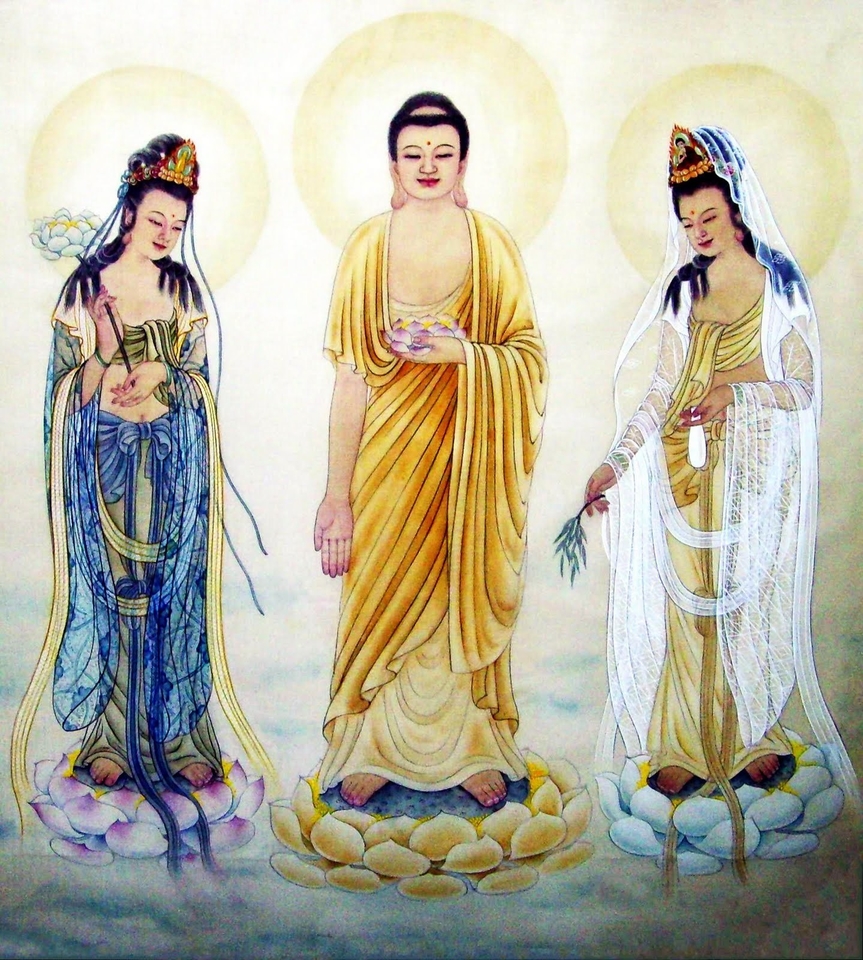
Nembutsu/Nianfo is the Pure Land Buddhist practice of repeatedly reciting Amitabha Buddha's name, aloud or silently, as an expression of faith, gratitude, and aspiration for rebirth in the Pure Land.
Last Updated
3 Jul 2026
We are still reviewing this page. Our research team checks every technique page for accuracy and evidence quality before final release. Details may change as that review completes. The evidence badge shows our current reading of the published research.
RECOMMENDED DOSE
A study of mantra recitation (Gayatri mantra and Om) used roughly 15-minute recitation sessions, supporting a short, achievable starting length for a closely related recitation practice. No direct dose evidence exists for beginner frequency, so 3–4 times weekly is an editorial starting point to build the habit.
The 15-minute session length from research on comparable mantra and Om recitation extends naturally to a slightly longer regular sit as familiarity grows. Frequency here is an editorial step-up toward a near-daily rhythm; no direct dose-response data specify it.
A cross-sectional study of Buddhist monastics who practised daily supports a daily maintenance rhythm for committed practitioners in a related contemplative tradition. The 20–30 minute session length is an editorial extension beyond the recitation durations directly reported in the literature.
Session length
Session length: 10–15 minutes
10
MIN
How long each individual practice session should last from start to finish.
Frequency
Frequency: 3–4 days
3
DAYS
The number of days per week to fit a session into your routine.
Session length
Session length: 15–20 minutes
15
MIN
How long each individual practice session should last from start to finish.
Frequency
Frequency: 5 days
5
DAYS
The number of days per week to fit a session into your routine.
Session length
Session length: 20–30 minutes
20
MIN
How long each individual practice session should last from start to finish.
Frequency
Frequency: 7 days
7
DAYS
The number of days per week to fit a session into your routine.
About this card. Dose guidance for Nembutsu/Nianfo is extrapolated from studies of related recitation and Buddhist contemplative practices rather than direct trials of this technique, so treat these figures as informed starting points. These recommendations are not a substitute for personalised guidance from a qualified practitioner.
Quick answers to what people most often ask. Each card links to the deeper section below.
evidence
Almost all supporting research comes from related practices—mantra recitation, repetitive prayer, and Buddhist meditation—not Nembutsu itself. Small studies link chanting a sacred phrase to short-term gains in focused attention, and regular Buddhist meditation is associated with better everyday well-being. No controlled trial has tested Nembutsu directly, so specific effects remain uncertain.
Read moregood for
Nembutsu suits adults seeking a simple, accessible way to steady scattered attention, settle the body, or connect with a devotional tradition, and it needs no prior training. Repeating one short phrase gives wandering attention a single place to return to. It is not a treatment for any diagnosed condition or a substitute for professional care.
Read moresafety
Most healthy adults can practise Nembutsu safely on their own with no special training. Because the recitation involves releasing self-directed control, it can occasionally bring strong grief, longing, or vulnerability to the surface. People in acute grief, active trauma processing, or psychiatric distress should begin gently and keep professional care in place. This caution is mechanism-inferred, not from safety trials.
Read morehow it works
Nembutsu works mainly by giving attention a fixed anchor: repeating 'Namo Amida Butsu' offers the mind one steady target to return to, which registers as fewer spiraling thoughts. Voiced aloud, the sustained sound sets the vocal cords vibrating in a way thought to stimulate the vagus nerve, the body's rest-and-recovery pathway, producing a grounded, settling feeling.
Read moreNembutsu/Nianfo is the central Pure Land Buddhist practice of repeatedly reciting Amitabha Buddha's name, aloud or silently, as an expression of faith and aspiration for rebirth in the Pure Land.
The practitioner repeats a fixed formula, "Namo Amida Butsu" in Japanese or "Namo Amituofo" in Chinese, voiced aloud, whispered, or recited silently. Recitation is often sustained for long stretches and paced by prayer beads or a wooden fish drum called a mokugyo, which marks a steady cadence. The formula is simple and needs no advanced training, so it stays accessible to practitioners at any level of experience.
Although reciting the name steadies attention much as focused-attention meditation does, Nembutsu is a devotional practice rather than a concentration technique. The recitation expresses trust in Amitabha's compassionate vow, what Pure Land teaching calls Other Power (tariki), rather than personal striving (Self Power, jiriki). It is not a self-improvement mantra, and it is not the same as silent breath meditation, even though the outer act of repeating a phrase can look similar.
Not to be confused with
Self-power (jiriki) meditation, such as Zen zazen
Zen and other self-power practices cultivate insight through the practitioner's own disciplined effort. Nembutsu rests on the opposite principle, Other Power (tariki): reciting Amitabha's name as trust in the Buddha's vow rather than personal striving.
Transcendental Meditation and other mantra programs
These use a personal or Sanskrit mantra as a vehicle for relaxation or transcendence within a Hindu-derived or secularised framework. Nembutsu recites a specific devotional formula, the name of Amitabha Buddha, as an expression of faith rather than a neutral sound.
Mindfulness of breath or body
Although Nembutsu literally means mindfulness of Buddha, it is not the same as observing breath or bodily sensation with detached awareness. Its focus is a repeated sacred name held in devotional trust, not open monitoring of present-moment experience.
Nembutsu appears to work mainly by giving attention a fixed anchor. Repeating "Namo Amida Butsu" offers the mind one steady target to come back to, which practitioners feel as fewer spiraling thoughts and a quieter mental background (Tomasino et al., 2013), (Barbara et al., 2014). Voiced aloud, the sustained sound also sets the vocal cords vibrating in a way thought to stimulate the vagus nerve, the body's main rest-and-recovery pathway, and this can register as a grounded, settling feeling (Rao et al., 2018). These mechanisms have been studied in mantra, chanting, and focused-attention meditation broadly, not in Nembutsu specifically, so they describe plausible shared pathways rather than proven effects of this practice.
Repeating 'Namo Amida Butsu' gives wandering attention a single, simple place to return to, which can quiet the pull toward worry and make it easier to stay present from one moment to the next. This anchoring effect has been studied in mantra and focused-attention meditation rather than in Nembutsu itself (Tomasino et al., 2013), (Barbara et al., 2014).
Chanting the name aloud sets the vocal cords vibrating, and that sustained sound is thought to stimulate the vagus nerve, the main pathway of the body's rest-and-recovery system, which many practitioners feel as a steadying, grounded settling as the voice finds its rhythm. Early support comes from related chanting practices rather than nembutsu itself (Rao et al., 2018).
When you try to focus by force, the mind keeps slipping; repeating 'Namo Amida Butsu' in a steady cadence, often paced by prayer beads or a wooden mokugyo drum, gives attention a rhythm to fall into, so it settles into the pattern instead of being held there by effort. That carried-along quality is thought to draw on rhythmic entrainment, in which breath, heartbeat, and attention loosely fall into step with a repeated beat; in studies of related chanting and meditation, sustained recitation has been linked to calmer, steadier attention and shifts in brain and heart-rhythm activity (Tomasino et al., 2013), (Rao et al., 2018).
Repeating the same short phrase gives attention one clear place to return to whenever the mind drifts, which practitioners often feel as a steadier, less scattered focus. Brain-imaging reviews of focused-attention meditation link this kind of anchored practice to the prefrontal and parietal networks that hold attention on a chosen target (Tomasino et al., 2013), (Barbara et al., 2014).
As the chanting continues, many people feel steadier and less reactive, the body easing out of high alert. That settling reflects a shift in autonomic balance, the automatic swing between the body's alert and rest branches, tipping toward rest; in a small brain-imaging study of chanting, activity dropped in emotion-related regions (Rao et al., 2018).
During recitation, imaging of closely related verbal-prayer and chanting practices has measured increased blood flow through the prefrontal and parietal regions that hold and steer attention, a change practitioners tend to feel as an absorbed, single-pointed steadiness (Andrew et al., 2003). Slow, rhythmic recitation has also been linked to a rise in baroreflex sensitivity, the speed at which the heart adjusts its rate to keep blood pressure steady, in a small study where the change narrowly missed statistical significance (Bodne & Patond, 2021); in the body this can feel like the pulse steadying and the breath easing into the cadence of the chant. All of these measurements come from adjacent practices in small samples rather than from Nembutsu itself.
Attention can settle onto the repeated name until staying with the practice feels absorbed and single-pointed rather than scattered. Imaging studies of a related repetitive verbal prayer have measured increased blood flow through the prefrontal and parietal regions that sustain and steer focus (Andrew et al., 2003). This pattern comes from a very small study of an adjacent practice, not from Nembutsu itself.
As the recited phrase gathers a scattered mind, attention can feel more directed and less pulled around. In a small imaging study of sustained repetitive verbal prayer, blood flow rose in the prefrontal cortex, the front-of-brain region that helps hold attention steady (Andrew et al., 2003). For someone reciting the nembutsu, this may register as the mind settling onto the name and staying there more easily.
When you keep returning to the recited phrase, the work seems to rest on the region behind the forehead that holds attention steady, the dorsolateral prefrontal cortex. Blood flow to this area has been measured to rise during repetitive verbal prayer and chanting in small studies (Andrew et al., 2003), which practitioners may feel as a steadier, more single-pointed focus, where coming back to the phrase takes less effort than fighting off distraction. Because this comes from prayer and mantra research rather than Nembutsu itself, treat it as a plausible parallel, not a confirmed feature of this practice.
Steady, repeated recitation appears to raise activity in the anterior cingulate cortex, a brain region that helps hold attention and steady emotional responses. So far this has been seen in related prayer and meditation studies rather than in Nembutsu itself (Andrew et al., 2003), (Medvedev et al., 2022). Practitioners often feel it as attention settling onto the phrase while background worry quiets.
As the chant slows, you may feel your pulse steady and your breath ease into its rhythm. That settling reflects baroreflex sensitivity, the speed at which the heart adjusts its rate to keep blood pressure steady, which rose during slow sacred recitation in one small study of 50 adults (Bodne & Patond, 2021), though the change narrowly missed statistical significance.
Limited, indirect evidence supports Nembutsu, and it is drawn from related practices rather than the recitation itself. Small studies find short-term gains in focused attention after chanting a sacred phrase versus reciting ordinary text (Kumar, 2019), (Pradhan & Derle, 2012), and a cross-sectional study of Buddhist monastics links more daily meditation to better mental well-being (Tsui et al., 2020). What is not yet supported: any controlled trial of Nembutsu specifically, any long-term outcomes, any large samples, or any claim that it treats or replaces care for a diagnosed condition.
Almost all of the research relevant to Nembutsu comes from related practices, mantra recitation, repetitive prayer, and general Buddhist meditation, rather than from the recitation itself. Small studies link chanting a sacred phrase to short-term gains in focused attention (Kumar, 2019), (Pradhan & Derle, 2012), imaging of verbal prayer and chanting shows shifts in attention-related brain activity and heart-rhythm measures (Andrew et al., 2003), (Bodne & Patond, 2021), and regular Buddhist meditation is associated with better everyday well-being (Tsui et al., 2020). Because samples are small and results vary widely across techniques, effects specific to Nembutsu remain uncertain; it can support rest and focus without replacing clinical care (Singh et al., 2019), (Nakata et al., 2014).
2
Meta-analyses
0
RCTs
0
Systematic reviews
0
Observational
10
Pilot
Studied populations
Neural correlates of focused attention and cognitive monitoring in meditation.
2010
Finding: Using brain scans of experienced Buddhist monks, this study found that focused-attention meditation actively engages the brain's executive attention networks, the prefrontal and parietal regions that help us hold our focus on one thing and notice when the mind has wandered. For someone practising recitation, that offers a plausible picture of what sustained repetition of a phrase may be doing under the hood: recruiting the same attention-steadying machinery that keeps a chosen anchor in mind. It's worth being clear about the limits, though: the study looked at focused-attention meditation in general, not Nembutsu specifically, and it was a small study of long-term expert meditators, so it describes a likely shared mechanism rather than a directly measured effect of recitation itself.
See full citation in referencesMeditation-related activations are modulated by the practices needed to obtain it and by the expertise: an ALE meta-analysis study
n = 24
Finding: This brain-imaging review pooled 24 neuroimaging experiments and mapped how different meditation styles light up different brain regions. Practices built on chanting or repeating words and phrases activated areas tied to processing sound and coordinating speech-like movement, while silent focused-attention practices engaged regions linked to sustained concentration and body awareness. In practical terms, repeating a sacred phrase appears to give the mind a steady anchor to return to, which may be part of why recitation can feel settling. One important limit: these studies looked at mantra and meditation broadly, not Nembutsu itself, so this points to a plausible shared mechanism rather than direct evidence about Pure Land recitation.
reported narratively
Nembutsu, or Nianfo, comes from Pure Land Buddhism and was systematised by teachers such as Honen and Shinran in Japan and Shandao in China between the seventh and thirteenth centuries. It grew from a theology of Other Power (tariki), in which reciting Amitabha's name expresses trust in the Buddha's compassionate vow rather than personal effort. These roots help explain the practice's form, its simple repeated formula and its receptive, surrendering stance, not its clinical effects.
For most healthy adults, Nembutsu is a low-intensity devotional practice that is safe to begin on your own, and it needs no special training to start. One practice-informed caution is worth knowing: because releasing self-directed control is central to the recitation, a letting-go that most people find settling, it can occasionally bring strong feelings of grief, longing, or vulnerability to the surface. That is a mild-to-moderate reaction, and it is best met slowly if you are in acute distress or working through trauma. This caution is inferred from how the practice works rather than drawn from safety trials, since the available evidence comes from related practices such as mantra and prayer, and effects across meditation types remain mixed (Singh et al., 2019), (Nakata et al., 2014).
People in acute grief, active trauma processing, or acute psychiatric distress should take extra care. The practice leans on surrender, the deliberate loosening of the urge to stay in control, and that release can bring intense emotion to the surface. This is a caution inferred from how the practice works, not an established or measured risk. Treat Nembutsu as a support alongside professional mental-health or medical care rather than a replacement for it, and anyone managing a diagnosed condition should keep their usual treatment in place.
Because releasing self-directed control is central to Nembutsu, a letting-go most people find settling, it can occasionally bring strong feelings of grief, longing, or vulnerability to the surface. This is a mild-to-moderate reaction best met slowly: shorten the session, open your eyes, let the breath ease, and return to the phrase only when you feel ready. The caution is inferred from how the practice works rather than drawn from safety trials, and evidence across meditation types remains mixed.
| Technique | Best for | Use with care | Evidence strength | Distinction |
|---|---|---|---|---|
| Mantra meditation (e.g., Om or Gayatri recitation) | Someone who wants a simple attention-steadying recitation without a specific devotional or theological framework. | The attention studies are small and short-term; do not expect the measured gains to transfer directly to any single practice. | moderate EVIDENCE | Both repeat a fixed phrase to steady attention, but mantra practice is usually framed as attention training or a Hindu-yogic sound practice rather than devotional trust in Amitabha. Most of the direct attention research on repetitive recitation actually comes from mantra studies, where reciting a sacred phrase produced short-term gains in focused attention in small samples of students. Nembutsu carries the same anchoring mechanism inside a Pure Land devotional frame. |
| Mindfulness / focused-attention meditation | Someone seeking a well-researched secular practice for attention and everyday well-being. | Its observational stance offers less of the devotional meaning and sense of surrender that draws many Nembutsu practitioners. |
It means "Homage to Amida Buddha", a phrase that recites the name of Amitabha Buddha as an expression of faith, gratitude, and aspiration for rebirth in the Pure Land. The Chinese form is 'Namo Amituofo,' and Nembutsu, or Nianfo, itself means 'mindfulness of Buddha.'
+
It means "Homage to Amida Buddha." In Pure Land Buddhism, reciting the name of Amitabha Buddha, 'Namo Amida Butsu' in Japanese or 'Namo Amituofo' in Chinese, voices homage, faith, and gratitude alongside an aspiration for rebirth in the Pure Land, known as Sukhavati. Nembutsu, or Nianfo, literally means 'mindfulness of Buddha.' That is the devotional meaning of the phrase within its tradition, not a claim about any clinical or therapeutic effect.
No. You don't need to be Buddhist or hold any particular faith to practice Nembutsu. It requires no prior training, and anyone can repeat the phrase to help steady attention or feel calmer. Its fuller devotional meaning, though, is rooted in Pure Land Buddhism.
+
No. Nembutsu, the repeated recitation of Amitabha Buddha's name, is accessible to anyone regardless of background or belief and asks for no prior training. Within Pure Land Buddhism it carries a specific devotional meaning, reciting the name as an act of trust in Amitabha's compassionate vow, what the tradition calls 'Other Power' or tariki, rather than personal effort. You can take up the practice for its calming, attention-steadying qualities without adopting that theology, while recognising that its full devotional significance is tradition-specific rather than a tested clinical treatment.
The Pure Land Buddhist practice of repeatedly reciting Amitabha Buddha's name, 'Namo Amida Butsu' in Japanese or 'Namo Amituofo' in Chinese, aloud, whispered, or silently. The word means 'mindfulness of Buddha.'
A devotional recitation practice of Pure Land Buddhism involving sustained repetition of Amitabha Buddha's name, examined indirectly through adjacent mantra, chanting, and focused-attention meditation research.
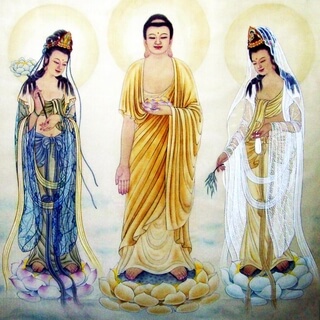
The Buddha of Infinite Light whose compassionate vow is central to Pure Land Buddhism. Reciting his name is understood as an act of faith, gratitude, and aspiration for rebirth in his Pure Land.
The realm associated with Amitabha Buddha, toward which Pure Land practitioners aspire to be reborn. It gives the practice its devotional aim and name.
The Pure Land principle that liberation comes through Amitabha's compassionate vow rather than one's own effort. Nembutsu is framed as receptive trust in this power rather than self-directed striving.
The contrasting principle of reaching awakening through one's own disciplined practice, emphasised in traditions such as Zen. Pure Land practice deliberately sets this aside in favour of Other Power.
A hollow wooden percussion instrument struck to mark a steady cadence during chanting. It helps pace sustained recitation, along with prayer beads.
Deliberately releasing self-directed control and offering oneself toward a sacred presence with active trust and openness. It is distinct from passive resignation and often felt as relief and connection.
The deliberate release of self-referential control and personal agency toward a perceived higher power, involving active trust and receptive openness; associated in research terms with self-transcendence and surrender experience.
Manna Antonietta, Raffone Antonino, Perrucci Mauro Gianni, Nardo Davide, Ferretti Antonio, Tartaro Armando (2010). Neural correlates of focused attention and cognitive monitoring in meditation.. https://doi.org/10.1016/j.brainresbull.2010.03.001
Cited in: How it works
Barbara Tomasino, Sara Fregona, Miran Škrap, Franco Fabbro (2013). Meditation-related activations are modulated by the practices needed to obtain it and by the expertise: an ALE meta-analysis study. https://doi.org/10.3389/fnhum.2012.00346
Explore guided sessions to deepen your Nembutsu / Nianfo (Pure Land Recitation) technique.
As you recite, you may notice your heartbeat, your breath slowing, and the body easing into stillness. That inward awareness is tracked by the insula, the brain region that maps internal body signals like heartbeat and breath; it shows increased activity during closely related chanting and prayer practices, though the shift is inferred from those adjacent practices rather than measured in Nembutsu itself (Andrew et al., 2003), (Bodne & Patond, 2021).
As the recitation holds your focus, attention gathers inward and the world around you seems to recede. A small imaging study of repetitive verbal prayer measured blood flow rising in frontal and parietal regions of the brain, the areas that help sustain focused attention (Andrew et al., 2003).
As the phrase repeats, attention settles onto it and outside distractions fade into the background. Small imaging studies of verbal prayer and meditation link this to increased blood flow in the frontal and parietal regions that hold attention steady (Andrew et al., 2003), and to fewer automatic reactions to outside sounds in experienced meditators (Medvedev et al., 2022), though none has measured Nembutsu itself.
Steady recitation can leave you feeling more inwardly grounded and less easily pulled away by noise, a shift that may reflect closer teamwork between the insula, which maps sensations inside the body, and the prefrontal cortex, the region that holds attention steady. This coupling has not been measured in Nembutsu itself; it is inferred from chanting and verbal-prayer research, where imaging shows shifts in frontal and parietal blood flow (Andrew et al., 2003) and quieter automatic responses to outside sounds during practice (Medvedev et al., 2022).
Focus tends to feel steadier and less scattered as the repeated phrase gives attention one place to keep returning to. This steadiness is linked to the dorsal attention network, the fronto-parietal system that holds focus on a chosen target: small imaging studies of repetitive verbal prayer measured increased frontal and parietal blood flow during practice (Andrew et al., 2003), and experienced Buddhist meditators showed reduced automatic reactions to outside sounds while meditating (Medvedev et al., 2022).
Outcomes measured
| Outcome | Effect size | 95% CI | N | Comparator | Source |
|---|---|---|---|---|---|
| Stroop score improvement | reported significant; P<0.001 | — | 30 | within-group pre vs post | Kumar, 2019 |
| baroreflex sensitivity | reported narratively | — | 50 | — | Bodne & Patond, 2021 |
| GHQ-12 mental health | standardized beta = -0.53 | — | 47 | — | Tsui et al., 2020 |
The research is useful for setting expectations, but study methods and participant groups vary. Treat the findings as general guidance rather than a promise about any single session, and not a replacement for clinical care.
Immediate Role of Two Yoga Based Mantra Recitation on Selective Attention in Undergraduate Students
n = 30
Finding: In a small study of 30 male undergraduates, just 15 minutes of sacred mantra recitation sharpened performance on a focus test that measures how well you screen out distractions. Reciting the Gayatri mantra produced the bigger gain, about a 16% improvement, while the shorter "Om" recitation improved scores by roughly 9%, suggesting that even brief spoken practice can help settle a scattered mind before a task that demands concentration. Keep in mind this was a single-sex pilot group tested over just two days, and it used different mantras rather than Nembutsu itself, so it points to the general value of recitation for attention rather than proof of what this specific practice does.
reported significant; P<0.001
Comparison of effect of Gayatri Mantra and Poem Chanting on Digit Letter Substitution Task
n = 60
Finding: In a school study of 60 students aged 12 to 14, chanting the Gayatri mantra sharpened performance on a quick attention test, with scores rising about 22% afterward, compared with roughly 5% after reciting ordinary poem lines. Each student was tested before and after both kinds of chanting, so the sacred phrase, rather than chanting in general, appeared to carry the larger benefit for focus. This points to the value of repetitive recitation broadly, and while it was not a study of Nembutsu itself, it suggests that regularly voicing a meaningful phrase may help settle and steady the mind. Keep in mind the effect was measured immediately after chanting in a small group of children, so it speaks to short-term attention rather than lasting change.
reported narratively
Disentangling the neural mechanisms involved in Hinduism- and Buddhism-related meditations.
2014
Finding: This meta-analysis of focused-attention meditation found that keeping attention anchored on a single object activates the brain's attention-control networks, including regions in the prefrontal cortex and parietal areas that help hold focus steady and pull it back when the mind wanders. For someone practising sustained recitation, this offers a plausible account of what the repeated anchoring on the phrase may be training, since chanting works much like other focused-attention techniques. It's worth being clear, though, that these brain changes were measured in general focused-attention meditation, not in Nembutsu itself, so the connection is a reasonable inference rather than something directly tested in this practice.
See full citation in referencesPhysiological Effects of Cryptic Ancient Religious Chants
n = 50
Finding: In a study of 50 healthy adults, reciting prayers and mantras at a slow, steady pace raised baroreflex sensitivity, a measure of how nimbly the nervous system adjusts heart rate to changes in blood pressure, from about 9.2 to 11.7 ms/mmHg. The change was modest and sat just short of statistical significance, so it points to a possible calming effect on heart rhythm rather than a firm one. Importantly, this was measured with general prayer and mantra recitation, not with Nembutsu itself, so it suggests only that the shared ingredient of slow rhythmic chanting may support a steadier nervous system.
reported narratively
Traditional Buddhist meditations reduce mismatch negativity in experienced monk- practitioners.
n = 115
Finding: When 115 experienced Buddhist monks meditated, their brains showed a smaller automatic reaction to unexpected sounds than during ordinary relaxed rest, a sign that their attention had pulled away from the outside world and turned inward. For a practitioner, this hints that deep meditative absorption can quiet the mind's habit of tracking every noise around you, leaving you less pulled by distraction. One important caveat: this study looked at highly experienced monks doing traditional concentration-style Buddhist meditation, not Nembutsu recitation specifically, so the findings describe the broader parent tradition rather than Pure Land practice itself.
reported narratively
Directional brain networks underlying OM chanting
n = 12
Finding: In a small brain-imaging study of 12 healthy adults, repeating the sacred syllable "OM" out loud quieted the flow of activity from several emotion-processing regions toward the amygdala, the brain's threat detector, and participants reported feeling more relaxed alongside shifts in the balance of their nervous system. This hints at how sustained sacred chanting, such as reciting the nembutsu, might help calm the body's stress response. Keep in mind, though, that this was a very small study using OM rather than Nembutsu itself, so it points to a plausible pathway rather than proof that Pure Land recitation produces the same effect.
reported narratively
Cerebral blood flow during meditative prayer: preliminary findings and methodological issues.
n = 3
Finding: Using brain imaging, this study tracked blood flow in three experienced practitioners of a repetition-based prayer, silently repeating a phrase much like recitation practice. During the practice, blood flow rose in the frontal regions tied to focused attention (roughly 7 to 9 percent) and in the parietal areas involved in sense of space and self, with the two regions shifting in opposite directions, a pattern often seen when attention turns inward and the ordinary sense of surroundings quiets. For someone drawn to Nembutsu, this hints at how the steady repetition of a phrase can reshape where the brain directs its energy, but the study included only three people and used a related devotional practice rather than Nembutsu itself, so treat it as an early, suggestive glimpse rather than settled fact.
reported narratively
Meditation reduces pain-related neural activity in the anterior cingulate cortex, insula, secondary somatosensory cortex, and thalamus
2014
Finding: This study looked at how meditation affects the way the brain processes pain, using brain-imaging and brain-wave recordings to trace what happens during practice. The picture that emerged was mixed rather than clear-cut: some measurements pointed to meditation dampening pain, while others showed the brain responding more strongly, so the results pulled in different directions. For someone drawn to Nembutsu recitation, this is a useful reminder that findings from meditation research vary a lot depending on the specific method studied, and no single recitation-specific benefit can be claimed with confidence from this kind of work yet.
See full citation in referencesMindfulness Meditation, Mental Health, and Health-Related Quality of Life in Chinese Buddhist Monastics.
n = 47
Finding: In a snapshot study of 47 Chinese Buddhist monastics, those who spent more time in daily meditation reported better mental health and a stronger sense of mental well-being, while their physical health scores showed no such link. For someone drawn to a recitation practice like Nembutsu, this hints that sustained daily practice within the broader Buddhist tradition may go hand in hand with a steadier mind. Keep in mind, though, that this looked at general mindfulness meditation rather than Nembutsu specifically, the group was small, and because it measured everyone at a single point in time it can show a connection but not prove that practice caused the difference.
standardized beta = -0.53
Evolution from four mental states to the highest state of consciousness: A neurophysiological basis of meditation as defined in yoga texts
2019
Finding: This review of meditation neuroscience found that results vary widely from one practice to another, and that the science behind many techniques is still unsettled rather than conclusive. Because the studies pooled together used such different methods, the review couldn't isolate what any single practice like Nembutsu recitation does on its own. For someone considering this practice, the honest takeaway is that broad meditation research offers encouraging but mixed signals, not firm proof of recitation-specific benefits.
See full citation in referencesPeople in acute grief, active trauma processing, or acute psychiatric distress should take extra care. The practice leans on surrender, the deliberate loosening of the urge to stay in control, and that release can bring intense emotion to the surface. Begin gently, keep sessions short, and treat Nembutsu as a support alongside professional mental-health or medical care rather than a replacement for it. This is a caution inferred from how the practice works, not an established or measured risk.
Nembutsu is gentle to begin on your own, and it asks for no special training, just a quiet place where you can recite 'Namo Amida Butsu' aloud, whispered, or silently. A sensible starting format is short and unhurried, letting the phrase settle into its own steady rhythm rather than reaching for a particular speed or state. Because the practice leans on letting go, tender feelings can surface, so treat it as a support alongside your usual care and give yourself room to ease off when you need to.
Choose a quiet place, sit comfortably, and recite 'Namo Amida Butsu' aloud, whispered, or silently for just a few minutes at first. Notice how your body and attention respond before you lengthen the session.
Allow the phrase to find a steady, unforced cadence, optionally paced by prayer beads or a wooden fish (mokugyo), rather than pushing for a particular speed or state. The settling comes from repetition, not effort.
If sadness, longing, or tenderness rises, slow down or pause, let the breath ease, and return to the phrase only when you feel ready. There is no need to force through intense emotion.
Use the practice as a support alongside professional mental-health or medical treatment, not a replacement, especially if you live with a diagnosed condition.
If recitation consistently leaves you distressed, or surfaces trauma-related material that feels hard to manage, pause the practice and contact a qualified professional.
This information is educational and is not medical advice. This practice is not a substitute for professional care and should not replace prescribed medication or treatment for any medical or mental-health condition. If you are managing a health condition or taking medication, talk with a qualified health professional before changing your practice. If you are in distress or crisis, seek professional support.
| strong EVIDENCE |
| Mindfulness meditation trains open or focused awareness of breath, body, and thoughts, observing what arises rather than offering the self toward a sacred presence. It shares the prefrontal and parietal attention circuitry that focused recitation is thought to recruit, and it carries a far larger body of controlled research, including randomised trials and meta-analyses. Nembutsu differs in its explicitly devotional aim of surrender and gratitude rather than detached observation. |

| Repetitive Christian prayer (Jesus Prayer, rosary) | Someone whose faith and meaning system is Christian rather than Buddhist. | The supporting imaging comes from very small samples, so the physiological picture remains preliminary. | emerging EVIDENCE | Repetitive verbal prayer also uses a sustained sacred phrase voiced as an act of faith, and small imaging studies of this practice supply some of the closest physiological parallels to Nembutsu, showing shifts in frontal and parietal blood flow during recitation. The difference is the meaning system: a Christian devotional address rather than invocation of Amitabha's name and aspiration toward the Pure Land. |
Probably more than nothing, but the evidence is indirect. No trial has tested Nembutsu itself; small studies of related chanting and mantra practices link reciting a sacred phrase to short-term gains in attention (Kumar, 2019), (Pradhan & Derle, 2012). Treat this as an early signal, not proof.
+
It appears to do more than just pass the time, though the supporting evidence is borrowed rather than direct. Repeating one short formula can anchor attention, a mechanism studied in mantra and focused-attention meditation rather than in Nembutsu (Tomasino et al., 2013), and small studies link chanting a sacred phrase to short-term gains in attention (Kumar, 2019), (Pradhan & Derle, 2012), while regular Buddhist meditation is associated with better everyday well-being (Tsui et al., 2020). Because samples are small and effects vary across techniques, recitation-specific effects stay uncertain, and this is not a proven treatment or a replacement for clinical care (Singh et al., 2019), (Nakata et al., 2014).
No. There are no controlled trials, long-term outcomes, or large samples of Nembutsu itself. The available findings are borrowed from related chanting, mantra, and Buddhist meditation studies in small samples, so they point to shared pathways rather than proven effects of this recitation (Kumar, 2019), (Tsui et al., 2020).
+
No direct research on Nembutsu has been published, no randomised trials, long-term outcomes, or large samples specific to the practice. What exists is indirect: small studies where chanting a sacred phrase produced short-term attention gains (Kumar, 2019), (Pradhan & Derle, 2012), and a cross-sectional study linking regular Buddhist meditation to better mental well-being (Tsui et al., 2020). Because samples are small and results vary widely across techniques, effects specific to Nembutsu stay uncertain, and the practice should support rather than replace clinical care (Singh et al., 2019), (Nakata et al., 2014).
It may. Chanting aloud vibrates the vocal cords in a way thought to stimulate the vagus nerve, the body's main rest-and-recovery pathway, and slow rhythmic recitation has been linked to steadier heart-rhythm and baroreflex measures that can feel like grounding calm (Rao et al., 2018), (Bodne & Patond, 2021). This is a plausible shared pathway from related practices, not a proven nervous-system treatment.
+
It may, though this points to a plausible mechanism rather than a proven treatment. Voicing the recitation sets the vocal cords vibrating in a way thought to stimulate the vagus nerve, the nerve that drives the body's rest-and-recovery response, and slow, rhythmic chanting has been linked to shifts in heart-rhythm and baroreflex sensitivity, a marker of how quickly the heart steadies blood pressure, in a small study where the change narrowly missed significance (Rao et al., 2018), (Bodne & Patond, 2021). These findings come from adjacent mantra, chanting, and verbal-prayer studies in small samples rather than from Nembutsu itself, so they describe how it might work, not a tested treatment for autonomic regulation or any diagnosed condition.
Possibly, though the finding is suggestive rather than confirmed. Small studies of slow chanting, mantra, and prayer link paced recitation to shifts in heart-rhythm measures, and many people feel their pulse and breath settle into the cadence (Bodne & Patond, 2021).
+
Possibly. In one small study of related slow, rhythmic recitation, paced chanting was linked to a rise in baroreflex sensitivity, the speed at which the heart adjusts its rate to keep blood pressure steady, though the change narrowly missed statistical significance (Bodne & Patond, 2021). This evidence comes from adjacent mantra and prayer practices in small samples rather than from Nembutsu itself, so treat it as an early signal. It is not a treatment for any heart or breathing condition.
Yes, it can. Because Nembutsu centers on releasing self-directed control, that letting-go may occasionally surface grief, longing, or vulnerability. This is inferred from how the practice works, not a measured risk. Start gently, pause if emotion feels intense, and keep professional care in place during acute grief, trauma, or crisis.
+
Yes, it can. The recitation leans on devotional surrender, and for some people that loosening of control can bring strong feelings such as grief or longing to the surface. This is a practical, mechanism-inferred caution rather than a proven adverse effect; it follows from how the practice works and from mixed findings across related meditation types, not from safety trials of Nembutsu itself (Singh et al., 2019), (Nakata et al., 2014). If emotion feels intense, slow down, open your eyes, shorten the session, and keep working with a qualified professional if you are in acute distress.
Use extra care. If you are in acute grief, active trauma processing, or crisis, Nembutsu's emphasis on surrender can bring intense emotion to the surface, so begin gently and use it alongside, not instead of, professional care.
+
Use extra care. Nembutsu is low-intensity for most healthy adults, but because reciting Amitabha's name means releasing self-directed control, that letting-go can surface strong grief, longing, or vulnerability for people in acute distress. This is a mechanism-inferred caution rather than a measured risk; no safety trials of Nembutsu exist, and evidence across meditation types is mixed and varies by technique, so recitation-specific effects stay uncertain (Singh et al., 2019), (Nakata et al., 2014). Begin gently, keep sessions short, and treat the practice as a support alongside professional mental-health or medical care, not a replacement for it.
Start small. Try a few minutes at first, notice how your body and attention respond, then lengthen gradually as it feels comfortable. This is practice-informed guidance, not a tested dose; there is no trial evidence for an ideal duration or frequency of Nembutsu.
+
Begin gently and let repetition, not effort, do the work. A practical starting point is a few minutes of reciting 'Namo Amida Butsu' aloud, whispered, or silently, optionally paced by prayer beads or a wooden fish, the hollow wooden drum known as a mokugyo, lengthening the session over time as it settles you. No Nembutsu dosing studies exist, so no optimal length or frequency can be promised; if strong emotion such as grief or longing surfaces, slow down or pause, and keep any usual professional care in place.
The main difference is aim and stance. Nembutsu repeats Amitabha Buddha's name as an act of devotional trust and surrender, while mindfulness trains detached observation of breath, body, and thoughts. Both steady attention, but mindfulness carries a far larger controlled research base; Nembutsu's is mostly indirect (Antonietta et al., 2010), (Barbara et al., 2014).
+
The main difference is stance and meaning. Nembutsu is a Pure Land Buddhist recitation of Amitabha's name, framed as faith, gratitude, and surrender rather than self-directed effort, whereas mindfulness cultivates open or focused awareness by simply noticing what arises. Both appear to recruit the same prefrontal and parietal attention circuitry, which is why each can feel steadying (Antonietta et al., 2010), (Barbara et al., 2014). Mindfulness has been tested in far more controlled trials, while evidence for Nembutsu is borrowed from adjacent chanting and meditation studies and remains suggestive rather than established (Tsui et al., 2020). Neither is a treatment for a diagnosed condition.
Steadying attention on a single clear target, here the recited name, so the mind has somewhere to return to when it drifts. It tends to feel like fewer spiralling thoughts and a quieter mental background.
The stabilisation of attention on a defined target to reduce mind-wandering, engaging focused-attention and attentional-selection processes in prefrontal and parietal networks.
The tendency of body rhythms such as breath and heartbeat, along with attention, to fall into step with a steady external beat like chanting. Practitioners often describe a sense of being carried by the rhythm.
The synchronisation of physiological rhythms, including neural oscillations, heart rate, and respiration, to an external rhythmic stimulus such as chanting or repetitive movement.
The use of sustained vocalisation to stimulate the vagus nerve, the main pathway of the body's rest-and-recovery system. It is associated with a calming, grounded feeling as the voice settles into a rhythm.
The stimulation of laryngeal vagal afferents through sustained rhythmic vocalisation, thought to enhance the parasympathetic regulatory capacity of the vagus nerve.
A measure of how quickly the heart adjusts its rate to keep blood pressure steady, which practitioners may feel as the pulse steadying as recitation continues. It is taken as a marker of cardiovascular flexibility.
A quantitative index (ms/mmHg) of the reflex adjustment of heart rate in response to blood-pressure changes, used as a marker of cardiovascular regulation and vagal tone.
Cited in: How it works
Narottam Kumar (2019). Immediate Role of Two Yoga Based Mantra Recitation on Selective Attention in Undergraduate Students. https://doi.org/10.36018/dsiij.v13i.109
Balaram Pradhan, SeemaGodse Derle (2012). Comparison of effect of Gayatri Mantra and Poem Chanting on Digit Letter Substitution Task. https://doi.org/10.4103/0257-7941.118540
Tomasino Barbara, Chiesa Alberto, Fabbro Franco, Barbara Tomasino, Alberto Chiesa, Franco Fabbro (2014). Disentangling the neural mechanisms involved in Hinduism- and Buddhism-related meditations.. https://doi.org/10.1016/j.bandc.2014.03.013
Cited in: How it works
Abhijit. V. Bodne, Varsha Patond (2021). Physiological Effects of Cryptic Ancient Religious Chants. https://doi.org/10.9734/jpri/2021/v33i60b34711
Cited in: Research, What happens in the body
Medvedev S V, Boytsova J A, Bubeev Y A, Kaplan A Y, Kokurina E V, Olsen A (2022). Traditional Buddhist meditations reduce mismatch negativity in experienced monk- practitioners.. https://doi.org/10.1016/j.ijpsycho.2022.08.011
Cited in: What happens in the body
Naren P. Rao, Gopikrishna Deshpande, Kalyani Bangalore Gangadhar, Rashmi Arasappa, Shivarama Varambally, Ganesan Venkatasubramanian (2018). Directional brain networks underlying OM chanting. https://doi.org/10.1016/j.ajp.2018.08.001
Cited in: How it works
Newberg Andrew, Pourdehnad Michael, Alavi Abass, d'Aquili Eugene G (2003). Cerebral blood flow during meditative prayer: preliminary findings and methodological issues.. https://doi.org/10.2466/pms.2003.97.2.625
Cited in: Research, What happens in the body
Hiroki Nakata, Kiwako Sakamoto, Ryusuke Kakigi (2014). Meditation reduces pain-related neural activity in the anterior cingulate cortex, insula, secondary somatosensory cortex, and thalamus. https://doi.org/10.3389/fpsyg.2014.01489
Cited in: Research, Use with care
Tsui M C F, To J C N, Lee A T C (2020). Mindfulness Meditation, Mental Health, and Health-Related Quality of Life in Chinese Buddhist Monastics.. https://doi.org/10.12809/eaap1949
Deepeshwar Singh, Hongasandra Ramarao Nagendra, Bal Budhi Rana, Naveen Kalkuni Visweswaraiah (2019). Evolution from four mental states to the highest state of consciousness: A neurophysiological basis of meditation as defined in yoga texts. https://doi.org/10.1016/bs.pbr.2018.10.029
Cited in: Research, Use with care
Editorially curated. Tracks are not themselves clinically studied; evidence on the page applies to Nembutsu / Nianfo (Pure Land Recitation) as a technique.
Beginner content for Nembutsu / Nianfo (Pure Land Recitation)

★ 4.7
·
Music
·
40 min
Bup Seon Sunim
How hard is Nembutsu / Nianfo (Pure Land Recitation)?
Nembutsu stays at 2 because it is intentionally accessible repetition rather than a heavier contemplative discipline.
2
Mental Effort
2 / 4
▾Emotional Depth
1 / 4
▾Physical Intensity
1 / 4
▾Prior Knowledge
1 / 4
▾