The world’s largest free audio library for everyday wellbeing
Psychological & Psychotherapy
Polyvagal-Informed Self-Regulation Practice is an educational and experiential method, drawn from Stephen Porges' Polyvagal Theory, in which a person learns to identify their current autonomic state and then uses specific exercises, such as elongated exhales, humming, gentle eye movements, and orienting to the environment, to move toward a calm, socially engaged baseline.
Last Updated
4 Jul 2026
We are still reviewing this page. Our research team checks every technique page for accuracy and evidence quality before final release. Details may change as that review completes. The evidence badge shows our current reading of the published research.
RECOMMENDED DOSE
No direct dose-response literature exists for this technique. A short, low-commitment starting dose helps you build the habit of down-regulating your nervous system without strain. No direct dose evidence; editorial synthesis.
Once the basic practice feels comfortable, a modestly longer and more regular routine reflects common conventions for nervous-system regulation and breath-based practices. No direct dose evidence; editorial synthesis.
A daily, slightly longer session suits established practitioners seeking a maintenance routine. This is a general practice convention rather than a tested protocol. No direct dose evidence; editorial synthesis.
Session length
Session length: 5 minutes
5
MIN
How long each individual practice session should last from start to finish.
Frequency
Frequency: 3–4 days
3
DAYS
The number of days per week to fit a session into your routine.
Session length
Session length: 10–15 minutes
10
MIN
How long each individual practice session should last from start to finish.
Frequency
Frequency: 5–6 days
5
DAYS
The number of days per week to fit a session into your routine.
Session length
Session length: 20 minutes
20
MIN
How long each individual practice session should last from start to finish.
Frequency
Frequency: 7 days
7
DAYS
The number of days per week to fit a session into your routine.
About this card. No direct dose-response literature exists for Polyvagal-Informed Self-Regulation Practice; these recommendations are based on general practice conventions for breath- and nervous-system-regulation techniques and should be treated as starting points only. These recommendations are not a substitute for personalised guidance from a qualified practitioner.
Quick answers to what people most often ask. Each card links to the deeper section below.
evidence
No trial has tested this exact polyvagal-informed method; support comes from related practices. A randomized trial in 40 nursing students found emotion-regulation training improved self-awareness and regulation, and small mindfulness studies lowered the stress hormone cortisol. One trial found no benefit over doing nothing, so treat findings as early signals.
good for
Adults who feel chronically wired, on-edge, or emotionally shut down and want practical tools to steady themselves may benefit most. Early support comes from small groups like nursing and college students learning emotion-regulation skills, not the general public. It is not a substitute for care when anxiety, trauma, or mood symptoms are severe.
Read moresafety
Most healthy adults can practise this on their own without supervision; its slow exhales, humming, and orienting exercises are gentle by design. The main caution is over-monitoring: tracking your inner state too closely can tip into over-analysis or self-judgment. People prone to rumination or working through recent trauma should go gently and seek professional support.
Read morehow it works
Slow elongated exhales, humming, and orienting to your surroundings engage the parasympathetic nervous system, the body's rest-and-recovery branch, which many people feel as tension easing and breathing slowing. Naming which state you are in adds a witnessing stance that opens a small gap between you and the reaction, so feelings can be watched from a step back.
Read moreA self-regulation method based on Porges' Polyvagal Theory that teaches you to name your current nervous-system state and use exercises like slow exhales, humming, and orienting to shift toward calm.
The practice pairs plain-language teaching about the nervous system with hands-on regulation tools. First you learn to recognize which autonomic state you're in, whether calm and socially engaged, in fight-or-flight, or shut down and collapsed, then you apply specific exercises to move toward steadiness: elongated exhales, humming, gentle eye movements, orienting to your surroundings, and social-engagement cues. It is an ongoing skill used in everyday moments rather than a single fixed seated session, at once explanatory and experiential.
This is a self-regulation practice built on Polyvagal Theory, not a diagnostic tool, a medical treatment, or formal polyvagal-based psychotherapy delivered by a clinician. It overlaps with breathwork, meditation, and biofeedback but is not identical to any of them, and the polyvagal model that frames it is contested in basic neuroscience even where the individual exercises remain useful. It does not replace professional care for anxiety, trauma, or mood conditions.
Not to be confused with
Polyvagal Theory (the model itself)
Polyvagal Theory is Stephen Porges' neuroscientific model of how the autonomic nervous system reads safety and threat; this is the applied, hands-on practice built on that model. The theory is contested in basic neuroscience even where its clinical exercises remain widely used.
Vagus nerve stimulation (VNS)
VNS is a medical intervention that delivers electrical current to the vagus nerve through an implanted or transcutaneous device. This practice uses only self-directed behavioral cues, slow exhales, humming, orienting, with no device and no electrical stimulation.
The practice works mainly by engaging the parasympathetic nervous system, the body's rest-and-recovery branch, through slow elongated exhales, humming, and orienting to your surroundings, which many people feel as tension easing and breathing slowing (Cisler et al., 2009). Naming which state you're in adds a second layer, a witnessing stance that opens a small gap between you and the reaction, so feelings can be watched from a step back rather than swallowing you whole (Galderisi et al., 2015). These pathways come from research on emotion regulation broadly, not from studies of this specific practice, so they describe how it is thought to work rather than a mechanism measured here.
As you slow the exhale, hum quietly, or let your eyes take in the room, tension tends to ease and breathing slows while the body settles out of fight-or-flight. These exercises are meant to engage parasympathetic activity, the vagus nerve's calming brake on the heart that shifts you toward rest and recovery, and being able to settle arousal this way is linked to less fear and steadier well-being (Cisler et al., 2009), (Galderisi et al., 2015).
Feeling wound up and unable to settle may ease as the practice helps turn down the body's overall alertness, what researchers call arousal downregulation. Reviews of emotion regulation suggest that learning to notice and shift your internal state can change how much fear or tension you feel, though this link comes from related research rather than a direct study of this practice (Cisler et al., 2009), (Galderisi et al., 2015).
When racing thoughts or a fear reaction sweep you up, naming which nervous-system state you're in ("I'm in fight-or-flight right now") opens a small gap between you and the reaction. From that step back, thoughts and feelings can be watched from a slight distance instead of swallowing you whole, a witnessing stance sometimes called metacognitive distancing that is thought to be one way the practice loosens the grip of fear and strong emotion (Cisler et al., 2009), (Galderisi et al., 2015).
Naming what is happening inside you, "my chest is tight, I'm keyed up", opens a small gap between you and the reaction, so a wave of feeling becomes something you can watch instead of something that simply carries you along. Reviews of emotion regulation and anxiety suggest this stepping-back is one route by which self-regulation practices may shape how much fear or distress takes hold (Cisler et al., 2009), (Galderisi et al., 2015).
When a stressful moment feels overwhelming, changing how you interpret it, a skill called cognitive reappraisal, can soften how much fear or anxiety it carries. Reviews of emotion-regulation research link this kind of reappraisal to lower anxiety and treat it as a core skill for mental well-being (Cisler et al., 2009), (Galderisi et al., 2015).
Feeling stuck, either wired and on-edge or flat and shut down, is what this mechanism works on. By learning to notice which nervous-system state you're in and using simple cues to steer back toward a settled baseline, the practice aims to build the flexibility to move between activation and rest more smoothly (Cisler et al., 2009), (Galderisi et al., 2015).
Noticing what is happening inside your body, a tight chest, a quickening heartbeat, a held breath, is the first skill this practice trains. Reading those internal signals early is thought to help you catch stress before it escalates and reach for a calming step in time, one of the pathways researchers use to link emotion regulation to lower anxiety and steadier mental well-being (Cisler et al., 2009), (Galderisi et al., 2015).
The most concrete bodily signal comes from a related mindfulness practice, where salivary cortisol, the main hormone the body releases under stress, was measured to fall and stay lower two months later (Sadimi et al., 2021). Falling cortisol tends to feel like coming off high alert, with less jittery tension and an easier return to calm once a stressful moment passes. Separate work with athletes found that pushing emotions down rather than regulating them raised perceived effort and shifted heart-rate responses (Wagstaff, 2014), a reminder that how you handle a feeling changes what the body does. Both findings come from other populations, so they point to what may happen rather than what has been measured for this practice.
Feeling wired and unable to come down after a stressful moment has passed is a sign the body is still on high alert. In a related mindfulness practice, cortisol, the body's main stress hormone, was measured to fall and stay lower two months later (Sadimi et al., 2021). Lower cortisol often feels like coming off that high alert, with less jittery tension and an easier return to calm. This signal comes from a small study of a similar practice, not this one, so read it as early, indirect evidence.
Emerging–indirect evidence to date supports this practice for self-awareness, emotion regulation, and stress-related calm. A randomized trial of reflective mindfulness and emotion-regulation training in nursing students improved self-awareness and emotional regulation versus standard activities (Mohamed et al., 2025), and mindfulness-style practices have been linked to greater resilience and lower perceived effort in female college students (Wang et al., 2021). What is not yet supported: any large trial of this specific polyvagal-informed protocol, long-term outcomes, or claims that it treats a diagnosed condition. Because the strongest studies tested related practices rather than this one, these results read as early signals rather than settled findings.
The clearest direct finding is a randomized trial in 40 nursing students, where reflective mindfulness and emotion-regulation training improved self-awareness and emotion regulation compared with standard course activities (Mohamed et al., 2025). Smaller studies add that a mindfulness practice lowered salivary cortisol, a stress hormone, in professional shooters (Sadimi et al., 2021), though not every self-regulation program outperforms doing nothing; one trial found no significant difference in emotion regulation versus a no-intervention control (Atena et al., 2025). The main limit is that no study has tested this exact polyvagal-informed protocol, so the evidence, drawn from related practices in small and specific groups, is best treated as an early supportive signal rather than proof.
0
Meta-analyses
1
RCTs
0
Systematic reviews
0
Observational
8
Pilot
Studied populations
A transactional analysis training program on cognitive flexibility and emotion regulation in undergraduate nursing students: an experimental study.
2025
Finding: In a study of 80 nursing students, a structured self-regulation training helped participants think more flexibly under pressure, but it did not measurably improve their emotion regulation compared with students who received no training. In other words, the practice may sharpen how you adapt your thinking in stressful moments, yet the evidence here does not show it reliably steadies emotions better than doing nothing. Keep in mind this was a single study in one group of students, and it looked at a related training rather than polyvagal-informed practice directly, so treat any emotion-regulation benefit as promising but unproven for this specific technique.
no significant difference; p=0.27
Reflective mindfulness and emotional regulation training to enhance nursing students' self-awareness, understanding, and regulation: a mixed method randomized controlled trial.
n = 40
Finding: In this trial, 40 nursing students were split evenly between a reflective mindfulness and emotional-regulation program and a group doing standard coursework, and those who took the training became more self-aware, understood their emotions more clearly, and relied less on bottling feelings up. For someone building an emotion-regulation habit, that points to a practical payoff: noticing what you feel and working with it rather than pushing it down. Keep in mind this was a small study in one specific group of students, and it tested a general emotion-regulation training rather than polyvagal-informed self-regulation specifically, so treat it as encouraging but indirect support.
This practice grew out of Stephen Porges' Polyvagal Theory, introduced in the 1990s and adapted for everyday clinical use by practitioners such as Deb Dana. Its roots help explain the practice's form, the three-state map of the nervous system and the exercises meant to signal safety, rather than proving its clinical effects. It is worth knowing that the polyvagal framework is debated in basic neuroscience even as its practical exercises remain widely used.
For most healthy adults this is a low-risk practice you can do on your own, and its core exercises, slow exhales, humming, and orienting to your surroundings, are gentle by design. The one thing to watch is a matter of tolerability rather than a safety hazard: tracking your inner state too closely can tip into over-analysis, harsh self-judgment, or a mental tiredness that leaves you more drained than settled. Hold the checking-in lightly and step back when it stops feeling useful (Latinjak, 2025). This caution comes from broader self-regulation research rather than a direct study of this specific practice, so treat it as a tolerability consideration to notice, not a reason to avoid the practice.
People who lean toward rumination, perfectionism, or heightened sensitivity to body sensations may find that watching the nervous system closely amplifies distress rather than easing it; for them, the guidance is to go gently and check in less often (Latinjak, 2025). Anyone working through recent trauma may find that turning attention inward surfaces difficult material, and is best supported alongside a trauma-informed professional. If self-tracking consistently increases distress instead of settling you, that is a signal to reduce how often you practise or to seek support.
For most healthy adults this is low-risk, but tracking your nervous-system state too closely can tip into over-analysis, harsh self-judgment, or a mental tiredness that leaves you more drained than settled. Hold the checking-in lightly, keep it brief, and step back whenever it stops feeling useful.
If you lean toward rumination, perfectionism, or heightened sensitivity to body sensations, watching the nervous system closely can amplify distress rather than ease it. Go gently, check in less often, and if self-tracking consistently increases distress instead of settling you, reduce how often you practise or seek support.
| Technique | Best for | Use with care | Evidence strength | Distinction |
|---|---|---|---|---|
| Mindfulness meditation | Building sustained present-moment attention and a general calming routine without a nervous-system framework. | People wanting a concrete do-this-now tool for a spike of activation may find open monitoring too unstructured in the moment. | moderate EVIDENCE | Mindfulness trains open, nonjudgmental attention to whatever arises in the present moment, without a map of nervous-system states. This practice instead names specific autonomic states, ventral vagal safety, sympathetic fight-or-flight, and dorsal vagal shutdown, and uses targeted cues like elongated exhales, humming, and orienting to the room to deliberately shift between them. |
| Cognitive Behavioral Therapy (CBT) | Structured, goal-directed treatment of diagnosed anxiety or depression with a trained clinician. | When distress is felt mostly in the body and is hard to reach through thinking, a purely cognitive approach may feel like a poor fit. |
It is a learn-and-do practice for calming your nervous system: you notice which state you are in, wired up, shut down, or calm and engaged, and then use simple tools like a slow exhale, humming, or looking around the room to steer yourself back toward steady.
+
In plain terms, it is a learn-and-do practice, drawn from Stephen Porges' Polyvagal Theory, that pairs simple teaching about how your nervous system works with hands-on tools you can feel. You learn to spot your current state, fight-or-flight activation, flat shutdown, or calm and socially engaged, and then reach for exercises like elongated exhales, gentle humming, eye movements, or orienting to your surroundings to move toward a calmer baseline. The three-state polyvagal map is best understood as an organizing framework that gives the exercises a coherent story; it is contested in basic neuroscience, so it explains the practice's shape rather than proving any clinical effect.
Not settled. Polyvagal Theory is contested in basic neuroscience and is best treated as an organizing framework rather than proven physiology, even though the practical exercises it inspired remain widely used and can feel genuinely calming.
+
Not settled. Stephen Porges' Polyvagal Theory offers a useful three-state map of the nervous system, but its core physiological claims are debated among neuroscientists and are not established fact. The framework organizes and gives meaning to the exercises, yet it is not proof that the practice treats any condition. Its practical tools, such as slow exhales, humming, and orienting to your surroundings, remain widely used and can help people settle, regardless of whether the polyvagal explanation turns out to be the correct one.
The part of the nervous system that runs automatic body functions like heart rate, breathing, and digestion, and shifts you between states of activation and rest without conscious effort.
In the polyvagal map, the settled, socially engaged state that feels like safety and connection; the practice treats it as the calm home base it helps you return to.
The activated state that mobilizes the body to confront or flee a threat, often felt as a racing heart, tension, and urgency.
A protective state of collapse or numbing that can feel like flatness, disconnection, or being switched off when threat feels overwhelming.
The calming influence the vagus nerve exerts on the heart; engaging it, for example through a long slow exhale, tends to slow the heart rate and settle the body.
Increased activity in the body's rest-and-recovery branch, which shifts physiology away from fight-or-flight and is usually felt as tension easing and breathing slowing.
Increased parasympathetic (largely vagal) tone; here inferred from indirect emotion-regulation research rather than directly measured for this practice.
The sense of your body's internal state, the feel of your heartbeat, breath, and muscle tension; building it helps you notice rising stress sooner.
Awareness of the outside world through the senses, such as noticing sights and sounds around you; orienting to your surroundings is one way this practice uses it to signal safety.
Barry J. Zimmerman (2000). Attaining Self-Regulation. https://doi.org/10.1016/b978-012109890-2/50031-7
Cited in: Research
Abbasszade Atena, Farokhzadian Jamileh, Torkaman Mahya, Miri Sakineh (2025). A transactional analysis training program on cognitive flexibility and emotion regulation in undergraduate nursing students: an experimental study.. https://doi.org/10.1186/s12912-025-02961-w
Cited in:
Outcomes measured
| Outcome | Effect size | 95% CI | N | Comparator | Source |
|---|---|---|---|---|---|
| emotion regulation | no significant difference; p=0.27 | — | — | no-intervention control | Atena et al., 2025 |
The research is useful for setting expectations, but study methods and participant groups vary, and some results rest on significance tests rather than full effect-size estimates. Treat the findings as general guidance rather than a promise about any single session, and not a replacement for clinical care.
reported narratively
Comparison between mindfulness and cognitive-behavioral psychological interventions on the reduction of pre-competitive stress of elite shooters: a follow-up of 2 months
n = 24
Finding: In a small trial with 24 young professional shooters split between a mindfulness program, a cognitive-behavioral program, and a no-training comparison group, those who practiced mindfulness showed lower levels of the stress hormone cortisol in their saliva right after the training, and the mindfulness group was the only one still measurably below the comparison group two months later. In practical terms, a regular mind-body practice may help the body hold onto calmer stress-hormone levels over time, not just in the moment. This is early, indirect evidence, though: the study was tiny, limited to young men in a high-pressure sport, and it tested mindfulness rather than polyvagal-informed self-regulation specifically, so it points in a promising direction without proving that this particular practice lowers cortisol.
reported narratively
Integrative self-regulation model for sport and exercise: Theory and implications for comprehensive training
2025
Finding: This paper proposes a unified framework for how athletes manage their emotions, motivation, and focus under pressure, drawing together self-control, coping, and emotion regulation into one integrated model rather than treating them as separate skills. For someone practising polyvagal-informed self-regulation, it offers a useful way of thinking about how the pieces of staying composed fit together, and it supports the broad idea that regulation can be trained and structured. It's worth knowing, though, that this is a conceptual model built for sport and exercise settings, not a test of this specific practice; it describes how self-regulation might work rather than measuring whether any particular technique delivers results.
See full citation in referencesEmotion Regulation and the Anxiety Disorders: An Integrative Review
2009
Finding: This integrative review makes the case that how we manage an emotion is separate from the emotion itself, and that the strategy we choose can either turn fear up or bring it down. It also found that how well people regulate their emotions accounts for a meaningful slice of their anxiety, over and above the feelings themselves, which supports the broad idea that working with your internal state can shift how much fear or anxiety you carry. Keep in mind that the review looked at emotion regulation in general across the anxiety literature, not at polyvagal-informed self-regulation specifically, so it speaks to the underlying principle rather than to this practice's direct results.
See full citation in referencesToward a new definition of mental health
2015
Finding: This is a conceptual paper about how we define mental health, not a trial of the practice itself, so it doesn't test whether polyvagal-informed self-regulation works. What it does argue is that being able to notice, express, and adjust your own emotions is a core part of mental well-being, and that this skill may act as a buffer that helps people adapt to stress, while difficulty regulating emotions is linked to depression. For someone considering this practice, it offers a useful rationale for why working with your emotional responses matters, but it should be read as background thinking about mental health rather than direct proof that this specific technique delivers those benefits.
See full citation in referencesOn Mindfulness Training for Promoting Mental Toughness of Female College Students in Endurance Exercise
2021
Finding: In an 8-week trial with 60 female college students, those who practised mindfulness reported stronger mental toughness and, notably, found hard endurance exercise less intense and less tiring than a comparison group who did no training. For a practitioner, this hints that building a regular mindfulness habit may change how demanding effort feels, not just how well you cope with it. Keep in mind that this was a small study in one narrow group, and it tested a general mindfulness program rather than polyvagal-informed self-regulation specifically, so treat it as related, supporting evidence rather than proof for this particular practice.
See full citation in referencesEmotion Regulation and Sport Performance
2014
Finding: In a small lab study, 20 competitive athletes each completed a 10-km cycling time trial under different conditions, and when they deliberately bottled up an upsetting emotion beforehand, they rode worse: their effort felt harder and their heart rate peaked lower than when they let the feeling be. In practical terms, how you handle a strong emotion, whether you clamp down on it or let it move through you, can shape both your physical output and how tough the effort feels. This is only indirect support for a polyvagal-informed practice, not a direct test of it; the study looked at emotion-suppression strategies in a handful of athletes, so it hints at why working skillfully with emotions may matter without proving that this specific technique changes heart rate or performance.
See full citation in referencesTurning attention inward may surface difficult material for anyone processing recent trauma. This practice is best used alongside a trauma-informed professional; it can complement clinical care but does not replace it.
Polyvagal-informed self-regulation works best when you hold it lightly, keeping the noticing brief and gentle rather than turning it into effortful, drawn-out monitoring. A sensible starting format is a short check-in on how your body feels, paired with one calming action like a slow exhale or letting your eyes settle around the room, and then a gentle return to your surroundings. If the checking-in ever starts to feel draining or slides into self-criticism, that is your cue to ease off rather than push on.
Begin with short moments of noticing your state rather than long, effortful monitoring. A few seconds of asking how your body feels is enough to start; extended self-scrutiny is where tracking tends to become tiring.
When you notice you are wound up or on edge, follow it with one concrete regulating step: a slow, elongated exhale, gentle humming, or letting your eyes orient around the room. Linking awareness to action keeps the practice grounded rather than purely analytical.
If checking in starts to feel like a chore or slides into self-criticism, ease off. Reducing how often you track your state is a normal adjustment, not a setback.
End each session by returning attention to your surroundings and moving slowly, especially after longer periods of inward focus, so you transition back to everyday activity feeling steady.
If you are processing recent trauma, or if self-tracking consistently raises distress rather than easing it, work alongside a trauma-informed professional. This practice can complement clinical care but does not replace it.
This information is educational and is not medical advice. This practice is not a substitute for professional care and should not replace prescribed medication or treatment for any medical or mental-health condition. If you are managing a health condition or taking medication, talk with a qualified health professional before changing your practice. If you are in distress or crisis, seek professional support.
| strong EVIDENCE |
| CBT works largely top-down, identifying and reframing thoughts and behaviors that fuel distress, and is usually delivered by a trained therapist. This practice works bottom-up, starting from felt body state and autonomic cues rather than from cognition, and is designed as a self-directed skill set. |
| Standalone vagal or slow-breathing techniques (e.g. paced breathing) | Readers who want one simple physiological calming tool without an overarching framework to learn. | strong EVIDENCE | Slow paced breathing and similar single-exercise tools aim directly at physiological calming, such as a slower heart rate and easing tension. This practice embeds those same exercises inside a three-state map and psychoeducation about cues of safety and threat, so the tool comes with an interpretive story rather than standing alone. |

Partly both. No trial has tested this exact practice, so it can't be called proven, but related emotion-regulation and mindfulness practices show early promise for steadier self-awareness and calmer stress physiology (Mohamed et al., 2025), (Sadimi et al., 2021).
+
Partly both. No trial has tested this exact polyvagal-informed protocol, and its three-state map is debated in neuroscience, so it can't be called proven, but the underlying tools are more than theory. A small randomized trial of related emotion-regulation and mindfulness training helped nursing students feel more self-aware and better able to steady their emotions (Mohamed et al., 2025), mindfulness-style practice has been linked to greater resilience (Wang et al., 2021), and a mindfulness practice lowered cortisol, the stress hormone, which many people feel as coming off high alert (Sadimi et al., 2021). Not every program beats doing nothing (Atena et al., 2025), so read this as an early promising signal, not proof, and not a replacement for care (Zimmerman, 2000).
Emerging and mostly indirect. No trial has tested this exact polyvagal-informed protocol; the support comes from related emotion-regulation and mindfulness studies in small, specific groups, and at least one found no benefit over doing nothing (Atena et al., 2025), (Mohamed et al., 2025). Treat it as an early supportive signal, not proof.
+
Emerging and mostly indirect. The nearest direct finding is a randomized trial in nursing students where reflective mindfulness and emotion-regulation training improved self-awareness and emotion regulation (Mohamed et al., 2025), and mindfulness-style practice has been linked to greater resilience in college students (Wang et al., 2021), but these tested related practices, not this exact protocol, and one comparable program showed no gain over a no-intervention control (Atena et al., 2025). Because the studies are small, specific, and indirect, the evidence is suggestive rather than confirmed; the underlying polyvagal framework is also contested in basic neuroscience even where its exercises stay useful.
Likely by engaging the parasympathetic branch, the body's rest-and-recovery system, which shifts you away from fight-or-flight and can be felt as tension easing and breath slowing. This is a proposed pathway drawn from broader emotion-regulation research rather than measured for this specific practice (Cisler et al., 2009), (Galderisi et al., 2015).
+
Likely by engaging the parasympathetic nervous system, the branch that governs rest and recovery, largely through the vagus nerve; a long slow exhale and gentle humming are thought to shift physiology away from fight-or-flight, which many people feel as tension easing and breathing slowing (Cisler et al., 2009). Naming and modulating your state adds a second ingredient, since noticing and adjusting emotions is widely seen as central to regulation (Galderisi et al., 2015). These mechanisms are suggestive rather than confirmed: they come from general emotion-regulation work, not trials of this exact practice, and the polyvagal account behind them is debated in basic neuroscience even where the exercises remain useful.
Possibly, but this isn't proven for this exact practice. A related mindfulness practice was linked to lower salivary cortisol, the body's main stress hormone, an effect that held two months later in young professional shooters (Sadimi et al., 2021). No study has yet measured cortisol for this specific polyvagal-informed practice.
+
Possibly. The closest evidence comes from a related mindfulness practice, not this one: participants showed lower salivary cortisol, the main hormone the body releases under stress, and the drop was still present at a two-month follow-up in a small group of young male professional shooters (Sadimi et al., 2021). Falling cortisol tends to feel like coming off high alert, with less jittery tension. Because this was a different practice and population, treat it as a suggestive early signal of what may happen rather than confirmed proof that this specific practice lowers your stress hormones.
For most healthy adults, yes. The core exercises, slow exhales, humming, and orienting to your surroundings, are gentle and low-risk to do self-guided. Watch for over-monitoring: tracking your inner state too closely can tip into over-analysis or fatigue, so check in lightly.
+
For most healthy adults, this is a low-risk self-guided practice, and its core exercises are gentle by design. The main thing to watch is practical rather than a safety hazard: tracking your inner state too closely can slide into over-analysis, harsh self-judgment, or mental tiredness, so hold the checking-in lightly and step back when it stops feeling useful. If you are working through recent trauma, or if self-tracking consistently raises distress rather than easing it, work alongside a trauma-informed professional. This practice can complement clinical care but does not replace it.
Start small: take a few seconds to notice your body's state, then pair that noticing with one calming action, like a slow, elongated exhale, gentle humming, or looking slowly around the room. Keep check-ins brief and ease off if tracking starts to feel effortful or self-critical (Latinjak, 2025).
+
Start small and keep it practical. Begin with brief check-ins, a few seconds noticing how your body feels, then link each noticing to one regulating step: one slow elongated exhale, a little humming, or orienting your eyes around the room, so awareness leads straight into action rather than analysis. Close each session by re-orienting to your surroundings and moving slowly. Ease off if checking in becomes a chore or slides into self-judgment, since over-monitoring can feel draining for some people, and work alongside a trauma-informed professional if self-tracking consistently raises distress (Latinjak, 2025). This is a low-risk, self-directed routine to support steadiness, not a treatment for any diagnosed condition.
The main difference is structure, not superiority. Plain mindfulness trains open, nonjudgmental attention to whatever arises, with no map of body states; this practice names specific nervous-system states, calm-and-engaged, fight-or-flight, or shutdown, and uses targeted cues like a long exhale, humming, or orienting to the room, which can feel like tension easing, to shift between them.
+
The main difference is structure, not superiority. Mindfulness meditation cultivates broad, accepting awareness of the present moment, while a Polyvagal-Informed Self-Regulation Practice adds an explicit three-state model of the autonomic nervous system, the automatic system that runs heart rate and breathing without your input, plus concrete tools you can feel working, such as a long exhale or humming that eases tension and slows the breath, to move toward a calmer, socially engaged baseline. No head-to-head trial has compared the two, and the supporting evidence overlaps and is indirect: emotion-regulation and reflective-mindfulness training improved self-awareness and regulation in nursing students (Mohamed et al., 2025), and mindfulness-style practice was linked to greater resilience in college students (Wang et al., 2021). Read this as a suggestive rather than settled distinction.
The capacity to move smoothly between activation and rest rather than getting stuck in high alert or shutdown, felt as being more resilient and less stuck.
Sympathovagal balance and autonomic flexibility; treated here as a hypothesized training target rather than a measured outcome for this practice.
Watching your own thoughts and feelings from a slight distance instead of being fully inside them, so a reaction can be seen and named rather than simply lived out.
Salem Gihan Mohamed Mohamed, Hashimi Wilf, El-Ashry Ayman Mohamed (2025). Reflective mindfulness and emotional regulation training to enhance nursing students' self-awareness, understanding, and regulation: a mixed method randomized controlled trial.. https://doi.org/10.1186/s12912-025-03086-w
Hossein Sadimi, Faranhaz Ayatizadeh, Glaciane Axt, Sérgio Machado (2021). Comparison between mindfulness and cognitive-behavioral psychological interventions on the reduction of pre-competitive stress of elite shooters: a follow-up of 2 months. https://doi.org/10.6018/cpd.399081
Cited in: Research, What happens in the body
Alexander T. Latinjak (2025). Integrative self-regulation model for sport and exercise: Theory and implications for comprehensive training. https://doi.org/10.1016/j.peh.2025.100350
Cited in: Research, Use with care, Who should use care
Josh M. Cisler, Bunmi O. Olatunji, Matthew T. Feldner, John P. Forsyth (2009). Emotion Regulation and the Anxiety Disorders: An Integrative Review. https://doi.org/10.1007/s10862-009-9161-1
Cited in: How it works, Research
Silvana Galderisi, Andreas Heinz, Marianne Kastrup, Julian Beezhold, Norman Sartorius (2015). Toward a new definition of mental health. https://doi.org/10.1002/wps.20231
Cited in: How it works, Research
Yi Wang, Jing Tian, Qingxuan Yang (2021). On Mindfulness Training for Promoting Mental Toughness of Female College Students in Endurance Exercise. https://doi.org/10.1155/2021/5596111
Christopher R. D. Wagstaff (2014). Emotion Regulation and Sport Performance. https://doi.org/10.1123/jsep.2013-0257
Cited in: Research, What happens in the body
Explore guided sessions to deepen your Polyvagal-Informed Self-Regulation Practice technique.
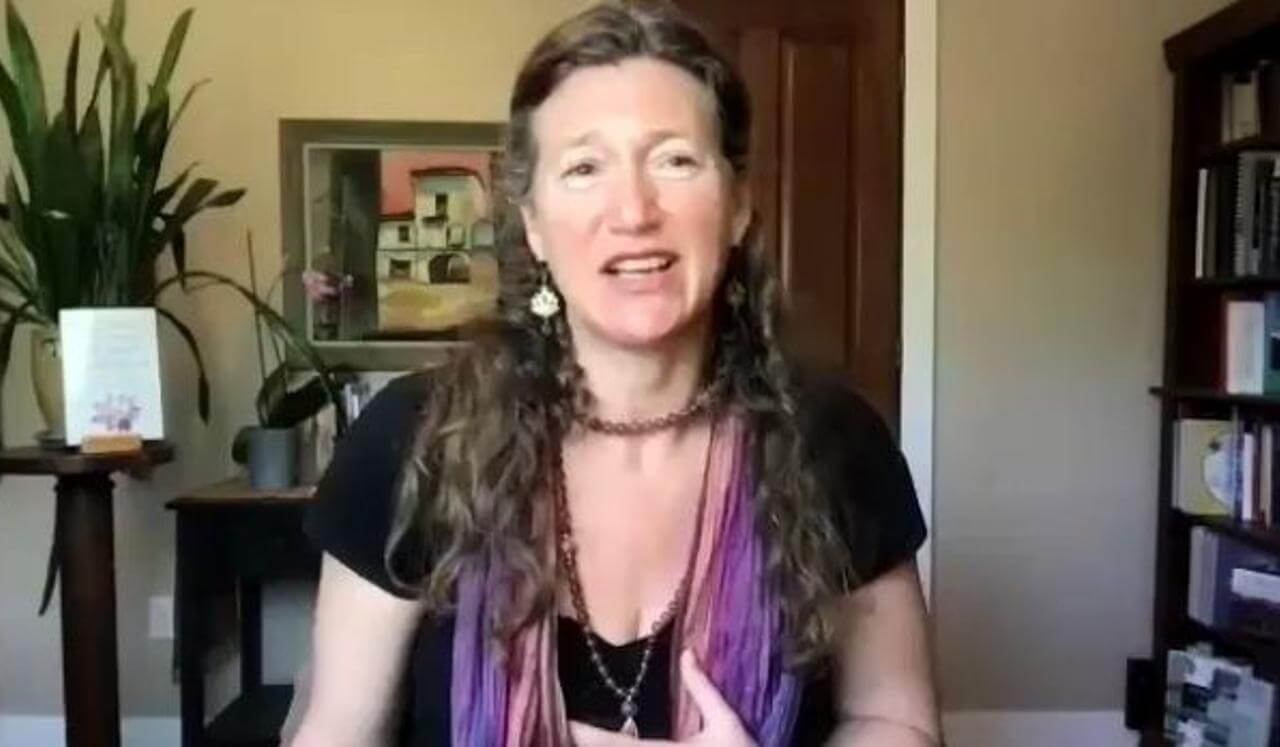
Beginner video for Polyvagal-Informed Self-Regulation Practice

★ 4.8
·
Guided
·
10 min
Arielle Schwartz
How hard is Polyvagal-Informed Self-Regulation Practice?
Polyvagal-Informed Self-Regulation Practice stays moderate because it is regulation-focused and usually saturates after the initial calming phase.
2
Mental Effort
2 / 4
▾Emotional Depth
2 / 4
▾Physical Intensity
2 / 4
▾Prior Knowledge
2 / 4
▾Editorially curated. Tracks are not themselves clinically studied; evidence on the page applies to Polyvagal-Informed Self-Regulation Practice as a technique.