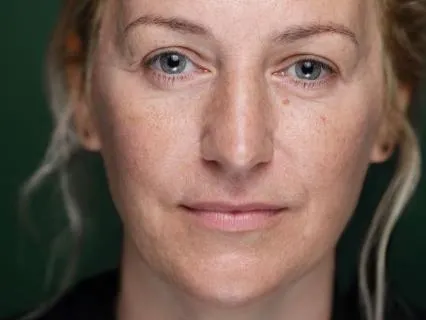
Welcome to Excelent Rising,
I'm Anna Mael and today's episode is Secrecy vs Privacy.
Let's begin.
In this episode I want to name something clearly,
Because when it stays unnamed,
It causes real harm.
The difference between secrecy and privacy.
These two are often confused now.
They are treated as interchangeable and they are not.
One wounds the nervous system and fractures your identity.
The other protects dignity,
Vitality,
And your choice.
In families,
Churches,
Closed community,
Institutions,
And now across social media culture,
People are routinely pushed into secrecy,
While being shamed for practicing privacy.
And the cause of this confusion lives in your body,
In your psyche,
And the way we learn to relate to ourselves.
So today I'm speaking about how secrecy is enforced,
How privacy heals,
And how reclaiming the right to privacy is not only a personal work.
It is ethical,
It is political,
And it's rooted in a human dignity.
Secrecy carries shame and isolation.
Most secrecy is not chosen.
It develops because someone else's actions are pushed onto us,
And then reframed as our responsibility to carry.
Violence,
Abuse,
Addiction,
Or harm happens,
And instead of accountability moving outward,
The burden is placed inward,
On you.
And the message becomes,
This is yours to hold.
And we are shunned into the secrecy.
Secrecy is often enforced in families,
Closed communities,
And the systems where silence is demanded under this disguise of loyalty.
And sometimes the demand is explicit,
Sometimes it's very manipulative and quiet.
And it can be through the lines as,
This is how you show love.
This is how you stay loyal to your family.
This is for your enlightenment.
This is how you protect us.
And being shunned into secrecy is a form of emotional abuse.
Why?
Because it fractures your values.
It erodes your dignity.
It settles into the core of your body as belief that something is fundamentally wrong with who you are.
And secrecy does not only hide the events,
It reshapes your identity.
It convinces your nervous system that exposure equals danger.
And that telling truth equals exile.
And for minors,
This damage is profound.
To witness or experience harm in the family,
Abuse,
And to be told,
Directly or indirectly,
That speaking will destroy the family,
That speaking will destroy the family,
Or upset the mother,
That speaking will destroy the faith,
That your speaking up will shame community or someone's life,
Is unbearable psychological bind.
And the child learns that survival requires silence,
Requires disappearance.
And that secrecy carries so much shame.
It's very heavy in the body.
As you know,
I'm somatic experiencing therapist for PTSD and trauma recovery.
And I can see this and observe in so many clients,
The quality of the shame.
It compresses vitality.
It restricts movement.
It restricts expression and the capacities to receive.
Because when you live in secrecy,
You also struggle to receive joy,
Care,
Or goodness.
Not because you don't want it,
But because the nervous system is protecting itself.
Because it learned that what is received equals shame.
And your nervous system cannot make a difference now between,
Is this what I'm receiving harm or love?
It shuts down both because it's so quick.
It's responding to the pulse of receiving,
Not the quality.
It shuts down before assessing,
Is this quality positive or negative?
It's only doing assessment of receiving.
So many people who are shunned into the secrecy carry the shame.
They cannot feel the joy or fully experience joy.
Because secrecy creates contraction,
Caution,
Hypervigilance,
Deep distrust.
There is no trusting.
Trusting is not happening.
Trusting is happening with,
Usually,
With dogs,
With cats,
With animals.
And healing secrecy requires safe and compassionate witnessing.
A secret cannot heal while it remains secret.
It must move out the body into a regulated,
Trustworthy container,
Which needs to be bigger than narrow experience in body.
Speaking,
Giving the name to the secret,
Naming and speaking out is a profound act of reorganization of your trauma state.
And when a secret is named,
The nervous system begins to orient differently.
Fear rises.
It's absolutely natural that first time when you name your secret,
The fear will rise.
Terror may surge.
There may be a dread of retaliation,
Rejection,
Judgment,
Being cast out.
Very common is a feeling that you're seen as abuser is right behind your back.
And this is why secrecy must be approached so carefully.
Experienced therapists,
They know how to titrate that in a micro,
Micro segments.
And often,
The safest witness is someone outside the family,
Church,
Or social circle,
Someone who doesn't carry relational risk,
So your body can fully trust into the safety of the container,
Where you can speak out and not think about possibility of the danger.
And shame,
Shame lives in body in very specific places.
We know that shame lands on your skin,
Right?
The face,
Lungs,
Heart,
And pelvis.
This is where shame lives.
These are the places where secrecy settles.
And to speak,
So body needs to be supported.
Body needs to feel anchored,
And it needs to go slow to go fast.
And very simple example is sometimes how we can help clients is for a client to hold the face while they talk.
Letting warmth return.
Looking up,
Because eyes in shame always are looking down.
So allowing your client eyes to meet you,
If you're in the role of a therapist.
Shame demands that we look down.
Healing invites us to look up.
So these are some somatic movements.
We can practice and teach our clients.
So that's secrecy.
Privacy is something entirely different.
And we lost practice of privacy more and more.
Privacy is not about hiding what is wrong.
Privacy is about protecting what is sacred.
And we are living in a time that confuses the two.
In a culture of oversharing.
It's so much oversharing.
Privacy is often shamed and mislabeled as secrecy.
Don't get confused with this.
We live in an age because of social media.
There are boundaries.
Your boundaries are treated as suspicious.
Not disclosing everything is interpreted as withholding.
But your privacy is essential.
Privacy is an inner altar.
Where you come back to.
It's a protected inner space of your own church.
Where your experience is felt.
Where your experience doesn't have a time limit to be digested,
Savored,
And allowed to take shape.
In this privacy is where dreams are conceived.
Where plans are formed.
Where we create our vision for books,
For poems,
For business.
And privacy is where something becomes yours before it becomes visible.
It's only yours.
And when you move something what is yours and so precious too early from privacy into public space,
It often loses potency.
It loses the momentum.
And the moment you expose something so meaningful and sacred,
And when you merge this to others' opinions,
Projections,
Indifference,
Jealousy,
Or misunderstanding,
That what is sacred to you,
It can collapse.
But not because it was weak or less valuable.
But because it was not ready.
It needed gestation period.
Which didn't happen.
And when something lives in privacy,
Your nervous system remains in a,
We're calling this internal locus of control.
You stay connected to your own meaning.
To your own values.
You savor what's happening inside of you.
And when it's shared prematurely,
Locus of control is now external.
And then,
In that moment,
There is a big shift in the nervous system.
You start to anticipate how will someone else react on your dream,
On your plan,
On your idea.
And you start to track their reactions.
Reading faces.
Likes.
Hoping for validation.
And when validation response does not arrive,
Or arrives mismatched,
The spark fades.
It's so quick.
Your dream shrinks.
And something what was vital and important for you is devalued.
And this is not because others are cruel.
It's because no one can carry your frequency for you.
And simply,
Many times,
People are living their own stress,
Their own grief.
Or exhaustion,
Or limitation,
Or jealousy.
And your dream,
Your plan,
May land on a day that your partner,
Your best friend,
Or people on social media just cannot receive it.
Or it may land on someone who feels threatened by a plan,
By a dream.
And this is reality.
And privacy is very important,
Because it protects what's so valuable for you from deluding,
From dumping down.
And something must remain private,
Not because they're shameful,
But because they are very powerful.
And they deserve protection.
It's your responsibility until they're embodied,
Until no response from others can destabilize your plan,
Your dream,
Your creation.
And the work would be always ask yourself,
Who is a steward of my inner land?
Who is a steward of my inner land?
Where I get to grow what's important for me in this lifetime?
And who can hold my truth without fixing,
Judging,
Minimizing,
Reshaping?
Just hold,
Just hold your share.
And who can protect what is sacred without claiming it?
And when no one needs to validate your dreams,
For them to remain alive and important for you,
Then,
And only then,
Sharing becomes your choice,
Not a need.
So privacy is not secrecy.
Privacy is sovereignty.
And oversharing,
We are so much pushed in this oversharing,
Has become one of the quiet ways we live our lives.
We lose ourselves.
We lose our potency.
And think about this.
We just hand our value to algorithms,
Attention spans,
And social approval.
Can really that define your value,
Your dream,
Your plan,
Your poems,
Your books,
Your creating in your own privacy?
And what is essential for your own identity,
Dignity,
Is placed into space,
Container who is not able to hold it.
And that container is,
As I said,
People who in the moment are not regulated,
Or they cannot receive,
Or the social media,
Right?
And your essence does not belong in the arena of noise,
Content overload,
Performance.
It truly belongs in the sanctuary of privacy.
And no one has the right to shame your privacy into secrecy.
So we must relearn this distinction and teach it again.
So let me repeat this.
No one has the right to shame your privacy into secrecy.
No one does.
Because secrecy wounds,
And privacy preserves your life.
Secrecy is imposed.
Privacy is chosen.
Secrecy compresses your body.
Privacy stabilizes it.
It gives you inner authority.
And think about secrecy as a product of emotional abuse,
Or physical abuse.
And also to provide some clarity,
What goes into privacy?
What can be private for you?
Privacy includes unformed dreams.
Unformed dreams.
Early stage plans.
Or completed plans.
Emotional processing,
Grief.
It's deeply private,
All of this.
Joy,
Oh,
This is the big one.
We saw so many times how joy can be devalued and mocked when we express it in unsafe container.
So joy deserves also privacy when it's not safe to share.
Identity exploration.
Absolutely private.
Sacred experiences.
Something what is so spiritual between you and spirit,
Between you and God.
Between you and your angels.
Private.
And decisions which are not embodied yet,
It's private.
And privacy is not silence.
It is your incubation period where your body learns certainty.
Where your nervous system integrates.
Where meaning settles.
Where you can savor all of this.
And what goes under privacy until fully embodied or until you choose to share,
You don't have to share anything.
So what it goes under your privacy,
New ideas or creative work.
Private.
Life transitions before they're stable.
That's very private.
Desires that are still forming.
Private.
Healing processes.
How you want to heal.
How you're healing.
Very private.
Medical procedures.
Very private.
Spiritual experiences.
It goes under privacy.
Plans that require your protection from influence.
And feelings,
They are just not ready for anyone's interpretation.
So these are not secrets.
These are your human rights on privacy,
Right?
And something very important,
We are teaching,
I'm teaching my clients,
Are boundaries.
So boundaries around privacy.
Number one,
Privacy is not owned to anyone.
It's yours.
And you don't owe access to anyone inside of your world.
Especially not someone who is just not safe for you.
Disclosure should never precede your embodiment.
Needs to land.
It needs to anchor in your soma.
It needs to be fully embodied.
It has this quality of gravity.
And if sharing destabilized you,
It was premature.
It wasn't kept in the privacy.
Long enough.
Also,
Validation is not prequisite for meaning.
If something dies without validation,
Your idea,
Something you want to really to express outside,
If it died,
It was not protected enough.
And your privacy is violated when you're pressured to explain.
You don't need to explain anything to anyone.
Your privacy is violated when you're shamed for not sharing.
This is the big one.
Because expectation of social media is that we need to absolutely share.
Everything.
To the point where your neighbor will stop you and say,
Hey,
I haven't seen you.
What did you do over the weekend?
And by see you,
It means on social media.
If you're told silence equals dishonesty,
Your privacy is violated.
And if you're told boundaries equal secrecy,
Same thing.
If you're looking to share,
Who deserves this access to your inner church?
You look for the stewards,
Steward of your inner land.
That's someone who does not fix,
Does not judge,
Does not redirect or compare,
Dilute.
And they don't make it about themselves.
So we need to re-educate ourselves on sovereignty and correct this trauma narrative we see on social media that overvalued this.
And we need to reorient inside.
We need to go back to the privacy.
Very important practical advice is,
Before you respond,
How you protect privacy.
First principle is you ask yourself,
Before responding to anyone,
Is this moment asking for protection or for sharing?
And you don't need to justify privacy.
You need to sense it.
And you're sensing by going back to your Soma,
To your body,
And just feel,
Is my body is tightening,
Compressing or decompressing?
So that's number one.
Also,
Some internal questions to ask between you and you.
You can ask yourself,
Am I sharing because I want to or because I feel obliged?
Do I trust this person to hold this without shaping it?
Is this person going to dilute my experience?
What's the history with this person and patterns?
And this is how you can respond.
So these are complete sentences.
No apology required.
You are not over-explaining.
So when someone is poking into your life and you don't feel like sharing,
You can say,
I'm keeping that private for now.
Or I'm not sharing that at this time.
So simple.
I'm not sharing this at this time.
It's a full sentence,
Full stop.
Or you can say,
I will speak about it when it's ready.
Very clear.
Or you can soften and you can say,
It is meaningful to me and I'm protecting it.
Or you can say,
I'm still with myself.
Or I'm letting it settle before I talk about it.
Or you can say,
I'm still in the process.
I don't feel like sharing.
Full stop.
Feel that.
Even when I say those lines,
See if your body is responding in fear.
This is how much we can be pressured to overshare and not allow for privacy.
That's a big signal.
Or if pressure continues,
You just simply say,
I'm not available for that conversation.
Or that's not something I'm discussing.
Or I don't need to explain my privacy.
For anything,
Especially when it comes to your identity.
If you're planning to have a partner or a family.
What are your beliefs about politics,
God?
If it's coming from the church,
Pressure to share things.
Very good line is,
I am praying on it.
It's between me and God only.
That will do it.
That will do it.
And when it comes to social media pressure,
Let's say someone comes in and say,
Oh,
Why don't you share more?
You used to post everything.
You can reply,
I learned to protect what matters to me.
Don't explain further.
So simple.
Or family intrusion.
We all know about this one.
So what's really going on with you?
When are you becoming pregnant?
How is your job hunt?
You can tell me,
I'm family.
Response.
I know you care.
I'm not sharing this.
If pushed,
Reply.
Care does not require access to my intimacy or to my plans.
Or when someone is saying,
Oh,
You're being so secretive.
Why won't you open up?
How do you respond?
I'm not being secretive.
I'm being private.
This is very powerful distinction.
And it often stops the conversation immediately.
So let me repeat this.
Are you hiding something?
Why are you so secretive?
I'm not being secretive.
I'm being private.
At work,
What's happening in your personal life?
Why are you so distracted?
I'm managing something personal,
And it's handled.
No details required.
One important thing.
In spiritual work,
Retreats,
In the therapy offices,
This is very,
Very important.
Healing spaces.
If you come to this line as you should talk about it,
Or healing requires disclosure,
This is a big no.
Because this is power over you.
There is no consent.
How are you responding?
I'm not being secretive.
I'm being private.
I'm not being secretive.
I'm not being secretive.
How are you responding?
I'm not being secretive.
I'm not being secretive.
How are you responding?
I'm not being secretive.
How are you responding?
I'm not being secretive.
How are you responding?
Actually,
It's very dangerous for your healing.
And if someone is violating,
If someone dismisses or minimize your privacy,
You say,
I already said no.
Please stop asking.
This conversation is over.
And leaving is also response.
And cutting out that person as well.
And when sharing is appropriate,
Privacy doesn't mean isolation.
Sharing is appropriate when you feel steady before speaking.
When your body remains regulated while imagining that someone responds.
And when you trust that person or that person or that space.
And this is a sharing from sovereignty,
Not exposure or demand of the society we live in now.
So,
As I close this today,
Let's take a pause.
And know that you're not required to expose yourself to be authentic.
You're not obliged to share to be real or to be true friend,
Quote-unquote.
And you don't owe access to what is sacred for you,
For your heart,
For your soul,
For your culture,
For your background,
For your biology.
Privacy is not hiding,
It is choosing.
And in choosing is where our dignity lives.
I am Annamal.
This is Exalted Rising.
And as always,
Be gentle with yourself.
Be gentle with yourself.
Much care.