The world’s largest free audio library for everyday wellbeing
Attention & Awareness
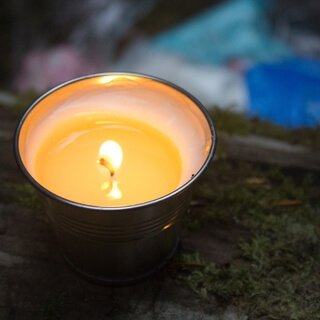
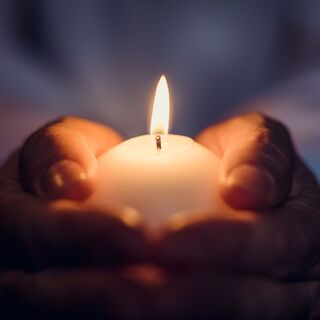
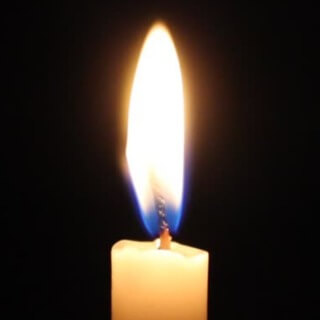
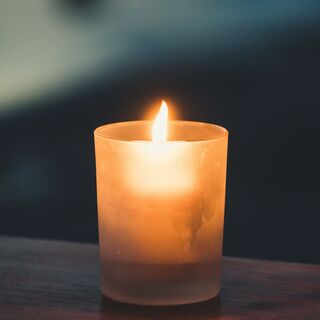
Trataka is a yogic focused-attention practice in which you gaze steadily at a candle flame or small point until the eyes water, then close the eyes and hold its after-image (Pramanik & Chatterjee, 2024), (Raghavendra & Singh, 2016).
Last Updated
2 Jul 2026
We are still reviewing this page. Our research team checks every technique page for accuracy and evidence quality before final release. Details may change as that review completes. The evidence badge shows our current reading of the published research.
RECOMMENDED DOSE
Short candle-gazing sessions are a conservative introduction that let the eyes and attention adapt gradually. No study reports a specific beginner session length or weekly frequency, so these figures are an editorial synthesis intended as a gentle starting point.
Trataka studies delivering benefits typically run as sustained programmes over roughly three weeks, but they do not specify the per-session minutes or weekly frequency used. This intermediate dose is an editorial step-up for someone comfortable with regular practice; no direct dose evidence supports these exact figures.
An insomnia study by Shathirapathiy and colleagues (2022) used 45-minute Trataka sessions and reported improvements in insomnia severity and sleep quality, supporting this longer session length for experienced practitioners. The daily frequency shown here is an editorial estimate, as the source does not clearly specify a weekly schedule.
Session length
Session length: 10–15 minutes
10
MIN
How long each individual practice session should last from start to finish.
Frequency
Frequency: 4–5 days
4
DAYS
The number of days per week to fit a session into your routine.
Session length
Session length: 20–30 minutes
20
MIN
How long each individual practice session should last from start to finish.
Frequency
Frequency: 5–6 days
5
DAYS
The number of days per week to fit a session into your routine.
Session length
Session length: 45 minutes
45
MIN
How long each individual practice session should last from start to finish.
Frequency
Frequency: 5–7 days
5
DAYS
The number of days per week to fit a session into your routine.
About this card. Only the extended 45-minute session length is directly drawn from a Trataka study; the shorter durations and all weekly frequencies are conservative editorial estimates where direct dose-response evidence is limited. These recommendations are not a substitute for personalised guidance from a qualified practitioner.
Quick answers to what people most often ask. Each card links to the deeper section below.
evidence
Early, small studies point to sharper focus and a calmer body after Trataka, though findings remain unconfirmed. A one-month controlled trial in older adults and single-session studies found better attention and memory, while autonomic studies recorded slower heart and breath rates and a shift toward rest-and-recovery tone. Most trials are small, short, and preliminary.
good for
Trataka suits adults whose attention feels scattered, whose restless mind makes settling before sleep hard, or who experience eye strain from screens. It has been studied in older adults, students, healthy volunteers, and people with insomnia. Early evidence supports a modest boost to focus, memory, and sleep, not treatment for any diagnosed condition.
Read moresafety
Most healthy adults can practise Trataka safely; in screen workers it has been linked to less eye strain, not more. People with glaucoma or raised eye pressure should get an eye doctor's clearance and avoid head-down postures. Those with recent eye surgery, an eye infection, or marked dry eye should keep sessions short.
Read morehow it works
Trataka works by giving attention a single, vivid anchor: the flame gives a wandering mind one bright place to keep returning to, which reviews link to firmer, longer-held concentration. Because the eyes must hold the flame open, heart rate and breathing slow and the body shifts toward its rest-and-recovery branch while alertness stays clear.
Read moreTrataka is a yogic focused-attention practice in which you gaze steadily at a candle flame or small point, then hold its glowing after-image with the eyes closed (Pramanik & Chatterjee, 2024), (Raghavendra & Singh, 2016).
A session moves through two phases. In bahiranga trataka you gaze steadily at an external candle flame set at eye level, holding an unblinking gaze until the eyes water. In antaranga trataka you close the eyes and concentrate on the after-image at the point between the eyebrows. Unlike most seated meditations, Trataka carries a distinct physical-training element, gradually building the capacity for sustained, open-eyed fixation on a small, gently moving light.
Trataka is a focused-attention practice built around a fixed external object, not an eyes-closed mantra or breath meditation, and not an eye exercise or medical vision treatment despite involving the eyes. The tearing of the eyes as you hold the gaze is an expected part of the practice, not a sign of harm. It is a concentration discipline rather than a support for eye conditions, and people with glaucoma or raised eye pressure should seek medical guidance before starting.
Not to be confused with
Inverted or head-down yoga postures (headstand, shoulderstand)
These are physical postures sometimes taught within yoga that can raise pressure inside the eye, unlike the seated, still gazing of trataka. The distinction matters most as a safety caution for people with glaucoma or high eye pressure.
Dharana (yogic concentration)
Dharana is the deeper stage of sustained concentration that trataka is traditionally used to prepare for. Trataka is the entry technique, the steady gazing that builds toward that state, not the state itself.
Clinical vision therapy or orthoptic eye exercises
Orthoptic and vision-therapy exercises are prescribed under professional care to address refractive or eye-muscle problems, whereas trataka is a concentration practice and is not a treatment for vision disorders.
Trataka appears to work by giving attention a single, vivid anchor. The flame gives a wandering mind one bright place to return to, so instead of chasing every passing thought it keeps settling back on the same steady point (Pramanik & Chatterjee, 2024). Reviews connect this repeated re-focusing to firmer, longer-held concentration, and small studies find better performance right after a session on attention tasks such as the Stroop test, where the challenge is holding focus while ignoring distraction (Raghavendra & Singh, 2016). Because the flame is a physical target the eyes must hold open, the practice trains attention through the body as much as through the mind.
A single candle flame gives wandering attention one bright place to rest, so instead of chasing every passing thought the mind keeps returning to the same steady point, a way of anchoring attention. Reviews describe this steady visual focus as how trataka builds concentration, though the evidence is still early (Pramanik & Chatterjee, 2024).
When attention keeps slipping away, resting the eyes on a single candle flame gives it one clear place to return to, so the pull toward wandering thoughts is met, again and again, by the same steady point. Reviews of the practice link this repeated re-focusing to firmer, longer-held concentration (Pramanik & Chatterjee, 2024).
As you hold a steady gaze on the flame, colours, edges, and the glowing after-image can start to look more vivid and detailed as focus sharpens. This is sensory attention refinement, a gradual training of focus toward subtler perceptual detail that reviews link to sharper perception (Pramanik & Chatterjee, 2024), with one small study measuring a short-term rise in visual processing speed right after a session (Mallick & Kulkarni, 2010).
After steady gazing, many people notice the breath lengthening on its own and the heartbeat slowing and steadying, signs that the parasympathetic branch, the body's rest-and-recovery system, is becoming more active. Small studies measured slower heart and breath rates and a shift in heart-rate variability toward vagal, rest-and-recovery tone right after trataka (Raghavendra & Ramamurthy, 2014), (Rajbhoj et al., 2024).
Racing, keyed-up energy tends to settle when the eyes rest on a single flame. Steady gazing has been followed by slower heart and breath rates and a shift toward the body's rest-and-recovery mode, governed by the vagus nerve (Raghavendra & Ramamurthy, 2014), (Rajbhoj et al., 2024), which reviewers link to the calm, focused feeling trataka can produce (Pramanik & Chatterjee, 2024).
After steady gazing, many people feel the body grow calmer and the breath lengthen on its own. Small studies match that sensation: heart rate and breathing slow, and vagal tone, the nervous system's rest-and-recovery signal, rises (Raghavendra & Ramamurthy, 2014), (Rajbhoj et al., 2024).
The most consistently measured change is a settling of the nervous system: in small studies, heart rate and breathing rate slowed right after Trataka, and heart-rate variability, a marker of how flexibly the body moves between effort and rest, shifted toward vagal, rest-and-recovery tone (Raghavendra & Ramamurthy, 2014), (Rajbhoj et al., 2024). In the body this can feel like the pulse quieting, the breath lengthening on its own, and alertness softening without tipping into drowsiness. One small study also recorded a short-term rise in visual processing speed, tracked as critical flicker fusion, immediately after practice (Mallick & Kulkarni, 2010).
When you feel wired and want the body to settle, the pulse can quiet as you gaze. Heart rate has been measured slowing during and right after trataka, alongside a shift toward greater vagal tone, the rest-and-recovery activity of the vagus nerve (Raghavendra & Ramamurthy, 2014), (Rajbhoj et al., 2024). In the body it often registers as a quieting pulse and breathing that lengthens on its own.
As the eyes close and rest on the after-image, the breath often lengthens on its own and the body feels like it is settling. In studies of healthy adults, breathing slowed right after a Trataka session, fewer breaths per minute, a sign the nervous system is easing toward rest (Rajbhoj et al., 2024), (Raghavendra & Ramamurthy, 2014).
You may feel the heartbeat settle, the breath slow on its own, and the body ease out of high alert. That shift reflects vagal tone, the strength of the calming vagus-nerve signal that steadies the heart, which increased right after Trataka in one small study (Raghavendra & Ramamurthy, 2014).
That keyed-up, on-alert feeling tends to ease after Trataka. In one small study, the sympathetic nervous system that drives fight-or-flight arousal quieted right after practice: heart rate and breathing slowed, and heart-rate variability shifted toward the calming vagal branch (Raghavendra & Ramamurthy, 2014). People often notice the body settling once the gazing ends.
After candle gazing, some people notice the mind feels clearer and quicker to switch between tasks. That everyday sense of mental flexibility, the ability to shift and update how you respond, was measured to improve right after trataka on switching tasks like the Stroop test (Raghavendra & Singh, 2016), alongside a short-term rise in visual processing speed (Mallick & Kulkarni, 2010) and a shift in heart-rate variability toward calmer, rest-and-recovery tone (Raghavendra & Ramamurthy, 2014).
Holding a spot in mind, like where an object sat a moment ago, is visuospatial working memory. In one small study this capacity measured higher right after a Trataka session, tested with a spatial-memory task (Swathi et al., 2021), and people often notice it as feeling mentally sharper and better able to keep track of where things are around them.
Limited, early-stage evidence supports Trataka for sharper focus and attention, better short-term and spatial memory, and easier sleep, with each finding resting on small studies (Jagannathan et al., 2014), (Raghavendra & Singh, 2016), (Swathi et al., 2021), (Shathirapathiy et al., 2022). A randomized trial also found less self-rated eye strain in screen workers (Saoji et al., 2024), and moderate review-level evidence suggests gazing and slow-breathing practices may lower eye pressure while head-down postures can raise it (Chetry et al., 2023). It has not been shown in large controlled trials, over long follow-up, or as a stand-alone treatment for any diagnosed condition.
Scattered, jumping attention has one steady place to rest when the eyes hold a single candle flame. In small studies, people showed sharper attention and better performance on focus tasks soon after trataka practice, including older adults and students (Jagannathan et al., 2014), (Raghavendra & Singh, 2016), (Sherlee & David, 2020).
Names, numbers, and where you left off in a task can be a little easier to hold onto after regular candle gazing. In a controlled trial with older adults and a small study in younger adults, trataka practice was linked to better short-term and spatial memory, the kind of recall you lean on to keep a phone number in mind or follow a set of directions (Jagannathan et al., 2014), (Swathi et al., 2021).
After a candle-gazing session, many people notice the body settling and the breath lengthening on its own, a shift out of effortful focus into calm, alert stillness. In one small study, this came with a measured rise in heart-rate variability, the small beat-to-beat variation that reflects how flexibly your nervous system moves between effort and rest, alongside slower heart and breath rates (Raghavendra & Ramamurthy, 2014).
After candle gazing, many people feel their breathing slow and the sense of being on alert soften. In one small study, that settling was measurable: right after a trataka session, heart and breath rates slowed and heart-rate variability shifted toward greater vagal tone, the rest-and-recovery activity of the vagus nerve (Raghavendra & Ramamurthy, 2014).
That wired, can't-downshift feeling after a stressful day may ease with steady candle gazing. In a small controlled study, trataka was followed by a shift toward stronger vagal tone, the parasympathetic rest-and-recovery state, with slower heart and breath rates that practitioners often notice as the breath settling and a loosening of mental urgency (Raghavendra & Ramamurthy, 2014).
If you lie awake at night with a mind that won't switch off, trataka may offer a way in. Resting your eyes and attention on one steady candle flame, then holding its after-image, the faint glow that lingers behind closed eyelids, is a focused-attention practice that early research links to less severe insomnia and better-rated sleep quality (Shathirapathiy et al., 2022).
A one-month controlled trial in older adults and several single-session studies found sharper attention and memory right after Trataka, measured on tasks such as the Stroop and Corsi-block tests (Jagannathan et al., 2014), (Raghavendra & Singh, 2016), (Swathi et al., 2021). Small autonomic studies also recorded slower heart and breath rates and a shift toward calmer, vagal tone after practice (Raghavendra & Ramamurthy, 2014), (Rajbhoj et al., 2024). Most studies are small, short, and run in healthy volunteers, and their authors describe the evidence as preliminary, so the results are suggestive rather than settled (Pramanik & Chatterjee, 2024).
1
Meta-analyses
0
RCTs
0
Systematic reviews
0
Observational
13
Pilot
Studied populations
Aarti Jagannathan, Nagarathna Raghuram, Shubhada Talwadkar (2014). Effect of trataka on cognitive functions in the elderly. https://doi.org/10.4103/0973-6131.133872
n = 60
Finding: In this controlled trial, 60 older adults were split into a group practising trataka for one month and a wait-list group who did not, and the trataka group showed clear gains in attention, working memory, and mental task-switching by the end of the month. For an older practitioner, that points to candle gazing as a simple routine that may sharpen everyday focus and mental agility within a few weeks. Keep in mind this was a small, month-long study in elderly adults, so it speaks to short-term mental sharpness rather than any lasting protection against memory decline.
reported narratively
J. Ida Sherlee, Anita David (2020). Effectiveness of yogic visual concentration (Trataka) on cognitive performance and anxiety among adolescents. https://doi.org/10.1515/jcim-2019-0055
2020
Finding: In a controlled experiment with school adolescents in Chennai, those who practised trataka scored notably better on attention and focus tasks (a color-and-word naming test) than a comparison group who kept to their usual routine, with a clear difference between the two groups. The researchers also tracked anxiety and concluded that trataka helped more than everyday activities, though the anxiety side of the results was measured less precisely than the attention scores. For someone considering the practice, this points to sharper concentration as a plausible benefit, but because the study focused on adolescents and did not firmly pin down the anxiety effect, it shouldn't be read as evidence that trataka treats anxiety conditions.
Trataka comes from classical Hatha Yoga, where it is listed among the shatkarmas, the six cleansing practices described in texts such as the Hatha Yoga Pradipika and Gheranda Samhita (Pramanik & Chatterjee, 2024). Teachers such as Swami Satyananda Saraswati present it as a gateway to dharana and dhyana, the deeper stages of concentration and meditation. These roots help explain the practice's form, its staged movement from gazing at the outer flame to holding the inner after-image, not its clinical effects.
For most healthy adults, trataka is a low-risk practice. Steady candle gazing is gentle, and in screen workers it has been linked to less eye strain and fatigue, not more (Saoji et al., 2024). A few situations do call for care. If you have glaucoma or raised eye pressure, the gazing itself is usually fine, but the head-down and inverted postures sometimes taught alongside it can push the fluid pressure inside the eye upward. This is a practice-informed caution of moderate concern, drawn from reviews of yoga in glaucoma rather than a trataka-specific safety trial (Chetry et al., 2023). And because gazing without blinking naturally makes the eyes water and can leave them tired, anyone with a recent eye infection, recent eye surgery, or marked dry eye is wise to keep sessions short or check with an eye-care professional before starting.
People with glaucoma or elevated eye pressure should get clearance from an eye doctor before starting and avoid the inverted, head-down postures that can raise the fluid pressure inside the eye; the gazing component itself has not been shown to raise it, a practice-informed caution of moderate concern (Chetry et al., 2023). Anyone recovering from recent eye surgery, managing an active eye infection, or living with significant dry eye should shorten the gaze or seek professional advice first, since the practice deliberately holds the eyes open until they water. And anyone with persistent eye pain, migraines triggered by visual focus, or an unexplained change in vision should have it assessed before making trataka a regular practice.
If you have glaucoma or raised intraocular pressure, the steady gazing itself has not been shown to raise eye pressure, but the inverted, head-down yoga postures sometimes taught alongside trataka can push it upward. Skip inversions and head-down positions and get clearance from your eye doctor before starting. This is a practice-informed caution of moderate concern, drawn from reviews of yoga in glaucoma rather than a trataka-specific safety trial, and trataka should support your glaucoma care rather than replace it.
| Technique | Best for | Use with care | Evidence strength | Distinction |
|---|---|---|---|---|
| Focused-attention breath meditation | Practising anywhere without props, or when the eyes are tired and an external focal point is hard to set up. | moderate EVIDENCE | Both anchor attention on one object to quiet a busy mind, but trataka fixes an external candle flame with open eyes until they water and then holds the internal after-image, whereas breath-focused meditation rests on an ever-present internal sensation with the eyes usually closed. The gazing gives trataka a physical-training element that breath meditation does not carry. | |
| Mindfulness (open-monitoring) meditation | Building nonjudgmental awareness of changing inner experience rather than sustained single-point focus. | moderate EVIDENCE | Mindfulness typically widens attention to observe whatever thoughts, feelings, and sensations arise without fixing on one object, while trataka narrows attention tightly onto a single luminous point. They train different attentional skills: open awareness versus single-point concentration. |
Trataka is a yogic focused-attention practice in which you gaze steadily at a candle flame or small point until the eyes water, then close the eyes and hold its glowing after-image (Pramanik & Chatterjee, 2024), (Raghavendra & Singh, 2016).
+
Trataka is a yogic focused-attention practice: you sit before a small flame at eye level and hold a steady, unblinking gaze until the eyes water, then close the eyes and rest attention on the after-image (Pramanik & Chatterjee, 2024), (Raghavendra & Singh, 2016). It is one of the shatkarmas, the six cleansing practices described in classical Hatha Yoga texts, and is traditionally taught as a gateway to deeper concentration. This describes the practice form and its roots, not a claim that it treats any condition.
Because holding the eyes open without blinking triggers the eyes' normal tear reflex. In trataka the gaze is deliberately sustained until the eyes water, so watering is an expected part of the practice rather than a sign of harm (Pramanik & Chatterjee, 2024).
+
Watering happens because the practice keeps the eyes open and steady without blinking, which naturally triggers the tear reflex, and trataka is built around holding the gaze until that point (Pramanik & Chatterjee, 2024). It is an expected part of the practice, not a signal that something is wrong, and it does not mean the eyes are being cleansed or treated. Even so, keep sessions short, blink and rest the eyes freely, and stop and see an eye-care professional if you notice persistent eye pain or any change in vision.
The six cleansing practices of Hatha Yoga, meant to purify body and mind and prepare the practitioner for deeper practice. Trataka is counted among them.
The external phase of the practice: gazing steadily at the physical candle flame without blinking until the eyes water.
The internal phase: closing the eyes and concentrating on the lingering after-image of the flame.
The point between the eyebrows where the after-image is traditionally held in attention during the internal phase of the practice.
The lingering visual impression of the flame that remains when the eyes close, which becomes the object of inward focus.
Sustained one-pointed concentration on a single object; a stage of yoga that trataka is said to lead toward.
Meditative absorption that follows concentration (dharana) in the traditional yogic sequence.
A measure of how quickly the visual system can process flickering light, used as an everyday index of visual processing speed.
The frequency at which a flickering light source is perceived as steady rather than flickering, used as a psychophysical index of cortical arousal and visual temporal resolution.
The small beat-to-beat variation in the pulse; higher variability generally reflects a nervous system that can shift flexibly between alertness and rest.
The variation in time intervals between successive heartbeats, used as a non-invasive marker of autonomic (sympathetic and parasympathetic) regulation of cardiac rhythm.
Aarti Jagannathan, Nagarathna Raghuram, Shubhada Talwadkar (2014). Effect of trataka on cognitive functions in the elderly. https://doi.org/10.4103/0973-6131.133872
Cited in: Benefits, Faq, Research, What happens in the body
J. Ida Sherlee, Anita David (2020). Effectiveness of yogic visual concentration (Trataka) on cognitive performance and anxiety among adolescents. https://doi.org/10.1515/jcim-2019-0055
After trataka, many people feel the body settle, the pulse quieting, the breath lengthening on its own, and mental urgency easing. In small studies this shows up as a shift toward vagal, rest-and-recovery tone, with heart rate and breathing measured to slow right after practice (Raghavendra & Ramamurthy, 2014), (Rajbhoj et al., 2024).
Right after a Trataka session, some people notice their mind feels less scattered and more able to hold a single thought without losing the thread, a shift in working memory, the mental scratchpad that briefly holds and juggles information while you use it. In small studies, memory-span and spatial-memory scores rose immediately after practice (Swathi et al., 2021), (Jagannathan et al., 2014).
In the minutes after candle gazing, the body often settles: the pulse quiets, the breath lengthens on its own, and alertness softens without tipping into drowsiness. One small study measured this as a shift in sympathovagal balance, the tug-of-war between the body's activating and calming nervous-system branches, toward the calming, rest-and-recovery side (Raghavendra & Ramamurthy, 2014).
Right after gazing, breathing can feel fuller and easier as the body settles. In one large single-group study, blood oxygen saturation, a rough stand-in for how well the body's tissues are supplied with oxygen, rose slightly after trataka alongside slower heart and breath rates (Rajbhoj et al., 2024).
Lying awake with a restless, alert mind that won't switch off is the state trataka may help settle. In a small study of adults with insomnia, a short daily candle-gazing practice was linked to less severe insomnia and better-rated sleep quality (Shathirapathiy et al., 2022), and people often describe the steady focus on the flame as a way to unhook attention from the churn of thoughts that keeps them awake at night.
Outcomes measured
| Outcome | Effect size | 95% CI | N | Comparator | Source |
|---|---|---|---|---|---|
| Digit Span score | reported significant; P<0.01 | — | — | — | Jagannathan et al., 2014 |
| Stroop color-word test performance | reported significant; p<0.001 | — | 30 | control session | Raghavendra & Singh, 2016 |
| forward Corsi span / total score | reported significant; p<0.001 | — | 41 | — | Swathi et al., 2021 |
| HRV (LF decrease, HF increase), heart rate, breath rate | reported significant; P<0.01 | — | 30 | control session | Raghavendra & Ramamurthy, 2014 |
| heart rate, respiratory rate, SpO2 | reported significant; P<0.0001 | — | 503 | — | Rajbhoj et al., 2024 |
| Stroop color/word scores | reported significant; p<0.0001 | — | — | control group | Sherlee & David, 2020 |
| Visual Fatigue Scale, Visual Symptoms Checklist | reported significant; p=0.001 | — | 300 | wait-list control | Saoji et al., 2024 |
| IOP, SBP, DBP, RR, FBG, pulse rate | reported significant; p<0.05 | — | 60 | control (medication only) | Ismail et al., 2022 |
| intraocular pressure (between-group) | reported narratively | — | — | standard medical treatment | Sankalp et al., 2022 |
| heart rate | OR = 2 | — | — | — | Ming-Zhi et al., 2004 |
The research is small and early. Most trials involve few participants, measure only the minutes right after practice, and rely on self-reported or single-task outcomes, and some report statistical significance without full effect-size estimates (Pramanik & Chatterjee, 2024). Samples skew toward healthy volunteers and young men, so how well the findings generalize, and whether any benefits last between sessions, remains untested.
reported significant; p<0.0001
Palash Pramanik, Sridip Chatterjee (2024). Tradition and science of Trataka kriya: A comprehensive review. https://doi.org/10.4103/ym.ym_67_24
2024
Finding: This 2024 review gathered 16 studies on trataka, the practice of gazing steadily at a candle flame or small point and then holding the after-image with closed eyes. Across those studies, regular practice was linked to sharper focus, steadier heart rhythm, better emotional control, and a greater sense of mental relaxation, which fits the idea that giving your attention a single fixed target helps settle both mind and nervous system. For someone taking it up, that suggests trataka may be a useful way to train concentration and unwind, but the authors are clear that the evidence is still early: most studies were small, designs varied widely, and long-term effects have not yet been confirmed, so treat these as promising rather than settled benefits.
See full citation in referencesTaruna Mallick, Ravi Kulkarni (2010). The Effect of <i>Trataka</i> , a Yogic Visual Concentration Practice, on Critical Flicker Fusion. https://doi.org/10.1089/acm.2010.0012
n = 30
Finding: In this small study of 30 healthy adults aged 25 to 40, the ability to detect rapid visual flicker (a measure of how quickly the eyes and brain process what they see) rose slightly right after a session of trataka, from about 37.4 to 38.7 flickers per second, while a comparable non-practice session showed no such change. In everyday terms, a short spell of candle gazing may leave your visual attention feeling a little sharper immediately afterward. This was a one-off measurement in a small group, so it points to a brief perceptual lift rather than a lasting change, and it says nothing about eyesight or vision correction.
reported narratively
B.R. Raghavendra, Prashanth Singh (2016). Immediate effect of yogic visual concentration on cognitive performance. https://doi.org/10.1016/j.jtcme.2014.11.030
n = 30
Finding: In this small experiment, 30 healthy young men completed a demanding attention task both right after a session of trataka and after a control session, and their scores were noticeably better immediately following the candle-gazing practice. That points to a short-term sharpening of focus and mental flexibility, the kind of clearer, more attentive state many practitioners report after a few minutes of steady gazing. Keep in mind that this was a one-off, immediate effect measured in a small group of young men, so it tells us the practice may prime attention in the moment rather than proving any lasting boost to thinking.
reported significant; p<0.001
P. S. Swathi, Raghavendra Bhat, Apar Avinash Saoji (2021). Effect of Trataka (Yogic Visual Concentration) on the Performance in the Corsi-Block Tapping Task: A Repeated Measures Study. https://doi.org/10.3389/fpsyg.2021.773049
n = 41
Finding: In this study, 41 healthy young adults completed a memory task after a single session of trataka, after an eye-exercise session, and at baseline, and their scores on remembering and reproducing sequences of positions climbed noticeably higher right after the trataka session. Candle-gazing beat both plain eye exercises and their starting scores, while eye exercise on its own produced no real change, which points to the focused-attention quality of trataka rather than eye movement alone doing the work. For someone practising, this suggests a short trataka session may sharpen short-term and spatial memory in the moment. Keep in mind this was a small study measuring an immediate, one-off effect in healthy adults around age 23, so it does not tell us whether the practice builds lasting memory gains over time.
reported significant; p<0.001
Pratibha Hemant Rajbhoj, Ranjeet Singh Bhogal, Satish Dattatraya Pathak (2024). Immediate Effect of Trataka Kriya on Heart Rate, Respiratory Rate, and SpO2 as Stress Correlates in Healthy Individuals: A Single-arm Clinical Trial. https://doi.org/10.4103/asl.asl_35_24
n = 503
Finding: In a single-group trial with 503 healthy adults, heart rate and breathing rate dropped and blood-oxygen levels rose immediately after a session of trataka candle gazing, a pattern the researchers linked to the body shifting into a calmer, more relaxed state. For someone trying the practice, this hints that even a short session may help settle the nervous system in the moment. Because everyone in the study did the practice with no comparison group to measure against, these results show what changed alongside trataka rather than proving the practice alone caused the calming effect.
reported significant; P<0.0001
Ali Mohamed Ali Ismail, Hatem Fawzy Abd Elfatah Abo Saif, Alaa Mohamed El-Moatasem Mohamed (2022). Effect of <i>Jyoti-Trataka</i> on intraocular pressure, autonomic control, and blood glucose in diabetic patients with high-tension primary open-angle glaucoma: a randomized-controlled trial. https://doi.org/10.1515/jcim-2021-0041
n = 60
Finding: In this controlled trial, 60 adults (ages 52–67) with type 2 diabetes and high-pressure open-angle glaucoma either added one month of daily candle-flame gazing (Jyoti-Trataka) to their usual medication or stayed on medication alone. Those who practised showed lower eye pressure, along with reductions in blood pressure, breathing rate, pulse, and fasting blood sugar, while the medication-only group saw no meaningful change. For someone managing these conditions, this points to trataka as a possible calming add-on to standard care, not a substitute for it. Keep in mind the study was short, small, and specific to diabetic glaucoma patients, so anyone with an eye or metabolic condition should practise alongside, and with the guidance of, their medical treatment.
reported significant; p<0.05
Apar Avinash Saoji, PS Swathi, Raghavendra Bhat, Bhavit Bansal, Sriloy Mohanty, R K Roshni Raj Lakshmi (2024). Exploring the Effect of Trataka (A Yogic Cleansing Technique) and Cold Eye Pack on Eye Strain During COVID-19 Pandemic: A Randomized Three-Arm Trial. https://doi.org/10.1089/jicm.2023.0175
n = 300
Finding: In a randomized trial with 300 IT professionals struggling with screen-related eye strain, two weeks of daily trataka noticeably lowered self-rated visual fatigue compared with a group that did nothing. A separate cold eye pack worked just as well, and the two produced similar results, so trataka helped but did not outperform that simpler option. If your eyes feel tired from long hours at a screen, this suggests a short candle-gazing routine may bring some relief, though the study relied on people's own ratings over just fourteen days rather than longer-term or objective eye measurements.
reported significant; p=0.001
BR Raghavendra, V Ramamurthy (2014). Changes in heart rate variability following yogic visual concentration (Trataka). https://doi.org/10.4103/2321-449x.127975
n = 30
Finding: In this study, 30 healthy men in their twenties and early thirties showed a shift toward a calmer nervous system after a session of trataka: their heart rate and breathing slowed, and the balance of their heart-rate variability tipped toward the "rest and recover" side, the same pattern often seen during meditation. A comparison session without the practice showed no such change, which points to trataka itself rather than simply sitting still. Because this was a small, one-session study in young healthy men, it is an encouraging early signal rather than proof the practice will steady everyone's nervous system, but it does suggest that focused candle gazing may leave you feeling physically calmer.
reported significant; P<0.01
Dipak Chetry, Jayvindra Singh, Archana Chhetri, Vinod Kumar Katiyar, Daya Shankar Singh (2023). Effect of yoga on intra-ocular pressure in patients with glaucoma: A systematic review and meta-analysis. https://doi.org/10.4103/ijo.ijo_2054_22
2023
Finding: This review pooled six studies of glaucoma patients and found that steady gazing practices like Jyoti-trataka, along with some slow yogic breathing techniques, lowered pressure inside the eye, while head-down inversion postures tended to raise it; three of the strongest trials showed bigger pressure improvements in the yoga groups than in controls. For someone with glaucoma, that hints candle or point gazing may fit into a broader routine aimed at protecting the eyes, but it should never replace prescribed treatment. Keep in mind the studies were small and varied in quality, and they tested yoga as a mixed package, so the benefit can't be credited to trataka on its own. If you have an eye condition, check with your doctor before adding practices, and avoid inverted poses.
reported narratively
G. Shathirapathiy, A. Mooventhan, N. Mangaiarkarasi, SA. Sangavi, V. Shanmugapriya, B. Deenadayalan (2022). Effect of trataka (yogic gazing) on insomnia severity and quality of sleep in people with insomnia. https://doi.org/10.1016/j.explore.2020.09.009
n = 29
Finding: In this study, 29 adults living with insomnia practised trataka daily for 10 days, and afterward they scored lower on a standard insomnia measure and reported better overall sleep quality, including how quickly and how deeply they slept. For someone struggling to wind down at night, this hints that a short, focused gazing practice over a couple of weeks may take the edge off restless sleep. Keep in mind the trial was small and had no comparison group, so we can't be sure the practice alone caused the change; treat it as an encouraging early signal rather than a proven fix for clinical insomnia.
See full citation in referencesSankalp, Tanuj Dada, Raj Kumar Yadav, Hanjabam Barun Sharma, Ritesh Kumar Netam, Kanwal Preet Kochhar (2022). Effect of Tratak (Yogic Ocular Exercises) on Intraocular Pressure in Glaucoma. https://doi.org/10.4103/ijoy.ijoy_160_21
2022
Finding: In a randomised trial with glaucoma patients (at least 30 per group), a yoga program that included a modified form of trataka was added to standard medical treatment and compared with standard treatment alone. Eye pressure did drop within the trataka group over four weeks, but there was no meaningful difference between the two groups in eye pressure, stress hormone levels, or quality of life, and the researchers concluded the eye exercises should not be relied on to manage raised eye pressure. If you have glaucoma, this suggests trataka may be a pleasant addition to a routine but is not a substitute for prescribed care, and larger studies are still needed before any firm claim can be made.
reported narratively
Zhang Ming-Zhi, Fu Zhi-Fu, Liu Xiao-Rui, Zheng C (2004). [A comparison study of pulsitile ocular blood flow in normal eyes and primary open angle glaucoma]..
2004
Finding: This study compared eye blood-flow and pressure measurements in people with a common form of glaucoma against people with healthy eyes, and it did not test candle gazing or any meditation practice directly. The one heart-related difference it reported was not statistically reliable, meaning the numbers could easily have come up by chance. Because the work focused on diagnosing an eye condition rather than on the effects of a wellness routine, it offers no usable evidence about whether Trataka helps or changes anything for a practitioner.
OR = 2
Trataka deliberately holds the eyes open without blinking until they water, which can leave them tired and irritated. If you have a recent eye infection, are recovering from recent eye surgery, or live with marked dry eye, keep sessions very short, blink and rest the eyes freely, and check with an eye-care professional before making it a regular practice.
Stop and have it assessed by an eye-care professional if you notice lasting eye pain, headache, migraines triggered by visual focus, or any unexplained change in vision before continuing trataka. Watering and mild tiredness during a session are expected; persistent pain or vision change is not.
Trataka is best approached gently, in a calm, draft-free space with the candle set at eye level and safely clear of anything flammable. A sensible starting format is just a minute or two of soft gazing, letting the eyes water on their own and lengthening the sessions gradually as your eyes adapt. If you are managing an eye condition, treat professional clearance and shorter sessions as part of getting set up rather than an afterthought.
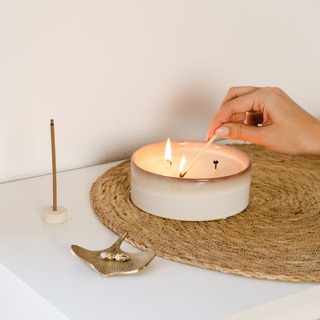
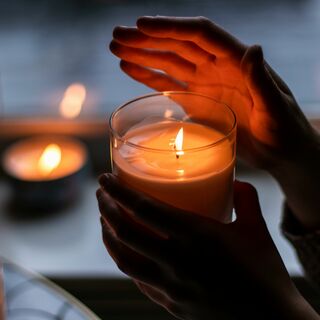
Place the candle at eye level about an arm's length away, in a draft-free spot so the flame stays still. Keep it well clear of hair, curtains, and anything flammable, and sit in a comfortable, upright position.
Rest a soft, steady gaze on the flame rather than forcing the eyes wide. Let them water on their own and do not push past sharp discomfort; watering is an expected part of the practice, not a signal that something is wrong.
Begin with only a minute or two of gazing and lengthen sessions gradually over days and weeks as the eyes adapt. This is a sensible starting point, not a fixed prescription.
Once the eyes water, close them and rest attention on the glowing after-image of the flame behind the eyelids. Let the eyes rest, blink freely, and pause if they feel sore or dry.
If you have glaucoma or raised intraocular pressure, skip inversions and head-down positions and get clearance from your eye doctor before starting. With dry eye, a recent eye infection, or recent eye surgery, keep sessions short or seek professional advice first.
Open the eyes slowly at the end rather than all at once. Stop and consult an eye-care professional if you notice lasting eye pain, headache, or any change in vision.
This information is educational and is not medical advice. This practice is not a substitute for professional care and should not replace prescribed medication or treatment for any medical or mental-health condition. If you are managing a health condition or taking medication, talk with a qualified health professional before changing your practice. If you are in distress or crisis, seek professional support.
| Yoga-based eye (ocular) exercises | Targeting visual fatigue or eye-muscle relief directly, without a meditative concentration goal. | If the goal is attention or memory training, eye exercises alone lack trataka's single-point concentration component. | moderate EVIDENCE | Ocular exercises move the eyes through directed patterns to relieve visual strain and fatigue, while trataka holds the gaze still on one flame as a concentration practice and then adds an internal after-image stage. Only trataka is aimed primarily at training attention rather than the eye muscles. |
Modestly, and only early evidence supports it. Small studies, including a one-month controlled trial in older adults and single-session tests, link trataka to sharper focus right after practice (Jagannathan et al., 2014), (Raghavendra & Singh, 2016). The findings are suggestive, not yet confirmed.
+
Modestly. A one-month controlled trial in older adults and several single-session studies found better performance on attention tasks such as the Stroop test soon after trataka (Jagannathan et al., 2014), (Raghavendra & Singh, 2016), and one adolescent study also reported attention gains alongside lower anxiety (Sherlee & David, 2020). But these samples are small, short, mostly healthy volunteers, and measure the minutes right after practice, so the effect reads as an early, modest boost rather than a proven or lasting one, and not a treatment (Pramanik & Chatterjee, 2024).
Possibly. One small study in people with insomnia found that trataka may ease insomnia severity and improve sleep quality, so it can work as a pre-sleep settling practice (Shathirapathiy et al., 2022). This is early, single-study evidence, not a proven treatment for any sleep disorder.
+
Possibly. In a small study of 29 adults with insomnia, practising trataka was linked to lower insomnia severity and better self-rated sleep quality, which fits its use as a way to settle a restless mind before bed (Shathirapathiy et al., 2022). This is early, single-study evidence with no long follow-up. Treat trataka as support for your wind-down routine, not a replacement for care when sleep problems are severe or persistent.
Early signs point that way, though it isn't confirmed. In small studies, heart rate and breathing rate slowed right after trataka, and heart-rate variability shifted toward calmer, vagal rest-and-recovery tone (Raghavendra & Ramamurthy, 2014), (Rajbhoj et al., 2024).
+
Early signs point that way, though the change is not yet established. In small autonomic studies, heart rate and breathing rate slowed immediately after a session, and heart-rate variability, the beat-to-beat change in pulse, shifted toward vagal tone, the parasympathetic, rest-and-recovery pattern (Raghavendra & Ramamurthy, 2014), (Rajbhoj et al., 2024). These effects were tracked in the minutes right after practice in mostly healthy volunteers, so they read as preliminary calming signals rather than a confirmed or lasting change, and not a treatment for any diagnosed condition.
For most healthy adults, no. Steady candle gazing is low-risk, and in screen workers two weeks of trataka eased eye strain rather than worsening it (Saoji et al., 2024). Because gazing without blinking makes the eyes water and tire, keep sessions short if you have dry eye, a recent eye infection, or recent eye surgery, and see an eye doctor first if you have glaucoma or raised eye pressure.
+
For most healthy adults, no. Trataka is a gentle, low-risk practice rather than something that harms the eyes, and a randomized trial in screen workers even linked two weeks of practice to less self-rated eye strain and fatigue (Saoji et al., 2024). The practice deliberately holds the eyes open until they water, so they may feel tired afterward; keep sessions short, blink freely, and pause if the eyes feel sore, especially with dry eye, a recent eye infection, or recent eye surgery. If you have glaucoma or raised intraocular pressure, the fluid pressure inside the eye, get clearance from an eye doctor and avoid head-down postures, which reviews of yoga in glaucoma suggest can raise that pressure (Chetry et al., 2023). Have any persistent eye pain or change in vision assessed before making trataka a regular practice.
Use care. The steady gazing itself is generally low-risk, and reviews suggest gazing practices may modestly lower eye pressure, but the head-down or inverted postures sometimes taught alongside it can raise it, so avoid those and get clearance from your eye doctor first (Chetry et al., 2023).
+
Use care. If you have glaucoma or raised intraocular pressure, the fluid pressure inside the eye, the candle-gazing component has not been shown to raise that pressure, and review-level evidence suggests gazing and slow-breathing practices may even lower it modestly (Chetry et al., 2023). The practical caution is about the inverted, head-down yoga postures sometimes bundled with trataka, which can push eye pressure upward and are best avoided. This is a practice-informed precaution of moderate concern drawn from yoga-in-glaucoma reviews, not a trataka-specific safety trial; check with an eye-care professional before starting, and treat trataka as a support alongside your glaucoma care, not a replacement for it.
Start with about a minute or two of soft gazing, letting your eyes water on their own, then lengthen sessions slowly over days and weeks as they adapt. This is a practice-informed starting point, not an evidence-tested optimal dose.
+
Start short: roughly one to two minutes of gentle, soft-focused gazing is enough when you begin, and you can extend the time gradually over days and weeks as the eyes adjust. Let the eyes water naturally rather than forcing them open or pushing past sharp discomfort, then close them and rest on the after-image, pausing if they feel sore or dry. This is practice-informed guidance rather than a tested dosage, so treat it as a sensible starting point rather than a fixed prescription.
Both anchor attention on a single object to quiet a busy mind, but trataka fixes the gaze on an external candle flame with open eyes, then holds its after-image, while breath-focused meditation rests on an internal sensation with eyes usually closed (Pramanik & Chatterjee, 2024). That external, open-eyed gazing gives trataka a physical-training element breath meditation does not carry.
+
The core difference is the anchor. Trataka is a yogic focused-attention practice in which you gaze steadily at a candle flame until the eyes water, then close them and hold the after-image, whereas breath meditation keeps attention on an ever-present internal sensation (Pramanik & Chatterjee, 2024), (Raghavendra & Singh, 2016). Both train single-point focus by giving a wandering mind one place to keep returning to, so the shared mechanism is similar even though the vehicle differs. No direct head-to-head trial has compared the two, so this is a practice-form distinction rather than evidence that one works better than the other.
The strength of the calming vagus-nerve signal that slows the heart and shifts the body toward rest and recovery.
The degree of parasympathetic (vagus nerve) influence on the heart, reflected in high-frequency heart-rate variability and associated with restorative physiological states.
A candle-flame form of trataka, studied in glaucoma research for its effect on eye pressure alongside standard care.
The fluid pressure inside the eye, which is the main modifiable risk factor in glaucoma and can shift with body position.
The pressure exerted by aqueous humor within the eye, the principal modifiable risk factor in glaucoma, influenced by aqueous production, outflow, and posture.
Palash Pramanik, Sridip Chatterjee (2024). Tradition and science of Trataka kriya: A comprehensive review. https://doi.org/10.4103/ym.ym_67_24
Cited in: Faq, How it works, Research, Roots and tradition, What it is
Taruna Mallick, Ravi Kulkarni (2010). The Effect of <i>Trataka</i> , a Yogic Visual Concentration Practice, on Critical Flicker Fusion. https://doi.org/10.1089/acm.2010.0012
Cited in: How it works, Research, What happens in the body
B.R. Raghavendra, Prashanth Singh (2016). Immediate effect of yogic visual concentration on cognitive performance. https://doi.org/10.1016/j.jtcme.2014.11.030
Cited in: Benefits, Faq, How it works, Research, What happens in the body, What it is
P. S. Swathi, Raghavendra Bhat, Apar Avinash Saoji (2021). Effect of Trataka (Yogic Visual Concentration) on the Performance in the Corsi-Block Tapping Task: A Repeated Measures Study. https://doi.org/10.3389/fpsyg.2021.773049
Cited in: Benefits, Research, What happens in the body
Pratibha Hemant Rajbhoj, Ranjeet Singh Bhogal, Satish Dattatraya Pathak (2024). Immediate Effect of Trataka Kriya on Heart Rate, Respiratory Rate, and SpO2 as Stress Correlates in Healthy Individuals: A Single-arm Clinical Trial. https://doi.org/10.4103/asl.asl_35_24
Cited in: Faq, How it works, Research, What happens in the body
Ali Mohamed Ali Ismail, Hatem Fawzy Abd Elfatah Abo Saif, Alaa Mohamed El-Moatasem Mohamed (2022). Effect of <i>Jyoti-Trataka</i> on intraocular pressure, autonomic control, and blood glucose in diabetic patients with high-tension primary open-angle glaucoma: a randomized-controlled trial. https://doi.org/10.1515/jcim-2021-0041
Apar Avinash Saoji, PS Swathi, Raghavendra Bhat, Bhavit Bansal, Sriloy Mohanty, R K Roshni Raj Lakshmi (2024). Exploring the Effect of Trataka (A Yogic Cleansing Technique) and Cold Eye Pack on Eye Strain During COVID-19 Pandemic: A Randomized Three-Arm Trial. https://doi.org/10.1089/jicm.2023.0175
Cited in: Benefits, Faq, Research, Use with care
BR Raghavendra, V Ramamurthy (2014). Changes in heart rate variability following yogic visual concentration (Trataka). https://doi.org/10.4103/2321-449x.127975
Cited in: Benefits, Faq, How it works, Research, What happens in the body
Dipak Chetry, Jayvindra Singh, Archana Chhetri, Vinod Kumar Katiyar, Daya Shankar Singh (2023). Effect of yoga on intra-ocular pressure in patients with glaucoma: A systematic review and meta-analysis. https://doi.org/10.4103/ijo.ijo_2054_22
Cited in: Benefits, Faq, How to practice safely, Research, Use with care, Who should use care
G. Shathirapathiy, A. Mooventhan, N. Mangaiarkarasi, SA. Sangavi, V. Shanmugapriya, B. Deenadayalan (2022). Effect of trataka (yogic gazing) on insomnia severity and quality of sleep in people with insomnia. https://doi.org/10.1016/j.explore.2020.09.009
Sankalp, Tanuj Dada, Raj Kumar Yadav, Hanjabam Barun Sharma, Ritesh Kumar Netam, Kanwal Preet Kochhar (2022). Effect of Tratak (Yogic Ocular Exercises) on Intraocular Pressure in Glaucoma. https://doi.org/10.4103/ijoy.ijoy_160_21
Cited in: Research
Zhang Ming-Zhi, Fu Zhi-Fu, Liu Xiao-Rui, Zheng C (2004). [A comparison study of pulsitile ocular blood flow in normal eyes and primary open angle glaucoma]..
Cited in: Research
Editorially curated. Tracks are not themselves clinically studied; evidence on the page applies to Trataka (Candle Gazing) as a technique.
Beginner content for Trataka (Candle Gazing)

★ 4.9
·
Guided
·
9 min
Liza Colpa
How hard is Trataka (Candle Gazing)?
Trataka should sit above simpler focus anchors because it mixes demanding visual fixation with a real physical gazing component, while the reviewed Focused Attention defaults still describe its runtime pattern.
3
Mental Effort
3 / 4
▾Emotional Depth
1 / 4
▾Physical Intensity
3 / 4
▾Prior Knowledge
2 / 4
▾Explore guided sessions to deepen your Trataka (Candle Gazing) technique.