The world’s largest free audio library for everyday wellbeing
Movement-Integrated
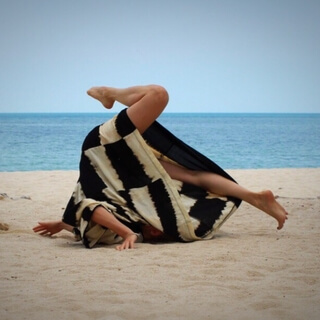
Free-form movement is unstructured, self-guided dance in which you move however the body wants, following internal impulses rather than set steps or choreography (Payne & Crane‐Godreau, 2013).
Last Updated
4 Jul 2026
We are still reviewing this page. Our research team checks every technique page for accuracy and evidence quality before final release. Details may change as that review completes. The evidence badge shows our current reading of the published research.
RECOMMENDED DOSE
No direct dose-response literature exists for free-form movement. This is a conservative introductory range based on general movement-practice conventions and should be treated as a starting point only. No direct dose evidence; editorial synthesis.
No cited source reports a specific dose for free-form movement. This established-practice level reflects general movement-practice conventions rather than technique-specific trial data. No direct dose evidence; editorial synthesis.
No direct dose-response literature exists for this technique at a maintenance level. This upper range is inferred from general movement-practice conventions and should be adjusted to individual capacity. No direct dose evidence; editorial synthesis.
Session length
Session length: 10–15 minutes
10
MIN
How long each individual practice session should last from start to finish.
Frequency
Frequency: 2–3 days
2
DAYS
The number of days per week to fit a session into your routine.
Session length
Session length: 20–30 minutes
20
MIN
How long each individual practice session should last from start to finish.
Frequency
Frequency: 3–4 days
3
DAYS
The number of days per week to fit a session into your routine.
Session length
Session length: 30–45 minutes
30
MIN
How long each individual practice session should last from start to finish.
Frequency
Frequency: 4–5 days
4
DAYS
The number of days per week to fit a session into your routine.
About this card. No direct dose-response literature exists for free-form movement; these recommendations are based on general practice conventions for movement-based techniques and should be treated as starting points only. These recommendations are not a substitute for personalised guidance from a qualified practitioner.
Quick answers to what people most often ask. Each card links to the deeper section below.
evidence
Direct research on free-form movement is almost absent, so most evidence is borrowed from related practices like Tai Chi, Qigong, and structured dance. Reviews of these link regular practice to lower depression, less stress, and better sleep, with the clearest signal for mood. No trial has tested free-form movement itself.
Read moregood for
Adults who feel stuck in stress or low mood, disconnected from their bodies, or drawn to movement rather than talk-based approaches may find free-form movement helpful for expression, settling, and reconnecting with the body. It is not a substitute for care when trauma, dissociation, or a mental health condition is severe.
Read moresafety
Most healthy adults can practise free-form movement safely, setting their own pace and stopping whenever anything feels like too much. Because it loosens conscious control, it can surface strong emotion or spontaneous shaking faster than expected. People working with trauma, grief, or an active mental health condition should move with a therapist or facilitator nearby.
Read morehow it works
Free-form movement appears to work by making the body's own signals — breath, heartbeat, tension, the pull of an impulse — the thing you follow, which trains interoception, your ability to read internal sensations. Research on related mindful-movement practices links this inward attention to brain circuits that map body signals onto emotion and help you steady yourself.
Read moreFree-form movement is unstructured, self-guided dance in which you follow inner bodily impulses rather than set steps or choreography, using spontaneous motion for self-expression and emotional release.
A session has no fixed choreography, sequence, or length. You stand or move on the floor, eyes open or closed, and follow internal impulses, letting sensation, breath, and spontaneous urges shape the motion, which may include swaying, stretching, stillness, or shaking. The single instruction is to move without censoring or performing. Practised to music or in silence, alone or in a group, it is the improvisational foundation of conscious dance and a container for authentic expression and emotional release.
Free-form movement is not choreographed dance, a fitness class, or a performance, and there are no steps to learn or get right. It differs from dance movement therapy, a clinician-led treatment, though the two share somatic roots; here no therapist directs the process and no clinical claim is attached. It is also distinct from structured mind-body forms such as Tai Chi or Qigong, which follow set patterns. The defining feature is unstructured, internally guided motion driven by impulse rather than any external form.
Not to be confused with
Named conscious-dance forms (such as 5Rhythms or Ecstatic Dance)
Free-form movement is the foundational, fully unstructured layer of conscious dance; named forms add maps, phases, curated music, or a communal setting on top of it. The core skill is the same, but these forms give it shape and social context.
Dance Movement Therapy
Dance Movement Therapy is a clinician-led psychotherapy with assessment and therapeutic goals; free-form movement is a self-guided practice with no therapist directing or interpreting the process.
Tension and Trauma Releasing Exercises (TRE)
TRE deliberately evokes therapeutic tremor through a fixed set of physical exercises, whereas free-form movement lets shaking or trembling arise spontaneously if it does. Both may draw on nervous-system discharge, but TRE is a specific protocol rather than open improvisation.
Free-form movement appears to work by turning the body's own signals into your guide: breath, heartbeat, tension, and the pull of an impulse become the thing you follow rather than any set step. Sustaining attention on those signals trains interoception, your ability to sense what is happening inside your body; research on related mindful-movement practices, not free-form dance specifically, links this inward attention to the insula and neighbouring circuitry that map body sensation onto emotion and help you steady yourself (Critchley, 2005), (Xu et al., 2020). Practitioners often describe catching a feeling or a knot of tension earlier, with somewhere to move it rather than hold it.
When you move without set steps, you start tracking what is happening inside, breath, tension, the pull of an impulse, which sharpens interoception, your ability to sense and read internal body signals. Tuning into those signals engages brain regions such as the insula that link body states to emotion and help you steady yourself (Critchley, 2005), and related movement practices show shifts in this same circuitry alongside mood changes (Xu et al., 2020).
Moving on impulse while staying tuned to what the body is doing may help the nervous system shift more flexibly between revved-up and settled states, the balance researchers call autonomic regulation. In related mindful-movement practices, this inward attention engages brain areas that link body sensations to emotion (Critchley, 2005), (Xu et al., 2020), which practitioners often notice as jitteriness easing and the breath evening out.
What the body does during free-form movement has not been measured directly, so the clearest picture comes from close relatives like Tai Chi and Qigong. In those practices, heart-rate variability, the small beat-to-beat changes in timing that mark a flexible, responsive nervous system, tends to increase (Larkey et al., 2024), and studies of experienced practitioners describe active regulation rather than simple relaxation: heart rate can rise while the rhythm grows more coherent, a state that feels alert and settled at once (Goldbeck et al., 2021). Turning attention to the body has also been shown to sharpen how precisely you read internal signals and to lower momentary anxiety within a single session (Weineck et al., 2020), which can feel like being more clearly located inside yourself.
When you tune into the body while shifting how you hold yourself, you may feel more clearly located inside yourself and less carried away by anxious thinking. In one single-session study, this kind of inward attention raised interoceptive accuracy, how precisely you can read internal signals like your own heartbeat, while momentary anxiety dropped (Weineck et al., 2020).
As attention turns inward during movement, many people notice a clearer, more detailed sense of what the body feels from the inside. That shift is linked to the insula and anterior cingulate, brain regions that read internal signals like breath, heartbeat, and tension and connect them to emotion; activity there rises during related mindful-movement practices (Xu et al., 2020), though it has not yet been imaged during free-form movement itself, so the increase is expected from adjacent practices rather than measured here.
You might catch tension or unease earlier and feel more settled and grounded in your body. That reflects anterior cingulate-insula connectivity, the brain link between sensing the body and regulating emotion, which has not been measured directly during free-form movement; any change is inferred from related mindful-movement practices, where heart-rate variability rises and people read internal signals more accurately (Larkey et al., 2024), (Weineck et al., 2020).
When you can clearly feel your own breath, heartbeat, and tension, you are using interoceptive signal detection, the ability to read the body's internal cues. In one single-session study, deliberately attending to the body while shifting posture increased that accuracy and eased momentary anxiety (Weineck et al., 2020), which many people notice as a clearer, more grounded sense of what they are actually feeling.
Moving freely can leave you feeling alert and settled at once, not slumped into calm. That state reflects sympathovagal balance, the moment-to-moment sharing of control over the heart between the nervous system's activating and calming branches. In experienced practitioners of a related mindful-movement practice, this balance shifted toward active engagement during movement, with heart rate rising and its rhythm becoming more coherent (Goldbeck et al., 2021).
Moderate–Indirect evidence to date supports free-form movement's likely benefits for mood, stress, and sleep, all drawn from related practices rather than free-form dance itself. Reviews link mind-body and meditative movement to lower depressive symptoms in postmenopausal women and older adults (Bing et al., 2024), (Weber et al., 2020), to reduced stress and anxiety in mixed clinical adults (Chenyu et al., 2025), (Harry et al., 2025), and to better sleep quality in older adults (Wu et al., 2015); dance specifically has ranked among the more helpful exercise options for mood in cancer rehabilitation (Liang et al., 2025). What is not yet supported: any trial of free-form movement itself, long-term follow-up, and any claim that it treats a diagnosed condition.
A low, heavy mood can drain the motivation to move at all, and mind-body movement, which pairs physical activity with attention to body sensation, offers a gentler way back in. Reviews of related meditative-movement practices link them to lower depressive symptoms in older adults and postmenopausal women (Bing et al., 2024), (Weber et al., 2020), though free-form movement itself has little direct research, so this is expected from adjacent practices rather than proven here.
Research on movement practices closely related to free-form dance links regular practice to lower depression, less stress, and better sleep, with the clearest and most consistent signal for mood (Bing et al., 2024), (Wu et al., 2015), (Liang et al., 2025). Most of this comes from Tai Chi, Qigong, and structured dance rather than free-form movement itself, and effects vary by population and run steadier for depression than for anxiety (Wang et al., 2013), (Payne & Crane‐Godreau, 2013). It is a reasonable practice for expression and stress recovery, not an established treatment, and free-form movement specifically has barely been studied.
10
Meta-analyses
0
RCTs
0
Systematic reviews
0
Observational
6
Pilot
Studied populations
Meditative Movement for Depression and Anxiety
2013
Finding: This review examines meditative movement, a family of practices that pairs physical movement with focused attention to body sensations like balance, inner body signals, and the feeling of motion itself, and links these practices to reductions in depression and anxiety. Because free-form movement shares that same core, following your body's impulses while staying attuned to how movement feels, it belongs to this wider family, which is why the practice is framed around inward, sensation-led attention rather than set steps. The important limit is that this review looks at practices such as Qigong, Tai Chi, and yoga rather than free-form dance specifically, so it helps explain what the practice is and where it fits, but it does not directly test free-form movement's effects on its own.
See full citation in referencesUsing bodily postures to reduce anxiety and improve interoception: A comparison between powerful and neutral poses
n = 57
Finding: In a single-session experiment with 57 university students, shifting into an open, expansive posture or a plain neutral one while paying attention to the body lowered momentary anxiety and sharpened people's awareness of their own inner signals like heartbeat and breath. Notably, the dramatic "power" poses were no better than neutral postures; both helped about equally, which suggests the benefit came from turning attention inward while moving the body, not from any single striking stance. For someone drawn to free-form movement, that points to a plausible pathway: combining bodily positioning with self-focus can support calmer, more body-aware states. Keep in mind this tested fixed postures rather than free-form movement itself, in a one-off session with a student sample, so it hints at the mechanism rather than proving the practice.
Free-form movement grows out of the conscious-dance and somatic movement traditions, where unchoreographed, improvisational motion is treated as a language for what words cannot reach and the body as a source of held emotion and self-knowledge. It sits alongside embodied contemplative practices that pair movement with inward attention (Schmalzl et al., 2014). These roots help explain the practice's form, its permission to follow impulse without performing, not its clinical effects.
For most healthy adults, free-form movement is low-risk and self-directed: you set your own pace, effort, and range of motion, and you can stop the moment anything feels like too much. One thing to know is practice-informed rather than measured. Because the practice deliberately loosens conscious control, it can prompt nervous system discharge, the spontaneous shaking, trembling, or waves of emotion that surface as stored tension releases, and feelings can arrive faster than expected. That response usually settles into relief. But if you are working with trauma, grief, or an active mental health condition, it is safer to move with a therapist or experienced facilitator nearby. Free-form movement is not a treatment for any medical or psychiatric condition, and the supporting research is still limited and drawn mostly from related practices such as Tai Chi and Qigong (Payne & Crane‐Godreau, 2013), (Wang et al., 2013).
Take particular care if you have a trauma history, dissociation, or acute psychiatric symptoms. Unstructured movement can bring unprocessed emotional material to the surface, so this practice is best done with professional support. This caution is inferred from how somatic practices behave rather than from safety trials of free-form movement itself. If you have cardiovascular limits or low blood pressure, keep movements gentle and rise slowly, and if you have a joint, bone, or musculoskeletal injury, scale back your range and intensity; both are practice-informed precautions rather than measured risks. If you are pregnant or managing a diagnosed condition, treat free-form movement as a complement to medical or psychological care, not a replacement for it.
Unstructured, impulse-led movement loosens conscious control and can bring unprocessed emotional material to the surface, so practise with a qualified therapist or experienced facilitator who can help you stay oriented and steady. If trauma, dissociation, or acute distress is present, treat free-form movement as a complement to professional care, not a replacement for it. This caution is inferred from how somatic practices behave rather than from safety trials of free-form movement itself.
| Technique | Best for | Use with care | Evidence strength | Distinction |
|---|---|---|---|---|
| Tai Chi and Qigong | People who want a gentle, teachable, low-impact form with clear steps to follow, especially older adults seeking balance and calm. | If you specifically want unscripted self-expression and emotional release, the fixed forms may feel too contained. | moderate EVIDENCE | Tai Chi and Qigong are also meditative movement, pairing physical activity with inward attention, but they follow slow, prescribed forms rather than spontaneous impulse. Most of the research often cited around free-form movement actually comes from these structured practices, where regular practice has been linked to healthier heart rate variability and reduced depressive symptoms in adults and older adults. |
| Dance Movement Therapy | People working through trauma, grief, or a mental health condition who want a clinician present to hold and process what surfaces. | It requires a qualified therapist and is not a self-directed home practice. |
No. Free-form movement is unstructured, self-guided motion where you follow inner impulses rather than learned steps, so no dance skill, training, or performing is required (Payne & Crane‐Godreau, 2013).
+
No. Free-form movement is unchoreographed, internally guided dance in which you move however the body wants, following inner impulses rather than set steps or choreography (Payne & Crane‐Godreau, 2013). There are no correct shapes to reach and no external direction, so a session might look like swaying, stretching, floor work, or stillness. It is a practice of self-expression through movement, not a routine to master or a performance to get right.
Not quite. Free-form movement is the foundational, fully unstructured layer of conscious dance, where you follow inner impulses with no set steps (Payne & Crane‐Godreau, 2013). Conscious dance is the broader umbrella, and named forms like 5Rhythms or Ecstatic Dance add maps, phases, or curated music on top of that same core skill.
+
Not quite. Free-form movement is unstructured, self-guided dance in which you move however the body wants, following inner impulses rather than choreography (Payne & Crane‐Godreau, 2013). Conscious dance is the umbrella tradition it sits inside, and named styles such as 5Rhythms or Ecstatic Dance layer structure, movement maps, phases, curated music, or a communal setting over the same impulse-led foundation. So free-form movement is the core practice within conscious dance rather than a synonym for the whole category; this describes how the practice is situated in its tradition, not a claim about clinical effects.
The ability to sense and read the body's internal signals, such as breath, heartbeat, tension, and temperature. Strengthening it tends to feel like being more embodied and catching stress or emotion earlier, before it escalates.
The perception and processing of visceral afferent signals; associated with insula-based integration of bodily states with emotion and self-regulation.
Your sense of where the body is in space and how it is moving, drawn from receptors in muscles, joints, and tendons. It usually feels like clearer balance and more precise, grounded movement.
Kinesthetic awareness of limb position and movement mediated by muscle spindle, joint, and tendon receptors.
The release of stored physical activation through spontaneous shaking, trembling, or involuntary movement, often followed by a settling, letting-go sensation. It is thought to let the body complete an interrupted stress response.
Neurogenic tremor and autonomic release proposed to complete fight/flight/freeze cycles and return the system toward baseline.
The moment-to-moment coupling of intentional movement with sensory feedback, so the body responds more accurately and fluently. It typically feels like growing coordination and a sense of physical competence.
Sensorimotor integration coupling motor commands with proprioceptive, vestibular, and visual feedback.
An umbrella term for movement practices that treat dancing as a form of self-awareness and expression rather than performance. Free-form movement is its foundational, unstructured element.
Forms of exercise that combine physical movement with meditative attention to body sensation, including practices like Tai Chi, Qigong, and some yoga. Most of the research relevant to free-form movement comes from this broader family.
Peter Payne, Mardi A. Crane‐Godreau (2013). Meditative Movement for Depression and Anxiety. https://doi.org/10.3389/fpsyt.2013.00071
Cited in: Benefits, Research, Use with care, What it is
Felicitas Weineck, Dana Schultchen, Gernot Hauke, Matthias Messner, Olga Pollatos (2020). Using bodily postures to reduce anxiety and improve interoception: A comparison between powerful and neutral poses. https://doi.org/10.1371/journal.pone.0242578
Outcomes measured
| Outcome | Effect size | 95% CI | N | Comparator | Source |
|---|---|---|---|---|---|
| Depression (postmenopausal women) | SMD = -0.97 | 95% CI -1.28 to -0.67 | 2,170 | control | Bing et al., 2024 |
| Stress (adults with alcohol use disorder) | SMD = -1.14 | 95% CI -1.91 to -0.3 | — | control | Chenyu et al., 2025 |
| Sleep quality (elderly) | SMD = -0.7 | 95% CI -0.96 to -0.43 | 1,225 | active therapy or usual care/wait-list | Wu et al., 2015 |
| SDNN (heart rate variability) | SMD = 0.83 | 95% CI 0.16 to 1.51 | — | control conditions | Larkey et al., 2024 |
| Depressive symptoms | SMD = -0.75 | 95% CI -1.44 to -0.06 | — | waitlist/usual care | Wang et al., 2013 |
| Depression (older adults with cancer) | SMD = -0.89 | 95% CI -1.51 to -0.27 | 1,929 | conventional exercise interventions | Yi et al., 2025 |
The main gap is that free-form movement itself has almost no direct research; nearly all supporting evidence is borrowed from related practices such as Tai Chi, Qigong, and structured dance, with varied study quality, small samples, and mixed populations. Effects are clearer for depression than for anxiety, and mechanism claims rest on indirect neuroscience and small pilots rather than measurement of free-form movement (Payne & Crane‐Godreau, 2013), (Wang et al., 2013), (Weber et al., 2020), (Yan et al., 2024).
reported narratively
Effects and safety of the traditional Chinese exercise baduanjin on depression and anxiety in COVID-19 patients: A systematic review and meta-analysis.
2024
Finding: This review gathered randomised trials of Baduanjin, a gentle structured form of traditional Chinese movement, to see whether it eased depression and anxiety in people recovering from COVID-19. The pooled results pointed toward lower anxiety and low mood among those who practised, which hints that rhythmic, mindful movement can support emotional recovery during a stressful illness. Keep in mind this looked at a specific, choreographed routine rather than free-form movement itself, and the reviewers flagged that the underlying trials were small and uneven in quality, so the findings are encouraging rather than definitive. If you are drawn to free-form movement, treat this as a nearby signal that moving your body with attention may help, not as proof for this particular practice.
See full citation in referencesNeural mechanisms of autonomic, affective, and cognitive integration
2005
Finding: This review of brain research maps how a network of regions, including the insula, anterior cingulate and orbitofrontal cortex, reads signals from inside the body and turns them into the emotions we feel. In plain terms, paying attention to internal sensations like your heartbeat, breath or muscle tension draws on the same brain systems that shape mood and help regulate it, which offers a plausible reason why noticing your body during movement can feel grounding. It's worth being clear about scope: this work examines the brain-body wiring behind emotion in general and did not test free-form movement itself, so it explains a possible pathway rather than proving that this specific practice produces a given effect.
See full citation in referencesMovement-based embodied contemplative practices: definitions and paradigms
2014
Finding: This study sits within a growing line of research arguing that the mind can't be understood apart from the body and its surroundings, and it looks specifically at what happens when we turn attention toward our own physical sensations and movement. For someone drawn to free-form movement, that framing supports the idea that moving and noticing how your body feels is itself a way of shaping attention and mental experience, not just physical exercise. That said, the specific outcomes and how strongly they held up aren't detailed here, so treat this as background on why paying attention to the body matters rather than proof of a particular benefit.
See full citation in referencesEffect of exercise on mental health and alcohol consumption in individuals with alcohol use disorder: a systematic review and meta-analysis.
2025
Finding: Pooling randomised trials of adults recovering from alcohol use disorder, this review found that regular exercise produced a large drop in stress and meaningful reductions in anxiety and depression compared with people who didn't exercise. For someone considering movement as a way to steady their mood, it points to physical activity being a genuine lever for feeling calmer and less low, not just a distraction. Two things to keep in mind, though: the trials tested general exercise rather than free-form movement specifically, and they focused on people managing alcohol use, so the numbers are a promising signal rather than direct proof that dancing or unstructured movement will do the same for everyone.
SMD = -1.14
Comparison of the efficacy of exercise interventions on depressive and anxiety symptoms in cancer patients: A systematic review and network meta-analysis.
n = 6,235
Finding: This review compared different types of exercise across 72 trials involving 6,235 people undergoing cancer treatment, ranking each on how much it eased low mood. Dance placed among the top three options for easing depressive symptoms, just behind yoga and mixed exercise routines, which suggests moving your body to music may be a genuinely helpful mood support during a hard stretch. Two things to keep in mind: this looked at structured dance within cancer rehabilitation rather than the loose, unchoreographed movement this page describes, and because the study ranked exercises against each other rather than measuring a single effect, it tells us dance held up well but not exactly how much it helped.
reported narratively
The Effect of Qigong on Depressive and Anxiety Symptoms: A Systematic Review and Meta-Analysis of Randomized Controlled Trials
2013
Finding: This review pooled randomised trials of qigong, a gentle, flowing movement practice, and found a moderate-to-large drop in depression symptoms compared with waitlist or usual care, while the same trials showed no clear benefit for anxiety. For anyone drawn to movement to steady their mood, that split is worth holding onto: the practice may lift low mood more reliably than it eases anxious feelings, so it's better treated as a support for mood than a dependable anxiety remedy. Keep in mind these results come from qigong rather than free-form movement itself, and the underlying trials were few and methodologically uneven, so the findings point in a promising direction rather than settling the question.
SMD = -0.75
The Effects of Aerobic and Resistance Exercise on Depression and Anxiety: Systematic Review With Meta-Analysis.
2025
Finding: This meta-analysis pooled trials of aerobic and resistance exercise in people diagnosed with depression or anxiety, and found that regular exercise lowered both depressive and anxiety symptoms. For someone drawn to free-form movement, it's a reassuring signal that getting your body moving on a consistent basis tends to ease low mood and worry, though the studies tested structured exercise rather than free-form dance specifically, so this supports the idea only indirectly. The trials also varied quite a bit in how they were run, so treat the overall direction as encouraging rather than a precise prescription.
See full citation in referencesExercise Interventions for Depression, Anxiety, and Quality of Life in Older Adults With Cancer: A Systematic Review and Meta-Analysis.
n = 1,929
Finding: In this review of exercise trials involving nearly 2,000 older adults living with cancer, mind-body forms of movement like yoga, tai chi, and qigong were linked to bigger gains in mood than conventional exercise, easing depression by a moderate-to-large margin and anxiety somewhat as well. That hints the reflective, body-aware quality of moving mindfully may add something beyond the physical activity itself, which is encouraging if you're drawn to free-form movement as a gentle, expressive practice. Keep in mind the studies grouped structured practices like yoga and tai chi rather than free-form dance specifically, and everyone here was an older adult managing cancer, so the exact numbers may not carry over to a general audience.
SMD = -0.89
Effects of Tai Chi and Qigong on Heart Rate Variability: A Systematic Review and Meta-Analysis
2024
Finding: This review pooled trials of Tai Chi and Qigong and found that people who practised these gentle, structured movement forms showed higher heart-rate variability, a marker of how flexibly the nervous system shifts between effort and rest, compared with those who didn't. The gains showed up in two measures, one small and one large, pointing toward better autonomic balance and stress recovery over time. Worth knowing, though: these results come from slow, patterned practices like Tai Chi and Qigong rather than free-form dance, and the larger effect varied a lot from study to study, so it signals a plausible mind-body pathway rather than a guaranteed outcome for open movement specifically.
SMD = 0.83
Relaxation or Regulation: The Acute Effect of Mind-Body Exercise on Heart Rate Variability and Subjective State in Experienced Qi Gong Practitioners
n = 42
Finding: In a study of 42 experienced Qigong practitioners, moving practice actually raised heart rate and dialled down the body's "rest and digest" signals during the session, yet at the same time the rhythm of the heartbeat grew richer and more coherent. In plain terms, the body wasn't simply switching off into relaxation; it was actively fine-tuning itself, which suggests mindful movement may train your nervous system to regulate rather than just calm down. Worth keeping in mind that this was a small group of seasoned Qigong practitioners doing a structured routine, not free-form dance, so it points to a mechanism rather than proving the same holds for every mover or every style.
reported narratively
Effects of Mind–Body Interventions Involving Meditative Movements on Quality of Life, Depressive Symptoms, Fear of Falling and Sleep Quality in Older Adults: A Systematic Review with Meta-Analysis
2020
Finding: This review pooled trials of gentle meditative-movement practices like Tai Chi, Qigong, and yoga in older adults who did not have a diagnosed mental health condition, and found small-to-moderate improvements in quality of life, depressive symptoms, sleep, and fear of falling compared with those who did no such movement. In practical terms, older adults who kept up a regular mindful-movement routine tended to report feeling steadier, sleeping better, and carrying a lighter mood. Worth keeping in mind: the studies varied a lot in quality and design, so the size of the benefit is uncertain, and this research looked at structured practices rather than free-form dance specifically, so it points to what the broader movement family can offer rather than proving results for free-form movement itself.
Hedges' g = 0.25 to 0.71
Distinct Insular Functional Connectivity Changes Related to Mood and Fatigue Improvements in Major Depressive Disorder Following Tai Chi Training: A Pilot Study
n = 16
Finding: In a small pilot with 16 adults living with major depression, 10 weeks of Tai Chi lowered depressed mood and raised feelings of vitality, and those improvements tracked with changes in the insula, a brain region that monitors internal body sensations. That hints at how a slow, breath-paced movement practice might lift mood partly by shifting how the brain reads signals from the body. Keep the scope in mind, though: with only 16 participants, no comparison group, and Tai Chi specifically rather than free-form movement, this is an early clue about a possible mechanism, not proof that movement practices reliably work this way.
reported narratively
The Effect of a Meditative Movement Intervention on Quality of Sleep in the Elderly: A Systematic Review and Meta-Analysis
n = 1,225
Finding: Pooling trials of structured meditative movement practices like Tai Chi, yoga, and Qigong across more than 1,200 older adults with sleep complaints, this meta-analysis found a moderate improvement in sleep quality compared with usual care or wait-listing. The benefit only held for people who practised at least three times a week; sessions less often than that showed no measurable effect. So if you are older and sleeping poorly, a regular movement-and-breath practice several days a week may help you rest more soundly, though these results come from established forms like Tai Chi and yoga rather than free-form dance specifically, and the strongest effects tended to appear in lower-quality studies.
SMD = -0.7
Effects of exercise on depression and anxiety in postmenopausal women: a pairwise and network meta-analysis of randomized controlled trials.
n = 2,170
Finding: This review pooled trials of roughly 2,170 postmenopausal women to compare how different kinds of exercise affect depression, and mind-body movement practices like Tai Chi, Qigong, and yoga came out on top, easing depressive symptoms more than any other exercise type and clearly beating no-exercise comparison groups. The size of that improvement was large, suggesting that gentle, attention-focused movement may be a meaningful mood support for women in this life stage. One important limit: the studies tested structured mind-body disciplines, not free-form dance, so these results point to the broader family of practices rather than proving the same benefit for improvised movement specifically.
SMD = -0.97
Because the practice deliberately loosens conscious control, it can prompt nervous system discharge — spontaneous shaking, trembling, or waves of emotion that surface as stored tension releases — and feelings can arrive faster than expected. That response usually settles into relief. If it starts to feel like too much, slow down, open your eyes, feel your feet on the floor, and lengthen your out-breath until you feel settled again.
If you have cardiovascular limits or low blood pressure, keep movements gentle and rise slowly, especially after floor work, to avoid light-headedness. This is a practice-informed precaution rather than a measured risk.
If you have a joint, bone, or musculoskeletal injury, scale back your range and intensity and let the body build slowly rather than pushing into pain. This is a practice-informed precaution rather than a measured risk.
If you are pregnant or managing a diagnosed medical or psychiatric condition, treat free-form movement as a complement to medical or psychological care, not a replacement for it. Free-form movement is not a treatment for any medical or psychiatric condition, and the supporting research is limited and drawn mostly from related practices such as Tai Chi and Qigong.
Free-form movement works best in a cleared, private space where you can move both upright and on the floor without worrying about bumping into anything or needing to stay sharp for the rest of your day. Because the practice loosens conscious control and can bring feeling to the surface, it helps to keep something to ground yourself with close by and to give yourself permission to slow down or stop at any point. If you are carrying trauma, grief, or an active mental health condition, it is gentler on you to have a therapist or experienced facilitator nearby rather than going it alone.
Clear a patch of floor of anything you could bump into, and give yourself room to move both standing and lying down, so you can follow an impulse without watching for obstacles.
Begin with small, gentle movement and notice how the body responds before letting it build, so you can gauge your energy, breath, and any joint or balance limits early.
If shaking, trembling, tears, or strong feeling arise, let them pass through rather than pushing them away or chasing them; this discharge usually settles into calm on its own.
If sensation or emotion starts to feel like too much, slow down, open your eyes, feel your feet on the floor, and lengthen your out-breath until you feel settled again.
If you are working with trauma, grief, or a mental health condition, practise with a therapist or experienced facilitator who can help you stay oriented and steady.
Wind down with slower movement, and after lying-down or long sessions return to sitting and then standing slowly, so you avoid light-headedness before carrying on with your day.
This information is educational and is not medical advice. This practice is not a substitute for professional care and should not replace prescribed medication or treatment for any medical or mental-health condition. If you are managing a health condition or taking medication, talk with a qualified health professional before changing your practice. If you are in distress or crisis, seek professional support.
| Dance Movement Therapy uses movement toward explicit therapeutic goals with a trained, credentialed therapist guiding and interpreting the process, whereas free-form movement is a self-guided practice with no external direction. Dance-based approaches have ranked among the more helpful movement options for mood in some clinical groups, but that work studies therapist-led formats, not solo improvisation. |
| Yoga | People who want a repeatable, well-taught form with breath work and a strong research base for mood. | The set structure offers less room for the spontaneous, cathartic expression free-form movement invites. | moderate EVIDENCE | Yoga is a structured practice of postures and breath with named sequences to learn, rather than the improvised, impulse-led movement of free-form dance. In a network ranking of exercise options for mood in cancer rehabilitation, yoga placed near the top, and meditative-movement reviews report small-to-moderate gains across mood, quality of life, and sleep in older adults. |
| Conventional aerobic and resistance exercise | People whose main goal is cardiovascular fitness, strength, or a clear, trackable exercise routine. | A performance or intensity focus can pull attention away from the interoceptive, expressive quality free-form movement is built around. | strong EVIDENCE | Ordinary exercise like running, cycling, or strength training is measured by physical dose and fitness gains, while free-form movement is guided by inner sensation rather than intensity targets. Both are linked to lower stress, anxiety, and depressive symptoms across many trials, though conventional exercise has the larger and more direct body of evidence. |
Mostly borrowed. Free-form movement itself has barely been studied; the supporting evidence comes from related practices like Tai Chi, Qigong, and structured dance, where the signal is clearest for mood and depression (Payne & Crane‐Godreau, 2013), (Bing et al., 2024). Treat it as low-risk and suggestive for expression and settling, not an established treatment.
+
Mostly borrowed, and that is the honest limit. Almost no trials test free-form movement directly, so its likely benefits are inferred from adjacent meditative-movement and dance research, which links regular practice to lower depressive symptoms and has ranked dance among the more helpful movement options for mood (Bing et al., 2024), (Weber et al., 2020), (Liang et al., 2025). The signal is steadier for depression than for anxiety, where some reviews find it unclear (Wang et al., 2013), and study quality varies widely (Payne & Crane‐Godreau, 2013), (Yan et al., 2024). So it is a reasonable, low-risk practice for expression and stress recovery rather than a proven clinical intervention.
Likely, though the evidence is indirect. Reviews of related movement practices, Tai Chi, Qigong, and structured dance, link regular practice to lower depressive symptoms and reduced stress, with the clearest signal for mood (Bing et al., 2024), (Chenyu et al., 2025), (Liang et al., 2025). Free-form movement itself hasn't been trialled, so treat it as support for settling and expression, not a treatment for any diagnosed condition.
+
Likely, though the support is borrowed rather than direct. Meta-analyses of mind-body and meditative movement report reduced depressive symptoms in postmenopausal women and older adults (Bing et al., 2024), (Weber et al., 2020) and lower stress in mixed clinical groups (Chenyu et al., 2025), while dance has ranked among the more helpful exercise options for mood (Liang et al., 2025). The signal runs steadier for depression than for anxiety, and no trial has tested free-form movement itself, so the honest read is a low-risk practice that shows early promise for expression and stress recovery rather than an established treatment (Payne & Crane‐Godreau, 2013).
Because moving freely loosens conscious control and turns attention inward, held tension and feeling can surface, sometimes as trembling, tears, or a settling wave. This nervous system discharge, the body releasing stored activation, is a proposed, practice-informed idea rather than something measured in free-form movement itself.
+
When you follow inner impulses instead of set steps, attention drops into body sensation, and tuning into those internal signals engages brain systems involved in emotion and self-regulation, including the insula, a region that maps body states onto feeling (Critchley, 2005). Somatic traditions describe the shaking or tears that can follow as nervous system discharge, the body letting go of stored activation, but this is a hypothesis drawn from practice observation rather than a measured effect in free-form movement, and it is not a treatment for any condition.
Probably, though this is inferred rather than measured. Free-form movement itself hasn't been tested, but in close relatives like Tai Chi and Qigong, heart rate variability, a marker of a flexible nervous system, tends to rise, and turning attention to the body can lower momentary anxiety (Larkey et al., 2024), (Weineck et al., 2020).
+
Likely, though the evidence is indirect and points to active regulation rather than simple sedation. In studies of related mindful-movement practices, heart rate variability tends to increase (Larkey et al., 2024), and experienced practitioners show a state that feels alert and settled at once rather than plain relaxation (Goldbeck et al., 2021); attending to the body has also lowered momentary anxiety and sharpened interoception, your ability to read internal signals, within a single session (Weineck et al., 2020). Free-form movement itself has not been measured directly, so treat this as plausible nervous-system regulation, not a proven way to settle a dysregulated system.
Take extra care. Free-form movement is low-risk for most people, but its loose, unstructured style can surface strong or unprocessed emotion faster than expected, so with a trauma history it is safer to practise alongside a therapist or experienced facilitator. It complements, rather than replaces, professional care.
+
Take extra care. Because free-form movement deliberately loosens conscious control, it can prompt nervous system discharge, the spontaneous shaking, trembling, or waves of feeling that arise as stored tension releases, and this may bring unprocessed material to the surface. This caution is practice-informed rather than tested: there is no safety trial of free-form movement in people with a trauma history, and the wider evidence is limited and borrowed mostly from related practices like Tai Chi and Qigong (Payne & Crane‐Godreau, 2013), (Wang et al., 2013). If trauma, dissociation, or acute distress is present, work with a qualified therapist or facilitator and treat this as a complement to, not a replacement for, professional care.
Start simple: clear a safe space, put on music if you like, and let your body move however it wants, following inner impulses rather than set steps (Payne & Crane‐Godreau, 2013). Begin with small movements, check in with your body, and stop or slow down if anything feels like too much.
+
Start simple. Clear a patch of floor of anything you could bump into, leaving room to move both standing and lying down, then begin with small, gentle movement and notice how your body responds before letting it build. Let feeling move through without forcing it: if trembling, tears, or strong emotion arise, allow them to pass, and keep a grounding anchor by slowing down, opening your eyes, feeling your feet, and lengthening your out-breath if things feel overwhelming. Ease out gradually, and if you are working with trauma, grief, or a mental health condition, practise with a therapist or experienced facilitator alongside (Payne & Crane‐Godreau, 2013).
The main difference is direction and setting. Free-form movement is self-guided, unstructured dance you do alone with no one leading, while Dance Movement Therapy is a clinician-led psychotherapy in which a trained, credentialed therapist guides and interprets the process toward explicit goals (Payne & Crane‐Godreau, 2013).
+
The main difference is who directs the process. Free-form movement is a self-guided practice: you follow inner impulses with no steps, no therapist, and no external goals (Payne & Crane‐Godreau, 2013). Dance Movement Therapy uses movement toward defined therapeutic aims with a trained professional present to hold and interpret what surfaces. Dance-based approaches have ranked among the more helpful movement options for mood in some clinical groups, but that research studies therapist-led formats, not solo improvisation, so the two are not interchangeable (Liang et al., 2025).
A category of mind-body exercise integrating movement with sustained interoceptive and proprioceptive attention.
The small beat-to-beat variation in heart rhythm, used as a marker of how flexibly the nervous system shifts between activation and recovery. Higher variability is generally read as a sign of resilient, adaptable regulation.
Variation in intervals between heartbeats; indices such as SDNN and high-frequency power reflect autonomic, particularly vagal, modulation.
The moment-to-moment interplay between the body's activating branch and its calming branch as they share control of the heart. In mindful movement this can shift toward feeling alert and settled at once rather than simply relaxed.
The relative balance of sympathetic and parasympathetic influence on cardiac activity; mindful movement has been framed as active regulation rather than a pure relaxation response.
Cited in: Research, What happens in the body
Huang Yan, Xu Xiao, Chaurasiya Bishal Kumar, Bizimana Prudence, Qian Mei-Juan, Ntawuyamara Epipode (2024). Effects and safety of the traditional Chinese exercise baduanjin on depression and anxiety in COVID-19 patients: A systematic review and meta-analysis.. https://doi.org/10.1016/j.ctim.2024.103094
Cited in: Research
Hugo Critchley (2005). Neural mechanisms of autonomic, affective, and cognitive integration. https://doi.org/10.1002/cne.20749
Cited in: How it works
Laura Schmalzl, Mardi A. Crane‐Godreau, Peter Payne (2014). Movement-based embodied contemplative practices: definitions and paradigms. https://doi.org/10.3389/fnhum.2014.00205
Cited in: Roots and tradition
Liu Chenyu, Wang Ziyan, Yue Haiyan, Wu Zhusheng (2025). Effect of exercise on mental health and alcohol consumption in individuals with alcohol use disorder: a systematic review and meta-analysis.. https://doi.org/10.1136/bmjopen-2025-102622
Cited in: Benefits
Li Liang, Chen Xuxiang, Yang Chengyan, Hui Zhengxin, Fan Tonggang (2025). Comparison of the efficacy of exercise interventions on depressive and anxiety symptoms in cancer patients: A systematic review and network meta-analysis.. https://doi.org/10.1016/j.neubiorev.2025.106304
Chong‐Wen Wang, Clw Chan, Rth Ho, Hector W. H. Tsang, Chy Chan, SM Ng (2013). The Effect of Qigong on Depressive and Anxiety Symptoms: A Systematic Review and Meta-Analysis of Randomized Controlled Trials. https://doi.org/10.1155/2013/716094
Cited in: Research, Use with care
Banyard Harry, Edward Karen-Leigh, Garvey Loretta, Stephenson John, Azevedo Liane, Benson Amanda Clare (2025). The Effects of Aerobic and Resistance Exercise on Depression and Anxiety: Systematic Review With Meta-Analysis.. https://doi.org/10.1111/inm.70054
Cited in: Benefits
Soong Rou Yi, Low Chen Ee, Ong Vanessa, Sim Isaac, Lee Charmaine, Lee Fattah (2025). Exercise Interventions for Depression, Anxiety, and Quality of Life in Older Adults With Cancer: A Systematic Review and Meta-Analysis.. https://doi.org/10.1001/jamanetworkopen.2024.57859
Cited in: Comparison
Linda Larkey, Dara James, Maricarmen Vizcaíno, Sunny Kim (2024). Effects of Tai Chi and Qigong on Heart Rate Variability: A Systematic Review and Meta-Analysis. https://doi.org/10.4103/hm.hm-d-24-00045
Cited in: What happens in the body
Florens Goldbeck, Ye Lei Xie, Martin Hautzinger, Andreas J. Fallgatter, Gorden Sudeck, Ann‐Christine Ehlis (2021). Relaxation or Regulation: The Acute Effect of Mind-Body Exercise on Heart Rate Variability and Subjective State in Experienced Qi Gong Practitioners. https://doi.org/10.1155/2021/6673190
Cited in: What happens in the body
Manuel Weber, Thiemo Schnorr, Mareike Morat, Tobias Morat, Lars Donath (2020). Effects of Mind–Body Interventions Involving Meditative Movements on Quality of Life, Depressive Symptoms, Fear of Falling and Sleep Quality in Older Adults: A Systematic Review with Meta-Analysis. https://doi.org/10.3390/ijerph17186556
Anna Xu, Chloe S. Zimmerman, Sara W. Lazar, Yan Ma, Catherine E. Kerr, Albert Yeung (2020). Distinct Insular Functional Connectivity Changes Related to Mood and Fatigue Improvements in Major Depressive Disorder Following Tai Chi Training: A Pilot Study. https://doi.org/10.3389/fnint.2020.00025
Cited in: How it works
Weiwei Wu, E. Kwong, Xiuyan Lan, Xiaoying Jiang (2015). The Effect of a Meditative Movement Intervention on Quality of Sleep in the Elderly: A Systematic Review and Meta-Analysis. https://doi.org/10.1089/acm.2014.0251
Han Bing, Duan Yaya, Zhang Peizhen, Zeng Liqing, Pi Peng, Chen Jiping (2024). Effects of exercise on depression and anxiety in postmenopausal women: a pairwise and network meta-analysis of randomized controlled trials.. https://doi.org/10.1186/s12889-024-19348-2
Editorially curated. Tracks are not themselves clinically studied; evidence on the page applies to Free-Form Movement as a technique.
Beginner content for Free-Form Movement

★ 4.8
·
Guided
·
22 min
Glenda Cedarleaf
How hard is Free-Form Movement?
Free-Form Movement sits at 3 because it is emotionally more open than a simple dance warm-up even though the physical load can stay moderate.
3
Mental Effort
2 / 4
▾Emotional Depth
3 / 4
▾Physical Intensity
2 / 4
▾Prior Knowledge
1 / 4
▾Explore guided sessions to deepen your Free-Form Movement technique.