The world’s largest free audio library for everyday wellbeing
Energy & Subtle-Body
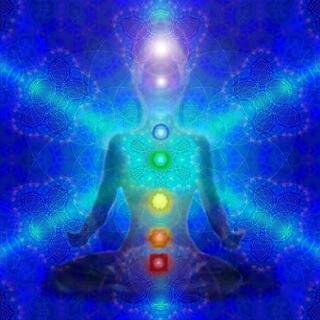
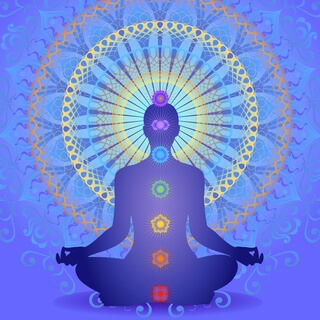
Chakra meditation is a systematic practice that moves awareness in sequence through the body's seven energy centers, from root to crown, to settle attention and work with perceived subtle energy (Kanegan & Worley, 2018).
Last Updated
3 Jul 2026
We are still reviewing this page. Our research team checks every technique page for accuracy and evidence quality before final release. Details may change as that review completes. The evidence badge shows our current reading of the published research.
RECOMMENDED DOSE
No direct dose evidence; editorial synthesis. No direct dose-response literature exists for this technique. These recommendations are based on general practice conventions for seated meditation and should be treated as starting points only — a short, achievable session a few times a week helps build a sustainable habit.
No direct dose evidence; editorial synthesis. No direct dose-response literature exists for this technique. This step up reflects general practice conventions for meditation once a basic habit is established, and should be treated as a starting point only.
No direct dose evidence; editorial synthesis. No direct dose-response literature exists for this technique. A near-daily maintenance practice reflects general conventions for established meditators and should be treated as a starting point only, adjusted to individual capacity.
Session length
Session length: 5–10 minutes
5
MIN
How long each individual practice session should last from start to finish.
Frequency
Frequency: 3–4 days
3
DAYS
The number of days per week to fit a session into your routine.
Session length
Session length: 15–20 minutes
15
MIN
How long each individual practice session should last from start to finish.
Frequency
Frequency: 5 days
5
DAYS
The number of days per week to fit a session into your routine.
Session length
Session length: 20–30 minutes
20
MIN
How long each individual practice session should last from start to finish.
Frequency
Frequency: 6–7 days
6
DAYS
The number of days per week to fit a session into your routine.
About this card. These recommendations are not a substitute for personalised guidance from a qualified practitioner. No direct dose-response literature exists for chakra meditation; the durations and frequencies below are editorial starting points based on general seated-meditation conventions, not on trial evidence.
Quick answers to what people most often ask. Each card links to the deeper section below.
evidence
Direct evidence is limited: one small controlled study of a music-based chakra practice reported fewer premenstrual symptoms in 40 college students over one cycle. Broader meditation research points to relief for premenstrual, mood, and anxiety symptoms, but no large trial has isolated the ascending root-to-crown sequence as the active ingredient.
Read moregood for
Adults wanting a structured way to ease everyday stress, quiet a busy mind, or feel more connected to the body may benefit from chakra meditation, which has most often been studied in young women with premenstrual symptoms. It is not a substitute for care when anxiety, depression, trauma, or physical symptoms are severe.
Read moresafety
Most healthy adults can practise chakra meditation safely, and broad meditation trials report serious adverse events only rarely. Because attention rests inward on body sensation, difficult emotions or memories can surface, especially for people carrying unresolved trauma. Slow, deliberate breathing can lower blood pressure, so rise gradually after longer sessions to avoid lightheadedness.
Read morehow it works
Chakra meditation works mainly by giving attention one clear target at a time, resting on each energy center from the base of the spine to the crown, which many people experience as fewer spiraling thoughts. Slow, deliberate breathing woven through the sequence shifts the body toward its rest-and-recovery state, slowing breath and softening muscle tension.
Read moreChakra meditation is a systematic practice that moves awareness in sequence through the body's seven energy centers, from root to crown, to settle attention and work with perceived subtle energy (Kanegan & Worley, 2018).
You sit or lie quietly and rest attention on one center at a time, starting at the root at the base of the spine and ascending to the crown at the top of the head. Each center is usually paired with a color to picture, a silently repeated bija or seed mantra, and slow, directed breathing. The sequence is cumulative and always ascending, so the session builds a felt sense of energy rising through the central channel. Some guided versions add classical music as an extra layer to hold attention.
Chakra meditation differs from general mindfulness or breath meditation: instead of resting on a single anchor, it moves attention through a fixed ascending sequence of seven named centers. It also differs from yoga postures or hands-on energy work, because the practitioner neither moves the body nor receives treatment but directs inner attention along a subtle-body map. The energy language is a traditional way of organizing the practice, not a claim that a measurable energy field has been detected.
Not to be confused with
Reiki and hands-on energy healing
Reiki is something a practitioner does to or near you, framed as channeling energy from an outside source. Chakra meditation is a self-directed attention practice you do on your own; no one transmits energy to you.
Kundalini awakening
Kundalini awakening refers to a dramatic, sometimes destabilizing release of energy said to surge up the spine. Chakra meditation is a slow, gentle, sequential attention practice and is not the same as deliberately provoking that intense event.
Chakra diagnosis or energy-clearing therapy
Some services claim to read, unblock, or heal chakras as a treatment for illness. Chakra meditation is a personal contemplative practice, not a diagnostic or medical procedure, and the felt energy it works with has not been measured as a physical field.
Chakra meditation works mainly by giving attention one clear target at a time, resting on each center before moving to the next, which many people experience as fewer spiraling thoughts and a steadier sense of being present. The slow, deliberate breathing woven through the sequence is the kind of practice that broader meditation research, not chakra studies specifically, links to a calmer and more settled state (Arias et al., 2006). Traditional teaching describes the ascending root-to-crown progression as circulating subtle energy through the body's centers (Kanegan & Worley, 2018); the warmth, tingling, or sense of flow people report is best understood as the felt result of sustained directed attention along a familiar route rather than a measured energetic current.
Many practitioners feel warmth, tingling, or a rising sense of flow through the body when they move attention in a slow sequence from the base of the spine up to the crown, which gives the mind one clear path to follow. Chakra practices describe this as circulating subtle energy through the body's centers, though it is a felt, subjective experience rather than something studies have directly measured (Kanegan & Worley, 2018).
As attention rests on each of the seven centers in turn, many practitioners describe a growing felt sense of energy, warmth, or flow. Chakra practices are framed as building subtle-energy awareness, a trained sensitivity to perceived non-ordinary energy in the body (Kanegan & Worley, 2018), though what you feel is a subjective experience rather than a measured energy field.
Chakra meditation has not been directly measured in high-quality chakra-specific studies, so the honest answer is that the clearest physical changes come from the general act of slow, focused meditation rather than the chakra sequence itself. In broader meditation research, practices like this are associated with a shift toward the body's rest-and-recovery state, which tends to feel like slower breathing, softening muscle tension, and a mind that feels less urgent (Arias et al., 2006). During chakra practice specifically, many people notice warmth, tingling, or gentle pressure at each center as attention rests there, sensations that reflect close inward attention rather than a verified energy flow (Kanegan & Worley, 2018).
Limited, early evidence to date supports chakra meditation for premenstrual symptoms and for the general settling that comes with meditation. A small controlled study of a music-based chakra practice reported reduced premenstrual symptoms in college students over one cycle (Viswanathan et al., 2015), and moderate but indirect evidence from a systematic review of meditation trials points to benefit for premenstrual, menopausal, mood, and anxiety symptoms (Arias et al., 2006). Relaxation-based approaches including meditation are also described as helpful for managing PMS (Hormones, brain and behavior, 2003). Not yet supported: large trials of the chakra sequence itself, long-term follow-up, reported effect sizes, or any claim that it treats a diagnosed condition.
A small controlled study found that a music-based chakra meditation was linked to fewer premenstrual symptoms in 40 college students over a single menstrual cycle (Viswanathan et al., 2015). Beyond that, most of the confidence rests on meditation in general: a systematic review of 20 trials with 958 participants pointed to benefit for premenstrual, mood, and anxiety symptoms (Arias et al., 2006), and a randomized trial of 97 students found a music-based intervention significantly reduced premenstrual symptoms and improved quality of life (Kırca & KIZILKAYA, 2022). The main limit is that no large trial has isolated the ascending chakra sequence as the active ingredient, samples are small and mostly young women, and results are often reported only as statistical significance rather than full effect sizes.
0
Meta-analyses
1
RCTs
1
Systematic reviews
0
Observational
4
Pilot
Studied populations
The Effects of Classical Music based Chakra Meditation on the Symptoms of Premenstrual Syndrome
n = 40
Finding: In a small study of 40 college students screened for premenstrual syndrome, 15 minutes of daily classical-music-based chakra meditation over one menstrual cycle was followed by lower scores across all measured groups of PMS symptoms compared with where those participants started. For someone dealing with monthly premenstrual discomfort, this hints that a short, consistent daily practice may ease symptoms within a single cycle. That said, the evidence here is early and limited: the group was small, the practice combined meditation with music so we can't tell how much the meditation itself contributed, and everyone's before-and-after scores were compared without a firm comparison group, so this shouldn't be read as proof that chakra meditation treats PMS.
reported narratively
Systematic Review of the Efficacy of Meditation Techniques as Treatments for Medical Illness
n = 958
Finding: This review drew on 20 controlled trials of meditation techniques, covering 958 people living with various medical and psychological conditions, and found the clearest benefits for epilepsy, premenstrual symptoms, and menopausal symptoms, along with improvements in mood and anxiety. Across the trials, no serious adverse events were reported, so meditation practices in general appear well tolerated, though rare serious reactions do show up elsewhere in the medical literature. Two things are worth keeping in mind: the review looked at meditation broadly rather than chakra meditation specifically, and the authors noted that large, high-quality studies are still limited. So while this points to meditation being a reasonable and low-risk practice to explore, it can't confirm that chakra meditation in particular delivers these specific results.
Chakra meditation traces to Hindu and Buddhist Tantric traditions dating back at least to the 8th century CE, and was systematized for Western readers through Sir John Woodroffe's 'The Serpent Power' in 1919 and later yoga lineages. These roots help explain the practice's form, the ascending root-to-crown sequence, the color visualizations, and the seed mantras, rather than proving any clinical effect.
For most healthy adults, chakra meditation is a gentle, low-risk practice. Across meditation trials reviewed for safety, practices were generally well tolerated and serious adverse events were rare, though that is indirect evidence from general meditation research rather than chakra-specific studies (Arias et al., 2006). Two situations still call for care. Because the practice holds attention inward on body sensation, difficult emotions or memories can rise closer to the surface, especially for people carrying unresolved trauma; this is a practical caution drawn from experience, not a documented adverse event. And because the slow, deliberate breathing shifts the body toward its rest-and-recovery state and can lower blood pressure slightly, you may feel briefly lightheaded, so return to sitting slowly after longer sessions.
People with a trauma history, or anyone currently working through distressing material, are the main group who should approach the inward, sensation-focused stages gently, and ideally alongside a trained teacher or mental health professional. Sustained interoceptive attention, the close sensing of internal body signals, can bring hard feelings closer to the surface. People with low blood pressure or a tendency to feel faint may want to keep sessions shorter and rise gradually at the end. None of these rule out chakra meditation; they simply call for pacing and, where it helps, support.
Because chakra meditation holds attention inward on body sensation, difficult emotions or memories can rise closer to the surface, especially for people carrying unresolved trauma. Keep sessions short, practise with the eyes softly open or easily openable so you have a gentle exit, and ease back if hard feelings surface rather than pushing deeper. This is a practical caution drawn from experience, not a documented adverse event, and it is not a reason to avoid the practice — where it helps, work alongside a trained teacher or mental health professional who can help you pace the inward, sensation-focused stages safely.
| Technique | Best for | Use with care | Evidence strength | Distinction |
|---|---|---|---|---|
| Mindfulness / focused-attention meditation | General stress, anxiety, and attention training where a person wants a flexible, secular practice without a specific belief framework. | Open-monitoring styles can feel unstructured for people who prefer a clear, step-by-step focus. | moderate EVIDENCE | Both anchor attention to reduce mind-wandering, but mindfulness rests attention on breath, sound, or open awareness without a fixed route or energy framing, while chakra meditation moves attention in a set ascending sequence through seven centers and layers on color, mantra, and the idea of energy rising. Mindfulness is the broader family; chakra meditation is one structured variant with a Tantric meaning system attached. |
| Yoga (postural mind-body practice) | People who want physical movement alongside inward focus, and who are managing premenstrual symptoms or general tension. | Requires physical mobility and, for some postures, guidance to avoid strain or injury. |
Chakras are a traditional Tantric map of the body, not a laboratory-measured physical structure. Chakra-based practices are framed as working with the body's perceived energy centers, and the warmth or flow you feel is best understood as the felt result of sustained inward attention rather than a measured energetic current (Kanegan & Worley, 2018).
+
Chakras are best understood as a traditional way of organizing the practice, not a physical structure that has been measured in a laboratory. Chakra-based practices are described as working with the body's perceived energy centers to restore a sense of balance (Kanegan & Worley, 2018), and the warmth, tingling, or sense of flow people notice is real as an experience, but it reflects close, directed attention on each area rather than a verified energy field. That makes chakras a meaningful subjective and cultural construct: useful as places to rest attention, without a claim that an energetic current has been instrument-measured.
Honestly, the evidence can't yet separate the two. Just one small study (40 people, premenstrual symptoms) has tested a chakra-specific practice, so most support is indirect from general meditation research. The calm you feel is best credited to focused attention and slow breathing, not a proven chakra-specific effect (Viswanathan et al., 2015), (Arias et al., 2006).
+
The current research is early and limited, so it can't confirm that the chakra sequence adds anything beyond ordinary relaxation. The one direct study, a small trial of a music-based chakra practice, linked it to fewer premenstrual symptoms, but that alone is not enough to isolate a chakra-specific effect (Viswanathan et al., 2015). Broader meditation research points to genuine relief for stress, mood, and premenstrual symptoms, which suggests the benefits people notice likely come from shared mechanisms like anchored attention and slow breathing rather than a measured energy flow (Arias et al., 2006). So the fair answer is suggestive rather than proven. It can help you settle, but no large trial has shown it works better than meditation in general or treats any condition.
One of seven perceived energy centers arranged from the base of the spine to the top of the head in Tantric tradition. In practice, each is used as a place to rest attention; the energy itself is a felt, subjective experience rather than a measured physical structure.
A short syllable silently repeated at each chakra to help hold attention there. It works as a mental anchor that gives the mind a single thing to return to, steadying focus at that center.
The main energy channel said to run up the spine, along which awareness travels from root to crown. Practitioners often describe a felt sense of warmth or flow rising along this line as attention moves upward.
The first center, located at the base of the spine, where the ascending sequence begins. It is associated with grounding and a felt sense of stability and settling.
The seventh center, at the top of the head, where the sequence ends. It is associated with a sense of openness, spaciousness, or expanded awareness at the close of the practice.
The ability to sense internal body signals such as breath, heartbeat, warmth, or tension. Building it tends to feel like being more embodied and noticing early stress cues sooner.
Interoceptive awareness: the detection and interpretation of visceral afferent signals, linked to insular cortex activation and emotion regulation.
A shift toward the body's rest-and-recovery branch, largely through the vagus nerve, that eases the fight-or-flight response. It usually feels like the body settling, the breath slowing, and tension loosening.
Increased parasympathetic (vagal) tone that downregulates sympathetic arousal, associated with reduced heart rate and increased heart-rate variability.
Poornima Viswanathan, Nishal Pinto, P. Viswanathan (2015). The Effects of Classical Music based Chakra Meditation on the Symptoms of Premenstrual Syndrome. https://doi.org/10.25215/0203.017
Albert J. Arias, Karen L. Steinberg, Alok Banga, Robert L. Trestman (2006). Systematic Review of the Efficacy of Meditation Techniques as Treatments for Medical Illness. https://doi.org/10.1089/acm.2006.12.817
Outcomes measured
| Outcome | Effect size | 95% CI | N | Comparator | Source |
|---|---|---|---|---|---|
| PMS symptom level | reported significant; p<.05 | — | — | control group | Kırca & KIZILKAYA, 2022 |
No large, high-quality trial has tested the chakra sequence itself as the active ingredient; the strongest direct study is small and limited to young women with premenstrual symptoms, and broader claims lean on general meditation research. Reported outcomes are frequently significance-only rather than full effect-size estimates, and long-term follow-up is largely absent.
reported narratively
Complementary Alternative and Integrative Treatment for Substance Use Disorders
2018
Finding: This paper sits within the complementary and integrative medicine literature, where it describes chakra-based practices as energy techniques aimed at restoring balance to the body's perceived energy centers. It frames these methods conceptually rather than testing them, so what it offers is a working definition and a proposed idea of how they might operate, not a measured physiological effect. For someone considering the practice, that means chakra work is best understood as part of a broader integrative-wellness approach: the balancing of energy centers is a guiding concept here, and this source does not confirm that those energy fields exist biologically or that they change in a way instruments can track.
See full citation in referencesHormones, brain and behavior
2003
Finding: This review of relaxation therapies for premenstrual syndrome lists meditation and visualization among the approaches reported to help ease PMS difficulties, so if you struggle with premenstrual symptoms, a regular relaxation practice may be worth trying as part of your routine. Keep in mind that the review points to the broad family of relaxation methods rather than chakra meditation on its own, so it can't tell you how this specific technique compares. Because it gathers and summarizes earlier reports rather than testing chakra meditation directly, treat it as gentle encouragement to explore relaxation, not as firm proof of a particular effect.
See full citation in referencesThe effects of acupressure and yoga for coping with premenstrual syndromes on premenstrual symptoms and quality of life
n = 155
Finding: In a trial with 155 students troubled by premenstrual symptoms, those assigned to yoga reported lower PMS scores and better quality of life than students who received acupressure or no treatment. That points to a broader pattern worth knowing if you're drawn to chakra meditation: body-based practices in the same wider family can ease premenstrual discomfort and lift day-to-day well-being. Keep in mind this study tested yoga, not chakra meditation itself, so it offers helpful context rather than direct proof for this specific technique, and it was limited to young students over a short window.
reported narratively
Effects of music medicine on premenstrual symptoms levels and quality of life: A randomized controlled trial
n = 97
Finding: In a randomized trial with 97 college students who experienced premenstrual syndrome, those who listened to music as part of the intervention reported significantly milder premenstrual symptoms and better quality of life than a comparison group who did not. This is relevant here because the chakra meditation practice pairs meditation with classical music, so the study hints that the musical element may add something worthwhile for period-related discomfort. Keep in mind, though, that the trial tested music on its own rather than chakra meditation directly, and it looked only at young adults with PMS, so the results are supportive context rather than proof of what chakra meditation itself does.
reported narratively
The slow, deliberate breathing woven through the sequence shifts the body toward its rest-and-recovery state and can lower blood pressure slightly, so some people feel briefly lightheaded, particularly on standing after a longer session. In reviewed meditation trials, practices were generally well tolerated and serious adverse events were rare, so treat this as a mild, manageable effect: keep sessions shorter if you tend to feel faint, take a few breaths, move gently, and rise gradually at the end.
Chakra meditation is best approached gently and unhurried, in a comfortable seated position where the inward focus on body sensation has room to settle without becoming overwhelming. A sensible starting format is a short session of ten to fifteen minutes with the breath kept easy and a gentle exit always available, so you can slow down or pause the moment the focus feels too intense. If you are carrying difficult material or tend to feel faint, keep sessions brief and lean on a trained teacher or mental health professional for the pacing and support that helps.
Begin with 10 to 15 minutes in a comfortable seated position, long enough to move through the centers without overtaxing attention or lingering too long in a deeply relaxed, low-arousal state.
Keep the directed breathing slow and unforced. The aim is a settled, less tense feeling, not strained or held breath. If breathing starts to feel effortful, return to your natural rhythm.
Practise with the eyes softly open or easily openable, and know you can slow the pace or pause at any center. A clear way out makes it easier to stay steady if the inward focus feels intense.
If uncomfortable emotions, memories, or body sensations arise as attention rests on a center, acknowledge them and ease back rather than pushing deeper. Difficult material coming up is common with sustained inward attention and is a signal to slow down.
Because the practice can leave the body deeply relaxed and blood pressure slightly lowered, take a few breaths, move gently, and stand up gradually so you do not feel faint or lightheaded.
If the practice consistently brings up overwhelming feelings, or if you are living with trauma, work with a trained teacher or mental health professional who can help you pace the inward, sensation-focused stages safely.
This information is educational and is not medical advice. This practice is not a substitute for professional care and should not replace prescribed medication or treatment for any medical or mental-health condition. If you are managing a health condition or taking medication, talk with a qualified health professional before changing your practice. If you are in distress or crisis, seek professional support.
| moderate EVIDENCE |
| Yoga shares the same Tantric and subtle-body heritage but works mainly through physical postures, movement, and breath rather than seated attention alone. A trial in students with premenstrual complaints found a yoga group had lower symptom scores and better quality-of-life sub-scores than acupressure and a control group, so the direct outcome evidence for yoga is somewhat firmer than for the seated chakra sequence, though the two were not tested against each other. |
| Body scan meditation | People who want a secular way to build body awareness and release tension without an energy-based belief system. | EVIDENCE | A body scan moves attention slowly through the physical body much as chakra meditation does, but it treats each region as ordinary muscle, breath, and sensation rather than as an energy center, and it carries no color, mantra, or ascending-channel framework. Both build interoceptive awareness, the felt sense of internal signals; chakra meditation adds a symbolic map and the language of energy flow on top of that shared attentional method. |
| Qigong | People who prefer gentle movement combined with breath and want an energy-based practice they can do standing. | EVIDENCE | Qigong also works with the idea of directed internal energy, but it typically combines slow physical movement and posture with breath and attention, whereas chakra meditation is usually still and seated and organizes energy around seven centers rather than meridian pathways. Both frame practice as circulating a vital force; the felt sensations of warmth and flow are shared, while the movement component and the underlying energy model differ. |

Directly, just one: premenstrual symptoms. A single small study of about 40 young women linked a music-based chakra meditation to fewer premenstrual symptoms (Viswanathan et al., 2015). Evidence for the chakra practice itself remains early and limited.
+
Directly, chakra meditation has only been studied for premenstrual symptoms, and even that rests on one small study of a music-based version in roughly 40 college students (Viswanathan et al., 2015). Claims about stress, anxiety, or mood come from broader meditation research rather than chakra-specific trials; a systematic review of meditation techniques pointed to benefit for premenstrual, mood, and anxiety symptoms (Arias et al., 2006), but that is indirect evidence, not yet confirmed for the ascending chakra sequence itself. The honest summary is that chakra-specific evidence is early and limited (Viswanathan et al., 2015).
Most likely because sustained inward attention heightens your awareness of ordinary body sensations at each center. Traditional teaching frames this warmth or tingling as subtle energy rising, but that is source-context language, not a measured energetic current (Kanegan & Worley, 2018).
+
The warmth, tingling, or sense of flow you notice is best understood as the felt result of resting close, sustained attention on one body region at a time. This draws on interoceptive awareness, your ability to sense internal signals like temperature, pulsation, or pressure. Chakra tradition describes these sensations as subtle energy circulating from root to crown, which organizes the practice but has not been measured as a physical field (Kanegan & Worley, 2018). So the sensations are real and normal, but they reflect directed inward attention rather than proof that energy is moving.
Occasionally, yes. The slow, deliberate breathing can gently lower blood pressure, so a few people feel briefly lightheaded, especially when standing up after a longer session. Rise slowly and keep sessions shorter if you tend to feel faint (Arias et al., 2006).
+
Occasionally, yes, though this is inferred from how the practice works rather than a documented chakra-specific adverse event. Because the slow breathing woven through the sequence shifts the body toward its rest-and-recovery state and can gently lower blood pressure, some people feel briefly lightheaded, particularly on standing after a longer sitting. In reviewed meditation trials, practices were generally well tolerated and serious adverse events were rare, so this is best seen as a mild, manageable effect: take a few breaths, move gently, and stand up gradually (Arias et al., 2006).
Usually, with care. Meditation was generally well tolerated in reviewed trials, but because chakra practice holds attention inward on body sensation, difficult emotions or memories can surface, so pace gently, keep an easy exit, and ideally work with a trained teacher or clinician (Arias et al., 2006).
+
Usually, with care. Across reviewed meditation trials, practices were generally well tolerated and serious adverse events were rare, though this is indirect evidence from general meditation rather than chakra-specific or trauma-population studies (Arias et al., 2006). As a practice-informed caution, sustained interoceptive attention, the close sensing of internal body signals, can bring hard feelings nearer the surface, so keep sessions short, practise with eyes softly openable, and ease back if material rises. This is not an absolute reason to avoid the practice, and it is not a treatment for trauma; support from a qualified professional helps you pace the inward stages safely.
Start with about 10 to 15 minutes, seated and comfortable. This is a practical starting point for pacing rather than a clinically set dose, and you can lengthen sessions gradually as the practice feels more settled.
+
Begin with roughly 10 to 15 minutes in a comfortable seated position, which is long enough to move through the centers without overtaxing attention or lingering too long in a deeply relaxed, low-arousal state. Keep the breathing slow and unforced, practice with your eyes softly open or easily openable so you have a gentle exit, and rise slowly at the end since the practice can leave the body relaxed and blood pressure slightly lowered. This is sensible starting guidance for building the habit, not a validated dose or a promise of any particular effect.
No. The parts most likely to help, steadying attention on a clear target, noticing body signals, and slow breathing that settles the body, work whether or not you believe in chakras (Arias et al., 2006). The chakra map is the practice's meaning frame, not a proven active ingredient (Kanegan & Worley, 2018).
+
No. The evidence-addressable parts of chakra meditation are ordinary processes: resting attention on one center at a time, sensing internal body signals through interoceptive awareness, and the slow breathing that broader meditation research links to a calmer, more settled state (Arias et al., 2006). The Tantric energy model, the idea of rebalancing the body's perceived energy centers, is the carrier and meaning system that organizes the practice rather than a measured mechanism (Kanegan & Worley, 2018). If the framing feels meaningful to you, it can support motivation and adherence, but that speaks to engagement, not to belief itself producing the effect.
Both sweep attention slowly through the body, but a body scan treats each region as ordinary muscle, breath, and sensation, while chakra meditation adds a Tantric map of seven energy centers with colors, seed sounds, and root-to-crown energy-rising language.
+
The core method is shared: both move attention through the body and build interoceptive awareness, the felt sense of internal signals like warmth and tension. The difference is framing. A body scan is secular and treats each area as plain physical sensation, with no color, mantra, or channel model, whereas chakra meditation follows a fixed ascending sequence through seven perceived energy centers and layers on visualization, bija (seed) mantras, and the idea of energy rising through a central channel. No head-to-head trial has compared the two, so this is a difference of method and meaning system, not of proven effect.
No. Chakra meditation is a self-directed, seated practice of resting attention through the seven energy centers; Reiki is applied by a practitioner channeling energy from an outside source, and Kundalini awakening is a dramatic, sometimes destabilizing energy release up the spine. They share the subtle-body tradition but are not the same practice.
+
No. All three sit within the same subtle-body tradition, but they differ in who acts and what happens. Chakra meditation is something you do on your own, slowly moving attention from the root at the base of the spine to the crown, often with color, a silently repeated seed sound, and slow breathing. Reiki is delivered by a practitioner said to channel energy toward you, while Kundalini awakening describes an intense, sometimes overwhelming surge of energy up the spine that chakra meditation does not aim to provoke. In each case the energy language is traditional framing rather than a measured physical field.
The perceived vital force (prana, qi) that chakra practice describes moving through the body's centers. It is experienced as sensations of flow, warmth, or vitality, but no instrument has measured it as a physical field, so it remains a subjective, traditional construct.
The deliberate, sequential direction of attention along the body's perceived energy pathways. Unlike simply holding attention at one point, it involves actively moving focus along a route, felt as a rising sense of flow.
Cited in: Benefits, How it works, Research, Use with care, What happens in the body
Gail Van Kanegan, Julie Worley (2018). Complementary Alternative and Integrative Treatment for Substance Use Disorders. https://doi.org/10.3928/02793695-20180521-04
Cited in: How it works, What happens in the body, What it is
Unknown author (2003). Hormones, brain and behavior. https://doi.org/10.5860/choice.40-2774
Cited in: Benefits
Didem Şimşek Küçükkelepçe, Hacer ÜNVER, Gülçin Nacar, Şermin Timur Taşhan (2020). The effects of acupressure and yoga for coping with premenstrual syndromes on premenstrual symptoms and quality of life. https://doi.org/10.1016/j.ctcp.2020.101282
Cited in: Comparison
Ayça Şolt Kırca, Tuba KIZILKAYA (2022). Effects of music medicine on premenstrual symptoms levels and quality of life: A randomized controlled trial. https://doi.org/10.1016/j.ctcp.2022.101542
Editorially curated. Tracks are not themselves clinically studied; evidence on the page applies to Chakra Meditation as a technique.
Explore guided sessions to deepen your Chakra Meditation technique.
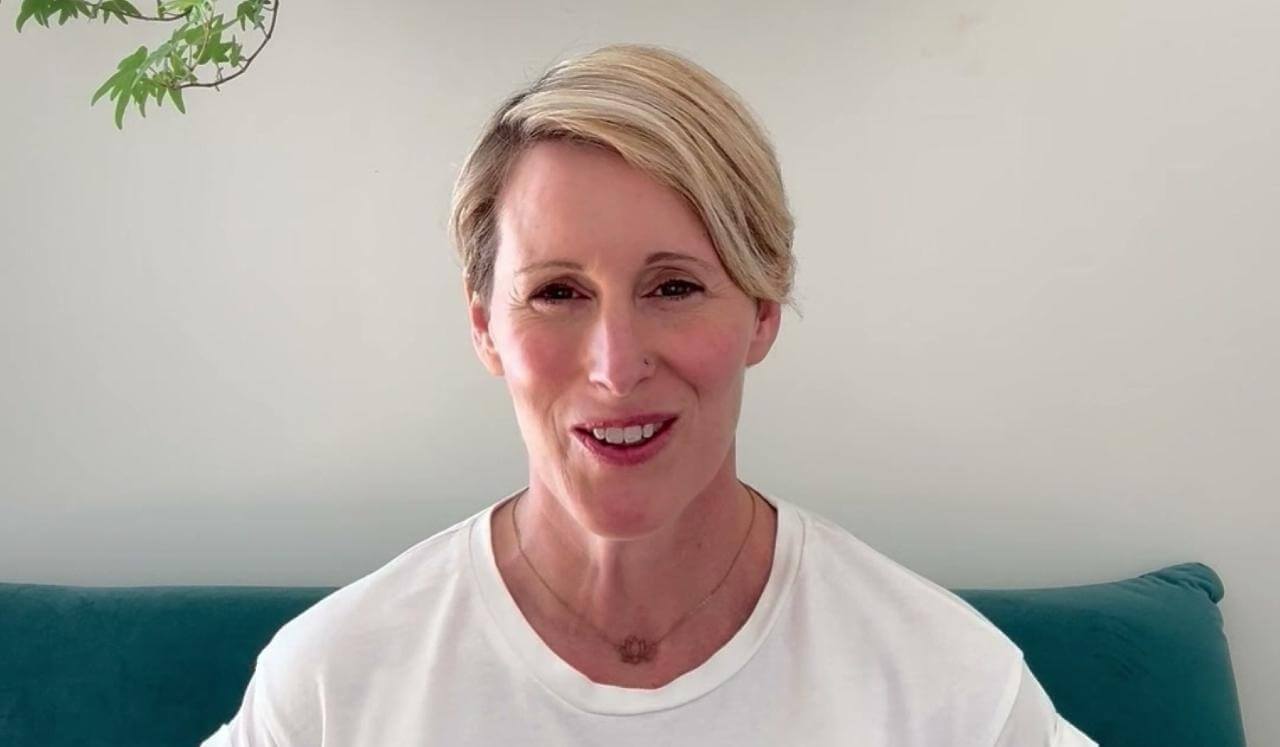
Beginner video for Chakra Meditation

★ 5.0
·
Talks
·
4 min
Heather Deane
How hard is Chakra Meditation?
Chakra Meditation stays at 3 because it is a structured sequential activation practice rather than generic energy awareness.
3
Mental Effort
3 / 4
▾Emotional Depth
1 / 4
▾Physical Intensity
1 / 4
▾Prior Knowledge
3 / 4
▾