This is mindful reflection number four.
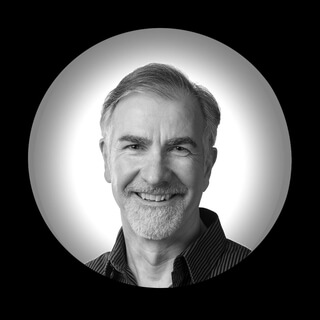
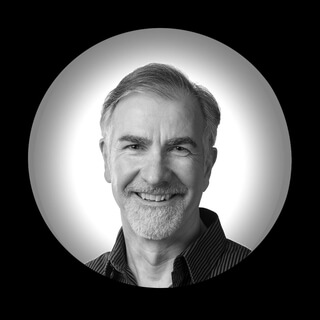
I'm Stephen Scattini.
Whether you're lying down or sitting up or standing,
Walking,
Driving or being conveyed,
Bring your attention to the present moment.
Know what's going on.
Be aware of being aware.
And feel your body from the inside.
What are you doing?
What is your posture?
What are your movements?
Where is there tension in your body and where is there peace?
There are many things you can be aware of,
But the conscious mind is selective.
So that if I bring your attention to your left wrist,
You may be slightly surprised.
Oh,
I hadn't thought of that.
Feel it now.
It's a marvellous piece of machinery.
It enables your whole hand to rotate.
And more than that,
It learns things.
It has intelligence.
When you stand up from your seat,
You bring the empty coffee cup with you.
The hand does that sometimes all by itself without you even thinking about it.
Sometimes you drive a familiar route home without thinking about it.
It's unconscious,
But it's definitely intelligence.
Intelligence is not limited to your conscious mind and it's not limited to your brain.
Think of the intelligence that put your body together,
Starting with one egg and one spermatozoa.
Awfully small.
And yet it grew into you.
Not just your body,
But your mind.
The way your brain uses its components.
All this learning has gone on unconsciously,
Unintended,
And yet meticulously.
All that you've learned,
All your skills,
All your knowledge,
Your memories,
And most importantly your sense of self,
Of who you are.
What sort of person you want to be.
To what things you are inclined.
So if you lean towards people,
You will learn about them.
If you lean towards mathematics,
Then you will lean towards abstraction.
Mindfulness reminds you to go back to the center so that you see not just the direction in which you're leaning,
But many other options.
Mindfulness takes you out of the tedium of routine.
You start your mindfulness practice not knowing what will happen.
Perhaps even reminding yourself,
I don't know what will happen.
To wake up your curiosity.
Curiosity chases away expectations and preconceptions.
So be honest.
You don't know what's going to happen in the next few minutes.
So you're going to just watch.
Pay attention.
This is mindfulness.
And when you don't know what to do,
What this means,
You watch your breath.
The breath is your anchor.
You come back into the body,
A source of intelligence.
And you pay attention to how does this moment feel to you now.
It can be anything.
It's entirely subjective.
You may be thinking,
This should be more specific.
I should be doing this better.
I should be controlling it.
I should know what I'm doing.
And I'm curious about that thought.
I take it as the object of my attention.
And then it becomes something interesting.
That's what I'm thinking.
It doesn't make sense.
This is self-knowledge.
It's not just a piece of information.
You're developing a skill.
The ability to look at your thoughts and your feelings in an objective way.
Understanding yourself as intelligent.
So intelligence pervades your body and your feelings and your thoughts.
And when you think of it,
You have the option of being conscious of any of these things.
Any sensation,
Any mental event,
Any emotional state.
And what it takes is letting go of your expectations,
Shoulds and shouldn'ts,
Preconceptions.
And you do that by being curious,
By admitting,
I have no idea what's going to happen.
Let's see.
The mind sometimes conjures up strange images and peculiar thoughts,
Incredibly random.
So don't be afraid.
Look at the contents of your mind as you sit or walk or stand or drive or are lying down.
Whatever you're doing,
Pay attention.
You can continue this meditation if you like.
More importantly,
I hope you'll come back to it again and again.
Just for a moment here and a moment there,
Maybe more than a moment.
That's all for now.
Mindful reflections are thoughts for a mindful mood.
More at www.
Scottini.
Com