Welcome everyone.
I welcome you to this exploration.
And in this exploration,
We first do a short guided practice together.
And there will be a question for reflection for all of us.
So we invite you to join us in this meditation and reflection.
So I invite everyone to join me in this guided practice.
You can.
.
.
Allow yourself to be in your meditative posture And if it feels right,
You can gradually close your eyes.
And just.
.
.
Becoming aware,
Of everything.
First starting with becoming aware of your surroundings.
Can listen to the sounds around you.
And now gradually bringing your awareness.
To your body and just noticing there is any tension in the body,
Allowing it to relax.
And now becoming aware of your emotions,
Your feelings Noticing how you feel.
And now noticing any thoughts crossing your mind.
Just letting them come and go.
Now becoming aware of your breath and simply being with your breath for a while.
And now a question for reflection.
What is meditation?
What is meditation to you?
And Now gradually can start coming out of the practice this point if you feel like moving stretching can allow yourself to do that.
And very gently allowing your eyes to open.
As we bring this practice to its completion.
And so thank you for meditating with me.
Just a question.
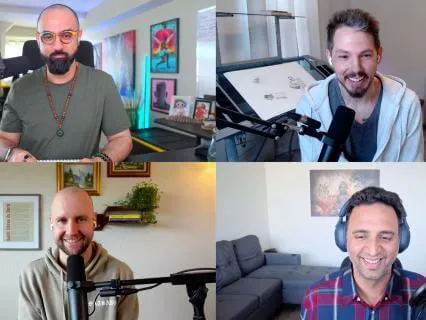
I will expand this question because four of us are meditation practitioners,
But we also are in the role of guiding meditations.
So I would expand that question to.
.
.
What is meditation what is the experience of meditation in your personal life,
In your personal experience?
And what is the experience of meditation when it comes to you guiding?
Meditation or guiding practices is there a difference there or is that the same for you the personal experience and being a guide.
So yeah,
This is in the spirit of the question that what is meditation to you?
So anyone who would like to start with that share One sort of immediate thing that came to me.
Which reminds me of,
I think in a previous one of these,
Introduced ourselves briefly and I think something you said Saka where you could correct me if I'm wrong was Just trying to.
Find the answer to any question in the present moment.
Like as it arises.
Uh,
And.
To me,
I find that that tends to be where the best answer can come from.
So in response to your question,
There was a.
.
.
Like construction sound outside a common experience sort of on zoom or on.
Like meeting virtually.
And I just noticed I had two very distinct experiences of the sound and one was one of a version of like i don't want this to be here i don't want this to intrude on the experience And like a tension as it relates to that sound.
And then the other was like.
.
.
None at all just total like there's really no difference between me and the sound and it's it isn't a negative sound or a positive it's just a sensation And then that experience for me is like.
This is total.
Relaxed openness spaciousness and so i was thinking meditation But you could take it like,
What is it?
That'd be maybe a different question.
But what is it like?
What's the quality of it or what does it do for me is like it softens the boundary between me and.
Like what's inside me and what's outside me.
Where in that case,
The sound is just something that is allowed to pass through and there's no resistance or pushing away or holding on whatsoever.
Which just tends to be a.
.
.
Like a pretty relaxing.
.
.
And grounding.
Feeling so that was just one thing that came up like softening the boundary between me and the outside world.
That reminds me of what Jiddu Krishnamurti said.
He used the term choiceless awareness.
And so he talked about how usually when we are talking about awareness or meditation or focus,
We think of being aware of something.
So in this case,
Then the mind creates the separation between the inner and outer world.
And so either I'm aware of the breath,
Maybe,
Which is more outer,
Or I'm aware of my inner.
Essence or you know soul or whatever i want to call that and that's more inner But really,
He said that.
.
.
In a true sense,
There is no separation between inner and outer,
And that's like the creation of the mind when the mind divides it.
So what do you say,
Like,
Is that something similar to what you said about the kind of,
I think you said dissolving of the boundary between?
Yeah,
Or softening.
Yeah,
I mean,
Dissolving to the fullest extent.
I would say,
Yeah,
Totally.
And I just noticed the switching back and forth between two very.
.
.
Like if I had to dichotomize it,
It was like one where I am aware of the sound and that's when it becomes.
Like a negative thing or something that I don't want to be here.
And then one where.
There's not so much a me aware of,
There just is the sound.
And that is my present moment consciousness at that moment.
And there's not like a.
.
.
There's no need to resist it or wish that it wasn't.
Here so it does sound like that i think And do you see like a difference between,
Let's say in your meditation,
Personal meditation experience,
And when you are guiding a meditation,
Like do you see a difference in that experience?
Sometimes,
But increasingly for me,
It's more like I'm attempting to meditate as I'm guiding.
And I just have a trust that the guidance of the meditation will.
Naturally follow.
If I'm sort of meditating myself,
If that makes sense.
And then it's just like.
Whatever my experience is as I'm guiding the practice,
Like that's the next step.
In what I say,
Which also takes kind of pressure off.
Of me to be separate from them.
The meditator or the person that I'm.
Guiding.
So there are some times maybe if I'm attempting to deliver a certain message or a particular type of experience,
But in most cases these days,
Or increasingly so,
It's just I'm attempting to be in a meditative state or am meditating.
And.
.
.
But there's also words that are happening.
Kind of threw me.
Sometimes I feel that the dilemma I face is that You know,
The meditation that I'm experiencing and the meditation that I'm guiding,
They might be like a.
.
.
I don't know if that experience can really be communicated.
And that is where I feel a challenge.
Where I will feel this difference between guiding experiencing a meditation versus guiding a meditation.
And sometimes the mind would come up in the picture that,
Okay.
You know,
What is it that the audience wants?
What kind of a meditation experience does the audience want?
If I'm like doing a meditation,
Which is,
Let's say on Samadhi,
Is that something which like will resonate with the audience or will like not resonate with the audience?
Do you feel like that kind of a difference between your like personal practice and what you share?
Or do you feel that your personal practice is exactly what you share?
That was directed at you,
Charles,
If you'd like to engage.
I didn't want to dominate it too much.
My immediate response was just to reflect it back to you because I was curious about your experience when you guided the meditation here.
Did that feel like you were leading it for?
An audience for a particular purpose,
Or I guess,
Yeah,
Sometimes I can find myself getting into a script that I'm familiar with and like,
Okay,
This is the next step.
And this is not that there's anything wrong with that necessarily,
But in that case,
I'm a bit less.
In the like the meditative experience of finding what happens next and i tend to find that can create a pretty unique experience.
But there are certainly times where I have kind of a there's a progression.
And then I kind of this is the next place that I go.
This is the next place that I go.
So maybe there's some.
.
.
Some balance between the two of those,
But I was just curious what you felt like when you were guiding.
This one.
Yeah,
It's,
I think,
Kind of a.
.
.
Mixture of the two where what i'm sharing is from like something that resonates with me the most like for example this like awareness practice is really helpful for me to like turn inward gradually so i do that But when I'm sharing that,
There is a certain way of,
Although like,
You know,
I'm sharing it here with you and also sharing with,
You know,
The people who are listening to it.
But with you,
For example,
Or with Darius or Lou,
I know that,
You know,
You have experience with meditation.
And so what I'm sharing,
Maybe that would not need like more guidance.
You know,
I don't need to say a lot here.
But when it comes to like guiding an audience,
There's always this,
Sometimes I would find my mind becoming activated.
Okay,
If I.
.
.
Like,
For example,
If I you know,
Say being aware of being aware,
Become aware of the awareness itself.
Like,
Is that something which.
.
.
Audience you know understands or gets or um or maybe maybe there is no maybe it's not necessary to understand that and i can say that but if i'm saying that will that you know make someone feel more disconnected or is that or will that deepen the experience so i would notice sometimes my mind coming in between and questioning that like do they need more do they need more explanation or guidance or less yeah I feel like for me,
My North Star is.
.
.
Am I getting them closer to their head or am I getting them closer to their heart?
And so it's a bit contextual depending on.
.
.
Who I'm connecting with and who I'm guiding.
But if I am being too intellectual,
Then I kind of know I'm going the wrong way.
I'm moving away from the North Star.
And then I'm like,
Can I be simpler?
Can I be slower?
Can I be.
.
.
A safer container?
Could I be more spacious?
Could I,
You know?
And then,
Yeah,
Thinking about the concept of the meditation,
You know,
Is it gratitude?
Is it calming?
Is it.
.
.
Exciting but Am I bringing them closer to their hearts or not?
Because I think that's the pathway to.
.
.
Everything.
I think it's.
.
.
I think in certain.
.
.
Theories.
There's like three awakening paths,
Heart being one of them,
Mind being one of them,
Gut being one of them.
And so it's interesting to think of like where we fall into.
The practices that we're interested in and the practices that maybe we lead.
And I was curious to ask all of you.
Do you ever,
What percentage?
I don't want to say I never do it.
But it's pretty rare for me.
What percentage of times that you meditate are you listening to someone guiding a meditation?
Almost zero.
Yeah,
That's fascinating.
Sometimes,
I would say sometimes,
Maybe like.
.
.
25% of the times.
Yeah,
I did a.
.
.
I didn't for a long time.
And then I ended up doing Henry Shookman's app for like a couple months just to get some guidance again and learn from someone who.
Is a master in this work.
But isn't that interesting?
I've always thought that people are like,
Lou,
What do you listen to?
And I'm like,
I don't listen to anything.
Meditation for me is.
.
.
An art.
And it's like,
I'm not,
It's,
I almost don't want to listen to things because I feel like I'm going to take things from other people.
And it almost takes away from the,
The creativity that I get to have with,
With no boundaries or no rules.
And I think we've also shared this together,
Which is interesting.
And Saki,
Maybe we could cut this if you don't want this public,
But none of us have a quote unquote,
Like certification that says meditation teacher,
Yeah.
And so much of our work is in in this world.
I think it's in some ways not having.
The instructions to do it like this,
And this is the way it's supposed to be done,
I think has allowed all of us to find our own way and our own art of doing it.
So yeah,
When you ask this question,
There's like three different answers that come to mind.
One of them is definitely an art and a creative expression,
A way that I make my art in the world.
Yeah,
That's a very interesting like question and like I always find myself in this dilemma of Like,
Do I do my own silent practice or do I do like a guided meditation?
Or do I listen to a guided meditation?
Mostly it's my own practice,
But there are some days when I'm more finding it difficult to sit in silence by myself.
So I think in that case,
A guided meditation helps.
But I would refer to something you shared,
Charles,
With me when I was talking to you about.
Like creating these courses on like Tao,
Zen,
Or Upanishads.
And you said something interesting,
If you don't mind me sharing that.
I'm curious what it was.
You said that,
Like,
I think you were saying.
.
.
Like you were asking me that,
Like,
Would you create a course on these topics?
We were like in,
I think in Idlewild together.
And you asked me like.
Will you create like a course on such a topic,
Like an ancient tradition or a scripture,
You know,
Which is already there?
And I said that.
.
.
And maybe that was coming from ego or something.
No,
I want to create something of my own,
You know,
And not like from a scripture or something.
And and then you said that,
Like,
No,
I said I want to create something new.
And you said that.
.
.
Is anything new?
And that was really interesting to me.
I started reflecting on that,
And that made sense to me.
And that is a question related to what Lou said about doing your own meditation or it might lead to an imitation of someone if we listen to a guided practice.
And I realized that actually maybe there is nothing,
In a way there is nothing new,
But also everything is new.
But what we are talking about,
Even if we think that we are guiding our own meditation,
Someone has done that.
You know,
In the past in a certain way.
So is there like a Is there truly something that is unique to us or is that just the ego saying that?
I know I was the first person who did a visualization with a forest.
I just I put that in the meditate.
No,
I'm just kidding.
Yeah,
You're reminding me I'm listening to steal like an artist and talks about like the concept that,
Yeah,
They're like exactly what we're talking about.
Like there is actually nothing new and often.
It wouldn't be wrong to if we had some instructions.
And there's definitely things I've heard from people where I'm like,
Oh,
That's really cool.
Like I might bring that into a meditation.
And.
.
.
By actually modeling other people.
In some ways by doing it so much,
Then we actually start finding our own voice.
It's like,
Actually,
It's a great place to start if you want to,
Is actually taking meditations that you really like,
Learning how to guide them yourself if you're interested,
And then.
.
.
Figuring out and creating space for our own insights to come.
But yeah,
It's all coming from,
It's all remixing.
So it's a bunch of remixing and saying the same thing in 10 different ways.
So I think there is some truth to that.
And I think there is still room for something completely.
New to emerge in the world as we continue to see in different ways.
Do you guys.
.
.
Yeah.
It's interesting.
Like for me,
I used to listen to lots of guidance.
I think guidance is really great,
Particularly when you're getting started.
Um,
But not like binaural beats.
Insight Timer has got some artists that play incredible binomial beats and like.
.
.
Were they the bowls?
I listen to that almost every day like two or three of those all the time i think because it's so spacious It lets my words come through.
You know,
But because we are actively creating meditations,
I hear you,
Lou,
Like.
If there's no space for my words to come through.
I get locked into someone else's words and then,
You know,
It's a little different than being inspired by someone's meds.
It's like those,
That exact.
Frame or phrase ends up like being front and center when I'm trying to make my own meditation.
So it's like,
I think that's part of the reason I don't listen to other guided,
Even my own stuff.
Do you guys find out with your own stuff?
Like if I listen to my own stuff,
I'm like,
Oh man,
Now this is baked into.
Every once in a while,
I'll listen to it,
Especially like someone sent me a message like,
I just listened to this meditation three times in a row.
And I'm like,
I don't know what that meditation is.
I made it like three years ago and I have no idea what it is,
But maybe I'll.
Have a listen and you know and it's kind of like a walk through memory lane you're like oh yeah But it's kind of like experiencing it for the first time,
Too,
Because it's like,
I don't know what that guy guiding the meditation whose name is Darius is going to say next.
Do you guys have that experience when you listen to your old stuff?
Totally.
Yeah.
People say things I've said.
I'm like,
Did I say that?
I didn't say that.
That is pretty good.
It's funny.
Yeah.
That was actually pretty good that I said.
You know,
Thanks,
Old dude.
I think.
Like,
How did he come up with that stuff,
Right?
Like,
I was in that moment.
I don't remember,
Right?
Like,
You're telling me stuff that I'm not that Lou.
That Lou did it,
Right?
It's an interesting holding.
I don't know how you guys feel.
With and maybe you guide differently.
The holding of I'm trying to create an experience or I'm trying to get someone somewhere,
Which.
In so many places of,
I think,
Deeply transformative states,
That is antithetical to transformative states.
Whether it's coaching or therapy,
At least different schools that I've studied and understood,
Like having a change agenda.
Is getting in the way of change happening in some ways.
And I think for the most powerful,
And these meditation experiences,
And we can talk about this,
But I also would like to just cue up Charles.
Charles,
Because I know you had,
And I had a,
You know,
I've had,
I'm sure we've all had different powerful meditation experiences.
For me,
One was cataclyctic in my life.
And Charles,
I know you had a pretty powerful one on one Zen retreat that you talk about in your book,
The Will to Do Nothing.
And I'd just be curious,
Obviously you've tried to put words to it in a book and there's no words to actually put to that experience,
But just to.
.
.
Queue up like Because when I think of meditation,
Like meditation is a journey,
But I know how deeply impactful an experience like that for me was and how much it changed my life.
And I'm curious for you,
Like I know that was a big reason the book came together and how much just like one meditation experience.
So I don't know,
This can go into wherever it can go into maybe each of us speaking about because we get also stuck on like searching for an experience.
I know I've been trying to get an experience before,
But those experiences,
I just to tie that into my first thought of like those experience came when I wasn't looking for an experience.
And I think you go and you practice or you go into meditation retreat and the more you're trying to grasp something,
The less you're going to get it.
Attitude and feel your heart and do you know have all this agenda for them rather than like how do I hold not letting them experience something that's way more than I could ever,
You know,
Create or think I could create.
It's like you can't Get it.
On purpose.
And yet it seems like it does require,
I mean,
Maybe sometimes it can just happen.
Like you've heard stories of people where it just sort of,
There's an enlightenment experience that just.
Hits them I think like Eckhart Tolle has a story like that but then the interesting intersection of it isn't anything you can get on purpose and yet it seems like it does require a certain consistent effort there's a A line I came across not too long ago from Shinryu Suzuki is like,
Enlightenment is an accident.
But spiritual practice just makes you accident prone.
I thought that was nice.
It's like,
Like,
You know,
Just do these certain practices and you're creating a certain kind of atmosphere in which the accident can or might occur,
Though you can't.
Control whether it will or not.
And probably the more you want it to occur,
Like that's not creating the atmosphere.
But there's just something that maybe you trust about these practices.
And by creating the atmosphere,
You're just more prone to have the accident.
Kind of happened.
I like that way,
Like that way of.
Describing it.
Yeah,
I just heard actually Adi Ashanti.
To listen to an interview and he said something the same thing he was like it can happen just you walking down the street and some people have sudden awakenings but he was like 98 percent come through meditation like it seems to be that or they seem like they have some spiritual practice and discipline but it you know so it could happen but your percentages are much higher if you're creating a space to whatever you know whatever your practice might be meditation just being a tried and true one yeah but then it is like a.
.
.
How to describe it because it's also,
When you try really hard,
You could easily find yourself in that energy of try to get this thing which can then be the thing that blocks it so it's like it makes me think of in buddhism like right effort um it's a certain kind of effort but then you can easily find yourself maybe in the more ego-based effort that actually pushes it away uh like there's that zen story about a student who goes to a teacher and he's like how long is it going to take me to get enlightened you know you the rest of your life he's like no you don't understand like i'll work as hard as anyone you've ever had he's like okay in that case maybe 10 years he's like No,
You don't understand.
I don't have 10 years to get enlightened.
I will literally work harder than any student you've ever had.
And then it's like,
OK,
In that case,
20 years.
And then like he keeps saying he's going to work harder and harder.
And then the teacher's answer keeps getting longer and longer until he gets the point like you can't want it like that.
And yet you still need to like really want it.
This is this really tricky.
Kind of balance.
That reminds me of Buddha's story himself.
He went into the forest and for six years he did all practices.
He did all types of yoga and he did fasting and he did all kinds of meditation,
Got trained under many teachers.
And then like after six years he like he was like very frustrated and in that moment he said he kind of said i i leave all the practices you know and i i i just throw away all these practices and he just like there was a feeling of that like relaxation in that of letting go of all practices and then he realized Nirvana or enlightenment.
Like,
It's kind of like,
You know,
You are working for it,
But that working itself is done by the ego,
That the ego works towards it.
But then that working,
In a way,
Has to be let go of for that to be experienced.
And.
.
.
You know,
To answer your question,
Lou,
I think for me it was.
.
.
You know,
My first out-of-body experience was through a chakra meditation practice.
And it was like,
I'm out of my body.
I'm looking at myself meditating.
I'm floating around the room.
And that was the most fascinating experience I had.
And for the next six months,
I just kept doing chakra practices to get that experience back.
It never happened.
And then I came across this.
Then I came across this.
Line from the Bhagavad Gita which in Sanskrit or Hindi is which means that Do the work,
But don't worry about the fruit.
Because if you're concerned about the fruit,
You won't get it.
And it's,
I think,
Very similar to also like our creativity practices that if we.
.
.
Create something from the point of you know trying to achieve something then it's not like really pure creativity so even in in the meditation in that sense that doing that work or meditating not with the intention of being enlightened or anything like that,
But just doing it.
And letting go of the outcome in some way.
That's why I think one of the worst.
Advice.
I've heard around meditation is like,
Just quiet the mind.
Quiet the mind.
I've talked to so many people who are terrified of meditation because of that.
I can't quiet my mind.
I don't know how to quiet my mind.
I don't try to do that at all.
I think the way I see it sometimes is like,
It's like a.
.
.
An off-leash dog park.
And instead of trying to quiet the mind,
I give my mind permission to think about anything it wants to think about.
I just open the leash and let it go.
And I say,
Go wherever you want to go.
Instead of trying to get it to a place,
I let the dog get tired.
And when I'm not looking at the dog,
Trying to control the dog.
Something happens i can feel like a a frequency shift i'm like oh i'm here I was interested,
So what you're saying,
Sort of like what you're saying,
Sockip,
Around like letting go of the outcome and just creating spaciousness.
And I love that prone to accidents idea.
Because there's for sure rituals and routines that help the accident happen more often.
You know,
Because I think for all of us,
We.
Maybe I'm wrong,
But.
.
.
Meditation is a fundamental component to my creativity.
I couldn't create without meditation.
And so is that true for all of you?
I see your heads.
Yeah.
If I removed meditation from your life.
What would be the impact to your creative output?
It would probably just be to remove one of my most.
.
.
Effective.
Channels for accessing intuition but like there are others but i feel like that's probably the most potent one where i'm just literally stop doing anything and that allows for the space for that stuff to kind of percolate.
Which can happen.
If I'm on a walk,
If I'm in the shower,
If I'm,
You know,
Whatever,
Like those kinds of things,
Which are sort of a similar meditative.
State but that to me feels like the most potent one And just before I lose the thought,
I was wondering about.
.
.
Not to move off on this tangent,
But as it relates to the dog park.
Notion,
Like,
I was wondering how that might connect to the importance of length of meditation.
Um,
Because someone might.
Let the dog go and then that's like it's like a crazy energy or it's like too much uh and then this isn't for me.
Like,
I don't want to do this,
You know,
But to me,
It's like,
I feel like going to the Zen monastery was the first time where I started doing like a 40 minute,
50 minute meditation.
And that allowed me to,
I think,
Realize what you're talking about,
Darius is like,
Let the dog go.
And after a while,
It's going to.
.
.
Calm down.
It's going to just stop.
It's just going to want to come sit in your lap.
Like I'm,
I don't have nothing else.
I have no more energy to exert,
But I,
It required me to like kind of force myself to sit,
I think,
For long enough to come to that realization.
Whereas I wonder if somebody moves into a practice and is like,
You know,
I'm only going to do it for a short period of time or a couple of minutes.
And then it might just be like that energy is too much.
I'm bad at meditation or whatever it might be.
Like they just maybe didn't wait for long enough.
For the dog to.
.
.
The dog was just humping other dogs.
The analogy holds,
Right?
The whole dog park concept is not to look at your dog and be hyper-vigilant,
But just to know that the dog is safe here.
There's nothing that can harm the dog here.
So you can look at the sky and the butterflies and whatever you want.
Oh,
There's a dog.
And hey,
What about,
You know,
And no matter what you do,
The dog is safe.
But you're right.
Time should play a factor in that.
Like at least safety is key to 10 to 20 minutes.
I always say like my favorite meditations right now on inside time is 11 minute meditation,
A binaural beat.
And it's so fruitful.
It's like so ridiculously fruitful.
And I'm shocked because I used to be like a 20 minute,
30 minute sick guy.
And I'm like,
11 minutes will get me there and then some.
I also imagine maybe once the door is open.
.
.
That you can enter the door maybe a little bit more.
Quickly like or it might not take 30 40 minutes if you know you kind of the door is there There is still something to like that longer.
Every time I do it,
I'm like,
Oh,
Yeah,
Like there is something to giving.
I heard some yogi say,
Like,
Give it an hour before you're actually in it like an hour and then you're in into a meditation and i've committed to hour sits for a while and for me it was like yeah after the 30 minutes you can at least for me,
I could feel like,
Okay,
I'm entering a new domain.
And I think from being on retreat to like silent retreats,
That just continues over a few days.
That's so unique.
Like you come out,
I've come out of those experiences being like,
Whoa,
It's so hard to create that at home.
Like,
Yeah,
You can touch it,
But to like create that kind of depth on a retreat is.
Um Yeah,
And I think it opens up the place for those type of experiences.
Charles,
I still want to hear your story on the retreat,
If you're open to sharing about it.
Yeah.
At the Zen monastery.
Yeah.
It was a session periods or some people say session session,
Like,
Um,
An extended period of like 10 hour days of meditation,
Just like,
Like.
A deep focus on intensive meditation for a few days.
Four or five days.
And yeah,
That was on one of those experiences.
It was making me think of what.
Darius,
It's kind of a nice barometer of like head versus heart.
And what Lou,
What you said about like,
Meditation that's trying to get someone somewhere that could actually be something that is or even if it's like therapy or whatever that might actually be blocking from kind of the progress that can be made Because it felt like.
.
.
What happened in that meditation was like a dropping into what is like the bedrock of me.
And then by hitting that is like just this sort of explosion or opening.
That occurred.
But it was via.
.
.
Feeling really intense physical pain.
I know some people talk,
It's like kind of a controversial topic in meditation.
Some people are like,
You kind of have to go through physical,
Like intense physical pain.
To reach this certain state.
And some people are like,
That's.
.
.
Masochistic or like sadistic or you know whatever it's like or people it's just like ego based like oh i you know i went through so much pain um but that was just something that was happening at that that particular period because.
.
.
It felt right to keep sitting through the pain.
I asked the resident monks about it and they were like,
Yeah,
That's normal.
But you could use a chair,
Too,
If you want.
That'll reduce the pain.
But just when I heard them say how normal it was,
I was like,
OK,
I'm just going to keep sitting through it.
Uh,
And it's like sitting through this pain and it was just like,
It was probably the most intense pain I've ever felt.
Cause it's like my.
I sat in Seiza position,
Which is like the kneeling.
Meditation position.
And it was just like my ankles,
My knees,
My,
Like,
Just,
It was just like this.
Pain that i could barely uh sit with like for even a second like every second i was like just resisting the sensation as much as I possibly could.
And it felt like.
.
.
And the meditation felt so long.
I felt myself angry with like the meditation,
The guy who hits the bell.
He's like,
He's going longer than he needs to go.
He's just like full of this.
Frustration that just reached a certain threshold where the way I think about it is like there was no more resistance left to give against this physical pain and like just something happened.
Well,
It was triggered by a sound because there were birds outside the monastery.
I remember in this one meditation,
There were these birds that were making bird sounds.
And for some reason,
I was really annoyed with them because I was just trying to grit my way through this meditation.
Just something about the sound just was really aversive to me.
Just like,
Shut up.
Everybody shut up.
Everybody stop.
Let me just get through this.
But something about the sound of the birds,
Like.
.
.
It like hit something at the very center of everything.
And it was like all my resistance just.
Like crashed off.
There was no more to give.
So there was just no more resistance to the pain.
And then it was like the pain was kind of non-existent anymore.
It was like a,
Like a flood of something just went away.
And then all of a sudden,
Kind of like what you said,
Saka,
The out of body thing,
But I wasn't,
I was still very much just here on the cushion,
But it felt like my awareness.
Was an endless awareness and that very specifically the bird sounds were passing through me as opposed to me hearing the bird sounds.
I'm like,
The birds,
You know,
Are outside in a way,
But really they're inside me when I'm hearing the bird sound.
It was like this.
Just a very like,
Endless,
Spacious awareness thing.
And it just made no sense for there to be anything such as pain,
Because that would require this me separate from it.
It was just like a.
.
.
A dissolution of any sense of a separate self and yet still maintaining us.
Like a notion of like me,
But.
Endless,
Boundless,
Spacious me.
And then out of that was this felt like an uprising of the book,
Like the first it was the title,
Because that felt very representative of what was happening,
Like a certain a certain willingness to it's called the will to do nothing is the title of the book.
And it's like a willingness to do absolutely nothing at all,
Even though it's not really your willingness,
Because I didn't try to do it.
It just it just kind of happened.
And then the subtitle is an expression of the heart,
Like capital H heart.
Nothing and then an expression of the heart.
And so it felt like.
.
.
Something just sort of poured out of that,
That space.
And then it was like the whole structure of the book,
Like it's going to be eight sections.
And it's just like,
And I was just like receiving this thing.
I felt so exciting.
And then after the meditation was done,
I just rushed to my room to write it down,
The different pieces of it.
And I'll like,
I'll finish it here.
The next day I had a meeting with the Roshi,
Like the leader of the monastery,
These little sort of Dokusan meetings where you have individual meetings with the teacher there.
And I was curious what she would say.
About having creative thoughts like that in meditation because I was wondering,
Is that also a distraction?
Is that something I should notice and let go?
Because certainly when the book came up,
I was like,
Oh,
This is awesome.
Let me just,
Yeah,
I was just kind of playing with it for the rest.
Of that time.
And so I,
I told her about that.
I was like,
I was,
I was having these really creative thoughts and like the thoughts about a book and meditation,
But from your perspective.
Is that a distraction or is that something in this practice to just notice and release kind of like everything else?
And she said,
In samadhi,
Each thought is a lotus flower.
I.
.
.
In samadhi each thought is a lotus flower so I didn't ask any more about it.
We didn't talk any more about it.
But the meaning that I took from that is like in samadhi,
This certain.
Awareness which is like this reaching the point at which you are connected with everything when you're in that certain state of awareness each thought maybe from there is like a lotus flower blossoming and it's something worth maybe receiving or writing down or sharing like it's a creative insight that's not from you but it's like a gift from the universe or something like that.
That's how I took it anyways.
Um,
Yeah,
So that's my sort of story about that experience.
A destruction of my holding on and then out of that is sort of what really felt like an explosion.
From beneath uh of like creative That makes sense?
So cool.
It's such a,
It brings up the image of like a classic,
Like Zen.
Zen center or zen teacher right to ask this question and want these answers and then just get this poetic every thought is a lotus flower just like one line just take that with you yeah yeah so good and i think you know it speaks to I think the essence of an intention I have with meditation or when I'm working with anyone.
Is how does that state be present?
Because in that state.
.
.
Your answers come,
Right?
Every thought is a lotus flower.
Your ideas come,
Your intuition is tapped in,
In a different way that's going to lead you by the right,
You know,
You guys know the song,
The Way Knows the Way.
I remember you guys singing it,
Right?
The way knows the way.
So if you're in that,
The energy of the way,
Then it's like,
Yeah,
That's the path.
Just keep following that and the thread just unfolds with a lot less effort than if we were to,
Let's come up with our year plan.
And so it's like the balance of,
Yeah,
The goals and the vision.
But where's the vision coming from?
Is it coming from this part that's wounded from when we were kids and they just want to be loved and liked by everyone?
Or is it coming from.
.
.
Our deepest,
Truest self.
And I think that's the million dollar question I know I keep asking myself.
That statement,
Charles,
That you like that Roshi gave you,
Like in Samadhi,
Every thought is like lotus flower.
I think that was so insightful because,
You know,
I was kind of at that time when you mentioned that to me,
I was reflecting on like the value of thinking or like is thinking really like important?
You know,
Is it a barrier or maybe just not think and be connected to more intuition without thoughts?
Is thinking creating the ego?
And they're just like brought a lot of clarity because,
Um,
That makes you realize that thought,
Like thinking,
Is not wrong.
Like,
You know,
Some spiritual traditions consider thinking as,
You know,
Almost like thinking is a barrier to truth.
But thinking is not really wrong because that thinking.
.
.
Thinking thoughts can be used,
You know,
By the source,
Whatever that source is,
Or by the essence to.
Express something and and that the quality of like thinking really improves in meditation in that sense and so That was quite insightful.
I would also come to,
Because I was.
.
.
You know,
I really resonated with the question that Darius was asking previously,
Like what if.
.
.
Meditation you know goes away from your life and that made me also realize that definitely that immediately brought like a feeling of sadness as you asked that question Darius and but also then I realized that Meditation has changed a lot for me in the coming years,
And I would love to know if anyone would like to share about that.
Is your setting practice the same or has it increased?
Has it reduced?
Like for me,
My setting practice has actually reduced.
When even when I'm like on a walk in nature,
I feel like the same deep meditative experiences that I would used to get from sitting practices.
And so I think that's where meditation expands into even our daily life.
And maybe the word meditation itself goes away in some way.
Everything then in a way becomes meditation.
Is like it has changed for me for sure.
Um,
Your first question around like what is meditation for me?
I went immediately to like the light side.
And then to the dark side,
And maybe I'm different than y'all in this sense,
But I know it's true for me.
Like the light side is it's just connection with God.
I get to sit with God.
I get to.
Talk to god i get to be guided by god and universe which are two different things for me But it's like the greatest relationship advice,
Life advice,
Coach,
Therapist.
Creative And so that's the light side.
The truth is,
If I don't meditate.
.
.
And I don't mean this as an exaggeration.
I don't think I could make it here.
Like if you removed meditation,
I don't think I can,
I would not be able to make it as a human.
It's like.
.
.
Depression and the density and the darkness.
Will consume me and i won't be able to make it so like for me it is like a life and death type thing And that's why I don't.
Go more than two days,
Three days without meditation.
And the people around me know that.
Like my wife knows like that's a very dangerous situation for me to be in because of my makeup,
Because of my I don't know what.
And I don't mind.
Because there's no scenario in which I can't sit and meditate.
You know,
So it's like there's an urgency and a danger to not having meditation in my life.
But the ways in which it has changed is like before I would do like 30 minutes to an hour every single day.
And that was when I was like 20 years old.
Which was crazy.
And it was transformative and it was like.
A spiritual awakening for that year that I did it.
But it was not sustainable.
And it like,
I call it kind of like,
I almost like broke up with God.
And I was angry with God.
For.
.
.
Six seven years but now i'm realizing how simple and accessible it is and how transcendent a walk can be being in nature and just like you know walking is one of the most powerful meditations and i think what's changed in my practice is Yes,
I'll have an 11-minute,
Sometimes 20-minute sit.
But I'll have like a one hour,
Two hour buildup of rituals and routines and spiritual practices before that.
You know,
And then like an hour long creative spiritual practice after that,
That also connects to business and like.
You know,
Community growth and development.
But it's like,
I like what you said,
Sakabaran,
Like everything being a meditation.
What would it be like to approach as many parts of your life and as many relationships in your life as a meditation?
This is a tangent,
Darius,
But I'd love to hear you.
I've never heard you describe the difference of universe and God in your words.
I can understand how I might describe the difference,
But I still will couple them for people who might interrelate those terms.
Yeah,
I don't know.
It's like it's indescribable.
So we're going to try to put words to something that.
Are beyond words but A year or two ago,
Like they became two different things.
And I realized I was just being cautious and safe.
You know,
Not wanting to offend people.
And I leave that open for people if that word means like you want to interchange it with universal,
Go for it.
But it's two different things for me.
Like God is a personified energy.
It's not a white guy with a white beard.
That's not what I mean by God.
But something changes when it's personified.
And universe is this like collective.
It just feels different.
The way I relate to it is different.
You know,
It's kind of like Yeah,
It's this bad example.
But yeah,
It's hard to explain,
But they do feel like two different things to me.
And I like having access to both of them.
Are they both in your eyes?
Heart are they both benevolent or is one benevolent one is um neither benevolent or malevolent neutral,
I guess you could say.
They're both neither.
Those are binary constructs of the human experience.
So there's no good or bad for God.
Interesting,
Okay.
Kind of make me think of I might not be getting this right,
But like the Atman in.
.
.
Hinduism and I don't know what the other,
Like Brahman maybe,
Or there's like the Atman,
Which is sort of like the seat of.
.
.
God.
Or whatever that like the universe,
Maybe there's like the universe is like the whole thing.
And then the Atman is like the,
Sort of the individual point of connection.
It's not really distinct from it,
But it's the individual point of connection with.
The whole thing was kind of sounding like that.
Yeah,
I don't spend too much time trying to figure those details out to bring it back to Buddha.
You know,
I remember when.
.
.
When I was like,
I like Buddha or something about,
You know,
There's many different analogies of like the burning house and walking into the burning house and being like,
What is the comp?
This wood is so fascinating.
I wonder where this wood came from.
And like,
Wow,
Look at the upstairs floor looks really dead.
You know,
It's a burning house.
Stop asking silly questions.
You know?
And so like,
I,
Not to say that the question is silly.
It's just like,
I don't think it's those questions are so important.
You know,
For me,
It's like,
Oh,
This works.
This helps me be more of myself and contribute to my community better.
If your version of that is different than mine,
Cool.
You know where I get You know.
.
.
Where I draw the line is when someone's version harms another person's version.
That's a different conversation altogether.
But like however you want to feel it,
Vibe it,
Use it,
Utilize it.
Go for it,
In my opinion.
I really like what you said,
Darius,
About like,
I think I'm hearing about this distinction described in this way for the first time.
And that's like a very fascinating experience for me.
You're describing like the universe,
You know,
Being everything but God being like different from that.
And that just reminded me also of someone asked a Sufi mystic,
His name was Ibn Arabi,
And someone asked him a question like,
Uh is god in is like where is god like is god everywhere everywhere and he said God is everything and God is nothing.
That was quite interesting.
And then he expanded on that in one of his works,
Which is called The Unity of Being.
And he explained that in the way that God is everywhere because God permeates everything.
But at the same time,
God cannot be really experienced.
You can experience God in everything,
But at the same time,
You cannot experience God because.
.
.
An ego,
A limited perspective cannot experience the wholeness of God because the ego will always be limited.
And that was really like kind of a paradox and a very fascinating paradox where.
Yeah,
It just reminded me of that when you mentioned that.
So it's a fascinating perspective.
One thing I'll share just as it relates to your question of.
Evolution of my own relationship with meditation.
Sort of selfishly because I've been.
.
.
There's not really other people I would share this with.
That feels more relevant than the three of you.
Let's see if I can put it quickly i feel like so as it relates to the the book the will to do nothing and I feel like at a certain point,
Several years ago,
I was deeply in meditation,
Deeply in that practice.
And I feel like I caught a wave of.
Inspired energy and then that like led to a lot of creation,
Like a lot of creative output.
Out of like no creative output,
Just like deep receptive input for a while.
And I feel like I've just been in that wave and I'm still like.
I'm almost addicted to the wave in a way of the creative,
Like create,
Create,
Create,
Create.
But I think that also.
Is a barrier to the,
Deep receiving,
I still can receive.
And I feel like I have developed the ability to access it in a way where maybe it doesn't feel like I need meditation as much.
And that's not true.
There's a depth that I know I can access.
With more meditation.
And so I've been feeling.
Like I would really like to get back into the energy of like deep,
Just receiving,
Receiving,
Receiving,
But I've,
I've,
There's so much momentum behind continually creating.
That's like this wave is just keeping going,
But I would like.
Somehow to get back to the place where I'm just.
.
.
Like waiting for the next wave.
To come,
If that makes sense.
Because it's like,
Because it's like all output.
Um,
And.
.
.
Which I think is still good and inspired.
But my sense anyways,
Which may or may not be true.
I'm just sort of like fleshing it out.
Right now.
But if there's all this output,
Then it might not leave a lot of space or enough space for just.
.
.
Input,
Like receiving.
Something new um but tell me what you think though like like can they both yeah exist It's like you can call it output.
You can call it.
Impact,
You can call it service.
Right.
All the things you create positively impact your community.
You know,
So it's like.
It's kind of like I get a grocery delivery every week and I have all this delicious food and I'm just going to jam it into my fridge.
And next week I get another one.
I'm going to jam it into my fridge.
Or.
.
.
I'm going to.
.
.
Cook some stuff and share it.
The world and my neighbors.
You know,
So it's like.
.
.
I think it's good.
Like I'm going to do a silent meditation retreat.
You know,
It's good to do those.
In like moments where you can go really,
Really deep because it is a different thing.
You know,
To go on a retreat.
And not think about like using these channels for creative output and art and community building.
Um,
But I think.
.
.
Removing it completely.
Doesn't make sense for me at least i'm like yeah there's a channel there's a God's blessing you with.
Something and you've created a channel that can hold it and created a system that can work with it to to give back to the world that light You know,
And it's like the world needs light right now.
So if you have a.
.
.
An in on that radiant light share it,
Share with as many people as possible,
As long as it's not depleting you and robbing you of some joy in this world.
And I think you love creating.
So I would say like,
Why,
Why just receive?
Yeah.
Yeah,
I don't know that it needs to be totally.
.
.
Stop creating to receive,
Or maybe it's just making more.
Space.
To receive or having more of a balance because I feel like there's just a certain momentum.
This almost feels like I'm on the hook,
Like to keep.
Making more,
Making more,
Making more.
Um,
Again,
Which doesn't,
It isn't necessarily a bad thing.
And maybe there's also some element of nostalgia where there was like at a certain point.
It was not connected to anything as it relates to.
A creative output or certainly outcome that is a return out of the creative output.
There was just like pure,
This is for me practice,
Which helped,
I think,
To access the energy of that,
That wave.
Uh i think maybe it's like of course i'm definitely gonna like keep creating i feel like i have to create at this point like kind of like what you said about to stay alive.
Like it feels like it's necessary.
As I've been taking art classes,
A saying has been coming up in my mind,
Like art will save my life.
And I don't know exactly what it means,
But it feels true.
And maybe it's via having a certain type of awareness or understanding of reality.
Like art is like the only thing that makes sense on a certain level to me in terms of like what to do or what energy.
Where to put my energy.
Yeah but it's like yeah maybe it's just making more space finding a way to make more space in the midst of continuing to create.
Cause I think the more space that I have then.
Like the more depth and richness there can be in.
Like the next creation.
How will you know the wave is.
.
.
Settled.
Yeah,
That's a good question.
That's yeah,
Maybe part of it is I don't know the answer to that or I don't know how it would feel.
I don't even know how it could exist.
Like because there's also like just waves in life generally and like.
You know,
A child coming into the world.
That's just like constant.
Motion to that.
Yeah,
I don't know.
I don't know.
What it would feel like if it could exist.
Yeah,
It's interesting if you just look at spiritual texts and teachers and even not even spiritual teachers,
But some just kind of artists or figures that you might follow.
There is typically some gestation period.
Where they weren't fully expressing their gifts yet.
They were.
.
.
You know,
The idea of being in the desert for 40 days or what was Jesus doing for the first 30 years of his life,
Right?
Like,
You know,
You only hear about him at 30 and he starts,
You know,
He's,
He's teaching.
He's Buddha.
He goes through all this stuff and then he's teaching.
Joseph Campbell spent five years reading,
Just reading for five years.
And he says like those five years were the basis of his entire life's work.
And so there is this idea of like apprenticeship or something that happens earlier on in our life.
And then now in the phase of expressing and it's never going to be like going back to it.
It's like you're never going to spend another five years reading those books again.
And maybe I think about it myself.
I might have missed that boat.
Or maybe I've been in training in some ways.
And the expression is still coming in some way.
But it's interesting to think about.
Maybe that has already happened for you.
And it's never going to be like it was then.
And it's just going to be more creativity breeds more creativity.
There's more of it where that came from.
It's actually like expanding on itself.
Rather than it's fulfilling you.
You've already filled yourself in some ways.
You're not the waves just actually growing.
It's almost a tsunami that's continuing to slowly get higher and higher and expand outwards.
I don't know maybe.
When you talked about that,
Charles,
About that wave of creativity and perception,
I think what came to me was,
Like,
I see my.
.
.
Work like what happens to me is like uh i was thinking of this like a pipe which has like water flowing through it And that peak creativity is pure water coming out of the pipe in full force.
But then at some point of time,
Either the water would become dirty,
It will start throwing out mud,
Or it will stop.
And so like I see that moment as like,
You know,
Going back to the basics or like cleaning the pipe or finding the source of the problem.
And that would be like more receptivity for me.
And that time I feel is also like important for.
Cleaning the pipe and so that once again,
That pure,
You know,
Full flow of water can come back.
So yeah.
Where are you in that,
Like.
.
.
Do you have a sense of what your water is like?
Yeah,
I think I did some cleaning some time ago.
And I think the water has started becoming more pure now.
Yeah that's a good question.
Feels like the It's like the flow is a bit less.
It was like a really powerful.
.
.
Flow.
But I feel like also it was like quite pure for a while.
I think it requires more maintenance.
Currently.
To make sure that it doesn't get full of.
.
.
Impurities like due to variety of reasons fatherhood like honestly being a a big one um but that's what it seems like to me it's like requiring a bit more maintenance or awareness of impurities that can get in there.
I also noticed it's time for us to wrap up our podcast.
But before that,
If anyone wants to share anything.
.
.
Like,
Yeah.
Feel free to do that.
I'm just so interested.
Like these go so existential.
These go so spiritual,
These.
God's been a part of every single one of the conversations if you're just watching this there's two more that we've made before this and one more coming up.
So it's just It's really cool to have.
Dear friends that we can talk about these things.
Maybe someone watches this,
Maybe they don't,
But just having the conversation is really.
.
.
A blessing.
Where else could they go,
Darius?
Oh,
You mean our Insight Timer pages?
No,
Like just where,
I'd be curious.
Oh,
These conversations.
Yeah.
Um.
.
.
So were you not surprised at all that God showed up every time?
I mean.
.
.
Not necessarily.
I think we are all.
.
.
Spiritual seekers and.
.
.
Creators in some way so it makes sense that that that would be a part of it and part of how i you know same thing with you like you know meditation is how i found god that's how i realized god was However,
You know,
That God is,
There's more,
I'll just say there's more than meets the eye.
So yeah,
It makes sense.
I think,
Yeah,
Like when I think of someone like Sam Harris,
For example.
They take a very secular approach to this.
Yeah,
It's interesting.
Very popular,
Very secular approach.
You know,
So it's.
.
.
I think we're in a bubble.
And I like this bubble a lot.
But not a lot of people talk about.
These deeper spiritual things.
And so it's nice to have a close group that does.
It's really nice to have a close group of men that does.
That feels really special.
You know,
I have another men's group where we,
We talk about this stuff a lot too.
And I'm,
I'm like,
Yeah,
I'm not sure if like 20-year-old D would have known that that's what 43-year-old D would be doing with his time.
And I'm happy I got here because I could have got so many other places that.
Let's just say this one's a nice timeline to be in.
I wonder if what you're describing as the secular approach might tend to exist more.
Here,
Like in the head.
Um,
And which there's space for that and that can be great,
But maybe what this is feeling like is it's like.
Closer to the heart or it feels a lot more experiential.
Um,
And.
.
.
Like what Lou asked about the meditation that we all practice a fair amount of.
Unguided,
Silent meditation.
I wonder if that's where these conversations ultimately lead to the place where you can't.
And like what you said,
Darius,
You can't really talk about it or describe it.
We'll try to put words to it,
My senses.
What we explore naturally is like pointing in the direction of there's no words to describe it.
Um,
And that probably lives quite close to words like God or.
.
.
The universe or you know like where else could it lead i suppose like nowhere else really is like and probably ultimately lands in a place where you can't say anything,
Which makes it hard to talk about.
It was just nice to like.
.
.
Have a group where you can sort of explore and experiment in that place where you're kind of getting close to that thing that can't ultimately be put into words.
So oftentimes it can sound quite nonsensical.
Or to like woo-woo or like,
You know,
That kind of thing.
But to be able to still talk about it maybe in an intelligent and intelligible way.
That's like the only thing,
Honestly,
That I feel like get excited about sort of talking about or discussing for an extended period of time.
Yeah.
Based on that i think a question is coming up for me uh you know if you'd like to engage with that as a closing question for our for our podcast today um and that question is the same question but just like in a different way As you said,
Charles,
Ultimately there is no word that can describe the experience of what we call meditation.
And even in Buddha's last sermon,
He simply presented a rose flower and that was his last message.
And so but I would still like ask this question that,
You know,
If there was one word.
So the question like same question what I asked in the beginning that what is meditation to you?
And if there is one word.
That can describe that,
Although no word can describe that.
But if there is one word that can describe that for you.
Would that be and maybe it is nothing but yeah what is that one word for you that would describe your meditation experience I'll go with the ultimate metaphor and say God.
I think for me it would be.
.
.
Truth.
I'm just going to say.
.
.
This.
That dude right there.
Thank you everyone.
It was wonderful exploring this with you.
Thank you,
Sakim.
Thanks,
Saga.