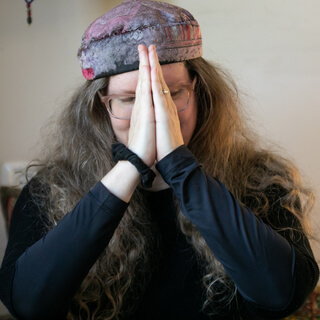
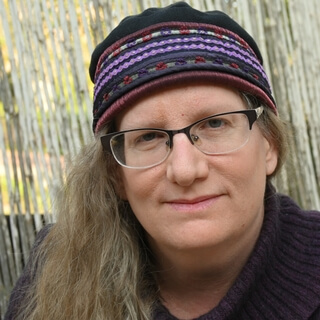
I am Robert has the Oreo Steinbauer the founder and director of Hamo on the could do show the Institute for holiness.
Kehila Moosar.
And YouTube channel,
Or on Facebook,
Or even on Twitter or LinkedIn,
And here of course on zoom with our zoom link from our website,
Delighted to have you for our weekly offering our series of awakening Torah moose our mindfulness.
This week is special because here in Israel.
We had just the partial of Matot tribes back yesterday.
And then this coming week,
We will have my essay.
Okay,
The journeys,
And in hoot slower it's outside of Israel.
And so what I will cover today on my toes will apply to half of what you were doing them and then when we meet up again,
This rotation God willing next Sunday we will cover part of my say and then we will be back on the same page together because we haven't been on the same partial the weekly tour portion since pay socks it's Passover because the holidays shorter here.
And so,
The Torah readings ended up being one off from one week.
So,
Let's jump in let's just introduce today is Sunday July 24 on the Gregorian calendar it is cough hey the 25th of Tom moves the Hebrew month of Tom moves.
We are in the depth of what is called the three weeks where essentially,
And it is a very sad time on the Jewish calendar as we remember the walls being breached,
And essentially by the Romans who sought to enter into the temple and to destroy it which will fall on the ninth of of we aren't there yet.
We're in the middle of the three weeks leading to that.
So,
This is our 43rd sitting together,
Which is beautiful and a blessing and not something we take for granted.
So before we begin we always come with our cover notes our intentions for today's practice.
So I'm going to share screen as I always do for those of you watching on video through audio you will hear me just cover and read what we are seeing here.
So here at the Institute for holiness Kehila moose are we see this practice together and all of our moose our mindfulness together as an act of radical self care,
Because we are dedicating time to our growth to being refuge and community together.
And so we see this right now this time of 30 minutes 45 minutes that we spent together as caring for the self and so we say,
This is something I'm doing to strengthen my own soul.
In order to be a benefit to others in the future.
We take this idea from Rabbi Shimon Shimon scope and his beautiful work on Oh Sherr yeah yeltsir,
Which a he really talks about being a benefit to others and that being what drives us with what our central drive should be.
And so we also say from before doing acts for others is something I'm doing to strengthen my relationship to others.
Today I can be a better conduits of God's good to others when they need me.
And finally,
The last part,
We see this is strengthening our relationships to the divine however we may define divine or that relationship.
This is something we're doing to strengthen our relationship with the Creator,
The one greater than us,
So that I can be a better conduit of God's good to others when they need me.
So that is our practice,
And that are those are our cover note our intentions for today's practice so I stopped sharing screen now,
And we will move in.
So what happens here in Matzot many things happen.
I think the two main ones which I will point out and finally delve into and discuss the first is recall last week,
How we had the banalts laugh hold okay solid hold okay difficult name to save as slow cards,
Excuse me slow crowd I can't even mix up the name.
And they were these wonderful five daughters who am basically their father had passed away in the desert and he had no sons,
And they wanted,
They were part of a patriarchal tradition is being part of the children of Israel and they wanted to be able to inherit the basically whatever portion their father was going to receive and entering the land and to make sure it passed through their family still.
And so they had approached Moshe this is last week,
And Moshe talked to God and God said they're right that they should be able to have this transfer happen and that when they finally marry assuming that they will marry a man and they will have children and even male children that that it will pass on to them.
What comes next,
Our middle green vow vow V o w s our time saying the word.
So,
It's not only vowels it's vows of women,
And in particular girls who are still living in their father's home,
And they decide to make one he has the right to nullify there's if he says it within one day of her making it a married woman.
If she makes a vowel.
Her husband can nullify that within 24 hours within one day if he hears it.
So this is also really powerful about speech.
So if he remains silent,
Which is an act of speech,
Believe it or not,
The act of silent is consent.
So,
Here you have,
In my opinion.
Probably this is here as a text to address the men of the time and even have centuries later who probably were challenged by and a little bit threatened by what happened with the daughters of slow hard.
Okay,
That these suddenly were strong five women who approached with deep humility of requesting their father's inherited estate that each tribe and head of household would get.
All sudden you have a coming immediately next men,
A challenge by this probably and wanting a way in which to contain the power,
Not only the power of speech,
Which we had with these daughters but in the form of a girl or a married woman could do with her taking a vowel that she would promise to God to do something,
And anytime a woman back then promises to God to do something that's upheld she has her own kind of power in that situation in that moment and it's between she and the divine.
It's not between the patriarch the husband or the father,
And that can be challenging and threatening to a patriarchal system.
And so I think that's what we're witnessing here and why it comes immediately after this whole dog.
The story of the five daughters.
And so I pointed this out week after week after week,
How important speeches in this tradition if you pay very close attention to all the tour portions.
There's always such,
Not only is it so refined what someone says they pick up and notice what everyone else says what's lacking how it said,
So it's not only what said it's how it's delivered or the lack of it.
There's another situation where if he withdraws,
And he doesn't say anything.
That's consent.
And so this is the power of speech and the Jewish tradition being reflected through these ancestral stories passed down to us in the Torah.
Now I want to point out how powerful the speech is in the master story that I get out of this text this week.
I might get a little emotional because if the story hits me.
And that's part of the practice is where we kind of admit when a story hits you.
And that we want to be,
You know,
Sure not to want to be clouded by it in the sense of,
I don't want to over identify,
Nor do I want to push it away and be in denial okay so it's the story of God,
And who then God being GAD in English,
The tribe of God called valid and moving,
And they come so where we are in the story is every tribe is about to receive they're all kind of doing a lottery of who's going to receive what land in the land of Israel once they call colonize and conquer it essentially with God's direction.
And in.
They come.
And unlike Cora to partially go two or three,
Who comes with like really arrogant speech and challenges kind of the power and position of our own and Moshe,
You have these tribes that come and they say,
Very kindly,
Very humbly.
And if we found favor in your eyes.
We essentially our lots are a hazard are are holding that is going to be ours our inheritance is going to be on the other side of the yard and meaning it's not going to be in the land of Canaan,
It's not going to be in the promised land the land of milk and money that they've decided that this land on this other side is there's,
It's good for the eyes it's a looks good to them because they have lots of animals,
Lots of cattle,
Lots of animals that need green pastures,
On the other side.
And this might if you're if you're not following along this may seem like Oh what's wrong with them,
Choosing other land.
Well let me let's give you some context for those of you who might be on that boat.
This is a people who have just been 40 years ago taken out of the institution of slavery through the huge master story of the Jewish people master narrative or God with an outstretched arm takes them out of slavery,
So that they'll be God's people and they'll be free,
And that they'll settle in this land that has been promised to their ancestors of Abraham and Sarah yet sock and the river,
Raquel Leah and Jacob,
Bill can Zilpah,
And their children,
And that that the their ancestors should settle in this land and it's going to be where they'll serve God.
Then they're taken through the desert obviously with lots of ups and downs if you've been following along.
And so there's this vision and all 12 tribes,
All descendants of the 12 sons of Jacob,
Who were,
You know,
Living with him and descended down into the Egypt before there was even slavery,
That they would enter the land together live there as 12 different tribes together and serve and live life affirming life.
And so you have two tribes and it ends up being another half of the national that comes later some some scholars actually feel that that's an addition later on,
But it's it's well known that the half tribe of menasha actually wants to settle in that land and so you have God and Reuben approaching,
And they come and say that this is this is their what they believe is their land and what they should be happening.
So you could imagine,
If you're following along.
It's so shocking and a bit painful this might have been too much to hear this.
This is someone who's as even even in his own words carry this people in his bosom.
That's how he words it.
If you carry this people all the way through he himself can't even enter the land.
Right.
He's been denied that based on his lack of anger management and also attributing the water flow to his own power and hand instead of to the Almighty.
And so you enter the land and suddenly these two tribes are coming,
And they're saying,
We,
We are not going to enter the land that is not where we belong and Moshe,
Probably heartbroken is angry at first,
And that's actually the the very language.
He's,
He's a bit shocked.
And so if you're following along,
You want to come to chapter 32,
Verse one pursuit,
Alice.
And that's where the proposal of the Reubenites in the God that's that's how it's pronounced in English,
Come saying that they want their livestock to be there that they'll build these land these places for their livestock and then for their children and they also word it that way first comes the livestock.
And then the homes for the children so their priorities are not straight and you know who helps us with this is in a hammer level it's if you don't know her.
Here's this wonderful text they have English translation and the Hebrew.
It's studies and bummy bar and numbers by the hammer level it's she is a may her memory be for a blessing,
My favorite Torah teacher.
And I always seek out what she has to teach and what's so beautiful about it is she brings the major rabbinic commentators and their opinions and gives a nice summary and she does one of her techniques which was new at the time was bringing a literary analysis to the text,
And it's quite lovely so she if you're following along she brings here that on page 382 she goes very closely looking at the language against speech that's used between the two between Moshe,
And the tribes.
So when the tribes the true tribes are very smart about how they approach Moshe,
They do it very humbly they say you know if we found favor in your eyes.
They also go on to say that they will be the shock troops the huddle team the first soldiers that will enter the land with their brethren and help colonize it help settle it,
And then they'll return to their land on the other side so they're not saying we're rejecting the other 10 tribes will go and fight with you but we're going to settle over here we're not going to settle in the land.
Okay.
And so Moshe first has a strong reaction but after like some negotiation here Moshe basically accepts the proposal,
But then he repeats in his own words with significant and the nation basically appreciates the mandations of what they say so first day of tribes come near.
They say we'll build sheepfold for our cattle and cities for our little one.
And what is motion to do is there any talk so far among these tribes about is God in the picture.
There's no mention of a low he more I deny or anything.
So Moshe says to them,
If you will do the same if you'll go armed before the Lord to war,
And then they come back,
And they say we ourselves will go armed before the children of Israel,
Until we have brought them to their place,
And our little ones will dwell in the fence cities.
And then Moshe comes back and says,
You will go armed over the yard then over the Jordan.
Before the Lord,
Until God has actually driven out the enemy,
Not you with your own hand,
And the land will be subdued before the Lord.
And then you shall return and be guiltless before the Lord before Israel and this land should be your possession before the Lord.
So he's constantly.
He's so smart Moshe when he comes with his speech right he always adds in and knows what's missing knows what he heard.
Okay,
He's very using why speech.
And he's not screaming or yelling at them he's also delivering it in a way that they can hear it.
He then goes on date return and say we will not return onto our houses until the children of Israel have inherited every man has inheritance,
And the five daughters right until they can get married or have children.
So he says,
You will not do so,
Behold,
You'll have sinned against the Lord.
And surely if you if you don't basically go and serve and fight and on behalf of the Lord and then bringing this forward,
That you will have sin upon your hands essentially so reminding them the consequences the karma of what will happen of their behavior,
And then they go on to say we will not inherit the other side of the yard in.
Because we will not go in with the 10 and inherit and that lab.
Instead,
We are inheritance has fallen to us on this side of the Jordan Eastward,
And he comes back and says,
Build your cities for your little ones for your children.
And then the folds for your sheep and all your animals and do issues proceeded what has come out of your mouth.
Okay.
This is a huge moment.
This is a huge moment because Moshe doesn't lose it completely right we've we've seen him have a lack of anger management he's getting exhausted.
His buckets full,
And he doesn't lose it to the point where he actually just like kind of yells at them and condense them and like pray,
You know,
You know,
And also God doesn't come and kind of shut them down and punish them for even having this desire,
One that's very seemingly based on greed greed for certain type of land for their cattle.
And you don't see that reaction anymore,
There's been a shift.
And instead the shift is,
What are you going to do actually to be part of this people what are you going to offer and make sure your priorities are straight because guess what this isn't about your own hand and what you're going to build and do this is what actually God will enable this whole time and if it's not in the cards for God meaning of God has decided not to enable that for the tribes,
Then it's not going to happen.
And Moshe is coming in his very wise speech way,
And how he delivers it being very forward with us,
And through repetition,
How he's leading them to see what's going to happen with the settlement of what we call trans Jordan.
And so,
What's emotional for me and what I get caught up in is this like I really felt at this time to where I was like,
Wow,
I can't believe after all these years you're not going to settle with all the tribes.
So that you've gone through this whole thing.
But it also just taught me the power that we always come back to in this mindfulness practice particularly.
And is this like how strong greed can be,
And that it can blind us right and it can really lead us to wanting them in this case and God and move in it can really lead them to wanting a land that is a certain way that they don't see on the other side,
Or maybe not even have the patience and the trust in God to believe that they would get that same kind of land on the other side in the land itself.
And so it's something that I just tried to hold and honor and I I'm,
I'm in all of how they have communicated and and worked it out,
Essentially,
But you know it is in our rabbinic tradition as is you might even begin to feel that there's a sense that this is a British disregard for Israel's unity as a people,
As a all 12 tribes entering together,
And that it's based on an economic basis for their petition.
And so we'll just hold that for now as we move into our practice I will say that unfortunately,
And I don't know if this has anything,
You know,
People.
Let me just share it first which is,
These are the first tribes to be kidnapped and taken off by the Assyrians and other people later on it is God and move in and the half menagerie who are on the other side of the air then,
Most likely because they don't have the least protection they don't have the other 10 and a half or nine excuse me nine and a half other tribes with them on the other side to fight and help protect them,
You know,
Obviously gets read,
Also in rabbinic tradition that in some ways it's a hand of God for not entering with the people in the first place,
I don't know if I hold such a belief and I need to,
But I just want to honor that there's definitely in my practice this time and studying this text,
An attachment to a certain way that I want it to be and it's not going to be and something I have to practice and work through.
So today in our practice in our guided mindfulness meditation.
We are going to look at the third foundation of mindfulness of mindfulness of thoughts,
And in particular we're going to notice what thoughts arise through this teaching for us,
If any.
That you make thoughts happen,
If you're new to this practice,
You don't need to cause any thoughts to come up,
You're just going to notice what arises and I will guide you with my voice through it.
And if you need to stand,
Please do so there is kind of like a strong secure mountain pose that you can stand if it hurts your low back to sit any chronic issues.
You're also welcome to lie down if you have vision I recommend that you keep your eyes open to remain awake and alert.
If you don't have vision,
Then you should really in order to remain awake and alert,
Really pay attention to a strong sensation in the body or sounds to keep you awake and alert for the rest of us,
You come to an upright dignified position as I like to say dignified created in the image and likeness of the divine of God of Hashem,
And your posture wants to be one in which you feel alive,
That you feel upright,
But not stiff and at ease.
You can let your hands rest into your lap.
If you feel safe and comfortable and have vision you may close your eyes,
Or otherwise lower your gaze.
And we're going to begin with three deep cleansing breaths in breath,
Welcoming all that is here.
Exhalation letting any tension leave the body,
Inhalation,
Allowing stillness and ease to enter exhalation further arriving,
Coming to this moment.
And now you can allow your breath to just settle to its own natural rhythm.
Noticing what is here for you right here and right now in this present moment being with things as they are and as they arise.
Do you notice any strong sensations,
Something unpleasant,
Maybe something strongly pleasant?
Calling your attention,
Maybe pulling your attention away from my voice or your own breath as your anchor.
Simply recognize it,
Allow it and honor it.
You can always do an inner bow and say you'll visit it later.
The same thing goes with any strong emotions that might be emerging.
Perhaps it is something pleasant or unpleasant.
Just simple kind without judgment,
Mental noting for yourself.
Maybe even naming the emotion.
Allowing whatever is here to emerge.
And for some of us,
It might be thoughts.
It could be that we are rehashing something that happened in the past.
Or we are ruminating over what we think will happen in the future what we're planning.
You can notice that and say planning,
Rehashing,
Just noting it without judgments,
With kindness,
Bring your attention to how I'm guiding you in this moment.
Following the sensations of your breathing sensations in your body,
You will begin to notice a stream of thoughts in the background.
For the human being the thoughts are always there.
We may not be aware of them.
They come and go like clouds,
Ephemeral,
Only having significance when we identify with them,
Or when we try to push them away.
Let all thoughts be.
Let them rise and fall like the waves of the ocean around the breath.
Whether it's after three breaths or six or ten,
A strong thought will arise and carry away the attention.
And as soon as you notice this thought,
Name it gently according to its predominant quality.
You can use simple notes like planning,
Remembering,
Judging,
Worrying,
Imagining,
Fearful thoughts,
Happy thoughts,
Interesting thoughts,
Creative thoughts,
And so forth.
Simply naming and acknowledging the thoughts is supportive of the witnessing quality of mindful loving awareness.
Once you have noted a thought gently for some time you will notice that it dissolves like a cloud under sunlight.
Thoughts are ephemeral.
Once it has diminished simply return again to the mindfulness of breath and body for a time until another strong thought or experience pulls your attention away from the breath.
Notice how it feels the very moment you shift from being absorbed or lost in thought to simply name it without being swept up in the thought.
Notice which types of thoughts really have an effect on your body.
What thoughts trigger you most?
What is their bodily effect?
Notice how some thoughts automatically bring strong emotions and how some emotions automatically bring up certain thoughts.
We are witnessing the interplay between thoughts and emotion.
Now deliberately bring up a thought of whatever came up for you during the talk today.
Perhaps a sad thought,
An angry thought,
A loving thought.
Notice how powerfully these thoughts and their connected emotions affect the whole state of body and mind.
We will sit for the next minute in silence contemplating this.
Thank you.
If your mind has drifted,
Simply bring yourself back to this present moment to your breath and body or to my voice.
And our last minute of meditation together,
Imagine you are open in the sky.
Thoughts float through like clouds.
Sense what it is like to shift from thinking to noticing the clouds.
I will ring the bell when it is time for us to join again in our sacred circle.
If you had your eyes closed gently and slowly,
Open them bringing back in light.
Joining us on the screen.
Taking refuge and community together.
Allow yourself to stretch.
Coming to this moment together here.
So grateful to have you in your practice.
Allow yourself to give an inner bow and bow to the divine who sustains us and brings us to this moment to be able to practice together and learn.
We now have a opportunity to share how our experience was,
How the teaching was,
If one wants to,
And any questions or comments.
Who is ever with us.
We also received them in comments on our YouTube channel.
So if either one of you joining us,
You could let us know your name and where you are from if you wish to speak.
And we welcome you.
Yes,
Please.
Cindy in New York City.
I was just wondering about the book you shared earlier.
The commentary.
I was hoping to take a look at it online.
Yes.
So the author,
She didn't really actually author it herself.
Her two students who she helped in their doctorate program actually brought her teachings all together.
And but her name is Nahama Levowitz.
They have a whole series of all five books of Moshe Al-Gatorah with all the commentary in it,
Essentially.
And this one's called Studies in Bamimbar in Numbers,
Because we're in the book of the book right now.
And the publisher is,
Let's see here,
Printed in Israel at Maor Wallach Press.
So I know you can get it here in Israel.
I don't I imagine somewhere you can get it in the United States,
Probably at a Judaica store with books,
Maybe online also.
And you're in New York.
I know Yeshiva University runs an annual foreign sale,
A book sale of all rabbinic texts.
And you can head up there given COVID restrictions.
I'm not sure.
But and get books at a great discount.
So I highly recommend that you can buy it as a set.
And that's cheaper than buying each book by itself.
And it's high.
It's wonderful.
So this one was translated through by R.
A.
Newman.
She's wonderful.
So I highly recommend it.
So thank you.
Thank you,
Rabbi.
Yes.
Thank you,
Cindy from New York.
Wonderful to have you.
And Jeannie,
Where are you joining us from?
You're on mute.
Just sorry,
I got that.
I just,
Jenny,
I'm from Toronto,
Ontario,
Canada.
Oh,
Welcome.
Wonder and I'm sorry,
I pronounced your name incorrectly.
So it's Jenny,
Correct?
Yeah.
JEE double N.
I.
Welcome.
Welcome.
So delightful to have you.
So great when we have people from all different countries joining.
So you have any comments or questions?
No,
I just cannot spell the author's name of that book.
OK,
So her last name is Lebowitz.
It's L E I.
B O.
W I.
T Z.
T Z as in zebra.
Oh,
Z.
Yes.
And this one says,
Oh,
Here they do have it in Brooklyn.
It's a special edition for Lambda Publishers and based in 13th Avenue in Brooklyn,
New York.
So here's a phone number for the New Yorker who wants it.
718-972-5449.
Yeah.
So let me know if you end up getting your hands on them.
They're wonderful.
OK,
So if there's no more comments or questions,
I'm so grateful to have you for all of our viewers who join us every week,
Either live streaming or on Zoom.
We're so grateful to have you.
We're grateful for your sponsorship and donations.
What we call Truma or Dana and the mindfulness tradition to help strengthen the institute to offer things like this.
Any amount is appreciated.
You can be in touch with me via email or at our website for that.
And just want to honor all of you for showing up and making us stronger and practicing together.
So thank you.
Thank you,
Rabbi.
Bye bye.
Take care.
Bye bye.