Welcome.
Welcome to Dora Musa mindfulness we will begin in one moment.
About one minute.
Please allow yourself to settle.
Welcome.
Welcome to Dora Musa mindfulness.
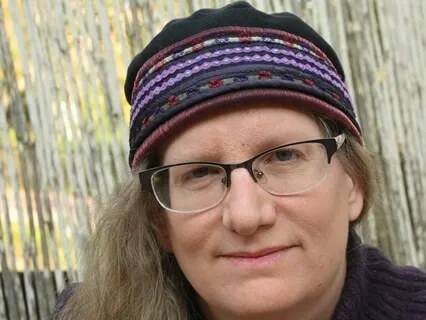
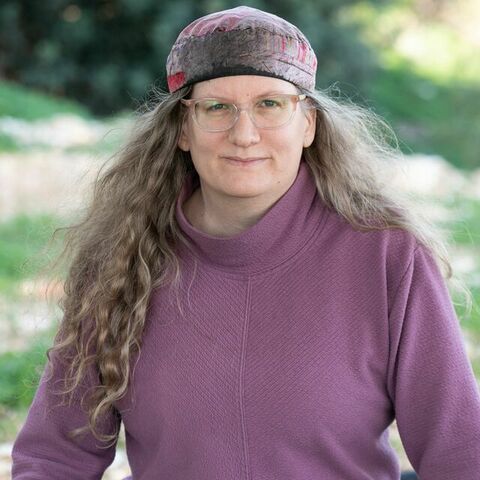
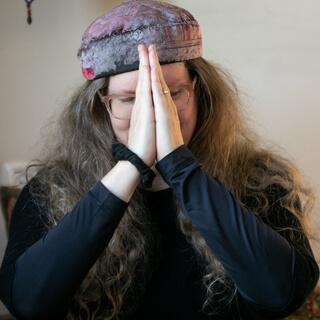
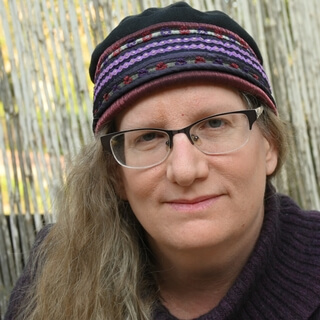
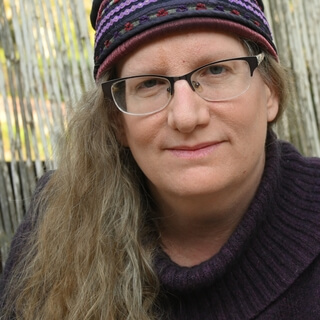
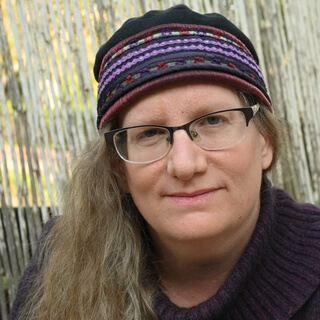
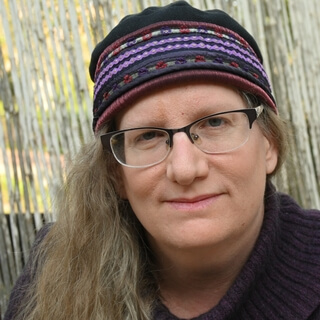
I am Rabbi Hasi Oriashteynbauer,
The founder and director of the Institute for holiness Kihilat Musar and I am just delighted to be here with you today.
We meet weekly on Sundays and Yom HaSheon at three Eastern Standard Time,
12 Pacific Standard Time here in Israel,
Located in the Galil.
It is now 10 p.
M.
And we join together to practice together,
To grow together so that we can be a service to others and to God.
So thank you for joining.
We begin with our Kavanah,
Our intention for today's practice.
And so as you begin to settle and join the meeting,
We are live on Facebook and on YouTube and together here on Zoom.
Thank you for joining.
I will begin to share the screen with you and I will of course read it out loud for those of us joining by audio.
Our Kavanah,
Our intention for today's practice is before doing acts of caring for the self,
Which this is this 30 minute plus practice that we engage in together weekly,
If not daily,
Is active self care that is radical.
Why?
Because this is something we are doing to strengthen our own soul in order to be of benefit to others in the future.
It is that act of bringing God's good to the world.
That is our intention for our self care and for our practice.
And so we jump into today's practice.
We are looking at parashat lech lecha,
The Hebrew Bible,
The weekly Torah portion that we just read yesterday on Shabbat.
And hopefully you've all spent some time looking at the text,
Really allowing yourself to be there with your ancestors to really see where you are troubled and pushing the text and what does the text have to teach you?
What does God want you to get out of it?
And so we meet our ancestor Avram before he becomes Avraham.
And like with all of our practice,
We want to have an encounter.
And when we have this encounter with our ancestor,
We want to come in with the beginner's mind.
We want to come in with curiosity,
With compassion and an open heart.
And really,
It's almost like coming with that curiosity as if you had a close family member,
Like a parent who changed their name at one point.
And you as a child would be very curious about this.
And the same thing with us here.
We have Avram who behaves in different ways.
Obviously,
His selected by God,
Even though the Torah doesn't tell us how or why just tells him to lech lacha,
Get up and leave three places,
Right?
Your land,
Your birthplace and your father's home.
That is a that's a full leaving.
That's a physical leaving a spiritual leaving a soul leaving every part of oneself leaving,
Which is almost impossible.
It's almost impossible.
And so we even begin to question why this God asked of something that's impossible.
So let's hold on to that.
Because although he physically leaves,
He comes with his orphan nephew lot.
And they go together with,
Of course,
His spouse,
Sarai,
And all the souls that come with them.
And so hold on to this about can you really leave your family and everything that you once knew.
But we encounter Avram before he becomes Avraham.
And of course,
You know,
In our midrashim,
As I taught the previous few weeks,
That comes in our tradition to fill in what the Torah doesn't tell us and teach us.
So they have lots of things to explain to us why Avram is selected.
But that's not where our attention is going to go today.
Today,
Our attention is where we are bothered in the sense of the need of again,
Of responsibility.
This is the one we've been looking at over and over again in our partial.
And it's so evident here.
So from a moose our perspective,
What is responsibility twofold,
It has the sense of being aware of one's consequences of one's behavior,
Okay,
So it's a it's an element of time,
And inside of it.
And so we want to do in order to be one of the balanced responsibility,
We're aware,
We try to anticipate the consequences of our behavior.
And the second part of responsibility is the Acher inside of the the shorosh,
The root of the word,
That we are to be considering the needs of the other,
And being responsible to them,
Carrying the burden of them.
And what we'll find here is,
Although Avram is surely righteous,
In many ways,
Obviously selected and chosen by Hashem,
God,
And obviously is balancing and courage,
Very brave to get up and leave.
Also very balanced and the result in alacrity,
Enthusiasm,
Just follows the meets,
Follows what to do and goes,
And he's not so balanced and responsibility of being aware of the consequences of his behavior,
Especially toward the other,
And what will happen in the future together.
So our case before us is Lot.
All right,
I'm going to briefly share again the text we have before us from chapter 13,
Pasuch,
The verse number six,
That let me give you the background of the story,
That a famine hits the land of Canaan,
All the land actually,
Except for Mitsrayim,
Except for Egypt,
And because of the Nile,
It provides during the famine.
So Avram and Sarai and all the Nefeshot,
All the other souls,
Including Lot,
Head down to Egypt to survive the famine.
Now we could discuss the whole story of what happens with a certain lack of responsibility to Sarai in Egypt,
But I want to concentrate on what happens when they leave Egypt.
So we're in the middle of a famine and Avram leaves with a mass amount of wealth,
Excessive wealth,
And for the first time when they return to where they were before the famine.
It has here in our Pasuch,
The land could not support them and staying together.
Because their possessions,
What they had amassed was so great.
They were not able to dwell together.
And I want you to sit with that just a minute and think almost to the absurdity of that.
Could you imagine that you're with family and you amass so much amount of wealth,
You say,
There's not room for both of us to dwell together in harmony.
I have to be with this wealth.
I need to manage this wealth.
This wealth means more to me than us dwelling together and being together.
And that is has great consequences.
Avram is not thinking and prioritizing being responsible to lot his old orphaned nephew.
He's not thinking of the consequences of his behavior,
Which we all know will lead to lot being kidnapped during a war among the kings taken as far as Syria,
Up until Damascus,
Past and gone.
And then later on dwelling and so S which from the Hebrew,
The English is Gomorrah.
We know what happens there too.
And so this lack of bearing the burden of his nephew,
It's just a such a lack of responsibility and it pains us,
Pains us,
Pains me.
And so I'm going to share with you a text that I'll read out,
Of course,
For those listening on audio that the hisconey tells us that the point of the Torah is making here about this,
But Suki,
Hiyara who sham I don't even think it's the excess of wealth.
I think it's the prioritization of having wealth over the relationship with his nephew.
That's really what led to strife.
But our ancestors again,
Are so uncomfortable with this behavior.
As I told you,
They bring up me to Rashim in order to kind of deal with not accepting what is real in the present moment,
What is real for this ancestor and this behavior of Avraham.
So they make up things about locked.
They make up things that he,
So we have here in Melbourne who comes to say that at lot began to deviate from Avraham's ways,
And they were not able to dwell together.
Other commentators go on also that he ends up being part of this ancestry that is essentially not looked upon well by our ancestors.
And so I rather than demonize lot or find something wrong with him.
I rather look at responsibility of Avraham and at our ancestors.
He's obviously the master patriarch.
It won't be the first time that he prioritizes his own needs or wants over the consequences towards another and not bearing the burden of the other.
We'll see how he treats Sarai.
It's heading down to Egypt in order to save his own life.
Obviously he wants to save his life,
But it's questionable the behavior.
Again,
Questionable with lot here.
We're going to see a pattern with Avraham who eventually will become Avraham,
That this is someone that doesn't know how to be balanced and negotiate responsibility so well with those closest to him.
Think of Hagar,
Think of Yishmaya,
Think of Yitzhak,
Think of the death of his own wife,
Sarai later.
This is someone that knows how to embrace strangers and care for others and be very courageous and to go all out there to care for others and even defend those he doesn't know in order that they not be killed,
For instance,
In Sodom and Gomorrah.
We see this amazing side to him where he's very balanced,
But we also see where there is room for growth that we are wanting.
Again,
In our own practice,
What do we do with that?
We see where there is an opening,
A petah,
Where we can strengthen our own selves.
We can grow towards greater responsibility of anticipating consequences and bearing the burden of the other,
Of those closest to us so that we can almost do a tikkun for Avraham and Avraham,
That we can model how we wish that he had behaved.
We can then be able to give him more of the benefit of the doubt,
Which is a practice of compassion.
It's a nitzvah to do this.
And so we're going to sit with that today as part of our practice.
I want you,
If you're sitting,
To come to an upright position.
If you feel safe,
Shut your eyes.
If not,
Just lower your gaze before you.
Lie your hands on your lap,
Or maybe you want to place them on your heart.
And if you need to stand due to chronic pain issues,
Please do so with a chair next to you to hold you stable.
You're welcome to also lie down,
But I would like your eyes open so that you stay alert and awake in the practice.
And when you're ready,
Upright and dignified as the child of God you are,
Allow the gift of breath from God to enter.
As you allow your lungs to expand,
Come to awareness of your body.
What sensations in the body may be calling for your loving attention?
Send your kind of compassion to whatever spot in your body is calling for your attention.
Honor it.
Do not try to push it away or be in denial.
Just gently tell it you will visit it again.
You are practicing being in the present moment now.
It is here and only here in the present moment that we encounter God,
That we encounter Avram and Sarai and all of our ancestors.
It's where we encounter ourselves as we are.
As you gently and slowly do a body scan from the top of your head down,
Notice if you're holding any tension,
Just pay attention,
Come to awareness,
Recognize and accept whatever might be going on with you.
If you notice any planning and your thoughts looking towards something in the future,
And when you become awake to that,
Bring yourself back to my voice,
To your breath as your anchor.
Perhaps you're thinking about something that happened in the past that too can wait till later.
When you awaken that you have been lost in thought,
Gently guide yourself back to your breath as your anchor and to my voice.
What we have continued to do today as we started and bear the sheet,
Continued on to our ancestor 10 generations after Adam and Chavav,
Nowak and 10 more generations later to Avram,
We are building our muscle.
Which muscle is that?
Well,
Actually,
Our muscle of kindness,
Our compassion,
Of giving the benefit of the doubt,
My muscle of mindfulness,
Allowing ourselves to be fully present with the text,
This beautiful gift handed down to us.
We are meant to encounter it in our ancestors so that we can be troubled.
It is part of our curriculum is a gift from God,
From the Musar perspective.
And this is where we are in our Musar mindfulness practice.
To be fully present with whatever is and to notice the need of soul traits that are unbalanced where we have room for growth,
Just like our ancestors did.
So as you spend these last moments in silence and this quiet sitting meditation,
Note where you have your room for growth in the need of responsibility,
Of anticipating consequences,
And of considering the needs of the other of bearing the burden of the other.
We will move to silent meditation now and I will ring the bells when we are ready to come out together.
You'll move to mute to silence so we may sit together.
You need not worry about time.
I will pay attention to it.
You are welcome.
You are welcome.
You are welcome.
You are welcome.
You are welcome.
Note in our practice of the Musar mindfulness that as we learn from the Dharma,
We must come to calmness if we are going to be able to see clearly.
And I bring us back to our Kavanah,
Our intention for today's practice,
That our intention is a form of self-care in this practice together today so that we may be of service to God and others so that as Rabbi Shema Shkob says,
To bring God's good to others,
To have that as our delight,
As our wish,
As our first impulse,
That we may through our practice of calmness and mindfulness strengthen that muscle to be present for others and ourselves and thereby bringing God's good to the world.
Slowly and gently allow your eyes to open.
Come join us in this virtual holy space,
Sacred space of us joining as a kahal,
As a community,
As a sangha,
As a vaad.
Thank you for your practice.
Thank you for joining today.
May we all give ourselves an inner bow,
A bow to our teachers,
A bow to our ancestors,
A bow to God for giving us this moment,
Sustaining us to bring us to this moment,
A sheikhiyanno to be together.
Again,
I'm Rabbi Chasia,
The founder and director of the Institute for Holiness,
Kihilat Musar.
Please join us every Sunday 3 p.
M.
Eastern Standard Time looking at the weekly Torah portion as we do awakening,
The heat over root of Torah,
Musar,
Mindfulness that we can incorporate into our daily lives as practice.
Do practice responsibility this week.
Read next week's parasha,
Vayera.
Allow yourself to get deep into it,
Especially in Shabbat.
Use the time of that special extra neshamah,
The extra soul to really dwell in it and see what the text has come to teach you.
Allow God to show you your gift and your curriculum,
Your own spiritual curriculum.
We thank you for your donations,
Your dana that you give weekly to us as the Institute is a freewill offering to support our institutes that we may continue to offer this programming to you.
I thank all those who have supported us.
And again,
We accept sponsorships in honor of anyone during these settings and teachings and in memory of anyone.
Blessed be their memory.
And you're welcome to reach out to us at Kihilat Musar,
The website and also at gmail.
Com.
And again,
I thank you for your practice.
Feel free to be in touch with any questions or concerns.
And with that,
I say to you,
Lila Tov,
Good night from here.
Take care and be strong from strength to strength in your practice.
Take care.