Wonderful.
We are set to begin very shortly.
If you've just arrived,
Allow yourself to settle,
Begin to come to stillness.
We are live streaming as usual on our YouTube channel and Facebook and other means.
Delighted to have Marina here joining on Zoom and anyone else who pops in last minute.
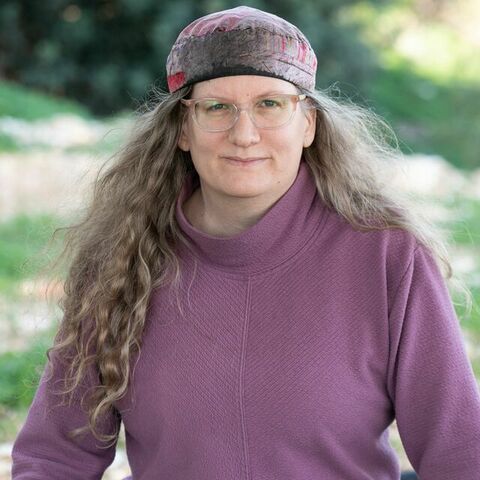
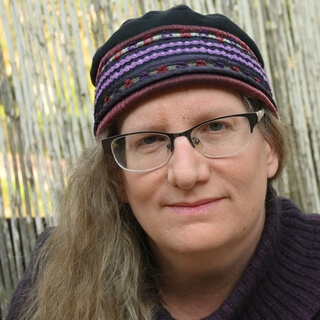
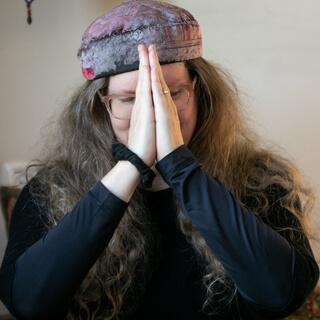
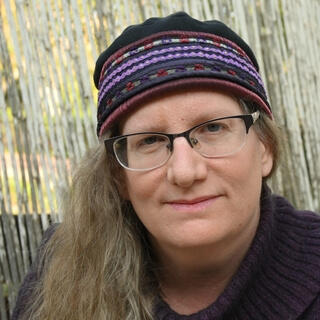
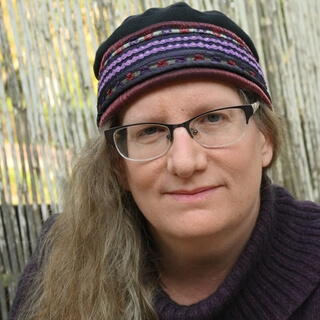
I am Ravek Hasio Rios-Steinbauer,
The director and founder.
Here we have one more.
Here we go.
The director and founder of the Institute for Holiness Kehilat Musar.
And I'm delighted to share this free will offering every Sunday,
God willing,
Bezrat Hashem at 1230 Eastern Standard Time here in Israel at 730 PM,
Where we basically,
As I say every week,
Delve into the weekly Torah portion for outside of Israel.
That will be for you,
Balak coming up.
For us in Israel,
We just actually went through Balak on Shabbat on the Sabbath.
And so what we do here is we look briefly at the Torah portion from the lens of Musar mindfulness.
And then we engage in seated or standing however you need guided mindfulness meditation practice around the Torah portion around the parshah and for our own practice here,
Taking refuge and community before we begin,
We always begin with our kavanot,
Our intentions.
So I'm going to briefly share screen.
Give me a thumbs up if you could see the purple flowers.
That would be great.
Thank you.
So we say all of these,
Actually,
Because here at the Institute for Holiness,
We see this time we spend together on Sundays as a radical act of self care,
That you're spending this time in your practice to strengthen your own soul in order to be a benefit to others in the future,
Which is where what our orientation is in this practice.
Also,
We see this as doing something on behalf of others,
Because in that self care will be able to be present for others and care for them and the like.
So we say number two,
This is something I'm doing to strengthen my relationship to others.
So I can be a better conduit of the divine's good,
However you define God,
God's good to others when they need me.
And finally,
We also see this as an act of strengthening our relationship with the divine with the oneness.
This is something I'm doing to strengthen my relationship with the Creator so that I can be a better conduit of God's good to others when they need me.
So we hold that intention in our practice,
Taking refuge together in the learning.
And for those of you who didn't have the visual,
You'll be able to hear it on audio.
So I obviously can't capture everything that comes across in the weekly Torah portion.
If you're someone who took a look at it,
You'll understand why there's always just too much material.
So we are in Balak.
For those of you who are just looking at it,
It's chapter 22,
Verse two through chapter 25,
Verse nine.
We're here on July 10 of 2002 of Yod Aleph of Tammuz,
The month of Tammuz in the Hebrew calendar,
Delighted to be here and practice together.
So just to brief who we are and what we offer,
As I said,
This is our weekly offering.
But here at the Institute,
We really offer three tracks of practice and community together.
We have our Musar track for those who want to do the strict Jewish practice of daily discipline of Musar.
We have the synergy of Musar mindfulness where we really bring what we learn from the Theravada,
Vipassana,
Buddhism with the Musar of Judaism,
Where they benefit each other.
And then we have a third track of just mindfulness meditation,
I shouldn't say just,
But it's for those who want to have a regular sitting practice in a Sangha and taking refuge and community.
And so we offer these as a way to be in community and to be in practice.
We invite all of you to become a subscriber and also a member.
I know I can't see you,
Susan,
I can see your name.
I don't know who you are yet.
But thank you for joining as a member,
You will be receiving material soon.
So I want to thank you and anyone else who subscribed or join lately,
I will be in touch with you.
I'm delighted and we're very grateful here at the Institute.
So the quick summary,
What do we notice here?
We have someone named Balak.
He is the king of Moab.
He has just to remind ourselves the background,
What just happened with our ancestors.
OK,
Earlier in Korach and the Torah portion of Chukot,
We have a lot of violence.
I talked about this in the last two weeks,
This cycle of reaction and violence.
So we basically have Korach and his followers either being swallowed by the earth or burned by fire or a plague.
We have all of our ancestors,
B'nai Israel,
The children of Israel reacting to that,
God reacting,
Moshe,
Rebeinu reacting.
And then we have even Chukot,
We have the passing of Miriam and even Aharon,
The siblings,
The brother and sister of Moshe.
And we have more reactions due to the lack of water and Moshe getting angry at the people.
And then also a plague of snakes coming and essentially attacking the people.
And then this very odd thing for all of us who pay attention to Torah,
Where he's told to put up a stick with a snake on it,
Like a copper snake,
Which for anyone following this knows that like the children of Israel are supposed to be moving away from any kind of idolatry object.
Right.
So you're kind of wondering,
Why is this happening?
That's another discussion,
Another time.
But this is the background that we're coming in.
So you can imagine a people who are already dealing with intergenerational trauma from the institution of slavery leaving Egypt,
Trying to become a people in this desert journey.
There's obviously challenges.
All right.
So all sudden we enter where this king of Moab is watching this whole nation of Israel coming in the desert,
Millions of people.
And it's like,
I know what they just did to the other two groups of people from the last week's bar show where they actually went to war and one,
He's terrified,
He doesn't want them.
He seeks out a seer,
S e r,
Who wants to who basically his whole profession is that he's hired to curse people.
You might already begin to think is this a wise profession?
Is this a profession that causes harm and suffering?
Or is it one that's life affirming,
But that's another,
We'll just hold that in mind for our practice.
So his name is Bill.
And Bill is sent by this king to come and curse the children of Israel.
All right.
He thinks if they curse them,
Then he'll be able to go in with his army from Moab and stop them and possibly destroy them.
So basically,
God intervenes through dreams with this bill arm and says,
You shouldn't go you're not going and at first they kind of had this back and forth.
Okay,
You can go as long as you follow exactly what I say,
Or what I put in your mouth essentially.
And that in and of itself has a lot of rabbinic commentary of like,
Why the back and forth?
It's not what I'm going to focus on right now.
But I just want to say that,
In the end,
Be alarm is essentially kind of given permission to go and do in this mission,
Knowing that he'll have to say exactly as the Lord in the Torah designs him to say that right,
Even running into a scary angel with his donkey,
Which he beats,
There's very,
There's material in here that makes everyone kind of question what this is.
So this is why in the rabbinic tradition,
We call these chapters the section of Balaam.
Its designation is so because we actually see this as a desperate scroll that's brought in later,
Believe it or not,
The only connection of this whole Torah portion is the idea of Moab.
And so,
Um,
But there is something that we can take here in this Torah portion for our Musa mindfulness practice.
And if you notice,
There's a lot of unwise speech.
And even more than that,
There is attachment,
There is greed,
There is desire.
So let's look at each individual case.
First,
We have God not wanting Bill to go and actually do the curses right to be hired by Balaam.
All right,
I'm not belong,
Excuse me.
So there's first the desire.
And the attachment to the desire by God is that he choose on his own that he does not go,
Okay,
He's disappointed and angry that he actually chooses to go.
So that's when he creates the condition.
So we see that we see a lot of like,
Unfulfilled and frustration that desire and then the compromise.
The second Balaam himself feels this way towards his donkey.
He has this attachment to a certain outcome,
This desire that things operate a certain way and she female donkey is wearing back and forth because she sees this angel with the sword going back and forth that he can't see until later.
And so there's that unfulfilled desire,
But it's really this clinging,
Right?
We see that a lot of this,
Then we see even the angel of God feel this way towards Balaam.
The angel itself doesn't want Balaam going and is obviously causing this donkey to veer a different way or stop.
And so there's this attachment to Balaam making the right choice and the right decision.
He ends up being able to go.
Then we also see Balak,
The king of Moab have a fit of rage because he's so attached to the outcome that Balaam will curse Israel.
And when Balaam doesn't curse Israel,
Instead the words of God go in him,
Come out like prophecy,
He ends up giving three blessings.
One of the famous blessings that we sing often in synagogue or even in Jewish life is the song.
Ma tov u'u ochaleiach ochaleiach u'u.
So that's actually from Balaam.
It comes from someone who's normally hired to curse.
Instead,
What comes out of his mouth is how good are your tents,
Your habitations,
Yaakov,
The people of Israel.
Okay.
There's a bit of humor there.
That's something that so precious to us as a prayer comes from someone who's hired to give curses.
So Balak is attached to Balaam giving curses.
He doesn't give it.
And so we're seeing this deep,
As I said,
Like attachment,
The desire,
The greed.
And we know when people get caught up in that we know in our own personal lives.
I mean,
Just think about even one example in your own personal life right now where you've had real desire and attachment to a certain outcome.
It usually doesn't go so well,
Right?
It causes you suffering,
It causes those around you suffering.
So we see this that people will use essentially unwise behavior,
Unwise speech for whether it's profit or fame or greed or hatred.
We see it in all the characters in this Torah portion.
It's really rich material.
And so when we're caught in that rage or that cycle,
We can't be present.
And there is no seeing,
There's no hearing.
That's in some sense why Balaam can't even see the angel,
Right?
The ability to use one's skills or gifts are basically denied to us.
Like here's someone that's so gifted in speech that when he curses,
It actually happens.
He has some relationship with the divine,
Obviously.
And that gift is gone.
Like there's actually a donkey who is able to speak as a miracle and the donkey can see.
So it's a satire in some ways.
It's really pointing out the absurdity,
What happens to us when we're so caught up in attachment and greed that here an animal that normally can't see angels and can't speak will be the ones that will come with the wise response.
She's actually so calm.
She actually says,
Why are you beating me?
She's actually able to speak when I've always been so loyal and good to you.
Have I ever done this before?
And so you can't really speak to someone that way when they're caught up in their rage.
Like,
You know,
Balaam doesn't appreciate it.
And unfortunately he's still so full of rage.
But that's what we want to carry with us today.
In today's practice,
We're going to move into a guided mindfulness meditation.
And what's important to this practice today is that we're going to be practicing one of the four foundations of mindfulness meditation,
And that is called mindfulness of emotions.
And in particular,
As I guide you through it,
We want to bring up on purpose with Kavanah,
With intention,
That feeling of attachment to a certain outcome,
Even greed that we've experienced in our own life,
And see where we feel it,
See where we experience it really get into the sensory embodied practice of it.
So we can be witnesses to it when we're not caught up in it,
Where we actually have space between the match and the fuse.
So I invite you right now,
If you're sitting with me,
If you need to stand,
Please do so any chronic pain or back issues,
You're also welcome to lie down.
If you have vision,
I encourage you to keep your eyes open so you remain awake and alert.
Otherwise,
You may want to close out any visual stimulation again,
If you have vision.
That way you can really concentrate on what's the inner experience instead of kind of being distracted by what's around you.
If you come to this practice with any past trauma,
Or something that you're aware of that's coming up in your practice now,
Just be aware of it.
If it arises,
Practice self care,
Open your eyes.
If you have vision,
Look around,
Ground yourself,
Keep your feet on the ground.
So you're here with us in this practice,
And know what you can handle what you can't.
So for the rest of us who are going to sit,
I want you to come to a dignified position upright but also at ease.
And we're going to begin with three deep cleansing breaths.
The inhalation,
The exhalation,
Any stress leaving.
Inhalation beginning to arrive.
Exhalation coming to stillness.
Inhalation coming to ground yourself feeling yourself fully in your seat and your sit bones.
Spreading your toes and feet on the ground.
Allow yourself to feel the comfort if any,
Right here arriving fully with who you are and what you are right now.
Let the breath settle into its natural rhythm.
Those of you new to meditation,
You will notice from time to time that I will go silent in between the guiding.
And that's just giving you an opportunity to practice in silence.
You may come to your anchor of the mindfulness of emotions that are arising in you.
Notice if there is any obvious tension in the body that you can release easily and do so.
Let the eyes and the face be soft.
Relax the shoulders and let the arms and hands rest easily.
Let the belly be soft and the breath natural.
Let the heart be soft as well to receive whatever arises with kindness and compassion.
Now with this embodied presence,
Bring a kind and gentle awareness to the breath.
You can notice it as coolness in the nostrils,
Perhaps a swirling tingling in the throat or the rise and fall of the chest or the belly.
Feel each breath and as you allow it,
Invite a sense of calm and ease to grow.
Let all other experiences,
Sounds,
Sensations,
Thoughts,
And images rise and fall like the waves of the ocean around the breath.
Return gently to the next breath whenever you notice the attention has wandered,
Which it will do.
The mind naturally wanders.
Sometimes there are many thoughts,
What we call monkey mind or the thinking mind.
It is a natural process.
We have no need to bring judgment to it.
After a time,
Become mindful of any emotions that call your attention right now.
You can bring the same mindful,
Loving awareness to them as you have to the breath.
When an emotion arises,
Let go of attention to the breath and receive the emotion kindly.
It can be helpful to use the technique known as the naming technique,
Just naming it softly.
It could be sad,
Joy,
Bored,
Anxious,
Excited.
Allow yourself to sit with whatever emotions arise right now.
As you attend to any emotion that arises,
Notice carefully where you feel it in the body.
Notice the sensations that arise in the body in response to the emotion.
Now,
Gently recall if you don't feel the emotion right now,
A time when you had attachment to a certain outcome,
When there might have been some greed or desire that wasn't a healthy one,
Gently recall it in all its glory and see where you feel that memory of that emotion.
Where does that emotion rest in your body?
Where does attachment,
Clinginess,
Where is its home in your body right now?
Any sensations in the body that accompany it?
Giving yourself permission to be with whatever arises,
Knowing that you have the heart space to be with all of it here together in community,
Nurturing yourself,
Bringing the recognition and awareness to what is here for you.
Let's spend some time investigating that attachment.
How does it respond to kind awareness?
Does it dissolve or get stronger?
Does it change into another emotion?
In your space of loving awareness,
You can kindly notice emotions as they come and go.
You can kindly notice sensations in the body as they come and go.
If you feel resistance to contacting the emotion,
Or if it feels very strong,
Notice the story that the mind tells along with the feelings in the body.
Acknowledge it kindly.
Allow this in the background and again,
Bring a gentle presence to the emotion.
When the emotion has changed or dissolved,
Bring back yourself to the awareness of the breath for a time.
If you cannot bring awareness to the breath right now due to chronic illness of COVID or asthma,
Bronchitis,
Or any trauma that's difficult to use the breath as an anchor,
Give yourself permission to use the body as the anchor or sounds around you.
Knowing that this practice of including emotions in your loving awareness and your mindfulness meditation practice,
As well as attending to the foundation of breath and body,
They are here for you to come and go becoming the calm,
Steady witness,
Acknowledging them without getting caught by each one.
We will move into five minutes of silent meditation to dedicate to your practice gentle,
Kind,
Curiosity,
And non-striving if you are able.
I will ring the bell when we are to come out of the meditation.
In the interest of some laughter or avoid.
.
.
.
.
.
.
.
.
.
.
.
.
.
.
.