Welcome.
Allow yourselves to settle.
We will begin in a few minutes.
So do whatever you need to do to arrive.
Leave your day behind.
We will begin at 830 in just a few minutes.
Thank you for joining us.
Welcome.
Allow yourselves to settle.
We will begin in two minutes.
Do what you need to do to leave the day behind and to arrive.
I want to invite you to write in the chat box where you're coming from and what's your kavanah,
Your intention for today's practices.
We will begin soon.
Thank you for your patience.
Welcome,
Everyone.
As you enter the room,
Allow yourselves to settle.
Please share where you're coming from in the chat box and what your intention,
Your kavanah is today for today's practice.
We begin very shortly and under one minute.
Any final people to enter?
Okay.
Great.
Welcome.
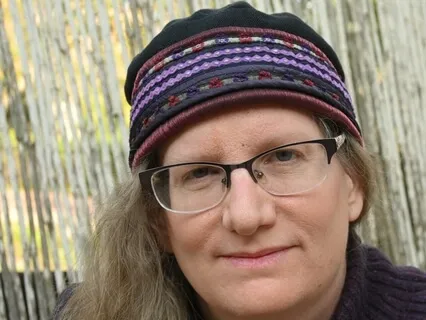
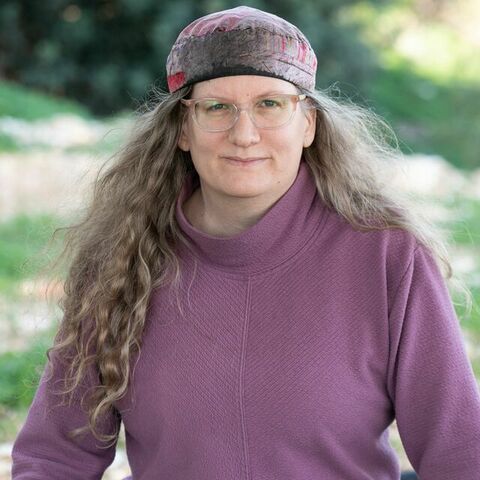
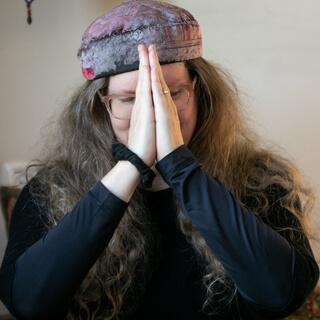
I am Rabbi Hasuah El Steinbauer,
The founding director of the Institute for Holiness,
Kihilat Musar,
And we are in the 40 Days Elul practice.
Welcome,
Anyone entering.
We're just beginning with introductions.
We are on day eight of Elul.
We did not meet on the Sabbath on Friday night and for Saturday night.
We also did meet yesterday,
As you know,
Because I was leading a Musar workshop for a synagogue in the United States called Adaf Yisrael.
Hopefully,
Some of you were able to join us.
As you're entering,
Please share where you're coming from in the chat box and let us know what your intention is,
Your kavanah is today for today's practice.
As we enter this 40 Days Elul practice,
Let us know what your intention is.
As you enter this 40 Days Elul practice,
Last week,
We concentrated on self-honor and self-forgiveness.
This week,
We enter honoring someone dear to us,
Forgiving someone dear to us that we get along with well.
I ask that everyone go ahead and put your hands together.
Good to see any intentions or kavanah notes can be shared.
Also,
Welcome,
Everyone.
Thank you.
Okay.
So,
As I was sharing,
We are back on track together,
Starting on day eight,
And we will be moving into a shift from a focus away from our own honor to honoring someone else and forgiving someone else.
And we'll do that by a short intention,
A kavanah for today.
And we'll move into practice together of sitting meditation that I will guide you and into silence,
Which is one of the practices that we prepare for during the 40 days.
So,
I'm going to quickly share screen with you right now.
And you will see in front of you three kavanah,
Three intentions for the Elul practice.
We're only going to focus on number one today.
And it says,
Before doing acts of caring for the self,
We want to say,
This is something I am doing to strengthen my own soul in order to be of benefit to others in the future.
And that is what we're doing here right now while we enter this sacred space together,
To practice together,
To know that we are in sacred community,
We are caring for ourselves in a healthy way that allows us to be able to care for others,
To bring God's good to others in the future.
So,
With that,
We're going to hold that kavanah,
That intention for ourselves today.
And I encourage you to sit in an upright,
Comfortable position.
You can stand if you have any chronic pain issues,
Just have a chair next to you that will keep you safe.
So,
In case you feel a little bit,
A little imbalance when you're doing the meditation.
And if you have such chronic pain that you need to lie down or any issues,
Please do so.
But keep your eyes open,
Remain alert and awake.
For the rest of us,
We're going to really firm our feet on the ground,
Become one with the earth.
We really want to feel connected to the chair and the earth in order to keep us grounded so that we don't go off,
Especially for beginners.
We can put our hands on our hearts,
Or we can lower them in our lap,
Whatever is comfortable for you.
I always like to hold my heart,
Especially during this practice.
And if you feel safe and comfortable,
Shut your eyes,
Or you can just lower your gaze.
We're going to take three deep cleansing breaths.
Bring your attention to your breath.
Settle into your body.
Collect your attention.
Allow yourself to arrive.
Come to stillness.
We begin with what is going on inside you right now.
So part of this practice and sitting together is whatever arises inside,
We recognize,
And we allow.
We allow the felt experience in the body.
This enables us to become deeply intimate with what is calling our attention inside.
What is saying to you,
Please pay attention to me.
I have a need.
We try not to push away any uncomfortable or unpleasant feelings,
Thoughts,
Or sensations.
We simply recognize that we are having thoughts,
Feelings,
Or sensations in the body.
We come to the felt experience.
We locate it in the body.
We may even attempt to inside describe how it feels,
If there's any hotness,
Perhaps a coolness,
Maybe a discomfort,
Maybe a vastness,
An openness.
We allow.
We always investigate with a non-judgmental awareness,
A nurturing self-compassion.
You can always name whatever is going on for us.
So for having feelings such as judgment,
We can say,
Hello,
Judgment.
Welcome.
Hello,
Fear.
Hello,
Sadness,
Just to name a few.
Perhaps the sensations in the body that are calling our attention,
Discomfort,
Tightness,
Expanse,
Or ease.
Sometimes it is thoughts of future,
We're planning something.
Perhaps it's going over whatever happened today,
Replaying it in our minds.
We simply allow and accept.
Your breath is always your anchor to bring you back to the present moment.
The danger with the word investigating is that we take it to be a mental conceptual activity where we are trying to figure something out.
It is not that in our meditation practice together.
We're investigating with an embodied kind of attention,
With a felt sense of what is going on.
So we set an intention for today's practice to honor someone dear to us,
Someone that we have a relationship with that is actually at ease.
We set this intention with care and compassion and understanding as part of this week's Elul practice,
Where we concentrate on bringing this someone into our hearts and forgiving them for any pain or suffering they may have caused us during this year.
We're setting our attention to release them,
To release anything that we're holding on to.
We also recognize if we've caused them any suffering during the past year.
During this week,
With courage and the strength of this community,
Each of us will ask for forgiveness from that person if we have caused them harm or suffering.
Now repeat these lovely phrases to yourself quietly.
Calling this person that you hold dear in your heart,
Calling them to mind.
May they be safe.
May they be safe.
May they be safe.
May they be safe.
May they be kind to themselves.
May they accept themselves just as they are.
May they forgive me.
May they forgive me.
May they forgive themselves.
Knowing that whatever arises is welcome,
Is honored,
There is space for it all.
Meditation teacher and poet Dorothy Hunt describes the heart space where everything that is,
Is welcome.
There is a quality of tender wakeful presence,
A space that can include whatever is here,
Even a reaction we may be having moment to moment.
Calling our special person to mind again.
May they be safe.
May they be kind to themselves.
May they accept themselves just as they are.
May they forgive me.
May they forgive themselves.
The mind may wander from time to time.
That is the practice.
Gently bring yourself back to your phrases,
To your breath as your anchor.
This practice may evoke strong feelings or emotions.
You can come always to the awareness of your breath and your phrases to anchor you and hold you.
Sometimes the phrases may be too much right now.
Honor what you need for your own practice.
May they be safe.
May they be kind to themselves.
May they accept themselves just as they are.
May they forgive me.
May they forgive themselves.
Finally,
We will sit quietly for about 10 minutes,
Opening to whatever feelings or sensations are present.
I will ring the bells when we are to join ourselves and gently open our eyes to come back into this amazing virtual sacred space together.
We move into stillness and silence.
If you are noticing any resistance,
Simply note it with a smile and a beginner's mind.
Honor it and welcome it.
And note where you can feel it in a felt embodied sense in the body.
We will note it and bring our attention back to our breath and our phrases.
Thank you.
Welcome.
Welcome back.
I'm going to briefly share a text that I shared last week with you.
I can find it.
You know it's never here when you want it,
Right?
About centering our exercise,
This practice of the 40 days of Elul,
Around this nida,
This soul trait of honor,
Of kavod,
And really internalizing its meaning.
I'm looking for the text here.
Okay,
Maybe I won't be sharing with you today.
One last attempt.
Ah,
Here we go.
You just never know on Zoom,
Do you?
And all this live stream.
We're live on Facebook and LinkedIn and one other location which I can't remember now.
Excuse me.
Oh,
YouTube.
Welcome all YouTube followers.
So we have before us a wonderful quote from Rabbi Av Veloshin,
17th-18th century,
In his text called Ruachaim an Perkei Avot an M'Nishna.
Honor,
Respect,
And dimly are a beautiful soul created in the image of God.
That will help us break down sometimes when we're being closed-hearted,
Even to those that we love most and are closest to.
Sometimes we can be imbalanced and it really creates a kind of closed stubbornness.
So this will help us this week in this practice.
And as we sit together each day,
We will meet again tomorrow at the same time.
Today's sitting,
I'm honored to say,
In teaching has been sponsored by Edith Stein in memory of her beloved Ima.
Welcome to sponsor in memory of someone or in honor of someone for each day's teaching or sitting.
Before we leave one another,
We are going to close with our practice that we do each day,
As you might recall from being together,
Which is the prayer that we traditionally say as Jews before we go to bed and before we do the Shema.
And here it is in English.
It's in any prayer book,
Any Seder.
I provide a link to it on our blog,
On the website.
Be in touch with us again at our email address if you don't have a prayer book or Seder and you want this prayer,
We'd be happy to email it to you.
I hereby forgive,
Please say along with me,
Anyone who has angered me or provoked me or sinned against me physically or financially,
Or by failing to give me due respect,
Or in any other matter related to me,
Involuntarily or willingly,
Inadvertently or deliberately,
Whether in word or deed,
That no one incur punishment because of me.
And as I shared last week,
I always add on more of my own personalized prayer,
Which is may I take responsibility and ask for forgiveness.
May I be forgiven.
May they forgive me.
May they forgive themselves.
Because for me,
It's less about this concept of punishment and more that we really do this purification work during the month of Eloh,
Leading into Rosh Hashanah,
The New Year and Yom Kippur,
The Day of Atonement,
So that we really can feel at one and at peace at equanimity when we are standing before God during these beautiful rituals that we have.
So if this teaching today really spoke to you and meant a lot to you and is really carrying you,
We ask that you donate any amount that you can called dana,
A free will offering.
You can be in touch with us at kihilat musar,
Gmail,
Their account about how to do that all forms,
PayPal,
Nelly,
Beat pay box,
Whatever works for you.
And we're grateful for you that you've honored yourself and your practice.
Thank you for joining me today and showing up.
It's very beautiful and important that we create this together and we're here.
I'm honored.
Shalom.
Thank you.
God bless you all.
I look forward to tomorrow together.
May you have a great best of your day.
May you be healthy and safe.