Hey everybody,
Welcome to Bringing Meditation to Life,
A podcast in which we immerse ourselves in the intersection of meditation and everyday life,
In which we look at the ways meditation illuminates and deepens our experience of daily living and the ways life itself does the same for our practice.
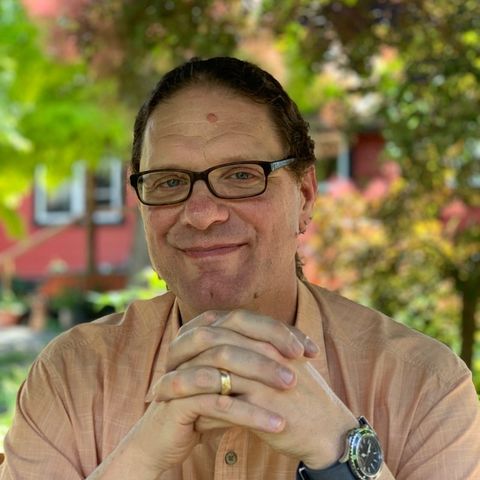
I'm your host,
Neil McKinlay.
Open or closed?
This is probably the single most common question I'm asked during introductory meditation classes.
At some point in the proceedings,
A tentative hand will rise into the air and then an equally shaky voice will ask,
When I meditate,
Should my eyes be open or closed?
It's a good question,
This,
A good question for at least a couple of reasons.
In the first place,
It's something I'm sure many of us wonder once we've settled into the practice a bit,
Once we've got the hang of arranging our body on a cushion or chair,
Started to remember to bring our attention back to embodied experience whenever it wanders.
Hey,
Wait a minute,
What do I do with my eyes?
This is a good question in the second place because in answering it,
I feel we are given a wonderful opportunity to address the matter of how we relate with practice instructions altogether.
So what's the deal,
Open or closed?
In the training I received,
I was typically instructed to leave the eyes open during meditation practice.
The reason for this is relatively straightforward.
In leaving our eyes open,
We have a chance to develop our capacity to be with the so-called external world in the same way we be with the so-called internal world during meditation.
When we meditate,
We are developing our ability to rest with embodied experience,
To rest with whatever arises.
Internally,
This means we're developing the capacity to have our attention remain steady on the breath flowing into the lower belly,
For instance,
Lost all sorts of feelings and impressions,
Insights and revelations,
Thoughts and sensations arise.
Rather than chasing any or all of these,
Which tends to be what I do much of the time,
We practice resting.
Leaving our eyes open during meditation allows us to do something similar externally.
With our gaze slightly lowered,
We let our attention rest in the visual field.
Rather than chasing the patterns of shadows and light,
We see the spider we notice scurrying across the floor or following the tumbling dust ball.
We let our attention rest.
In the process,
We develop our capacity to simply be in this world.
So when we meditate,
Then we should practice with our eyes open,
Right?
Well,
Not exactly.
As I tell the students I work with,
I believe it's really important to know and understand the instructions we receive from whatever tradition it is that we're working within.
It's crucially important.
Once again,
In the tradition that has been my training ground,
The instruction is eyes open for the reasons already noted.
At the same time,
However,
At the very same time,
It's also crucially important that we pay close attention to how the instructions we've received interface with our own personal experience.
It's important we pay attention to how a particular instruction affects us,
Whether this is an instruction regarding what to do with our eyes when we practice,
How to work with posture when we practice,
Or anything else.
So if we receive an instruction that encourages us to keep our eyes open whilst meditating,
And then when we do this,
We find our attention slowly,
Slowly,
Slowly beginning to rest in the visual field.
Great.
Let's keep practicing in this way.
If on the other hand,
We follow this instruction and find our attention wandering all over the place session after session,
Or find our eyes stinging intolerably,
It might be a good idea to do something different.
Because it would be wise to just close our eyes for a short while.
We can close our eyes.
We can see if our attention is able to settle while doing this,
Or if our eyes stop stinging.
And then at a certain point,
We can re-engage that initial instruction.
We can open our eyes and see how it goes this time.
In my experience,
It's a crucial part of bringing meditation to life for all of us,
A crucial part of letting the practice have a living,
Breathing,
Personal presence in our every days.
Know and understand offered instructions,
Yes.
And at the very same time,
Attend to and respect your necessarily unique experience with these instructions.
See where it all leads.
Thanks again for listening everybody.
As always,
You can learn more about myself and my work at my website,
NeilMcKinley.
Com.
Until next time,
Take care and be well.
Let's keep doing this work together.
Let's keep bringing meditation to life.