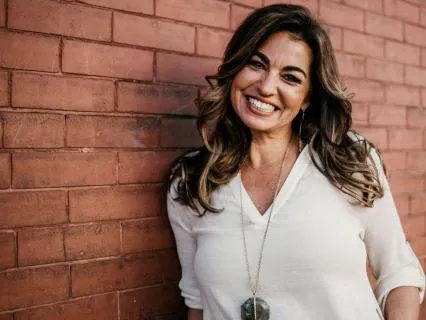
Welcome to the Michelle Chalfant show,
Amy Morin.
Thank you so much for having me,
Michelle.
I'm excited to talk to you.
I was just telling you,
I don't know how you slipped out of my radar because I'm like,
I feel like I know everyone out in the world.
I'm like,
Wait a minute.
How?
I was on your show.
Thank you again for having me.
But I and I and I have done research on you.
I'm like,
Whoa,
I'm so honored to have you on.
You've had such a life story,
Amy.
Would you be willing to share a little bit about that?
You talk a lot about how to be mentally strong.
And I would say based on everything you've gone through and your training as a therapist,
You know how to do this really,
Really well.
So we'd love to hear a little bit about your story and how you came to be the woman you are today.
Sure.
So I grew up an incredibly anxious child,
Thinking that this is horrible to be anxious.
I hated school.
And I can't even put my finger on it to this day what I hated about it.
But as a kid,
I just said,
It's a really long day.
But I used to throw up before school until like the fourth grade consistently.
I hated it,
Hated everything about it.
And I thought,
You know,
When I get older,
I just want to help people.
I don't want kids to have to deal with this.
If other people feel like this,
I want to figure out how do I help them.
But I also wanted to help myself.
So like a lot of us therapists,
I went into the field of mental health and graduated thinking,
Oh,
Now I have all of these skills,
Tools,
Knowledge.
I got this stuff that I learned in my textbooks.
I'm ready to take on the world.
And about the first year into my work as a therapist,
My mom passed away suddenly.
She had a brain aneurysm that ruptured.
And so I had just spoken to her on the phone earlier that evening.
And it really just did a number on my brain.
When you lose somebody in such a sudden and unexpected way,
It takes a while for your brain to really catch up and process this idea that they're gone.
You can't call them next week.
You can't tell them the story of how you got through this.
And I saw my dad for the first time too as a widow.
He and my mom had been together since they were 18 and 19.
And I just felt like all of that stuff I had learned in college left me so unprepared to deal with the grief and the emotional pain.
And I thought,
Oh my goodness,
I thought that these things worked.
But a lot of the things that I was teaching people really weren't enough when I was in the middle of that.
And so that sent me on a journey to start learning as much as I could about emotional pain and mental strength and figuring out not just how do you get through the tough times in life,
But how do you enjoy the good times too?
Because I saw people in my therapy office who were just like always bracing themselves for the next bad thing.
And people talk about resilience and it's just about bouncing back.
But I'm like,
I don't want to just brace myself for the next tragedy,
But I want to also be able to enjoy the best times in too.
And I'm glad that I started working on that because it was three years to the day of when my mom died that my 26-year-old husband died of a heart attack.
And I didn't even know you could have a heart attack at 26,
But very much in the same way that I had lost my mom suddenly and unexpectedly,
I lost my husband,
Which had been my biggest fear.
Of course,
After losing my mom,
I always thought like,
Oh my gosh,
You know,
If I ever lost my husband,
What would I do?
So I'm 26.
I don't have my mom.
I'm a widow.
And it's of course about the same time that some of my friends are just starting to get married and talking about kids.
And I thought,
Boy,
What do you do?
How do you move forward in life?
And of course,
I'm a therapist and I'm supposed to be helping other people deal with their problems.
But I thought I can't do this,
But wasn't like I had a choice either.
Last thing I wanted to do was we'd bought a house.
I didn't want to lose my house.
And I thought I don't want to be homeless in the midst of all this.
So I kept working,
Tried to figure it out.
One of the things I started doing to earn a little bit of extra money was writing became my side hustle.
At the time,
I just wrote articles for like $15.
But if I could do that at night and on the weekend,
Somehow I'd get through it and experimented with lots of stuff over the course of a couple of years to figure out,
You know,
How do you figure out which way is up and which way is down when life has been completely flipped upside down?
And I got a motorcycle and a pink leather jacket and just,
You know,
Trying to experiment with like,
Okay,
This new phase of my life.
I knew things would never be normal,
But I could create a new life for myself and had to figure that out.
We were foster parents.
So I was like,
Do I still want to be a single foster mom?
I don't know.
Took a break from it for a while.
Did go back to it.
And it took years really to feel like,
Okay,
I've got my two feet under me and I can move forward one step at a time.
And I was fortunate enough.
I found love again.
I got remarried and started a new job,
Got a new house.
My sister's a therapist.
We had adjoining therapy offices.
Like,
This is cool.
And then my father-in-law gets diagnosed with terminal cancer.
And I thought,
Ah,
You know,
I just spent all of these years grieving.
I don't have it in me to grieve any longer,
But it wasn't like I had a choice,
But,
And I didn't want to see my husband lose his dad.
I knew what it was like to lose a parent,
But on one of my worst days,
I sat down and I wrote myself a letter of what mentally strong people don't do.
And it was just the things that I had learned over the last years of how do you get through a bad day?
How do you get through a rough time in your life?
How do you put one foot in front of the other when you feel like you can't even get out of bed?
And I published it online because I thought,
Well,
This letter helps me.
Maybe it will help somebody else.
50 million people read that letter and I got a book deal out of it,
But nobody knew the backstory of why I wrote it.
And so it was about two weeks after my father-in-law passed away that I was on Fox News and Forbes interviewed me in person and said,
You know,
Like,
This is,
You're a therapist.
This is amazing that you know all this stuff.
And I didn't come out with it that like,
Actually,
I struggle with all 13 of these things and that's why I wrote the letter.
So I just kind of went with it.
And a literary agent was like,
Oh,
You should write this book.
But I didn't even know what a literary agent was.
I had no intentions of writing a book,
But decided to do it and thought,
All right,
I'll tell the backstory.
It's not that I've mastered these things.
It's that I struggle with them.
Wow.
Okay.
So much right there that we can unpack.
Let's start with what were some of the things on that list?
13 things to be mentally strong.
Yeah.
So of course,
Number one on the list was that mentally strong people don't feel sorry for themselves.
The reason that was number one on the list was because that is where I was in that moment thinking,
This is not fair.
How come I have to lose one more person?
Like taking inventory of like,
Oh,
This person's never lost anyone or how that's not a very nice person over there.
How come?
How come I have to lose my father-in-law who's incredible?
And obviously that's not helpful.
Being sad is helpful.
It's helpful to work through those tough feelings,
But digging in your heels and trying to figure out what's fair in life or who's deserving of what and why this is awful and horrible and minimizing my ability to cope,
None of that is helpful.
So that's why that was number one on the list is don't waste time feeling sorry for yourself.
But is it just a matter of choice?
I think it is.
I think recognizing,
Okay,
Am I just being sad or am I exaggerating how awful things are?
Am I really underestimating my ability to cope?
Because when we're in a really sad place,
Of course,
All of our thoughts start to get stirred up around,
This is horrible,
Awful.
We predict doom and gloom,
But then you have a choice of what do you do?
Do you indulge those thoughts?
Do you stay on the couch and say,
I'm not leaving the house ever again?
Or do you say,
All right,
This is tough,
But I'm a tough person.
I can get through it.
And you put one foot in front of the other.
I love the word.
I love that we can talk therapy talk here.
Yes.
I love,
And I'm thinking like back to some clients that I used to have like saying,
And it's horrible.
You're in grief,
You're on the couch and fill in the blank just to kind of help them lift off because we do get lost in story,
You know,
Especially I can't even imagine when I think about all the death and grief that you must've been experiencing from the,
From your loss losses.
I can,
I would imagine many people are relating to your story or something like that.
And they're spiraling down and they are on the couch or they are just,
They can't get out of their heads.
And it's so hard just to say,
Well,
I'm going to stop feeling sorry for myself to go from that really low place to that almost,
Not that it's a high place,
But do you feel like there are words in between?
Like,
How did you do it?
Like,
It's so hard.
It's like that ego part of us,
Or that mind doesn't want to let go of,
No,
You need to keep feeling sorry for yourself.
Yeah.
And I think it was just again,
Finding that balance of like grief is the process by which we heal.
You have to go through it.
Our tendency sometimes is to go around it.
And when we try to go around it,
Sometimes it's like,
You hear people say like,
Oh,
I just keep busy.
Cause as long as I distract myself,
I don't feel pain.
That's one way to try to go around the feelings.
But another way is to try to be like,
You know,
My life is so awful.
I don't have to put in any effort moving forward.
And I didn't want to become that person who just throws up my hands and gives up and says,
Well,
You know,
I'm doomed to have a horrible life from here on out.
So I'm not going to try.
I'm going to,
You know,
Be passive about what happens to me in the future.
And I think that's really the difference about knowing,
Yep,
I can be sad and I can have those days where I don't get up off the couch and you can cry.
And all of those things are really good for you.
But if you're convinced that that's going to be your entire future is that you're never going to feel any better,
Then it becomes a self-fulfilling prophecy.
You never do anything to make the world a little bit better.
And even on your worst days,
Like you have something to give and it's not about pasting on a smile and saying,
I'm going to go volunteer in a soup kitchen necessarily,
But it's about knowing that that we still get to make a difference and that we matter even when we're in what feels like the pits of despair.
Like there's still something that you can do to put a little bit of kindness back out into the world.
Very true.
Thank you.
That was really good.
Okay.
What's what's another one?
Another one is that mentally strong people don't give away their power.
And this one is about that tendency where we think like,
Oh,
My my mother makes me feel bad about myself because she criticizes me all the time.
Or my boss makes me work late.
Anytime we insist that somebody has the power to control how we think,
How we feel or how we behave,
We're giving them power over our life.
The truth is,
Like,
Even if your mom isn't the nicest person,
Maybe she does criticize you,
But that's an opportunity to set a boundary.
Or if your boss says,
Hey,
I expect you to get this project done by Friday and it causes you to work late,
You can still recognize it's a choice.
Like maybe the consequences if I didn't do this,
I might get fired or I don't get paid.
But blaming it on your boss saying somebody makes you do something means that you're just this again,
This passive victim of life.
So it's all about taking control.
Like,
Nope,
I'm in control of how I think,
How I feel,
How I behave.
From the time I wake up until the time I go to bed,
I get to choose who I spend my time with,
What I'm going to sit and think about,
How I'm going to prioritize my life.
But it's so easy to get caught up and to think,
Oh,
I have to do this or everybody else is making me feel this way.
Or in today's world,
You just can't get through it because it's so hard and you just blame so much on everybody else.
And so even though my circumstances were tough,
I was like,
You know,
I still have the power to decide what kind of life I want to live.
And I wanted to remind myself of that every day,
That it wasn't about just being a victim of life's tragic circumstances,
But instead it was about saying,
Nope,
If there's something I don't like,
I have the power to change it.
And I can't control everything that happens to me,
But I do have a fair amount of control of how I respond to it.
I love that.
So you're bringing,
How would you define power?
How do you define that?
I think people define power in different ways.
Yeah,
They do.
You're right.
Cause when I talk about this,
Sometimes people are talking about,
You know,
Like somebody that abuses their power.
I guess I'm referring to more like empowering yourself to know that you have choices and just the knowing that when you give somebody else that ability to get inside your head so much that it changes how you think about yourself or that they can control your feelings.
Like if you're in the same room with somebody who's in a bad mood and suddenly you become in a bad mood,
Like you've given that person power over your feelings and taking it all back is just about recognizing,
Okay,
I can't control other people,
But I can empower myself to decide how do I want to think today?
How do I want to feel?
What do I want to do?
And I'm going to choose.
I love that.
And I'm thinking about people that have,
I think you,
You brought up on your TED talk,
Maybe the mother-in-law.
I think that was you.
Like you,
You can't,
If your mother-in-law,
Let's say,
Isn't kind to you,
It's,
It's okay.
You don't have to take what people outside of you are saying as truth.
And when we take it as truth,
We're giving them our power.
I think that you said something like that.
It was good.
Exactly.
Because how often are we tempted to be like,
Oh,
So-and-so ruined my day today.
We don't have to let somebody else ruin your day.
Even if they're in a bad mood or they say something rude to you,
Really just taking back control is about saying,
Okay,
Well,
What could I have done differently?
What will I do differently next time?
And knowing that you have the power to decide what kind of day you want to have.
Yeah.
We have the choice.
That's really good.
Okay.
What is another thing that mentally strong people do?
So what they don't do is they don't shy away from change.
And this one,
You know,
Again,
Life is going to change on us whether we want it to or not.
And I think during COVID people saw like,
Sometimes it's not just our little world that changes.
Sometimes it's like the whole world changes and it changes fast.
But I think we also saw how quickly we adapt,
That we're able to adapt when we need to.
But I saw so many people in my therapy office who they were in a tough spot,
But they didn't want to make a change because they thought,
Well,
The last thing I can handle right now is making things worse.
What if I do this thing and it's even worse than what I have now?
Maybe I should just be grateful for what I have now.
And I'm all for gratitude,
But at the same time,
To trust that you can cope with change and to know that if you don't do anything different,
Life is going to stay the same.
And what would that look like five years from now?
Like,
Are you going to be happy with that?
And so many people I would talk to would just be like,
Oh,
You know,
I like things to be predictable.
I like my routine.
I like my structure.
And because of that,
They just didn't want to do anything differently,
Whether it was ending a relationship that wasn't going well or getting a new job,
Moving to a new city.
And literally the world could be crumbling around them,
But they're like,
As long as I know what to expect tomorrow,
Somehow I'll be okay.
And it's really that fear of change because we doubt our ability to adapt.
Obviously my world flipped upside down repeatedly and I had to figure out how am I going to adapt?
I didn't choose it.
But because I went through that,
Now I at least know I can handle things differently.
I can deal with change.
I moved,
You know,
Voluntarily moved from the woods of Maine to a sailboat in the Florida Keys after I wrote my books because I thought,
You know,
Change can be a good thing too.
It's not as bad as you expect it to be.
And if you change something and you don't like it,
Most of the time you can go back to the way it was.
But research study after research study shows when people create change in their lives,
Most of the time they don't want to go back.
They tend to be a lot happier once they've made that change.
That's such a good point.
That's such a good point.
We don't want to go back after we've made the change,
Even though we might've resisted making the change.
It's like,
Right.
I'm good.
I'm good.
What,
Okay.
What's something else that people don't do that are mentally strong?
That they don't,
That they don't repeat the same mistakes over and over again.
Now.
Ooh,
That's a good one.
Who among us hasn't done this one sometimes,
Right?
Where you say like,
Oh,
I'm never going to do that again.
And then of course you wake up the next day and what do you do?
You do the same thing again.
Cause we don't learn from our mistakes.
And a lot of this is because of the society that we live in.
Like it's nobody wants to admit our mistakes.
So,
So often we try to hide them.
We minimize them.
We're embarrassed by them.
And it's difficult to step up and say,
Hey,
I made that mistake.
Unless it's like 20 years later.
And that mistake turned into something amazing.
And then we kind of brag about them on social media.
Like,
Hey,
I messed up,
But look.
And so in the moment,
I think it takes so much humility to acknowledge that you made the mistake.
And then to take that moment and say,
Well,
What did I learn from it?
And how can I do things differently?
There's pressure sometimes,
You know,
To get back up on the horse when you fall off and try again right away without taking a moment to say,
Well,
What could I do differently next time?
And I think that's really the key to,
To learning is just taking that beat sometimes and saying like,
What did I learn from that?
And how could I do it differently?
Because if you don't,
We just fall back into the same patterns,
Obviously,
When we set a goal,
Whether it be a New Year's resolution,
Like,
Oh,
No,
I'm going to do this.
And then we know statistically three weeks later,
All of our resolutions go out the window,
Because we struggle to make the change.
And then we can't figure out like,
I just made that mistake.
But how do I learn from it so that next week I can stick to it?
Instead,
We just give up when we make a mistake sometimes too.
So get,
Get back on the horse and keep going.
Right,
As long as you take that minute to learn from it first,
Because I see so many people that are just impulsive,
Like,
Oh,
You know,
I'm just gonna keep going,
Keep going,
Keep going,
Without taking that minute to think,
Well,
What went wrong?
And what could I do differently next time?
I think about those New Year's resolutions,
People sometimes will go so extreme,
Like,
I'm going to give up sugar and alcohol and 20 things.
And you can't sustain that.
But if I like what you're saying,
Because then you could go back and say,
I'm going to go to the gym five days a week,
They've never been to the gym.
It's like,
What did I learn from that?
Well,
Maybe I can just go to the gym once a week,
Or maybe let me just start with giving up sugar twice a week or on the weekend,
You know,
So it's inching your way in instead.
Yeah,
This whole idea of like,
Go big or go home.
Well,
Of course,
Most people that go big end up going home later.
So yeah,
And we know that's not sustainable.
Yeah.
How often in society do we talk about that?
Like,
Just transform your life,
You're going to be a new person next week and reinvent yourself tomorrow.
And then we just set ourselves up for failure.
Study after study will show those little small steps are what's sustainable.
And that's how we change our lives.
So true.
I just started working out again.
I've worked out in the gym off and on a lot most of my life,
Honestly,
Since I was in my 20s.
I just started again.
I'm like,
Okay,
It's been a couple of years,
Let me get back to the gym again.
And I was just listening to someone online say,
It might take six months to a year to see really good results.
So don't give up.
I'm like,
It's so true.
I went for the first day to the gym,
I was there for an hour,
And I came home the next day and I go,
I don't see anything.
And I knew it,
Like in my mind,
I'm like,
You're not going to look different.
It's been once or twice you've been,
Come on.
But when I heard her say that,
I was like,
Oh yeah,
That's right.
It's going to take about six months.
So I'm going to give myself about six months.
So,
And I'm not going to give up.
That's good.
Okay,
What else?
I want another one.
This is good.
So another one is that mentally strong people don't fear alone time.
Since I started talking about this one,
People are like,
No,
I kind of like my alone time.
But then I'm like,
Well,
What do you do during your alone time?
I'm like,
Well,
I'm on social media and I'm listening to podcasts and all of those things are great and they're fine.
But sometimes you have to be alone with your thoughts.
And it's scary to do that.
But if you don't give your brain any time to process,
To think about the day,
To plan for your goals for the future,
To kind of assess how am I doing today,
Then I think we just have so much running around in the background that we feel like frenzied and we have to busy ourselves and surround ourselves with noise.
And I think this is one of the reasons why sleep stories and sleep podcasts are topping the charts right now because people are struggling with the silence in their head when they try to go to sleep.
And I'm not against sleep stories because sometimes that's what people really need.
But we also need to build in some silence during the day.
And I'm not talking about six hours of meditating or anything like that,
But sometimes just five minutes of unplugging and being alone with your thoughts.
And for a lot of people,
That's incredibly scary.
In fact,
When they've done research on this,
Too,
And they ask people like,
Would you rather sit alone with your thoughts for 15 minutes or submit yourselves to an electric shock?
And like 25 percent of the women chose the electric shock,
But 75 percent of men also said,
No,
I'd rather zap myself than be alone with my thoughts.
Really?
Yeah.
Holy moly.
Yeah.
And obviously in today's world where we can have our phones,
You never have to be bored.
You can entertain yourself constantly.
You can have input all the time.
It's really doing a number on our brains and it makes it more difficult than ever to sit in silence for a lot of people.
And you have to be so much more intentional about it,
Too.
Otherwise,
There's just so much going on and it's chaotic and you can always have the TV on.
You can always have your phone with you and have something going on without just thinking and reflecting like,
How was my day?
How did I do today?
What can I do better tomorrow?
And no matter what goes on in your day,
My favorite question to just think about is,
What did I do today to grow mentally stronger?
Maybe I couldn't control all this other stuff that happened to me,
But did I do something that sharpened my skills?
And at the end of the day,
That's a win.
If you stayed calm in a conversation or you spoke up when you didn't really think you could,
Or maybe you said no to somebody when you typically say yes to everything and just knowing like,
What did I do today?
And just asking yourself that question in a few minutes of quiet reflection can make a huge difference.
That is such a good point.
We don't reflect well anymore because these things are attached to us.
I'm holding up my phone for those people that are just hearing me or hearing us speak today,
But the phone is with us 24-7,
You know,
Unless maybe if you sleep and it's in your bathroom,
Let's just say,
But still it's with us all day and it is difficult to sit and not,
Oh,
Is that a text?
Or is that,
You know,
Can you put your phone on silence for five minutes?
It's hard.
It is.
It is.
Yeah,
It really is.
So I think it's so important.
Carve that out just a few minutes a day of your life to say,
I'm not going to be interrupted by my phone.
I'm not going to be listening to something.
I'm just going to sit in silence for a couple of minutes and watch what happens.
And it's different than meditation because I remember when I was working with people,
I was like,
You need,
Let's,
Let's start with a meditation practice of whatever,
Five,
10,
15 minutes,
Whatever.
And it became like a to-do instead of this relaxation time and really connecting with yourself.
So I did that.
And then the rest of the day,
You know,
It's shot to hell because,
You know,
It's like,
Well,
Wait,
I call it,
Um,
Spending micro moments throughout the day of peace of silence of gratitude,
Whatever it might be,
But leave your phone behind and take a minute to five minutes of just doing nothing.
Right.
Love the reflection.
How many of us really sit and just reflect on the day?
We do.
We do it like at the,
At the end of the year,
Like,
How was my year?
What am I going to do next year now?
It's like,
Wait,
What about every day?
That that's a game changer right there.
It really can be.
And just,
You know,
How do I do today?
What do I want to do tomorrow?
What do I want to do differently?
Take a few minutes.
We spend so much time like planning certain things in life.
You plan your wedding for so many months,
You plan a vacation in advance,
But we don't really like zoom out sometimes and say like,
How do I do today?
But then like,
How do I want to plan my life?
What's my big picture goals too?
And how do I make sure I'm putting some things into practice that I'm going to be proud of in the future as well?
That's good.
All right.
Give us one more.
I love these.
Ah,
So I would say if I had to pick one more.
Ooh,
They don't try to please everyone.
Ooh,
That's a good one.
People pleading is a tough one,
Right?
And for a lot of us too,
When we grew up and we were just taught,
You know,
To try to make other people happy or to not create too many waves,
It just becomes so deeply ingrained that after a while,
It's tough to even know what is it that I want?
And you know,
Like what kind of food do I like to eat?
When somebody says,
Where do you want to go to lunch?
And you're the person that says,
I don't care.
Sometimes you're like,
I don't even know what I want.
Or I don't even know,
Like what I like in life.
I just kind of go with the flow with everybody around me.
Or I feel resentful because I say yes to so many things and I'm starting to get burned out,
But I don't dare say no because somebody might get mad.
Or if I speak up for myself,
Somebody might not like me and all of these fears that come into play.
And it's difficult to start doing the things that are like,
Nope,
I'm not responsible for your happiness.
I'm going to say no.
Or I'm going to decline a social invitation when usually I would say yes.
Or I'm going to speak up and say,
Actually,
I don't like that.
Or I don't like it when you do that.
And sometimes it's about setting boundaries and knowing that that's a really kind thing to do,
Not just for yourself,
But it's kind to other people.
When you tell them what the rules are,
They don't have to guess anymore.
They don't know what you like or don't like.
So it takes a lot of the stress off of them,
But it improves your relationships.
But to get to that point is tough.
And I've certainly had times in my life too,
Where I have to pause and think,
Well,
Like,
What is it I really want?
And am I just going with the flow because I didn't want to create waves?
Or is this something I really want to do?
And constantly evaluating that,
Like,
What's important in life?
And am I living according to my values,
Not just doing what I think other people want me to do?
I want to talk a little bit more about boundaries.
That's one of the things I love talking about.
I think you know that.
So why is boundary setting a key mental strength skill?
Because that's really important,
It would seem,
With mental strength.
It is,
Because otherwise you just kind of get tossed around like a rag doll and you aren't able to,
Again,
Live according to your values.
And it might be the financial boundaries.
Do you loan money to a relative who's in a crisis?
Do you let somebody sleep on your couch if they're struggling or become homeless?
Do you tell people when they hurt your feelings?
Do you say no to certain things that you don't want to do?
And just learning about yourself is key when it comes to setting boundaries,
But then also trusting that other people can handle that.
Because when you think about it,
People will be like,
Well,
Boundaries are selfish.
But really the opposite is true.
Like thinking that you're so important that if I said no,
If you invited me to go somewhere to lunch today,
Michelle,
And I'm like,
I don't want to,
But I have to,
Because Michelle will be so crushed if I say no,
Because I'm that important that she can't handle it.
That's actually what's kind of selfish is thinking that I'm so important that you couldn't handle me saying no to you.
Of course you can handle that.
It's not that big of a deal.
I'm not that important.
And for people to realize that,
That when we decline a social invitation,
You're not actually going to crush somebody.
And if they're struggling,
That's not your problem.
That's theirs to,
To manage that emotion if they're uncomfortable and trusting that and knowing that,
Yeah,
The people around me can handle it.
Of course,
If you haven't set boundaries though,
When you start doing it,
People push back twice as hard because they're going to try to be like,
No,
This is,
You've never done this before.
And they don't want you to change your behavior,
But just trusting the process of,
Okay,
If I start speaking up,
Eventually we can have a relationship.
And that if people do leave,
They weren't your people.
And knowing that too,
That if you stop loaning money to your friend and your friend never talks to you again,
Like they did you a favor and you figured that out by saying,
I'm not going to loan you money.
And so those little things in life and knowing that like,
Allowing yourself to be surrounded by the wrong people is even worse than,
Than being alone.
And when you start setting boundaries,
If people do leave,
You can find new people and trusting in yourself that I can find the right people for my life.
Something that people struggle with a lot is setting boundaries without guilt,
Right?
Yeah.
How do people learn how to do that?
So I think it's about knowing that just because you feel guilty doesn't mean you did anything wrong.
You have a,
You know,
Your 10 year old wants something and you say no,
And they're crying about it.
Like maybe you feel guilty of,
Oh,
Should I give them this or not?
But guilty feelings don't mean that you are a bad person or that you should change your behavior.
So trusting that,
And then knowing that when you say no,
When you set a boundary,
Like you're saying yes to something else.
And it might be,
I'm showing myself self-respect.
That's what this is about right now.
Or I am showing that I value my time or that I value our relationship too much to say yes to things I don't want to do.
And so flipping that switch,
I think,
And saying,
Like,
What am I saying yes to by saying no to this other thing can be helpful in the moment and knowing,
All right,
Well,
I'm,
There's a reason that I'm doing this and it goes back to remembering your why.
Why is it that I'm setting these boundaries?
Oh yeah,
Because I need to stay a healthy person so that I can be there for them down the road or so that I can continue running my own life and I don't get resentful and angry.
Very true.
That's good.
Thank you.
So you talk about inner dialogue when it comes to building or destroying mental strength.
How do we work with our inner dialogue,
That inner voice?
How do we,
How would,
How do you recommend that people work with that?
Because yes,
We can just say,
Okay,
I'm just not going to do that anymore.
But what if that voice is really,
Really,
Really strong and you're not mentally strong enough to combat that strong inner critic voice or whatever that voice is or that inner judger?
Yeah,
That's the thing.
I think we have something like 60,
000 thoughts a day.
I don't know exactly how they figure out how many thoughts we have,
But some of the research will show that.
Most of the thoughts we have every day are repetitive.
You think the same thing today that you did yesterday.
A lot of the thoughts we have are just replaying something from the past.
Sometimes it's predicting things that's going to happen in the future.
But then there's this narrator too,
That's like narrating everything going on around you.
And we tend to look at that as a fact,
That this narrator is like,
Oh,
Amy did this today,
Or you showed up two minutes late,
Or you embarrassed yourself in front of everybody.
All of those things are not necessarily facts,
They're just an opinion.
So one exercise I love to do with my therapy clients,
And I've done it in my own life,
Is you name your inner critic.
And it might be something like silly,
Like,
All right,
This is perfectionist Pete,
And he always wants me to do everything perfect all the time.
But it gives you some distance to really separate yourself from that inner voice.
And you're like,
Okay,
My inner critic's trying to keep me safe.
It doesn't want me to embarrass myself,
It doesn't want me to take risks,
Doesn't want me to be blindsided by something.
So it's always pointing out danger,
It's always telling me things are going to go awful,
But I don't have to listen to it.
And just knowing that that inner voice in your head doesn't mean that you're a bad person,
Or that you are somebody who can't succeed.
It's just you have a cautious brain,
Or a brain that's always trying to point out the negatives so that you don't get hurt in the future.
So if you can name your inner critic,
Kind of separate yourself from it,
Recognize that it's trying to help you.
It doesn't want you to get hurt,
So it's looking out for you.
But at the same time,
Knowing it's just an opinion,
I don't have to listen.
And to practice self-compassion.
You know,
The old,
What would I say to my friend right now question?
You make a mistake,
And your inner critic is like,
Hey,
Stupid,
Way to mess up again.
Everybody's staring at you.
Now you look like a complete idiot.
What would you say to your friend who just messed up?
You wouldn't say that to your friend.
You'd be like,
It's okay,
You made a mistake,
But most people probably didn't notice.
It's not a big deal.
Give yourself those same kind words.
And when we practice that self-compassion instead of harsh self-criticism,
We tend to do a lot better,
Right?
When if I think I'm a bad person who's incapable of making good choices,
That becomes a self-fulfilling prophecy.
But if I just tell myself,
All right,
That didn't go the way I expected,
I then have the power to say,
But next time I'm going to do better.
So it's really about knowing that you don't have to listen to everything that inner critic says.
And you can't silence it.
You know,
So many people are like,
Well,
Just silence your inner critic.
Good luck silencing it.
You're not going to turn it off.
It's not like you can hit a button and suddenly it goes away.
But just knowing that you don't have to listen to it all the time,
I think is important.
Yeah.
Thank you.
Because it's like,
We've got to learn how to cultivate that voice.
We've got to grow that inner voice.
That's a kind voice.
Because we don't have,
So many of us,
We just,
We don't have that voice.
It's like,
It's just,
We're constantly in the inner critic or the judger.
What do you,
What do you,
What do you say to people in today's world about,
Like,
I'm thinking about social media right now.
Like it,
Everybody's on some sort of social media,
Whether it's TikTok,
I shouldn't say everybody,
Most of the world,
It's the whole world.
We're looking at everything from LinkedIn to X,
To TikTok,
To Instagram,
To Facebook,
Whatever it might be.
And so we fall into the comparison trap.
And it's hard to be mentally strong when we've got something like social media in our lives,
Which again,
We didn't have this like 20 years ago.
And it's bombarding us like daily,
Every single day,
Every moment you open that app up,
You are in a comparison trap.
So how do we stay mentally strong in this case?
Yeah,
You're right.
Because back in the day,
Right,
People would just compare their lawn to their neighbor's lawns,
Right?
The old saying,
The Joneses,
You have more weeds than I do,
You know,
Right.
Boy,
Those days sound pretty good right now.
No kidding.
To know that these apps are built to make us compare ourselves to other people,
Because that keeps us coming back.
When you look at somebody that looks better than you,
And they look happier than you,
They look like they have an amazing life.
And you think,
Well,
I want that.
So you keep following them,
You keep coming back to say,
You know,
Am I doing better than this person?
Are they worse than I am in this area?
And then they,
Of course,
Try to get us addicted.
And it works really well.
How many people like you are on social media constantly scrolling?
So one of the things we know from the research is that comparing ourselves to other people immediately ruins our mental health.
It's linked to everything from depression to anxiety disorders.
And even if you think you're comparing yourself to somebody below you,
That doesn't help us either.
If you're like,
You know,
Well,
I'm doing better than this person,
That actually doesn't help your mental health.
It stirs up pity and other things that aren't good for us.
So we know from the research that one of the best things we can do is just look at somebody else as an opinion holder rather than your competitor.
So if I were to be like,
Well,
Your book sells more copies than mine,
Then suddenly I think,
Well,
You're better than I am.
But if I were to say,
You know,
Michelle,
Your book sold a lot of copies,
I'd love to learn how you did that.
And even if I don't have a relationship with you,
I'm talking to somebody about on social media,
And I've never met them before,
But I'm following their account,
Just looking at them as an opinion holder.
This person has skills,
Tools and knowledge that I could learn from.
And I don't have to say that I'm better than them or worse than them.
But instead,
They're running their own race.
And it's a separate race.
And sometimes just flipping that switch in our head that this person's an opinion holder,
Not a competitor helps.
And it's also important to create your own definition of success,
Right?
What is it that I want out of life?
Because you could look on social media and you think,
Oh,
Look at this person.
They travel all over the world all the time.
And that's not fair that I don't get to do that.
Well,
Do you really want to do that?
Maybe you don't.
Maybe you want to be home in your own bed and you want to have a consistent schedule every day.
And it's not all it's cracked up to be.
And so just write down what's important in life.
When I'm 95 years old and I look back over my life,
How would I have wanted to live it?
Maybe you want to travel all over the world,
But maybe you want to spend time with friends and family or live a simple life.
So knowing what's really important to me also helps us to know just because you're over there running your race doesn't take anything away from me that I can still run my own race.
And this is what my goal is.
And you can have your goal and I can cheer you on.
I don't need to tell myself that you're going to hold me back just because you're working on your goals.
And it seems also this is just occurring to me when you were sharing.
Don't get on social media if you're not feeling really strong within yourself,
Because if you're in a bad mood,
You're sad,
You're overwhelmed,
You're feeling anxious,
Depressed,
Whatever it might be.
Probably the worst thing you can do is get on social media.
It's going to take you even worse.
Would you say yes?
Absolutely.
And we don't talk about that enough.
I think you're absolutely right.
Because sometimes people are like,
You know,
Maybe it's a holiday and you're spending it alone.
Don't spend the holiday then scrolling through everybody's family.
Yeah,
When they're all together.
Right.
Or,
You know,
Like I don't really look at social media,
Say on Mother's Day sometimes if I'm not in the mood for it,
Like I'm just going to shut it off for the day and that's OK.
Yeah.
You're in a rough place.
You're like,
Oh,
Kind of depressed today.
Maybe social media is not for you or you're anxious.
Like don't scroll through and doom scroll all the bad news today.
That's just going to fuel your anxiety.
I never thought about that.
You're right.
That's a good point.
Good stuff right there.
Gosh,
Amy,
This was so good.
Thank you.
Thank you.
Thank you for being with us today.
Is there anything else?
Wait,
One more question.
What do you say to the younger generation?
What would you say to them right now based on the world that we're living in right now?
And how can they become more mentally strong?
What are the things they don't need to be doing or doing in order to maintain their mental strength?
How do they what would you say to them?
Oh,
That's a good question.
You know,
I think part of it would be managing what you consume all day long.
Right.
Yeah.
You have to be so mindful of what we're putting into our brains.
We're starting to talk so much about what we're putting into our bodies in terms of junk food versus healthy food or whether certain chemicals that we're consuming or microplastics.
And there's so much about that.
We don't really talk a lot about what goes into our brains.
Right.
And for people that are consuming news 24-7 that are always on social media,
You have to feed your brain good stuff,
Too,
And cut out a lot of that other stuff.
So I think reading books,
Listening to podcasts that are helpful,
Having meaningful conversations with people,
Doing those things that really feed your brain with more positive stuff.
You don't just want to be binge watching TV shows that do nothing for you or constantly consuming the news because that's going to take a toll on you.
So true.
Thank you.
All right,
Honey,
Where would people find you?
You got a lot of good stuff out there in the world.
I want to say thank you so much for all the work you're doing in the world.
And thank you for being with us today.
Oh,
Thank you so much for having me,
Michelle.
It's been a pleasure.