Hello everyone!
Welcome.
I'm so grateful that out of all the things you could be choosing to do,
That you're choosing to spend time here.
I always love how Insight Timer brings so many people together across the globe in community that otherwise wouldn't be possible.
So thank you so,
So much for being here.
For those that might be meeting me for the first time,
Welcome.
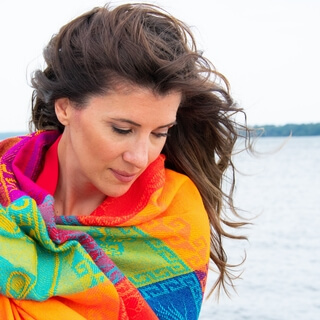
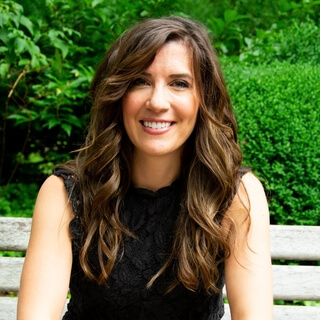
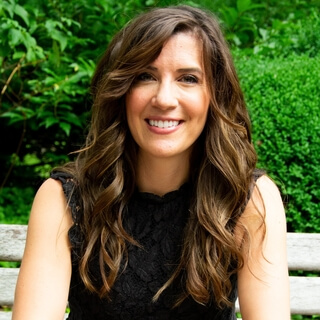
My name is Dr.
Megan Kirk-Chang.
And I'm a proud Canadian,
But I currently live in the United Kingdom.
I am an academic researcher by background,
So my job by day is to build lifestyle programs and interventions for adults who are struggling with severe mental illness and looking at combinations of diet and exercise and stress management and CBT what is the right combination of tools for folks to help them move through mental illness and find resilience and self-trust again.
And I absolutely love my academic work,
But one of my hats that I wear outside of academia is really trying to bring the scientific knowledge to the masses in a palatable way.
So I've been a teacher on Insight Timer for about six years now,
Which is really hard to believe.
I started in the pandemic.
And.
.
.
Just bringing different trauma-informed,
Theoretical,
Evidence-based information about healing from trauma to the platform.
And it's been wonderful to build such an incredible global community.
So for those of you who know me well,
Welcome back.
I'm so grateful that you're here.
I lead a group on Insight Timer,
Newly called Grace in Action.
And so if you are into being connected to one of the groups on Insight Timer,
You can certainly search that and find that.
So welcome Jane from Southwestern Ontario and Paul from Iowa.
Great to see you again.
And hello Gilbert,
All the way from Florida.
I hope you're getting some sunshine where you are.
So today I am so excited to be talking about part seven of the series that I've been doing since January.
And this is a series called The Year of the Horse.
This is based on the Lunar New Year calendar,
Where we've entered into a new year as of February.
And the animal symbolism of this year is the year of the horse.
And so we've been talking for seven months now around entering this year.
What does momentum look like?
What does movement look like?
What does alignment look like?
So if you're joining for the first time,
Please know that the previous recordings,
Parts one through six,
Are all uploaded to my teacher profile.
So you may want to visit that.
At your own pace and time.
So today we are at part seven and we are talking about setting boundaries.
And this is one topic that I would have to say is really near and dear to my heart because I'm actively learning how to do this in a way that feels aligned with who I am,
Aligned with my values,
While also overcoming some fears that I have around setting boundaries.
Myself.
And so we're going to talk today about why boundaries feel so difficult.
Maybe you can take away something that resonates for you when you think about what comes up for you when you say no to somebody or when you have to set a boundary with people that you love.
And how we can do this in community where we don't feel like we're abandoning ourselves in the process.
So tonight isn't about learning to say no perfectly.
What it's really about is understanding why saying no can feel so frightening sometimes in the first place.
Because when we understand the pattern underneath,
We can actually begin to change it with compassion rather than self-criticism.
And so I'm actively going through this alongside you,
And I'm so glad to be having this conversation today.
To be honest that preparing for this session has probably been the hardest for me to prepare because it's vulnerable.
And it's not because I don't believe in boundaries,
It's because I'm still actively learning how to set them.
And if I'm being totally honest with all of you,
I'm learning how to set boundaries much later in my life than I wish I had.
And that's where the inner critic comes in and I'm learning to navigate that.
So when I think about boundaries myself,
I don't think about confidence.
I think about fear.
For a really long time boundaries didn't feel like an easy skill.
Setting boundaries felt really dangerous to me.
And somewhere along the way,
Throughout my life journey,
My nervous system learned that saying no or speaking up and asking for what I needed or disappointing someone.
Might mean losing the relationship altogether.
And that wasn't an intellectual belief,
It actually lived quite viscerally in my body.
And when something lives in your nervous system,
You can't simply think your way out of it.
And what that means for me is that I react impulsively before I pause or even take the time to choose.
And so what I've been realizing as I've been preparing for this session is How I've navigated relationships has been predominantly rooted in people-pleasing.
Survival.
And a trauma response.
I have become a master at reading other people's emotions and learning how to shape shift.
How to change my approach in order to keep the peace.
So what I'm really good at is anticipating needs.
I'm really good at keeping the peace,
Not just in close relationships,
But workplace dynamics,
Making sure that everyone else was okay.
Everyone else was comfortable.
Because somewhere inside of me was the belief that if I could make everyone else okay and comfortable,
Then maybe I would feel safe as well.
When it comes to boundaries,
It has felt easier for me to abandon myself.
Than to risk someone else being disappointed,
Angry,
Walking away,
Or leaving.
I want to say that one more time because I feel like I'm not the only one.
For much of my life.
When it comes to setting boundaries.
It has felt easier for me to abandon myself and my own needs.
Than to risk someone else being disappointed in me.
Angry with me.
Walking away or abandoning me.
It's really vulnerable for me to admit this widely to a global audience.
And I know by doing so,
I know I'm not alone.
So let me know if this rings true.
And this realization really stopped me in my tracks.
Because I never thought about it as me abandoning myself.
I thought I was being kind and helpful.
I thought I was being generous and reliable.
Easy to work with.
But what I've been realizing over time is that there was a cost to this.
Every time I ignored what I needed,
Every time I've said yes when my body,
Heart,
And soul meant no.
Every time I rescued someone,
Or I rescued a project,
Or I rescued because I couldn't tolerate someone else's discomfort.
I was abandoning myself and quietly reinforcing this belief that my own needs mattered less than everybody else's.
And what I've been really learning is that that catches up with us.
That shows up physically.
In symptoms that are really hard to ignore.
So that's what we're talking about today.
How does this sound for folks?
I'm going to look in the chat.
So I see Jean saying bingo.
Thank you for the solidarity.
Gilbert saying yes.
Renee saying absolutely.
Nancy,
Thumbs up.
Adela,
Totally feel you.
Thank you for your vulnerability.
Lori,
Yes.
Thank you all so much for that.
Reinforcement and validation because it's I'm honestly sweating being so open with you about this but I think It takes courage to just name what's going on,
Because when we do so,
We realize we really aren't alone,
That there is a community of people that will resonate with what I've just said about people pleasing,
It's way easier to abandon ourselves than it is to face the discomfort of other people.
I just want to thank you again for choosing to spend this next hour with me.
I know there are so many ways that you could be spending your time,
And I never take it for granted that you've chosen to be here today.
Just know that these sessions take many hours of reflection,
Research,
Writing,
And prep,
Because I genuinely want to create something for Insight Timer that's thoughtful,
Evidence-formed,
And meaningful.
And Insight Timer,
What I love about this app is that they really focus on bringing accessible information to everyone regardless of people's financial circumstances.
So if by the end of our time together,
You feel that this session has brought you value and you're in a position to do so,
I'd be so grateful if you would consider making a donation.
Whether or not you choose to do so,
Presence is valued first and foremost,
But your generosity does help me continue creating these sessions.
So with that in mind,
Let's dive into our grounding practice because it's really important that we create a sense of safety in our body before we talk about boundaries.
Because if you're like me right now,
You might be sweating a little bit thinking about boundaries.
And I think one of the reasons that boundaries are so difficult is because we often try to have boundary conversations while our nervous system is triggered or while our nervous system is in fight or flight or survival mode.
And when we're activated,
Our brain really isn't focused on wisdom and communicating.
In a way that allows the boundary to make sense.
It's focused on self-preservation and protection.
And we can sometimes impulsively communicate in a way that is maybe too forceful or actually not very clear.
So we first need to help our body feel safe.
Enough to have choices and be able to communicate.
So.
Taking a couple of moments wherever you are.
And let's help our body remember that in this moment,
We are safe to simply be here just as we are.
If it feels comfortable for you,
Allow the eyes to drop downwards,
Take the gaze off the tip of the nose.
If it feels comfortable for you.
You may also wish to gently take the eyes to a close.
We're just going to take a few moments to draw awareness in words,
Allowing us to tune out any external distractions.
Begin by noticing the support beneath you,
Whether you're seated in a chair,
Lying down,
Standing.
Bringing awareness to the support.
Beneath you.
Simply noticing that in this moment,
You are held.
And you are supported.
As we begin to bring connection to ourselves.
You may wish to bring the hands gently on top of the thighs,
Or if it feels comfortable,
You can gently place one or both hands over the heart space.
Just this gentle connection to ground yourself here.
Reminding yourself that you've got you.
Taking a slow breath in through the nose,
Feel the chest rise.
And a gentle breath out.
Again,
Breathing in.
And breathing out.
There's gentle awareness of the breath moving in and out of the body.
Nothing to fix here,
Nothing to change.
And as you're ready,
Bringing awareness all the way down to the soles of your feet.
Noticing if you can sense the entire sole of the foot.
Tuning into any sensations,
Maybe you feel warmth in the feet.
Coolness or numbing.
Pressure or tingling,
Just simply noticing.
Allowing your awareness to move slowly up through your legs.
Past the knee joints.
Your thighs,
Awareness now into your hips.
Bringing awareness to your lower back.
Your abdomen,
Your chest.
Drawing awareness to your shoulders and down your arms.
Into the fingertips.
Feeling your body.
Noticing the sensations without the urge to fix or change or judge.
Notice if you can allow the shoulders to soften down and away.
Bringing awareness now to your jaw.
Maybe bringing a gentle swallow and allowing the jaw to unclench.
Softening the muscles around your eyes.
And bringing awareness to your forehead.
Seeing if you can soften the muscles.
Allow the eyebrows to melt.
Bringing awareness back to your flow of breath,
The gentle movement of your breath.
In and out of the body.
Nothing to fix here.
Nothing to achieve or just simply breathing.
And as you continue breathing naturally,
Silently repeating to yourself,
I am here.
I can trust this moment.
I do not need to rush.
Just noticing how it feels to stop trying to get somewhere,
To stop trying to solve.
Everything just for these few moments,
Just allowing yourself to simply be.
Present.
Breathing.
Support it.
And as you continue breathing gently,
I'd like you to simply notice what happens inside your body when I say this next sentence.
I have permission to disappoint people.
I have permission.
To disappoint people.
Just notice.
Perhaps your chest tightens or your stomach clenches.
Maybe you feel attention or feel some guilt,
Sadness.
Fear.
Or perhaps for the first time you might even feel a little relief.
Whatever arises is welcome.
Nothing to fix.
Gently letting that sentence drift away.
The invitation is to replace it with another sentence.
I can care about someone without carrying what belongs to them.
I can care about someone.
Without carrying.
What belongs to them.
Allowing those words to settle.
I can care about someone.
Without carrying.
What belongs to them.
And just noticing if your body responds differently.
Perhaps nothing changes.
Or maybe something softens.
Or if you're like me,
You might recognize how often you've confused carrying with carrying.
So just simply notice.
Continuing to bring awareness to breath.
And now one final sentence.
I can choose myself.
Without rejecting someone else.
I can choose myself.
Without rejecting.
Someone else.
In community,
Taking a slow breath in.
And slowly breathe out.
Just notice what these words stir within you.
Perhaps they feel true.
They might feel impossible.
Or they might feel like something you're only just beginning to believe,
And that's okay.
Healing and learning to set boundaries rarely begins with certainty.
But it does begin with curiosity.
And as you're ready.
Take one final deep breath in.
One final deep breath out.
And begin to notice the room around you again.
Perhaps taking a few moments to bring some movement to the fingertips,
Maybe wiggling the toes.
Perhaps a gentle stretch or twist in the body if that feels right.
Bringing presence back to this space,
However it feels right for you.
I'm just simply noticing those sentences.
What they brought up for you as we work through.
Setting boundaries.
And so if anything profound came up for you in that session,
I'd love to hear it in the chat.
And always remember that we co-create these sessions together.
And I'm sharing one lived experience,
But we have over 80 people here.
So if there's something that you think would be of value to the group,
I welcome you to share in the chat as well.
So let's dive into why boundaries feel so difficult.
I've spent a lot of time in the last month since our last session reflecting on why boundaries have always felt so uncomfortable for me.
Beet red in the face,
Sweating.
Thought loops going through worst case scenario.
Why have boundaries always felt so unbelievably uncomfortable for me?
And I really don't think it's because I didn't know how to say no.
I think it's because my nervous system learned throughout my life journey.
To associate setting boundaries with danger.
So for many of us,
Especially if we've experienced trauma,
Adverse childhood experiences,
Emotional neglect,
Or relationships where love felt conditional.
Our brain wires in a way.
And learn something incredibly important.
That connection equals safety.
And disconnection from others is dangerous.
So if setting a boundary risks conflict,
Our body interprets that as a threat.
And that's not a weakness,
That's our neurobiology doing what it's designed to do based on our lived experience and what we've gone through in our lives.
The amygdala,
So this little almond shape region in the brain.
Is responsible for detecting danger and threat in our body.
But what's interesting about our amygdala is that it doesn't really distinguish well between a physical threat or a relational threat.
The threat of conflict between you and another where the relationship is threatened.
And you might be demeaned,
Humiliated,
Called out aggressively.
So the amygdala detects danger,
But it doesn't distinguish between the different types of threats that exist.
And so what I'm talking about today is more around relational threats.
So think about being criticized.
Being rejected.
Feeling excluded or uninvited or retaliated against.
These are different than physical threats like.
.
.
Fights,
Punches,
You know,
Things like that.
I'm talking about the relational threats and why boundaries can feel so difficult.
Because I think it's human nature.
I don't know anyone who has been criticized,
Rejected,
Excluded or uninvited from something,
Retaliated against,
That just can wash that off like it doesn't affect them.
There are some people that can do it a lot quicker than others.
But it's human nature to.
.
.
Want to avoid relational threats.
That's a survival mechanism to connect and feel a sense of belonging,
To feel part of community.
The social connection,
It's very much part of being human.
So for many people,
These types of relational threats or anticipation of these threats,
Light up similar neural pathways in our brain to what we would experience if we were to endure a physical threat.
So it's no wonder that boundaries feel really hard.
Because your body can't,
Your amygdala can't distinguish between physical or relational,
But your body is always trying to protect you.
The problem is,
Is that the strategies that once protected us don't always serve us anymore.
So for example,
For me,
People-pleasing.
Became almost automatic.
When I look at my work ethic.
Quote unquote perfectionist.
While it's gotten me a lot of really great accolades in my life,
There is a flip side to that.
The perfectionism that happens is a protection to avoid disappointing someone.
What i'm learning is it's like impossible to 100% meat.
What you think is people pleasing everybody.
There's always going to be somebody that disagrees or doesn't like you or.
.
.
Criticizes your work.
But for me,
What I've learned in my life is people pleasing,
Making things easier for other people,
Being helpful,
Was an automatic response to have a false sense of safety.
So where that shows up,
Particularly in my work environment,
Is if someone forgot to do their part on a project.
What would happen,
I would step in.
If someone was struggling,
What would happen?
I would carry more.
If something felt uncomfortable.
Or there was dysfunction or conflict amongst a team.
I would fix it.
I became.
.
.
And in many ways still am very good at over-functioning.
And it's been really hard to realize that this over functioning,
This rescuing.
Automatic response,
Fixing it,
Taking on more.
Often creates underfunctioning somewhere else.
And it's not because people are bad,
But because systems naturally adjust when one person continually rescues.
Others often stop carrying their own responsibility.
So if I'm continuously the one that rescues a project,
Other people can easily step back and say,
Well,
Megan's going to do it anyways.
And historically,
I would have stepped in.
I would have done the extra work in my evenings,
On weekends,
On my vacation time to make sure everything stayed afloat.
Not because I wanted to,
But because I really struggle.
With tolerating the discomfort of things falling apart or having my name be attached to something that fails.
And so this time.
Just this month.
I've done something different.
Bye.
Have stopped carrying the responsibility that isn't mine.
And currently on annual leave or vacation time.
With no access to emails when there is a deadline that's due while I'm off.
But for those,
Just to give you context,
I'm off right now because on Saturday,
This past Saturday,
It was a very important day for me.
This was the second death anniversary of my sister.
And so I really wanted to honor that really tender time.
It still is tender in this moment.
Without feeling like I had to rescue a project.
Normal Megan.
Would still be checking emails,
Still be available.
Still.
Help if need be.
But what I'm learning this time around is that I really need to create a boundary around healing.
And around my time.
And not carrying responsibility that isn't mine.
So was this easy to do?
Absolutely not.
It was.
Uncomfortable,
Really uncomfortable.
I'll admit part of me worried and still does that they'd think less of me,
That I've damaged their relationship.
Part of me wanted to immediately backtrack and say,
Oh,
It's OK,
I'll just do it.
But.
.
.
I didn't.
And the deadline for the project is coming up.
And I'm letting go of the outcome and what I've realized.
Not on my own,
Through the help of many incredible mentors and healers.
Is that sometimes allowing a project to fail is healthier than continually abandoning yourself to keep it alive.
And that doesn't mean I stopped caring.
It means I've stopped confusing caring.
With carrying.
There's a difference.
I've stopped confusing caring.
With carrying.
And I've really protected my time over the last two weeks to.
.
.
Really sit with my own grief and my own unresolved Um.
.
.
Emotions around what it's meant to carry the loss of my sister.
Without feeling responsible for a work project.
And some of you might see this example and be like.
This is really easy to do,
Megan.
But if you knew my context and how I've operated through my life from my very early childhood to now,
It's like a matter of life and death in my body.
Setting boundaries feels so extremely threatening.
But I'm learning and it's not easy.
So if you have a similar example of something that you're either actively trying to set boundaries on or you'd like to.
Please feel free to share that in the comments.
I'm sweating.
Because it is so vulnerable.
You know,
You have to hold a mirror up to say,
You know,
The people-pleasing,
The shape-shifting,
Fear underneath why you carry so much more responsibility than is yours.
Well,
There's benefit to that and you appear helpful,
Useful,
Valuable to others.
What is happening to your relationship with yourself.
And right now in my life,
I'm not willing to sacrifice my own emotional well-being,
My own physical well-being to keep the peace.
With others.
By taking on responsibility that isn't mine anyways.
Okay,
So.
We're gonna dive in together because I want you to start recognizing this and excavating your patterns in yourself as well around setting boundaries.
So grab your journal.
And I invite you to reflect slowly.
I'm gonna type some questions into the chat.
Let me just see some of the comments.
So Chrissy says,
I can understand how difficult that was for you and very helpful that you shared that with us.
Thank you,
Chrissy.
I can see the red,
Like,
Flushing happening.
Peace says,
Dearest Megan,
I send you so much love,
Comfort,
And support,
Especially with the two-year passing anniversary of your sister.
August 3rd is my brother's passing anniversary,
Nine years this year,
And he was only 21 when he passed.
I resonate with your experience in setting boundaries to grieve and honor the dates that impact me emotionally.
Thank you so much,
Peace,
For sharing that.
And back at you,
What I'm learning is it doesn't matter if it's six months,
One year,
Nine years,
20 years,
That grief and emotional healing.
Is always there.
And we'll be there.
So I really extend you gentleness and kindness.
Okay.
Chris says this is the third out of five lives,
Awesome,
That I have been in today that has touched on caring versus carrying.
Source is definitely letting me know that I needed to hear these messages today.
Amazing,
Chris.
I love when,
You know,
You see a repetitive message and it might be something.
To reflect on.
Okay,
So folks,
Have your journals ready.
You can also type in the chat So the first question to think about is what have I been carrying that doesn't actually belong to me.
What have I been carrying?
That doesn't actually belong to me.
So maybe it's this idea that.
I'll use my own example that.
I am solely responsible for a team project to be successful.
Well,
If it's a team project and there's 12 people on the project.
.
.
I can't carry all of that by myself.
There is a team.
Right,
So thinking about What are you carrying that doesn't actually belong to you?
You could be potentially carrying.
Other people's emotions.
Or feeling responsible for other people's reactions when that's not actually yours to carry.
Next question is where do I confuse being helpful with over-responsibility?
Where my tendency to just do it or to take over if someone's struggling.
What I've realized through incredible mentors and coaches and healers is that sometimes that's actually taking away from somebody else's learning.
And I didn't see it that way initially.
I thought that I was being helpful.
But that over-responsibility is actually creating a missed opportunity for somebody else to step into their own leadership.
So where do you confuse being helpful with over-responsibility?
Question three,
We're getting a little more visceral in the body here.
And I smile because this question makes me sweat like instantly.
So what am I afraid would happen if I stopped rescuing?
Okay,
That's question three.
What am I afraid would happen if I stopped rescuing?
There's a lot of fear.
I think.
For me.
Moving to an entirely new country.
New system,
New institution,
Leaving friends and family and my pillars of connection.
For me,
If I stop rescuing,
I'm afraid of.
.
.
Abandonment,
Loneliness,
The ultimate,
Like being alone.
So this pattern of rescuing and taking over responsibility and carrying more.
Was to avoid this feeling of isolation.
That's what I'm working through.
So what are you afraid would happen?
If you stopped rescuing.
And then the final question to reflect on is what part of you still believes that love has to be earned.
By being helpful.
Pleasing.
Rescuing.
What part of you believes.
That love has to be earned by being helpful.
Pleasing,
Or rescuing.
And then,
Finally.
If I truly believed,
I didn't have to earn.
Belonging.
What boundary would become easier?
If I truly believed I didn't have to earn belonging,
What boundary would become easier?
And for me,
It's been permission to slow down.
Permission to experience joy.
Peace says,
I had a similar experience being laid off of my university professor teaching position,
Especially after years of setting boundaries.
I know there were other financial factors,
But I still find myself seeing it as evidence of abandonment from me setting boundaries.
Thank you for sharing that.
And I think that's why sometimes.
Setting boundaries can feel so difficult.
Is because we've.
.
.
Set boundaries that we know are necessary for ourselves and then the result or outcome.
Has been in line with what our biggest fear has been.
Right,
So how do we move forwards the next time when we have this evidence?
So I want to take us through another guided practice.
To meet the part of you that learned to rescue,
That learned to people please.
That learned to be overly functional or overly responsible.
And it's not to say that that is not helpful,
Like I said,
With me and my life.
My people pleasing,
My.
.
.
Perfectionism.
Have served me really well.
But to recognize the flip side of it as well.
What is that?
What is under-functioning as a result?
And it's not about getting rid of the people pleaser.
It's not about.
.
.
Getting rid of the part of you that wants to rescue and feel valuable and helpful.
I think those are really valuable components of social connection and belonging and team functioning and family functioning.
But what I am trying to say in this session is how do you allow space?
For the parts of you that maybe you've abandoned or neglected or are under functioning to also get some space to breathe as well.
So for me,
My physical health was suffering.
I was emotionally eating.
I was fueling my body with things that creating inflammation in my body.
I was not dealing with emotions and grief.
Of the loss that I injured.
I was distracting and deflecting and avoiding that.
So.
It's not about getting rid of the parts of us that want to be pleasing and valuable,
Rescuing and over-functioning.
I think they serve a very valuable purpose.
Role,
But it is allowing.
Parts of yourself that you've abandoned.
To also get that space to breathe and be realized as well.
Okay,
So let's do a guided practice to meet the part of you that learned to rescue and people please.
I'm gonna be honest,
I am gonna go over the hour,
So stick with me if you wanna continue.
I'll probably set this for an hour and a half next time.
This is such an important topic.
So if it feels comfortable for you,
Gently closing your eyes again.
Hands to heart,
Gentle connection.
Connecting to breath.
No need to fix or change.
And imagine meeting the younger version of yourself who.
First learned that keeping everyone else happy felt safer than being honest with maybe what you need or what you were feeling.
Bring yourself back,
Float back to a younger version of yourself.
Who first learned that keeping everyone else happy and comfortable.
Felt safer than being honest about what you needed or how you were feeling.
Just notice them.
Notice the age.
Notice what they're wearing.
Noticing without judgment.
Finding compassion for that younger version of you.
And asking them gently,
What were you protecting me from?
What were you protecting me from?
Just simply listening.
For many of us.
Maybe we weren't able to be honest about what we needed or how we felt because we were afraid we would be told we were wrong.
Or that our reality wasn't what it was.
Maybe we were protecting ourselves from a reaction.
Or a rejection.
And now asking that younger version.
What did you need that nobody taught you?
What did you need that nobody taught you?
Perhaps you just needed reassurance,
A gentle hug.
Permission.
Permission to be exactly as you were,
Protection.
To know that you weren't responsible for everyone else's emotions.
And as you're comfortable,
See if you can imagine your current day adult self.
Sitting next to the younger version of you.
No need to fix them.
Just being beside.
Little u.
Maybe you're on a park bench.
Maybe you're on a picnic table.
Sitting in your backyard.
Quietly say thank you for helping me survive.
You don't have to work so hard anymore.
I'm here now and I'll take care of us.
I'm here now.
And I'll take care of us.
Feeling those words,
Not just in your mind,
But in your body.
Gently asking yourself,
What is one small boundary?
That would honor both.
Little u.
And current day you this week.
What is one small boundary that would honor both little you and current you.
This week.
No need to look for the biggest boundary,
Just look for the kindness,
Kindest.
The most sustainable.
And just notice what comes up.
Spending as much time as you'd like connecting with the younger version of you.
And as you're ready,
Just bringing awareness and gentle movement back to the space.
It can be incredibly powerful to.
Create time to spend with younger versions of you.
Who?
Weren't able to ask for what they need.
And just revisit that part of you from the adult perspective.
And just see what comes up.
It can be incredibly healing.
So hard to believe that hour went by fast.
But I want to leave you with something that's incredibly important to me.
Healing and learning how to say no.
Doesn't mean that it doesn't come with feeling guilty.
What I'm recognizing is that the guilt will be there.
And it doesn't necessarily mean you've done something wrong.
Sometimes the discomfort of setting boundaries or the guilt that comes up,
The fear of disappointing somebody,
Simply means that you're doing something unfamiliar than your current pattern.
Especially if your nervous system has learned that self-sacrifice was the price of connection.
As I've shared with you,
I've experienced people pulling away after I've set boundaries,
And it hurts.
I'm not gonna pretend it doesn't.
But I am beginning to understand.
That sometimes people,
Especially the people that are closest to us.
Struggle with are setting boundaries because our old patterns worked really well for them.
Sometimes the people closest to us have the hardest time with us setting boundaries because they've learned that hour.
Old patterns worked really well for them,
And that doesn't make them bad people.
But it does invite us to ask an important question.
Do I want relationships?
Where I'm loved for who I am.
Or for what I'm willing to carry.
And that's the question I'm asking myself now.
Do I want relationships where I'm loved and accepted for who I am,
Which includes setting boundaries?
Or for what I'm willing to carry.
So remembering this,
Boundaries are not walls.
They might feel like it,
But they're bridges.
They help us build relationships where care flows in both directions.
Where responsibility is shared.
And where kindness includes ourselves.
Where kindness includes ourselves.
So I want to thank you so much for spending this hour with me and trusting me.
For your reflections and your willingness to look inwards.
So if these sessions supported you in any way,
Donations are always deeply appreciated,
And they do help me continue to create these spaces and sharing this work with our growing community.
But remember,
Your presence matters first and foremost.
So as you move through this week,
I hope you'll remember one simple truth.
You do not have to abandon yourself in order to belong.
You never did.
So please take gentle care of yourselves.
Thank you,
Everyone,
So much for your time.
I'm so grateful.
And may we all learn to be gentle with ourselves as we set boundaries.
And remember that you can start small.
It can be as little as a couple of breaths or five minutes.
It doesn't have to be giant leaps and bounds.
And just be extra kind to yourselves.
And we'll see you for part eight.
Thank you so much,
Everybody.
Wishing you a great evening.
Evening ahead.
Bye for now.