Hi,
This is Meg Rinaldi of Body Centered Inquiry,
And welcome to this guided somatic movement session,
Discovering Ease in Sitting.
As the name implies,
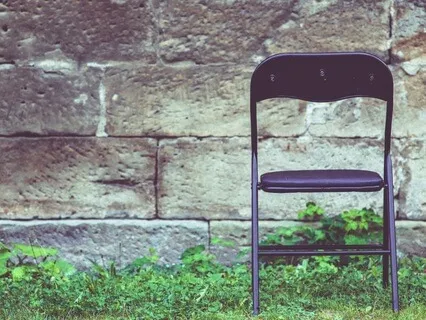
You'll be sitting on a chair for this session.
You'll need a flat bottom chair,
Not a seat that dips or has a lot of padding.
You need a chair where your hips and knees are the same height and at 90 degree angles to one another.
Make sure your clothing allows for ease of movement and warmth if necessary.
Have sock or bare feet.
And when you're ready,
Come to sit in your chair.
Take some time to notice how you're sitting there.
Notice the relationship of your head and shoulders to one another.
Notice where your eyes look,
Where your face is turned.
Would you look forward into the room as if you were looking at an imaginary horizon line?
Notice your breathing.
Notice where the sensation of breathing is happening in this upright position.
Is it in your chest or belly,
Upper back,
Nostrils,
Sides of ribs?
Where is the movement of your breathing most prominent for you in your sensation right now?
And notice your sit bones on the chair.
Are you tilting forward slightly ahead of the sit bones?
Are you tilted back a little bit behind the sit bones?
And do come forward on the seat of your chair.
You'll be taking ample breaks,
And of course you can pause any time and slide back against the back of the chair if you need to do so.
Notice your feet on the floor and how each foot connects with the ground or the floor.
And rest your hands in a simple way on your thighs.
Take another moment to tune into yourself,
Your quality of awareness,
Your quality of mind.
Have your eyes closed or in a soft gaze.
Now from where you are,
Begin to roll your pelvis forward and then return to where you started that movement.
Do this rolling of the pelvis forward a few times.
Forward and then back to where you started.
It's a movement where your pubic bone rolls forward on the chair.
And then return to where you began.
So roll back to that place where you could be balanced on your sit bones,
Not behind or in front of them.
How do you go about finding your sit bones?
And begin to notice,
Are you rolling your pelvis forward or are you tilting your upper body toward your thighs?
Those are two different movements.
The one we're looking for here is rolling your pelvis forward.
So the pubic bone rolls forward on the chair toward the seat of the chair a little bit.
And the low back is slightly extended,
Just a bit.
Keep the movements small and remain sensitive to yourself.
And then take a rest.
Slide against the back of the chair if you need to.
And come forward again on the chair if you're not already there.
Exercise yourself in a simple way.
Roll your pelvis forward.
And see if you can begin to make a distinction between rolling your pelvis forward and tilting your upper body toward your thighs.
And pause for a moment.
And tilt your upper body toward your thighs a few times and return to where you started so that you can begin to make a distinction,
If you haven't already,
Between these two movements.
And then pause and begin to roll the pelvis forward a few times as if you're moving the pubic bone toward the seat of the chair.
And then return to your sit bounce.
Your upper body will move as a result of the pelvis tilting forward,
But not the result of just leaning forward.
So there are two distinct ideas.
Tilting your pubic bone toward the chair and then back to where you started.
Small,
Gentle,
Simple,
Breathing,
Remaining sensitive to yourself.
And pause for a moment or take a longer rest if you need to.
It's up to you.
You can pause the audio at any time.
Now begin to roll the pelvis back so that you're moving closer to sitting on your tailbone.
And then return to where you started.
Again,
This is not tilting your upper body.
It is rolling your pelvis so that now you're actually behind the sit bones.
And then rolling back to where you started.
And do that two or three or four,
Maybe five more times in a quiet,
Simple way.
Relaxing,
Remaining soft in the throat,
The face,
The eyes,
The palate,
The jaw.
Breathing.
And then take a rest and slide back on your chair if you need to.
The distinction between rolling the pelvis or tilting the torso is an important one.
Another way of explaining it is to point out that what we're doing here is making a distinction between the pelvis and the legs.
When we begin to make a distinction between the pelvis and the legs,
We invite ease into the lower back.
Many of us engage our body as if the lower half of our trunks are fused to our legs.
When this happens,
We lose connection to the power in our legs.
We lose connection to the power available to us between the ground and our pelvis.
The upper legs and pelvis are the most powerful part of our body.
Trying to get a clear sense of the power and stability there can spare our low back or lumbar spine and it invites mobility into the rest of our spine.
The freer the pelvis,
The freer the entire spine.
When the spine is free to do what it's meant to do,
We have more freedom in our movement.
When the pelvis is doing its part and the legs are free to do their part,
Then we have the possibility for smooth,
Integrated,
And powerful movement.
Come to sit comfortably on the front of the chair again if you're not already there.
Legs comfortably spread,
Hands resting on your thighs in a simple way.
Notice the contact of your sit bones with the chair.
And begin to roll your pelvis a little bit forward slowly,
And then back to where you started,
And then roll the pelvis backward.
So now you're rolling your pelvis forward and back,
Breathing.
Breathing slowly enough so you can really listen to what you're doing and how you're doing it.
Continue to move like that in a simple,
Slow,
Easy manner in an easy range.
Can your neck be free to move?
Where does the face want to look as you roll the pelvis back behind the sit bones?
And where does the face want to look when you roll in front of the sit bones?
And what's happening with your breathing?
Can your face be soft and easy?
Your mouth and jaw easy?
And what do you do with your eyes as you move like this?
Either they're open or closed.
And pause in sitting in a simple way.
And again,
If you need more rest,
Then pause the audio.
This is your time and your learning.
Now begin to roll your pelvis back.
And as you do so,
Begin to fold through the ribs and allow your breast bone,
The potential to slide down toward your pubic bone.
The movement starts with rolling the pelvis back.
If someone were to look at you from the side,
You'd be folding softly into the shape of the letter C.
So we are looking for the natural C curve here.
And allow your head and neck to come along last.
Allow them to be invited into the movement by the folding through the middle of yourself.
Keep your breathing easy as you explore this.
Unfold to where it's comfortable for you.
And then begin to unfold by pushing into the floor with your feet.
And listen through yourself for movement that travels through the bones.
Let the skeleton do the work here.
Listen for that through line of movement from ground to head.
Push in with your feet and allow that movement to travel through your legs,
Your pelvis,
Your spine,
And you begin to naturally unfold from the letter C.
And return to where you started on your sit bones.
And pause.
And do that whole sequence again.
Roll back behind your sit bones.
Allow the movement of the pelvis to be what initiates the folding through the ribs,
The gliding of the breast bone toward the pubic bone,
The spine folds into the letter C shape,
And the head and neck arrive last.
Now reverse it,
Pushing into the floor with your feet.
Allow a clear movement through the bones to support you in unfolding.
And your face slowly looks out into the room again.
And perhaps once there,
Rolling forward,
Allow your face to take a sneak peek up in the direction of the ceiling.
That's not the same as look at the ceiling.
That is allow the face with support from the spine and pelvis and feet to move in the direction of the ceiling.
It's a direction,
Not a destination.
And explore this for a few moments.
The point is to begin to shift away from the tendency of allowing our movement to be led by the head and neck.
Humans are built to be led by the head,
But we are not.
Our power,
Agility,
And strength and balance comes from below.
Reclaiming our connection to the ground and developing a clear connection between ground and our skeleton is key here.
And when you're ready,
Let it all go and rest.
Come to the front of your chair one more time.
Feet flat,
Clearly connected to the ground,
Your hands resting in a simple way on your thighs.
Roll back behind your sit bones.
Allow the movement of the pelvis to be what initiates the folding through the ribs,
The gliding of the breastbone toward the pubic bone,
And your spine folds into the shape of the letter C.
The head and neck arrive last.
Now pause here for just a moment and imagine as if you had a set of eyes in the middle of your chest.
Now reverse the movement,
Pushing into the floor with your feet.
Allow a clear movement through the bones to support you when unfolding.
Your face slowly looks out into the room again.
And also allow your face and chest to take a peek in the direction toward the ceiling.
You don't have to see the ceiling.
It's just a direction.
It helps you to allow the looking with your face and eyes to move with support from the spine and pelvis and feet.
And again,
The point is to shift away from the tendency of allowing our movement to be led by the head and neck.
And take a rest.
Take time to notice how you are in sitting now.
Compare that to how you were sitting at the beginning of the session.
Each time you do this session,
You'll make new discoveries.
That's simply the nature of the work.
Notice your connection to the chair with your sit bones,
Your feet on the floor,
Your breathing,
Your face and how it looks out into the room.
And when you're ready,
Come up to standing.
Take a few steps around.
And thank you.
That's the end of this session.