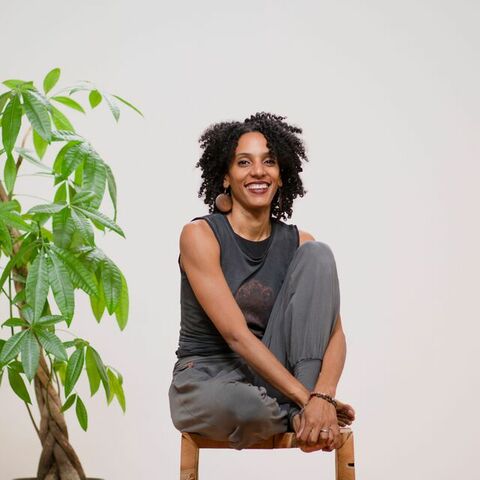
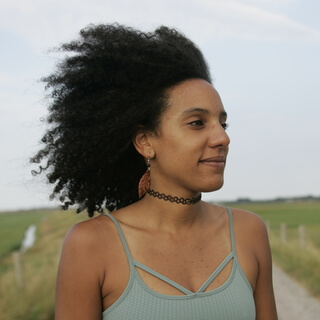
Hi I'm Laia.
This is The Pause,
A moment to slow down,
Settle in,
And meet yourself where you are.
Let's begin.
Focus tools for overwhelmed creatives.
Simple resources to trick your brain into wanting to sit down and do the thing.
Hello and welcome to The Pause.
Have you ever had a project or a task you've been wanting to work on yet every time you finally have the time and capacity you get so overwhelmed that you end up not working on it at all?
As a multidisciplinary artist involved in several projects at once and in charge of my own schedule,
I'm quite familiar with this disheartening experience.
So to be able to write and create and to do so somewhat consistently,
I've had to find small tools that trick my brain into wanting to sit down and do the thing.
I've experimented with different tools for a while and the main rule is this,
They have to be simple.
Some of the tools I tried didn't work at all,
Some worked for a certain project or for a period,
Reminding me that not everything works for everyone or every situation.
Keeping that in mind,
Today I will share with you some of my current simple focus tools and I hope that at least one of these resources serves you or inspires you to explore and find your own.
Move.
As a movement artist and coach,
I have studied and experienced firsthand the effects of exercise not only on the body but also on the mind.
Often when I'm feeling scattered and looking for an excuse not to sit down and write my novel,
Translate or answer emails,
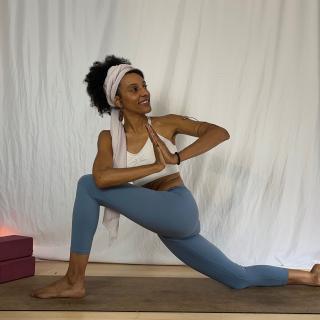
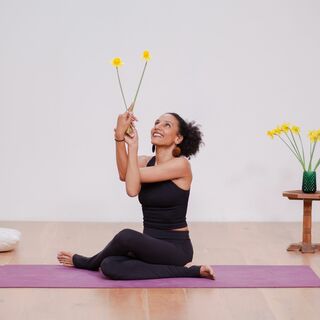
I unroll my mat and do a few minutes of yoga.
Or if I'm in a walkable area and the weather is decent enough,
I go out for a short walk.
Moving the body,
Whether you choose walking,
Yoga,
Dancing or shaking,
Will enhance your mental clarity and improve your cognitive function,
Allowing for better concentration.
So next time you want to focus but feel scattered,
Give a short yoga sequence a try,
Then dive right into the project.
Schedule it in your planner.
Back when I was in school,
I loved my yearly planner.
I put all my skating,
Voice lessons and homework on there but I also drew,
Added little quotes,
Song lyrics,
Magazine cutouts and photos with my friends.
They were more than planners,
They were almost a second diary.
When I look at them now,
I find they tell stories of how I saw the world and of how I spent my time.
I'm a firm believer that only the things that I put in my planner have a chance of actually happening and that's why I think it's super important to schedule time for the projects you want to put your attention and energy into.
Scheduling your creative time can provide you with a clear actionable roadmap for the day.
Your planner acts as a second brain,
Offloading mental clutter and lowering your stress levels.
If you pencil in creative time every Thursday afternoon for example,
You're more likely to show up than if you just say you will sit down to work on your project on Thursdays.
Make it your priority in your life by scheduling it.
Remove distractions.
There are distractions we can predict and distractions we cannot.
There's nothing you can do if you're working on your project and they call you from your child's school saying she's sick or if your laptop gets the blue screen of death in the middle of your writing session or if your favorite coffee shop is closed the day you finally decided to go there to work.
Other interruptions however like your phone or too much ambient noise are much more predictable and when you take the time to remove them from your creative environment you will be able to concentrate better.
If your phone is your main predictable distraction,
Try putting it on airplane mode,
Taking it to a different room or using an app to block phone access temporarily.
If you tend to get snacky,
Have food nearby so that you don't need to get up and interrupt your scheduled time.
If clutter bothers you,
Take the time to clean up your desk or your workspace before you begin.
The point is to remove as many of your predictable distractions as you can so that when you finally have the time and the capacity to work on your project you actually choose your project over everything else going on around you.
Tune the world out.
Another common distraction that can really get people out of the creative flow is unwanted noise.
Maybe it's a family member talking on the phone in the room next to you,
Your neighbor using the leaf blower or an upset baby screaming nearby at the coffee shop.
Unwanted noise can be super annoying when you're trying to focus.
A simple solution is a good pair of earplugs.
Nowadays they make high-tech ones that you can customize to your needs.
To truly personalize the experience try using headphones.
I like noise canceling ones and play music that helps you get in the mood and focus.
Screenwriter Shonda Rhimes swears by this herself.
Depending on what I'm working on I like to listen to jazz,
Lo-fi or deep house.
Other times I like to play ambient sounds like rain,
Ocean waves or a crackling fireplace.
Choose music you like and that brings your attention to the present moment,
Helping you tune out the world for a while.
Set a timer.
When I started writing my debut novel over three years ago I had to find a system that was sustainable enough for me yet not too intense and that motivated me to return to my project regularly if not every day.
Discovering Pomodoro or focus sprints not only helped me finish my novel but I now use them to get all sorts of things done from creative projects to housework to packing.
The traditional Pomodoro method is 25 minutes of focus with a five-minute break but I encourage you to adapt the formula to whatever works for you.
Setting a specific amount of time makes the work manageable,
Combating burnout,
Acting as a anchor and preventing unnecessary multitasking.
If you want to try this method in a chill and supportive environment check out one of my creative focus sessions.
Write by hand.
Another small tool that can help you focus when you're feeling scattered is writing by hand.
I do a lot of handwriting,
Daily morning pages,
Character notes,
Dialogue pieces,
Full novel chapters,
Article drafts,
To-do lists.
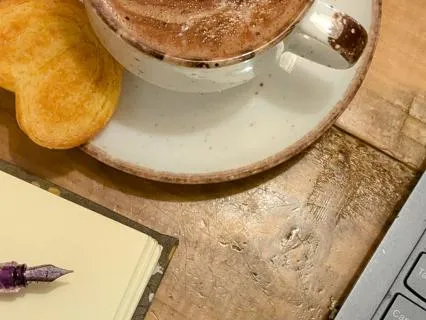
I find it more organic to let my thoughts flow from my fountain pen to the paper first,
Giving me clarity and ultimately helping me focus better on whatever I'm working on.
Since it's a slower,
More deliberate and physically engaging process than typing on your computer or phone,
Handwriting forces the brain to process information more deeply,
Helping you center your thoughts.
Change your surroundings.
As important as it is for me not to depend on my surroundings to be able to write,
I must admit I'm a sucker for spending time at a coffee shop or a public library.
Changing your surroundings is not only a nice change of pace every once in a while,
But it's an almost foolproof way to remove some of your habitual distractions.
Personally,
Especially if I'm using resources to go out to write,
I'm also more motivated to get shit done,
Even if for the sheer pressure of taking good advantage of my time and budget.
Being in a different environment also triggers a dopamine-driven reset in the brain and it stimulates cognitive flexibility.
Take breaks.
Taking breaks is one of the hardest yet often most important parts of being able to focus and concentrate on a regular basis.
Resting allows the brain to recharge,
Preventing mental fatigue,
So even when it may seem like a waste of time,
Taking regular pauses boosts productivity,
It enhances your memory retention and fosters your creativity.
So next time you're having a hard time concentrating,
Ask yourself,
When was the last time that you paused to take a break and just let yourself relax or play?
Or even better,
Start scheduling your breaks in the same way you schedule your productive time.
To close.
With such busy schedules,
Making time to pursue your creative projects is difficult enough,
So having your own systems and simple tools to find focus whenever you need is essential.
Whether you choose to do a few minutes of movement before you start working,
Use a timer to break up the task into more manageable chunks,
Listen to music to help you tune out distractions,
Or take yourself out of your regular environment,
You'll be creating new positive habits that train the brain to strengthen its attention muscle,
Reducing cognitive switching,
Lowering stress,
And inducing deep work state.
Keep in mind that these tools may only work for a particular project or season,
So taking the time to re-evaluate what distracts you and what helps you focus every once in a while will help you readjust.
I'd love to know,
What resources do you come back to when you need to find focus and concentration?
Feel free to share in the comments to inspire others in the community.
Until we meet again,
Pause often,
Breathe deeply,
And be kind,
Especially to yourself.
Much love,
Laya.