Hey everybody,
It's Judy and this is Wake Up Call 543.
So let's look at chapter 11 of the Dharmapada,
Which is called Old Age.
Funny thing about this one.
So Monday,
I was in my own ongoing teacher training group where I'm a student with James,
Who's our teacher,
And the friends in the training.
And in my check-in,
I shared that lately I've been noticing this body breaking down,
As a body does,
Aches and pains that I'm really feeling and that impact me.
And also that I've been having some aversion arising to this body breaking down.
And.
I know that Y's relationship to the body breaking down and to aversion is to meet it with curiosity and with ease.
And sometimes I can even do it.
Uh.
.
.
But what feels like needs to happen is another shift to letting age be my teacher.
Which feels possible some days and very hard others,
You know,
Relating to this body with ease,
To this body as teacher.
Because there's like a cellular memory of this body being so strong and flexible that You know,
I mean,
I could do all kinds of crazy things.
I could do a full series one of shangha practice and then swim a mile in the bay.
And,
You know,
The biggest consequence is that I would just be really hungry.
So that was a conversation that we were having in the teacher training group,
And then Old Age is the title of today's chapter.
So here's how Ram Dass and Thomas Byram translate the first part of the chapter.
The world is on fire.
And are you laughing?
You are deep in the dark.
Will you not ask for light?
For behold your body.
A painted puppet,
A toy.
Jointed and sick and full of false imaginings.
A shadow that shifts and fades.
How frail it is.
Frail and pestilent.
It sickens,
Festers,
And dies.
Like every living thing,
In the end it sickens and dies.
Behold these whitened bones,
The hollow shells and husks of a dying summer.
And are you laughing?
You are a house of bones,
Flesh and blood for plaster.
Pride lives in you and hypocrisy,
Decay and death.
The glorious chariots of kings shatter.
So also the body turns to dust.
Okay,
So that's the opening Sally.
Um pretty intense.
Are you laughing?
I was not laughing.
When I first read it.
But then again,
You know,
The question is,
What else is there to do but laugh?
So I was having these aches and pains.
And I wasn't laughing.
And it was this kind of depression that was coming up.
I was waking up and feeling pain,
Feeling a sense of,
Wow,
This is terrible.
And it's only going to change for the worse,
Not the better.
Right?
I'm never going to see the Savasana at the end of that full series one practice again.
I'm just not.
So.
As a conditioned unconscious reaction,
It's not surprising,
I wasn't surprised.
Notice pain,
Feel aversion to pain.
But the Dhammapada and all of the teachings of mindfulness are really clear that even if it's not surprising,
It is unskillful.
You know,
That aversion is a hindrance to our practice at best,
And it's a flat out unwholesome state of mind or state of heart at worst.
It's not a wholesome one.
Right,
And it's it's really clear why because a version is pushing back against the way things are or striving or grasping for things to be different,
Which leads to clinging,
Which is.
The cause of suffering.
Right,
So.
I can see this,
You can see it.
So my aversion to the aches and pains is about wanting them to stop or grasping for that old young body,
You know,
Clinging to the notion that this body today shouldn't feel the way it does or shouldn't be behaving the way that it is,
Or that,
You know,
There's some fix,
Some permanent fix,
Some permanent fix.
Which is the recipe for suffering.
The recipe.
But of course,
You know,
This is the territory of the mind heart,
Not the body.
You know,
The body can be doing anything at all.
And we still have a choice about the mind.
Or at least a choice about how we want to condition or recondition the mind.
So here's what the Dhammapada says specifically about mind in relation to body,
And this is Srimad's translation.
She says the true.
Law is never worn out and so one sage can pass it on to another.
The ignorant person grows older like a bullock.
Their weight increases,
But not their intelligence.
So I noticed the weight and the intelligence part and the weight part for sure as I'm getting older.
But here's how she explains this and also the verses that I just offered from Ram Dass and from Thomas Byron.
She says this.
There is an old age much more dangerous and much more real than the amassing of years.
The incapacity to grow and progress.
As soon as you stop progressing.
As soon as you cease to better yourself,
To gain and grow,
To transform,
You truly become old.
And you go downhill towards disintegration.
But if you carry in you the flame for progress and transformation,
Ready to leave everything behind so that you may advance with an alert step.
Then you are eternally young.
Everything that has been done is always nothing.
Compared to what remains to be done.
So in relation to the aging body,
You know,
This growing edge,
The progress,
Or even transformation.
It feels like it wants to be peace.
In early mindfulness,
There are considered to be three characteristics of this human life,
Suffering,
Impermanence,
And not-self,
Or emptiness.
But Thich Nhat Hanh says there's a fourth characteristic,
And it's the characteristic of peace.
And I feel like peace in relation to aging and everything else is the invitation,
Is the characteristic of being human to be cultivated.
It's,
I feel like it's the progress and transformation to be pointing towards.
And so one way to point towards this transformation is just within inquiry,
When pain and suffering comes up,
Or I'm sorry,
Pain and aches and pains come up,
Can I practice peace in relation to my aging body?
Or maybe the body's not showing signs of aging,
But it's misperforming.
Or it becomes ill.
Can I practice peace in relation to the body doing whatever it's doing,
Doing that?
Or if my mind or heart is broken.
Or scorched by another person,
By the world.
Can I practice peace in relation to sorrow or fear or anger or disgust or whatever is arising?
And it's practice because this is a lifelong inquiry.
I mean,
Isn't it?
The body and mind and heart are always shifting and changing,
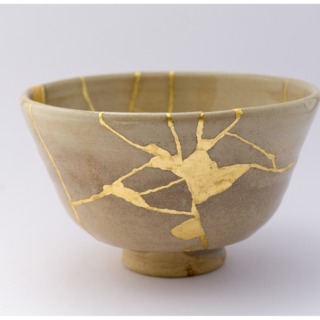
Always falling apart and coming back together and falling apart again.
Norman Fisher's organization Every Day Zen,
Their motto is changing and being changed by the world.
And so because we can count on things changing,
A second part of the inquiry could be,
How do we learn new ways in each moment to respond to whatever is arising right then?
In the body,
In the mind,
In the heart.
In the world?
How do we learn new ways to respond to all of that with peace?
Because the last time,
Whatever the last time was about,
It's different.
It's hugely different,
Slightly different from what's happening in this moment.
So our peaceful response will be.
By its nature need to be different too.
And so we will always need to be changing and progressing and transforming.
Everything that has been done is always nothing compared to what remains to be done.
Okay,
So let's sit.
So find your posture for your practice.
For this practice.
Take a few breaths to settle in.
See if there's some.
Relaxation that can happen in whatever posture you're in.
You're choosing.
And then just begin to notice the body.
Start with the top of the head and just let the attention slowly flow down through the body.
And as you do that just notice.
What is the.
.
.
Relationship with the body.
Just in this moment.
The moment of noticing the head.
And the shoulders.
The arms.
And the torso.
The legs and the feet.
And then back to the head.
And like that,
Just letting the attention flow down through the body.
Like a slow waterfall of attention and noticing what arises when the attention meets The body.
And seeing if you can invite peace.
To whatever arises.
And where there's peace in relation to whatever you're noticing,
There can be Gladness,
You can have real gladness.
And where there's not.
Then that's great,
That's the teacher.
Everything that has been done is always nothing compared with what remains to be done.
Thanks everybody for being on the Wake Up Call.
Really nice to see you all.
Take good care and I'll see you next time.