Hello and welcome to this short talk about types of meditation for the different Ayurvedic constitutions.
I was recently asked if different methods of meditation are best for each of the different constitutions and the answer to this is yes.
People with different constitutions are likely to find different types of meditation more effective and more balancing for them.
This is because each of the doshas needs different qualities and different elements to stay balanced.
The vata dosha is made from the air and ether elements so people with the vata constitution already naturally have a lot of ether and air in their bodies and their minds.
Often traditional seated meditation can open our minds up to a more expansive and spacious way of being but for people with a vata constitution they already have a lot of this openness and too much silent seated meditation can become ungrounding for them.
The most balancing types of meditation for vata people are meditations which ground the person into their body such as a steady breath based meditation or slow mindful walks in nature or meditative movement.
A slow practice of yoga asanas is great for vata people as along with bringing the awareness into the body it also strengthens the body and builds muscle which can be very helpful for skinny vata people.
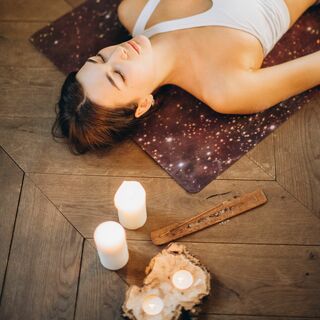
Yoga nidra is also a great practice for vata because it provides the rest and the rejuvenation that vata types being naturally light sleepers often need.
The pitta dosha is made from the fire and water elements and people with a pitta constitution usually have a good capacity to focus and can sit in meditation for a long time due to this presence of the fire element in their minds and in their bodies.
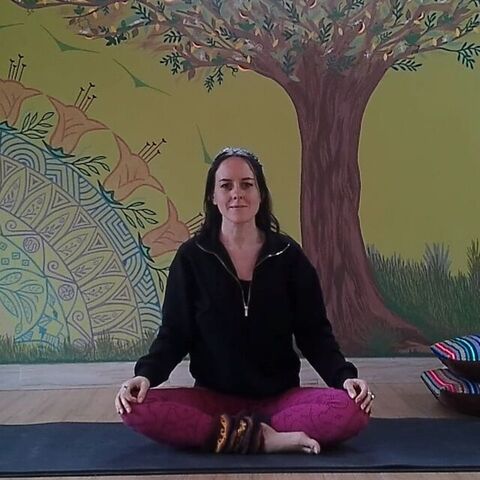
Traditional seated meditation with an object of focus like the breath or a mantra is great for pitta people.
Sitting still and meditating is very balancing for the ever striving pitta mind and because they do have a good amount of mental focus and endurance they're able to benefit from sitting in meditation for longer periods of time.
Yoga nidra is also great for people with a pitta constitution because of the passive nature of the practice.
There's nothing for them to do except listen and receive which is balancing for their tendency to be overproductive.
And the kapha dosha is made from the earth and water elements and people with a kapha constitution are usually steady and grounded with good endurance due to the heavier nature of these elements but if they sit in meditation for too long there is the possibility that they may fall asleep.
Kapha people need movement and stimulation and so movement based meditation is the most balancing for them such as walking meditations and qigong and active yoga flows like ashtanga practices can be very good for kapha.
Often kapha people are very steady and consistent in the way they live their lives but they can become stagnant and stuck in their ways and lacking in creativity so meditation that includes creative visualizations can be very useful for them to help them to open up creatively and to open up their minds to new ideas and new ways of thinking.
So if you know your Ayurvedic constitution you might like to experiment with some of the types of meditation that are best for you and if you don't already know it my course Ayurveda healing through the senses talks you through the different constitutions with a questionnaire to help you to find yours so you might like to listen to that one.
I hope you've enjoyed this short talk about meditation for the different Ayurvedic constitutions today and I look forward to meeting you again here on Insight Timer very soon.