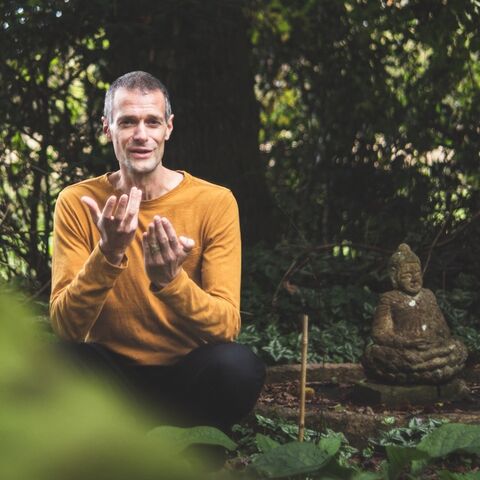
Today I'm joined with Wendy Nash.
Wendy,
What's going on?
Well,
I'm looking at your not background,
Actual real environment.
Now you have to do a kind of a this is not AI just saying folks,
This is actually the real McCoy.
I'm here on Gummy Gummy Country in Queensland in Caboolture and my background is nothing like as exciting as yours is.
That's kind of amazing.
Now you're in Crete at some place where there's a lighthouse at the back.
Yeah.
And I thought,
And also,
I guess,
I don't know if you can hear this in the background,
But military jets.
I think there's an American military base here on Crete and this is Chania.
If you see right behind me here,
I've got the video louder and that's a lighthouse,
Like an old Venetian lighthouse.
That's kind of the main fixture of the town.
But Wendy,
I'm going to throw it over to you and mute for a second.
Sure.
Well,
Josh,
I'm very excited.
Apart from anything else,
I've been having a quite a cool day.
It was really inspiring.
Then I just went.
So basically,
You know,
I have my transport thing.
So I looked at what there's an event called the week without driving in October that happens in the US and I'm bringing it up to here.
I've done it a couple of times and I looked at all the amazing stuff everyone's doing and I'm going,
Oh man,
I can't do any of that.
And I felt really down in the dumps.
And then I just thought,
But what can I do?
Like I can't do all that stuff.
I don't have the social media and I don't have,
You know,
There is nobody really other than me.
I mean,
That's not entirely true,
But it's pretty thin on the ground.
And then I went,
Well,
What can I do?
And I thought I can do this and I can do that and I can do that.
And I thought,
Okay,
That's pretty cool.
Actually,
If I just got that,
That would be amazing.
And we had Emery 1747 on today.
Hi,
Wendy.
Welcome Emery.
And Hey,
How's it going?
So,
You know,
Wendy,
That's a really good point because a lot of times it seems we can get discouraged before we do anything and we think that we can't do anything,
But usually there's a lot of things we can do and we write it off as insignificant,
Like,
Oh,
That's not good enough.
But again,
Incremental steps,
Drop by drop,
We can fill things up.
I mean,
Yes,
It could be frustrating that the progress that we don't have access to enough resources.
We know what we want,
But we can't do it.
But there's usually something that can be possibly done.
I mean,
I said this time and time again,
And that support and encouragement and trust that what we do and say does make a difference,
Especially with the intentionality behind it.
So today is also our 40th one of these.
So let me read the description we have here.
We're calling this one practical ease.
I was wanting to call it practical peace just because of the alliteration,
Right,
PP,
But I think ease is more relatable.
So in this 41st installment of the ongoing live series with Wendy Nash,
We continue our inquiry into meditation practice,
Both on and off the cushion,
Turning our attention to the question of peace,
Especially in a time when conflict is close at hand.
Rather than focusing on politics so much,
We'll explore what can be done practically within practice itself,
How peace is cultivated and supported in formal meditation,
How it carries into everyday life and where it tends to wane or destabilize.
Areas of exploration here may include the conditions that give rise to and sustain peace,
How it is revealed or obscured in relationship,
The difference between brief glimpses and more stable baselines of peace and ease,
The role of awareness,
And how inquiry itself can clarify or deepen peace.
So kind of a lot of fancy words there and descriptions,
But the main thing today,
I think,
Is practicality.
And we're told there's a war going on.
I mean,
War sucks.
I don't think war is ever OK,
Really,
In my personal opinion.
But what relevance does it have in our lives?
And if anything,
I think it draws our attention to,
OK,
How peaceful is my life and those around me?
And how much at ease am I?
And how much the opposite?
And why is that important?
And how does that work?
Yeah,
So I'm going to speak to a bit about that.
So a few years ago,
I was really,
Really earnest.
I'm a very kind of goody-two-shoes kind of person.
By the way,
M.
Reid says I can totally relate,
Wendy.
I think that was the up and down thing.
And it's always great to have M.
Reid because she's so supportive and such a lovely person.
And at least I assume it's a woman.
But anyway,
We'll just assume that.
It is.
As far as I know,
It is.
Yes,
I know.
I'm saying M.
Reid's first name,
But I'm pretty sure I know.
Yeah.
So,
You know,
I can get pretty earnest,
Pretty serious about being good.
We've got to be good,
Folks.
We can't be like fun.
We've got to be good.
And I just,
I read this book.
I realized it was really boring.
And it says something like page one or two,
Or certainly in the first chapter,
What stops you being feeling joyful right now,
Like in daily life?
And I just thought,
I actually feel really guilty for feeling joyful.
You know,
There's so much bad stuff that people experience.
And war,
Of course,
Is one of those things.
It's like awful.
I have a an acquaintance in Iran.
And it's,
I just said,
I'm sending you lots of love through one of the social media or email.
And she said,
That just made my day.
I was,
She's so heartbroken by the situation that she just is going.
Just that one good kind word made her day.
Can you imagine what your life is like when that happens?
That's,
That's war.
That's what war does.
And,
And,
But I thought,
I thought I,
I felt really guilty because there are all these things.
And then I thought,
When I'm,
When I'm down in the dumps,
Who do I like to hang out with?
And I thought I do not like to hang out with miserable gits.
I like people who are negative and naysayers and they should.
And I like to hang out with people who are joyful and fun and lighthearted and kids and people who just bring this lightness and love.
Now I'm not talking about the positive,
Toxic positivity stuff where it's like,
Be happy no matter what.
I'm not talking about any of that.
I'm talking about being just like,
Playful and joyful.
If,
If the Dalai Lama and Desmond Tutu do that,
And they are,
You know,
Really important spiritual leaders in our,
In our world.
I think Desmond Tutu has died.
And they are really keen on joy.
That's a big,
Big topic for them.
It's a really important practice and a very needed practice.
So I think it's really important to bring that into the picture.
So,
And I also want to talk about hurt,
But before I do that,
Let's hear what you have to say.
It is a really,
It's a really good point.
And,
You know,
Joy,
If we're doing the traditional Buddhist line here,
It's one of the awakening factors,
You know,
It's,
It's also one of the brahmaviharas altruistic joy or sympathetic joy,
Or vicarious joy,
Like vicarious,
So I can be happy for someone's happiness.
And it helps counterbalance and equal out,
If I'm slogging through really challenging time,
And it's really,
Really hard,
And I have to do lots and lots of compassion and kindness to myself.
It is a counterbalance to that,
Because that can get too kind of weighty.
And,
You know,
So the joy lifts up.
And it's not,
Yeah,
That's the thing,
When he makes such a good point,
Some people,
We misinterpret it as like,
Overindulgent,
Right?
Like,
I,
How can I be happy and joyful,
When all this horrible stuff is going in the world,
It's not responsible.
But the fact is,
It actually is responsible,
Because how can we,
We have to have some uplift in our heart all the time,
Sometime,
Because things can get really challenging in life.
And how do we nourish that and balance that,
If I'm constantly in a state,
I can't meet everything with compassion,
Not everything requires that.
So when someone else is happy,
That the best mind and heart state for that is to be happy for their happiness without any kind of jealous,
Jealousness,
And it's a practice too.
So I can't beat myself up for not doing that,
When I slip into envy,
Like,
Why am I not happy?
I want to be happy.
How come they're happy and I'm not?
That's,
Without training,
That's kind of where my heart goes,
You know.
But it can be trained.
And then because it is an innate part of our heart,
That it can rejoice and be happy for others.
It doesn't have to slide into jealousy,
But it takes work for some people,
Some people it's more of a natural response.
And yeah,
So I think that wants to be really put forth here and it can't be stressed enough.
This is actually a responsible thing for us to do,
Is to seek out wholesome joy for ourselves and rejoice in the happiness of others,
Because it is a nourishing,
Supportive heart quality.
Again,
And I'm doing Samatha meditation,
This concentration on one object,
And one of the jhanic factors that arise is joy,
Pity.
Pity and sukha.
Pity is like this rapture,
Uplifting,
Kind of bubbly,
You know,
Energetic uplift that's joyful.
And then sukha is a more smooth happiness.
So these are things that happen when there's concentration practice,
That they arise and they're needed for jhana,
Deeper states of concentration.
So yes,
Absolutely.
And the Buddha praised these states as well,
Right?
And it's the appropriateness of it as well.
So I think that's key here to joy.
So there's a word in English that nobody ever uses.
It's the opposite of schadenfreude,
And it is confelicity,
That you take joy in somebody else's happiness.
There you go.
Confelicity.
Why is it that in English,
We don't even know our own words for being happy for somebody else?
Are we such awful people?
Anyway,
So M Reid has said,
I just had a penny drop with what you shared here.
Thank you.
I'd like to work in trinities.
I like to work in trinities,
Share of three.
And I had a part I hadn't heard before and never saw in a context,
I needed to see,
But I just did.
Yay.
We love that.
We love that.
Yeah,
That's awesome.
And yes,
Sometimes you get caught in knowing two sides,
But I love working with three different things because it's not always black and white,
Square kinds of thinking.
I try you in effect a lot of times.
So yeah.
So,
Windy,
You go ahead.
Yeah.
So I was going to talk about hurt because I've been meditating a lot and I think,
You know,
We take these difficult situations and we can be,
I mean,
You know,
I work in social justice,
Transport justice,
Basically.
And I'm always fighting for people who don't have transport choice.
And I don't have transport choice,
But I can kind of work around it.
But other people that makes a difference to their,
Whether they get to a job or a medical appointment or whatever,
You know,
Like it has really serious implications.
And,
And so I sometimes have to,
I obviously have to deal with politicians and infrastructure professionals and transport professionals.
And I can feel myself get really worked up.
And I realised that actually I feel hurt on behalf of the people who don't have that choice.
And perhaps maybe my younger self,
I feel hurt for that person who didn't feel,
Who felt very trapped and unable to have independence.
And I've been thinking a lot about this,
About Dukkha actually.
And there are lots of translations for Dukkha,
But I really like the embodied experience.
So we can say the intellectual,
It feels unsatisfactory,
But that feels a bit airy fairy up here somewhere.
But I think if we bring it back down into the body and say,
It aches,
You know,
When we want something and we can't get it,
It aches in our body.
When somebody says something that is hurtful,
What's that is sharp and unkind or whatever,
Or they ignore us,
It hurts,
It hurts in the body.
So we have these like heartaches and hurts and aches.
And I think that's really where Dukkha lies.
Because it's true that there is the physical pain.
So when I go to the dentist,
Sorry,
If you're traumatized by that,
But I'm willingly putting myself into a painful situation,
I get the injection,
I get the cleaning,
Whatever.
And that is unpleasant,
And it's painful.
But I'm okay with that.
So there's no Dukkha with that.
So for me,
When I look at the what is Dukkha,
It's actually that there is an experience of hurt in the body,
A sort of an emotional hurt and ache in the body.
And when I get all like,
They should reply to me,
And they should do my things,
They should agree with me and all these things when I write all these letters.
And when I get carried away like that,
I go,
Ah,
Actually,
I just feel hurt.
Or even ask myself,
Am I feeling hurt?
No,
I'm not feeling hurt.
I'm like,
Really happy.
And this is their problem.
And then I go,
Oh,
No,
I'm actually just hurt.
But it's really useful to sit and kind of go,
Ah,
Actually,
This is hurt.
Because what I realized is that we are resisting feeling hurt,
We are resisting feeling the sort of this body ache,
We are resisting feeling that and we are defending this.
So when you have an ache,
And your body,
When you when your body hurts,
You contract.
Yep.
And this gives the impression.
And then at the same time,
The mind goes,
Once it sort of exits the body,
It sort of dulls down the body,
The mind will go.
And then he said,
She said,
She said,
He said,
And it's not fair.
And they're an idiot,
And all this sort of stuff.
So you have the impression that when you're hurt,
Or aches,
That it's all one system.
Because then the body,
You know,
Your tummy's clenched,
Your chest is tight.
You can't really feel all that.
And you've got this worrying,
I this and I that and then there and da da da.
But actually,
It's,
It's,
If you just sit there and go,
Actually,
I feel hurt or an ache.
All that dissipates,
And you can start to feel it in the body.
So there you go.
What do you reckon,
Josh?
This is really timely.
I've been dealing with this lately as well.
And,
You know,
The depths of this.
And I don't know the complete depths of this.
But my inkling,
My,
My guess is that,
You know,
There's a low level of this inherent in all of existence,
You know,
It's there on a low level,
All the time,
It's just that we're not either sensitive enough,
Or willing enough,
Or capable enough to really see and know the depths of this,
You know,
On very,
Very subtle levels.
So but on a practical day to day thing,
I've been working with this too,
Or maybe not working as much as I'd like.
Because I've,
And I've noticed what I've been seeing as a pain response.
And so whenever I don't see and mindful of what Wendy's talking about,
Then I can give a pain response that I that I basically don't want to give,
You know.
But that's why mindfulness,
I think,
And feeling and seeing and knowing is so important.
Because when I have the heedfulness and the mindfulness to,
To see and know what Wendy's talking about,
Then I have more of a choice,
How I'm going to,
How I'm going to view this and respond to what Wendy's talking about.
Because that's what it is.
And yeah,
The emotional pain,
It usually has a correspondence in the body of a fact that when he was talking about tightening in the chest,
You know,
For me,
There's some kind of maybe psychic pain or mental pain sometimes.
And it's like in the head,
Or just kind of a scattering.
And yeah,
That's,
That's the effect too.
So sometimes not connected to my body,
And that's not an option.
So then there's,
There's other things I have to deal with,
Like,
Okay,
Maybe it's showing up as chaos or in my life,
Or like a scattered mind.
And,
You know,
That those can also be indications when those of us aren't as connected to our body sometimes and need other indicators to see,
Okay,
There's pain here.
And,
And what kind of pain response is happening,
Or not happening.
And the benefit for me of seeing this is then,
Then it helps when I can catch it,
I can help contain it.
And I'm far from being anywhere successful at this.
But when I do,
And then I can say,
Okay,
I have a choice,
I can say something that can actually be more hurtful to myself and another,
Or I can refrain from saying something right now and wait till the time is more appropriate to respond,
You know.
So yeah,
I think also for me,
It has to with restraint a lot of times and,
And actually not restraining when I need to restrain and pull back and actually just feel the pain,
You know,
And say,
Oh,
Yeah,
This is,
This is,
This is Duke,
This is,
This is pain,
You know.
Now,
And then that's the first step because yes,
Like we were talking,
Everything's going to be,
We're going to have moments of pain.
You don't get out of a human existence without pain.
However,
What we then do about that and how we view it and respond to it is going to make the difference between adding piles and piles and piles of extra suffering on top of that pain or dealing with it in a way that,
That will minimize or help not do that.
And it's tricky too,
I think,
Because sometimes it,
It,
It feels so good to be angry,
Right?
They talk about like a honey tip and poison root of anger.
Sometimes it feels so good to be justified that I'm right.
But at the end of the day,
It's,
It,
It's only like momentary.
And then there's consequences and fall out of that,
You know,
Either from feeling shameful and guilty about it or actually having,
Um,
Another company,
Like nobody wants to be lashed out on,
Right?
So they,
They,
Some people can lash back out on me and then it just keeps compounding and compounding and compounding.
But this notion that it,
Oh,
It feels so good to just be right and lash out and say my choice.
And,
But I,
But I found that's not a really solution long-term,
Right?
I guess it's,
It's,
It's understandable in some senses.
And it's not as simple as straightforward as this either,
Because,
You know,
Some,
Some of us have been,
Uh,
Felt,
And this isn't me because I had no,
Uh,
Shyness coming up about emotionally conflict with my family.
We were just mired in it and we were all doing the best we could,
But we didn't really have any tools or anything to know how to do anything different,
Unfortunately.
But some people,
They've been,
They've,
They've suppressed.
They think,
Oh,
I need to be like,
When he was talking,
I need to be the good girl.
I need to be the good boy and be,
Make sure everything is going okay and make sure everybody's happy.
And I don't want to show any kind of anger or anything because,
You know,
I'm not really allowed to,
Or,
You know,
I,
Or for whatever reasons,
Right?
And so then when they,
They find out,
Oh,
Wow,
I've been suppressing this and then I need to deal with this in a different way.
One of the options that I guess is to come out,
Um,
And just,
Just express it,
You know?
Um,
And now I think,
Yeah,
We,
So I think that's,
That's enough to get,
To get us started here.
I've been going on a little bit,
But,
Um,
To bring it back to Wendy's point,
Feeling it in the body is so helpful because it does dissipate.
If I can just sit and be with it and say,
Oh yes,
This is,
This is pain and you just feel it really deeply without really any kind of judgment.
And like I was taking care of a five-year-old child in pain,
You know,
And how would I respond to that five-year-old child in pain and,
And giving that to myself and when,
When,
Um,
It will dissipate,
Right?
It will dissipate and it's okay,
Um,
To because,
Because it's there anyway,
Right?
So I want to just,
Uh,
Question this thing about pain because I don't think it is pain.
I think it is hurt and I want to distinguish because I,
I think what the ego does is it says,
I,
I'm not,
Not hurt.
I don't hurt.
And so there's a whole lot of different strategies that the mind will do to say,
I'm never hurt.
And,
And I know that I used to say,
Oh,
I don't feel hurt.
And I know I met other people and they say,
Oh,
I don't feel hurt.
You know,
It takes a lot to hurt me.
And I know that that's not true for me anymore.
I look back and I'm like,
Oh man,
I was like one big hurt giant bubble bee,
You know,
Bubble of whatever.
And,
Um,
Uh,
So,
And the people who say,
Oh,
It's takes a lot to hurt me.
Other ones,
You want to go,
Oh,
They're really likely to get really hurt really quickly.
So I think it's really important to just really lean into terrible expression,
But really allow yourself to experience hurt because it's not pain because when you go to the dentist,
That's pain.
But when you are in this experience,
When it's relational,
It's actually hurt.
And you can have a relationship with your body.
Like,
Why does this,
Why does my cancer do this?
Or why,
You know,
Why one of our volunteers and she's going,
Oh,
I get on all these migraines and the migraine is separate from her.
And she's hurt by the fact that these migraines are hurting her.
And yes,
It's excruciatingly painful and it knocks her out.
So I'm not belittling the enormous physical pain and the debilitation and the disability that arises for people who experience a lot of migraines.
But,
Um,
I do want to say that hurt and pain are different.
That's all.
Thank you so much.
Absolutely.
Couldn't agree more.
And that's,
It's,
It's a really significant,
Um,
Difference,
You know,
And,
Uh,
Correction.
And I just look back at my own and not to get too overly confessional or,
Um,
You know,
It's more fun.
If you do,
If you speak about your direct experience,
Well,
Sure.
It's more helpful.
It's more helpful.
If you sort of speak in theoretical abstract terms,
It's like,
You know,
Who cares?
I don't care if I can get that out of a book,
You know?
So give me the real McCoy here.
I want the real thing,
Josh.
Totally.
And it's way more juicy.
And I,
I don't know if the,
These,
Uh,
Fighter jets are showing up,
But yeah,
I totally agree.
However,
I do like lots of books and lots of study too.
So,
But to remind,
Uh,
Thanks for the reminder where we're not reading a book here,
Right.
We're having a conversation and talking.
So it's,
This isn't a classroom setting as far as I know.
So,
But the,
The,
The hurt thing,
Yes.
You know,
I look back in really low points of my life and there was so much hurt that I,
And I didn't have any kind of tools or know how to deal with it.
And the only thing that I could think of is I want someone,
This is horrible,
You know,
And I'm so glad that this is not the case anymore.
As far as I know,
Or it's very rare.
Thank goodness.
I hope so too,
That I'm not being delusional on this is that I,
I was,
I felt so hurt and pain and hurt.
They can be there together.
Right.
You know?
Um,
So,
So they can be easily confused,
Like you're saying,
But I,
I wasn't so,
I felt so hurt that I just wanted someone to feel the only thing I could think of doing is wanting someone to feel the,
The amount of hurt that I was going through,
You know,
Like that was going to be any kind,
Any better for me or anyone else.
But there was no kind of reasoning.
There was no kind of,
I would say,
Hardly ethics,
Of course,
Around that,
You know,
Especially not to the ethics of non-harming.
It was just that I am in pain and I hurt and I want somebody else to know what I'm going through.
You know what I mean?
And this denial or this,
Um,
This delusion that my hurt is,
Is unique and that no one else can really relate to it.
And that makes it even worse,
Right?
Because we know that's not true.
I mean,
Of course,
It's not going to be exactly the same as someone else's hurt pain,
But it's going to be similar,
You know,
And this notion that my hurt is so unique that,
You know,
That,
And that I really want to cling to my special flavor of dukkha because it's so,
It's,
It's mine.
And that's what I know.
And it's,
It's kind of unique.
No,
Not really.
You know what I mean?
It's,
There's nothing really special about it.
Usually now,
Now I don't want to be,
Not to be insensitive,
But what I'm saying is that,
Um,
Sometimes I can also cling on to my,
My special version of,
Of what I'm going through,
But it is a universality.
We all suffer,
You know,
Until we're fully awakened.
Oh yeah,
I know.
But I mean,
You know,
It's quite,
You know,
The whole,
Oh,
Woe is me.
My life is terrible,
Which often comes with alcohol.
I find they come together,
You know,
Like you get the up and then you get the down.
Oh yeah.
Yeah.
Yeah.
Good point.
I was that,
That was when I used to drink too,
You know?
Yeah.
So very good point.
Yeah.
Yeah.
So now we're talking about,
Uh,
The,
Our installment,
How do we,
How do we bring peace to me?
It's like we bring peace to it by acknowledging that we feel hurt or we have an ache,
A heartache.
And I also want to put in this caveat that when something really awful happens,
You know,
You,
You hear about people and their loved one dies and people are told,
You know,
They have to kind of come to terms with it and go through it and stuff,
But they're sort of living in denial.
And I'm just going,
Wow,
You know,
Give it a break because it's really awful sometimes and denial sometimes is the right response because it keeps you psychologically safe during a really tough period.
It's not healthy to live like that forever,
But if that's what gets you through a really bad phase,
Hey,
I'm all for it.
So just to put that in there.
Um,
So how do we cultivate and support peace in formal meditation?
And I want to ask what peace means.
And before I do that,
I'm going to give you a United Nations definition.
So I was listening to the radio,
The radio,
And it was this guy talking about what does peace mean now in the United Nations,
The formal,
He was some big UN diplomat from wherever in the world.
And,
Um,
He said in the United Nations,
Which is basically the Anglo,
Um,
Sphere and European,
Western European,
Peace means no conflict,
But everywhere else in the world,
What it means is that you,
You actually,
Everybody lives with dignity because then you have peace.
But if it just means no conflict,
It means you're not aware of things and you can silence things.
Now in the moment,
Emery says in the moment,
It is then when you see the larger point that it's not.
So I'm a little bit confused.
Tell me in the moment,
In the moment,
It is then when you see the larger point when it's not.
So I'm very sorry.
I,
I'm not quite sure I get it.
So,
Um,
I'm not wanting to be rude or anything.
I just don't understand.
So,
But I think that difference between living with dignity and not living with conflict is a really useful thing here.
That's my take.
You've mentioned this before,
And it's a really helpful point.
Let me just,
Let me guess on Emery's comment.
At least I don't know what the,
What the specific point is,
But this is something like if we're focused maybe on too much minutiae and we think something is the way it is,
But then we have a larger picture of it.
Then we realize the,
What we've been kind of hyper-focused on then that that's,
That's actually not the case because now we have a larger perspective and we can see that what we had before was only a tiny little piece of the puzzle and why it was probably still,
Um,
Uh,
About being unique.
Okay.
So she said about being unique.
So yeah,
Now,
Now we get the,
Now we get it.
I mean,
Yeah,
Yeah,
Yeah.
So that's right.
Okay.
So before I comment on Wendy's definition of peace,
You talked about,
And I think this is a really important point to touch on again too,
Is the denial.
And so yes,
You know,
If we were in a perfect world and we all had the perfect conditions,
Anytime we felt hurt,
We could go within and do a formal practice and address it in all the highest helpful ways.
But the matter of the fact is we don't always have access to that.
Um,
And so we have to have other,
Uh,
Coping mechanisms,
Right.
And other strategies for dealing with things.
And like Wendy said,
Actually from what I guess the psychologists say,
This denial is part of the grieving process,
Right?
It's one of the stages.
And so just because I'm in denial about something doesn't necessarily mean that I'm completely delusional or off track,
Or we'll never get through it,
Or am I doing it wrong,
Right?
It's just one of these stages.
And sometimes things do get too overwhelming and are hurt too much that it's just unbearable to be with it.
And so at those times there,
We need other helpful ways,
Uh,
Not just,
Uh,
The,
The,
The ideal way to,
To deal with something.
So I just wanted to echo and,
And validate it and,
And amplify that point of that denial is,
Yeah,
Is,
Is part of the grieving process and in a strategy as far as I know,
You know,
Now,
Like,
And then like you said,
Though,
If we get stuck there,
Well,
Then that's another thing that we have to address that maybe in a different way.
But,
Uh,
Okay.
So,
So you said about peace and it's really interesting.
I mean,
Yeah,
If we frame peace as lack of conflict,
Then it's almost like pre,
Uh,
Assuming that,
That,
That there's conflict or that I'm on the edge of conflict or that it could go into conflict any moment.
And I don't want conflict,
Get it away from me.
You know,
That's not peaceful.
And then there's maybe an avoidant tendency or a judging about it and,
Um,
Uh,
Maybe our denial or lack of to,
To confront it,
To go into it,
You know,
To,
Um,
To be like,
So yeah,
You're right.
So I think that definition is helpful to a certain,
Uh,
Degree because who,
Who wants a lot of extra conflict internally or externally?
Yes.
Of course we,
As far as I know,
Unless we're like psychopathic,
We don't really want that or thrive on that.
Or if we're a chaos maker and think that I can somehow get some power by stirring up chaos and then,
And then stepping in and say,
Oh,
I got this.
I'm going to make order out of chaos,
Kind of a silliness that,
Uh,
We hear the slogan order of chaos,
But if they're deliberately stirring up chaos so they can step in and then control it.
And so that's,
That's something else.
And that's ridiculous.
Um,
So I'm not,
Not necessarily talking about that.
So,
But dignity,
So that brings it,
It takes it away from a theoretical level and it puts it on a very humanistic day to day heart level.
I think,
You know,
Dignity,
You know,
Where,
If I'm not treating someone with dignity,
Including myself,
What's,
What's going on,
You know,
Why is that?
Is it because I was not treated with dignity?
Does it feel,
Maybe I feel justified and in being indignant,
You know,
Does it feel good to be indignant?
Um,
You know,
Do I feel,
Do I feel like I can now feel better about myself because I can put someone else down and not,
Or maybe I'm just too overwhelmed and stressed and I can't,
I need to show myself dignity before I can express it to another or consider it for another because I'm so stressed out now that I can't even show myself dignity,
You know?
So I think,
Yes,
Um,
I,
They both go hand in hand,
But I do feel that this dignity thing is that we're all deserving of that.
And that's where we're all on equal footing is that we're all worthy of,
Of dignity,
You know?
And I'm not there all the time either.
Of course there's times when I lack dignity for myself and others,
You know?
And,
And I appreciate being called out on it because that way I can change,
Uh,
If I don't see it,
You know?
Yeah,
I think there's definitely a lot in there.
So here in your,
I've just got the,
Um,
Video here on my right,
It says areas of exploration may include the conditions that give rise to and sustain peace.
And I think we've just talked about that,
How it is revealed or obscured in relationship.
And I think we've addressed that.
The difference between brief glimpses and more stable baselines.
Let's go there.
Very good moderator,
Wendy.
Yeah.
So it's,
I think what we mean here is we have,
We all have,
We've,
I hope to heck that you've experienced peace,
Right?
So that's a given.
And then how long,
Um,
So I guess if we,
If we reflect,
Where's our baseline of peace,
What would we consider peaceful?
Most of the time,
If it goes a little bit away from it,
Then I feel like I've lost peace of my life.
But if I go a little bit stronger into peace,
Maybe really on a long retreat,
Or you happen to be around really wise,
Calm,
Peaceful people,
Or just the circumstances and conditions,
Then we kind of know the opposite end of this is,
Oh,
Wow,
That I've seen that even more peace is possible,
You know?
So that's,
So that's,
Um,
So then we can kind of maybe establish our baseline if we see where we get really off track or it gets really off track,
And then where it can really be solid and peaceful.
And so,
Yeah.
So how do we,
I guess,
Reflecting on my own baseline to that,
You know,
I,
I honestly,
I,
I think I,
Yeah,
I don't like conflict.
I,
I,
And I try to avoid it actually,
You know,
And it's,
It's,
It feels easier and nicer for me not,
Not to do it.
And so I do think I have some avoidance for conflict and,
Uh,
Doesn't work too well in relationship though,
Because we're going to be,
We're going to be,
Uh,
Confronted,
I think for the most part with,
With conflict,
Whether we want it or not.
So that is one of the challenges and,
Um,
Rewards I think of,
Of relationship is that you can't really avoid it.
Uh,
It's going to come out sooner or later,
Whether we want it to or not.
I think if,
If I had to guess for a significant part of relationships,
You know,
I mean,
There's a degrees of severity,
I think,
But,
Uh,
Yeah.
So as far as baseline,
I think my baseline is actually not so healthy.
You know,
I think I'm,
Uh,
Avoidant when it comes to conflict and then it ends up coming out kind of all at once because I've been lazy and neglectful,
Um,
For something that needs to be addressed head on and in depth and more detail until it's too late.
And then it can kind of turn into conflict sometimes and conflict.
I just mean like,
Okay,
I can't get out of this where we have to address it now.
There's no other option.
You know,
We can't put this off anymore.
It needs to be gone through right now.
I think it's,
It's hard,
You know,
When you're in a relationship,
I mean,
Relationships are hard,
You know,
And I was thinking,
I think the Anglosphere is very,
Um,
Conflict averse and there's lots of silences and withdrawal that arise rather than,
You know,
Say in,
I'm going to be a bit stereotypical,
But like an Italian family or in other families where it's more robust,
They have these really stronger relationships.
And,
Um,
So just while I think about it,
M Reid has said,
Great definition.
This was,
I think before about conflict,
Peace,
Great definition.
Thank you for sharing it,
Sharing.
It says so much about our current times and she's now said,
We start with where we are real authentic,
Look into it.
Awesome chat.
Love the chat.
Um,
Thank you.
So where was I?
Well,
We were,
We were talking about conflict and I,
I just,
It doesn't necessarily have to escalate conflict address.
So,
So I,
You know,
When you,
When I,
You know,
In poor communities,
They actually get used to conflict cause they're so dependent on each other and they,
They have these big Barneys and they,
They get used to relationships,
But in the Anglosphere middle-class and up,
We,
We don't like that.
We just do no speakies and all that sort of stuff.
And I,
I feel that that can be really an unhelpful way.
I've,
You know,
I've lived in Sweden and I think the Germanic side of the Anglosphere is a bit like that.
Um,
Whereas in,
I've also lived in France and they are more robust and they,
Family is more important and they,
You know,
Let you know things.
So I think,
I think it is an,
An,
I think the Anglosphere is an anomaly in terms of conflict.
And we think that when conflict must mean an argument,
We think a conflict must mean that we are hurting each other.
But I've been sort of looking at this sense of hurt and ache a lot and thinking,
What if we're so not allowing ourselves to enter into the body,
To feel the body?
You know,
I realized after living in England that they kind of,
Anything to do with the body is completely denied through their sense of humor and everything.
You know,
That the way they dress,
The way they eat,
The way they use alcohol,
The way they present themselves,
It's all sort of antibody.
And I,
And I think as I,
You know,
I've got English heritage,
As I think about that,
And that denial of the body,
When you feel hurt,
It feels such a shock to be connected with the body.
And so maybe conflict is just saying,
Well,
This is a bit uncomfortable,
Boys and girls.
Let's have,
This is a bit miserable,
It's a bit,
And maybe what we can do is come forward gently.
But it's really frustrating.
People park on the footpath near the vape shop,
Drives me mad.
Vapes are illegal here.
And I see them parked on the footpath and they block it and I have to ride on the road.
It's really dangerous for me.
And I'm railing at them and yelling into the shop.
I have my days because I get really tired of it.
And I think when we don't,
When we don't feel we have resources,
That's when we get into this argumentative space,
As opposed to conflict being,
Well,
You think this and I think this,
And let's have,
You know,
A lovely wee chat about it.
Yeah,
Really good stuff,
Wendy.
So,
That's the thing that's so great about meditation,
Is that when we're not in relationship and there is some kind of hurt there,
What does that boil down to?
In one sense,
Maybe it's too insensitive or oversimplifies,
It's unpleasantness in the body.
There's unpleasantness in the body.
Now,
This isn't the full extent.
There could actually be some abuse that needs to be dealt with,
Right?
But when we're dealing with it on the cushion,
This hurt,
I think,
Can be simplified down in one degree to,
Okay,
What is my threshold for being with hurt,
Unpleasantness in the body?
You know,
How do I do that?
What are the benefits of,
Why should I bother doing that?
What's the point of that?
How is it going to help me?
And yeah,
So this is what it comes down to.
And if I can address some of those own questions,
I would say it's happening anyway.
It's when I become aware of it that I can really have a choice of how to deal with it.
But I look at my own,
When I can deeply feel it and be with it,
Then it tends to dissipate.
Then I realize,
Then I have a sensitivity.
Then I have kind of a feedback of my own voice and what I say and what other people say to me.
There's an increased sensitivity.
So then when I have more of a feedback that's,
I think,
More instantaneous,
More direct,
More sensitive,
Then I can get quickly,
Oh,
When I say this,
It might have these impacts.
When I don't say this,
When I don't listen,
When I try to be avoidant,
Or when I be too direct,
When I'm not direct enough,
These are kind of the feedback responses.
And it's not like I have to think about all this in micromanagement.
It can be felt in real time,
Effortlessly in the body sometimes,
Right?
And so then there's just comes into intuitively having a sense,
A wide sense of how to think,
Speak,
And act that's going to have an impact on others and myself.
And kind of let wisdom take the reins on what to know and realize that I'm not going to get it right all the time.
I'm going to screw up.
But there's a willingness to go forward and to continue doing the best I can.
And if I could do better,
I would.
And allow that to inform how I am and using the outcome to reflect on,
OK,
What kind of intentions do I need to adjust here?
What kind of speech and action do I need to do different?
What's helpful?
What kind of thing is going to be helpful in my speech and actions with others that's going to lead towards my well-being and theirs?
And it's an ongoing learning process in these things,
In life and how to do it.
And a big support too is having friends like Wendy and someone I can talk to that's on the same page,
Has the same interest,
Has kind of on the same path,
And that can keep me in check.
That can show me my blind spots,
Call me out,
But not do so out of hate and spite or unhelpful.
But there's a genuine caring and interest for well-being.
And that we're all figuring our way out through this.
And we can help each other when we can.
And teachers too.
So,
All right.
So,
I think I was just thinking about my vape shop and they park and they,
It's illegal,
They get closed down,
They've got their trading thing.
And,
You know,
I contact the various authorities and go,
They've got their little,
Because I'm like really peeped because,
You know,
It's unsafe and it drives me nuts.
So,
Here you are.
See,
I'm getting really worked up about this because it drives me nuts.
Because they shouldn't be parking in the footpath.
So,
I'm going nuts.
And so,
Tell me,
Like,
You know,
It's like people who rail at the television.
You know,
Uncle Bob,
He's always railing at the television,
You know.
And so,
How do we,
Like,
Without being all avoidant and kind of fake and,
Like,
Theoretical,
When you're really worked up,
Like,
Okay,
I actually know the police constable.
So,
I could write to the police constable for highway patrol and just email him and go,
Right,
Just so you know.
So,
I should do that.
But I think it's good to yell,
Don't yell,
Don't park on the footpath too.
Because for me,
I just feel like,
Mind you,
I'm also a bit nervous that one of them is going to come after me and run me down while I'm on my bicycle.
So,
That's the problem with anger.
You know,
We think it can make us safe.
And I used to have such a foul temper.
And then I started counting up how many times getting angry made me safe.
And I was like,
Oh,
Not very many.
And how many times does it make me feel unsafe?
Well,
Plenty,
Actually.
So,
That made me kind of keep in check.
But I don't want to be fake.
And I don't want to be suppression.
And I don't want to avoid.
And,
Like,
What do you do when you're kind of something like that,
Where you're physically harmed,
And you're frustrated that this keeps coming up?
And it's an illegal thing.
And,
You know,
They're thugs.
They're all gangs run by gangs and stuff.
They have no compunction about anything.
Now you tell me how I deal with that,
Josh?
Well,
As a female,
You don't do it this way.
As a guy,
This is a little bit more likely to do.
Although I don't know if I could recommend it.
I'd have to see,
You know,
The extent of it,
How big it is,
And how many friends I have to take with me,
You know.
So,
To me,
When it's a challenging situation,
If I can and it feels safe to do,
Even though it takes a lot of courage,
This doesn't apply to Wendy,
I'm sorry,
But this is maybe how I might deal with it,
Is actually just to walk up and say,
Hey,
Bro,
What's going on?
How's it going here?
And just start.
I'm just two minutes.
I'm just two minutes.
What's your problem?
No,
But see,
That's the thing.
Like,
If you were on,
Okay,
So put yourself in their shoes.
And if someone was yelling and screaming at them.
They can walk 50 meters,
100 meters down the road.
It's not impossible.
It's exactly how I feel.
This brings me to the next point that I've been working with a lot lately is it's what we say,
But also how we say it,
You know.
So,
How receptive.
And,
You know,
This doesn't really apply to gang members too,
Because they operate on a different rule set as well.
So,
I don't recommend also going in there and being harmful or the tough guy either,
But I wonder how,
And not as Wendy,
But if some guys out there around Wendy's neighborhood that have had enough of it too,
But this is where it's really important is how you do it,
Because this is actually a potentially dangerous situation,
But I don't think it's beyond going in with the right heart and the right attitude and the right way and not being a pushover,
But not being overly aggressive and condemning either,
But just say,
Hey,
What,
I don't know exactly how to say it,
But how you say it is going to be important.
But is there,
I'll just say,
Is there a possibility for some guys to go up there and directly talk to them and just see what's going on and see what the options are here,
You know?
And I don't know if that would be too wise.
I think it is illegal.
That's a rubbish answer,
Josh.
Could you send an anonymous message to the police so you don't have to give your name?
I know the police constable.
I'll just write him an email.
He's fine.
He'd be all right.
Last time I complained about the sign.
Well,
He would be all right,
But I don't know about you,
So that's why I'm wondering if you could just contact anonymously.
It'd be all right.
I've contacted through the various things,
But the point is,
You know,
Like as I was saying there,
Probably,
You know,
It's about me just letting off steam apart from anything else because I get so,
So frustrated by it.
And am I better for it?
No,
But I just,
It's like I just see red,
You know?
So that is.
.
.
Yeah,
What do you do with that?
What do you do?
Because it's completely valid.
It's completely valid.
It's a completely valid feeling.
Of course,
I'm completely right,
Josh.
There you go.
Finally,
I've convinced you.
I'm right.
Of course,
I'm right.
But they're still there.
You're right,
But they're still there,
Right?
I know.
See,
Then how does it work?
Like what do you do in that situation?
Normally,
I'm pretty chill and I'm much better about that.
And I do it a bit more jovially.
I don't do it with like,
Don't park on the footpath a little bit.
But I do kind of,
You know,
Do that.
And sometimes,
You know,
I go,
Stop parking on the footpath.
And they go,
Oh,
Sorry.
So there have been patrons who have done that,
But it's just,
You know,
It's like they shut down the vape shop and it was fantastic.
I didn't have to worry about my safety.
It was fantastic.
And then it popped up back up because they're thugs.
So yeah,
You go in there and buy a vape from them and then break it right in front of their face,
Throw it on the ground and walk out without saying a word.
What about that?
That would cost me money.
I'm not going to give those thugs money.
So you see,
But I think we get like caught in these things and it's really hard when we're in that thing and it's that thing that drives us mad and we're railing at the telly and we look at those,
I don't know,
Politicians or people or whatever.
And we just kind of,
Blood boils,
You know?
Yeah.
And it's,
I think they prey on that,
Actually.
They deliberately show things that are going to be emotionally triggering because that's what sells ads,
You know?
Oh,
How dare they?
How could they?
Could you believe this?
Well,
They're deliberately putting material and presenting material in a certain way that will deliberately invoke those responses because then I'm emotionally invested,
Involved,
And that's very powerful and alluring and charging,
You know?
So that's the thing,
Yeah.
But you actually have a real life situation,
Not something that was deliberately manufactured on a wide scale to have an emotional trigger response,
Right?
Yeah.
So this is your work,
Right?
Yeah.
Yeah.
I mean,
The thing is that it wasn't such a problem and then it's when the vape shop is there and people are desperate because they're all like,
Exactly,
You know,
Those stupid vapes.
And,
You know,
And they hate them.
People I know,
Just they hate them.
I meet people and they go,
They're more addictive than even cigarettes,
You know?
So,
Yeah.
If we look,
So if,
You know,
If we look at that,
The behavior is,
At least I know when I used to smoke,
It's because I was nervous.
I didn't feel good.
And then when I smoked cigarette,
I felt some sense of false,
Basically,
Or very conditional peace and relaxation,
Right?
It felt like a release.
And there was a few minutes of calm and ease until it wore off.
And then I had to have another,
Like you're saying,
It's highly addictive.
But if we look at the root of that,
There's hurt and pain there.
And this is one of the ways that they've been suckered into dealing with that because they don't have any other resources.
And that's the other thing you mentioned about trauma.
The definition I heard of trauma I really like is unintegrated resources.
So,
Yeah,
I think that's it.
So,
Yeah,
You talked about resourcing and it's like having resources or whatever resources we do have,
Because I think everybody has some,
But they're just not kind of integrated properly.
But,
You know,
That doesn't make their behavior right though,
You know,
That doesn't make that,
It doesn't make that,
Yeah,
I'm not saying what they're doing is right because they're in pain.
No,
But if we're trying to have some kind of baseline understanding,
They're in extreme pain and that's one of the ways they're doing with it.
Now,
How they're dealing with it,
Not okay.
And actually,
You raise a really good point because I need to just look in the mirror and know that when I was a driver and when I used to,
And I used to park on the footpath,
What's wrong with parking on the footpath?
And I was very,
Well,
Yeah,
I can't park anywhere else,
Got to park on the footpath.
And I was completely selfish.
So,
Yeah.
So,
I think I'm just arguing with myself,
To be honest.
And I think I'm just being adversarial because I'm not putting myself in my own shadow experience.
You know,
Maybe I'm overly practical,
But I think if there was a choice for somewhere else for them to park,
Other than the footpath,
They wouldn't park in the footpath,
But the opportunity is not even there,
You know?
And I think,
You know,
Maybe if I had to venture a guess,
You might feel invalidated for the work you're doing,
You know?
Here,
I'm trying to do this and make things better for people.
I'm being completely disregarded.
They don't even think,
You know what I mean?
Absolutely.
And how dare they?
After all this work I've done,
I've devoted my life to this and they just,
They're completely ignoring it.
They are off my Christmas card list,
Let me tell you,
Josh.
So,
Yes.
But it just goes to show,
You know,
We kind of workshop that in real time because I'm actually,
There was one person who had this stupid big van and it was completely enormous and I couldn't pass.
And yes,
There are parking spaces over there,
But they don't,
You know,
The footpath,
The road,
Everything's just a car.
You know,
When you're in a car,
You just think,
Oh well,
It's just everything's there for a car.
And I used to be exactly the same.
And actually,
I've conflated all these things together and I'm now going to write to my police officer friend and just go,
All right,
By the way,
You're doing this to drive me nuts.
So,
I'll do it in a more formal tone.
So,
We're coming up to the end,
Josh.
Yes,
We are.
How do you feel about today's little catch-up?
I feel we,
I have a long way to go to be more peaceful.
And I want you all listening to this to chime in and actually say how you find peace and ease in your practice in your life,
Because I can use more help as well.
And yeah,
So,
But I'm aiming towards it.
And peace is said to be the highest happiness.
Ease is one of the things in the Metta Sutta.
I thought about reading the Metta Sutta again on here because it's short,
But we're out of time now.
And one of the things that's repeated in there,
May all beings be at ease.
And it is a great wish and the highest happiness.
And it's an ongoing work in process for us too,
But it is also available in our hearts.
So,
It's not anything super special,
But it does take cultivating and dealing with things the way we can best deal with them when we're able to,
I guess.
Hopefully that's not too convoluted and watered down,
But I wish everyone peace here and peace and ease in their hearts and their lives and their relationships in the world at large too.
And you think,
Well,
Maybe that's wishy-washy,
Hopeful thing that's not practical.
But what it does is it starts pointing and aiming the heart in a right direction.
And it's for me too,
Because it conditions the heart.
And so,
The more I can work and condition,
Or I don't know about work,
But incline the heart and mind in that sense and have a genuine sense of goodness and well-being,
Then that really does have an impact on the heart.
And then by default,
Those I come into contact,
It would just be more likely I won't be such a sour puss when I don't have to be.
Or I can see maybe I have a choice now and I'm treating myself with some peace and ease,
So maybe that won't rub off in the relationships around me.
And I'm the first recipient of my well-wishing and alignment and wanting peace.
And I think have a bit of joy,
Take yourself not so seriously,
And look at how much are you problem,
I think,
Is the other one.
Anyway,
We're out of time.
We're out of time.
One more point.
I learned the other day,
Too,
How much priority are we putting on something?
Am I giving it too much of importance?
Like Wendy said,
Am I taking this too seriously?
I'm putting too much importance on this.
Is it really that important as well?
So yes,
As Wendy says,
Have fun,
And we'll catch you next time.