Hey there,
Welcome to this short live event on disarming,
Disbanding,
And dealing with
Dishonesty.
For 15 minutes or so,
Let's explore dishonesty and what to do about it internally and externally.
So welcome all.
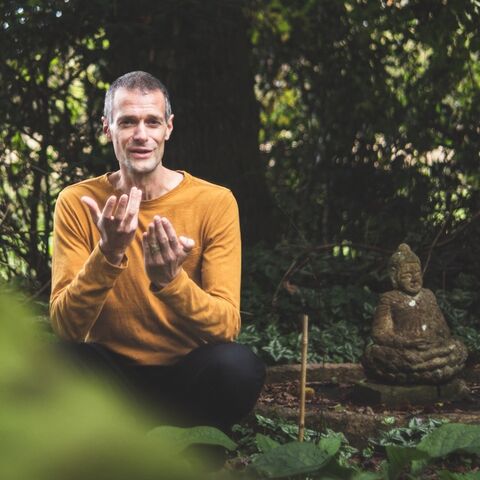
Let's do a quick taking the three-breath highway and you can take in my surroundings here in
A park in Denmark.
Let's close our eyes if that's comfortable and let's just do a brief being present for
Three full breaths for every moment of the inhale.
On through the pause at the top,
The turn,
And every moment of the exhale where there's
A pause,
And then every moment of the inhale again,
And continue.
Okay,
When you're ready,
You can open your eyes,
Bring yourself back to the space.
And so this was inspired by a couple actually TV shows or things on one of the streaming
Platforms.
I won't mention the names because we're not supposed to draw attention to things here.
Just supposed to ask for your donations,
Right?
But I hadn't watched this.
I haven't watched TV series in a long,
Long time,
Maybe for since 2012,
13.
So we watched two,
My fiance and I watched two TV shows recently and I was just kind
Of abhorred by not only the dishonesty,
But the deception.
So I do have a guided meditation here on discerning deception,
Which is rampant in our society
Too.
But at the heart,
So to speak,
Or the mangled,
Distorted heart of deception is dishonesty.
And where to begin with this,
You know,
Well,
We start wherever we're at,
Right?
So this is one of the things the historical Buddha was said to never have done throughout
All his lifetimes is be dishonest or deliberately tell a falsehood.
So I think where this starts is valuing it,
Right?
Why is this important to you guys too?
Why would you even value honesty over dishonesty?
And I know,
I think most of us here would say,
Oh yeah,
Of course I do.
But where does this really lie on our importance level?
For me,
It's just practical simpleness is it's just easier to do this,
Right?
Now I'm not talking about like speaking everything that comes on our mind,
Right?
And going out of our way to voice every thought we have about things.
That's crazy,
Right?
But going out of our way to deliberately tell a falsehood is it's not only is it takes a
Lot of time and effort keeping track of all the things.
But if we tune into how it feels,
It just doesn't feel good either.
And a lot of these repercussions I noticed in haste when I say something in haste where
It's not completely 100% honest,
Where's my intention behind it?
Usually with deception,
There's two things that it's used for either protection or to
Get back at someone.
And so it's totally understandable to protect ourselves.
However,
There are way healthier ways to do it than dishonesty.
Now,
Internally,
Though,
This is one where I need you guys' help,
Insights you have on
Dishonesty internally,
Being dishonest to ourselves,
Like lying to ourselves,
You know.
And I know this isn't really popular in spiritual communities,
Probably to hear sometimes,
But
Even affirmations sometimes can be dishonest,
Right?
So I get the wisdom and the helpfulness of affirmations.
However,
My take on them is a little bit different.
So instead of saying something I'm not or not feeling,
And there's a disconnect and
Disharmony and cognitive dissonance between saying something that I know isn't real or
Doesn't feel truthful or honest in my heart.
So the way to get around this and still use the helpfulness of affirmations I like is
Acknowledging what's here in its raw,
Honest form of how it is.
And then setting a goal or resolve,
An aspiration,
I love aspirations.
So I know I'm not here now,
But this is where I want to be.
And what do I need to do practically to turn my attention towards that without lying to
Myself or deceiving myself and saying things are the way they're actually not.
So that's one way we can use an aspiration instead of an affirmation to acknowledge how
It actually is right now and where we aspire to be or to go.
So now we're talking about the thing we most often encounter in our daily lives,
I think.
And luckily,
I haven't had too much of an opportunity with this,
Thankfully.
But the most challenging thing is when someone just lies directly in your face,
Right?
So there's different flavors of this.
If someone can lie directly in your face,
And there's all different ways that could
Be unfolding here,
They could know absolutely that they're telling you a lie,
And they don't
Care anyway,
And they want to do it to harm you or deceive you deliberately,
And they
Don't care if you know they're lying or not.
Then of course,
There's the one where they hope they don't know you're lying.
That's the most common one,
Right?
So how is that?
What do you do?
Depends on what situation you're in,
How do you deal with that?
When someone deliberately,
Have you ever had that happen?
Someone deliberately lie in your face,
What was your reaction?
I know in certain situations,
You can't call them out immediately,
Right?
Because other people are around and due to causes and conditions and circumstances,
It
Would not be helpful to call them out on their lie.
Other times it is right away.
So it really depends on the context and what the situation is like,
But I think one of
The obvious things,
If we know it's a lie right away,
Is how it feels in the body,
How
Horrible it feels in the body,
You know,
And then we might have regrets about,
Well,
Maybe
I lied to them,
Or it might bring up notions in our past of how we might have lied to other
People,
Now it seems to be coming back to us maybe or some way or another guilt or shame.
So what do we do about this?
What do we do about this?
Or what if you're just in an organization where you know somebody's just kind of blowing
Hot air and smoke,
You know,
On the surface it seems really good,
But underneath it just
Seems like they're not being 100% authentic and you know some of the things they say,
They're just saying it because it sounds good.
You know what I mean?
So these are tough situations too.
What do we do?
One of the easiest ways to not cause as much trouble is pull them aside and just kind of
Probe out,
I don't know exactly how to do this,
Just kind of see,
You know,
Investigate
In so many ways what they're saying and how,
You know,
Truthful they seem to be or how
Much committed to what they're saying they're going to do in organizations.
Easier said than done though.
Now another technique I've done before is when someone is in kind of in a social situation
In an organization where you kind of know they're lying or they're trying to pull the
Wool over someone's eyes,
One of the things that I've done before is make a joke about
It and a joke that lets the other person know who's deceiving or lying,
That I'm on
To you,
I know what you're trying to do and testing the waters here.
But at the same time it doesn't really,
For those that aren't in the know around,
It will
Still be funny to them and so it won't ruffle feathers or cause division,
But it sends a
Clear signal to the person telling the lie that,
Hey,
I know you're spewing BS here,
But do it in a funny way that even the person might laugh and the other ones around.
So sometimes it doesn't have to be as gravely serious of a thing,
It can just be,
Oh,
They
Might get the idea.
Oh,
Hey,
Maybe I shouldn't be saying things like this,
Talking like this,
Saying lies
And things.
Agnes says,
Hello,
Hello,
Agnes.
Now,
One of the more complex kind of moral or ethical hypothetical situations here is
This notion,
These thought experiments,
Right?
Like okay,
Let's say,
And the classic one of you're housing some Jewish people and Nazis
Come on your door and they ask for them,
Do you lie or not?
Now,
There's so much wrong with this setup and there is no clear answers,
Right?
And these hypothetical things,
They're a great thought experiment,
But as we all know,
What
We think about is not usually how things unfold in reality.
I just wanted to point out a few things here and I'm not going to give answers to this.
One of the things is,
What if you're in a,
Well,
First of all,
It's a completely political
Loaded question.
I mean,
A hugely politically loaded question.
So how would this question differ with a different time period,
Different ethnicities,
Different
Groups,
Different ideologies?
Okay,
Well then the whole question wouldn't have such a huge emotional charge.
The other thing is,
How do you know whether it doesn't matter what you're going to say
Or not,
Whether you are truthful or lie?
It could be the case that that won't even matter.
So then to get oneself all worked up over what one would say,
It might not even have
Any effect whatsoever.
They might just storm in there and do whatever they're going to do,
No matter what you say
Anyway,
You know?
So those are just a couple of things.
There's some other ones that I'm blanking on now.
But these things,
Of course,
Because what lies sometimes are being dishonest usually
Is couched sometimes in popular entertainment as a noble lie,
Right?
This fallacy,
I feel,
Mostly of a noble lie that I'm doing this to protect or for a greater
Good,
But the greater good of whom and at the expense of what other goods?
So the way I look at this is it's just a lack of creativity and a lack of commitment to
Honesty,
Right?
So if we really commit and work on building our honesty muscle,
Then if we're putting
These situations where it's just easier to tell a little white lie,
That's no longer
A thing because we've built that muscle and it's really easy just to say,
To not be dishonest,
But to have the same effect,
Right?
Of protection or not ruffling feathers,
Having,
Creating harmony,
You know,
Being kind and
Certain things like this,
Because we've exercised or,
And then our creativity muscle too.
A lot of times when people won't be honest,
They just don't want to spend the extra time
And effort to be creative,
To say things still in an honest way.
It's just easier to go fall back on a little white lie.
All right,
Is any of this bringing up anything for you guys?
Do you have any questions?
What about someone that's considering this,
But they have a history of not being honest,
You know,
Or not being honest with themselves and they want to change,
But they,
It's hard,
You know,
Because this habit pattern that they've built up,
You know,
It takes a lot
Of time sometimes to create new habit patterns of being honest and then people might know
Someone by how they are and they kind of think it's kind of funny to be dishonest in certain
Situations or this isn't a serious thing,
So we don't have to be totally honest.
And I,
Of course,
I'm not beyond that either.
I joke around,
You know,
With,
With things that aren't completely honest,
You know,
But
Some of the funniest humor is,
You know,
Raw honesty about certain things that just people
Haven't put in certain ways,
But so it,
It takes a little time and effort to,
To change
And we all start where we are,
We're at,
And there's no need to feel shame,
Blame,
Or guilt
Around being dishonest to ourselves or others,
I feel,
As long as we recognize the importance
And want to change and,
And put forth the effort to do so,
You know?
So one of these things I think might help with that is just reflecting on times in our
Past where dishonesty has caused ruin,
Not been helpful,
Led to things that are not skillful
And wise,
Either from others or in ourselves,
And then notice times in our lives where we
Have been honest,
Even when it wasn't easy or comfortable,
And how it had beneficial
Outcomes,
Maybe immediately or in the future.
So I think we,
Reflecting on that and really letting that sink into the heart,
Being kind
To ourselves and wherever we're at in this process of being honest towards ourselves
And others,
And knowing that we are doing the best we can,
If we could do better,
We
Would.
All right,
Well,
Thank you all for joining.
Hopefully,
This has sparked some kind of,
I don't know,
Perhaps internal process,
Some
Memories,
Some aspirations even,
And yeah,
Look into this for yourself,
Don't take my
Word for it,
Try it out,
See what happens in your life,
And until next time,
May you
All be blessed with the most honest,
Upstanding,
Truthfulness that benefits not only you and
Others,
But all beings everywhere.
May all beings everywhere realize awakening and be free.