Wholeness and welcome,
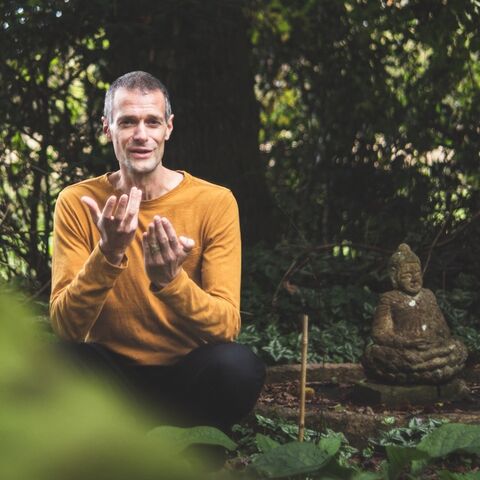
This is Josh Dippold,
Integrating Presence.
This event I've entitled Ghosted,
Ignored,
Canceled.
More Grist to Nourish All.
And that's grist,
Like grist for the mill.
In the description,
Let's explore what can be done to transform,
Transmute,
And turn ghosting and being canceled into nourishment and support for the wellbeing and awakening of all.
So I had to give a quick,
Brief disclaimer here.
You know,
This is obviously my perception,
My take on this,
And I invite people to correct me,
Seriously,
Where what's more beneficial here than this opinion.
The goal is to try to get to kind of the best perception,
Best views,
Kind of best response to this phenomenon we witness in our society here,
Fairly recently,
Right?
For anybody not knowing what this is,
I would guess pretty much everybody has,
Knows what ghosting and canceling is,
Or cancel culture,
But I'll just go ahead and read a definition I found online for cancel culture here.
A social environment in which publicly boycotting or withdrawing support for people,
Organizations,
Et cetera,
Regarded as promoting socially unacceptable beliefs is widespread practice.
Cancel culture or call out culture is a contemporary phrase used to refer to a form of ostracism in which someone is thrust out of social,
Professional circles,
Whether be it online or on social media or in person.
Those subject to this ostracism are said to have been canceled.
This expression,
Cancel culture,
Has mostly negative connotations and is used in debates on free speech and censorship.
And then ghosting behavior,
Stopping all communication with the person.
Ghosting,
Also known as simmering or icing,
Is a colloquial term which describes the practice of ending all communication and contact with another person without any apparent warning or justification and subsequently ignoring any attempts to reach out or communication made by said person.
The term originated in the early 2000s,
Typically referring to dating and romantic relationships.
In the following decade,
Media reported a rise in ghosting which has been attributed to the increasing use of social media and online dating apps.
The terms also expanded to refer to similar practices among friends,
Family members,
Employers,
And businesses.
And another definition,
The practice of ending a personal relationship with someone by suddenly and without explanation withdrawing from all communication.
Example,
I thought ghosting was a horrible dating habit reserved for casual flings.
Ignored is the other thing and that's pretty much universal,
Right?
That doesn't need really any much explanation of being ignored.
So I noticed when I was on YouTube the other day,
I didn't watch any of it,
But I saw Johnny Depp was on there.
I think it's some anti-defamation trial.
And I don't know the particulars of this,
So I'm not really referring to this thing.
Obviously there's some good that can become in watching that thing.
So you can discern what the media is doing,
What they're trying to,
How they're trying to take one instance and then use it for different agendas and whatnot.
It can be really emotionally charged.
I didn't watch any,
I really don't even know what it's about.
So I'm not really discussing that.
It just happens to be a timely thing.
Then again,
If this is such an unpopular culture,
It's gonna be kind of hard to set that on the shelf to consider maybe a different way of looking at this too.
So let's keep that in mind.
And I think the first thing we ought to maybe look at here is what's the frequency of these phenomenon and how often?
So by frequency,
I mean,
How often does it happen?
Does it happen just as a one time thing and then it never happens again?
Or is it happening regularly?
Is it happening irregularly?
And then the duration,
For how long does it last?
Is it just a really open and shut thing?
Or does it drag on for a long time?
Pretty much everything involved with it from actual events to processing in our minds,
Thoughts and emotions leading up to it during and after.
How long that last?
I'll break this down kind of in three different categories.
I'm gonna first go into like the emotional part of this.
What does this feel like either to be on either end of this,
Ignoring,
Being ignored,
Canceling,
Being canceled,
Ghosting or being ghosted?
Then I'll look at some of the psychology involved from my perspective,
Of course.
Then I'll go into perceptions,
Responses and actions.
I'll share some examples for me too.
Canceling,
In society,
There's also this kind of thing now where there's like a standoff before who can cancel who before they get canceled.
One example without going into details,
Once I was trying to go to an event,
But the intent I had in mind is kind of,
Not necessarily to cancel people there,
But to just go and see the distortions and things I didn't agree with.
Just for me coming from that place to begin with,
I don't feel it's kind of the most wholesome thing,
Especially when I was just doing an all or nothing type thing like that,
Right?
Without having more of an open mind.
Now,
Granted,
I've been to similar events before.
There was maybe a likelihood that it would be similar,
But that's not necessarily all the case.
So just going into it with something with a fresh open mind,
Not going into something with so much righteousness.
But it turned out that the event had been canceled and I didn't find out till I got to the place and there was nobody there,
Right?
And then I sent a message and didn't get a response from it.
So I got canceled and ignored maybe,
I don't know.
The next example is in a workplace,
Probably wasn't in the best place to be doing what I was doing at that point in life.
Without going into too much detail,
I just felt I was being ignored there.
And it ties into being appreciated or not being appreciated,
Mostly the perception,
Which happens in my own mind.
And so I was kind of acting out to try to get attention to be recognized or saying I was too good for what I was doing,
Right?
Maybe a little bit narcissistic and definitely ego trip of,
Oh,
I'm way above what I'm doing here,
Kind of thing and being pissed off and try to hide it.
That's one example of me being ignored and then not acting wholesomely out of it.
The indifference of being ignored too,
Of maybe just going around a park and trying to be friendly and making eye contact and just being received with indifference and just have to realize that that's not really being ignored so much that's just people being indifferent.
They're not necessarily friendly,
They're not necessarily hostile,
They just happen to be indifferent.
That doesn't necessarily mean being ignored either.
Now I wanna give one example of where I actually ghosted someone as an experiment for how this would work.
I don't need to put any details at all here.
Other than what happened was I did it with that intent of kind of being more of an experiment with the intent of not being a full ghosting.
So I just left a small amount of space and then got back in touch and explained myself.
Although I didn't put too much emphasis on an experiment,
It happened to be more relational but I did explain myself later for why I tried out ghosting in that attempt here.
It resulted with the other person being frustrated,
Me having a temporary satisfaction and this is an inverted satisfaction of,
Oh,
I ghosted the other person so now I've got the upper hand right in the relationship.
It just,
That almost happened almost immediately but then I realized,
Well,
That's temporary and not a wholesome real satisfaction.
Okay,
So now onto the feelings.
There's feelings of abandonment,
This core wound of being abandoned with ghosting,
Right?
Even some with cancel culture and ignoring.
Neglect,
Feelings of neglect,
Being neglected.
Desperation even,
Being cut off but then really being desperate to either find out what happened,
Wanting to be back with the person or be around them,
Things like this.
Neediness,
That we have to get some needs met from people or if we've been on the other end of that too,
Perceiving others is too needy for us.
Can be light despair involved.
Rejection,
Of course,
That's a really common one that just kind of goes into all this,
Is feelings of rejection.
It's not really as important as if these things are really there.
If we feel them,
They may as well be,
Right?
So if any of these kind of feelings come up around these,
Then it's just as real as if,
You know,
It doesn't really matter if they're not justified or anything like that.
The thing is they're there and that's what we're feeling.
Can also something for those of us who are energetically sensitive and empath,
There's a consideration that,
Oh,
This might not be me actually feeling this.
I mean,
It's kind of hard sometimes to know where we start and where we end.
What if we're empathing these types of feelings from the other party as well?
Might just be picking up on that and not realizing that we're just picking up others' feelings on this too.
So some of the psychology involved in this could just be a misunderstanding,
Not just a simple thing.
It doesn't make anything right about the behavior,
But there just could be a misunderstanding,
Lack of communication or not being able to communicate one way or the other.
And so it's just might be easier to act in these ways.
I'll give you an example.
My Instagram behavior,
If somebody doesn't know I operate like this on Instagram,
They might have certain ideas.
I follow a bunch of people on Instagram and I'm rarely on it.
When I do go on it,
I do it really briefly to do it like a traditional type post.
I don't do any of the kind of the new features yet.
And I go on there to do that.
And then I reciprocate for likes.
So if someone's liked my posts,
I'll usually go and check out their stuff recently and hit some likes on that.
For anybody's followed,
Depending on what it is,
I'll follow them back.
There's messages on there.
And then I only scroll for like a minute or two because there's just hundreds and hundreds of things.
For whatever reasons,
Good or bad,
I just choose not to engage much there.
So once somebody knows that's how I use that,
Then it might give them a little bit better idea what I'm doing or not doing on there.
The psychology around these things,
Ghosting,
Being ignored,
Canceled.
Looking at the triggers on this.
So some people will just get triggered out and that's how they'll respond now.
Some of these have guessing here,
Like cultural steam for lack of a better thing.
So once something becomes kind of popular,
You see it in media,
You see friends doing it,
You hear about people doing it,
Seems easy and trendy or for whatever reasons,
That trigger gets hit and then it gets responded with this.
And the more the habit pattern builds up,
The more likely it seems to continue such a thing.
We might also wanna look at our expectations or the expectations involved in this.
So if someone has an unmet expectation,
Then they might respond in these ways.
They might ignore someone because they're not worth their time.
So they're not expecting much out of the person so they don't wanna spend much time on them.
Canceling,
Here's my expectations.
If you don't live up to my expectations,
I'm gonna cancel you.
Ghosted,
For whatever reasons,
I now choose to ghost you because you don't meet the expectations I had and so this is a response or tactic I'm gonna do now because that.
Separation is another thing.
So when these things happen,
They cause separation,
Right?
Divide and conquer tactics,
Separating people from friends,
Acquaintances,
Family members even.
Sometimes separation's needed,
Sometimes it's almost weaponized in a sense if you were to push it or not push it,
But just say,
Or even push it and say,
There's a incentive for these types of behavior in order to separate people from their support systems.
However,
On the other hand,
Sometimes we need to be separated from people to create boundaries for our own health that can consider them from afar too.
Can also ask,
Was this a good fit to begin with?
Or is this a good fit?
By that I mean,
Well,
Maybe there was a reason why this ghosting,
Canceling,
Ignoring happened.
Maybe it's just time for the relationship to come to a close or a different stage and that's just kinda how it played out.
What about the thoughts and emotions leading up to being ignored,
Ghosted,
Or canceled?
I think it's very worthwhile to reflect on that.
And especially when maybe this might be anticipated to really tune in to be mindful of our thoughts and emotions around the time where we might anticipate this to happen.
And that's not to say that we should be hypervigilant and anticipated all the time and so have to be so self-monitoring ourselves,
Thoughts and emotions that it's challenging to interact and just be in the world in relationship.
So it's a balance there.
Also,
What about this golden question of how can this be an opportunity?
Golden question is what if the worst things that ever happened to me are the greatest gift I've ever been given?
So this is more after it would happen and that's just something to reflect on and consider and maybe something will come up with that.
There's an exception to this next one.
I'll go into it right after.
It's kind of like reverse psychology and saying,
Well,
Can I invite even more of this,
Invite the most absurd,
Imagined,
Feared extremes of this?
And this is in order to see how ridiculous it is to be completely down on this type of thing,
To make such a big deal out of it,
Which kind of seems maybe like I'm doing here.
What's the worst that could happen if I was ignored,
Right?
Make these absurd assumptions to the end,
Like,
Okay,
Well,
No one will ever talk to me again.
I'll just only say hi and bye to people the rest of my life.
No one will ever be able to even have an acquaintanceship with me again.
See how absurd that is to kind of stretch this out to the extreme.
Cancel,
Okay,
Well,
I'll just cancel everyone all the time.
I won't be able to even go in Starbucks because I'm just gonna cancel the welcome mat even before I get in there.
Absurd things like that,
Or,
You know,
I can't do anything without being canceled.
Everybody cancels me,
Woe is me kind of thing.
Ghosted,
Well,
I'm just going to go into superficial relationships just so I can ghost them.
Be that kind of person who just gets one up on everybody.
No,
So these are total extremes,
Right?
As painful as they might be,
Kind of going to the weird extreme of these can show how silly they can be sometimes in a way.
Not to say that the hurt and misfortune is justifiable.
And so that's the exception here.
This is not to fall into victim victimizer,
Which there's a bunch of that in our society,
Right?
Or the abuse abuser cycle,
If you want to call that.
Okay,
I get abused,
So I'm going to turn around and abuse others because that's what's been done to me,
Express the pain.
And then I will in turn get abused again by the person that I've abused or it'll come back to me in the other way.
So this is a vicious cycle in our society and there's programs around this,
It seems to perpetuate this for pain and misery in the world as if we didn't have enough or see it enough in the world at least.
So another thing is worth mentioning is putting ourself in other people's shoes,
Really sitting considering without ruminating.
It's like,
Oh,
Well,
Maybe this has been done to them and now they're doing it to me.
Acting out the pain that's been done to them on someone else.
And then the next thing here is the resultant of this to look at,
There's two different perceptions of looking at something really similar.
On one hand is the more wholesome,
Well,
This might lead to some needed solitude,
Some needed disentanglement,
Some needed seclusion,
Some needed disengagement and some needed renunciation versus the,
Oh,
I'm being isolated,
Now I'm lonely,
I'm not belonging anymore,
That type of thing.
See how there's a perceptual shift there between one way of viewing things is more wholesome than the other way of viewing it,
But they happen to be fairly similar,
It's just kind of a shift in perception.
So the appreciation involved here too,
In the frustration and social and professional status.
So a lot of times this feeling of a lack of appreciation can be related to frustration I found.
So sometimes when I feel frustrated,
I'm trying to get appreciation from outside myself.
And so when I'm not getting that,
I feel frustrated.
And one of the things that's helped me is realizing that I have to appreciate myself.
And when I feel appreciated,
When I can appreciate myself,
Then the frustration tends to die down a little bit.
Another psychological aspect of this is looking at the social and professional status involved here,
Kind of our worthiness and ego too.
So some people are kind of pressured into,
I don't know,
Canceling because of their social and professional status,
It becomes a trend.
Maybe there's a quick dopamine boost from doing this.
You get people egging us on to engage in this culture,
Peer pressure,
I mean,
It just might be an easy way out,
Ghosting too,
Instead of having to spend a bunch of time explaining oneself and going through the pain that it would take to do that.
And so it's just easier to ghost someone,
Right?
How is worthiness involved?
How is our either an inferior ego or our superior ego involved on either sides of these?
Sometimes power plays are involved in this type of thing too.
Like I was just talking about how this plays out in the media,
These kind of powerful people doing these canceling things and kind of the repercussions that come from that.
Sometimes people reap certain seeming benefits from canceling,
Ghosting,
Ignoring.
And probably the last thing here on the psychology is respecting the power of shadow as an expression of consciousness.
This perception comes from Matt Kahn teaching on respecting the shadow.
The idea behind this is the reason sometimes our shadow keeps rearing its ugly head and we don't want these dark things to act out,
But they keep happening,
They keep surfacing because they want to be seen as an equal expression of consciousness.
Now that doesn't make them acceptable or right to act in certain harmful ways.
It's just being aware that sometimes the shadow side of us will surface wanting to be seen as an equal expression of consciousness.
I found that when I can see it that way,
Then it doesn't really have to play out.
It just has to be seen this power that our shadow can have.
Now onto perceptions,
Responses and actions.
And I've gone into a little bit of this.
And I find like many things in life,
Some of us are here to learn and learn lessons about this.
Some of us have already learned a lot of stuff in life already.
Now we're being tested.
So when we're being tested,
Life will put things on our path to show how are we gonna view this?
How are we gonna respond to this?
And even no response is a type of response.
And so I like this idea of compost,
Mulch and fertilizer,
Taking all this that we've been talking about and just finding a way to compost it,
Mulch it,
And then use it as fertilizer for things to grow in.
If any processing is being done,
If we need to do processing on this stuff,
That's kind of like putting a bunch of waste products in a compost pile and then eventually turns into soil.
And with that soil,
It can now stop drawing negative energy and now it can be used as a nourishment ground soil for something beautiful to come forth.
And this goes in with the teachings of the four nutriments.
This happens to be a Buddhist teaching.
So we've got the physical food,
Right?
That's the most obvious.
We nourish our body with physical food,
But how many times do we just think of there's so much emotionality and ideas around eating food?
But if we look at our food as nourishment,
Instead of,
Oh,
I want to gain weight,
I want to lose weight,
I want to eat healthier,
I got to do this,
Got to do that.
What if we sat down and just used a blessing or just being mindful of this is nourishment for the body?
Taking that kind of idea and applying it further to this next one,
Sense impressions.
What are you taking in in the media?
What are you listening to?
What are you watching?
I mean,
If it was food,
Would you eat it?
For me personally,
My idea of having a TV in the house is like having a raw sewage pipe open in my house.
I'm not saying all television programming is not worthwhile,
But I find the majority of it,
And having get too much into political things here,
But paying for having to watch commercials and reruns,
Although that I could be outdated since I haven't had a TV for a while.
A lot of things are online you can watch too.
Really take that in,
Violent video games.
Is that nourishing?
Sex and violence on TV,
How nourishing is that?
Listening to talking heads like me for a long time,
Really evaluate,
Is this worth my time?
Am I getting benefit out of this?
Can I have feedback?
How are my emotions?
How are my thoughts?
How is my state of being,
My mood,
All this stuff,
From what sense impressions I'm being exposed to.
Of course,
Volitional thought.
Pretty sure everybody's here familiar with negative self-talk.
It's almost like a default.
You have to be super mindful to even stay in a neutral state so the mind will just kind of typically default into negativity.
At least it seems like that way for the most of us,
Right?
So it takes active effort to counter that.
Unfortunately,
It's just not like a quick fix and then no more negativity,
Self-talk,
Negative perceptions,
Negativity bias,
All this.
It takes active effort to first be aware of that,
Be mindful of that,
And then,
Okay,
What's the correct response to this?
How is that type of thing affecting me and others around me?
Next one is consciousness.
That's the fourth nutriment and that's just kind of a huge topic I don't have time to go into today.
So also in the Buddhist teachings,
There's the three characteristics of existence.
Anicca dukkha nata,
And I'll just,
Dukkha is stress,
Suffering,
Unsatisfactoriness.
And anata is,
I won't go into that so much because it's a very complex thing that I'm really challenging for me still to talk about.
But anicca is,
Sometimes it's translated,
I don't think,
The most helpful as impermanent,
Right?
Because we all know everything's impermanent in our mind.
Oh yeah,
I know,
Nothing lasts forever,
Which can be very helpful.
But to actually see and know that in our lives,
It goes beyond just impermanent.
I like inconstancy,
Enchangability for this word.
One surefire way to experience stress and suffering is to mistake things that are changeable and inconstant for constant and unchangeable.
Trying to set up all these external conditions in our life just right,
So we get all the outside world just right,
Arrange things just how we like,
And then we'll be happy,
Right?
But the thing is,
That's not a long-term success for happiness,
Because no matter how long and how hard we try and put effort into keeping all the external conditions in our life exactly the way we want them,
Eventually,
In the long run,
They're not gonna stay that way.
They're not gonna be constantly like that,
And they're subject to change,
Right?
And then when that happens,
We have this false notion that oh,
That shouldn't be like that,
But that's just the way the world works.
Things are subject to change.
Things are inconstant.
So just being in alignment with that truth,
Knowing that,
It's like,
Oh yeah,
That's just the way reality is right now in this world we're in.
There's also five daily reflections,
But the one most pertinent here I feel is separation.
We're going to be separated from everything we love and hold dear,
At least temporarily,
Depending on what faith or whatever we have.
And that separation,
It's been really challenging for me,
But that's just the way things are.
I've heard these Buddhist wedding vows that are just brutally honest and say,
We will be separated either by estrangement or death.
And I mean,
Just like that honest truth.
All relationships,
Everything will end either in estrangement or death.
It's not to get bummed out.
It's just to realizing that that's the truth.
And so the more in alignment I can be with that truth,
When that does happen,
Oh yeah,
That's just the way things are right now.
I mean,
This is the way reality is,
Restructured that way.
It doesn't mean we have to get bummed out and anticipate that the entire time.
Just knowing that so we can be more in the moment and enjoy the time we have together,
Right?
Real briefly,
I'll just give this kind of one last Buddhist thing.
It's kind of a crash course in psychology.
It's called the eight vicissitudes of life.
It's a big,
Fancy $2 word,
But it also is commonly called as the worldly winds.
So there's gain and loss,
Pleasure and pain,
Fame and ill repute,
And praise and blame.
Those forces are pretty much what all these,
I love this term,
Un-instructed worldlings,
People that are only of the world,
They're completely of the world and they haven't received instructions on how really to live properly in the world or live wholesomely,
Skillfully,
Wisely in the world.
And so they're completely at the mercy of these forces.
Gain and loss will just elate or devastate.
Pleasure and pain,
Seeking after pleasure,
Trying to escape from pain all the time.
And then praise and blame,
Right?
Completely uplifted by praise,
Torn apart by blame,
Are doing to others too,
Fame and ill repute.
Look at the huge celebrity culture.
Oh,
Gotta get fame,
Gotta get more followers.
Spending time,
Social media,
Getting followers and stuff.
Ill repute,
Oh,
There's a scandal,
Devastated career gone,
Gotta do everything to save face.
And so these things just dominate people's time and activity if they're not aware of this and not instructed otherwise.
Of course,
This inclusivity around these things,
How can we include more,
But doing it in a wholesome way that's not kind of like this forcing inclusivity on other people too,
Or totally bad mouthing old ways as well,
Censoring or imposing inclusivity,
But actually having real honest inclusivity with folks.
Not from a really moral,
Righteous,
Better than thou standpoint,
But hey,
I would like to belong,
Other people wanna belong.
This is how we find ourselves in the world.
One of the most devastating kind of things is being ostracized or not having any sense of belonging.
You see this,
Hear these stories,
How people were exiled back in the olden days for whatever reasons.
And that was,
A lot of them feared that more than death is being kicked out of community,
Sent off wherever without any kind of connections or anything.
How can we invite more real,
Honest,
Wholesome inclusivity as well.
Being prompt,
Clear and concise in communication can help give meaning and understanding,
Closure,
And just,
I mean everybody knows kind of the benefits of good communication,
Right?
I'll give an example here on some podcast guests,
Some people,
Or potential ones have reached out to me.
Honestly,
A few of them,
I've just,
I've looked the profile and the things they've done and I'm like,
Okay,
I just don't have a feeling that this is gonna be a good fit,
But instead of just coming to that conclusion based on a short profile and things like that,
I'm inviting several people just to chat for like five,
10 minutes and just,
You know,
See what they're all about and see what I can learn from them.
And if there's common ground or,
You know,
Some other option,
There'll be some mutual benefit either way,
Whatever happens,
I feel.
I don't know if I'll be always able to do this,
Kind of a humble brag there,
But for now,
That's what I'm doing instead of just not responding or responding and saying,
I don't think we're a good fit right off the bat without even chatting with them.
Now,
The next one is a balance thing too.
It's balancing kindness with boundaries.
How can we have kindness with boundaries?
How can we be aware of people pleasing and being superficially agreeable in social situations?
People say,
Oh yeah,
Let's get together again,
Let's chat and meet again soon,
Okay?
And then people go,
Oh yeah,
Yeah,
I'll just go along with that.
And it just seems so inbuilt into our culture,
Even if there's a clear kind of either knowing that that's not gonna happen,
Or maybe it's just me saying,
Or me knowing,
Oh hey,
You know,
I'd rather not do that.
So let me give you an example.
Somebody I was in talks with to possibly do a podcast and kind of get pushing off,
Pushing off.
So finally we got to the point where just saying goes,
Well,
You know,
Let's talk soon.
And I said,
I mean,
It's awkward,
But I said,
Hey,
Anytime you wanna reach out to me,
I'll make an effort,
Basically,
That's what I said,
I'll make an effort to chat with you,
But honestly,
I'm not going to probably initiate contact again.
It was awkward in the,
You know,
Just kind of like this,
I don't know how to describe it,
But it's just that kind of honesty.
And then also balancing our integrity of our word and honesty,
Like I was just talking about,
Kindness,
Again,
I've said boundaries,
And then forgiving ourselves,
Right,
When we fall short of this and making that resolve too,
To come back and be more honest,
Have better boundaries,
Be more kind,
Have more integrity,
Being aware of people pleasing,
Realizing that if some of these things,
If we deviate from our normal behavior,
It might be awkward,
You know,
At first.
Where are these boundaries we should set?
How should we set them?
What are you leading with?
So when we go to,
In these situations,
What are we leading with?
And then what do we want to lead with?
And then what would actually be the best for us to lead with?
Give you an example,
For me,
I tend to lead more with truth.
And that comes at the expense of awkwardness,
Just kind of being weird sometimes or different.
I'll give you an example.
This morning,
I was at a place and this,
I had my headphones on,
So I didn't know exactly what happened,
But there was a light by the scowl and it kept going on and off.
And somebody came in to kind of address it and I didn't really hear what they said,
But I said,
Kind of off the cuff,
Not really putting much thought into it.
I said,
Oh,
It's probably just ghost,
Right?
And just thought it would be kind of this funny thing.
And then I'm like,
Oh,
Well,
Wait a second.
They didn't take that as kind of a joke.
They,
You know,
Then they kind of,
I was kind of like,
Whoa,
What's going on here?
But then I just said,
Oh,
But not really.
I don't know what's going on.
Another thing possibly is expressing our views up front.
And not holding back until the end.
An example,
Recently I did say,
You know,
Kind of the minimal thing up front of like,
If such and such happens or doesn't happen,
Well then this is gonna be my choice then,
Right?
But then I didn't really express kind of the reasoning behind that,
You know,
What that was all about until the end when that outcome happened.
And then I put the whole thing on the table,
More or less,
Of kind of the reasons behind that choice.
It's like,
Well,
Yeah,
I guess that's okay.
And then on the other hand,
It was challenging because if I would have put all that up front,
It would be almost like too much right away.
It's too much unnecessarily right away.
Maybe even towards the end,
Maybe what I said wasn't really necessary either.
Maybe I was doing out of kind of a self-justification.
Or though sometimes something's really important to us and really needs to be expressed.
I could see it either way.
Also,
What about welcoming things that happen in our lives with the excuse of abuse,
Right,
And harm,
Right?
That's the exception here.
But otherwise,
What about considering just kind of a more of an ease of things coming and going?
So if someone ignores us,
Okay,
Just let that come and go.
We're canceled,
How can we actually welcome being canceled?
But with the idea in mind that,
Okay,
How much is it gonna do for me to get really pissed off,
Angry,
Upset,
Wanna retaliate?
What if I just welcomed?
Especially how I feel how this is coming in,
Just feel the feelings in the body and letting them come and go.
What would that be like compared to what I've been doing?
I don't know.
And then I find just giving authentic recognition and acknowledgement,
Honor and respect in our daily lives can help kind of build this muscle for when these things happen too.
And especially giving this to ourselves.
When was the last time we just recognized ourselves?
Looked in the mirror and said,
Oh,
That's this being people call Josh.
Or that comes with acknowledgement,
Honor.
How can we honor ourselves?
Respect and respect ourselves as well.
So to wrap up here,
Cancel culture,
Kind of some of the takeaways.
I had this as a tweet a while back.
Cancel culture can be a clearing.
All this stuff can come up to be seen and cleared out of the way.
It can teach us how much we value keeping our word,
If we do that,
Right?
If we value keeping our word.
How uncertain life is.
It just shows that really nothing is certain and how much do setting expectations really help us,
Right?
On the good end,
If our highest expectations are met,
Well then how long does that last before we're just setting the next expectation,
The next expectation,
The next expectation?
They can't really satisfy anyway,
Right,
In the long run.
Not to say you shouldn't have goals and celebrate good things in life,
Not at all.
The other end of expectations,
When we expect something to happen that it doesn't,
It's kind of set up for disappointment.
And then another takeaway I've had from this is some things that fall away from our lives can actually serve us well.
Some things,
It's the time for certain things to happen.
And so with that,
Take what's useful and leave the rest.
May you all be blessed with a optimal ideal state of consciousness and energy for the rest of your morning,
Afternoon,
Evening,
And night.