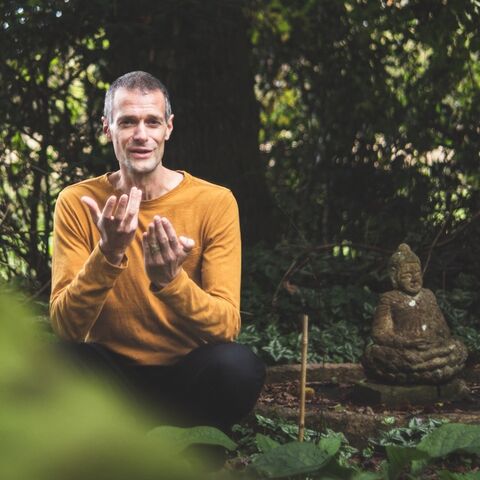
Wholeness,
Welcome.
This is Josh Dippold of Integrating Presence,
And today I have Denise Maselli with me.
How's it going,
Denise?
Doing well,
Thank you for having me here.
That's my pleasure,
You're welcome.
So the typical format,
And this is no exception,
Since Denise and I don't really know each other,
And to keep me from reading a bio from a script,
I'm going to pass it back and ask,
Who is Denise and what does she do?
So I am a teacher at heart,
A guide,
And I have been doing work in life coaching,
And I found that I have a very strong intuition,
So I do like to say that I'm an intuitive life coach,
Because I think that does add another dimension to it.
I was working in the health and fitness field because there were so many people who had seen a journey that I had taken and it just started organically happening,
And people were saying,
What are you doing?
What are you doing?
Why you make it look easy,
All of that.
So that's where it all started,
But then just before the pandemic,
I began to start to see people really struggling making changes,
And so I started looking deeper into how I could,
You know,
Get more experience with the resistance that comes up in people when they try to change,
And that's how I found subconscious healing and how I learned about the subconscious mind and the power of it,
Especially when we go through changes in life to kind of almost just keep reverting back to the old stuck patterns that we have,
And so I've now kind of made that the focus of my work,
And sometimes people do come to me wanting a goal in fitness,
Health,
Or just aging well,
And so I can weave together my knowledge about health and fitness along with like,
Okay,
What is the emotional pattern or the stuckness that you're feeling whenever you try to implement these new things?
So it's really a combination of coaching,
Teaching,
Guiding,
But really tapping into what are those patterns that seem to be on repeat,
And so I got certified in subconscious healing where I learned really how the brain works and how it's so easily changeable.
You know,
If we go back in history about how the brain was looked at,
I mean,
They used to do some pretty extreme things to try to get people who had problems,
You know,
What they would call mental problems at the time,
And now from everything that we know,
Our brains are neuroplastic,
And so if we simply change the way that we look at things,
Change the way we speak,
Change the way we think,
And get out of the stuck patterns,
We can create what we want in life.
So that kind of gives you a little bit of an overview,
And I was an educator for years,
And ironically or not,
The goal of all of my work was helping people change,
Helping people kind of face difficulties,
Whether it was in their role or,
You know,
Helping others,
Is,
You know,
Getting stuck in that and finding,
Like,
I'm doing the same thing,
But I want,
Like,
My students to learn,
And they're not.
Well,
Maybe the students in front of you have changed,
And you're still doing the same technique,
And so it really has been a lifelong journey for me of personal growth and also helping other people through change.
So I think I developed a resiliency at a very young age and a positive attitude.
No matter what's going on,
There's a reason for it,
And even as a preteen,
I had found meditation,
Which is pretty uncommon,
But I was struggling,
And I was looking for answers,
And I found yoga,
And that got me into meditation.
I remember finding the book,
Transcendental Meditation,
You know,
In the bookstore,
The local bookstore,
And it literally changed my life.
Throughout life,
You go in and out of it,
So I'm not gonna say I meditated all those decades,
But it did always come to me as a tool when I struggled.
So part of what I infuse into the work I do is I try to help people understand the reason why this concept of mindfulness,
Self-awareness,
There's so many terms for it now,
The reason why it keeps coming up,
Especially now as we're going through,
You know,
The whole globe is going through massive change,
Is that it really does work.
So part of what I like to teach people and guide people is to find and curate their own practice so that whatever work they do,
Whether it's doing,
You know,
A subconscious healing,
Guided coaching,
Or they find another way,
What keeps you moving forward to change and to grow is to have a practice.
You can't rely on people outside of yourself,
Right?
You can be guided and learn from teachers,
But,
You know,
Who wants to work with somebody all the time?
You wanna integrate those skills into yourself.
So part of what I do is help people find the best practice for them,
Develop consistency in it,
And learn that,
You know,
That changes too with time,
And there's nothing wrong with that.
You know,
Sometimes people will say to me,
I tried meditating and it just didn't work for me,
And I'll ask them about,
You know,
Give me some details,
And they did it once or twice.
And I'm like,
It is a practice.
That's why people call it mindfulness practice because practice,
You know,
It's not about perfection the minute you sit down and try to quiet your mind.
For the first week,
You could have nothing but thoughts,
And that's part of the process is to start to see just how much you are affected and impacted by things outside of you.
Well,
All right,
Beautiful.
There's plenty tossed out there to work with.
I want to dive in deeper to the subconscious healing technique as I'm not familiar with that.
But the other thing I think where we should start is with this notion of change itself.
And then maybe if there's time left over,
I'd like to go into meditation practice and how you help people,
You know,
Establish a meditation practice because that's my wheelhouse is meditation.
And I just naturally stuck for me almost immediately,
Which is a rarity as far as I understand.
So let's look at this thing of change,
Right?
So what are some of the things that are involved in change?
Most likely,
You know,
What needs to be changed?
I mean,
Usually if people come to you,
They know what,
I would just guess,
They probably know what needs to be changed or what they want to change.
So I think that the media thing that's coming up,
What happens if something's just not realistic?
Or maybe it's gonna take a really long time for them to do,
Right?
Or maybe in your guidance that maybe they shouldn't,
Maybe they shouldn't go in the direction that they want with,
You know,
These type of things.
And then the biggest thing is roadblocks,
I think,
For change too.
So I think that's enough material to get us going.
Yeah,
There's quite a few different ways you could go.
But yeah,
I'll talk a little bit about change because I think that some people are very uncomfortable with change and others are pretty comfortable with it.
I think that I became very comfortable with it at a very young age because of my family of origin.
So one of the things that I ask people about is,
You know,
What was your life like from zero to seven?
Because that has a massive impact on your subconscious mind and also how you feel about yourself.
And even if you don't have any distinctive memories,
Sometimes it's just an emotion that comes up of like,
For example,
Unworthiness.
If you feel unworthy and you don't really know why,
There's something going on there that is causing you to make decisions in your life that you're not happy with.
So sometimes people come to me,
Let's,
You know,
Use that quick example of,
You know,
They wanna just be healthier.
I've had people say to me on the free call,
I really wanna work with you.
I'm excited about what you know about nutrition,
But I don't wanna change anything I'm eating.
So right there,
We have a mindset issue.
I'm not gonna go ahead and work with you because you're telling me you're not gonna change anything,
Right?
So sometimes it is like you said,
Okay,
This probably isn't a good fit because I'm about helping you to see.
And I don't have like a,
Even in my life coaching that's not about wellness,
I don't have a program,
But I have people connect with what it is they're eating and how they feel after.
So many times,
Right,
Just like in life,
We're going so fast,
We don't pay attention to the effect of things on us.
And so,
You know,
I explained to the gentleman,
I said,
You know,
I totally hear you,
But unless you said to me,
You know what,
Dee,
I only wanna work with you on fitness and,
You know,
We'll just leave.
That's fine,
I'll work with you on that.
But if you're telling me you wanna feel better but you're eating the same exact thing for how many years?
And also you'll find this with supplements,
Right?
They're taking the same supplements for 10 years.
I'm like,
Your body probably stopped needing that like nine and a half years ago,
Right?
We never wanna get dependent on one thing outside of ourselves.
We wanna kind of get to the root cause of things.
So I try to help people on that first call to really find out,
Is their goal something they can work on?
In that example,
He wasn't willing to.
And I said,
I'm willing to work with you if you're willing to look at what you're eating and see if it's really helping you because what you're telling me is what you've been doing hasn't got you to your goals.
Do you just want someone to talk to about it every week?
Because that's what it,
You know,
In the back of my mind,
My gut,
My intuition was telling me he just needs a friend,
You know,
Which is fine.
But again,
If you talk to someone about the same thing over and over,
And this is where a lot of times people will come to someone like me who has a subconscious or a different way to heal emotional patterns because they're tired of talking about it.
Talking about something,
Thinking about something in a pattern that you have just creates more of it or just keeps you stuck in that same thing.
And so that's where,
And I can jump over into the subconscious,
So it's mindset,
Right?
And if it's a goal that you're on one hand telling me,
I want this and I want it now,
I've had people say that,
I want to lose 50 pounds in eight weeks.
I'm probably not your gal.
I want to help you create long-term change.
I'm not the one to call right before your wedding so you can get into a dress.
Like,
No,
You know,
And right away,
I can usually tell on a call when people set an unrealistic goal like that.
It's not something,
You know,
That like the minute you get into that dress,
Like you're done with the changes,
I'm really about lasting change.
So it's mindset,
Realistic,
You know,
Goals for the situation and what people are willing to do and commit to.
And,
You know,
Even just tracking nutrition.
You know,
If I've had people tell me,
Oh,
I'm terrible with these apps and that,
Because I'll,
You know,
That's one way I do it with them.
I say,
Give me 10 days worth of data,
Tell me how you're feeling,
And then I will tell you some different macros that might make you feel differently.
And they're not willing to track it.
So it's that willingness to do a new activity,
Even if it's just for,
You know,
Typically I don't work with people for less than three months,
But going into the new year,
I wanna make it six because I know that three months we can make a change,
But it's still not long enough to create those pathways in your brain that wanna stay with it.
You know,
You could lose half of the weight,
For example,
In three months,
But you have still this subconscious part of you that can still revert back and say,
Oh,
It's the holidays,
I'm throwing my hands up,
And I'm just,
You know,
Whatever,
Everything goes.
And it's that kind of,
You know,
Your body doesn't like that kind of extremism,
Right?
All of a sudden January 1st comes and you're gonna be perfect.
So I look for,
You know,
Are people willing to commit?
What is their mindset and what is their goal?
And that usually tells me whether it's a good fit and,
You know,
And also too,
Like not that other people who do those short-term things aren't,
You know,
Worthwhile,
But it's just not my style.
And then with the subconscious healing,
It really,
The certification that I got is based on two different kind of schools of thought in psychology.
One is neuro-linguistic programming.
So many people have,
You know,
Written about the I am statements,
How powerful they are,
You know,
And I'd like to think of what I hear more often than an I am statement is an I can't statement,
Right?
People say,
Oh,
I can't do that,
I tried that plan or I can't do that or I can't eat meat or whatever it is.
And it's like,
They've closed off their mind.
So it's another indicator of like the mindset,
But it's based on NLP,
Which is really just being careful about how you talk to yourself because your subconscious is listening and it's going to give you again,
More of the same.
So if we can slow you down and that's where the mindfulness comes in,
We can slow you down enough to stop that negativity because the one thing about the subconscious is it is based on a lot of the long-term emotional patterns,
Behaviors,
Thoughts,
Repeated thinking comes from a time when you were young,
You were so impressionable and whatever happened during that time.
And I tell people this,
I've had people who've had massive trauma to people who just felt left out.
Maybe they just didn't feel a part of their family.
They felt they were the youngest,
They never got seen.
It doesn't have to be a massive thing.
It's just an emotional memory that you have.
And every time you go to do something new,
There's that sticky feeling again.
And so I call it a negativity bias because back then we created these parts of ourselves to be seen,
To be heard.
You know,
If we were told,
You know,
Don't talk to me about that,
We learned to be quiet about it.
We learned to keep parts of ourselves quieter and away from our caregivers,
Or,
You know,
We learned what they wanted and then we provided that.
And it was all out of just wanting that unconditional love.
So it combines what is known as IFS,
Which is internal family system.
So I do a little bit of work in the beginning on what's your family of origin story.
And I tell you so many people,
Especially,
You know,
As we get older into the decades where we've got decades of these patterns,
Had some type of parenting situation or family situation where they felt unseen.
They felt that they had to push part of themselves down.
And,
You know,
It could manifest in later in life,
You get into a career and you're like,
Wow,
This is great money.
And,
You know,
I'm recognized in that,
But I don't love it.
Or you can get with a partner who maybe your family was really happy with,
But now you're like,
I don't feel like I'm in sync with this person.
You know,
You can start to have almost these feelings of imposter syndrome because you have learned so well,
This well-worn path in your brain about doing things that you don't necessarily enjoy doing,
Saying yes when you mean no,
All of those things.
And they can build up to a point where people will come sometimes just very confused.
They're like,
You know,
I should be happy.
I've got this,
I've got,
You know,
A relationship.
I've got,
You know,
A great career,
But I'm not feeling fulfilled.
And they're very confused about why.
And so that's where it's like,
It really helps to work with someone on a longer term,
But a lot of it ends up going back to,
They've really lost touch with who they really are because they were so in that pattern of doing what was needed when they were younger.
And they don't realize it because we're not aware of those parts of us.
So through this work,
We start to identify those younger,
More protective parts that said,
You know what?
It's,
You really need to not ask for so much.
You need to make the other person,
For example,
In relationships,
Just see how valuable you are.
But meanwhile,
If you overdo that,
You become a people pleaser,
Especially common in women,
Right?
But it can be anyone.
And suddenly you're like,
But wait a minute.
There are things that I enjoy and I like,
And that has been left out of the equation.
And we have to take responsibility for it for sure,
But it does help to understand that it developed out of a need for unconditional love.
And maybe,
Just maybe,
You felt that your love was gonna come to you under certain conditions.
So it's like we develop sort of an unhealthy relationship with ourselves because we disconnect.
And then we might get in connection with people,
Jobs,
Situations that that disconnected self was okay with.
But now here we are,
Like we're coming back around into meditation or we're having experiences in our life that make us question everything.
And that's when I say,
I call it sometimes the dark night journey,
Which you can go through multiple in your life where you say,
Why am I doing this?
So that's kind of like how the pieces of this,
I really feel this subconscious healing,
By looking at the parts,
Because of course,
What if we have more than one part?
Like there's,
I like to use the archetypes when I have people look at their family and say,
What would you say?
Like,
Were you a rescuer?
Were you just the quiet artistic one?
Were you the ringleader of your brothers and sisters?
Like if you had siblings,
And then what do you think your parents were?
And just by looking at that dynamic,
You start to realize,
Wow,
I have literally been a rescuer my whole life.
And was that really who I was,
Or was that something that developed out of a need to survive that circumstance?
And then because it became so strong,
Those parts of us become strong that they start to operate in our adult life.
And it's sometimes people never realize that.
And other times they might realize it over and over,
Like a marriage or a partnership or a career is suddenly,
You know,
They're suddenly feeling sad all the time.
And they're like,
What's going on here?
I'm actually really good at this,
But it doesn't feed me.
It doesn't make me feel happy to be good at it.
So I think that that's where people get to where it's like,
You know what?
That resistance you're feeling is a sign that you really have some inner work to do.
And so that's where I,
You know,
Through this process of subconscious healing,
It's usually an hour to an hour and a half session because we take a little bit of time to get mindful.
We share a little breath or a meditative practice to get people to where they can slow their mind.
And then the subconscious,
You can engage with the subconscious.
You can have insight.
You can have all kinds of things that come up just by talking.
So what I learned is to talk to the subconscious,
But I try to teach my clients how to talk to it as well,
Because you can actually use it.
For example,
If you have a racing thought,
You know,
Anxious person,
Rather than the other side,
The,
You know,
Depressed or sad,
You can use it to just say,
You know what?
I want to get some more sleep.
You know,
The waking up in the middle of the night.
So please tag and treat these racing thoughts because I really want,
You know.
And so there's a simple way that you can learn to be that in touch with your inner self.
And then everything is up for grabs in your life.
And you can start to feel more,
Oh,
This does feel more like what I want to do.
You know,
You can start to allow yourself to try different things,
To have more of an open mindset,
Because a lot of times we're so stuck in those patterns.
We don't realize that we really closed off from anything we're not familiar with.
And then add to it the pandemic where everyone literally got locked up and closed off from everything,
Right?
Even going out to work.
And now many people struggle with like,
Oh,
I can't work at home.
I can't just be cloistered in my little space,
You know?
So I feel like people are still going through,
You know,
The physical result of all of that as well.
Beautiful.
Yes.
The thing that was coming up when you were talking about this is sometimes seeing and knowing this is,
That's all it takes,
Right?
But other times seeing and knowing all this patterning is very helpful.
And it's a requirement,
Obviously,
To do that.
But are there more practical steps to do this?
You know,
If somebody doesn't even know what really makes them happy too,
Right?
And yeah,
Like you said,
Maybe they need an exploration period.
And there's this whole notion.
Yeah,
Some things from the outside will allow that and foster wellbeing and happiness.
But it's,
At the end of the day,
I think the full,
It's kind of an inside job.
But what I wanted to ask is,
Are there,
You talked about tagging and I forgot the other term you used,
But are there other practical steps that people can use once these patterns and archetypes are identified and seen in order to move through them?
Yeah.
Yeah,
So I think,
You know,
One of the sort of strategies in the method that I was taught was that you start with emotion.
And that primary emotion usually has a lot of charge behind it.
And what happens when you work on that,
So like typically a first session,
We would work on something like that.
What's the emotion that seems to run through different areas of your life?
You know,
Is it overthinking?
Is it high anxiety feeling?
Or is it more prone to sadness?
And that bringing that down through the session allows people the space to have such amazing insight.
Sometimes they can connect it to a body part because we do hold,
Right?
We do hold trauma or traumatic memories,
Emotional pain,
Losses,
Right?
Into particular body parts.
I've had people in the middle of the session be like,
Oh,
You know,
Something shifted in this area.
Like a lot of women,
It tends to be either the heart or the throat.
Like they have a hard time speaking what they need or they have had heartbreak,
Right?
Who hasn't had heartbreak?
But it'll start to shift that,
But it'll move down into the hips.
And I tell people this,
We're always trying to move it down,
Why?
Because we really wanna get rid of it.
We wanna release it down into the earth.
We wanna let it go.
But it will,
You know,
So sometimes I will just say,
All right,
Let's get you down on a mat.
And let's do some restorative practice.
And a lot of times it's,
You know,
We'll open them up,
The healing,
And then it's like,
All right,
There's some releasing.
And so we'll do like a,
You know,
A restorative,
Okay,
We're gonna do a shavasana,
But face down,
Because we're gonna just allow everything to drain out of you.
So it'll be,
You know,
More of a integrated somatic kind of thing where I'll work on doing those commands around what it is now.
Where did it move to?
And how can we release it down and through?
So that's also part of it.
So,
You know,
I will recommend to people,
Especially if they haven't been doing movement,
I'll give them some specific things to release.
Like if you're an overthinker and you have trouble even getting to sleep,
Which was a condition for a while when we didn't know,
Especially when we didn't know,
And today,
Right,
There's many things we don't know of what's gonna happen,
Is just putting your legs up the wall.
And as a meditator yourself,
I'm sure you know about some of these things,
But you put your legs up the wall,
What happens?
All of the stagnant energy that is pulled into your legs,
Right,
A lot of us are sitting,
We're not active during the day,
And so all of that is allowed to drain down into through your hips and out.
And the people who had absolutely no interest in yoga or anything else,
I said,
I promise you can even do it on your bed as long as you have access to put your legs up the wall,
And then just roll yourself down just five minutes and you will sleep better.
And they were just amazed.
They're like,
That's it,
I'm gonna be doing that forever.
So,
You know,
There's physical practices,
Breath practices,
And I often will teach,
You know,
Here's a series of things you can do if you need to down-regulate your nervous system,
And here's some to re-energize if you're toward that more sadness,
You know,
And I like to,
You know,
Being,
I do have experience in mental health,
But I will tell people this,
There is a spectrum,
And it's either you tend towards sadness or you tend towards worry.
Those are the two ends of the spectrum.
Where are you on that?
I try to get people to get really good at checking in with where they are and understanding that whatever emotional state that you're in now,
There's always one level up that you can go.
You wanna avoid going down,
So this is another practical application is that checking in.
Where are you on the emotional scale?
And how can you think about a way to get yourself up from there and also realize,
Hey,
Guess what?
I'm not at the bottom,
Right?
I'm not at total fear and,
You know,
Overwhelm.
I'm somewhere in the middle,
And you know what?
That midway point is better than being at the bottom,
So what can I do right now to get me out of that?
And just simple things,
Like if you need to energize,
Go outside in the sunshine,
You know?
I write articles about that as well,
How,
You know,
Simple things that we do,
We don't realize that if we just change our routines a little bit,
We can give our body more of what it needs because when we train you to be open to the subconscious and how it can change the brain so quickly,
We also want you to have tools that you can practice daily that will,
You know,
For example,
You know,
Getting into the sunset,
Getting into the sunrise,
The color of light that you get at those times and what it does for your hormones.
You don't need to take supplements for this stuff,
But you have to be willing to listen to what your body needs and be like,
Wow,
It felt so great when I woke up and I actually saw the sunrise.
There are physical reasons for that,
And once you experience these things,
So I'll give people like the down-regulating,
The up-regulating types of things that they can begin to do and,
You know,
Journaling is a part of it.
Some people don't like to journal.
I'll tell them get a voice recorder out,
Open on your phone,
Start to reflect about what it is you're doing and how it's impacting you so that you can be a little bit more willing,
Oh,
I can make that tiny little change.
You know,
I can do those things.
During a session,
We'll work on clearing,
Something that feels heavy,
And we start with emotions.
We go to repeated thoughts,
And then of course,
Repeated thoughts are what become our beliefs about ourselves.
So we go into belief.
So each session as we go,
We start to really build on it.
We do that family of origin,
Archetypal discovery,
And then we talk about storylines.
What are the stories that we're telling about our lives?
If we keep repeating the same story,
We stay in that story,
Right?
There's no room for anything else.
So what story can we create?
And as the session,
Each session comes to a close,
We try to get the person to create an I am statement or an can,
You know,
I do use my intuition there to kind of tell what are they ready for?
You know,
Is it an I deserve statement?
Because they've never allowed themselves to feel deserving.
And then we develop that together.
You know,
I give more assistance if they're new to it.
And sometimes they'll just be like,
Oh,
Here's the statement and then we try to magnetize that with talking to the subconscious.
And I tell them,
Put it on your phone screen because we know you're looking at that,
Right?
Put it everywhere and make it be part of your daily practice and see what else comes up,
See what resistance comes up to it,
What old stories might try to come in.
And that way you can bring that to the next session,
But you can also start to see,
Okay,
Well,
I do believe this except,
You know,
With this one person,
Right?
Typically people are not drowning in that emotional pattern in every area of their life,
But there's one person that triggers them or something they hear on the news that triggers them.
And I love to bring up triggering because this did not even exist outside of like,
You know,
Psychological assessments and things like that five,
10 years ago.
But now why is it so rampant that we're all triggered so much?
Or,
You know,
Many of us can get triggered by things and we find ourselves having,
You know,
Internal thoughts about it,
Or we say something out loud and we're like,
Ooh,
Did I just say that?
That was pretty charged.
And it's because we,
It's a sign of like needing to do inner work.
Do I really feel that way?
Or is it just a knee jerk reaction to hearing a political news story?
You know,
Is it something that I'm allowing to keep me in a negative kind of thinking pattern?
So I think that triggering is,
What I tell people is try to look at it as a positive sign that there's some part of you that's not okay with this outward activity or this mental thing,
You know,
Process,
Or,
You know,
That's a kind of statement like,
Oh,
I can't believe they're saying this now,
Or,
You know,
There's that I can't.
And we actually do have a whole series of on working on the statements that we say,
You know,
The storylines that we tell and really trying to neutralize them.
Like I tell people this,
It's never about getting rid of or feeling bad about feeling something or having,
You know,
A story that we've been telling for a long time,
But it's how much do you wanna move forward?
Let's give that a little bit of calming energy so you can bring in something more positive.
And if it's,
Maybe it's just,
I wanna be more in focus.
You know,
I want to do my work from inspired action,
Not feeling forced by deadline.
You know,
Which one is more productive?
And most people will say,
Yeah,
I wanna be inspired when I sit down to do my work.
I don't wanna feel like I have to do it because that doesn't bring up the most,
You know,
The best energy,
The best outcome.
That last part is a really good point for me too,
Because I can get kind of addicted sometimes of ticking things off my list,
Right?
But if I'm doing something important that's gonna be published out there,
That's not the right kind of energy to bring.
And I like this notion of triggering.
I say to folks,
Well,
Triggering is great because then it just shows me what I haven't addressed yet,
What I need to work on is yet,
You know?
So yeah,
It doesn't have so much to say with what's outside of me.
It's how I'm viewing it and how I'm responding to it.
And what's my relationship to that within myself as well.
So the other thing that stuck out for me here was this notion of these statements that we're,
You know,
These I am statements or the I can statements.
I like that,
I like that even more.
And so what I found with these is they need to,
Like you said,
They need to be believable.
Otherwise,
To me,
It just seems like I'm lying to myself,
Right?
I don't do these as much anymore.
However,
What I do,
I like to acknowledge the way it actually is now and not try to delude myself.
This is the way I'm seeing it now.
And at the same time,
I set an aspiration.
This is where I would like to be.
These are the qualities that I aspire to and that I can work with.
Then what are the actionable steps and new ways of seeing that can be conducive to aspiring towards these new values,
This new way of being,
This new way of seeing.
And then also with therapy,
I wanted to ask you,
And these type of things too,
I've noticed,
Yes,
Dredging up this old material is so helpful for a while.
And then I wonder though,
Is if it's already been addressed and there's been great progress made on it,
Does it make,
How much sense does it make to keep revisiting old material?
And one part of me thinks that,
After some progress has been made,
Or I don't know exactly where to draw that line,
But how much of this can actually either reboot it?
I think you were saying this earlier or something along these lines,
Like reinforce it.
And then if there's trauma involved,
How much of it can even re-traumatize it?
And how do you work with people about that notion that I find,
At least the small stint I did with therapy,
That's what I was finding after a certain point,
That I was feeling obliged and obligated to keep rehashing the same material just because I was in therapy,
Or doing therapy.
Exactly,
And it feels very,
Like to me it started to feel very indulgent and also just,
I would leave feeling very sad.
And I just was like,
I'm not a sad,
Inclined person.
And so I just,
I said,
I don't wanna do this anymore.
And I had done it throughout my life at various different stages.
So I have this unique way of looking at it that,
And also too,
If I add now the subconscious lens,
What I believe was happening in each decade or time period of I was doing it,
Is I was having conscious realizations about things,
But it was very limited to that situation.
So,
Just briefly,
Like when I first got married,
I was very young and I saw myself acting like my mother.
I was like,
Whoa,
Whoa,
Whoa,
Whoa.
This is not who you are,
Dee.
And I was just lashing out in an angry way instead of like talking about things and being very logical,
Which was my way.
I was like,
This is nuts.
And so I went to specifically for therapy for like,
I need to deprogram the imagery of my mother as a wife out of me.
And so that worked very well for that.
And it led to me going,
Okay,
Now what is this relationship to me if I'm not this sort of overprotective,
Maybe more narcissistic,
Which I didn't realize at the time that my mom was,
But so it's very specific in the conscious work and it is very drenched in that specific time period or situation that brought you there,
Whether it's a relationship,
A job,
Whatever.
And so I feel like it doesn't really touch the fact of that family of origin,
Your role in it.
And I didn't think anything about what my role was in the family.
I just really focused on like now this new role and how I was kind of mimicking what I had seen and what generationally,
Not to just call one person out,
But generationally had been the pattern in a very traditional Italian Greek,
Very patriarchal expectation kind of a family.
And so when you have all of that going on,
It's way bigger than just your relationship in your family.
It's like,
This is what is in the DNA.
And so working with the subconscious,
To me,
It was very quick that I was able to see the patterns throughout my life.
And that's one of the things that we talk about is like identifying the emotion,
The repeated thought,
The belief,
The story,
Whatever it is,
But then we ask people to make that connection to what other areas of your life,
So we can bring that in,
So we can treat all of it at once.
You know,
We do like something called a structure of associations.
And in the beginning of doing this work,
There is a training for specifically your brain.
It's about 10 minutes,
20 minutes.
There's three versions,
10,
20,
And 30 minutes where you just sit and listen to it.
It's got some visuals to it,
But it is all about association,
Dissociation,
Very,
Like I said,
Based on NLP,
Where it's not really about you logically understanding it.
It's about activating those parts of your subconscious that understand.
It's about putting together all of those pieces so that your tagging,
When I say tag and treat,
Is kind of one of the main commands is that find all of those things that are layered.
We even talk about emotion collages,
Because,
You know,
If you have a sadness thing or just a dissatisfied mentality from your family of origin,
That's probably not just one area of your life.
But if you're in talk therapy,
You're talking about it in just this one way.
So by doing it this way,
We're able to layer in the healing.
And so some of the people I work with with more severe trauma and that have done this method have tried everything to erase that childhood trauma.
It was,
You know,
Serious abuse in some way,
Like there was no trust,
They couldn't rely that they were gonna be cared for,
Whatever the case may be.
And even though they got some relief from the conscious talk therapy,
And some of them had even gone to,
You know,
Psychedelic therapies,
Some had gone to EMDR and had some success there.
It was always something where it was out of the box of talk therapy,
That they were able to achieve more space in their,
Like in their mind,
In their life,
To experience it from a different way,
To really let go of having been victimized in whatever way that is somatic work,
That it was always something deeper that came in.
And the people who came in and had tried that and it didn't work,
This was like,
Oh my gosh,
You know,
It's stuck in my hips.
And so sometimes it would be,
You know,
We do something to release it,
They come back the next week and they need a little bit more work in it.
So with those folks,
I would give them,
You know,
Some journaling to do in between,
I would give,
You know,
We'd work together on creating those statements that they would work on.
And,
You know,
Typically it would take a little bit longer because,
You know,
Especially if you're up there in your fourth,
Fifth,
Sixth decade and more,
You've got a lot of time in on those parts.
They have become very strong.
So,
And they become very resistant to change.
So we can literally get into the weeds with them and say,
Younger part,
You know,
We're respectfully asking you,
And I love using metaphors in this,
You've been driving the bus,
You've been jumping in whenever there's any kind of fear,
And we want you to sit in the back seat.
We love you.
We thank you for all this protection that you've given.
And we understand where it came from,
But we're the adult now,
And we don't need you to be so hypervigilant.
We just need you to understand that we're gonna make the choices that are best for us now.
Because really when you dig into that subconscious,
And I love this part,
And I started writing a book,
Honestly,
From having these great co-creative conversations on the podcast,
I started outlining a book after the first one,
Is to understand the subconscious mind is so empowering because this is why meditation works.
This is why self-awareness practices work,
Because our mind is changeable.
And the studies they've done on this particular type of healing,
You can actually see in a QEEG that the brain is changing.
Do they understand how?
No,
That's still all,
You know,
But they can see that just from talking to it and acknowledging these things that so much negativity and so much weight can be shifted and moved.
They can,
They'll never be completely gone.
They're part of our soul,
They're part of our hearts,
However you think of it,
But it can be just calmed to the point where,
You know,
People can just not be viewing themselves as a victim anymore.
You know,
Be feeling like,
Okay,
That demagnetized.
And then,
Like I said earlier,
That you want that session to move into,
Now what is left?
What are you feeling?
What are you thinking you would like to have more of in your life?
We get them into sort of a mini magnetization to wrap it up.
And then what the research shows on this is that even after the session is over,
There is a window where those commands are still active in you.
So I ask people,
If you can,
Do something chill,
Get a massage,
Go take a bath,
Take a walk in nature,
Bring your journal,
Like do something for you because the hits will keep coming.
You know,
Especially for those that are gonna do their daily practice and get subconscious healing in combination.
And I do have clients that they'll just come to the session and rely on me to create that.
It's gonna take longer to create those changes.
So the most effective way is to help them develop a practice,
To keep them going on it,
But use that time wisely.
Like don't book a session and then be like,
I've got six other appointments that day.
Like book it and then chill and take care.
You know,
Self-care and self-compassion are the two things that we'll talk about throughout the session.
Like how are you doing that for yourself now?
And if they don't have a lot of that going on,
There's usually a lot of negative self-talk,
Right?
There's a lack of compassion.
There's that practice of,
You know,
Like what leads to imposter syndrome,
That constant self-doubt voice has been given more power and more strength,
You know?
And that's where in a lot of the sessions that I get to,
There is usually some form of people-pleasing behavior,
Trouble with communicating and or full-blown imposter.
You know,
Like someone has experienced great success and then they're like,
Oh,
But I can't ask that much for what I'm offering.
You know,
There's all these different issues of like,
You know,
Really feeling worthy of what's coming at them.
You know,
They've created space and things have gotten better,
But then they have like an attack of self-doubt.
And that's,
There's those parts that are going,
Oh,
Are you serious?
You think you can do that?
And that we don't realize how much power they have.
And we just simply need to bring them in,
Identify them and say,
You know,
We even call it the protector-controller.
You know,
There was,
If you had abuse or neglect very severe as a young child,
There is a protector there.
And so when you go to be vulnerable in a relationship and you wanna open your heart to someone,
That protector could be sabotaging you and you could be pushing that person away without knowing that that's where it came from,
That protective part.
Wow,
Great insights here.
I love these fleshing out these details of all this inner work.
And you've touched on so many of the kind of motifs and challenges that we as a society seem to have in these days.
And I think you touched on a lot of the feminine challenges in particular as well.
So before we start wrapping up here,
I just wanted to ask if you have some quick tips and techniques for starting a daily practice,
Especially meditation and just how you work with folks,
Maybe even in your own experience to do that if you have one to yourself.
Sure.
So I'd like to tell people this,
That don't be overly committed to one type,
Right?
You might listen to like an insight timer meditation and really resonate.
I know I'll use my example because I used to love in the beginning having a guided meditation because it's helpful for beginners,
Right?
It gets you to go,
Oh,
Wow,
I'm really holding my shoulders really tight.
You know,
Doing little mini sort of like calming and soothing techniques.
And I've learned so much about nervous system regulation.
So I tell people start where it's comfortable.
Now,
Some people have an attitude towards it that is very like,
Oh,
It's so woo woo in that.
I tell them,
You know what?
Just listen to a sound then.
Maybe you love cello music,
For example.
Just listen to a beautiful five minute cello piece.
Like make it something that brings you a good emotional feeling and don't worry about it fitting in a container,
Right?
Because a lot of people picture someone in a robe,
You know,
With a mantra and they just can't connect to it.
So if that is what's happening,
Then ask yourself,
What is it that you enjoy?
What,
You know,
Is it jazz?
Is it,
You know,
So I start with that.
And then if they've never experienced sound healing,
Often those can be so powerful for people that just,
You know,
It's a simple soothing binaural beat,
Solfeggio frequency.
And so I like to produce those.
I don't produce the music myself,
But I'll just share it.
Like in my YouTube channel,
I do like mostly 10,
15 minute,
Because I know that as a beginner,
That's what they're going to be able to sit for.
So I'll,
You know,
Offer those as just a starting place,
You know,
And see whether you like the music,
The healing beats,
Singing bowls,
Make it a fun exploration.
And if one really speaks to you,
Then stick with that for a while.
But the whole goal of it is to let your mind go,
Right?
And,
You know,
A lot of what people will say is,
I sat there the whole time and just nothing but thoughts came through.
I would get that a lot when I taught like restorative yoga.
That's okay.
You needed that.
You needed that time to just let it all roll through.
And I'll tell people,
You know,
You can use a strategy of just kind of see it as a real going by that just fades as it goes by so that you're not getting too involved in it,
But don't try to fight it or deny that it's happening.
Oh,
I didn't meditate well.
Don't judge it,
You know,
Have compassion for yourself.
And it could be as simple if you're just not,
You know,
Into all that woo-woo stuff as listening to one sound.
You know,
Maybe you don't have a headset and you don't have all that stuff with you,
But maybe there's a hum of something like an air conditioner.
Just let your mind focus on one thing.
Maybe there's birds singing outside of your window and just focus on that and let everything just be as it is.
And so,
You know,
That way it becomes a flexible practice,
But the biggest thing that is going to show you results is a consistency of doing it,
Picking the time of day,
Morning or night.
Everyone's different in that.
You know,
Some people aren't going to do it at night.
So when you wake up and when you go to sleep,
You're the closest to a dream theta state,
You know,
To the state you were when you were,
You know,
Up to age seven.
And you want to be,
You know,
In the best state that you can.
Now,
Some people can find that time twice a day.
Oh,
The power of that,
Right?
I sometimes will take a break in the midday if I need to really shift gears.
I want to go into creative work and I can take five minutes and then I can be in a different state.
It's all about learning that you can control your state.
You don't have to be just a reactionary person out there in the world because we've got enough of those,
Right?
And so it's really about taking back your power to create the life that you want by starting in small steps like that.
And if you're a person that's feeling triggered,
I say,
You know what?
Acknowledge it and be,
You know what?
Rumi has a quote,
And this is one I love to kind of wrap up with.
The hole is where the light comes in.
There is a reason you went through that thing.
There is a reason why you're feeling so much resistance when you hear a certain thing come on the news or whatever.
There is a reason for it and look at it as a point of,
You know what?
The universe or whatever you believe in is trying to show you something that you want to be able to look at differently.
You want to be able to shift your perspective on it and take it as a point of this doesn't have to mean,
Oh,
I'm so messed up and all that judgment stuff.
This is a place where I can invite myself to allow self-compassion and allow myself the space to be a stronger person,
You know?
To move forward with what I want in life and not feel stuck.
Beautiful.
Yeah,
My fiance says like,
You know,
The life will present us with things that we need to address and we need to work on this mirroring technique.
People have different notions of what these mirror teachings are and I think that's one of the ones.
So Denise,
It's been a pleasure and an honor here and a joy along the way to hear about all the things that are possible with this technique and the other things you bring to your clients in your work and the work you've done as well.
So is there anything you'd like to leave folks with?
If there's any other final message you'd like to leave the audience with.
Sure,
Thank you.
You know,
The power of being in alignment with what's possible in your life,
With what you've always wanted is something to me that is you know that you are meant to be doing something when you feel happy.
Your emotions are your guide and when your soul feels true joy,
That's what you need to move toward,
You know?
And maybe it's just that you work too hard.
So what can you do right now to bring more joy into your life?
And let that be your guide.
Let your emotions guide you to what it is that wants to be more present in your life because any of those triggers,
Any resistance you're feeling,
It's telling you that maybe you're pushing too hard,
Right?
Pushing too hard doesn't necessarily get you to where you wanna go,
But taking care of you and feeling better and feeling happier with your days and what you're doing with your time are really the key to being aligned with who you really are.
So thank you so much,
Josh.
It was great to have this chat with you.
You're welcome.
It was,
The feelings are likewise here.
So may all beings everywhere experience true joy in their heart of hearts.
Bye,
Everyone.