Holdness and welcome.
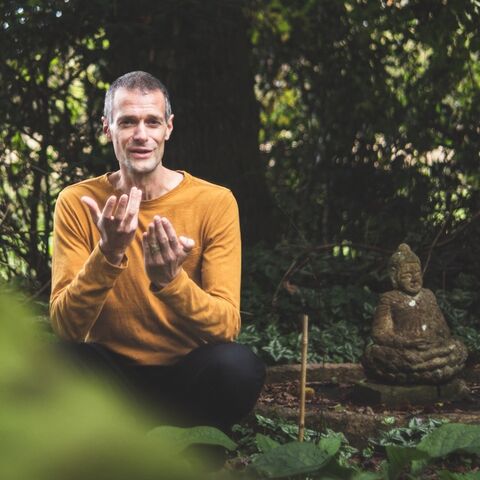
This is Josh Dippold,
Integrating Presence.
The description I have for this event,
This event of death contemplation and meditation,
Is unwise,
Unskillful choices can come from an unconscious fear of death.
The most profound contemplations and meditations on death protect us and help us appreciate every moment.
So,
What are you doing here,
Josh?
You might say,
It's springtime.
Here in Missouri,
The trees are already starting to get leaves.
There's this full life force energy,
Seething,
As nature returns to its regeneration cycles.
And of course,
We all know spring fever,
Right?
I wanna give this disclaimer right up front too,
That if any way you feel this might be triggering,
Because it is a pretty intense topic,
We'll be contemplating loved ones towards the end,
Loss of loved ones too.
And there'll actually be some really graphic detail on the contemplation and meditation.
So,
If you feel this isn't for you,
It's no big deal.
You can turn this off now.
And then another brief introductory note here.
When I was going through some of the stories and recalls and quotes and whatnot on this topic,
Things didn't really seem,
Or a lot of things didn't seem to match up exactly the way I remembered them,
Some of the tales themselves when I dug into them and stories,
Turns out some of the sourcing was,
Didn't line up.
But anyway,
I won't bore you with all those details.
I'll just put what I found out in the show notes as far as I can.
So,
We'll just take the wisdom presented here,
I guess on face value.
And then for any scholars that wanna dig into this deeper,
I would appreciate kind of any kind of better sourcing and information about anything that's mentioned here today.
Also wanna make clear that with death contemplation and meditation,
We're aligning with the truth of the way things are right now.
We're not aligning with death.
A side note here,
There's some teachings that go in and say that we were at one time,
You know,
This is way above my pay grade,
Eons and eons ago,
That we were able to consciously incarnate without needing to use a womb birth.
I guess we obviously weren't humans the way we were now then but anyway,
Just an interesting point to possibly consider.
I can't speak from experience on that obviously or even observation,
Just some information I've heard.
What I'm getting out there with that is the way reality is structured right now,
Right?
There's,
That's just the fact of life,
Right?
This body will pass more than likely.
Unless,
You know,
I'm sure there might be a few masters out there,
Maybe not listening to me in tonight,
But who could leave this plane of existence without shedding off their body.
But for most of us,
Right,
That's,
We're not gonna get away with that.
We're not gonna leave this earthly life here with this physical body intact.
Although I could be wrong but for the most part,
No,
No.
There's this phrase,
This quote actually,
That I kind of attribute to J.
Krishnamurti maybe.
I don't even know where this came from.
I couldn't actually find it at all when I was looking for this.
Thought I heard that Dharma talk years ago and it goes like,
The greatest ill of mankind is seeing death all around and thinking it won't happen to me.
So this goes into terror management theory which I just heard about,
Kind of looking,
Researching for this presentation here.
And so these are defense mechanisms like in the context of death,
Kind of push it into the future.
Oh,
I don't need to think about death now,
Push that in the future.
Or pretend it doesn't affect me.
Like,
Not me,
Not now.
And then we talk about death culture too.
I mean,
We live in a society where basically have a death culture.
And you turn on TV,
There's movies and shows like glorifying violence and death to the point of like titillation.
There's also,
You know,
People find entertaining horror movies like imaginative,
Imaginary things about violence,
Inflicting violence and harm as entertainment.
There's even corporations,
Right?
I was dealing in the business world today and this word corp,
Corpse is in corporation,
Like corporeal,
Meaning this dead entity kind of thing.
Corpse.
I don't want to get this political.
I'll just say that what about eating flesh even?
You know,
Obviously I'm a vegetarian,
So this is mostly a vegetarian,
Not a strict one.
So this is going to be obviously biased.
And I will say that it's not going to do me any good.
I haven't found in my experience of just going and preaching to somebody about,
You know,
They shouldn't be eating meat.
And I even say,
Folks,
If you're going to get sick by not eating meat,
Don't do it because what's,
You know,
What's the point?
You can't sacrifice your own health because of some ideology,
Right?
It doesn't,
That doesn't make sense to me.
If you think about it though,
And then of course,
Lead by example,
Not by telling someone what they're doing is wrong.
That's my personal opinion,
Obviously.
Eating flesh though,
It's like sustaining life from another life form.
And also when,
I guess the like life force energy,
When a being is killed,
The life force energy leaves fairly quickly and then what's left is pretty much death.
But if in vegetables and whatnot,
Once it's separated from the root,
It still holds life force energy for quite a while,
Right?
And not until it starts to be rotting,
Does it kind of lose life force energy.
If I'm mistaken here,
Please,
Someone jump in here and say something.
Another quote that I found that I remember,
But then I went to try to source it from the original polycannon.
I couldn't find it exactly the way it was here.
It comes from Tricycle Magazine,
Which is a Buddhist magazine.
And of all the most profound meditations,
It's on death.
And the quote is,
They attribute this to the Buddha,
But I couldn't find it exactly.
Of all the footprints,
That of the elephant is supreme.
Similarly,
Of all mindfulness meditation,
That on death is supreme.
Most of us don't know the time or place or how the body will shed.
And many of us don't wanna know this.
It makes sense.
So that just adds more immediacy to it.
How uncertain the time,
Place and the way or whatever happens will pass on from the body,
However you wanna look at it.
And so we have these two extremes kind of in society where you give people that think,
Oh,
No negativity,
Pretend it doesn't exist.
Don't be a downer.
And just all love and light all the time.
We can just supersede death somehow or something by just raising our vibration high enough and it'll all be good.
And then you've had the other extreme of,
Oh,
Being very morose,
Dark,
Bleak,
Death obsessed.
You know the type,
Right?
What made me think of this is I recently joined a Bonta Sujato signal group and their little thing,
It says friends to the end and it has this little cloud on top of a rainbow smiling but then the words say,
We're all going to die.
So it's kind of this kind of strange Buddhist humor,
I guess.
Now,
What are the benefits of this?
I went on and kind of just threw a bunch of stuff out there about background,
But what are the benefits of contemplating and meditating on death?
Well,
I wrote a short blog post about this as how death meditation is one of the four protective meditations.
I guess they're included in the Vasudha Magga,
The Path to Purification,
Which is a book.
I don't know if it's included in the canon or not.
I don't think so or maybe in the level of commentary.
Death meditation along with meditation on the Buddha,
Loving kindness,
The fourth one,
Blanking on right now.
But anyway,
Meditation on death.
I came up with this saying it could probably protect against any harmful effects or some of the harmful effects of nihilist.
So since they resonate with death and the energy of loving kindness,
Maybe a reprieve from their bleakness.
So I've combined two there.
I don't know.
I don't have too many encounters with nihilist,
But there are some out there who just,
They think the world's problems would all be solved if everything was just wiped out,
Annihilated,
Completely done,
Gotten rid of.
I mean,
That extreme.
The other extreme is like eternalism.
Both I feel are traps that are frightening,
Can be frightening.
But anyway,
If you have the influence of a nihilist around you,
It's just like,
Well,
They see the benefit in death all the time.
However it can come,
The less existence,
The better.
So if someone's around you like that and you're already prepared for death,
It doesn't really affect,
It can't affect that much or as much because that fear of dying is gone are at least less than when not being prepared for it.
And then of course,
Loving kindness can help us with that too help others around us and actually help the nihilist because maybe it's a little break from their bleakness.
This is a quote,
It really sums it up well of a benefit in the meditative context about death meditation.
It can be practiced when mental hindrances and other negative mental states are significantly affecting the progress of one's meditation which in some meditators can lead,
Can even lead to terminating the meditation practice altogether.
It also says it can be practiced as the powerful antidote to laziness,
Lethargy and lack of motivation while creating a sense of heedfulness,
Urgency,
Motivation and energy in the meditator to continue with the meditation.
So that first part there,
Yes,
If it's just like this kind of,
I don't know if doubt necessarily applies here but these negative mental states that is like if I'm just sitting down and experience all negativity mind states why even bother meditating?
And so it's like applying death to those negative mental states,
Right?
Well,
I'll get more into that a little bit later here.
And then of course it brings this sense of urgency the second point in motivation.
There's really no,
The time here is limited to make every moment count.
For the bigger picture in everyday life let's say some of us here have diagnoses or have had in the past,
Have challenges with the body over planning and striving.
How many people plan maybe to the point where they think it might be a little ridiculous or striving towards certain goals,
Like shoving things aside in order to get just to that goal like tunnel vision.
What about perceived problems in life?
Oh,
This is a problem,
They're a problem.
Oh,
I have problems,
Tons of problems,
Right?
Or quarrels,
Especially with like lovers and couples and whatnot.
The sixth line from the Dhammapada puts this beautifully.
There are those who do not realize that one day we all must die,
But those who do realize this settle their quarrels.
Where's all these diagnoses,
These challenges with the body,
So over planning and striving and perceived problems and quarrels.
What's gonna happen to those when the body passes?
What was this called,
You know,
Death.
It's not,
Those things aren't gonna be there in the same way with this body,
Right,
After dying.
So all this time and effort we put into those things just mentioned are gonna become moot,
At least in the same way that we know of them now.
To continue with the benefits,
Of course this prepares us for death,
Right?
If we've spent time contemplating and meditating,
Reflecting on death,
Well then it seems to make sense that we'll be more prepared when that time comes.
And also for the time of loved ones and anyone else we're around or need to go through their death process as well.
Whatever points of that journey we experience.
Also in the meditative context and kind of practice,
It's a way to help realize the deathless,
Nirvana.
So it gives that kind of reference point,
I guess,
To death and the deathless,
Which is another synonym for nirvana.
The unhailing,
Liberation,
Full realization.
So it's also easier to forgive too.
If we really realize that we're gonna die someday,
Then what's the point of holding onto this burden,
Carrying around this burden where we can't forgive?
And we hear that so often too,
People close to the end of life,
That they more easily forgive.
But also one of the main points here is it makes us become more alive.
We hear these stories about near death experiences and people like,
The whole life will change.
They now have a mission.
They take nothing for granted or very few things for granted.
Like so grateful for so much then.
And even I'm sure probably people here,
If they wanna reflect,
If it's not too traumatic on maybe a time when they had it,
Maybe a close brush with death.
Not to go out of our way to do this,
That's obviously not what I'm suggesting here.
After that time,
One feels very alive,
Very grateful to be alive.
It also brings tranquility,
Calmness,
And peace,
Meditation and reflection on death.
Priorities become clear,
Right?
We realize how kind of little time we have and how immediate this life is.
Then all these kind of sidetrack things and diversions,
Maybe distractions,
Stuff piling up.
What's really important in life becomes clear.
It can also help with grief too.
Gives composure and understanding.
Recently here,
I have two friends who lost parents.
Buddy now here in town,
Both of his parents are now gone.
He's not too much older than I am.
Maybe there's some folks here who are listening in who know about Denny,
You and I.
I help him sometimes,
Or at least comment at the end of his classes on Saturday,
His Chi classes.
And he recently lost his father.
He had been in a kind of a preparatory stage for quite some time being a caregiver with him.
And I just want to read really briefly his wisdom that he had surrounding this.
The dying really needs final resolution,
Which many family members inherently are incapable of delivering,
Mainly because they confuse dying with mourning.
Dying peacefully is about letting go,
Whereas mourning is about not letting go.
This discrepancy actually creates tremendous arguments among family members when the timing is the most critical,
Which doesn't help.
To let a loved one die peacefully in front of your eyes requires great discipline and self-abjection.
Try to enlist your family members so that their conversations with the dying are centered around.
Say love,
Say sorry,
Say thanks,
And say goodbye.
Keep focusing on these and keep uncovering issues that have been buried for decades,
Which are inevitably preventing the dying one from finally letting go.
Now this next story is from the Buddhist,
Well,
I'll let you read the sources,
But it's a really poignant,
Touching story,
Kind of intense one too.
And I'll just read this.
Pregnant with her second child,
She was returning to her parents' home along with her husband and small first-born child to give birth.
By the way,
This is obviously a selection.
Along the way,
A great storm blew up,
And she asked her husband to provide shelter for the family.
As he was cutting grass and sticks to build a shelter,
A snake bit him and he died of the poison.
Unsheltered and wondering at her husband's long absence,
Patakkara,
Probably not saying that right,
Gave birth and had to spend the night sheltering both her children against the rain and wind with nothing more than her body.
The next morning,
She found her husband dead.
Distraught,
She decided to return to her parents' home.
However,
A river,
Swollen from the rain of the previous night,
Ran across her way.
Unable to carry both children across the river,
She left her first-born on the near bank and waded through the raging current,
Carrying her baby.
Placing the baby on the far bank,
She turned back to fetch her first-born.
A hawk,
Seeing the baby,
Took it for a piece of flesh and swooped down on it.
Seeing this,
Patakkara raised her hands and tried to chase it away,
But to no avail.
The hawk picked up the baby and carried it off.
Meanwhile,
Her first-born,
Seeing his mother raising her hands,
Took it as a signal to cross the river.
As he jumped into the raging current,
He was carried off to his death.
Overwhelmed with grief,
Patakkara returned to her parents' home,
Only to learn that it had burned down from a lightning strike in the previous night's storm.
Her parents and brother were at that moment being cremated on a single pyre.
At this point,
She went mad and began wandering around half-naked.
Only coming into the Buddha's presence did she recover her senses.
He taught her the Dhamma,
And eventually she ordained and became an arahant.
Sometimes we think we've had a bad day,
Right?
So there's the parable of the mustard seed.
My retelling of this is not good,
But maybe you guys are pretty familiar with this or can look this up for a better retelling.
But it's basically,
I don't know if it's confused with the same gal we just mentioned.
Kisa Gotami is usually associated with the mustard seed.
This gal loses her child.
I don't know if I'm getting the details right,
But she goes mad.
Her only child is carrying around kind of a corpse and just going around frantic,
Asking for help.
And she comes across the Buddha.
And he doesn't judge or criticize.
And he says,
I can help you.
Just go and gather a mustard seed from all the houses who have never experienced death.
So she goes door to door.
And of course,
They all have had brushes with death or they know someone who has died,
Someone their family or friends have died.
And so she finally got the picture and realized that,
Hey,
This thing called death,
It pretty much has touched everyone.
Another brief thing I found really profound how immediate and uncertain life is.
Comes from another sutta.
And I'll just read a little portion of this from AN 619.
But as to the mendicats who develop mindfulness of death by wishing to live as long as it takes to chew and swallow a single mouthful,
Or to live as long as it takes to breathe out after breathing in,
Or to breathe in after breathing out,
These are called mendicats who live diligently.
They keenly develop mindfulness of death for the ending of defilements.
So you should train like this.
We will live diligently.
We will live keenly developing mindfulness of death for the ending of defilements.
That's how you should train.
So there really is no guarantee that one bite of food will be swallowed to the end,
Right?
Also that we're gonna make it through the duration of the in-breath or the duration of the out-breath.
Now I invite you,
We're gonna do kind of a more of a formal meditation practice on death.
Welcome to actually encouraged to take the corpse pose.
If you'd like and it's comfortable and you can still hear me,
Take a corpse pose which means lying on your back if you're not familiar.
If you'd like,
You can take your arm and place it like a karate chop on the floor.
That way if you start to fall asleep,
The hand will likely move in or out.
So we're meditating,
Not sleeping here,
Right?
If you get any kind of signal where this is not for you and that it could be triggering,
Please don't continue because we will be going into some really graphic detail and also letting go of some dear things.
And of course we'll use our imagination here.
And this is,
Most of it's modeled on a Biko Inalio,
Mindfulness of Death which I found interesting that if I'm remembering right a few years ago when I first discovered this as a recording and you can download all these other recordings in this series except for this mindfulness of death or death contemplation,
Death meditation which now it's on YouTube.
So I will also read the portion from the Satipatthana Sutta on the charnel ground contemplations.
The charnel ground for anyone doesn't know is supposedly this thing in maybe ancient India times for lack of a better context where if you could not afford,
I guess,
A cremation or a burial,
They put the dead bodies in just this area and let kind of mother nature take its course.
So the animals and insects,
Worms and whatnot.
And so some of the practitioners or monks used to go there and practice mindfulness of death like really immediate,
Right?
Doing that.
And so I'm just gonna use the word monks in that and I'll invite you to maybe just recollect if you were having that experience.
But the crux of this will be kind of an imagination of actually dying and we'll use the four elements for the decomposition of the body too.
Okay,
So when you're ready,
Again,
The corpse posture is recommended and I'll ring the bell before and after.
Now is the time to die.
The first thing that may creep in is our name and identity.
We came here without a name and identity and we'll leave without a name and identity.
And we'll be here without a name and identity.
And we'll leave without a name and identity.
At least the one we have taken on in this lifetime.
Letting go,
Name and identity.
Possessions.
Being prepared to let go of and depart with everything we've acquired in this lifetime.
Especially physical possessions.
Bank accounts.
Titles we've accrued.
Awards.
Even legacies.
Whatever it is we leave behind may or may not go on without us.
But those things are being relinquished,
Let go of.
The death process.
Even loved ones,
Ones we hold dear.
At least for now,
The way we know them.
Our let go of.
Stay behind.
So now,
Control over the body is starting to cease.
Maybe you have a blanket over your body.
Starts to become really heavy,
Oppressively heavy.
This is the Earth element.
Losing control over the Earth element.
Including form.
Next we may notice,
Notice water leaking.
Urine leaking out of the body.
Becoming very thirsty.
Dying thirst.
Parch beyond belief.
We're losing control of the water element in the body.
Next,
The cold creeps in.
Starts fingers and toes.
And moves progressively towards the heart area.
Some blue.
Almost like frostbite.
Loss of circulation and heat.
And the extremities,
The toes,
The fingers.
The body starts becoming colder from the outside in.
Losing control of the fire element in the body.
Finally,
The breathing becomes shallow,
Labored.
Grasping for more in-breath.
Not really being able to receive it.
Get it.
Losing control of the air element.
So finally the time comes.
When the life force ceases.
And the body is left behind.
Shedded.
Shed.
And so the decomposition process starts immediately.
Or fairly immediately.
And if the body is in an area where there's nature.
It won't be long before insects cover the body.
There's animals nearby.
The ones who feed on flesh may be attracted.
And if buried,
Worms will start to feast on the flesh.
If they can.
Eventually the bones themselves will start decomposing.
Falling apart and then decomposing.
So I'm contemplating this on a personal level.
I'll read this,
The nine cemetery contemplations.
And I'll just use monks so you can imagine if you're not a monk or practitioner.
You can just imagine you see these.
And further monks,
As if a monk sees a body.
Dead one.
Two or three days.
Swollen.
Blue and festering.
Thrown in the charnel ground.
He then applies this perception to his own body.
Fairly.
Also my own body is of the same nature.
Such it will become and will not escape it.
Thus he lives contemplating the body in the body internally.
Or he lives contemplating the body in the body externally.
Or he lives contemplating the body in the body internally and externally.
He lives contemplating origination factors in the body.
Or he lives contemplating disillusioned factors in the body.
Or he lives contemplating origination and disillusioned factors in the body.
Or his mindfulness is established with the thought the body exists.
To the extent necessary just for knowledge and mindfulness.
And he lives detached and clings to nothing in the world.
Thus also monks,
A monk lives contemplating the body in the body.
Two.
And further monks,
As if a monk sees a body thrown in the charnel ground.
Being eaten by crows,
Hawks,
Vultures,
Dogs,
Jackals,
Or by different kinds of worms.
He then applies this perception to his own body.
Thus,
Fairly my own body is of the same nature.
Such it will become and will not escape it.
And further monks,
Number three.
As if a monk sees a body thrown in the charnel ground and reduced to a skeleton.
With some flesh and blood attached to it.
Held together by the tendons.
Number four.
And further monks,
As if a monk sees a body thrown in the charnel ground.
And reduced to a skeleton,
Blood besmeared and without flesh.
Held together by the tendons.
Number five.
A monk sees a body thrown in the charnel grounds and reduced to a skeleton.
Without flesh and blood.
Held together by the tendons.
Number six.
Sees a body thrown in the charnel grounds and reduced to disconnected bones.
Scattered in all directions.
Here a bone of the hand,
There a bone of the foot.
A shin bone,
A thigh bone,
The pelvis,
Spine,
And skull.
Number seven.
And further monks,
As if a monk sees a body thrown in the charnel grounds.
Reduced to bleached bones of conch-like color.
Number eight.
And further monks,
As if a monk sees a body thrown in the charnel grounds.
Reduced to bones,
More than a year old,
Lying in a heap.
Number nine.
And further monks,
As if a monk sees a body thrown in the charnel grounds.
Reduced to bones,
Gone rotten and become dust.
He then applies this perception to his own body.
He thinks,
View the body as a component of consciousness and Stuart For the reasons listed in the priest's Book ofistry,
Focusing on discussing the remaining benefits the Christ has experienced so be not frightened torod in himself.
Factors in the body,
Or he lives contemplating origination and dissolution factors in the body,
Or his mindfulness is established with the thought the body exists,
To the extent necessary just for knowledge and mindfulness,
And he lives detached and clings to nothing in the world.
Thus also,
A monk lives contemplating the body in the body.
So as you continue to meditate,
Lie in the corpse pose,
Connect with the skeleton itself in this very body,
The way it is now.
And this is a way to connect to the earth element and pretty much the final stages of decomposition.
The bones will last longer,
Usually one of the last things to completely decompose and break down before they turn to dust and rejoin nature.
And these very bones that are subject to that are in this very body right now.
So with the breath,
Again,
There is really no guarantee that we'll make it through whatever breath you're on,
If it's an in breath or an out breath,
Nor any guarantee of the next in or out breath that comes after.
And so even if we do make it through,
Either the in breath or out breath in both,
Then that's one breath less in our lifespan,
One breath closer to the death of the body.
So before we wrap this meditation,
Come to a close,
Invite you to expand the awareness of the entire body.
You're welcome to maintain a full body awareness.
So we come out of this meditation,
You're welcome to continue meditating,
Either lying down,
Sitting,
Standing,
Or walking the four major postures,
Contemplating mindfulness of death.
May you all know and align with the truth of the way things really are.
And may this bring you great happiness.