Wholeness,
Welcome.
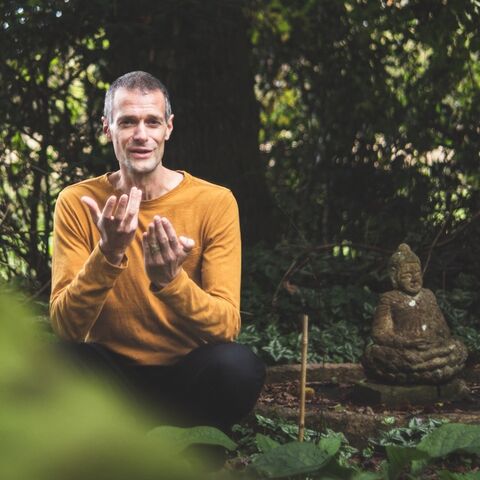
This is Josh,
Integrating Presence,
And today we're back again for another Q&A with the lovely Wendy Nash.
Wendy,
What's going on?
What's going on?
I'm here on Gubbi Gubbi Country in Queensland in Australia.
And what's going on?
My bike got stolen a couple of weeks ago,
So that's been quite a journey.
And so what else?
That's been a journey that was much more expensive,
Even though I had insurance,
Much more expensive than I expected.
So it's been quite interesting to discover how beneficial the Dharma is,
Because I look at all the good parts,
All the kind things that people do,
Rather than focus on,
Why is my insurance company swindling me?
And why did somebody steal my bicycle in the first place?
So it's been quite good,
Actually.
Yeah.
Yeah.
Isn't this interesting?
You've got this group with,
You know,
Biking,
Promoting biking more over driving,
And then your car gets,
I mean,
Your bike gets stolen,
You know,
Hopefully there's no shenanigans involved here.
Yeah,
Yeah.
And like you said about the Dharma,
Excuse me while I'm bringing up something here on the screen.
You know,
It does,
It really does.
So these inevitable challenges we face in our lives,
And then like,
What's going to help us with these?
What's really going to be a benefit?
I mean,
Do we want to,
There's plenty of things out there we can cope with and,
You know,
Improve our lives.
But as far as overall complete systems,
Longest standing,
Most effective,
This is what I've come across,
Especially for everyday life.
So today we've,
Go ahead.
Yeah.
No,
You go.
Oh,
I was just going to do a little bit too much of an abrupt transition here to today's show,
Which I'm calling a lengthening,
A lengthening attention spans.
This is the 26th meditation Q and A we've done.
And this is,
I know you,
Of course,
For those of us,
For those,
Easy for me to say,
Those of us,
For those of you and us who have not joined before,
This is an ongoing live series where we look into our meditation practice on and off the cushion.
And today we want to get into attention spans and we'll maybe draw on our internal and external meditative and non-meditative observations to examine how attention spans seem to be quite short these days,
Why this might be,
And what to do about it in meditation practice and in everyday life.
So of course I read that little description I wrote there.
Wendy,
I want to throw it over to you,
Attention spans.
What do you say about this stuff?
Yeah,
I'm not very good at the attention spans.
I do notice that when I watch movies from a couple of decades ago,
Gee,
They're slow,
You know,
And that's quite interesting to see what keeps,
What is it that makes us lose attention.
So I think that's interesting.
I've been looking at,
In my own practice,
The benefits of having a sustained daily practice.
So even though now I don't have,
Like a couple of years ago I was sitting for two hours a day,
It was fantastic,
And now I can just about get half an hour.
So things change and there are other commitments and other people in my life so I don't have the same sense of control.
And what's really interesting though is that by just even having the daily practice and having done it for a good number of decades now,
Then what I see is that I'm able to sort of widen the space.
So I guess I'm talking about the benefit and how good that is.
So I've been thinking a little bit about low self-esteem and the sort of sense of sorrow when you feel excluded and the arising of identity,
You know,
How your body hardens.
And when you have a lengthened attention span on meditation,
You can see these,
You have time to allow these inquiries to occur.
So yeah,
It's probably jumping in at the cell end.
This is really helpful.
Not so much at the where do you begin end of the spectrum and how do you do it and what are the antecedents and our current society and mobile phones and all the rest.
Yes,
We've got,
There's plenty to discuss and talk about.
And I would definitely say,
Yeah,
The lengthening of the space that meditation can bring,
Right?
This container,
This bigger container that it provides,
This tendency to allow for more of response instead of reaction.
You know,
This notion of a continuity in practice too,
I think that's another huge thing.
So,
So many things to,
To,
To jump into here and where you actually started trying to,
To make sense of the whole notion of shorter attention spans in general.
And I think what you pointed out at the beginning was a really good place to bring up here is look at movies and media from a long time ago.
I mean,
This is really evident.
I think I've talked about this before where you get these old movies where they have these really long camera,
You know,
Without any cuts,
Just a really long opening scene.
And it's just one camera for a really,
Really,
Really long time before it cuts to a different angle.
And that's how,
You know,
Movies and TV shows used to be.
Now it is just to look at any media,
Especially social media,
Chop,
Chop,
Chop,
Chop,
Chop,
Bam,
Bam,
Bam,
Bam,
Bam.
You know,
It's maybe a second,
Sometimes not even a second,
Maybe two or three seconds.
And so what does this do to our attention spans?
Well,
I mean,
It doesn't take a genius to figure this out,
Right?
And a fracturing of our minds too,
You know,
Our minds are used to having this constant novel stimulation,
Something that's different and not on the same thing.
And I get it,
You know,
It feeds,
I guess,
Maybe a dopamine response.
There's a lot of boring things out there,
Right?
There,
We,
Our time is precious.
We don't want to just listen to somebody like me blab on and on and on about this and that,
Right?
We want to get right to the meat and potatoes.
But the depth of our experience,
You know,
How does this deal with contentment too?
If I can't stay on a single topic for a long time,
It kind of mirrors or correlates the mind of just wanting to jump to the next thing and the next thing,
Thinking it's going to take satisfaction and a new shiny object,
A new goal,
A new this,
A new that.
And once we get it,
Then it's okay for a while,
But then it's just onto the next thing,
Onto the next thing.
And so there's this sense of really,
First off having contentment,
You know,
Contentment and staying with something.
The more we can be content with less,
I think just the more opportunity we have for contentment when we get more,
You know,
This,
This notion of being okay with something.
Now,
Also we can't really get anywhere on,
But the surface level of things.
If the mind can't just spend the time on something,
The heart can't really absorb and spend time on just one thing.
We can't really go into the depths,
Penetrate the depths and the details of something to investigate,
To see its deeper nature,
To fully appreciate and understand,
You know,
To realize when he's talked about how important belonging is,
You know.
But I get it if we think maybe our chances might increase for belonging,
If we just go try a bunch of different things out.
And there's nothing wrong with that.
That's what we,
We,
We find people in this and at different opportunities for belonging.
But,
You know,
This FOMO,
I think might play into it too,
Fear of missing out.
So I think that's enough to get us going on maybe some of the current background of this.
And I just wonder,
You know,
Who benefits from this?
Does anybody benefit from this or how did it get like this?
I don't know if we need to,
To answer all these questions,
But these are the kind of things I see in our external lives.
Yeah.
So a couple of things I just want to pull out there from what you've just mentioned.
I was just an observation.
I had noticed,
So in my previous relationships,
I would get a bit irritated and with my partner or whatever,
And I'd get a bit short-tempered if he did something or whatever.
What I realize now is that I actually don't react.
That what I'm doing is going,
What do I want to do?
Is it worth raising it or is it just me having a temper tantrum?
And is it my yearning for control or is it my whatever?
So I thought,
Because I was thinking about that yesterday or maybe the last few weeks or so,
Just going,
I'm actually really different in the way that I respond in relationships.
And this is because I'm not going,
Well,
Why did you do it like that?
Don't do it like that.
But I want to do it this way,
Which goes through my mind,
But it just doesn't come out of my mouth.
So I think,
And if it's something I really want to talk about,
I kind of can hold it and then mention it later in a nicer way,
In maybe a more playful way or whatever.
So it just,
When you have that,
You actually allow more playfulness in your relationships.
So I thought that was really interesting.
And the other one,
In contrast,
I have online meetings and there's this sort of slight lull where I think,
Oh God,
I'm a bit bored.
And I can feel myself yearning to sort of just get the phone,
Hide that I'm actually looking at my phone.
But of course,
Everyone knows that I'm looking at my phone because there's a look that you get when somebody's checking their phone.
So yeah,
Just how actually I can't tolerate online.
It seems to be a bit hollow there.
I guess that's definitely one.
And just to go back about belonging and purchasing and things like that.
Let me see if I've got what you're saying,
That you were saying that because we feel this slight unsettled something or other,
That we then kind of flip to this,
To that,
To that,
To that.
And we end up buying things that we kind of don't want.
Is that what you were sort of saying?
Well,
That's part of it.
But you said because we're looking for things that satisfy us.
Now it could be anything.
It could be buying or just what information online to consume or what kind of projects we want to do around the house or who we want to talk to or what we think will bring us satisfaction,
You know?
And yeah,
If you know,
So if there's a long attention span,
We can really absorb into something on a deeper level and allow it to completely engulf us and have this sense of more contentment.
Like if we're reading a novel,
I don't know for those of us who read,
Right?
You can really get absorbed into a novel that you don't even really know the time's passing or you don't hear things happening.
You can completely forget about a lot of other things and you're completely right there into it.
But when we think we're on the surface level of life,
We don't have that type of deeper experience and that type of satisfying experience a lot of times.
I like how you say about the the hollowness of online interactions a lot of times.
Yeah,
And how I think some of the things are just going through the motions and some of the things seem more like commitment-based or like we're like an obligation.
But some of the things though I find online I really want to do and I'm really engrossed and absorbed in them.
But yeah,
About checking your phone online.
And then what you said about relationships too.
You know,
This is really important I feel for like harmony in relationships instead of just immediately reacting,
Right?
And that there could be this pause,
This seeing of how we want to react and then restraining from this habitual way of reacting,
Right?
And I think it's very helpful.
I just hopefully it doesn't lead to like repression of like how we feel and how we.
.
.
I don't know,
You know.
So it's what we're talking about here is not a repressing and holding down how we feel,
You know.
It's just kind of what a consideration and a restraint for the other person.
Because sometimes I know when I react it's.
.
.
I feel like some kind of righteousness is involved.
Like I am entitled to say this and,
You know,
And usually that backfires.
A lot of times it backfires.
It fuels the ongoing contentions and conflict.
So the best way to stop that cycle is just to say,
Okay,
I don't need to be right.
I can be with unpleasantness but I have to take my foot off the gas.
And when I take my foot off the gas,
Yes,
It will be unpleasant.
Yes,
I will want to say things and react.
And it takes energy to hold it back.
But in the long run,
Somebody's going to break that cycle or it can escalate and it can blow up or it just.
.
.
It can be way worse than if I don't do that.
And I can't rely on the other person to do that all the time either,
You know.
So it's about taking responsibility for seeing a little bit into the future,
Comparing how my interactions have been and say,
Okay,
I have a chance to change this.
I can just buck it up or,
I mean,
I can just be with unpleasantness for a while and that energy will die out and then something more wholesome and skillful will then have the means to potentially arise.
And plus I'm protecting the other person too from my own heedlessness,
My lack of mindfulness and lack of restraint.
Yeah.
I want to go back a little bit to the dissatisfaction.
Is that okay?
Sure.
Here we are,
It's Dharmaland,
So let's talk dissatisfaction.
Sure.
Basically because I just had this really interesting insight and so I'm quite curious to explore that a little bit.
So I've been very curious about what it is that when you are angry,
You get this hardness.
We see a lot of politics at the moment where people are very angry and you can feel their bodies are kind of hard in the way that they're outraged.
There's a lot of outrage at the moment in our political landscape.
And as I sort of feel into that,
I became very curious about this and when I sort of step back and back and back,
You know,
Because I want to go back and back and find the root,
Right down to the root.
And of course there is no root because it's just Dukkha,
Suffering.
There is no root,
There is no self.
But what became clear is,
And I want to test it out,
See what you think.
So this is I guess the benefit of lengthening attention spans that I'm talking about here.
So I was thinking and then if I bring to mind a time when I felt excluded in a group,
And we all know that feeling.
We've all felt like we know when we're excluded.
We just absolutely know.
But what I've realized is that,
Well for me anyway,
That when I'm sad in that situation,
It has a particular flavor to it and I actually can't express it.
So it becomes quite locked in the body.
But it starts from this knowing I feel excluded,
A deep sadness at knowing that truth,
And then unable to express it and it becomes this hardness.
And my sense is then it becomes the core of dissatisfaction for so much of our lives because we want to buy that thing which will make us feel that we belong.
Because this is the sort of foundational sadness that we're trying to negate.
But like you said,
You know,
If you sit there and you kind of follow it and inquire and you space out the attention span,
It's the sort of thing that you can tap into.
What do you think,
Josh?
It totally is.
And I'll just say that the my relation to non-belonging is kind of a different one too,
Is that I've kind of always been on the fringes,
Right?
The social groups that coming up,
I never really fit into all of them.
Even the one that I was a part of,
Which was kind of like the stoner group,
I didn't really even smoke pot,
You know.
But those are the only people that would that would take me.
And so and kind of ruffians and things like that,
Completely different than what I am today.
And,
You know,
Being in a foreign country,
Not having a lot of interactions,
Going to another even more foreign country here pretty soon.
You know,
I've kind of always been on the outside,
The outcast amongst outcasts so much.
So this sense of belonging where,
Yeah,
I just,
I did reflect on it quite a bit of not fitting in.
But this is more to the,
Not directly to your point,
But just in the sense of belonging.
What I found really helped me with this is spiritual friends.
You know,
Once I had a friend that I could really relate to and really,
You know,
For guys,
It's kind of more like things we're interested in.
So it's in a way,
It's kind of more easy to belong,
I think,
Amongst guys,
Because it's really a lot of it's superficial.
You just have to share the same interest and you just feel like,
You know,
You have a friend or you're belonging.
And so this is,
That's how I found around this and really cherishing these friends.
And now it's spiritual friends,
Because,
You know,
There's this famous line in the suttas that Ananda said,
You know,
Went to the Buddha and said,
I guess spiritual friendship,
It's got to be like,
What,
50,
80% of the holy life.
And he said,
No,
Ananda,
Don't say that.
Don't say that.
It's the entirety of the holy life.
And it really can't be stated enough.
And I forget this time and time again.
And then it's like this new insight every time.
Oh,
Friends.
Oh,
Wow.
Yeah.
And I just start recollecting Dhamma friends and other friends.
And then I get,
It's so nice today,
I can just reach out.
And then instantly there's this sense of belonging.
And so Wendy mentioned an insight.
And I think that this,
A lot of that has to just do with remembering,
Right?
Reflecting on times in the past and just letting that sit in the heart and use that as motivation for just kind of our natural sense of wisdom and insight and care to arise and meet that with what's needed.
And in Wendy's case,
It showed how she really feels deeply into that and what works for her with that.
And this sense of belonging,
I feel,
They say it comes from being worried about survival,
Worried about being an outcast and not having needs met and not getting enough shelter,
Food,
You know,
Things that we need to live and survive.
And I think that's one part of it.
Today,
I don't think it's as pressing in that sense.
So it's more of a psychological and heart based thing and mind based thing.
And this deep sense of sadness,
Too,
That can come with it.
You know,
It really is.
Now,
When I started completely transitioning from one way of being in life into another,
It's a huge time period there where all kind of my friends dropped away.
I just didn't know what was up or down or sideways.
And there was a deep period of transition.
And with that came a lot of sadness,
Feelings of loneliness,
Isolation.
But there was this seed of something new coming like a almost like a caterpillar turning into a butterfly.
And I mean,
It's a kind of a cliche saying.
And we don't want to use this for a transformation happening.
And what I found with this sadness is sometimes it's just a chance to rest.
And,
You know,
It stinks because it's kind of double edged sword on one sense.
You need I needed this time alone and a time on my own and a time from away from other people.
But at the same time,
That's not very healthy either all the time when you're,
You know,
Isolated and it can make it even worse.
So but then again,
If we're if we go if we force ourselves to be around people,
When it's just going to make us feel worse and more estranged.
So it's a really delicate situation.
And I don't really have the best answers for it.
I think it's on a case by case basis.
And I will say,
Though,
That friendship is just absolutely where it's at for me.
Yeah.
Yeah,
Yeah.
I did hear,
Though,
That you wanted to belong,
But you were excluded.
And there was no no one would have you actually.
And it's that sorrow and that sort of,
Okay,
I'll harden against it.
And it's painful.
And we're sort of squishing down that that thing.
And we're going,
You know what,
It's not a problem.
I'm going to be friends with those other people.
But that it's that that I'm kind of inquiring into.
And so in terms of lengthening attention span,
I think it's really interesting to be able to pull pull it apart just a little,
Just stretch that time not not to go above it.
But to allow kind of observing and then noticing and then allowing it to be.
So that's what I think is it sort of stops the reaction and allows not even a response,
But just sort of noticing,
Allowing being.
That's what I think is really beautiful in that sort of space when it comes to lengthening attention spans.
But we have not talked about lots of things that we said we would.
Okay,
Yes.
The allowing being is it's a beautiful way to put it,
Because it's hard to really tap into our being where we're on the surface level of the heart and mind jumping from one thing to another,
To really explore just we're human beings.
I know it's a spiritual cliche,
Not human doings,
Human beings.
And the more time we allow ourselves to do nothing and just be it's,
It's like,
It's a really profound experience that's really not valued in our society.
But it's,
It's,
It's,
It's something you can't go out and buy an experience you can't really go out and buy,
You know.
So yes,
What,
What were the other things we were going to say that we were going to talk about?
I mean,
How do we do this?
I think the big is that the question how,
And I want Wendy to probably talk about her metta practice,
Right?
Is that still your main practice?
My,
Mine is more insight,
Actually.
It's,
It's a gentle inquiry process,
Where I,
Because I only get half an hour,
It's very short,
Generally,
Except on my,
In Brisbane,
There's now a place where I can sit for a whole day in silence in the company of other meditators.
It's magic.
So,
But I think kindness is the foundation to the practice,
Because if you don't have the kindness to allow whatever to arise and go,
Okay,
Come what may,
Then,
You know.
But I only get half an hour.
So I usually just sit and it's,
You know,
Dee,
Dee,
Dee,
Dee,
Dee,
Dee,
Dee.
And then after a while,
I'll ask myself,
What needs to be known here?
Or what are the themes or flavours?
And that helps me stay where I am.
And it,
And it also allows insight and inquiry,
It's sort of an inquiry.
And I,
Something comes from somewhere else in the mind to come forward.
So that,
I guess,
In terms of lengthening attention span,
It's not a noisy kind of meditation.
It's actually quite quiet.
It's full of thoughts and stories.
But there is a sense that somehow I'm able to create gaps between the thoughts.
And there's this,
I do get a sense sometimes there's a particular feeling in the body or the mind.
And I'm like,
Oh,
What is that?
What needs to be known here?
So I find that,
That helps me,
I guess,
Stay with it,
Stay with the meditation,
Rather than try and create something which I can't create or,
Yeah.
So that's,
That's where I'm at.
So you're the one who does tons and tons and tons of meditation these days,
Because you're always jetting off to some new country going,
Yep,
I'm going to be three months over here and two months over there.
And I've got to do a meditation,
Something or other and this,
That and the rest.
Yeah,
It's a little bit ironic,
I guess.
However,
This is kind of based on necessity now,
Because I have to legally leave the EU here,
You know,
So I've got to go someplace for three months before I can come back for another three months until we get things more squared away legally here.
Yeah,
And this,
This,
This light inquiry practice,
It,
It sounds like what I had been doing for,
For years,
And I miss,
I miss this more free and open meditation.
What I've been doing recently is just the standard Samatha practice,
A really kind of boring,
Dry,
Straightforward thing.
And,
And it's just basically the breath around the nose,
Around the anapanasva,
And then when the attention goes bringing it back,
And it sounds so simple,
It is very simple,
But it's not easy,
You know,
And this trains the mind to stay on one object over and over and over again.
And so there is,
There is a little bit of wiggle room in the fact that,
Okay,
Well,
How do I,
How do,
How do we,
How is the mind,
How do we,
How do we,
How does that get accomplished,
You know,
And so there's still a lot of kind of creativity and bringing forth what needs to be known in order to do that.
Sometimes it just won't stay there,
Not,
Not at all.
So it won't work.
So then there's times to go into metta,
Which Whitney so rightfully said,
This,
This base,
Base of kindness that needs to be there.
If I'm just going to sit there and fume,
Which sometimes that needs to happen too,
Is just bring forth and feel the anger.
If there's anger there,
Whether it be hardening or hotness,
You know,
Or steam or whatever.
And,
And then sometimes it's just too subtle.
And so I have to go with the breath into the entire body.
And it's also interesting how insights will just arise on their own.
You know,
When you're staying with one thing over and over,
If something really wants to surface and come up,
It's almost like it's going to,
Once we just,
We,
We allow the container to be there then.
Other times though,
It will,
Like it's this practice of Samatha,
It's said to suppress the five hindrances.
I think you mentioned something a little bit earlier about,
You know,
There is no root to this and there are some unwholesome roots though,
Right?
Like greed,
Ill will,
And like kind of delusion or ignorance.
And,
And these,
These notions of,
Of craving for the wrong things,
You know,
Craving for things that aren't going to help us.
And in other people,
And then,
Yeah.
So we'll go into all those.
The notion that,
Yeah,
That,
That,
That this lengthens attention spans though.
So any of this practice that Winnie's talking about and I'm talking about,
I think it goes a long way to kind of clearing things out,
You know,
Like you talked about the thoughts and yes,
They're,
They're there.
It's just kind of like the momentum for our day that just doesn't go away when we sit down.
So being kind to that,
Realizing that that's just due to causes and conditions of our,
What we've been doing through the day and past actions perhaps,
And other factors and things we're aware of and things that we aren't aware of.
And that we can bring a kind attention to that and work with that in many ways where there'd be a Samatha practice or more of an insight practice like Winnie's saying.
I have always wondered why,
Why bother with the Samatha practices?
I have spent my whole,
I don't know,
20,
25 years,
Whatever.
I'm still wondering it too.
Yeah.
Yeah.
But the way you described it was actually very lovely because what you're saying is by,
By focusing just on the breath,
You are training the mind.
It is the opposite to using social media in a way.
You're just coming back and then back and then back and then back.
And yeah,
So that's a very interesting thing.
And that insights still arise anyway,
When they really,
Really,
Really want to.
For me,
I've often thought the Samatha practices are a little bit suppressive.
They are.
Yeah.
And kind of quite repressive.
Yeah,
You go.
That's right.
That's what you're brilliant.
So they temporarily kind of almost artificially suppress the five hindrances.
And so we know that that's the greed,
Ill will,
And then we've got restlessness and remorse.
And then we've got sloth and torpor,
Which is basically kind of drowsiness,
Sleepiness.
And then we've got doubt.
These are the things that hinder our progress.
And these can get kind of temporarily suppressed.
And then the mind can be like bright and brilliant.
And there's really no impediments to our attention span and the mind.
It can get really concentrated.
It's not kind of where it is,
But it's not in the sense that,
Oh,
I've really got to bear down and concentrate,
Right?
It's kind of like this unification,
This gathering,
This collecting,
This calming,
This alignment of the mind and heart with the attention.
And yeah,
It can get into these beautiful mind states and it can even lead to jhana and absorption.
And we can just,
It just is around a traditional meditation object.
And the breath is just the traditional one.
There's all kinds of other ones.
Metta,
Loving kindness,
All the Brahma Viharas,
Ones that are done.
Kasinas,
You know,
These are like a color disc or an element.
And so these are like the,
I forget how many classical meditation objects are in the Vasudhi Magga that are often recommended.
And they're matched up for people's temperament sometimes with the meditation teacher.
But the breath is always there.
You know,
It's always accessible potentially.
And one of the things that can be done too in daily life is just whatever our practice is,
We can just set the intention to remember this throughout the day.
Like,
I don't know,
With Wendy's it might be to just ask the question,
You know,
What's needed now?
What needs to be known now?
What needs to be brought forth?
And so that's like a continuation of the meditation practice through everyday life.
And that can lead continuity.
So especially in the Samatha,
The more it can go continuously,
The more chance it has to build and have momentum and have effectiveness,
It's said.
And I've noticed that too.
So just several times throughout the day,
I'll just notice,
You know,
Where's the breath at?
And even more,
The more I can push it,
The more I can recollect it.
And it also shows how forgetful,
You know,
I am and how,
Even though I want to,
The mind gets distracted.
It gets pulled into other things.
Other things are seen as more important,
You know,
And that's okay because we have other things to do,
But it really gives us a chance to look at our heart and mind like times,
Like other times we don't.
And so the other thing I wanted to mention maybe is these four spiritual powers or four roads to power,
Four roads for accomplishment that we can maybe get into just a little bit.
But these are things that,
Four measures of success or four ways to success,
Not just in meditation,
But any area of life for any measure of success,
It's said too.
You know,
It's interesting how you said success.
Instantly I go,
Success.
I want success.
I want it.
I want it.
Give me,
Give me,
Give me.
I want it.
First you have to define what it is for yourself,
Not what somebody else says it is.
You said,
You said the word success.
I'm going to be successful.
I've just got to do my four bit more,
Four things for success.
I want it.
I want it.
I want it.
Tell me what they are.
That's funny you mentioned that because I,
Some people,
I think some people might say these particular qualities are,
Can be cultivated,
But I think others say that they just kind of naturally go along with and strengthen as the practice goes along.
And so I'll just name them.
I think Chanda is the first one.
And I'll go back to these.
Then there's Virya,
Chitta and Vimangsa.
So the first one is the,
Still the one that I find,
I used to find way more easy for some reason.
And it's just this wholesome desire.
You know,
The,
The tendency of the heart and mind in life is just desire.
I want this.
I want this.
I don't want that.
But so instead of fighting that and trying to eradicate that altogether,
What are the really good things to desire,
Right?
There are things that can actually benefit us and benefit others,
You know,
In the long run.
And so what are those things?
It's about finding those and really,
You know,
Using that to our advantage.
So I think one of the obvious ones would be to benefit ourselves and other,
And other beings,
Especially in the long term to,
You know,
Why not shoot for the moon and realize full awakening?
You know,
Why can't we have that as a wholesome desire?
And a serious one too,
You know,
However unattainable it feels,
Why not?
You know,
Why limit yourself?
And also balance it with reasonable expectations and not being deluded about it,
Of course.
Right.
But like,
What are these really things that make the heart leap up and sing?
And even just going to my meditation practice,
I'm just not as inspired as I was with it.
You know,
Actually this hardness in life,
I had this incentive,
You know,
This,
This what is it called?
This spiritual urgency.
I had that so much when I actually had my life almost seemingly dependent on it.
Now that things are okay,
I don't have that anymore.
So yeah,
Let's talk about this wholesome desire.
Yeah,
I think this is really good because I think there is something really important about the importance of delight and joy in the experience.
And I think virya means joy,
Doesn't it?
Well,
It can mean that,
But it's,
It's means effort and like a dedication to dedicate.
I think,
No,
Is it anyway,
Virya is,
It's kind of energy and effort and putting,
Putting,
Putting,
Yeah,
Doing it.
Yeah.
But then you get the fruits of it that,
That,
Yeah.
So,
But it's similar.
One of the awakening factors is joy,
You know,
Pity,
And it's an energizing factor.
It's right next to virya too.
Yeah.
Yeah.
And I think that,
You know,
Just,
We're talking today about lengthening attention spans.
And if,
If it's hard,
Like I've,
I go to Pilates and we've got one instructor and she's like,
Burn hard,
Push.
And I'm going,
This is really,
Really,
Really unpleasant.
And I'm just not enjoying it.
And so I just don't go to her classes because I find them so,
It's like,
Why would I want to do that?
Like,
It's just doesn't,
It's not fun.
So maybe there's a difference between having fun and,
And,
And I think it's really important to,
It is important to apply yourself.
But there,
There is this,
This urgency,
I think an urgency to have fun.
But I think certainly when you're taking up something new and you're maybe not happy,
You,
It can be like a device to a tool to maybe push yourself.
You,
I want to be happy,
Actually,
How do I do it?
And maybe that energy isn't there anymore.
It's,
It's a more natural,
Gentle,
Soft energy because you're still,
You know,
Darting all over the country,
All over the planet on retreats.
So I don't see any lessening of it.
I just see it's in a new form.
It's actually a softer,
Kinder.
Thoughtful,
More appreciative quality rather than a driven quality.
Yeah.
It's,
It's a really good point.
And so what you talk about with fun,
I think that might fit into the Chanda,
Right?
This is something that you have to be,
To have a desire for something,
You really want to have to do it.
You really want it,
You know,
That's what it comes down to.
And if you want fun,
Well,
Then you'll go seek out that quality in something because yeah,
The next one is virya,
That's effort,
Will,
You know,
In,
Let's see,
Let me,
Persistence,
Energy,
Effort,
And will.
And for some people that's not fun,
You know,
That's too much and that turns them off.
But if we can find something we're really interested in,
And then the key to that is balanced effort,
Right?
So if we see like,
Like a commando or somebody doing basic training or,
You know,
Some kind of crazy amount of physical effort,
It's like,
Oh,
That's not me.
That's not for me.
You know,
That's right.
We're not,
We're not talking about that,
But if that's what you want to do,
Well,
Then that's needed.
So it depends on what it is.
And then what's the balanced effort,
You know,
What's the appropriate amount of energy and effort to put in there.
And am I too,
Am I putting too much in,
Or am I not putting enough in?
And what's the best way to put in that energy and effort?
You know,
One of the classic ways is to get rid of all the effort that's the states that aren't helpful and to keep them from coming back and then maintain the things that are helpful and then keep generating more states and things that are helpful.
So it's kind of a fourfold thing,
You know,
Get rid of,
Prevent,
And then maintain what's helpful and then and then generate more of what's helpful.
And yeah,
I think this is,
It's a really good point,
Actually having the right amount of effort for that desire,
Whatever we success,
If we want to,
You know,
Succeed in knitting,
We're not going to be,
You know,
So it's the right kind of energy and effort and will.
So that's a different type of willpower that's needed for weightlifting,
I would imagine.
Yeah,
Although I don't know if you've ever done any weights.
Have you ever done weights?
I did.
I was doing,
But it was a whole,
What was it called?
This insane workout that I did years ago.
Now I'm completely blocking what it was,
But maybe it'll come up here.
Weights were part of it.
Yeah.
But you know what it's like when you have an aggression towards weights?
It's like your body is stiff and tense,
And you actually are not in the gentleness of it.
So there is,
You obviously do need to exert yourself,
But if it's something that is forced,
Then you actually do more injuries to your body.
It's true.
And I think that in terms of lengthening attention spans,
I think it's also really important to bring in the capacity to listen to yourself and notice and be kind to what is here.
And my favorite saying of all time,
I'm sure I've said this before,
Is of the two witnesses,
Trust the principal one.
So this is a Lo Jong slogan.
And I love this one because there's two things about that.
One is,
You know when you're conning yourself.
So you know when you're just,
Oh,
You know,
Just slacking off.
And sometimes it's really good to slack off,
But sometimes you're just kidding yourself,
You know.
So you know when you're kidding yourself.
And the other thing I like about it is no one can tell,
You can go out and seek advice all over the place,
But no one knows what is right for you.
Only you do.
And because you have that inner voice.
So I love that one.
And I think there is something really important about,
In terms of lengthening attention spans,
I've started when I work with people is 5-5-5.
Five minutes a day,
Five days a week,
Five weeks in a row,
Just to set up the foundation.
Because if you go more than that,
It just,
Yeah that's not going to work.
That's about right.
And then you can sort of make it longer and longer and longer than that.
And it takes a long time,
Like 18 months.
I have one client,
She was there for two years I think.
And she could only sit 13 minutes a day.
I was like,
Come on,
Lift it,
Lift it,
Lift it.
And she just couldn't.
She left.
She said,
No,
I'm done.
Okay.
So it struck me that if you don't have kindness,
Then you can't lengthen your attention span.
It's actually kindness towards yourself,
A recognition of what is here,
And knowing when you're kidding yourself.
This is really foundational to lengthening your attention span and lengthening your duration of meditation.
What do you think Josh?
It's beautiful.
You know,
It's that kind of tension.
I mean,
Back before I started all this,
It was constantly beating myself up.
But it was the conditioning.
That's what the people that I grew up around and friends,
Some friends,
They just constantly criticize themselves,
Were hard on themselves,
You know,
Never give themselves any slack or anything,
Any kind of friendly words or advice.
And that goes into what's just seeing what's here.
And when we really see that and see how unhelpful that is,
I'm not saying that's never helpful,
Right?
Because if we do get too slack,
Then we'll just come on,
You know,
Maybe it's time to,
Yeah.
And that's where it gets into kidding ourselves,
You know,
Being honest with ourselves.
So these three that you just mentioned are so helpful to balance each other out.
And I think those go into a measure of success too.
It kind of even lay a foundation for doing a lot of things as well.
And nevermind these,
These,
You know,
Four roads to power,
Four roads to success.
And so,
Yeah,
Even I think what you mentioned there is kind of a more modern day version for even get off the ground and it's okay.
You know,
We start where we're at and these are things that need to be addressed and put into place too.
Yeah.
And once the mind really can kind of see,
See these things clearly and meditation is a great opportunity to do all this,
Then it's just like,
Oh wow.
Yeah.
It's this huge realization that it's,
It's easier to correct these,
These habits and these,
These,
Yeah,
Just that's all they are.
I think conditioning and habits of,
Of,
Of this going on.
Yeah.
And,
And I think there can be a kind of fun in lengthening your attention span,
In inquiring,
In becoming a kinder person,
You know,
And it's very interesting to,
To be able to,
To increase your capacities and that comes from insights,
Longer sits and,
And kindness,
You know,
That it's,
And people,
You know,
As I say to people about getting angry or whatever,
It's like,
Yeah,
People don't like you.
If you're like a negative,
You know,
My,
You know,
Uncle Fred,
You know,
He's really,
Well,
Who likes that person?
Nobody.
It's like quick,
You know,
Duck for cover,
Run the other way,
You know.
Negative,
Negative Nancy.
Yeah.
It's,
As long as it doesn't go into this toxic positivity,
But that's right.
And we can just feel into this and negative all the time.
Now I get it.
People have gone through a lot,
You know,
They,
They have had a hard time.
We,
We,
This,
This life is not easy,
You know,
But it's like,
Okay,
Well,
How much of that is actually helping me?
Sometimes it actually helps to be negative.
Some people won't say crap if they have a mouthful of it,
Right?
Never speak up,
Never say anything and then keep it all repressed.
But then we have the other extreme of just,
You know,
Hey,
The sun shining,
You know,
Hey,
It's,
It's a beautiful day.
No,
But yeah,
It's,
It's,
It's balancing these extremes,
You know?
So I just move on to the,
The next one and the,
Of Chitta,
But actually Vimamsa.
Yeah.
This was always great for me because I,
I was a nerd,
Right?
I love studying the mind and how amazing it was.
But then what I found out quick is,
Oh my goodness.
I put that at the expense of behavior.
I put that expense of my heart.
And so then really seeing how much gunk was in the heart and how much that fuels beautiful mind states and how,
When we address the heart and clear that out,
Then it gives opportunity for the mind to become even more bright and brilliant and explored even more and how our behavior impacts all that and how it supports this.
So that goes into the investigation,
Which is the fourth one,
Vimamsa.
And that's,
Let's see,
Investigation,
Inquiry,
Discernment,
Discrimination,
Reason,
Discrimination in the fact of knowing one thing from another,
Right?
Reason,
Interest,
Intelligent curiosity,
You know,
Feedback and fine tuning,
Adjustment,
Learning from doing and circumspection.
A lot of words there.
But the third one is just Chitta.
And that's kind of like the heart mind.
And I've seen definitions for this is heart,
Mind,
Intent,
Consciousness,
The knowing mind,
Mental development,
And devoting the mind to something.
So yeah,
I don't know.
We don't have much more time to go into these,
I think today,
But yeah,
These are just things that,
These four things that help,
You know,
Success,
Whether we apply it to meditation or things in life.
But I think even Wendy's more fundamental things there,
Especially for certain personality types are really important of not being too down ourselves,
Being kind,
Seeing what's actually there and not being honest with ourselves.
I mean,
I think those are even more foundational.
Yeah.
Yeah,
I don't know.
This must be somewhere in the thing.
But somebody said yesterday,
I had a podcast and it didn't work.
So and she said,
Because at the end,
I always ask,
You know,
How did you feel about today's conversation?
And it's really good,
Because then it opens it up.
And she said,
Yeah,
But you were sincere,
You actually wanted to know what the answer was.
So I told you.
And I think there is a lot to be said for sincerity of practice.
What what is the driver here?
Is it about I'm the best?
And of course,
We all do that.
We all want to be the best,
The longest sitter,
The purest mind,
Dah,
Dah,
Dah.
You know,
We're all kids,
You know,
I'm the biggest,
I'm better than anybody else.
I'm better.
I promise.
I'm like,
Really,
Really,
Really good.
And I'm really good at it.
You know,
Like,
That's just what we do.
Or the other,
I can never live up to this.
So I'm just going to quit or I suck at this.
I'm so horrible.
Why am I such a horrible person?
Why is such a horrible meditator?
I can't do this.
This is stupid.
Yeah.
And I mean,
You know,
I think that I think it can flip flop,
Actually.
And I think that's why it's really important to have somebody to support you to develop a practice,
Whether that's like one on one or whether that's in a group.
I think I think what I really appreciate is how lovely it was to be part of a group and go in for a sit every Saturday morning or whatever it was.
And that I found so supportive,
So supportive for years.
You know,
And yeah,
You know what it's like,
You have a partner now and you you meditate together,
I'm sure.
And every once in a while.
Actually,
It's a really good point.
So we have to look at our personality types and what we need in practice,
Too.
And some of us do need that.
And I'm looking forward to being in the community on retreat because I don't get a lot of that.
I'm actually usually more solo practice here.
And then when I've had enough of that,
I'll be like,
I'll be so glad to get away from that and go back and sit on my beach on my island and in my little container away from any distractions.
So it depends.
Right.
Some people get too dependent on a group situation that they they find that outside of retreat or outside of community,
They can't do it.
They don't have the strength to do it on their own.
And then you get maybe someone like me who a lot of the times when I go into community,
I have to spend most of my time not doing this stuff,
But actually catering to how people are,
The way they do things and how things are expected of me and the formalities.
And these are all great.
This is all great training for me.
Like I'm going to be doing a bowing practice.
I don't want to do that.
So it's going to be great practice,
You know,
To do all these formalities that I find kind of tedious.
But one thing they do is you can see the mind and how aversive it is to it.
But also it gives also this great container where you don't have to worry about all these external things so much.
You can just watch how the mind in fine detail and heart can have these significant changes because there's not a lot of outside distractions and not,
OK,
What am I going to do now?
Should I do this?
Somebody's coming at me with this.
Now I need to do this.
And,
Oh,
I wanted to do this,
But now I'm going to do that.
And just all so everything is contained and you can see more and more subtle details.
And this unspoken communication and silence,
There's still how we react and respond on more subtle levels with the body,
Heart and mind and spirit when we can't talk.
And so there's this whole nother level of communication that's still going on that I often miss because the words take over,
The words take more power.
And so,
Yeah,
It's such a beautiful,
Wherever we're at,
It's an opportunity for practice and growth and development.
I think there needs to be a balance between these two.
You know,
Where do you need more support?
Do you need more support in community?
Do you need more support on your own?
You know,
And how do you do that?
Friends,
Teachers and balance.
I think,
You know,
Just this thing about always being on our own,
It's such an unnatural experience for humans.
You know,
Hermits,
The only way they could experience a solitary life was to be a hermit in a hermitage.
And you couldn't be a hermit in a hermitage if there were other people there because then it wasn't a hermit,
Was it?
So I think there is,
It is so unnatural,
Our life,
Because we are disconnected.
Now,
You're often on an island outside Copenhagen in Denmark.
So there's lots of people around,
I take it,
And you walk around and everything.
I would say a lot.
There's only like two or maybe two,
300,
400 people on this island.
It's a resort island,
So there's more in the summer too.
So it is fairly remote.
But there are,
Yeah,
There's still people here.
There's still a ferry running to the mainland,
You know,
Several times a day.
So it's not like complete isolation,
You know,
Like survival or survivor man or something,
You know.
No,
There's people here,
There's community here,
You know,
It's still somewhat modern lifestyle.
Yeah.
You know,
I've been thinking a lot,
And maybe this is something for another day,
But we live this very unnatural solitary life now,
Which at some level is lovely because it's like,
They don't irritate me because I get to do whatever I want.
But then on the other hand,
I don't have,
I don't know,
A sense of connection to much,
Actually.
And people use the word community.
And what does that word even mean anymore?
You know,
Maybe,
You know,
We use the word sangha.
But actually,
I think the word congregation,
In the way that Westerners use it,
Is a better word.
It's a more appropriate word.
That's not,
That was somebody called Jetson Kandra Rinpoche,
Who said that.
And I thought,
Yeah,
Actually,
It is,
We talk about community as if it's the congregation.
But really,
It's just the congregation.
It's just a different format.
Sangha is that robed community.
And I think that's much wiser.
We're at the end of time,
Though,
Josh.
We are.
Yeah,
No,
That's,
This is really good points about this.
You know,
I think it depends on our intention.
If our intention is to kind of hate people and get away from them,
That's one thing.
If our intention is I'm just so overwhelmed by the hustle and bustle of meaninglessness of consumer culture,
That I just want to,
You know,
Withdraw for a little bit,
You know.
So it depends on intention.
But like,
Where are the quality connections in life?
And what's the best way forward now for me,
Where I'm at now,
Where I want to be?
And then how do I factor into what's going on in the world to this,
You know?
So yeah,
Community and congregation,
That's a really good way to put it.
I think maybe this is something we can explore later.
But like I said,
We're going on retreat,
So we don't have anything scheduled.
There might be one in December.
There might not.
Do we have,
We have one at the end of January,
Though,
Right?
Yeah.
So nothing,
Nothing in November that we,
Yeah.
So maybe December,
Maybe not.
So January,
Though.
Yeah.
New year.
Watch this space.
Fantastic,
Josh.
Great combo.
All right.
May you all be well out there and practice well.