So anyway,
Welcome to today's meditation class.
For those who come for the introduction to meditation class,
That is happening in the room to my right,
To your left,
Room over there.
So because over here we do quite a long meditation,
45 minutes,
And we usually say something about the meditation and the story I'm going to tell this afternoon.
I was wanting to talk something about restlessness and the story came to mind,
I haven't said it for a long time.
This was in Sri Lanka,
Around the way sack time,
When many people would go to the temple for the birthday,
Enlightenment day,
Passing away day of the Buddha.
And because there's so many people go on those days,
There's so much food that sooner or later somebody will drop some food.
So the monkey decided to go to the temple.
Sure he'd be able to find some food dropped because people were so busy.
And when the monkey went to the temple to get a mango or a banana or something,
That is when he overheard the monk,
The teacher,
The Ajahn,
Giving a talk about meditation.
And there he mentioned something which some of you may have heard,
The monkey mind.
Have you heard about the monkey mind before?
In meditation it's a mind,
It's supposed to be a really bad mind,
It stops you meditating properly.
And this meditation teacher was talking about all the terrible things about a monkey mind,
How it stops you becoming peaceful and calm and mindful and clear.
And the monkey was listening to this and said,
What's wrong with a monkey mind?
I happen to be a monkey and of course I've got a monkey mind,
That's why they call me a monkey.
And anyway,
That is discrimination.
There's nothing wrong with monkey minds.
These human beings don't know what they're talking about.
It's actually discrimination.
It's libelous.
How can they put down different species in these days of equity to all beings?
They shouldn't say these things like this.
Monkey minds are okay.
I will defend the rights of monkeys to have monkey minds.
What do you expect?
You shouldn't criticise us like this.
This is just unacceptable.
This is how I'm going to tell the World Wildlife Fund and I'm going to sue these monks.
And he got very angry.
And even though he hadn't got any mangoes or dropped bananas yet,
He swung off into the jungle where his troupe of monkeys lived and he told her what had happened.
Oh,
And these monkeys were so upset.
They can't say this about monkeys.
These human beings should have more respect.
There's nothing wrong with monkey minds.
We can't stand for this.
We're going to get a lawyer.
We're going to sue these Buddhist monks for discriminating and defaming the minds of monkeys.
This is not on,
This is not right.
They're very upset.
Jumping up and down.
And like that,
The head of the tribe of monkeys who was very old and very wise said,
That is the monkey mind.
Jumping up and down,
Complaining,
Always blaming others,
Getting angry instead of doing something about it.
And all the monkeys understood all of their planning and their thinking and their scheming and all of their worries about the past,
Who said what to whom,
Especially to the monkeys.
They realised that is a monkey mind.
And they thought,
Oh my goodness,
Those Buddhist teachers are right.
Monkey minds are not peaceful minds.
So what should we do about this?
And the head monkey said,
Well,
You know,
I've been to the temple too and I see all these human beings,
They sit down very peacefully.
They cross their legs and they meditate to transcend the monkey mind.
Why can't we do the same?
Yeah,
Let's meditate,
Said the monkeys.
Yeah,
I want to meditate too.
Yeah,
Let's.
.
.
Shut up.
So how do you meditate?
So first of all,
Why don't you,
First of all,
I see them sitting on these cushions,
The zaphras.
So we haven't got zaphras here but go into the forest and get some grass and leaves and make a nice,
Yeah,
Let's get some grass and leaves,
Yeah,
We're going to get some grass and leaves,
Said the monkeys.
So they're all went off into the forest and made nice cushions for themselves.
And once they got on the cushions,
The head monk,
Monkey,
I've got to get this right,
The head monkey said,
Right,
Now I want you to all sit down,
Put your right leg over your left leg,
The right paw over the left paw,
Straight back,
Chin in and watch your breathing.
And all the monkeys did that.
The forest had never been so quiet,
The first time ever that monkeys were meditating.
You know how long that lasts?
About 30 seconds.
When one of the monkeys put up their hand and said,
Excuse me,
Excuse me,
Said one of the monkeys,
Said,
I've been thinking,
I've been thinking,
You know,
We had a plan to actually to go and raid the banana plantation when the owners were at the temple for a waste that day,
To raid the banana plantation.
And I can't get that out of my head.
You know when you think about something and you just,
It gets obsessive.
He said,
So why don't we go to the banana plantation now?
We'll raid the banana plantation,
But it's not lunchtime yet,
So we won't eat anything,
We just collect all the bananas,
Put them in a big pile in the middle of the forest and then we can eat them later.
Yeah,
Good idea,
Said the other monkeys,
Yeah,
I've been thinking the same,
Yeah,
Let's do that.
So they all jumped off their seats,
Went swinging through the jungle into the banana plantation,
They got all the bananas and they put them in a big pile in the middle of the meditation hall or the clearing,
What it was,
And then they sat down on the little seats,
The right leg over the left leg,
Right paw over the left paw,
The back straight and they started meditating again.
They got that outstanding business out of the way.
Excuse me,
Said one of the other monkeys,
I've been thinking,
I've been thinking before we eat those bananas,
We've got to peel them first.
Oh yeah,
That's true,
I've been thinking the same.
So they'd only been meditating 30 seconds first time,
30 seconds the second time,
Then they all jumped up,
They didn't eat them yet,
It wasn't time to eat,
They peeled all those bananas,
Put them in a big pile in the middle of the forest and then they went back on their meditation seats,
They got it out of the way,
They put their right leg over the left leg,
Right paw over the left paw,
Back straight,
Chin down,
And were quiet again.
Silent,
They were meditating.
Excuse me,
Said another monkey,
I've been thinking,
You know before we eat those bananas,
We've got them,
They've been peeled,
Before we eat them,
We have to put them in our mouth first of all.
Let's get that out of the way.
When that's out of the way,
Then we can meditate,
Yeah,
Good idea.
So they all got up and they put banana in their mouth each,
As I said in the story,
Actually how I heard it from a Sri Lankan gentleman years ago,
He said,
But also,
There's always some,
One monkey put two bananas in his mouth,
Another one three.
But then they didn't eat them yet,
They went back on their cushions,
Sat down,
Right paw over the left paw,
Back straight,
Chin down,
And they started meditating again.
And of course,
A monkey with a banana in his mouth and everyone else with their eyes closed not looking,
They all ate the bananas and thirty seconds later,
They jumped up and went away.
And that's what we call the monkey mind.
That's what's called restlessness.
Let's get this out of the way first.
Let's think this,
Plan this,
Remember this,
Let's get that done first,
And then we'll be quiet and still.
That is the definition of the monkey mind,
Straight from the leader of the monkey tribe in Sri Lanka.
So,
When I tell a story like that,
You remember it.
Sometimes you can say what restlessness is,
And we're using very complicated words,
But telling it in the story,
You all remember it.
I'll get this one done first,
And then I will meditate.
Get meditation out of the way first,
And then you can do all those other jobs.
Which what happens is you find many of those other jobs aren't so important anymore.
When you have some peace to set the standard of what is really required.
So a lot of restlessness is actually not that you have to think things,
It's not that you're very busy,
It's not that you have so many duties and responsibilities to do.
All it is,
Is we don't give stillness the priority.
We don't give peace a chance,
As I think John Lennon used to say,
For those of you my age.
But,
Or thereabouts,
But when we do give peace priority,
Then we find that the restlessness tends to vanish.
What is restlessness anyway?
Looking here,
Looking there,
Looking somewhere else,
Anywhere,
For some peace and quiet,
For some meaning,
For some satisfaction.
That's one of my other heroes when I was young.
That was Mick Jagger,
I can't get no satisfaction.
I'm really showing my age today.
But anyway,
All of those looking for satisfaction,
Over here,
Over there,
Get this out of the way,
And then I can be happy.
No.
Stop.
And see where you are.
It's one of the reasons why the word stop is one of the wonderful words for meditation.
Instead of always going on,
Improving,
Changing,
Making it better,
Trying to improve yourself,
How about stopping?
Stopping this journey,
Not outside your life,
But inside your mind.
Always going on to something else.
The inner journey,
How about stopping?
And of course the key story behind that,
Which just shows another aspect of restlessness,
And this was a little time novice,
Years ago.
And this little,
Because as you know,
That monasteries in that time were not just places for spiritual growth,
Sometimes there were social safety nets.
So a kid who didn't have any parents,
Instead of going to some orphanage,
They were looked after,
Or they didn't have any aunties and uncles or grand aunties,
Just had a whole village to look after you,
They would go to the monastery,
The temple,
And the monastery would look after them until about 16 or 17.
Then they'd go to school and then they would eventually just disrobe because they were now independent.
So many kids were temple kids and that's how they grew up.
But in Wat Ba Pong,
There's one little kid there,
Only about 8 or 9 years of age,
And he was there and Ajahn Chah was giving one of these talks,
Ajahn Chah the teacher,
Going on and on and on and on and on and on and on and on and on.
And this poor little novice,
Which was very,
Getting very restless,
You know,
When is Ajahn Chah going to finish?
When is he going to stop?
When is he going to stop?
I'm only a little novice,
Not like these big monks,
I just hear,
I've got nowhere else to go.
When is he going to stop?
When is he going to stop?
And it became like a repeated word,
When is he going to stop?
When is he going to stop?
And then this little novice,
Really young,
Turned it around.
A lot of times this is what insight is,
Understanding.
Stop going the usual way,
Not repeating old habits,
But doing it slightly differently.
And that's where this little novice said,
Or thought rather,
When am I going to stop?
Instead of when Ajahn Chah is going to stop,
When am I going to stop?
And the reason I tell that story is because the little novice stopped.
And when he opened his eyes,
And by many hours had gone past,
It was dawn,
He just had his first blissful meditation,
Really deep,
Peaceful,
Going deep inside.
And he hadn't heard the monks do the final chandler before they paid respects and left and went to bed.
He'd been meditating all night,
Just very simply,
Because instead of being restless,
He stopped.
When you stop,
You go inside.
When you do things,
You're always outside,
Going and doing things,
Changing things,
Making things happen,
Complaining about things,
But how about stopping?
And there was an interesting case,
Because that little novice,
He was really sort of not inexperienced,
And he just pressed that letting go button,
Which I say the stopping button,
And it went right inside.
He had a wonderful meditation,
Got up early in the morning,
Just from blissful states for hours and hours and hours.
So understanding that the restlessness is always looking somewhere else,
Over here,
Over there,
Some place,
Other than just stopping here and feeling what it's like.
It's hard to get similes.
One simile which I was trying to develop was like in the journey of your life,
Okay,
Life is a journey,
But sometimes you have a place to stop.
But it's not comfortable,
It's not inviting.
It's like stopping at a cold,
Hard,
Lumpy stone bench.
That's all you've got.
And so instead of walking on for something better,
You stop there and you sit down on this hard,
Cold,
Lumpy stone bench.
Then something happens.
When you stop there,
You warm it up.
It's not cold anymore,
It gets warm and comfortable.
And for some reason or another,
It gets softer.
And for some reason or another,
It gets smoother.
The longer you sit there,
The more comfortable it feels,
Until it becomes one of the most comfortable seats you could ever sit on.
This is what happens when you stay in the present moment.
At first,
You say,
I don't feel good,
It's too hot,
I'm just itchy,
Throat,
I'm so in pain,
I've just got so many things to do.
No,
Sit there.
And just allow this moment to appear more comfortable,
Second by second by second,
Which it does.
Being in the present moment,
It's nothing to do with the outside,
It's just your mind relates to it in a much more positive way.
Until your mind relates to this present moment as the most softest,
Most comfortable,
Most wonderful place,
If you stop long enough,
The restlessness has no chance.
You don't go off,
I'll do it later on,
I'll get this out of the way,
And then I'll meditate.
You just stop,
Stay there.
And the present moment always becomes more enjoyable,
More comfortable,
Until it comes to a place,
It's one of the most comfortable places you can ever hang out,
In the now.
When that happens,
You feel the delight in the present moment,
Then the meditation just takes off,
Simply because you're happy to be here.
When you're happy to be here,
We leave all this swinging through the jungles of life to another time.
Right now,
It's more important to be peaceful,
Happy and joyful,
In this delightful place called now.
That's the little thing about restlessness.
So don't have a monkey mind,
Don't go swinging around,
I'll get this done and then we'll meditate.
Instead,
Have that mind of someone who knows how to stop.
Stop in this moment,
And let this moment show you,
Open out,
As how beautiful and comfortable she can be,
Right now.
Okay,
So that's an introduction to the talk.
So,
Now those of you who want to meditate,
I don't think anyone else has come in for the introduction to class,
So get yourself nice and comfortable and if you're not already,
If you just want to have a bit of a stretch,
You can please do so,
Just so you can get yourself in a good meditation position.
Okay,
That's good.
Very good.
So,
You close your eyes.
And with your eyes closed,
We come home to our body.
When we're busy doing things,
Talking,
Working,
Travelling,
Sometimes we're not as aware of our own body as we could be.
So I ask my legs now,
Legs how are you?
This is how we can arouse mindfulness,
With a simple technique of asking a question of your body and your body will give an answer.
And if your legs need to be adjusted,
Please do so.
You get the fidgeting out of the way,
First,
With mindfulness and kindness,
Until your body feels really good.
Once my legs are comfortable,
Then I ask my bat,
Are you well positioned on the cushion?
It took me a while to get that good position,
But I realize it's worth the effort suddenly and the time,
Because if once I get the bat right,
Much of the body is also comfortable.
I get it wrong,
Leg might go to sleep,
Get the pins and needles,
Aches,
Pains.
So having adjusted,
My bat feels good.
So now you ask your back,
How does it feel?
Do you need to stretch or loosen up something?
And I'm willing to move,
Be mindful of before and after,
To find out if the movement,
If the stretching,
If the repositioning has had a good effect on it.
Now check my shoulders to learn how to relax them.
How we learn how to relax is many ways,
But the most important thing,
You're aware of that area of your body and however you relate to that feeling or whatever you do with it,
You see what happens next.
So little by little the feedback will teach you how to relax parts of your own body.
You get to know your body,
You understand your body,
So you can relax it anytime,
Anyplace.
Then you move your awareness to your hands,
Make sure they're well positioned.
Do your neck,
Shoulders and neck,
Throat,
To make sure that,
Especially if your head should be properly balanced on top of the neck,
Many neck problems come from the posture of the head on top of the neck,
Not being balanced.
If you do have an invitation in your throat,
You get to know it,
What makes it better,
What makes it worse.
So every time you meditate there's always something to learn.
And you move your attention up to your face,
Around the eyes and the mouth,
There's usually some tightness.
So be aware of that and then see if you can let it go,
Relax it.
So I was saying last night that much of the emotions,
The negative emotions inside a human being are manifest,
They appear as tension on the facial muscles,
Which is why by relaxing,
Learning how to relax the face,
Has this side effect,
Like reverse engineering,
It just makes the emotions calm down.
Same emotions which screw up the muscles in the face,
By loosening those muscles,
Those emotions get weaker and weaker.
You're more at peace.
And if you wish,
You can imagine two inches between the ears,
So two inches behind the eyes,
Right between the ears,
Is this thing you call the brain.
Visualization,
Imagination does have an effect,
So if you wish you can imagine your brain being put on a couch or on a bed,
Made comfortable,
Tucked in a blanket or a duvet and just given a break,
A rest,
A sleep,
A nap.
Then once you've rested every part of the body you can,
See if you can imagine the body as a whole,
Just one unit sitting here,
Being attentive to it,
Kind to it,
See if it's relaxed,
And if it is,
There is an associated pleasure called the delight of relaxation.
I'm mindful of that delight,
Indulge in it,
Enjoy it,
Enjoying the delight of meditation,
And the different is relaxation that stops any restlessness,
Because I'm really happy to be here.
When it's ready,
I now go to my emotional world,
The mind.
Look for my peace orbiter,
How peaceful am I,
Giving it a number from one to ten,
What makes me more agitated,
What makes me more peaceful,
What are the causes,
Because it's my mind,
A lot of time it's just the way I relate to how I feel,
If I can let it be,
I become more and more peaceful.
If I escape into restlessness worrying about the future or the past,
Then I get agitated.
Now is the time to relax,
Just to be,
And I feel the peace orbiter gets closer and closer to one.
And learn how to be peaceful,
And relaxed,
And free.
A lot of But mo Hasjid,
I was speaking in this last.
.
.
.
.
.
.
.
.
.
.
.
.
.
.
.
.
.
.
.
.
.
.
.
.
.
.
.
.
.
.
.
.
.
.
.
.
.
.
.
.
.
.
.
.
.
.
.
.
.
.
.
.
.
.
.
.
.
.
.
.
.
.
.
.
.
I have now been in the gong three times.
When the last ringing of the gong disappears,
It's a signal to come out from your meditation.
Very good.
Very good.
So,
Some questions,
Okay?
Yes,
Here we go.
Okay,
First of all,
From Beverly.
I find that I am prioritizing meditation over everyone else.
I use meditation to justify procrastinating on my responsibilities.
I find that I am prioritizing meditation over everyone else.
I use meditation to justify procrastinating on my responsibilities.
How do I stop.
.
.
How do I stop using meditation as an escape from my responsibilities?
In particular those that cause difficult emotions.
Procrastination,
I wouldn't even consider procrastination,
Put that off until tomorrow.
In other words,
Sometimes that's usually the case,
That you don't prioritize meditation over everybody else.
It's usually the other way around,
One starts to feel guilty.
The more that people meditate,
I think that usually the more effective they are.
And it's also,
Yes it is an escape from the world,
But it's a place where you do need to escape to get away from it all,
To have a holiday,
To have a break.
And if you prioritize meditation and the meditation starts to really work,
You get lots and lots of energy,
And that energy becomes very powerful,
And you can actually get more things done in less time.
So it's actually,
It seems to be running away,
But it's running away so that you can find peace,
So you can energize,
So you can relax,
And so you can serve.
So use meditation to escape from my responsibilities,
I don't know if that's really possible.
If you really use meditation and use it properly,
Use it deeply,
And you get energized,
It means you can fulfill your responsibilities even more.
But sometimes,
Are they your responsibilities?
Sometimes we take on too many duties,
And sometimes it's taking on responsibilities,
Is where we escape.
We escape in doing things,
Rather than healing ourselves.
Anyway,
From Katya,
When I meditate,
I can see that we create our own suffering.
Since my thoughts go from,
Do I have time for cleaning up,
To what if my mum is going to die?
What drives us to create more suffering from thoughts?
It is because sometimes suffering is more exciting.
We're addicted to drama,
It's one of the reasons why when people gossip to one another,
They talk,
Have you heard what so-and-so did,
Have you heard what this person is up to?
A lot of time it's negative stuff.
Of course I don't watch the TV,
But I do read the websites of ABC and BBC News,
And I was really quite surprised to see they were giving not commentary on the great news events in United States or Iran or India,
They were giving a commentary on the Game of Thrones.
And I think what is the difference between reality and just what is popular culture?
So anyway,
Why do people watch that sort of stuff?
It's because they do like to watch dramas.
It's another form of escaping.
So,
And that's the same,
Do I have time for cleaning up,
What if my mum is going to die?
So all of those escapism,
What usually really catches you is the negative stuff.
It's just even recently with people who do have cancers,
And the cancers,
You know,
They always,
When the people are in remission,
They think what if it comes back again?
It's like looking at the future with negativity,
Why does that really much more easier to do than if we start to think what if it doesn't come back,
Which is usually much more likely?
So we find of all the thoughts we can amuse ourselves with,
Sort of,
And pass the time and escape into,
The negative thoughts are far more powerful and seductive in a weird sort of way.
And happy thoughts,
They take,
Tend to make you peaceful,
Because happiness is not a problem which needs to be solved.
But the negative thoughts is a problem which we try and find solutions for.
They create more work.
The happy thoughts tend to stop work.
Anyway,
Congratulations from Emma,
Question,
Congratulations on what you've done for gender equality.
I've come to a place where surrender seems to be the wisest options.
Do you have advice for surrender?
Depends what you're surrendering to.
If you're surrendering to wisdom and kindness and compassion,
Great.
If you're surrendering to defilements,
What was that little story of the gentleman here who took the five precepts and first day when he went to a function,
Somebody offered him some wine,
He said,
No,
I can't drink,
I'm a Buddhist now.
Great!
Buddhism is all about letting go,
Surrender,
Come on,
Surrender,
Have a drink.
Surrendering to the wrong stuff.
So what does it actually mean by surrender?
It means wise letting go.
Not just letting go where you are going to get into even more trouble,
But actually letting go which is going to create much more peace and happiness and joy in this world.
So I don't know where the surrender is.
Sometimes that's a word which sometimes people use instead of letting go,
Just surrender to this moment,
Surrender to being sleepy,
Surrender to being angry,
Surrender to being guilty or whatever.
It's sometimes is that really just making things worse or better?
So that's where I would refer back to the peace-o-meter.
The type of surrender you do,
Does that make your mind more peaceful,
More agitated?
What does surrender do to you?
So that's one of the reasons,
Instead of like surrender,
Sometimes you can use that,
What that novice did,
Stop,
Which is even far deeper than surrender,
Really stop.
And so his mind stopped moving and just went very quickly into the deep meditation.
So anyway,
Any questions from the audience here?
Yes.
Ajahn,
We were talking a moment ago about drama.
Oh yeah,
Yes.
Would you be able to just talk a bit more about how to mitigate the tendency to seek out drama?
Oh yeah,
Tendency to seek out drama.
It's a lot of time you ask yourself,
Why?
And have you ever seen,
Even in,
You know,
We make a joke about this,
But you know,
In Buddhist monasteries,
Why is it that things go very,
Very peaceful,
Very nice and then suddenly like a drama erupts?
And sometimes,
Why does that happen?
It's almost as if like the idea of nature abhors a vacuum and that people are afraid of peace.
The fear of being peaceful and being content and being happy.
It's even why when somebody asked me for some,
Just a couple of words to help in their life,
I suggested to them just to,
And I have got them to repeat it to themselves three times,
I deserve to be happy,
I deserve to be happy,
I deserve to be happy.
Because sometimes we create drama to upset ourselves.
We go watch the Game of Thrones,
Whatever else it is,
Just to upset ourselves,
To excite ourselves,
Something to do.
And so can we find happiness in other ways,
Instead of with excitement and dramas and tension,
There's enough stress in this life already,
Without having to watch a football match.
Oh yeah,
Come on,
You can score,
You can score!
People get so upset,
People actually had heart attacks,
Apparently,
When watching sports matches.
Excitement is so,
What do you want to kill yourself like that for?
So the adrenaline rush,
The excitement,
Why is it that people pay good money to go to these theme parks,
Where they go on these death drives or whatever,
Death falls,
Where they get turned upside down,
It can be fast,
The sort of thing which I thought people would do in Guantanamo Bay to torture people.
But people actually do that and they pay good money for it.
Why?
They go into the,
What is it,
The haunted houses.
What do you do that for?
When people are really scared of ghosts.
Because sometimes people want that stimulation of negativity,
Of fear.
So,
It's an addiction which we have because we're not really used to being peaceful and happy.
And of course part of that is,
You know,
Knowing that you deserve to be happy,
Is that why is it you fear you don't deserve happiness?
What is that inner guilt,
That inner feeling of lack of self-worth?
I don't deserve to be enlightened.
That's a very deep psychology which has been ingrained into you for so many generations.
We don't deserve to be happy,
It's a guilt trip.
We're never perfect enough.
So,
Go against that tendency of you're a woman,
Original sin,
It's all your fault,
You know.
It's all your fault,
You know.
It's only joking,
Okay,
But it's making a point that people always feel guilty.
They're not quite sure what they're supposed to feel guilty of,
But if you don't feel guilty,
You know,
There's something wrong with you.
And if you feel really worthwhile and you're worth something,
Like I was saying last night,
You get some sort of award,
Like they must have made a mistake,
Not me.
I'm not good enough.
And it goes against the grain to say,
Oh thank you,
Yes I deserve that.
Why can't we accept goodness and praise and peace and contentment?
Why can't we one day think,
Yes,
I deserve happiness,
I deserve peace.
I don't need to look for any more drama.
I've got better things to do in my life than look for problems.
I have enough problems in work or in marriage or whatever else you do.
So why do we want to have,
Look for drama on the TV?
Anyway,
If people follow what I said,
There would be no entertainment industry,
The movie industry would be shot.
So anyway,
You know once it did happen about TV shows,
That somebody in the United States,
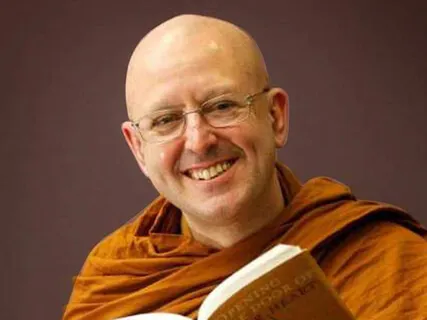
They saw Sarah Jessica Parker reading my book,
Opening the Door of Your Heart,
They photographed her in a coffee shop.
I thought,
Wow,
I've got this famous actress as a disciple and people told me that she stars in Sex and the City.
And I thought,
Wow,
Maybe she can find me a part in Sex and the City.
And I thought,
Wow,
You know,
That's not really my style,
Sex and the City.
So we'd have to change the episode title to No Sex in the Temple or in the Monastery.
And then I thought,
No,
No one would watch a show like that.
There would be no drama in it.
No drama means just no one wants to watch.
Imagine if that really happened.
Would that be a show people would tune into?
I never could have ever seen this movie,
But apparently there was a movie called Bulletproof Monk.
It was a movie,
I don't know,
But anyway,
I thought,
Why do you have to have bullets and monks in the same sentence?
It should be,
You know,
Not even in there.
It's an oxymoron,
But that makes it interesting.
If it's monks with psychic powers who can fly through the air and zap people,
Yeah,
That's interesting,
But monks who just sit peacefully in their cave meditating,
Is that really interesting?
No.
So that's why we like drama.
It's perverse.
So anyway,
It's because we're afraid of peace.
We don't know how to handle peace,
To sit there quietly with nothing to do.
We find something to do.
What a shame,
What a waste of moments of peace that is.
Okay,
Enough.
So I am now going to.
.
.
Another comment or question?
Oh there it is,
Okay.
Go on.
Could you talk about the importance of jhanas?
Oh,
Oh yeah,
Okay.
The jhanas,
They are always talked about as being essential for enlightenment.
It's the eighth factor of the eightfold path.
And the best simile,
In brief,
Because sometimes people need to go,
Is the simile of the tadpole and the frock.
There was a tadpole,
Lived in the water,
In the lake,
All this life in the water.
How can a tadpole know what water is?
No more than a fish.
But one day,
One day that tadpole becomes a frock.
It doesn't really know what it's doing at first,
But it jumps out of the water.
And it's standing on dry land,
It's something totally different.
You left the world as you know it.
You left the body with its five senses.
Seeing,
Hearing,
Smelling,
Tasting,
Touching,
Just like that little novice.
That was a jhana he would have got into for sure.
He couldn't hear the monks leaving,
Chanting.
He was just sitting there really quietly.
He didn't know the passage of time,
But perfectly aware,
Brilliant mindfulness,
A lot of joy,
Just in that sixth sense in the mind.
That was a jhana.
Now that little novice,
Like a tadpole turned into a frock,
Understands there's a different world than the world of the five senses,
And all the thoughts of the five senses.
And at least now you know what it's like when the body is just not there.
But your awareness really is.
Even these days,
The people,
A lot of people come here and say,
I like Buddhism,
I like meditation,
I like the compassion.
There's one thing I just can't really accept,
They told me,
And that's reincarnation,
Rebirth.
I say,
When you get into a jhana,
It's pretty obvious.
Your mind is there,
The body is not.
That mind is independent of this physical body.
So this physical body just dies,
Gets hit by a truck or something.
You notice what gets,
Carries on for a little while.
Eventually that mind stops as well.
But at least you have really direct experience of what it's like to die.
And you're perfectly okay,
Perfectly healthy.
You come out of your jhana afterwards,
You're really blissed out,
Walking on air.
Not mean literally,
But I mean just really happy and joyful.
And you have a big idea of why these jhanas are really important.
To let go some of the biggest attachments,
You need the biggest kick in the bum to make you see things a totally different way.
That's the job of jhanas.
People are really interested for a change.
So I maybe should have started out at the beginning,
Talk about jhanas.
But then I get criticized when I start thinking about jhanas,
Oh that's really for,
You know,
For really long time meditators and high minded stuff.
Now we're not at that level.
So that's how I get criticized for if I don't talk at an average level.
Anyway,
Whatever you do,
You get criticized,
So why not?
So jhanas are really cool.
And that's exactly what that novice would have got into,
One of the jhanas.
I mean weird stuff,
Good stuff.
You take things to a totally different level.
Buddhism is much more than psychology and just,
You know,
Making people at ease with this world.
It's actually leaving the world.
Real escape.
So when sometimes people say,
Oh you monks are just into escaping.
Yes,
You've got it.