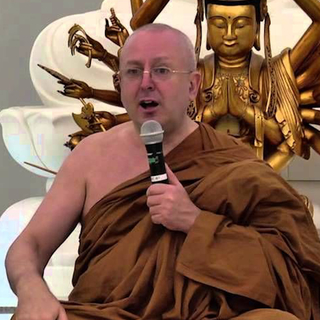
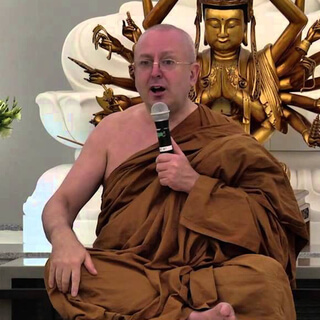
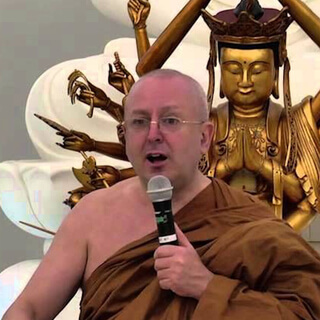
Okie dokie,
So now when we get to our meditation,
First thing to talk about is your posture.
We're not going to meditate yet,
So just relax.
The first thing to talk about is your posture and in how many years now have I been meditating?
I started when I was 18,
So about 52 years now.
And more than that,
51,
No,
Less than that,
51,
51,
52 years.
And I've tried many,
Many different postures to meditate in.
And I always find out that what I think is the best posture to meditate in is never as good as when I ask my body how it wants to sit.
So these days,
When I can sometimes meditate in any position,
But I see what is there when I'm supposed to sit,
I don't usually have much choice,
I say sit up here or sit over there and sometimes it's on a chair,
Sometimes it's not so comfortable,
Sometimes it's on the ground,
So many different places,
But you learn of how to adapt your body to what is needed at this time and this place.
And adapting the body,
What do I mean by that?
We're not forcing the body into a posture.
If you force it because some monk or nun or expert,
Be careful of experts,
Amongst the nuns as well,
They say this is the way you should sit.
That may be okay for them,
But for other people,
We weren't all born sitting on the floor in Asia and sometimes we've had accidents when we play soccer or football or have motorbike accidents,
And so some of us are carrying injuries from the past.
So it's really important to take account of your body and to understand what it needs to be comfortable.
So what I do,
Even at my age,
All those years meditating,
I close my eyes and I literally ask my body,
Body,
How are you?
Are you comfortable?
Something like that in your own words.
And as soon as I ask that,
The body responds.
It's so similar to going to a doctor,
To a GP.
The GP says,
How do you feel?
How are you?
And straight away you feel,
You know,
Your body,
How it feels.
And then once you know how you feel,
Then you can actually do something about it to make it comfortable.
The trouble is that sometimes,
Sometimes you go to the doctor and you know,
How do you feel?
It's very hard to actually understand,
That's why we have doctors for.
So sometimes this fellow did go to the doctor and said,
How does it feel?
He said it hurts.
Well,
Well where?
And this fellow said it hurts all over.
What do you mean it hurts all over?
He said,
Well,
When I touch my head,
It hurts.
When I touch my nose,
It hurts.
When I touch my throat,
It hurts.
When I touch my shoulders,
It hurts.
I touch my chest,
It hurts.
When I touch my knees,
It hurts.
Hurts all over.
The doctor was very smart,
He knew the answer.
He said,
You've got a broken finger.
Okay,
That's a joke.
If you haven't heard that before,
A few people are laughing.
You probably have heard that before,
But this is the first session after the range retreat and COVID.
So I'm betting on the fact that you've forgotten.
Anyway,
So you ask your body how it feels.
When I ask my body how it feels,
I get some interesting information.
Sometimes I think that I am comfortable but I ask your body,
The body says no.
Move your legs.
Or just adjust them or scratch something.
Or just your robe is too tight somewhere or your belt is too tight.
And I listen to that body.
What it says,
I usually follow.
And the reason I do this is because not only are you practicing mindfulness,
What is awareness anyway?
It is this ability just to know how something is experiencing life,
To have that clarity of feeling,
Especially in your body when you start meditating.
I focus the mindfulness on parts of my body by asking the questions.
I always get an answer.
Once I get that answer,
Yes the body is a bit tight there so I adjust the body.
Because if I don't adjust the body at the beginning,
That does mean that it's going to be painful or uncomfortable or go numb later on in the meditation.
So I'm really careful to understand my body and learn how to relax it at the very beginning.
And it's also a very simple but effective way of kindness.
What is the kindness?
I'm very impressed with many of the people who have been coming here for years even,
They ask these amazing questions.
One of those questions was,
What is kindness?
We always assume it's something we would know.
What actually is it?
They assume they know but they haven't really practiced it,
Felt it,
Really known it.
So what we do is we learn how to practice kindness.
And if it is kindness,
You find you're not fighting those feelings in the body,
You're not even trying to get rid of them,
You're relaxing with them.
To me the kindness was encapsulated with that story which my father kept telling me,
The door of my heart is always open to you.
So I look at my things in the body,
If I can't adjust the legs to actually make them more comfortable,
I just allow them to be.
The door of my heart is open to you,
You can stay if you wish.
It's this beautiful kindness.
Then you have kindness,
You can see that if you have kindness towards animals.
If you have kindness towards animals,
They relax in your presence.
They don't sort of tend to run away,
Especially so in the forests,
All these animals around,
You're kind to them,
They do what they need to do,
You do what you need to do,
You don't get in each other's way,
There's a lot of safety there.
So the kindness is important.
It relaxes the animals which are around you.
It relaxes the people that are around you.
When you give kindness to others,
They become nice and soft and easy to handle.
If you don't give kindness to them,
They get very tense and scary.
And that's not just animals,
It's also parts of my body.
If I give kindness to my body,
It relaxes and it's nice and easy.
It's how I bring my body to a deep state of relaxation,
With mindfulness and kindness.
That's what I call the kindfulness.
And that's also important when you do the meditation,
The deepest part of it on the mind.
My mind,
How are you?
I treat it as if it's not my own by me or part of me.
I treat it as a friend.
How are you doing today,
Mind?
Have you had a good day so far?
And I'm kind to it.
Because of the kindness,
My mind is not afraid of me.
It relaxes.
Any sort of tightness,
Aches tend to vanish.
That is how it works.
So with that kindfulness towards,
First of all,
My body,
I sweep it up the body,
As I will do at the beginning of the meditation period in a minute or two,
Actually,
Five,
Ten minutes or two.
I am nine minutes actually,
Eight minutes.
Yeah,
Roughly about eight minutes.
As you learn how to be kind to your body,
It does relax,
It doesn't cause you any problems.
And it's amazing personally just how deep in meditation or rather somehow deep in relaxation you can get just by really letting go,
Being peaceful and allowing the body to really,
Really,
Really,
Really,
Really relax.
That not only prepares you for what's coming next in the meditation when you spend a long time just being with your mind,
Not only does it help with the preparation,
It's also been five,
Ten,
Fifteen minutes which you have been spending just developing those two qualities of focusing the attention and also the kindness.
Because after you do that on the body which is a more coarse object,
Then we start to do that with parts of our mind.
When people ask what is the mind,
There's another one of those very good questions.
We don't assume anything,
That's why I started off the perceived in the peace-o-meter.
How peaceful are you?
Or how agitated are you?
So you ask yourself that question which means you are focusing your mindfulness and generating the mindfulness on something which is your quality of peace of mind or its opposite agitation.
It's a wonderful thing not just in the meditation but in other parts of your day when you know you're very aware of your peace-o-meter,
You know how peaceful or how agitated you are.
Because once you know that,
If you're agitated,
You should never,
If at all possible,
To try and avoid any conflicts or situations which are going to make their agitation worse.
You're not in a good state of mind to maybe have a talk with your partner or an important person in your life about some very,
Very difficult thing to discuss.
You calm yourself down first of all before you follow any difficult path in your life.
If you're doing examinations or you've got a very difficult time in some court or something,
You learn how to bring the peace of the mind to a very,
Very,
Very good level.
You know what you're talking about,
What peace of mind is.
You know what creates it,
What cultivates and strengthens it,
And what causes agitation.
So it gives you many,
Many,
Many good strategies in your life to calm your own mind down.
You're mindful of the peace-o-meter,
One of the most important parts of your mind.
And you know what causes it to become peaceful.
So the measurement of your peace-o-meter goes down,
Down,
Down,
Down,
Down,
As you become more and more calm and peaceful.
And there's another thing which I often focus on,
That when you are meditating and you start to relax your body or have great peace in your mind,
You find that it's very delightful,
Such an enjoyable feeling.
Sometimes people ask me as a monk,
I say,
What happiness do you have as a monk?
You can't watch Harry Potter,
You can't just watch Netflix,
You can't watch,
You know,
Sexuality or no family.
So it must be terrible being a monk.
You say no,
Because you have this beautiful joy.
Anytime you want knowing how to relax your body and bring your mind to a deep state of peacefulness.
That is a lot of joy,
You feel that joy,
That happiness.
Recently when I was teaching a retreat,
And I mentioned to people that when I was a young man I loved classical music,
Many other types of music,
But the last type of music I loved before I became a monk was classical music.
And afterwards I asked myself why,
Why was it delightful?
One of the causes was that because you had to watch every note,
Whatever the orchestra was playing,
You had to watch every note,
If you missed a few notes,
You missed the flow of the music.
So it did teach me how to focus and how to be in this moment and to stop this terrible thinking,
Which interfered with the appreciation of the music I was listening to.
It showed me just the joy of silence.
Of course these days you can't listen to music,
But you do listen to the sound of the birds or the sound of the trees as they are moving in the wind.
Or the sound of the rain is one of my favourites on the metal roofs of our huts.
So as you listen to these sounds of nature,
It brings you into the present moment.
And just being in the present moment and being silent are one of the two great,
Are the two great causes of peace of mind.
You find that your sacrifice gives up peace of mind by going off into the fantasies of the future or the fantasies of the past.
Many of the memories are fantasies,
It's not what really happened.
Often it's what you think happened and you make it real,
Which is why we have arguments.
So this is about the past and the future,
It's untrustworthy.
This also disturbs us.
You don't need to do that when you're meditating,
Be in this moment,
It's good enough.
And also,
Just no need to talk inside of yourself.
Instead you listen to this moment and you finally get very,
Very,
Very peaceful.
And that peace becomes very enjoyable,
Beautiful peace of mind,
Relaxation of body.
And that joy and happiness of mind means you don't have to concentrate,
You don't force the mind.
When you let go and are peaceful,
The mind has enough happiness and joy,
It attracts you.
You don't force your mind on it,
It brings you in.
Come here,
Watch me,
Because the mind becomes very joyful and beautiful.
And that means that you can relax even more and the meditation becomes a natural process.
Well you don't do it,
You just watch it happen.
The more you can be in this moment,
The more you can be silent,
The deeper you go into things like the breathing,
It just happens because the breath is the only thing moving.
You just watch the breath calmly going in and going out and that becomes joyful as well.
Something which was weird.
The why is just watching the breath one of the most joyful things you can do.
And for those of you who've been on meditation retreats,
You'll see this,
Every retreat there's always somebody who gets into a very beautiful meditation before lunch.
And they have that choice.
The choice is to break their posture and go to lunch or to carry on enjoying how they're feeling in their meditation.
And they know that if they don't get up,
They'll miss their lunch,
The next meal is the following morning.
It doesn't matter,
The joy in the meditation is much stronger than the need to eat.
They just carry on sitting there,
They miss their lunch and they have no regrets at all because the joy of peace is far,
Far,
Far better than a full belly.
And that's just a few words before we start.
It's usually 15 minutes of an introductory talk and then we meditate for about 45 minutes and then we have some questions and answers afterwards.
That's how we usually do things.
So I hope that's useful for you.
If not,
Unfortunately I can't play back time and start again.
So that's it for today for the beginning talk.
Now is the time for the meditation.
So those of you who have been sitting down a bit stiff,
If you need to get up,
You can stretch your legs or stretch your body and afterwards we can start the meditation.
I can feel my belt is a bit tight so I'm going to loosen it.
That's better.
Trouble with robes,
Sometimes there's so many of them in there.
Sometimes I can't find my legs under there somewhere.
I know they're there somewhere.
There they go.
That's the way.
Very good.
Good.
So when we're ready to start,
Please close your eyes.
When everyone's got their eyes closed,
You can always know you can scratch anything and people can't see so you're fine.
Except me because I'm on the video.
And you begin with your body awareness.
Even the Buddha said that we should do a lot of Kaya Gata Sati,
Which means awareness of your body,
Especially the beginning of the meditation because when you do become aware of your body,
You can learn how to bring it to a deep state of peace.
And it's also,
It's a coarser feeling to begin with.
If you do something coarse,
Then you refine it as you go on.
And then once we've got a general appreciation of our posture,
Then we go more refined.
To this point which I ask my legs,
How do you feel?
Do you need to be adjusted or moved,
Lex?
I'm willing to do that.
My legs are still not comfortable so I'll spend a little bit more time on them.
Ah,
That's better.
Much better.
And if you cannot relax your legs with further movement,
You focus your attention on any tightness,
Achiness in your legs.
And you're just kind to it.
When you're aware of a tightness or an ache and you give kindness to it,
Then you will notice that the feeling will change.
There really is kindness,
Opening the door of your heart to that experience and not scrunching up against it but relaxing around it.
You normally find that the ache,
Tightness gets less.
And relaxes until you get to the state where your legs are as relaxed as you possibly can get them.
So then you move up to your butt.
I'm always careful of my butt because sometimes sitting for long periods can be a lot of pressure on those muscles.
You may have a folded piece of clothing there which will dig into the flesh.
You can endure that,
It's not too much of a problem at all for the first five minutes.
Then you find your legs go to sleep or there's an ache which gets worse and worse,
Which disturbs your meditation.
You feel your butt and adjust it,
Wiggling,
Adjusting the clothing,
Cushions,
Till it feels good,
Able to be left alone for all this period of meditation.
I'm going to go to my back,
Usually stretching it.
Just up and down the back,
Making sure there's no parts of the back or the chest which are irritating me.
If any part is irritation,
I cannot lessen that irritation through movement.
I just focus my attention there,
Go right into it.
Give it a blast of kindness.
Compassion does relax things.
The muscles.
Go to my shoulders.
It's true,
Today my shoulders are a bit tight,
I can feel the tightness there.
That's what mindfulness does.
When I'm busy talking to people or doing work,
You're not so aware.
When I'm meditating,
I have full opportunity to be aware of the muscles in my shoulders.
And if I notice they're a bit tight,
I learn how to relax them.
I imagine they're being pulled apart.
I imagine some invisible beings pulling them apart,
Stretching them.
And I tell them,
Let go.
Let go of trying to pull or squash or push.
That's usually enough of a suggestion for my muscles to relax.
The aches,
The tightness,
Start to disappear.
Anywhere my shoulders are really relaxed,
Will I let my attention go down my arms,
Past my elbows,
Forearms,
Wrists and hands.
If when you're going past those parts of your body,
There's an ache or a pain,
Pause there.
And learn how to relax those feelings,
Just with this awareness and kindness.
After a while you find it's not that hard to take a part of your body and relax it to the max.
Go up to your neck.
I always remember,
I know some people had migraines because their head was not balanced on top of,
Sorry,
Their head was not balanced properly on top of their neck.
I make sure my head is well balanced,
Moving it around and finding the optimum position for my head on top of my neck,
So my neck feels good.
I don't rush this part of the body,
It's body awareness,
It's kindness,
It's increasing the power of these two qualities of meditation,
Awareness and kindness.
Eventually I come to my face,
I feel some tightness there,
Around my eyes and my cheeks.
Make sure the muscles around my eyes are relaxed.
I'm aware of them,
Feel them,
How are you?
Get to know them.
And I can see them change and relaxing and loosening.
And it's my kindness that does the job for me.
I'm kind even to muscles which most people don't even know exist.
I'm kind to my muscles around my mouth as well.
I'm aware of them,
My relaxant.
Once those muscles are at ease,
My whole face feels different than two or three minutes ago.
Nothing is being held tight.
It's loose,
At ease,
Like the rest of my body.
I'm aware of this body as a unit,
All connected up together,
Just sitting here in front of you.
And it's so much more relaxed than when I began.
It's at ease,
In a good meditation posture.
It's a simple thing to do,
As long as you don't rush into the meditation.
And it's very,
Very helpful to get good meditations,
Peaceful meditations,
Within a good body which has been relaxed.
But then as I'm still aware of my relaxed body,
I keep just being aware and being kind to it as a whole,
As a unit,
As one thing of my body,
Until I can feel it being delightful.
It is a pleasure.
It's why that sometimes you wake up in the morning,
You've got no place to go,
Don't have to get up yet,
And you can stay in your cozy,
Comfy bed.
It's a very pleasurable place for the body,
Relaxed,
At ease,
In the comfort of a nice bed.
Here you get the same feeling with your legs crossed,
Meditating,
Really at ease.
Let's listen.
Markani,
Come on.
Nothing Saber'sulp Okay.
Don't be send me.
Oh,
You said that.
Okay.
Only when I feel the relaxation is deep enough of my body,
Do I then go inwards to my mind.
Just ask you my peace ometer,
Ajahn Brahm,
How peaceful is your mind right now?
From one to ten,
One very peaceful,
Ten very agitated.
Once I'm aware of the reading of my peace ometer,
Then I know how to move that reading closer and closer to one.
No past,
No future,
There are two heavy burdens I don't want to let into my meditation.
And no thinking,
Just knowing,
Being aware of this moment and not forgetting the kindness to it,
The kindfulness,
The awareness and kindness to this old moment.
Always noticing just how peaceful you are,
What disturbs the peace,
What brings that mind to deeper peace.
What are the causes for these things?
This is we're not just being aware and kind,
We're learning insight without thinking,
Just knowing.
It happens for most people,
Once the mind starts to get calm and peaceful,
You start to become aware of your breathing.
Just like a simile,
Just walking by the beach,
You sit down and all you can see and hear the sound of the waves coming up the beach,
The gentle waves receding away again.
A very calm sunny day.
To me that's like watching my breath,
The breath coming into my body,
The waves rippling upwards on the beach towards me and then going away again.
Watching the breath come in,
Watching the breath go out.
And being content,
Not wanting anything in the whole world,
Just being with your breathing.
Trying to not become quiet now.
When I start speaking again,
I'll be close to the end of the meditation in another 25 minutes.
.
.
.
.
.
.
.
.
.
.
.
.
.
.
.
.
.
.
.
.
.
.
.
.
.
.
.
.
.
.
.
.
.
.
.
.
.
.
.
.
.
.
.
.
.
.
.
.
.
.
.
.
.
.
.
.
.
.
.
.
.
.
.
.
.
.
.
.
.
.
.
.
.
.
.
.
.
.
.
.
.
.
.
.
.
.
.
.
.
.
.
.
.
.
.
.
.
.
.
.
.
.
.
.
.
.
.
.
.
.
.
.
.
.
.
.
.
.
.
.
.
.
.
.
.
.
.
.
.
.
.
.
.
.
.
.
.
.
.
.
.
.
.
.
.
.
.
.
.
.
.
.
.
.
.
.
.
.
.
Because these classes are streamed live overseas,
And many people don't have the opportunity,
Especially this time of COVID-19,
Of being able to go outside.
So we have some questions here.
So if anyone has any questions afterwards,
Please feel free to ask them.
First from Lucas in Switzerland.
Paudit gave a very detailed description of meditation.
Why didn't he mention about closing the eyes?
Maybe they should be open.
You can try if you like keeping your eyes open,
But you find it's much more disturbing.
If you're staying in a cave,
It doesn't really matter,
It's dark anyway.
If you try keeping your eyes open,
Just in even a place like this,
Which is quite peaceful here in Western Australia,
Still there's so many things happening outside.
You get disturbed by the sounds,
By the change of light.
It's true that the Buddha never said to close the eyes,
He never said to keep them open either.
He never even mentioned that at all.
But you can try yourself and just about everybody when they're doing the sitting meditation,
It makes it so obvious to be able to be peaceful.
You have to close your eyes.
Otherwise,
Imagine,
I'm not sure what you've been doing the last 45 minutes.
If I have my eyes open,
I'd probably be pretty distracted by what you're up to,
I'm not sure.
So the Buddha never even mentioned that,
But it's obvious to me that when we're trying to calm our senses,
We try and close them,
Stop them.
If I possibly could have ear lids,
In other words,
I could close my ears and make them stop,
That'd be wonderful.
You wouldn't have to hear anything at all.
Next one is Sotira from United Arab Emirates.
My family is quite noisy and has a lot of conflict.
How can I practice meditation without striving to become peaceful from this?
If you are in a sort of a house or an apartment,
You ought to have a bit of peace.
We do have things like ear plugs,
Ordinary things.
Don't always try to think you need to use psychic powers or great determination to find some silence.
And of course the story,
Which you may know,
I used to,
In the old days,
Used to travel around a lot.
And the aircraft always would be really,
Really noisy.
Just one kid starts screaming,
And poor kid,
And it wasn't the kid's fault,
Would make a huge amount of noise and very difficult to meditate,
To sleep or do anything.
So I managed to get these ear plugs,
Which are molded into your ear holes,
So exactly the right size,
So they're very comfortable and they work amazingly.
So the first time I used them on a flight going from here to Asia,
And I put them in my ear holes and I started meditating.
But quite honestly,
As soon as I started meditating,
I fell asleep.
It was an amazing thing that I could fall asleep like that in an aircraft.
And when I woke up,
I went to the toilet and I remember this experience.
I thought to myself,
Wow,
This aircraft is so quiet,
So peaceful.
And then I realized,
Oh,
I still have my ear plugs in.
You couldn't feel them in there,
That's why there was such a wonderful addition to what you can have.
Because sometimes it's amazing,
Just when I do go traveling,
Giving talks,
Retreats everywhere,
And sometimes people put me in all sorts of weird places to stay.
I remember going to one place and the only place they could put me to stay was upstairs and down below was a karaoke bar.
That wasn't a good night's sleep at all.
You can understand just sometimes there's no quietness there.
But later on in my monastic life,
I just learned how,
What I call,
Create bubbles around you.
I remember doing this when I was giving a talk at a conference in Bangkok,
Outside of Bangkok,
And arriving in Sawanabhumi.
My host said,
Oh,
This is going to have to wait for about an hour because another guest is coming in an hour's time.
Would you mind?
I said,
No,
Not at all.
They said,
We'll try and get you a quiet place to rest.
I said,
No need.
So just in the concourse,
Just outside where you receive the guests,
I found a nice seat,
Sat down in there,
Closed my eyes,
And I did create the bubble around myself.
At first you could hear the noise outside of people talking,
Greeting each other,
Saying hello,
And even all the announcements coming on the PA system.
But after a little while,
Just,
They were like 100 miles away,
I was in my little bubble,
Like in the cave,
And I couldn't hear those sounds.
It was so wonderful that you could do stuff like that.
The other time I remember on the Wesley Church outside Hay Street Mall,
There was,
I think it was some sort of,
It's supposed to be like a peaceful demonstration against the situation in Burma or something.
But anyway,
They asked me,
Can you come and just,
We're just meditating there.
So I said,
Yeah,
I'll come along.
So a two hour meditation.
And that was actually on the pavement,
No cushions.
And it was opposite,
I never knew what was in the city,
It was opposite time zone.
Remember those video game shops.
And they were blaring out an incredible amount of noise.
So there I was,
Just two hours just meditating on the cold pavement,
No cushions.
And just opposite time zone,
Let alone the cars and people walking past.
The only reason I do that,
I must admit,
I wasn't really into protesting about anything.
But what I was really into doing was seeing if you could do that.
Meditate quietly,
Sort of on the cold,
Hard paving stones,
In a very noisy state.
There's no trouble at all.
You just let go of the noise.
And don't try and stop it,
Don't interfere with it,
It's just noise that's all.
So leave it alone.
So it can be done even with your family as well.
There was one woman,
Just amazing lady,
She said that she always wanted to meditate at home.
But she had two small children.
And every time she sat down to meditate,
The children would say,
Mummy,
Mummy,
Mummy,
I need a glass of water.
Mummy,
Mummy,
Mummy,
I need to go to potty.
Mummy,
Mummy,
Mummy,
I need something.
And of course they never needed that,
It's just they wanted attention.
And after a while the mother said,
I don't care,
I'm going to meditate.
So she sat down,
Mummy,
Mummy,
Mummy.
And then the kids,
When she wasn't going to stop to answer them,
They started climbing over her body.
And she had long hair,
Started pulling her hair.
And she didn't say leave it alone,
She just totally ignored them.
And then she told me the innovative nature of even young kids,
It must have been only about four or five or something,
Mummy,
Mummy,
Mummy,
Jenny's turned on the gas.
Mummy,
Mummy,
Mummy,
So if Nepal's got out a knife from the kitchen cabinet.
She really wanted to meditate,
She said,
I don't care.
They could blow up the house,
They could chop each other up with the kitchen knives.
And she carried on meditating,
And after another couple of minutes they became quiet.
And then when she came out of her meditation,
The house was still there,
Hadn't been blown up,
And the kids were in one piece,
They hadn't been sliced to bits,
And they were just playing quietly in the corner with themselves.
She said from that day on,
Whenever she wanted to meditate,
She just sit down and the kids say,
Mummy is meditating,
We can't disturb her now.
And I really praise her,
She won her peace in her household.
So it's difficult but it can be done,
Those are some ways of doing it.
From that,
How does spiritual meditation work?
What does that mean?
Does your mind actually travel or does your mind imagine things?
I'm asking because my goal is to enjoy peace,
I wish to know.
I just pretty much told you how to enjoy peace.
But when you go deep in the meditation,
Especially when we have meditation retreats,
We can focus on some deeper aspects of the meditation.
So you ask the question,
This is what happens next.
So you start exactly as we were doing here,
And you get into this beautiful,
Delightful breath,
Which often saves the pivot point of meditation,
When the breath is really delightful,
You're breathing in,
Breathing out,
And you're so satisfied,
So happy inside,
Just watching your breathing.
And little by little,
Your body starts to almost become further away from you,
You can't feel your body.
I had to learn this in Thailand because of the mosquitoes.
This was in the northeast in the jungle,
49 years,
46 years ago.
They were just eating you,
But when you really relax and calm down,
You went inside,
You couldn't feel your body.
So I didn't know whether the mosquitoes were eating my arm or what they were doing.
And anyway,
You go just on this beautiful breath,
Delightful breath,
And as you just relax even more,
You can understand the nature of this,
The science of it,
Because you're not doing anything,
Or worrying or thinking or putting effort into doing it.
It's such an effortless practice,
You don't need much oxygen.
So you don't breathe very much,
Your breath gets much lighter,
More peaceful,
It becomes very,
Very refined.
It's still delightful.
The more we find the breath,
The more delightful is your mind.
And so the delight of the mind is much more powerful than the breath,
And you can't feel the breath anymore.
It goes.
You haven't fallen asleep,
You're really awake.
The deeper you are in the meditation,
The more mindfulness there is.
Now you're mindful of inside.
What happens there is the delight,
The joy of the mind is so great.
You see what we call the nimittas,
For most people it's like lights in the mind,
Beautiful lights,
They can be complicated at first,
But you soon simplify them.
They can just be exciting or fearful at first,
But then you soon calm them down.
And so you get beautiful nimittas in the mind,
Gorgeous things.
And with the nimittas,
One thing which,
I don't mind telling you,
Because I don't think you can fool me,
Sometimes I tell people what to expect and they come and I say,
Yeah,
I got this,
And they didn't,
Their mind isn't making it up.
And it's not unconscious,
I'm conscious that they're doing this,
But still it's a problem.
But anyway,
The real nimittas,
It's the blues which are more blue than blue.
The yellows are gorgeous.
Everything about those nimittas is so delightful,
So wonderful.
And you're really just full of life's energy.
And those nimittas become very powerful,
Soon very stable.
I'm rushing along here,
But if you want to read this,
I've said it many times,
It's in some of the books.
And as you go,
In the books which I wrote,
Described in detail,
As you go deeper and deeper,
The nimittas become so powerful.
The head will be beautiful,
Very stable,
Very bright,
And then you get drawn into them,
They're sucked in,
Or they come over you,
And you go into what we call the jhanas.
And those jhanas stay again,
There's even more happiness.
And in those jhanas,
Again,
The body's not there for you.
It's quite safe,
But you're in the mind,
The sixth sense.
And you can usually stay in those places for such a long time,
They're very,
Very wonderful and joyful and happy,
And there's four of them in the jhanas.
And they really transform you.
And so,
As you let go of your body,
The five senses of seeing,
Hearing,
Smelling,
Taste and touch,
You go into the jhana states,
As you go into these things,
They're very,
Very wonderful.
And you come out afterwards,
You get a lot of insight into just the nature of this body,
And also the nature of this mind,
Of consciousness and will,
And all of that sort of stuff.
And your spiritual powers,
Not some talking about flying through the air,
But spiritual powers of insight and kindness,
Compassion,
Become extremely strong.
That's it really in brief.
Obviously there's more to it than that.
One of the other things,
If a person does,
They don't get into any jhanas.
Oh,
Just afterwards they're walking on air,
Having a wonderful time.
And sometimes,
I've said this so many times,
Now you all know this,
Or at least many of you do,
When somebody comes up and says,
Oh yes,
I've got a jhana today,
I jump on,
I look at you and say,
You,
Nah,
No,
You're a girl,
Girls can't get jhanas.
I'd do anything to try and upset you,
Anything to try and stir you up.
Of course girls get jhanas,
Somebody's saying that just to a skillful means.
If you react and you say,
What,
You can't say that,
Then it wasn't a jhana.
You say,
Okay,
Fair enough,
Whatever you say,
Then maybe it was.
Skillful means is to test,
Because after the deep meditations,
Oh,
You're so peaceful,
You can't get upset.
Is it possible?
You can't get angry.
Anyway,
So those are the deep meditations.
That's spiritual meditation work,
Oh,
That goes so powerfully deep.
In Indonesia,
How to teach non-Buddhists to stop thinking in meditation.
How to teach Buddhists to stop thinking in meditation too.
Just human beings.
We get so addicted to thoughts,
We get used to it,
We get attached to thinking.
But first of all,
To try and demonstrate to many people,
They're not always thinking,
Not,
You know,
Everybody,
You have some time when you don't think.
We don't notice that though.
One simple way of doing it,
When you come into this room,
What do you notice?
The people,
The shrine,
The chairs.
What about what's in between all of that?
The space between the people and the space between the ceiling and the floor.
The emptiness in this room is so much more.
The silence in your mind is actually more than the thoughts.
We don't notice it though.
We only notice the things.
So after a while,
When we turn,
Ask people to look at what's between things,
The emptiness even in the forest,
In the city.
Not just the things in the city,
But look what surrounds everything.
You find out that's what surrounds the thoughts.
And one thought finishes.
Before another starts,
There's a space.
When you watch those spaces,
Know how to experience and feel them,
They grow.
They grow bigger.
Because they're beautiful.
Silence is golden.
And after a while,
When you're in the silence,
There it was again.
The space between my words.
It's not that hard to be silent.
Once you point it out,
People get to know it,
And it can grow.
And last one,
How can one cultivate mental virtue in daily life?
I struggle,
E.
G.
With complaining when I feel stressed.
Oh come on,
Yeah you complain when you feel stressed,
But no one's listening to you.
So it's a waste of time.
Wasting your energy,
Wasting your time.
So after a while,
Why complain?
Of course it's much better if you don't feel stressed.
There's no need to complain.
I don't know why it is,
But maybe because I've been away for a while,
People come up and say,
Oh,
Can I ask for forgiveness?
I said something or I did something.
And I look,
What did you say or do?
I can't remember that.
The point is,
Whatever they thought,
They had a negative reaction to their own speech.
So don't have a negative reaction to life.
Feel stressed,
But then let go.
If you want to know how to have resilience,
So you don't stress out,
This is something which I was talking about six months ago before I went on retreat.
The guitar string,
You stretch the guitar string really tight and something falls on it,
Bing!
It makes a loud disturbing noise.
You lessen the tension of the guitar string.
Something hits it,
Boom!
It makes a low pitch noise and not that disturbing.
And then there's no tension on it at all.
Things hit it.
It makes no noise at all.
That's what happens when you're not stretched and stressed.
Whatever happens in life,
That could upset other people.
But for you,
You got no tension in you.
So life doesn't make a noise,
Doesn't make a reaction when it hits you.
You can't change things in life.
You see,
Human beings are human beings.
They do stupid things.
They back your car into yours.
They take something which is not theirs.
I don't know what people do,
But that's their life.
You don't have to make it your life,
So stop complaining.
Relax.
Let go.
Nothing upsets you.
There we go.
So those are five questions from overseas.
Any questions from here?
It's amazing,
No questions,
So we can now bow three times and then everyone will go home.
Of course,
I know that never happens.
What happens is people start lining up.
That's fair enough.
Okay,
So let's actually bow.
It gives me a bit of exercise because my knees are getting a bit sore.
And then we can come up and ask your questions.
I saw that.
Okay,
It's her birthday today.