Hello,
And thank you for joining another guided meditation with me.
In today's session,
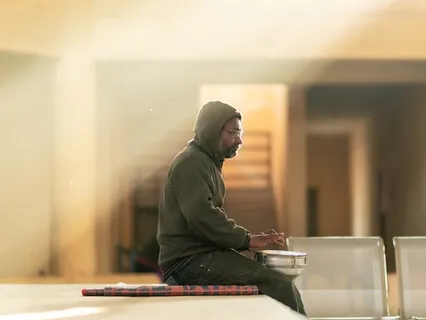
We will be doing a seated guided meditation using our breath as the main focus of attention.
This meditation suggests to be seated in an upright position with your back straight,
Preferably with your eyes closed,
And once you're settled in the upright position,
You should shift your attention to your breath.
In this session,
You'll notice the physical sensations of your breathing,
Such as the air moving into the nostrils and the chest expanding.
As soon as your mind begins to wander,
Simply notice the distracting thought without evaluating it,
Without judging it,
And just return your attention to your breath in a kind way.
Practicing the seated meditation serves many goals.
Guided meditation is a method that allows us to experience how associative and strong the noise is that our thoughts cause.
The simple instruction to keep your attention on a specific body part or on the breath seems simple but often it's more difficult to do than you may originally have thought.
The seated meditation is also a method to repeatedly learn how to draw your attention to a certain point.
This is,
Therefore,
A form of mindfulness training.
In the seated meditation,
The focus of attention is the breath and the effect of the training of attention in this way.
We can also transfer it to other areas,
Such as focusing or concentrating attention on a specific task,
Conversation with someone,
Etc.
The seated meditation is also a method that helps to learn to detect when attention wanders.
So being able to notice when your attention wanders is a critical component of successful self-control.
The seated meditation can also provide insight into the nature and the pattern of thoughts in general.
You may notice recurring themes of thoughts.
You may realize how some thoughts are played over and over again like an old record.
So in effect,
This exercise is teaching the thinking mind how to perceive.
The way in which attention is returned to the body and doing so without judgment and with acceptance is an exercise and an important part of mindfulness,
Acceptance.
So when you are ready,
When you've found a comfortable place to sit without any distractions,
Then you're seated with a posture that signals dignity and alertness.
So in other words,
You're sitting with your back straight,
The head is straight,
And just making sure that your shoulders are relaxed.
Just try to make sure that your knees are lower than your hips because in this way,
Your spine will be self-supporting and your lower back will have a gentle inward curve.
If a chair isn't an option,
Consider performing the meditation reclined or even lying down.
And remember,
There is no right or wrong way to do the meditation.
You may very well get distracted by your thoughts.
And that's okay.
Just remember,
When you recognize that you are not here in the present moment,
Come back to your breath gently and kindly.
Remember in this meditation,
We're going to use our breath as an anchor for our attention.
And before we start,
It's really important to let go of striving,
Of goals,
The idea of how we should do this to perform well.
Just simply allow yourself to do this exercise as you do it.
Let go of the idea of right and wrong and just simply see how it goes.
When you're ready,
You may close your eyes or if you feel comfortable keeping them open instead,
Keep them looking downwards,
The light case.
And for just a moment,
Become aware.
Notice how your body is presented in this room.
Notice how your body is connected to a chair or wherever you're seated on.
Maybe you notice how your feet are touching the floor or making contact with the floor.
Just simply notice,
Maybe you notice some other physical sensations.
Maybe you feel pain in your back or tension in your shoulders.
That's okay.
Just simply observe without attempting to make it go away.
Just notice your body as it's present right here,
Right now.
Now let's focus our attention on the breathing.
Notice how the air gets in through the nose and how your chest expands when you breathe in.
Also notice how it relaxes you when you breathe out.
You may also notice how your belly moves when you breathe.
There is no need to control your breath or change it.
All you're doing is simply witnessing as it naturally occurs.
Breathing in and breathing out.
Finding yourself to be present in this moment.
Sooner or later,
You may find yourself distracted.
Maybe you get distracted by thoughts or sounds or sensations in your body.
This is fine.
Remember this is just how the mind works.
So when you notice that you've been distracted,
You can always turn your attention back to your breath to let go of the distractions.
So breathe in and breathe out.
Breathe in,
Breathe out.
And rather than focusing in a rigid way,
Let your attention softly rest on the breathing.
Do not force yourself.
Simply going about this with an open and gentle attitude.
You're just following your breathing.
Every time you find yourself distracted,
Come back with a gentle attitude.
There's no need to punish yourself.
It is okay.
This is just how the mind works.
Always turn your attention back in a kind way.
So breathe in.
Just notice how the body reacts and breathe out.
Where is your attention now?
Is it still focused on the breathing?
Or is it somewhere else?
If you're distracted,
Maybe you can notice where it has distracted you.
Was it a thought,
A sensation,
A feeling,
A sound?
Notice and then bring your attention back to the present moment.
Even if you find yourself being distracted many times,
Remind yourself that you are always the one who can turn your attention back.
You have the power to do that.
You can decide to come back to this present moment.
Simply by focusing on something that's occurring right now in this moment.
So in this case,
Your breath.
And now when you're ready,
You may slowly open your eyes again and come back with your attention in this room.
Just for a brief moment,
Allow yourself to take in the room again.
Simply notice where you are,
How you feel.
Thank you so much for meditating with me.
Namaste.