Yoga Nidra.
The what?
The why?
And the how.
Welcome to the first yoga nidra of our seven day yoga nidra challenge.
Where we start by understanding what yoga nidra is and why and how we would practice it.
I'll talk you through the what and the why,
The benefits,
And then we'll have a short yoga nidra practice with the intention of providing a really nice reset.
Before you go back to your day.
So what is yoga nidra?
Well.
Yoga Nidra,
Also known as yogic sleep.
Is a really powerful practice that guides you into,
Hopefully,
Deep relaxation.
But whilst also being aware,
I.
E.
Not being asleep.
Now,
If you fall asleep during yoga nidra,
It just means that you needed that sleep,
That's all.
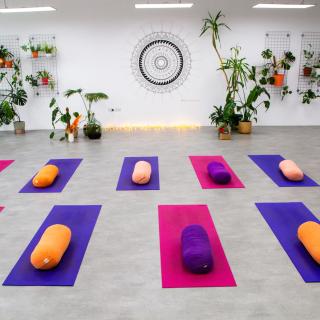
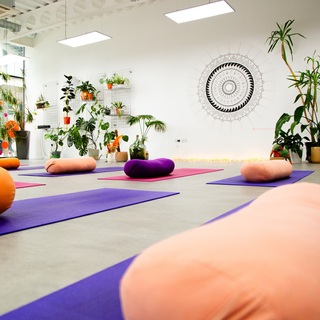
The practice of Yoga Nidra is a practice of getting set up comfortably,
Lying down or seated,
Getting your blankets and your pillows and your eye masks.
Practicing any breath work that's calming and ultimately getting out of your own way.
This as a practice is something that we can get very effective at.
The state of Yoga Nidram,
In Omer Dinsmurtuli's words,
Is a form of awareness.
How amazing is that?
A form of awareness.
What does that mean to you?
According to the Bihar School's Sanskrit glossary of yogic terms,
Yoga nidra is psychic sleep.
A practice where the body sleeps while the mind remains aware,
Although its movements are quietened.
I mean,
Yes please,
Right?
Inducing deep relaxation,
A state of complete bodily relaxation and magnetization.
How cool is that?
Which the mind rests in a suspended state,
Awake yet calm and free from all distractions.
So from that quite cosmic description we can lift that Yoga Nidra aims to help both the body and the mind rest.
It can be practiced in many different ways but it usually involves getting extremely comfortable either lying down or sitting somewhere and being guided through checking in with all five senses or some visualizations or setting an intention.
Or a body scan for relaxation,
Or focusing on the breath,
And much more.
And we'll explore many of these in our challenge.
The why.
Firstly,
If you go back to the description,
How often do we actually let the body rest outside sleep?
Just think about that for a moment.
How often in the last,
Like,
I don't know,
Week,
Have you supported your body in resting?
Not while holding your phone.
Not while holding your head up watching the TV,
But actually sunk down into rest,
But not sleep.
Just something to think about.
And then the mental rest.
I mean this is so rare.
For many of us,
Myself included,
The mind is still thinking and planning and analyzing even in Shavasana,
In the relaxation at the end of a yoga class.
OK.
Yoga nidra most probably improves sleep quality.
In a couple of studies adults practiced yoga nidra regularly and the results showed that they had more deep slow wave sleep some reported slightly longer sleep,
Less awake time at night and better sleep quality.
Reduced stress,
Depression and anxiety.
That combination of relaxing the body while focusing the mind provides a respite for a busy mind and an opportunity to let go of rumination.
A study and a review overall found that yoga nidra was associated with lower stress,
Lower anxiety and depression symptoms,
And lower physiological symptoms of anxiety.
How amazing is that?
Yoganandra might play a role in improving memory and increasing dopamine.
Dopamine is a chemical messenger that helps brain cells communicate and it plays a role in motivation,
Learning,
Movement,
And how we respond to rewarding or important experiences.
And the how.
Well,
This is what we're going to explore this week.
We'll have a range of lengths and intentions,
But for now,
I'm going to guide you through a relatively short yoga nidra,
The intention behind which is a simple reset.
Letting go of the day that's gone before you and feeling ready and refreshed for what's coming.
So let's start,
As we always will,
By getting comfortable.
You can be lying down in any way.
You can be seated.
As long as you're safe and comfortable,
You're perfect.
Faffing time is key.
Here,
Grabbing socks,
Layers,
Blankets,
Cushions,
An eye pillow or a sleeve of your jumper to block out the light.
Anything you need.
Although this practice of Yoga Nidra is on the shorter side.
It's still so important to get set up.
In a way that allows your body to rest as much as possible.
Once you're settled in.
Just do a sanity check that your head is comfortable and supported.
That your upper arm bones can rest fully into your shoulder sockets.
Check that your spine can soften.
And that your thigh bones can deeply rest in your hip sockets.
Take any movements or adjustments that you need.
And when you are sure.
You are as comfortable as can be.
Soften your gaze or close your eyes.
And allow your body.
To become really heavy down into all of those points of support.
Guide your awareness to your eyes.
Your gaze is soft or your eyes are closed.
But still noticing your sense of sight.
Perhaps patterns,
Different colours and patterns of light on the backs of your eyelids.
And allow your eyeballs to rest in stillness.
Relax your eyelids.
And all the little muscles around your eye sockets.
And let your attention move to your sense of smell.
Is noticing any smells that are present in this moment.
Relax the tip of your nose,
The bridge of your nose.
And the inside of your nose.
And notice your sense of taste.
Just notice.
Soften the tip of your tongue.
Your whole tone.
The base of your mouth.
The roof of your mouth.
The insides of your cheeks.
Relax your whole mouth.
And allowing your awareness to drift to your sense of touch.
Perhaps noticing the textures of your clothing.
Any sources of support.
Any different temperatures.
Relax your skin.
And allowing your awareness to drip.
To your sense of hearing.
Allowing sounds to come to you,
Not needing to go and search them out.
And allow your sense of hearing to come a little closer.
And a little closer.
Noticing the sound of your breath.
Noticing the subtle sound of the inhale coming in.
And the exhale leaving.
A letting go.
Letting go of the air as it leaves your body.
And with each natural exhale.
Perhaps letting go of anything that's been on your mind so far today.
It might take more than a few breaths and that is okay.
Let it go.
Let it go.
Using the exhale to surrender your whole body.
Drop down another layer of relaxation.
And then using the breath to reset.
On your inhale saying to yourself,
I am relaxed.
On the exhale saying,
I am ready for what's next.
On the inhale saying,
I am relaxed.
The exhale saying,
I am ready for what's next.
And let that go.
Let that go and let your whole face relax.
Who likes your whole head?
Your net.
Chest.
Shoulders,
Arms and hands.
Relax both arms completely.
Soften your upper back.
Your lower back.
The sides of your waist.
Your belly.
Relax your whole pelvis.
Maze.
Lower legs.
Ankles and feet all the way to the tips of your toes.
Completely relax your legs.
Your torso.
Your arm.
And your head.
Coming back to the breath.
On your inhale saying,
I am relaxed.
And on the exhale saying,
I am ready for what's next.
And starting to make your breath a little more active.
Keeping any positive feelings as we start to wake up the body and wake up the mind.
When you're ready,
Taking any movements that feel right.
Wiggling fingers,
Maybe,
And toes.
Perhaps circling the wrist joints,
The ankle joints.
You might like to take a big stretch,
Like animals do after a period of rest.
And then perhaps bring yourself up to any comfortable seated position.
And for one last time on your inhale saying,
I am relaxed.
And on your exhale saying,
I am ready for what's next,
I wish you a wonderful rest of your day.