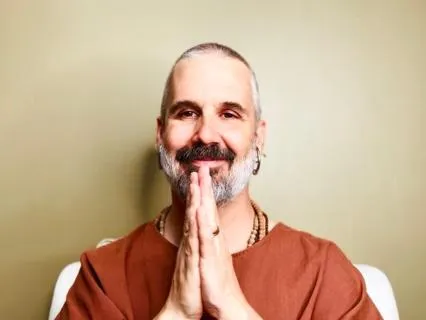
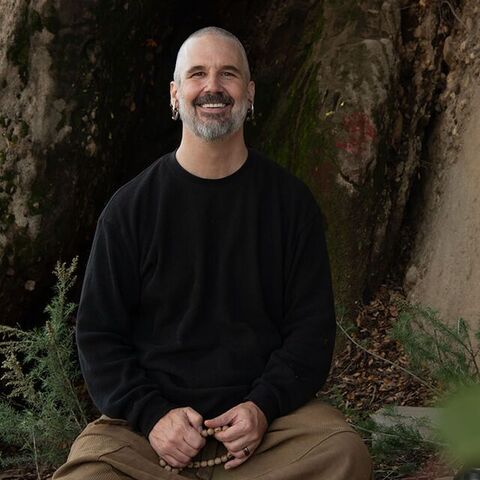
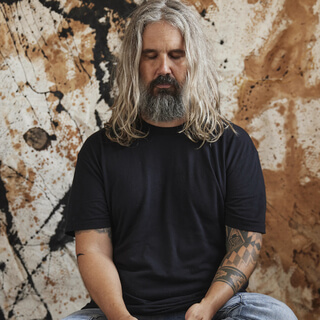
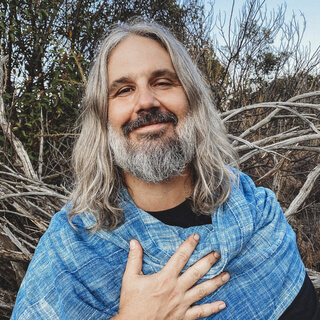
Herschel Wagner here.
Let's talk about Swadhyaya.
Swadhyaya,
It's a big Sanskrit word.
You may have heard of it because it's one of the Niyama that are mentioned in the Yoga Sutra and the eight limbs of yoga.
Swadhyaya is a very important practice on the spiritual path,
Especially within my community.
And the community that I come from.
My teachers focused a great deal on Swadhyaya.
And it has two.
Primary meanings to it.
One is the meaning of chanting the sacred text.
And we did do a lot of that in the ashrams where I studied.
It's a very common practice in India to chant texts like Bhagavad Gita,
Guru Gita,
And other texts that are chanted out loud.
So you're kind of studying the verses as you're singing them,
But also participating in the discipline of singing in Sanskrit and kind of washing yourself with those verses in that ancient language.
It's very powerful.
But the other meaning of swadhyaya is what I want to focus on in this video.
Which is sacred study.
Swadhyaya literally means the study of the self,
Study of one's self.
And I like that as a definition or as a translation also because Ultimately,
If we're studying Bhagavad Gita,
If we're studying Shiva Sutra or some other sacred text,
From a yogic point of view,
We're studying about our own divine essence.
But Swadhyaya isn't just confined to studying traditional texts.
I mean,
Not in my estimation anyway.
These days,
Swadhyaya,
I think,
Includes things like this,
Like watching videos where you're learning about the spiritual path,
Where you're learning new spiritual practices,
Where you're learning about different spiritual teachings and perspectives.
Even modern.
Perspectives,
Self-help perspectives or,
You know,
Personal development perspectives.
I think that practices like psychotherapy are also great things to do and I would put them in the category of Swadhyaya as well.
I think it's very important for many,
If not all.
Serious spiritual aspirants to work with good therapists that can help us on that level of healing along with the spiritual work that we're doing.
Swadhyaya also has to do with the practice of self-inquiry.
Also known as Atma Vichara.
I've kept a journal.
And have it as part of my meditation routine.
For many years,
For my entire sadhana,
My entire spiritual path basically.
And I use it in many ways.
Sometimes I use my journal just for brain dumping,
Just getting out whatever's there.
But oftentimes I'm doing a sort of a question and answer.
Session.
With the part of me that is just vulnerable and.
.
.
And need in whatever way.
Speaking to the part of me that is deeper,
That is wiser,
That is more connected to source.
And it's incredible the answers that come.
And I can work with those answers in a way that feels very reliable because I also have a very robust practice of studying the text.
Of studying the teachings,
Of studying commentaries by other masters.
And ancient masters in some cases,
And sometimes other contemporary teachers.
My colleagues even.
So there you go.
Another aspect of yoga for you that I'm so happy to share with you here.
And swadhyaya,
That's one of my,
That's one of the main things that I offer is studying and studying with and helping people to study different ancient teachings and the spiritual path,
Yoga philosophy,
Bhakti yoga,
Tantric philosophy.
I could talk about this all day.
I love it so much.
Many blessings to you on your journey of study of the self.
Of the teachings.
May bear the greatest fruit for you.
Bye for now.