So hello everyone,
Welcome.
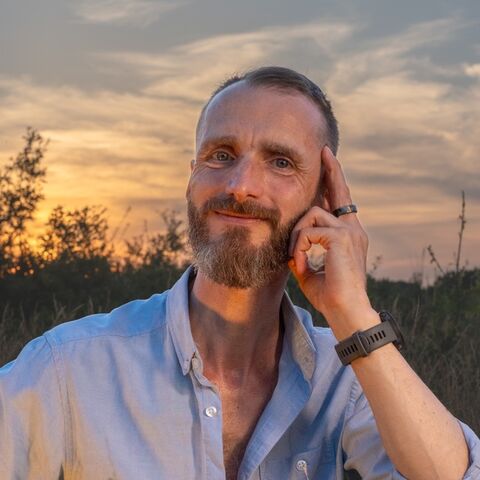
Lovely to be here with you all again and with the wonderful Grant Shepard based in New Zealand.
And a grant.
Hi Nick,
How are you doing?
Yeah,
Very well,
Thank you.
Really looking forward to our conversation today.
Yeah,
Same here.
Just before we started the recording,
We were chatting about how it's Pride Month and Grant was commenting,
Would you maybe like to repeat what you just said because I thought that was really lovely about Pride Month,
Someone wishing you a happy Pride Month.
So a lovely lady a while ago,
She wished me a happy pride month.
And I said to her,
Thank you very much.
I actually have a pride life.
I said,
So it's wonderful.
I said,
I get pride month and a pride life all at the same time.
And we both have had a bit of a giggle about that.
Yes,
Yes.
So then that is a lovely question,
Isn't it?
It's like,
And I do remember once being on a Pride here in London and going into Trafalgar Square where they have the central stage and all of the speakers.
And someone was saying there,
Well,
Yes,
It's wonderful that we have Pride and it's wonderful we have this day where we can celebrate ourselves and feel free to come out into the streets and be seen.
And then they said,
But how would it be to live every day as if it were pride?
100%.
Yeah,
100%.
Rather than just.
Pigeonholing ourselves into one month.
What would it look like to live freedom throughout the whole year?
Yes.
And live in our freedom to express ourselves as we are.
Yes.
And for me and my,
My explorations into Tantra.
Tantra certainly felt an element of Embracing living every day.
As if it were pride because for me Tantra is about connecting to that life force that sense of vitality bliss And then how does it manifest in our daily interactions with others?
And our internal practice,
How we experience the world.
So today we thought we would explore this intersection between Tantra,
Tantra practices,
Our experience of Tantra,
And then what it means to be a gay,
Bi,
Trans,
Queer man living.
With this sense of pride.
And the interesting thing is that pride is actually one of the seven deadly sins.
Yes,
Absolutely.
And in Hinduism as well,
Madha is the name of it.
Madha is pride.
But it's also connected to.
To that sense of.
Being different from others,
There's that certain sense of that.
And I think in our society,
It's important to.
Not only maintain a certain awareness of the differences we might have.
But also the similarities we have too,
Because that can help to.
Reduce division.
Reduce all the problems that we're having.
Particularly things like social media.
It really can divide us.
Rather than us all going,
Hold on a minute,
Yes,
We are kind of like an amazing rainbow.
And at the same time,
We share our common humanity.
Yes,
We are.
I remember someone once said to me in India,
They said something along the lines of differences because I was a Westerner there in India.
And I said to him,
Well,
You know.
Cut me and cut you and we both bleed the same.
Yes.
And it's like,
Oh,
Yeah.
Yes,
And likewise,
And I remember reading something where it's saying,
You know,
Skin color is literally only skin deep.
It's like it's a little tiny surface layer.
Historically,
A video I was watching was talking about how it was like one little change in the chromosome meant that people who were in climates with less sun,
Their skin adapted.
And became a little bit more pale.
But that's one of the things I do.
Think Tantra points towards,
Isn't it?
There's that we are simply all spiritual beings.
Appearing in the human realm.
And we all share.
Uh the same potential of buddha nature of awakening to to bliss Um.
.
.
I mean,
After all,
The teaching I follow,
Which is from the Buddha,
That was what would someone who would now be considered a person of color,
A non-Caucasian,
Non-European,
And yet what he discovered was something that is universal.
It's not just applicable within the Indian subcontinent.
It's something that people can practice throughout the world.
Absolutely,
Like timeless wisdom.
One step closer.
All the wisdom traditions have that.
Buddhism has it,
Hinduism has it.
Of course yoga and tantra being.
Specific schools in the Indian subcontinent.
Bye,
Everybody.
It's a different.
There's a different approach,
Though,
Often when it comes to Tantra.
Tantra is really world affirming.
It's like,
Okay,
This world is actually,
It's consciousness,
It's that's an expanse of our own awareness,
Our own consciousness.
So as a result of that,
There's nothing really that we need to run away from.
In order to understand ourselves.
That doesn't mean that.
Things don't come without consequences,
Right?
So if we do something that's not so great,
Okay,
Well,
Go ahead,
Do it,
But you are gonna have to deal with the consequences later on.
Combustly.
Same thing if you do something wonderful,
Down the line.
It'll come back.
Karma.
Their particular doctrine.
As you sow,
So shall you reap.
Yes,
And what you say actually reminds me a little bit of the second matrix in the Matrix trilogy,
In that there's a very tantric,
Life-affirming vibe in the second matrix,
Because the second matrix is all about the humanness of the human world,
People dancing,
Celebrating,
Having this ecstatic experience and when we're on Pride and however we might express that,
Whether it's that we're on a Pride march or whether we're going out dancing or we're just quietly celebrating who we are,
There's that tantric aspect of it.
You could say that as you were sort of dancing through the Pride March.
Tantra gives you that permission in a way to say,
Yes,
This is my way of expressing my bliss.
Rather than maybe the the earlier forms of Buddhism which focused more on restraint and cutting away of things which are a distraction.
Tantra is very much,
And I know Vadra,
The Italian tantra teacher,
I have conversations with,
He's made the same point and he's coming from a Tibetan Tantra perspective,
But it's the same point that,
You know,
Tantra affirms life.
It's like we don't step away from life,
We don't cut off into a life of asceticism.
And so my path in a way has included that because,
You know,
My first years from from 20 to 35 were all about monastic life asceticism one meal a day or not eating after midday and sexual restraint,
Celibacy.
And so.
There was a sense that all of these things had to be stepped away from.
In order to somehow try to to awaken and then and then leaving the monastery and meeting you and and Vajra and coming across different Tantra teachings you know then that's opened up a very different approach which is that well the issue is when we attach and when we and when our attachment leads to us acting unskillfully.
Because as you say,
You know,
There will be consequences.
But if we're just in the flow of something.
.
.
And enjoying the life force moving through us.
You can be in union with a lover and feeling that mutual prana and energy just moving through your bodies and enjoying the intimacy of that moment of just being with another living being expressing their bliss.
And then there's just something very beautiful about that.
And in the workshops that I do where you have a group of 14 men working together,
Massaging,
An intimate massage where it's including the genitals,
But then it's also What I've noticed is it's always about slowing down.
And so Tantra is both about saying,
Yes,
Fully celebrate this.
And it's also like,
And also just notice what it's like to slow it down.
So you really become present to the pleasure that's arising in your body,
The warmth,
The vibration.
The feeling of aliveness,
That flame of Shakti rising up through the central channel,
So you start to both be in your body but also recognize I'm not just my body,
Well,
That slowing down facilitates that,
Yes,
Because we're so caught in our thoughts usually,
Or our actions,
Or doing what we're doing in life right now.
The pace of life is pretty frantic,
Really.
And then.
For example,
I decided to give myself a break from social media for a few days.
And no more Doomscrolls.
Free myself up to do other things,
Right?
I noticed virtually immediately that my mind was a lot more settled.
And it was less fragmented.
We're looking at different images or seeing different emotive things or there's a lot of fragmentation that happens as a result of scrolling all the time.
Our mind can become really agitated and disturbed.
So.
What Tantra does is that it does allow us to slow down.
It gives us the tools to do that.
So for example,
It might be breath,
Or it might be being aware of our posture,
Or it might be coming into the present moment.
Oh,
I loved what you're saying about acknowledging the shakti,
Acknowledging that energy.
You know,
In Hinduism.
Without Shakti,
There is no Tantra.
Tantra is about the energy.
It's about the Shakti.
If there was no Shakti,
If there was no energy,
Then there would be no Tantra.
I'm talking traditional Tantra.
The particular school that I love and that I've been aligned with for many years is Kashmir Shaibism.
I'd love to read you a description of it.
It says here.
Kashmir Shaibism represents radical inclusivity.
Bringing the timeless wisdom of meditation to anyone who wishes to learn it.
Kashmir sadism is a highly inclusive tradition,
Open to people of all nationalities.
Backgrounds,
Genders and orientations.
As teachers that are authentically knowing yourself.
Is everyone's birthright.
Now when I heard that description,
It really resonated with me.
Because coming from a church background,
Where?
The church that I was involved with.
Was actively discriminating against gay people.
I thought to myself,
How does that work?
And also seeing a few priests that were looking very.
.
.
Well,
You know,
Members of the family,
So to speak.
Like,
Wow,
What's happening?
What's happening here?
Yes,
Friends of Dorothy in the Clotted.
That's right,
Yeah,
Yeah.
And the.
Here in the closet of the robes,
So to speak.
So I always found that quite disconnecting.
But then when I read that and discovered the meaning of Kashmir Shaivism,
I thought,
Oh,
Hold on a minute.
That makes a lot more sense to me.
Yes,
Radical inclusivity.
So in terms of your own sexuality and enjoyment of your sexuality and body and connections with others,
Um.
.
.
What aspects of tantra have then really aligned with this sort of principle of Pride Month,
Which is like saying,
You know,
I celebrate myself.
It sounds as if you're already in a way touching on that because it's the Shakti and being introduced to the Shakti,
You then realize there is something in me that I can be you.
I can celebrate.
I mean,
Pride,
I think the way we're using it in the queer world and for the Pride Month,
It's really about celebrating,
Isn't it?
It's like it's when we say we have pride in something.
It's not the pride of arrogance,
Which is the deadly sin pride.
Um being arrogant feeling that you're superior that you you deserve more than the the others but it's really more pride as in pride in something that you appreciate and celebrate I think definitely in the modern context,
Yes.
Of course,
We do have to recognize that pride started off as a big fight.
Yes,
We're headed.
Yes.
We'd had enough of being sidelined.
We'd had enough of being discriminated against.
We'd had enough of the violence.
We'd had enough of the sidelining.
We had had enough.
Enough of being shamed.
So it's like,
You know,
So what's the opposite of shame?
Well,
It's pride.
It's saying,
I celebrate who I am.
I celebrate,
I show myself.
I'm not going to hide myself anymore.
So it was a big fight.
So like Mardi Gras was like youths going down Oxford Street in Australia.
They ended up being a riot.
In Stonewall,
There was a riot as well too,
You know,
And the wonderful drag queens got in there and they sorted the police out.
In New Zealand,
There were riots around the homosexual law reform bill,
Which happened in the 80s.
You know,
It was basically us just saying,
Oh,
Look,
We've had enough.
Just stop.
We have the right to exist.
We're not trying to force you not to exist.
Stop doing that to us.
And then over time,
What they've done is that's morphed into this celebration.
And of course,
We have a lot of supporters and allies and people who understand that,
Hey,
You know,
Everybody's just trying the best they can to live their life.
And,
You know,
We should really try and.
.
.
And love and support each other.
I know that sounds corny,
But.
But wouldn't it be a great world if we did that?
Yes,
If we learned how to do that.
Yes.
That's the aspect of Tantra as well,
Isn't it?
I do this practice on the tube sometimes,
Which I think arose really from some conversations we were having where it's just looking around.
And just appreciating the fact that this Shakti is flowing in everyone.
And the people I find attractive,
Well of course I get drawn to look at those people initially.
Because there's a sense of attraction.
But then I can just notice,
Well,
That's just this sort of Shakti flowing and the life force energy,
The sexual drive is,
But then I can actually just look around and be like,
Well,
Everyone Everyone here is just.
.
.
This flow of energy.
We're all born of stardust.
You know,
Everyone around us contains the atoms of exploded suns from across the universe.
And those suns,
The ashes of those suns are now taking birth as these physical forms moving through the world made up of other ashes of other suns.
And so it's almost like Tantra is,
I know there's a deep spiritual element to Tantra which is about the interconnectedness of everything,
And yet also it's almost pointing towards something that physics could suggest as well,
That we're all interconnected.
Whether you're in a gay body,
A straight body,
A trans body,
A.
.
.
A Martian body.
It's like we're all made of the same stardust.
And the atoms in our body have moved through millions of other bodies and other entities,
Trees,
Animals,
Rocks,
Lava flowing down the volcano.
And just for a little while we're appearing here in this moment.
And yet then people argue over whether this manifestation of uh these atoms in the universe is is appearing in the right way as if you know there's there's a right way to be or a wrong way you know you're either straight or gay or this or that I'm really glad that quantum physics is finally catching up.
Because Tantra is thousands and thousands and thousands of years old.
And basically it has so many truths that quantum physics is catching up to.
Like one of the things that Kashmir Shaivism talks about is spanda.
The divine vibration that creates,
Sustains and dissolves everything.
And it's actually the divine vibration,
Right,
Of course,
In another tradition,
Like in the yoga tradition.
I also find it funny when people think that this sort of philosophy is very woo-woo,
Because we're going to take our Western framework of science,
Which is very young,
And we're going to put it on these other scientific systems that have existed for thousands of years.
So often what I say to people when they come to my retreats,
I say,
Don't believe what I say,
Experience it for yourself,
Experience it for yourself directly.
And then make your decision.
There's no need to blindly.
.
.
Blindly believe anything.
In fact,
To do that,
I think it's dangerous.
And that's when it comes into like a.
.
.
Misuse of power or power dynamic interplays or,
You know,
All the stuff that we've seen,
The problematic stuff that we've seen.
And modern spiritual movements and stuff.
Yes.
Yes,
And the Buddha himself said that.
In one of the scriptures,
He says something like,
Don't just take what I say without questioning,
You know,
Apply it in your life,
Question and then learn from your own experience the truth of what I teach.
And I think that's the best way to really see,
You know,
Is a teaching.
True because if someone's just saying just believe me.
I have the truth.
And give me some more money because I need another Rolls Royce.
I only I only I have the truth.
No one else has the truth but me.
It is such a burden to bear and I'm so humble with it.
Now,
Ah,
Goodness me,
What a,
What a hole.
Play letters.
Yes.
May I answer the question?
You asked a really cool question before about how did I experience Tantra or how do I experience it?
With myself and myself.
So originally,
I was studying Kashmir Shaivism,
Which is traditional Tantra and then I thought,
Okay,
I'd like to experience the other aspects of Tantra too,
You know,
As pertains to the six from energy,
How to work with that.
So when I was in India,
I had a couple of consorts.
Consorts of people that you practice Tantra with.
So I had one who was aligned with the masculine energy,
The masculine polarity,
And one who was aligned with the feminine polarity,
With the coreus.
And I would also work with.
At times and very disciplined by the way too.
You've got to be very disciplined with this because it can be dangerous otherwise.
At times I work with the 5Ms.
Anshu Makara.
Thank you.
And.
They're the five forbidden substances.
And you work with them in the left hand on the Vama marker,
The left hand part.
But the whole idea of working with them is,
Can you maintain awareness?
Can I stay centered in awareness without getting distracted?
And I go deeper into myself.
Can I do that?
If not,
Then the practice has been a failure,
If you like.
You've got to be able to enter the state of meditation.
Tantra basically says what's sacred and what's profane.
What's holy and what's not.
So working with the five M's or.
For example.
Going to a cremation ground and sitting on the chest of a corpse and meditating and just looking down at them.
The idea is to go.
.
.
Well,
Hold on a minute.
There's nothing that isn't holy.
Everything is consciousness.
And also we might sort of look down at that corpse and go.
.
.
Well,
I'm going there at some point.
I'm going to go there too.
So what am I doing with my life right now?
How am I living my life?
Yeah,
That's what I did in Mumbai,
And I deliberately did that.
I wanted to experience that.
A third.
That particular left hand.
Practice and see what it held.
I see what it could teach me.
Because I wasn't there to muck around.
I wasn't there to look all holey and.
.
.
Oh,
I'm going to waft down the street looking very spiritual.
I don't know,
I wanted to get to the nitty gritty,
You know.
I'm sure you did a little bit of wafting.
Oh,
I did quite a bit of boasting and it was fabulous.
Um I think you have spoken about how there was a period where you were sort of wafting and then your teacher sort of gave you some instructions to sort of unwaft you.
And stopping wafting,
I did.
Because after that,
Goodness me.
I think that sort of talks to the.
.
.
The spiritual bypass,
Right?
We want to be so holy,
Don't we,
In the beginning.
And everything has to be holy in the church.
And the rest of the world is profane and we are sacred and holy and rofting.
Yes.
And then at some point we're like,
Oh.
Hold on a minute.
There's absolutely no need to waft.
I can just be myself.
Be my authentic self.
Although my monastery was from a very different tradition,
But there was a sort of element of crazy wisdom to the Ajahn Chah lineage.
Um.
.
.
And so when I arrived at the monastery,
I'd had.
.
.
Eight years or so of meditating in a particular way and it had been very much a sort of apollonian path.
I was trying to rise up out of my body to connect with some external enlightenment state by relinquishing body,
Mind.
Meditating really,
Really quite hard and quite determinedly and Uh.
.
.
And when I arrived at the monastery,
And years later,
When I went back to see the abbot after having left the monastery for a decade or so,
And we were having a conversation,
He said,
Yeah,
You were such a space cadet when you arrived.
I wasn't sure whether to actually accept you in or not.
But he trusted.
He trusted the person who was recommending me,
Who was a friend of his and a student of his.
Um.
.
.
So anyway,
I arrived and,
You know,
I thought,
You know,
Going to a monastery,
It's going to be all about wafting,
Wafting into the shrine room,
Meditating,
Doing ethereal things.
And he told me firstly to stop meditating for long periods,
To just join the community for their morning and evening sit,
Which were more,
At that point were about half an hour because he had issues with his knees.
So we tended to sit for about half an hour.
And he said,
Apart from that,
Don't do any other meditation on your own.
And he then It was in Northumberland in the north of England,
Which is a very stony county.
So the farmers in the past had used the stones and rocks to build the enclosures to the fields.
So the monastery had all these old dry stone walls around it,
Which were collapsing and needing repair.
There was a stone mason,
A master stone mason,
Staying at the monastery,
So he showed me how you build a dry stone wall.
And for the next year or so,
My work was just going out every day,
Rebuilding these walls.
So that sense,
And obviously it wasn't being taught as in connect with the Shakti or connect with just the bliss that is present in the moment.
But in a way that that was the learning I got from it because my monastery experience wasn't going and sitting and having profound insights as I delved into the minutiae of my meditation experience.
It was standing in a field full of rocks,
Making a pile of them and then slowly building this this wall back up,
Being present in my body,
Present with my sensations,
Present with the pleasure there was actually in just the physicality and that sense of you were saying of Tantra that Andtra reminds us that there is pleasure and bliss in everything.
You know not to create duality between there's my meditation experience and there's my life experience.
Or there's being with a lover and then there's doing something spiritual.
There's building a dry stone wall and there's going and meditating in the temple.
And instead,
If enlightenment is actually about the dissolving of duality and simply being present to whatever this mysterious thusness is of the aliveness of the universe appearing in this moment,
Then I definitely experienced such a sense of bliss and pleasure letting go of having to be that spiritual seeker actually.
And letting go of having to do anything special.
And it's just,
I'm just here building a dry stone wall.
And it feels good.
Yeah,
I hear you.
I'm here.
Holy prison.
And my body.
Embodied.
Doing what needs to be done in the moment.
And I would say that is an absolute core teaching of Tantra.
In Kashmir Shaivism they call it Jeevan Mukti,
Living liberation.
Being liberated while in the physical body.
So.
When you with a lover be embodied.
When you're in the garden,
Be embodied.
When you're meditating,
Be in the body,
Settle.
There will be a time,
Perhaps in meditation when you're on the cushion,
That you may transcend the body for some period of time.
But then when you come back from that place,
Settle back into the body before moving back out into the world so that you're not spaced out,
So that you feel grounded,
So that you do feel present in the moment.
That to me is a really key point that I work with in my practice over and over again.
Am I important?
Am I present?
Where am I?
I remember once my teacher She gave a teaching with a light switch.
She went up to the light switch and she said,
All you people you want,
I'm paraphrasing,
But basically she said,
All you people,
You want philosophical discourse,
But you can't even do this.
And she went up.
And she switched the light switch on,
And she looked at it with full presence,
And then she switched the light switch off.
And so I worked with it.
For weeks afterwards.
And I would ask myself when I'd go up to that light switch,
Am I present right now?
Am I aware right now?
Where am I right now?
Am I in my body right now?
So yeah,
Nick,
I think you've really touched on a very important fight in the country,
An important teaching.
If we're not embodied,
And practice then.
We need to be,
Because otherwise it'll just kind of.
.
.
Flies away.
Just flies away into the ether.
Yes.
And funnily enough,
I was working with two men who are partners,
Lovers.
One of them had worked with me previously in a one-to-one session,
And he then contacted me about doing something,
A bespoke session for he and his lover,
With myself included within the mix as the practitioner participant.
Um and so and it was so interesting working with two people who were already lovers and so there's a certain autopilot within their dynamic so we um we were focusing on this slowing down on on a slow undressing taking turns to undress each other.
And then as we got undressed,
Then.
.
.
Then.
.
.
As we were standing together there started to be some kissing,
Caressing,
And obviously as they were lovers they very easily went into more of that flame burning.
Quite quickly.
And so I just sort of,
I allowed that for a few minutes so that they could really just feel this sense of connection and pleasure and joy.
And then it was like,
Okay,
And now let's just slow this down again.
Ground it in a sense,
So that it's not just suddenly 20 minutes into what became a three-hour session but 20 minutes in it's suddenly going into that autopilot of male and male fire energy meeting and it all gets very fiery and fiery and fuckery very quickly.
So again,
That's the point we touched on earlier about slowing down,
But also staying embodied.
So you're enjoying What i was wanting to really encourage them to experience was how they could really enjoy the connection that they had.
But then to explore what's it like when they then actually are just step back again for a moment,
Come back into their bodies rather than being suddenly in this intermingled,
Fiery,
Explosive,
Beautiful connection but then then then for a moment just coming back to like Ah and how does this feel,
How does this feel to just feel that shakti flowing and by the end that one of the partners,
The one who was new and had never done tantra before,
He'd started by saying he felt really anxious and.
.
.
Very uncertain about the experience,
But was trusting his partner and was going ahead with it.
And by the end,
Both of them were commenting on that classic Tantra experience of feeling energized and yet deeply relaxed.
Deeply present and yet full of this sense of vitality and aliveness.
Rather than this sense of the fire having burnt bright and pale.
Exploded and then being a bit like afterwards being a bit like spent and sort of needing some time to recover.
What I hear from that is a sustained awareness of the Shakti.
So it's like often people will ask me about ejaculation and orgasm or what's the relationship between the two.
And I'll say,
Well,
Ejaculation,
If you over-ejaculate,
You'll know very quickly.
For she'll feel tired.
Or you'll feel maybe a bit depressed.
Or you'll feel demotivated.
Or you'll feel spent is a good word.
If you haven't over-ejaculated,
Then you'll feel energized,
You'll feel quite light,
You'll feel in your body,
You'll feel pretty good.
Conversely,
If you decide to cultivate and you don't ejaculate semen at all.
You can.
I remember someone was sharing this with me the other day.
I work with a lovely couple in New York.
They're amazing people.
And one of them shaded that.
They'd been intimate and he hadn't ejaculated.
And then he said for hours afterwards,
He was in like an ecstatic state.
He was feeling light and buoyant and ecstatic and fantastic.
And so we discussed what that was about.
And I said,
And Tantra that would be called Samavesha.
That would be like Samadhi,
If you like,
And yoga,
It's like.
You're not spending the energy through ejaculation,
You're keeping it within you.
And then of course,
As a result,
Your energy builds,
Your energy builds into an ecstatic state,
What Tantra would call Ananda,
Bliss,
Blissful state and he said he was in it for hours.
And I said to him,
I totally.
I totally agree with you because.
That's been my experience also.
So it's not necessarily when you cultivate that you're trying to punish yourself.
I'm going to be ascetic.
I'm not going to ejaculate.
It's not like that.
It's like a foregoing the instant gratification.
For the slow burn,
If you like,
Rather than that incendiary thing you were talking about with the energy,
Rather a slow burn.
A slow burn of bliss.
Yes,
Beautiful,
Yes.
And then just being able to rest in that.
Sense of bliss and pleasure and And that's the thing,
Isn't it?
It's like,
I mean,
My Buddhist name was Bodhi Nandu.
So Bodhi and Anda.
Um.
.
.
So there's a bliss of awakening.
So you know,
And the Buddha says that enlightenment alone is bliss.
So.
.
.
Tantra is in a way pointing us towards what our true nature is.
And our true nature,
I mean,
Our true,
You know,
This body is a little bubble floating through space that lasts for a few seconds.
So it's not that we can go for refuge to this body because this body at best will last a hundred years or so.
But at the same time,
Our body isn't something,
From a Tantra perspective and from what you say,
It's not that we then ascetically reject our body and purge and purify our body.
The only purification we need in our body is opening the channels and allowing Shakti to flow so that we experience our body as a blissful part of the whole.
And of course,
We have to also let go of our body because it will dissolve at some point.
So and then,
Like you say,
Sometimes in meditation,
You may experience that which is not the body.
Well,
In fact,
I think that's the whole point of Tantra.
To experience that which is deeper than the physical body.
And let that permeate the entire physical body also.
So.
.
.
One of the.
The objectives of traditional Tantra is that experience of ecstasy.
To live in that,
To learn how to hold more and more and more of that Shakti,
Whether that be through meditation,
Whether that be through.
Scriptural study,
Whether that be through insight,
Whether that be through if you want to work with sexual teachings.
Now,
An interesting thing too with traditional tantras,
You might hear some scholars say,
Oh,
Well,
There's actually very little sexual teachings in these particular tantras.
But that's because they were kept secret.
And so they may be there,
They may not even be written down.
They may not even be written down in the scriptures because they're kept secret.
And as you and I know.
Tantra was initially.
.
.
And oral tradition.
And it was designed that way.
To protect the teachings as well too.
Experiencing that power can be Beautiful,
That Shakti.
It can also be downright terrifying if you don't know what you're doing.
Yeah,
This is the energy that's created the entire universe.
So for us to kind of skip around and go,
I am going to master the Shakti.
Oh,
That's a little bit silly,
Because how are we going to master the energy which has created the whole universe?
Well,
The energy will master us,
Won't it?
Yeah,
I think a better attitude is for us to go,
Okay,
Well,
I'm going to learn how to cooperate with it.
I will master the Shakti.
Okay,
Very nice.
Good luck with that.
I'm going to master the absolute life force of the universe and make it mine.
Instead of Nick and Grant being the masters of the universe like that new movie,
We can be the masters of the life force of the universe all that time.
Let's go.
It reminds me,
One of my mentors in the monastery,
The reason he became a monk was because he was doing a lot of yoga and a lot of headstands.
Um.
.
.
And um.
.
.
As part of his yoga practice.
And then.
He had a movement of Shakti one time whilst he was doing a headstand that literally blew blew his brains out.
He found it really,
Really hard to then ground and come back again because I think his sense of identity did just disintegrate,
But not in a It was an insight,
It was an awakening,
But it was forced and there wasn't the container of awareness to then be able to let it weave its magic.
Instead,
There was just this sense of collapse.
He became a monk so that he could just sit with this sense of,
Like,
I don't know what the fuck's happened to me.
I can't even operate in the world now.
Slowly,
He reconfigured and then was able to live from this experience,
But it took him some time to integrate it.
Yeah,
I totally hear that.
And it sounds to me like he spent his time in the monastery.
Learning how to assimilate.
That massive reorientation of one's identity.
Like a shattering of one's identity,
If you like.
Like,
Oh my God,
I'm not who I thought I was.
I'm so much larger than that.
Or smaller than that maybe,
Or am I limited?
Yes.
But live from that face.
But bringing it back also to your beautiful opening about pride as well too.
Often when I teach retreats,
Like I teach retreats for LGBTQ community,
Right?
I love it.
And also There's a lot of life issues to navigate,
Right?
There's shame,
There's bullying,
There's trauma,
Disposability,
Loneliness.
Fear of aging,
Competition,
Substance use and abuse,
Cheating,
Superficial app-based connection,
All these things.
But recently I was thinking about all of that,
You know,
Thinking about the upcoming retreat.
I also thought.
.
.
Hold on a minute.
That's also,
That's true for everybody.
As well.
Maybe it's time.
For people who aren't necessarily in the rainbow community.
Maybe it might be time for them to ask us.
What's it like to navigate those things from your perspective?
What could we learn from you?
What could you share with us through your life's wisdom?
Rather than sidelining us or putting us to the side.
I mean,
In the past,
Nick,
We were the shamans,
We were the mystics,
We were the people who were really easily aligned with our masculine and feminine energies.
We were powerful and we were dangerous because they didn't quite know how to deal with us.
So often we stayed and lived outside the village.
And then people would come to see us.
Yes.
But like the hatreds and.
.
.
Yes.
And I mean,
We still have that tradition in the Hindus in India.
And I mean,
You probably saw that when you were living in India.
Yeah,
I did.
Yeah.
They used to go down the train,
There was one particular day I was on the train to Mumbai and this hijra came down and she was clapping and doing her beautiful blessings for people and receiving some rupees,
You know,
To help her live.
And so I had some rupees ready for her,
Quite a bit.
Decent amount of rupees,
I might add,
Because I thought I'm going to feed your girlfriend,
You know,
This is,
Yeah,
This is your,
You know,
Your meal for the next week.
So anyway,
I gave her the root piece.
She looked at me with disdain.
And started to walk away.
So I went,
Hey!
Mary,
I don't know where you are.
Which means,
Hey,
Where's my blessing?
You cut it back.
She looked at me,
She gave me the blessing.
And I looked at her and I said,
Thank you for that.
And I look right in.
That's like,
Can you see that I'm seeing you?
Can you see that I'm seeing you?
Because I've lived a life similar to you.
A beautiful experience.
Yeah,
Very powerful.
And for people who don't know,
I might be wondering,
How would you describe this?
People are born in a male body but choose to dress and present as in a female form,
But they're integrating that masculine and feminine I don't think they have any form of surgery,
Do they?
So they continue to be in a male body,
But they dress and present as a female.
Yeah,
It's like,
You know,
How in India there's Aadhaar Nareshwar.
So there's the form of Shiva that is half feminine and half masculine.
Half Shiva,
Half Shakti.
In the same way,
Their hijras are like that,
Right?
They embody both the feminine and the masculine energies in one body.
And because they do that,
They're incredibly powerful.
And so.
When you go to a wedding.
It's very auspicious to have a hedgerow there because they're representing both the male energy and the female energy.
So in a way,
That's a lovely point to come to as we come to a close and we're talking about pride and we're looking at very much maybe from a Western perspective and pride marches and parades and riots and claiming our rights.
To step out of that.
Sort of Eurocentric perspective,
Western perspective for a moment.
We can remember that actually,
You know,
Hidras have been there in India for at least the last couple of thousand years.
Being respected,
Being valued.
Probably post-British imperial rule,
Their position in society was more challenged because of sort of British policies and incorporating British law into Indian law,
But they're still there.
And if anything,
You know,
I mean,
India a lot of the post-colonial countries,
You know,
They took in these anti.
.
.
Gay perspectives,
The homophobia that was brought from Britain to the colonies.
This is a whole separate thing we can explore in another conversation,
But many of the countries around the world where the British arrived,
Sex between same sexes was an accepted part of those local communities.
And then the British imposed their moral perspective onto these communities.
But even that for a hundred years,
Yeah,
India was under that cloud?
And yet now the law has changed and the hijras have ridden it out and they're still there walking up and down the trains,
Being given money,
Going to weddings,
Giving blessings.
As our way.
As are we.
We have endured.
We have endured.
One thing that I think about.
And my own life is.
How can I express pride in my own life?
And I guess for me,
It's just being who I am.
Unapologetically,
Authentically.
Just being who I am.
Beautiful,
That's a lovely place for us to finish Pride,
Simply being who I am,
And who I am is Shakti.
And how just.
.
.
Sorry.
Maybe a bit of Shiva,
Maybe a bit of Shakti.
A little bit of Shakti,
A little bit of Shiva.
Shakti Shiva.
Thank you.
But essentially,
That is the spiritual path,
Isn't it?
It's the coming full circle.
It's starting as an ego,
Going through the process of letting go and seeing through and asceticism and relinquishing ego.
And then it's sort of coming back full circle,
Which is sort of Tantra is pointing to where it's like,
Well,
You're you here in the world,
You are just this expression of life living itself.
So how do you live it most freely rather than living from a place of shame or restriction or narrowness in a way that doesn't harm others?
So because we respect the Shakti and the life vitality of others,
But that is also not apologizing and holding yourself small because you don't want to cause others offense sort of your own magnificence.
Because everyone's magnificent.
Everyone is the universe playing at being itself.
Absolutely,
And I would say that that that's the key,
Right?
Understanding our own magnificence,
And also seeing the magnificence of others as well.
And learning from that place.
And to do that is,
You know,
It's pretty badass.
To get to that place to be able to do that.
Yes.
But they don't want to say if we can get to that place.
Then that would be the essence of pride.
Yes,
And that is what you see,
Isn't it?
I mean,
When you see there's something so liberating say like last year on the Pride.
Parade,
My flatmate Pinto,
He'd made a whole Brazilian carnival costume.
So that when he was marching with the Stonewall group,
He was in his carnival costume dancing as he went through the parade.
And it made me realize that actually in some ways our pride march in London doesn't sort of.
.
.
Feels like a walk rather than a celebration because other cultures maybe have are a little bit more connected to that sense of like,
Oh,
You know,
So like the Brazilian carnival culture.
Uh so but when i'm watching the the pride march in london when there's a particular group going past where there may be drumming or there's people dancing and you start to feel that energy of like yes people just being fabulous within themselves but inviting others to connect with our own fabulousness and like you were saying you know so that's that aspect of pride that uh you're showing your your your magnificence but it's not to overshadow anyone else's magnificence it's it's because everyone is shiva everyone is brahma or however whatever your perspective you know everyone is has buddhism nature.
Um uh and everyone is magnificent so and then it's not just the lbgtq community but it's like actually if we can be the shamans or the the seers that sort of help people see between worlds then it's allowing everyone to know you know this is what you are in your deepest nature.
Our fear is that we only have this husk for 50,
60,
80,
100 years.
And so,
Of course,
There's a huge fear in that,
Isn't there?
Um because we feel how vulnerable this this little envelope of skin and flesh and atoms is um but then if we connect with well actually but what's actually informing what what makes this hard earth pliable and alive and vital and gives whatever this weird spark of energy is that gives rise to consciousness and knowledge.
Well,
That's,
You know,
That's something we all share.
And also from a spiritual perspective,
That's eternal.
It's outside of time and space.
And so it's not something that can ever die.
And that,
For me,
I mean,
That's what I've always felt this life is about,
Is how I actually truly wake up to that and waking up to it is bliss.
You know,
Is a state of recognizing that blissful nature of the universe,
You know,
Appearing in time and space.
Like this.
What a wonderful thing to have tried.
And what a wonderful thing to give rise to pride when if everyone were to come from that place of knowing that they are this sort of eternal bliss.
Wow,
I mean the eternal bliss,
That is the characteristic of the Shakti.
That is the characteristic of the Shakti.
Eternal bliss.
Uh,
No.
Wishing everyone eternal bliss for those who are celebrating Pride in any way,
And for those who aren't.
For everyone.
For everyone.
Celebrating bliss.
So thank you,
Grant.
Really,
Really lovely conversation,
As always.
Thank you.
Thank you so much for sharing these things and for everyone listening.
I hope that.
Whether you're part of the LGBTQ community.
Plus community or not,
I hope there's something there where you just get reminded to connect with,
You know,
What is your bliss?
And that bliss can be as simple as turning a light switch on or off when you are fully present in the experience of the amazingness of this moment.
I say.
Be well,
Everyone,
And I look forward to sharing some more conversations with Grant another time.
And for now,
Goodbye.
Be well.
And grant if you'd like to say any closing words.
Bye-bye.
Love you,
Bless.
Remember that you're the Shakti!
See you next time!
See you next time,
Everyone.
Bye for now.