Welcome to another stress-fit meditation.
The ancient masters understood that breathing has a powerful influence over our psychological and physiological well-being.
Unfortunately,
Many of us still find it difficult to understand the link between breathing and its impact on our body's physiological and stress levels.
Breathing is our most intimate,
Commanding tool to change the way we feel.
When we feel stressed,
One of the physiological changes that occurs is activation of the sympathetic nervous system,
Or famously known as the fight-or-flight response.
The fight-or-flight response is a stress response that increases the body's respiration,
Switching from slow,
Abdominal breathing to faster,
Shallower chest breathing.
The fight-or-flight response is a healthy response in the short term.
However,
If we are constantly triggering the sympathetic nervous system throughout the day,
We begin to program our breathing to be shorter and more shallow.
The danger is that this style of breathing is designed to send signals to the brain that we are under stress,
When in reality,
It may not be the case.
Modern day living is more stressful than it is calm.
Our highly demanding lifestyles and financial commitments keep the stress response turned on.
There are three different types of stress,
Mental,
Emotional,
And physical.
Physical stress is associated with trauma and injury.
Mental stress is associated with overthinking.
And emotional stress is associated with worry or anxiety,
All of which trigger shorter and more shallower breathing patterns.
Chest breathing is better known as stressed breathing,
Which involves very little movement in the abdomen and is predominantly the chest that moves when we breathe in and out.
This results in a shallower,
Faster breath,
And this is not ideal for optimal functionality in the body.
This series is specifically designed to focus on diaphragmatic breathing,
Or better known as deep belly breathing.
If you don't take deep,
Slow diaphragmatic breaths,
Do not despair.
You just need to relearn how to breathe properly again and choose to exercise this breathing when you are experiencing tension.
Breathing diaphragmatic is like any other skill,
It takes a little bit of practice.
This series will help you reprogram your body's respiratory system to breathe more efficiently,
Resulting in better health and vitality.
It is a wonderful prerequisite before you start your journey within.
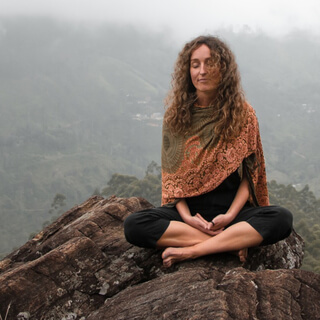
Find yourself a comfortable position for this practice.
Before your spinal column is erect,
Maintaining a nice straight back,
Roll your shoulders back,
Expand your chest,
And place your hands on your knees.
Finally close your eyes and mouth now,
And let's start by taking in a few deep breaths.
Breathing in through the nose,
And breathing out through the mouth.
Breathing in through the nose,
And breathing out through the mouth.
Nice,
Slow,
Long,
Conscious breaths in through the nose,
Out through the mouth,
In through the nose,
And out through the mouth.
In through the nose,
Out through the mouth,
In through the nose,
And out through the mouth.
The 579 Stress-Fit breathing technique triggers the parasympathetic nervous system,
Which activates the relaxation response in the body,
And this in turn promotes healthy rest and digestion.
This exercise is a natural tranquilizer for the nervous system.
By extending the exhalation,
You signal the body to slow down and relax.
Before we get started,
It is important to use the diaphragm for this breathing exercise.
Here is a quick method to activate the diaphragm.
Sitting up straight,
I will ask you now to put your hands on your side ribs.
When you inhale,
Feel your ribs stretch out to the side.
As you exhale,
Sit taller in your position.
Again,
Push your ribs to the side on your inhalation.
Hold your breath for a moment,
Then exhale and sit taller.
Inhale,
Allowing your rib cage to expand.
Hold your breath for a moment,
And then exhale,
Sitting taller than you were before.
Now place your hands to the back of your knees.
Take in a few conscious breaths to center your awareness into this moment.
Throughout this exercise,
Please be mindful to use your diaphragm for this breathing technique.
Place the tip of your tongue against the ridge of tissue just behind your upper front teeth,
And keep it there through the entire practice.
Exhale through the mouth around your tongue,
Keeping your lips slightly open on the exhale.
The technique is simple.
First,
You will close your mouth and inhale quietly through your nose to my count of five.
Then you will hold your breath to my count of seven.
And finally,
Exhaling completely through the mouth,
Making a whoosh to my count of nine.
Before we get started,
Exhale all the air out of your body by pulling your navel right in to the back of your spine.
Now follow my count.
Breathe in,
Two,
Three,
Four,
Five,
Hold,
Two,
Three,
Four,
Five,
Six,
Seven.
Inhale,
Two,
Three,
Four,
Five,
Six,
Seven,
Eight,
Nine.
Breathe in,
Two,
Three,
Four,
Five,
Hold,
Two,
Three,
Four,
Five.
Inhale,
Two,
Three,
Four,
Five,
Six,
Seven.
Exhale,
Two,
Three,
Four,
Five,
Six,
Seven,
Eight,
Nine.
Breathe in,
Two,
Three,
Four,
Five,
Hold,
Two,
Three,
Four,
Five,
Six,
Seven.
Inhale,
Two,
Three,
Four,
Five,
Six,
Seven,
Eight,
Nine.
Breathe in,
Two,
Three,
Four,
Five,
Hold,
Two,
Three,
Four,
Five.
Inhale,
Two,
Three,
Four,
Five,
Six,
Seven.
Exhale,
Two,
Three,
Four,
Five,
Six,
Seven,
Eight,
Nine.
Breathe in,
Two,
Three,
Four,
Five,
Hold,
Two,
Three,
Four,
Five,
Six,
Seven.
Inhale,
Two,
Three,
Four,
Five,
Six,
Seven,
Eight,
Nine.
Now let your breath go.
Release your tongue and focus on the sensation of your body.
Absorb your attention in this relaxation for the next few moments.
Exhale,
Two,
Three,
Four,
Five,
Six,
Seven,
Eight,
Nine.
Exhale,
Two,
Three,
Four,
Five,
Six,
Seven,
Eight,
Nine.
Exhale,
Two,
Three,
Four,
Five,
Six,
Seven,
Eight,
Nine.
Exhale,
Two,
Three,
Four,
Five,
Six,
Seven,
Eight,
Nine.
Exhale,
Two,
Three,
Four,
Five,
Six,
Seven,
Eight,
Nine.
Exhale,
Two,
Three,
Four,
Five,
Six,
Seven,
Eight,
Nine.
Exhale,
Two,
Three,
Four,
Five,
Six,
Seven,
Eight,
Nine.
The 579 breathing technique is a great way to relax your mind before sleep or can be used as a general stress relief when you are feeling overwhelmed.
Through regular practice,
You will program your body to breathe more efficiently.
Do not practice this method for more than eight breath cycles or more than three times a day.
Namaste.